Norssutilik

Tradition / Region: Inuit mythology
Alternate Names:
Category: Spirit


The Myth

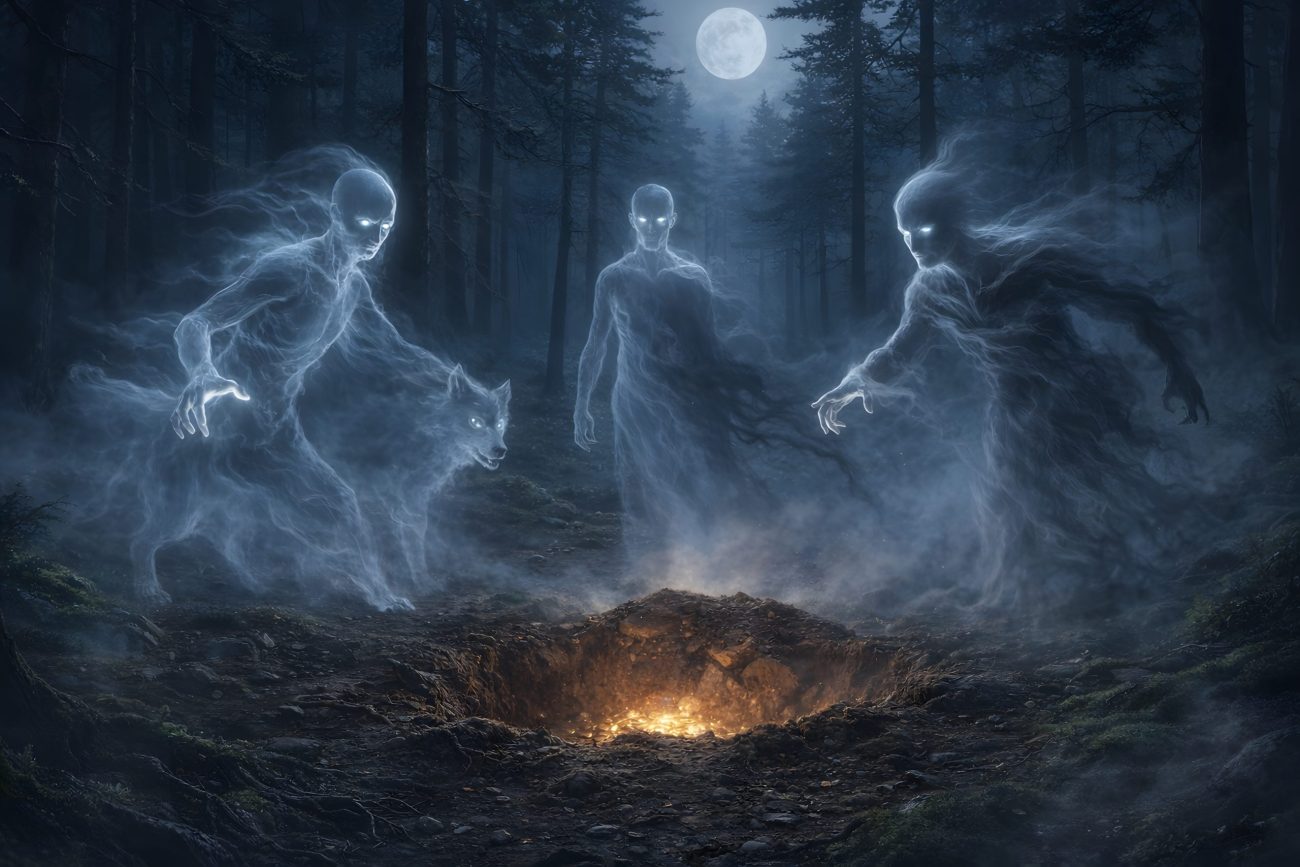
Norssutilik is the name given to two spirits in Inuit belief who share the same defining feature: a norjut, a tassel attached to a flexible stick worn or placed over the hood of a frock.

Because both spirits possess this distinctive tassel, they are known by the same name. The norjut serves as their identifying mark, distinguishing them from other spirits encountered in Inuit tradition.


Interpretive Lenses

Religious Readings
Philosophical Readings
Psychological Readings
Esoteric Deep Dive
  • Hermetic Deep Dive
Political / Social Readings
Other

Aksharquarnilik

Tradition / Region: Inuit Mythology
Alternate Names:
Category: Spirit


The Myth

Aksharquarnilik is a spirit encountered during shamanic healing rituals, acting as a helping spirit who reveals the hidden causes of illness.

In one account, a woman named Nanoraq, the wife of Måkik, lay gravely ill, suffering pain throughout her body and barely able to stand. She was placed on a bench, and all the people of the village were summoned. The shaman Angutingmarik began a ritual to discover the source of her sickness.

Walking slowly back and forth across the floor, Angutingmarik swung his arms while wearing mittens, breathing heavily and speaking in groans and sighs, his voice shifting in tone. He called upon his helping spirits and addressed Aksharquarnilik directly, asking whether the illness had come from a broken taboo—something eaten improperly, wrongdoing by himself, by his wife, or by the sick woman herself.

The patient answered that the sickness was her own fault. She confessed that she had failed in her duties and that her thoughts and actions had been bad. The shaman continued, describing what he perceived spiritually: something resembling peat, though not peat; something behind the ear like cartilage; something white and gleaming, possibly the edge of a pipe.

At this, the listeners cried out together that the woman had smoked a pipe she was forbidden to smoke. They agreed to forgive the offense and urged that it be ignored. But the shaman declared that this was not the only cause. There were further transgressions responsible for the illness.

Asked again whether the cause lay with him or with the patient, the woman replied that it was entirely her own doing. She said there had been wrongdoing connected to her abdomen, something internal that had brought about the sickness.

Through Aksharquarnilik, the hidden violations and their physical manifestations were revealed, allowing the community to acknowledge the causes of the illness and begin the process of purification and healing.


Source

Rasmussen, K. (1930). Intellectual Culture of the Hudson Bay Eskimos. p. 133.


Interpretive Lenses

Religious Readings
Philosophical Readings
Psychological Readings
Esoteric Deep Dive
  • Hermetic Deep Dive
Political / Social Readings
Other

Veehaldjas

Tradition / Region: Estonian Mythology
Alternate Names: Vetevaim; Näkk (in some regions); Vesihaldijas; Merehaldjas; Vee-ema; Vesineits; Mereneid; Merineitsi
Category: Spirit


The Myth

In Estonian folk belief, a Veehaldjas is the guardian spirit of a body of water. Every sea, river, lake, spring, or well was believed to have its own water spirit who ruled and protected it. The vetevaim also appears as a character in the national epic Kalevipoeg.

Closely related to the veehaldjas are beings such as mereemad (sea mothers), meretaadid (sea fathers), järvevanad (lake elders), vete-emad, and their daughters. These figures, especially known in southern Estonia and on the islands, were usually benevolent. They granted abundance and calm waters but could punish those who polluted or disrespected their domain.

In some areas, the veehaldjas was associated with the soul of a drowned person, a ghost, a goblin-like being, or—especially in southern Estonia—with the devil. In this form, the water spirit was dangerous and malicious, dragging people beneath the surface to drown them. The näkk is the most well-known of these hostile water spirits, and parents often frightened children with stories of the näkk to keep them away from water.

The veehaldjas could appear in many forms: most often as a human—usually a woman—but also as a bird, animal, or even an object. Coastal fishermen offered food and drink to water spirits in exchange for good fishing luck.

According to folklorist Matthias Johann Eisen, the name vesihaldijas was most commonly used in Viru, Harju, and Järva counties, while in Läänemaa and other regions the näkk was more often considered the ruler of the waters. Both the vesihaldijas and the näkk were sometimes described as equally fierce, though the merehaldjas was occasionally said to warn humans or refrain from harming them.

To protect themselves from dangerous water spirits, people placed small human-shaped figures near the water’s edge. These effigies were believed to frighten the veehaldjas away, preventing it from harming passersby.

Many female water beings—called vesineitsid, mereneitsid, mereneiud, and the daughters of sea or water spirits—were considered gentle and helpful. Some legends say these beings could appear with sea cows grazing on land. If a human herded them together with ordinary cattle, the sea cows would remain on land, give birth, and produce a strong and valuable breed of dairy animals.

Through these many forms, the veehaldjas embodies both the generosity and the danger of water, guarding life-giving resources while punishing disrespect and carelessness.


Klaas Vaak

Tradition / Region: Dutch Mythology, German Mythology
Alternate Names: Zandmannetje
Category: Spirit


The Myth

Klaas Vaak, also known as the Zandmannetje, is a figure believed to bring sleep to children. He is already mentioned in a poem from 1651, where it is said that he gently strokes people’s eyelids to make them yawn and fall asleep. In this early form, his presence is soothing and quiet, associated with the natural onset of sleep.

By 1767, the name Zandmannetje appears for the first time in a lullaby. In this version of the belief, Klaas Vaak causes sleep by sprinkling sand into people’s eyes, making them rub their eyelids. In the morning, the grains of sand are said to remain in the corners of the eyes as proof of his visit.

In a darker German version recorded in 1816, the Sandman is described as a frightening figure. Children were told that if they refused to go to bed, he would throw so much sand into their eyes that they would bleed from their sockets. He would then collect their eyes in a sack, carry them to the moon, and feed them to his own children. In this tradition, he becomes associated with the Man in the Moon and functions as a figure used to frighten children into obedience.

Like Sinterklaas, Klaas Vaak is sometimes said to enter homes through the chimney. While it is not known for certain whether the terrifying version of the Sandman was used in the Netherlands, the belief that Klaas Vaak visits at night to bring sleep was widespread and enduring.


Nachtwerkertjes

Tradition / Region: Dutch Mythology
Alternate Names: Werkgeesten (related)
Category: Spirit


The Myth

In Dutch folklore, Nachtwerkertjes are mysterious beings heard at night inside workshops and workspaces. When loud hammering, sawing, or other work noises are heard in the middle of the night—without any human present—it is said that the nachtwerkertjes are at work.

Their presence is believed to be a sign of what is to come. Hearing them foretells that there will soon be much work to be done, as if the spirits are preparing in advance. In the Zaan region, where windmills dominate the landscape, the sounds of nachtwerkertjes are specifically taken as a warning that a storm is approaching. Such storms often caused damage to mills, leading to extensive repair work afterward.

Thus, the nachtwerkertjes do not appear directly to people, but announce themselves through sound, acting as unseen workers whose nocturnal activity signals impending labor and disruption.


Baccoo

Tradition / Region: Guyana and Suriname
Alternate Names: Bakru (Sranan Tongo), Bakulu, Bakuu (Saramaccan)
Category: Spirit / familiar


The Myth

A Baccoo is a supernatural being found in the folklore of Guyana and Suriname. Descriptions of the creature vary, but it is often said to have an oversized head and a small body, with one half made of wood and the other half of flesh. Some accounts note that it lacks kneecaps, giving it an unnatural way of moving.

Baccoo are believed to exist in two main forms. Some serve humans—usually merchants or individuals seeking success—after a contract is made with them. Others roam freely, haunting the areas where they dwell. Those who keep a baccoo must feed it regularly, most commonly with milk and bananas.

When bound to a person, a baccoo may be sent to perform tasks. It can act as an invisible messenger, carrying information from place to place, or it may be used to torment others by throwing stones, starting fires, or causing unexplained disturbances. These acts are often attributed to unseen forces, though people familiar with the lore recognize them as the work of a baccoo.

The origin of the baccoo is uncertain. Some traditions connect it to the Abiku of Yoruba belief, a spirit associated with children who die before being named, commemorated through small wooden figures. Others trace it to the mmoatia spirits of Akan folklore. Over time, these influences blended, and the baccoo became a shared figure across multiple cultural traditions in the region.


Interpretive Lenses

Religious Readings
Philosophical Readings
Psychological Readings
Esoteric Deep Dive
  • Hermetic Deep Dive
Political / Social Readings
Other

Chairo-kaze

Tradition / Region: Japan
Alternate Names: Brown Wind
Category: Spirit wind / atmospheric yōkai


The Myth

Chairo-kaze, or “Brown Wind,” is a mysterious spirit wind described by Shigeru Mizuki based on an experience from his childhood. He wrote about it in a school composition titled Brown Wind, later recalling it in his personal writings.

As a child, Mizuki would occasionally encounter a strange wind that made him feel uneasy and different from ordinary gusts of air. The experience always occurred at night, so he could never actually see the wind’s color. Despite this, he instinctively named it the “Brown Wind,” sensing that it carried an uncanny and mysterious presence.

This phenomenon is later mentioned in books about yōkai and supernatural phenomena, including sections devoted to so-called “spirit winds,” where Chairo-kaze is treated as an example of an unseen but perceptible supernatural force felt rather than seen.


Interpretive Lenses

Religious Readings
  • Christian Ascetic Deep Dive
Philosophical Readings
Psychological Readings
Esoteric Deep Dive
  • Hermetic Deep Dive
Political / Social Readings
Other

Kolodechnik

Tradition / Region: Russian Mythology
Alternate Names:
Category: Spirit


The Myth

A kolodechnik is a type of brownie spirit in Russian folklore and is regarded as the master and guardian of a well. Each kolodechnik is bound to a specific well, which it protects as its own domain.

The spirit is believed to dwell within the depths of the well, watching over the water and ensuring its proper use. Every well has its own kolodechnik, and the spirit does not stray from the place it guards.


Kodama

Tradition / Region: Japanese folklore (mountain regions, Honshu, Izu Islands, Okinawa)
Alternate Names: Kidama-sama, Kodama-sama, Kiinushii
Category: Tree spirit / forest guardian


The Myth

Deep in the mountainous forests of Japan, ancient trees are believed to be inhabited by spirits known as Kodama. These spirits dwell within very old trees, and their lives are inseparably bound to their host. If the tree dies, the kodama perishes with it; if the kodama is destroyed, the tree cannot survive.

Kodama are rarely seen, but their presence is often heard. In forests and mountain valleys, sounds sometimes echo longer than they should, returning with an unnatural delay. This phenomenon, known as yamabiko, is traditionally attributed to kodama responding to human voices. When they do appear visually, kodama may manifest as faint, distant orbs of light, or as small, oddly shaped, vaguely humanoid figures moving through the forest.

Although their bodies may leave the tree temporarily, kodama remain guardians of their groves, tending to the balance of nature. Trees inhabited by kodama are considered sacred. Villagers traditionally mark such trees with shimenawa, sacred ropes, to signal their divine status and warn against harm. Cutting down a tree that houses a kodama is believed to bring a powerful curse, capable of plunging an entire community into ruin. In some traditions, when an ancient tree is cut and blood appears to flow from the wood, it is taken as proof that a kodama lived within it.

The belief in tree spirits is ancient. In early Japanese texts, kodama are closely associated with gods and yōkai alike. The tree deity Kukunochi no Kami, recorded in the Kojiki (712 CE), is sometimes interpreted as a kodama. In the Heian-period dictionary Wamyō Ruijushō, tree gods are listed under the name “kodama.” Classical literature such as The Tale of Genji refers to kodama alongside oni, fox spirits, and gods, indicating their liminal nature between kami and yōkai.

Kodama are said to take many forms. Some appear as ghostly lights, others as animals or humans. One story tells of a kodama that fell in love with a human and left its tree, assuming human form in order to meet them. According to medieval Shinto texts such as the Reikiki, kodama may dwell in groups deep within the mountains and are sometimes heard speaking, particularly at moments of death.

Regional traditions preserve related beliefs. On Aogashima and Hachijō-jima in the Izu Islands, shrines are built at the base of great cryptomeria trees and worshipped under the names kidama-sama or kodama-sama, and festivals are held whenever such trees are cut. On Okinawa, tree spirits are called kiinushii, and prayers are made before felling any tree. Nighttime sounds resembling falling trees are believed to be the cries of kiinushii, followed by the tree withering days later. The Okinawan yōkai kijimuna is sometimes said to be a manifestation of these spirits.

In the Gazu Hyakki Yagyō by Toriyama Sekien, kodama are depicted as elderly men and women standing among trees, with the explanation that when a tree reaches a hundred years of age, a divine spirit comes to dwell within it. Through these traditions, kodama remain enduring symbols of the living soul of the forest and the sacred bond between trees and spirit.


Interpretive Lenses

Religious Readings
Philosophical Readings
Psychological Readings
Esoteric Deep Dive
  • Hermetic Deep Dive
Political / Social Readings
Other

Ichchi

Tradition / Region: Russian Mythology
Category: Spirit masters / animistic spirits


The Myth

In traditional Yakut belief, ichchi are spirit masters that inhabit objects, places, and natural phenomena. According to this worldview, nature is alive in all its parts, and every thing—large or small—possesses its own indwelling spirit. Mountains, trees, rivers, lakes, fire, tools, dwellings, and even the most ordinary household objects were believed to have an ichchi.

Ichchi could dwell in prominent features of the landscape, such as forests or bodies of water, acting as guardians or owners of those places. At the same time, they could also inhabit humble or easily overlooked things, such as the firebox used in the hearth or tools used in daily work. Because of this, people were expected to treat both nature and objects with care and respect.

When approached properly, an ichchi could become a patron spirit to a person or household, offering protection, good fortune, and harmony. Disrespect, neglect, or improper behavior toward the object or place inhabited by an ichchi could provoke misfortune, illness, or bad luck.

Communication with ichchi took the form of prayers called algys, which were spoken to honor or appease the spirits. Offerings were an essential part of this relationship. These could include horsehair ornaments, scraps of cloth known as salama, non-animal foods, kumiss (fermented mare’s milk), or money. The offerings acknowledged the spirit’s presence and authority.

Ichchi are distinct from other spiritual beings in Yakut cosmology. They are not the high benevolent deities known as Aiyy, nor are they the malevolent spirits such as Abaahy or Uor. Instead, ichchi occupy a middle position as ever-present spirit owners of the world itself.

Similar beliefs in spirit masters exist among neighboring peoples. Other Turkic-speaking groups refer to such spirits as eye or ezi, the Buryats call them ezhins, and the Mongols know them as edzens, reflecting a shared animistic understanding across Inner Asia.