Reus te Hammen

Tradition / Region: Belgian Mythology
Alternate Names: Giant of Hamme
Category: Giant


The Myth

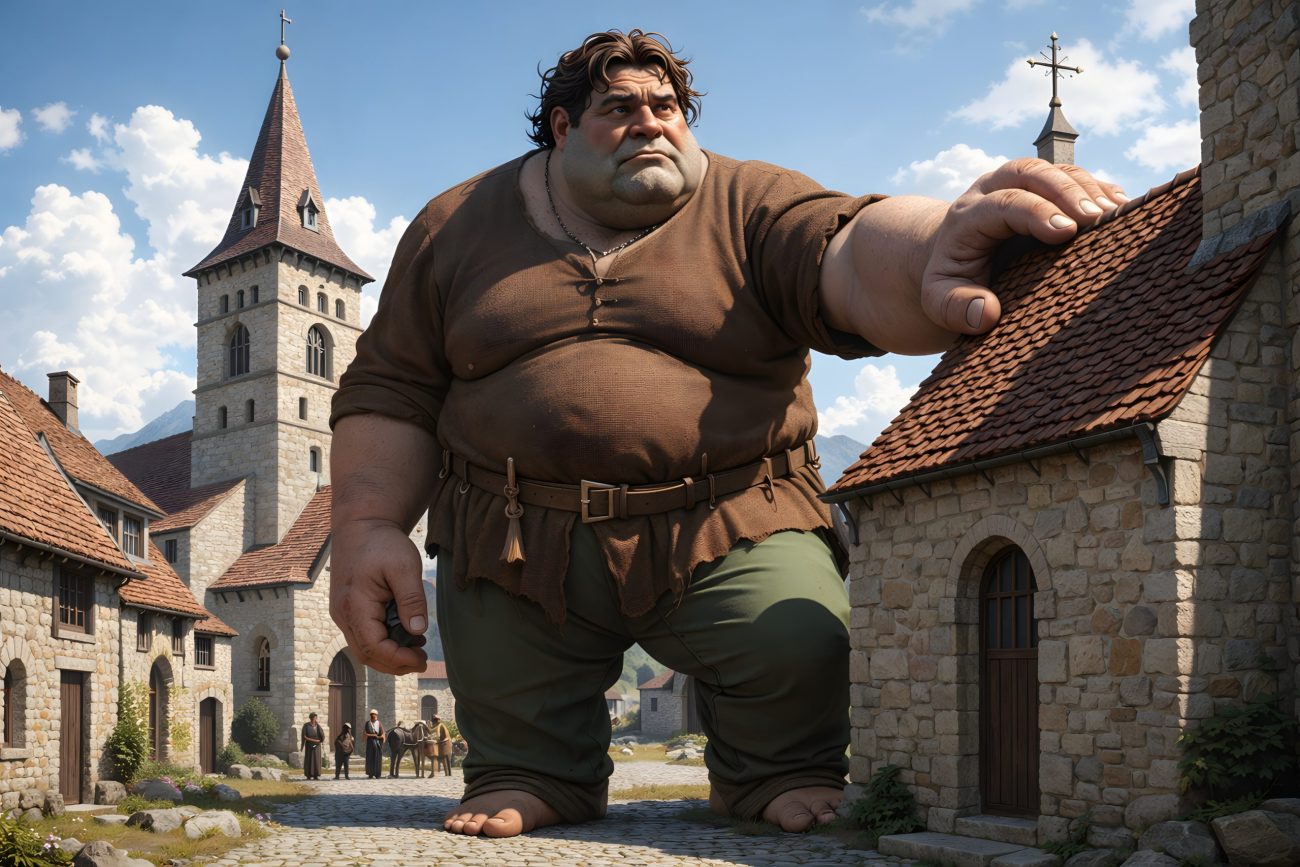
The Reus te Hammen refers to a legendary giant or giants associated with the town of Hamme in Flanders. The most tangible element of the legend is a massive bone kept in the local church, believed by the people to be the thigh bone of a giant.

According to tradition, this enormous bone was pulled from the river Durme long ago and preserved in the church, where it came to be treated almost like a sacred relic. Its unusual size reinforced the belief that giants once lived in the region.

Older accounts speak of two giants who lived on opposite sides of the river. They argued over who was taller and went to prove their size by reaching the roof of a church under construction, each able to place stones without the need for scaffolding.

In other versions, there were three giants who built a church in Hamme themselves, their height allowing them to work directly at roof level. One of them was said to cross the river simply by walking through it, unaffected by its depth.

Local traditions also preserve traces of their presence in the landscape. Certain paths and features, such as “giants’ roads,” were believed to mark where they once moved, and these places were treated with caution and respect.

The giant of Hamme was not just a distant myth but a figure tied to physical evidence, local geography, and enduring popular belief, linking the land, the people, and the memory of beings of immense size who once walked there.


Sources

de Cock, A. (1921). Vlaamsche sagen uit den volksmond. In Amsterdam: Maatschappij voor goede en goedkoope lectuur p. 154.


Torx

Tradition / Region: Armenian Mythology
Alternate Names: Torch
Category: Giant


The Myth

Torch is a powerful giant-like being in Armenian mythology, associated with a class of supernatural craftsmen similar to dwarfs and ancient smith-spirits. He is known for great strength as well as skill in crafting and working materials.

He was described as having a massive and rough body, an ugly face, a flat nose, and deep-set, harsh eyes. He belonged to a race connected to ancient beings of great physical power and was believed to dwell in the western regions of Armenia, near the Black Sea.

Torch was renowned not only for his strength but also for his ability as a craftsman. He could shape hard stone, smoothing it and carving figures into it with his fingernails, and was known as both an artisan and an artist.

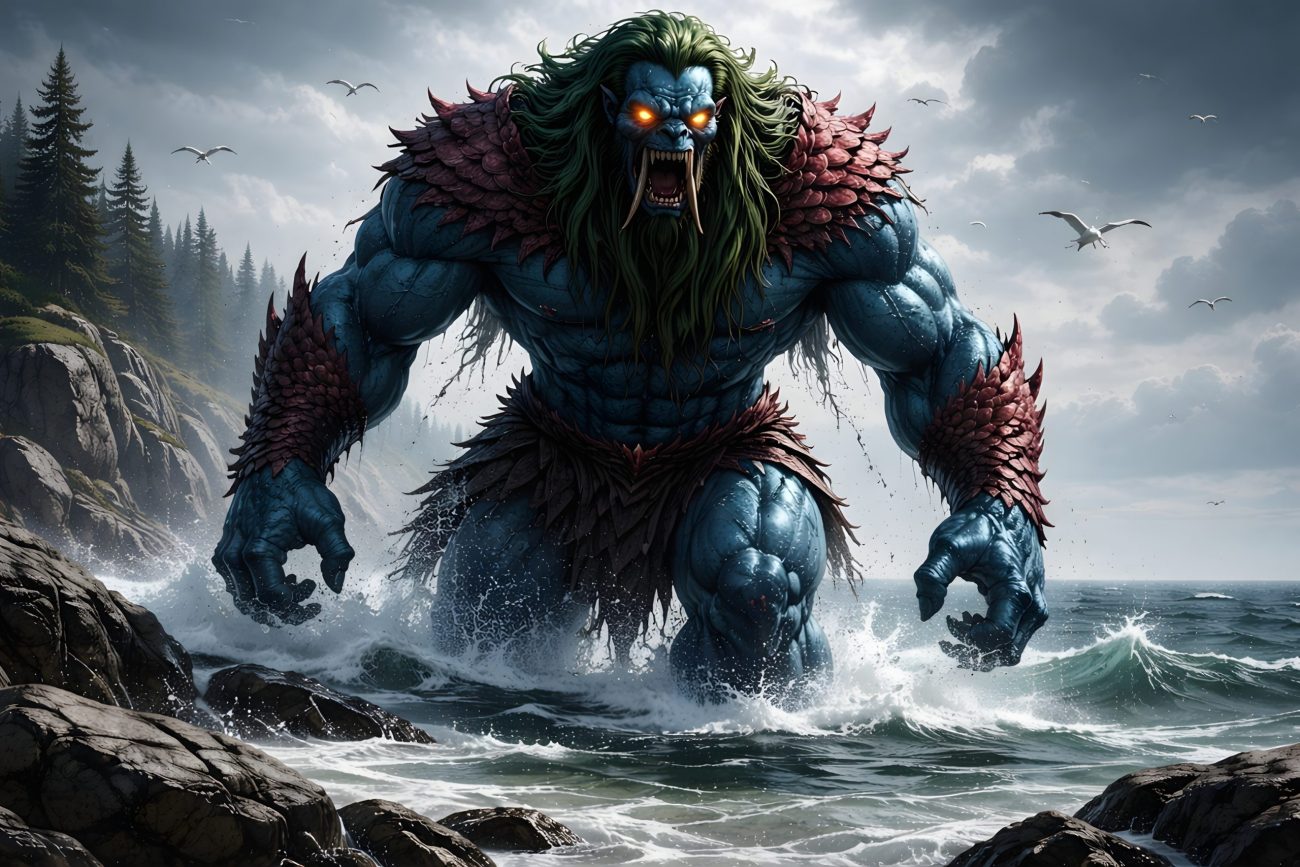
In one account, he encountered his enemies on the shores of the Black Sea. At the sight of him, they fled by ship and put great distance between themselves and the giant. Torch responded by hurling enormous rocks toward them. The stones struck the sea with such force that some ships were swallowed by the waters, while others were driven far away by the waves caused by the impact.


Sources

Ananikian, M. H. (1925). Armenian Mythology. In The Mythology of All Races, Vol. 7. Published by the Archaeological Institute of America p. 85-86.


Lintao Giant

Tradition / Region: Chinese mythology
Alternate Names:
Category: Giant


The Myth

The Lintao Giant is a giant recorded in Chinese legend. It is said that in the twenty-sixth year of Qin Shi Huang’s reign, giants appeared at Lintao. They were extremely tall, about 8 meters in height, with feet about 1.4 meters long, and wore foreign clothing. Some accounts say there were twelve of them.

It is said that after these giants appeared, twelve bronze statues were made to resemble them.


Gallery


Sources

Wikipedia contributors. (n.d.). 临沮巨人. In Wikipedia, from https://zh.wikipedia.org/wiki/%E4%B8%B4%E6%B4%AE%E5%B7%A8%E4%BA%BA


Interpretive Lenses

Religious Readings
  • Christian Ascetic Deep Dive
Philosophical Readings
  • Nietzschean Deep Dive
Psychological Readings
  • Jungian Deep Dive
Esoteric Deep Dive
  • Hermetic Deep Dive
Political / Social Readings
  • Marxist Deep Dive

Adasbub

Tradition / Region: Austrian Mythology
Alternate Names:
Category: Mountain dweller, Giant


The Myth

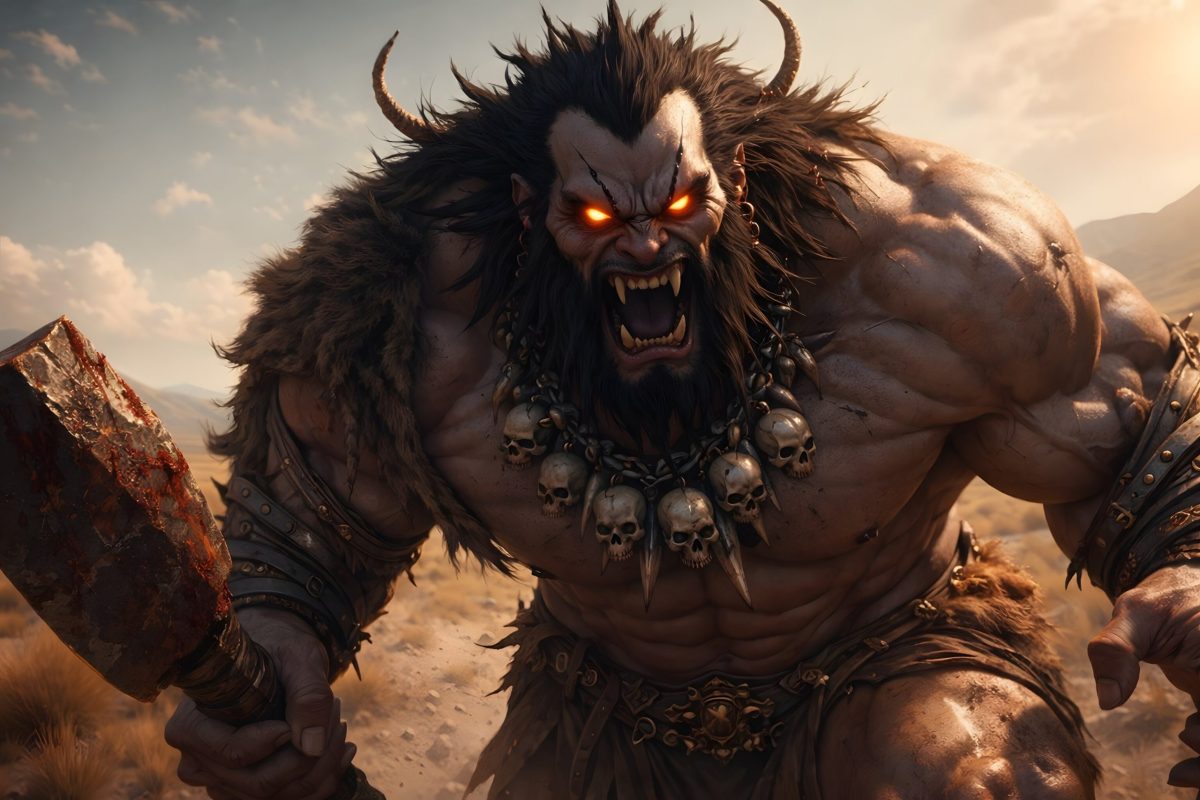
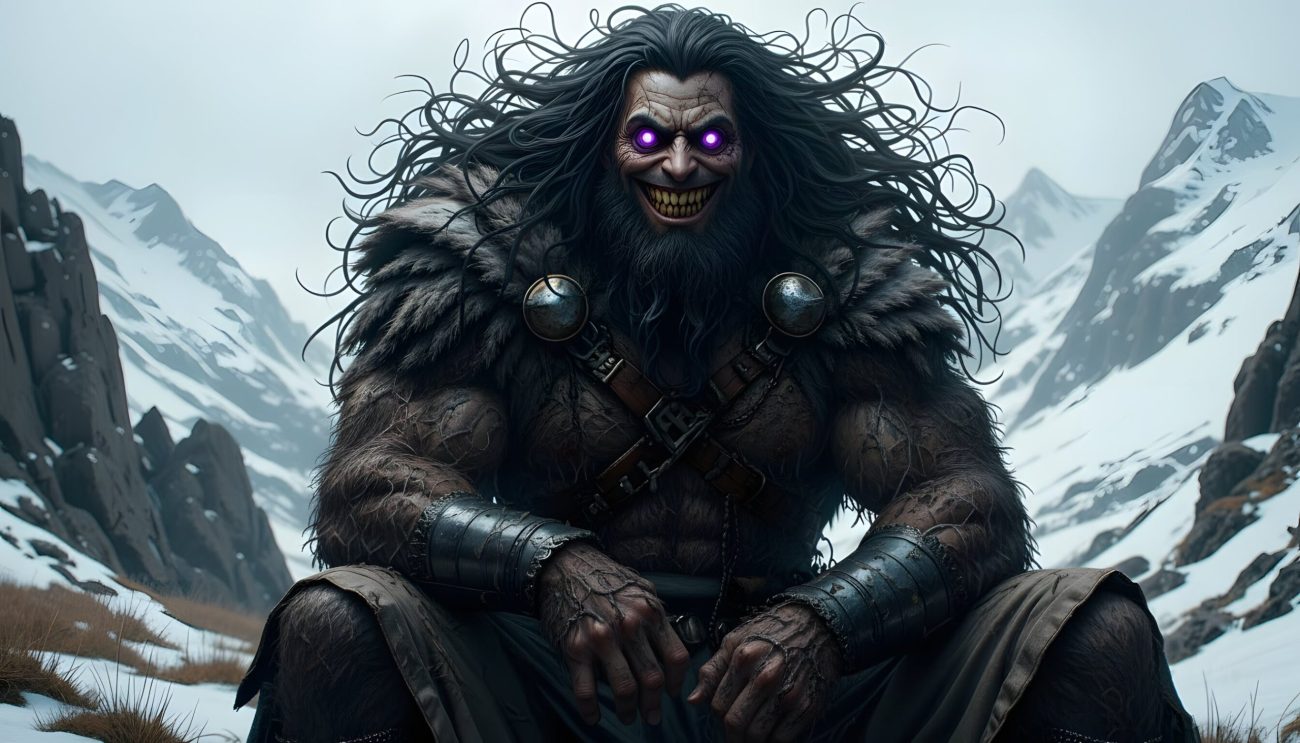
About sixty years ago, in the valley of the Ötz near Lengenfeld, there lived a man of enormous height and terrifying strength known as the Adasbub. He was a monster in spirit as much as in body—a thief, a drunkard, a fighter, and a blasphemer. He had served as a soldier in many wars and returned more savage than when he had left. From foreign lands he brought home great sums of money, stolen and extorted, and with this wealth he bought himself a farm.

Yet he lived not like a Christian farmer, but like a pagan. He never went to church. Instead, he sat in the village inn boasting of his velvet jacket adorned with buttons hammered from old silver coins. The young men of the village, dazzled by his swagger and riches, grew ashamed of their simple clothing and sought to imitate him.

The Adasbub’s strength was legendary. It was said he had once defeated fifty men who attacked him at the same time. Those who offended him feared more than his fists. People whispered that he could divert mountain torrents onto a rival’s fields or send huge snowballs—packed with hidden stones—crashing down upon a roof. Whether by cunning or brute force, he was a man to be feared.

His pleasure lay in drink, oaths, and cruelty. He gathered around him a band of like-minded ruffians. Together they committed outrageous acts. They tore doors from their neighbors’ houses and dragged them into the forests. They lifted carts onto rooftops. They broke into sacristies to steal and drink the priests’ wine. They shut goats into roadside chapels and uprooted cemetery crosses, thrusting them upside down into graves, laughing that they had made Christendom stand upon its head.

At last, the Adasbub planned a new villainy involving the daughter of a farmer whose home stood on the Burgstein above Lengenfeld. But word of the plot reached the farmer. Rather than flee, he sharpened his axe and waited.

When the Adasbub entered the house, the farmer struck with all his strength. The axe split the giant’s skull, and the terror of the valley fell dead at his feet. Seeing their leader slain, his companions fled in panic.

The alarm spread quickly. People climbed up to the Burgstein from every direction and thanked the farmer for freeing them from their tormentor. They cut off the Adasbub’s head and dragged his body to the edge of a precipice, casting it down onto the road below near the sulphur baths of Rumunschlung.

The head was thrown into the charnel-house of the cemetery at Lengenfeld. There it is said to remain.

The skull, nearly cleft in two, does not always lie quiet. On certain midnights it is said to glow red-hot, terrible to behold. Some claim that when it burns, it rolls from the charnel-house into the chapel, whirling in circles before leaping back to its place. By morning it has cooled, appearing once more like any other skull.

Thus the Adasbub endures—not as a man, but as a warning.


Sources

Günther, A. von. (1874). Tales and legends of the Tyrol. London: Chapman and Hall.


Puigmal

Tradition / Region: Catalan mythology, Spanish Mythology
Alternate Names:
Category: Giant, Mountain dweller


The Myth

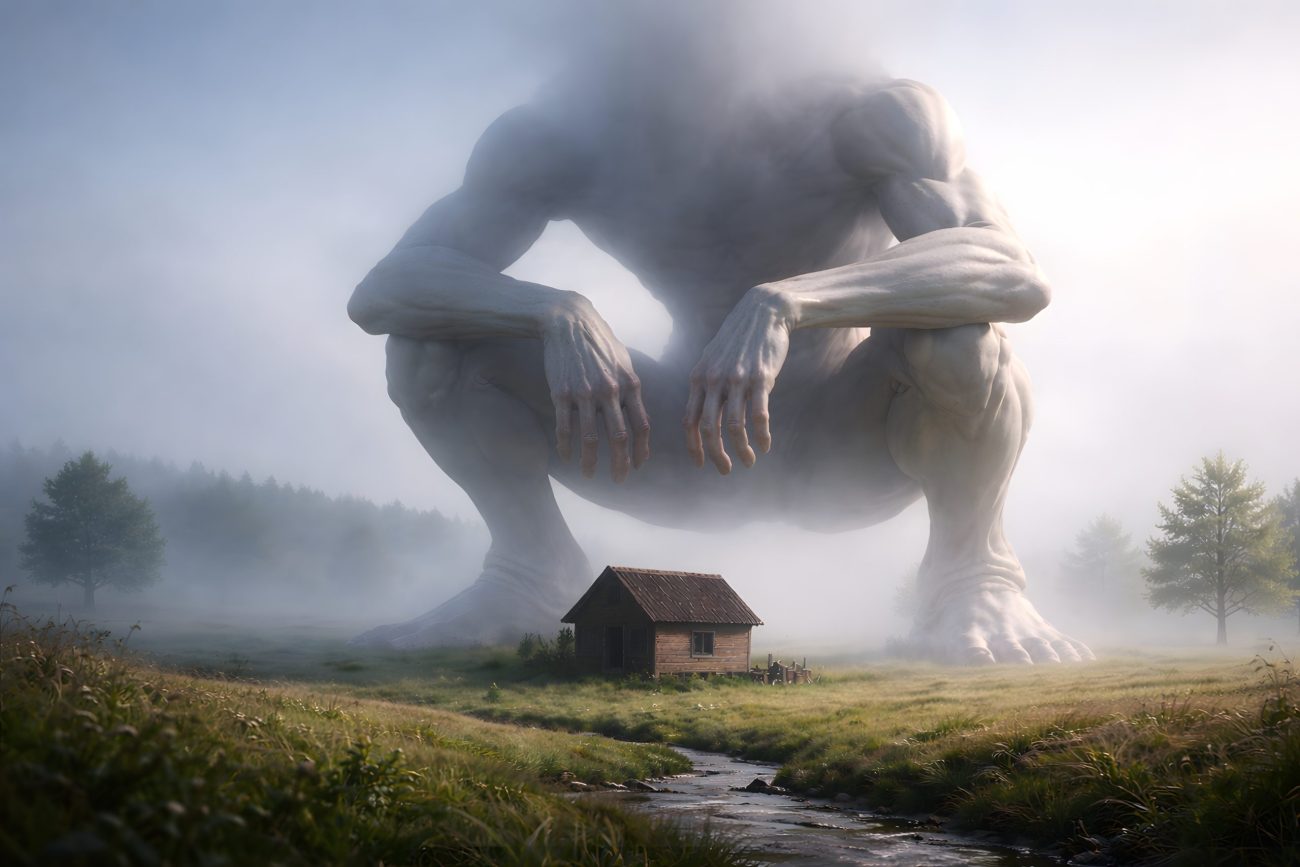
In the high mountains above the valley of Ribes there once lived a giant named Puigmal.

He towered above the forests and peaks, a mighty being who watched over the trees and the wild animals. No hunter could loose an arrow without feeling his presence. No woodcutter could strike a trunk without sensing the mountain’s silent warning. Puigmal guarded nature fiercely, defending it from careless human hands.

One day, as he wandered the slopes, he milked a wild doe and made cheese from her milk. He brought this cheese to a human and offered it as a gift. “As long as you do not eat it all,” he said, “it will grow again and again. You will never hunger, and you will not need to hunt the creatures of these mountains.”

The gift was a covenant: live with restraint, and the mountain would provide endlessly.

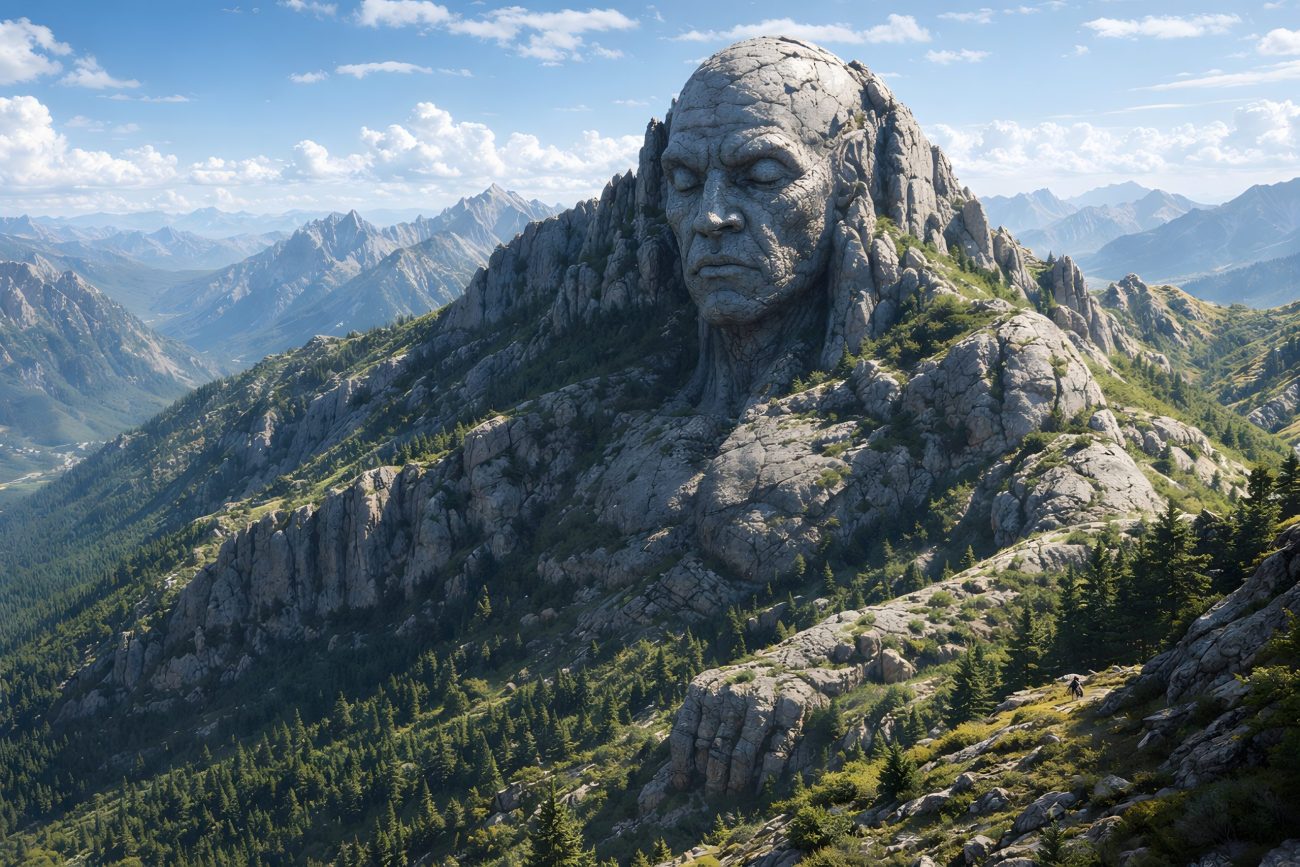
But the balance between humans and nature is fragile. In time, the giant was turned to stone, his immense body becoming the very mountain that now bears his name—Puigmal. His stony form rises above the valley still, silent and watchful.

They say he remains there as guardian still, the mountain itself standing as his petrified body, overlooking the forests and animals he once defended.


Sources

creatures-of-myth.fandom.com contributors. (n.d.). Puigmal. In creatures-of-myth.fandom.com, from https://creatures-of-myth.fandom.com/wiki/Puigmal


Tepegöz

Tradition / Region: Azerbaijani Mythology, Turkic mythology
Alternate Names:
Category: Giant


The Myth

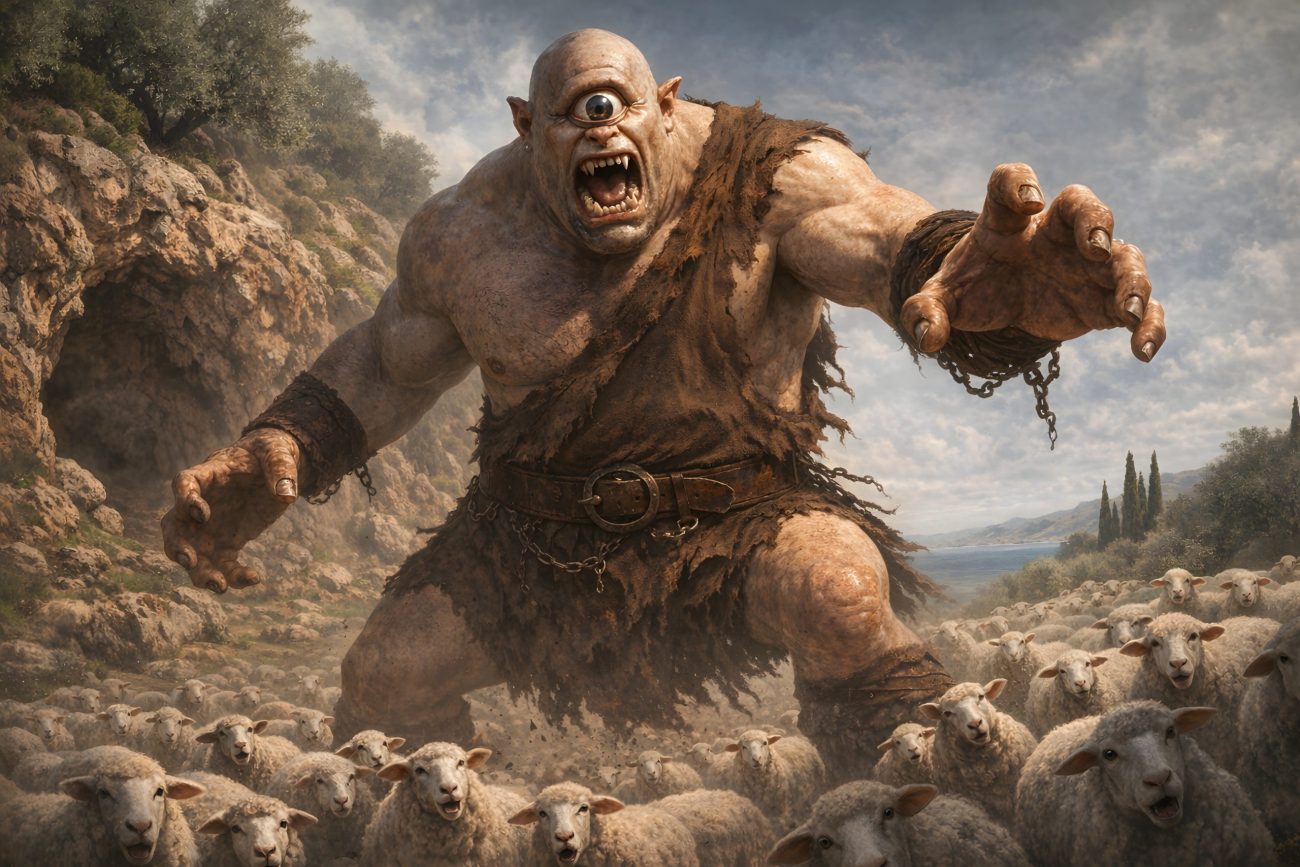
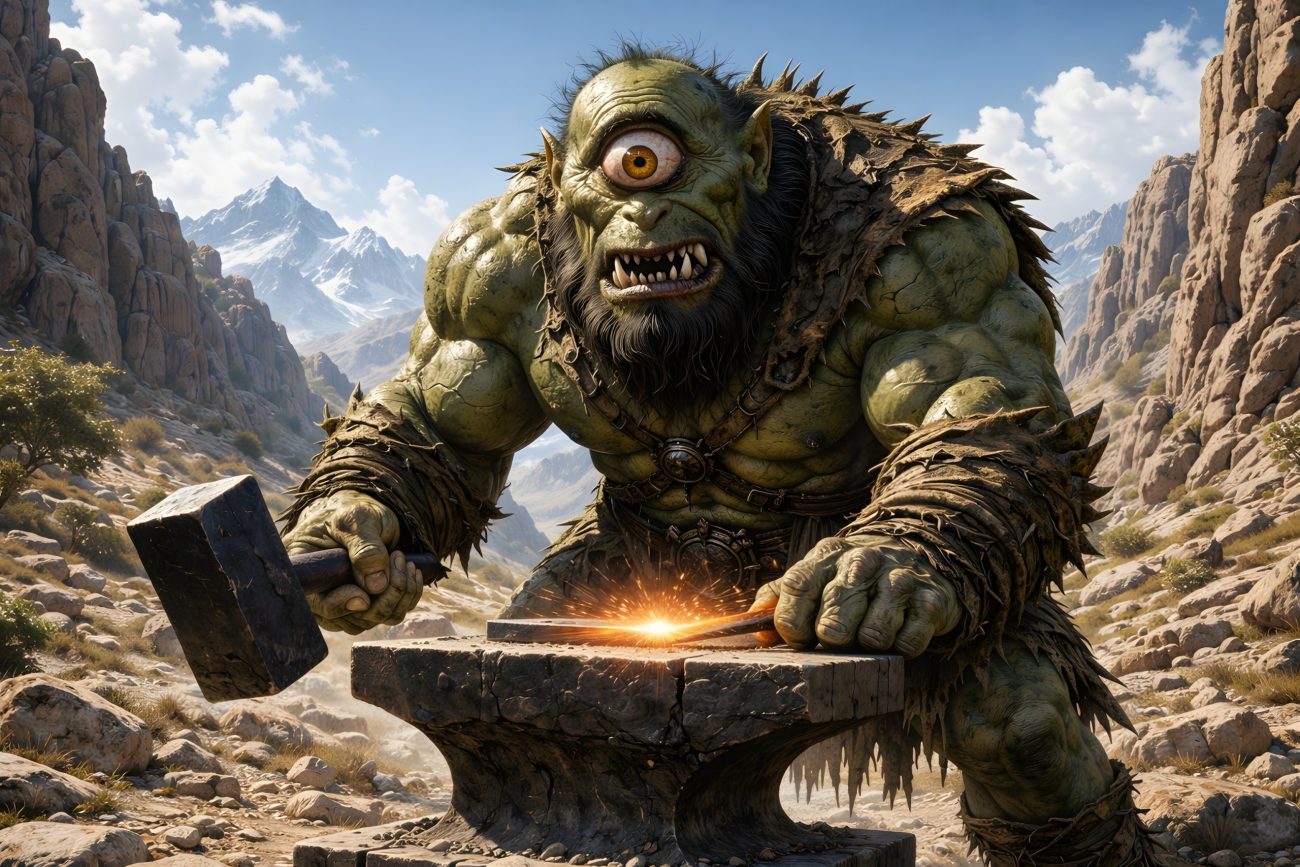
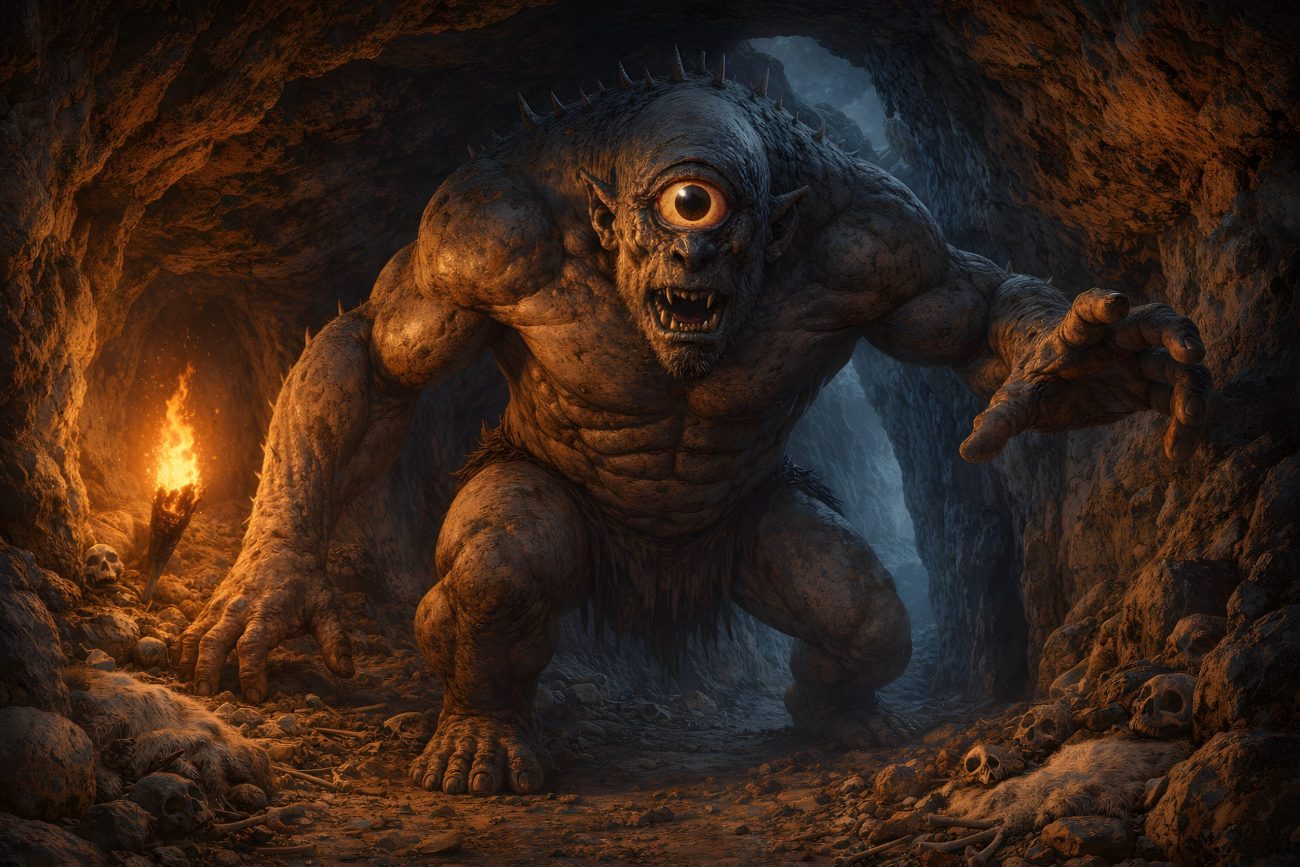
Tepegöz is a huge one-eyed giant who dwells in a cave and feeds on humans. When angered, he forces people inside his lair, where none escape alive. His sense of smell is keen, and he can track victims even in darkness.

There is only one way to survive him. A person must hide beneath a sheep’s skin so the giant cannot detect their scent. When the moment comes, Tepegöz can be slain only by driving a sharp sword into his single eye.

Though powerful and terrifying, Tepegöz is slow-witted. Those who rely on cunning rather than strength alone may overcome him, proving that brute force without intelligence is doomed to fall.


Source

JAMnews contributors. (2017, August 20). The magical creatures of Azerbaijani mythology. In JAMnews, from https://jam-news.net/azerbaijani-demons/