Lintao Giant

Tradition: Chinese Mythology
Alternative Names: Lintao Giants, The Twelve Golden Giants
Category: Giant


The Myth

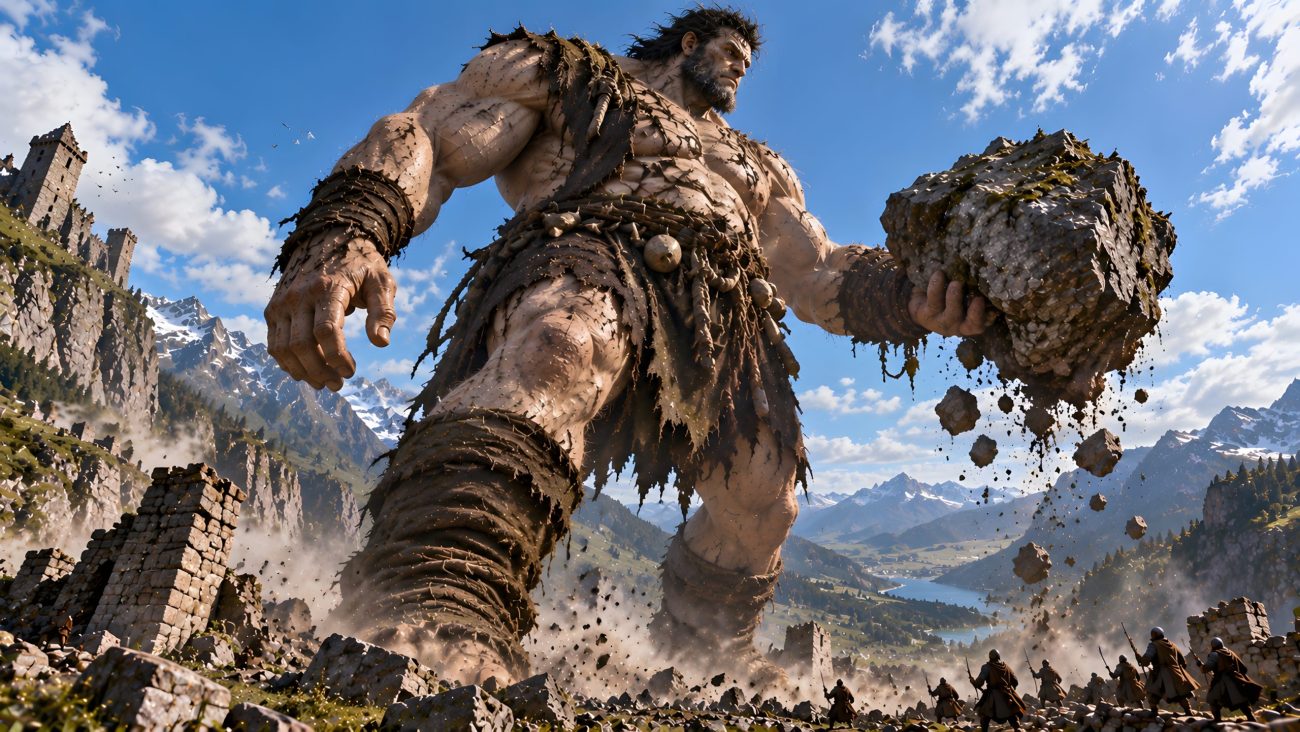
The Giants of Lintao are legendary giants recorded in Chinese historical and supernatural literature. According to the Soushen Ji (In Search of the Supernatural), during the twenty-sixth year of Qin Shi Huang’s reign, a giant appeared who stood five zhang tall and had feet measuring six chi in length. These traditional Chinese units of measurement varied historically, making the giant’s exact height uncertain.

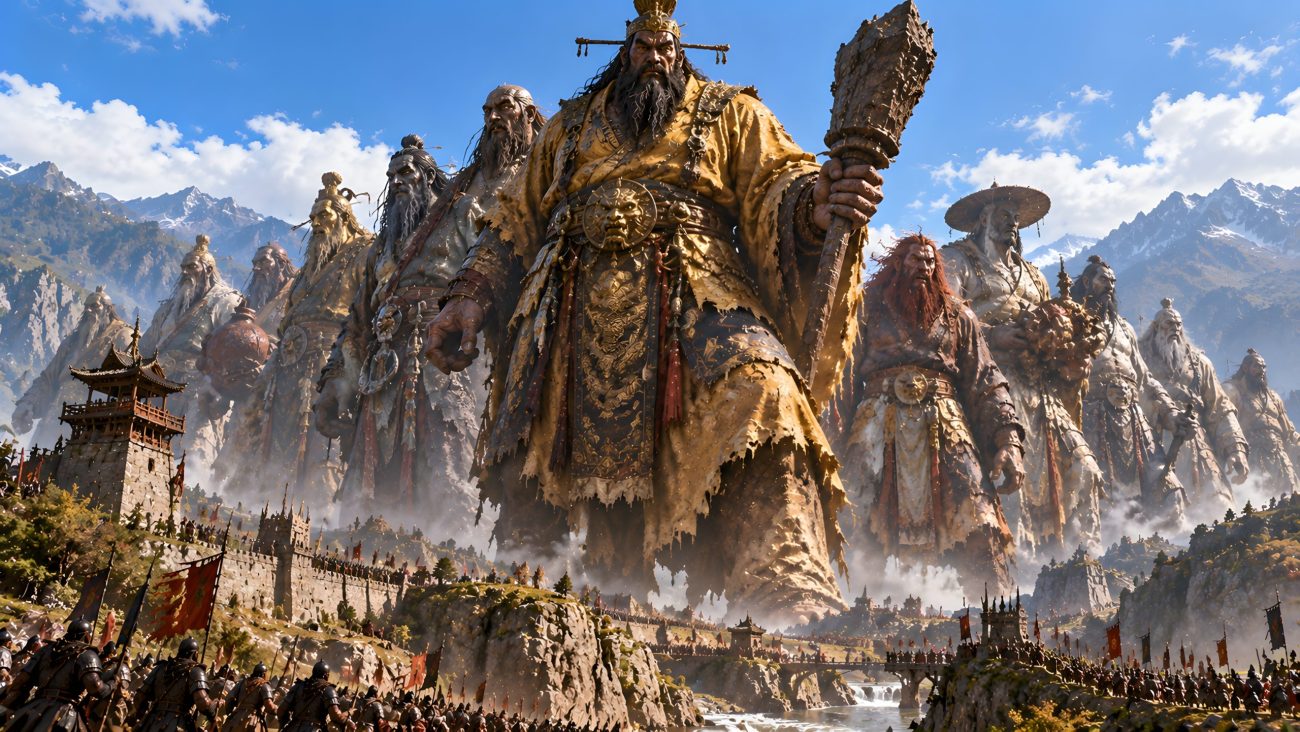
Other accounts describe twelve giants appearing at Lintao, in what is now Gansu Province in northwestern China, during the twenty-sixth year of the reign of King Zheng of Qin, who later became Qin Shi Huang, the First Emperor of China. These twelve figures are mentioned in the Records of the Grand Historian (Shiji) and the Book of Han (Hanshu).

The literary work Qin’e Yi also refers to twelve golden giants seen at Lintao. Using a traditional conversion of ten chi to one zhang, the giants have been estimated to have stood approximately eight metres tall. The accounts differ in their descriptions, with one referring to a single enormous giant and others recording twelve figures, including the twelve golden giants. Together, they preserve a tradition of extraordinary beings associated with Lintao during the early Qin imperial period.


Sources

“临洮巨人.” Chinese Wikipedia. Wikimedia Foundation. Accessed October 16, 2026. https://zh.wikipedia.org/wiki/%E4%B8%B4%E6%B4%AE%E5%B7%A8%E4%BA%BA


Olentzero

Tradition: Basque Mythology, Spanish Mythology
Alternative Names: Olentzaro, Olantzaro, Olenchero, Onenzaro, Onentzaro, Ononzaro, Orentzago
Category: Giant


The Myth

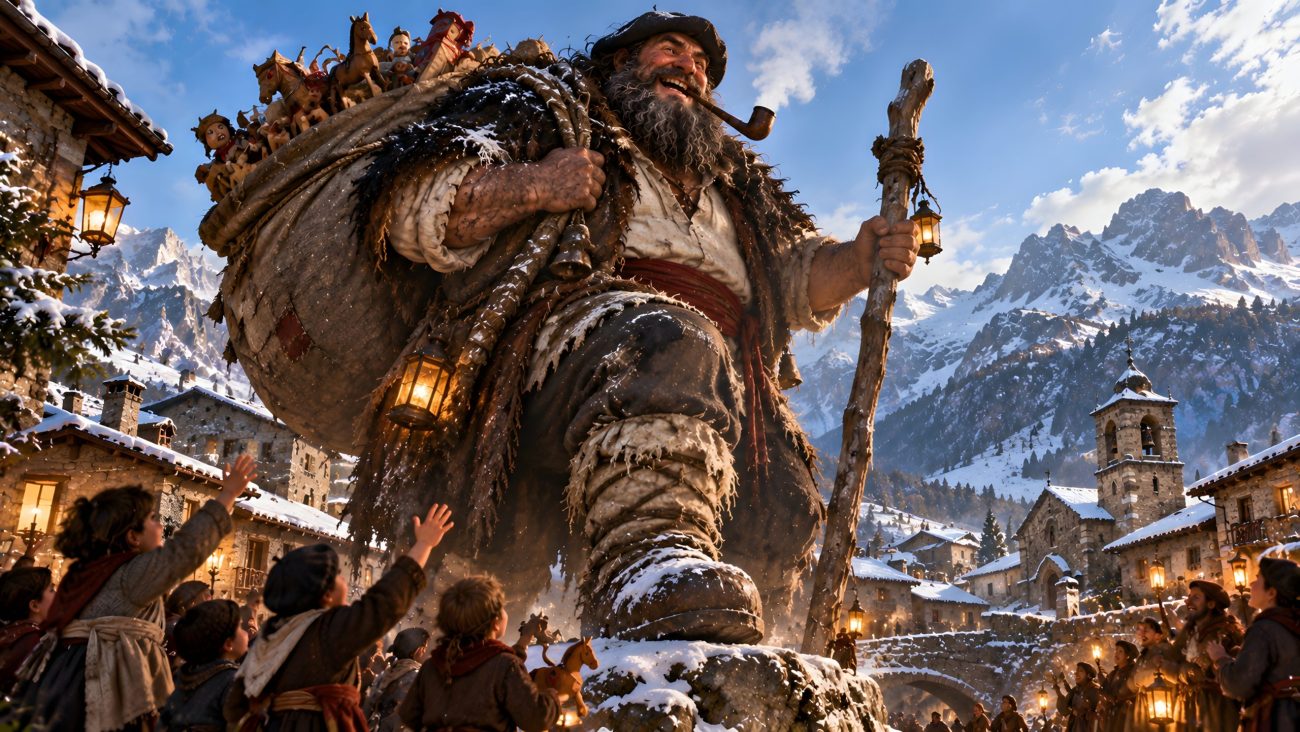
Olentzero is a traditional Basque Christmas figure who visits towns and villages to bring presents to children on Christmas Eve, 24 December. Depending on local custom, his arrival may take place on a different date, such as 27 December in Ochagavía or 31 December in Ermua. The name appears in several forms, including Olentzaro, Olantzaro, and Onenzaro. One widely accepted explanation derives it from the Basque word on, meaning “good,” combined with a plural genitive ending and the seasonal suffix -zaro, giving the approximate meaning “season of the good ones.” The earliest written reference dates to the seventeenth century, when the name was used for Christmas Eve.

In one traditional legend, Olentzero is the sole survivor of the Jentillak, a race of giants who lived in the Pyrenees. One day, the giants witnessed a mysterious, glowing cloud in the sky. Unable to look directly at it, they asked an elderly, nearly blind giant to examine it. He recognized the cloud as a sign that Jesus would soon be born, heralding the arrival of Christianity. In some versions, the old giant asked the others to throw him from a cliff so that he would not have to witness the coming transformation. After they fulfilled his request, the giants stumbled and died, leaving Olentzero as the only survivor. Other versions simply say that the Jentillak departed, while Olentzero remained and embraced Christianity.

Another version of the legend describes Olentzero as an abandoned child discovered in the woods by a fairy. She named him Olentzero, gave him the gifts of strength and kindness, and entrusted him to an elderly, childless couple who lived in the forest. As he grew up, he became a strong and skilled charcoal burner who carved wooden toys. Carrying the toys in a large charcoal sack, he distributed them to the children of nearby villages. According to this story, he died while rescuing children from a burning house. The fairy who had found him then granted him eternal life so that he could continue bringing happiness to children and adults.

Olentzero’s older traditions also include darker and more frightening customs. In some villages, adults dressed as Olentzero to frighten children who stayed outdoors too late or refused to go to bed. He was sometimes represented by a straw effigy carrying a sickle, hung from a church tower, chimney, or window. In these traditions, he threatened to punish disobedient children or those who broke the traditional Christmas fast. In parts of Navarre, related seasonal celebrations were known as xubilaro or subilaro, names connected with the Yule log. Other local versions depicted Olentzero as a three-eyed figure with red eyes, sometimes portrayed as a drunkard dressed like a scarecrow. Over time, these varied regional traditions developed into the familiar Christmas gift-bringer who visits Basque children.


Sources

“Olentzero.” Wikipedia: The Free Encyclopedia. Wikimedia Foundation. Accessed October 16, 2026. https://en.wikipedia.org/wiki/Olentzero
Bulgu

Tradition: Ethiopian Mythology
Alternative Names: Bulgu, Bulguu
Category: Giant


The Myth

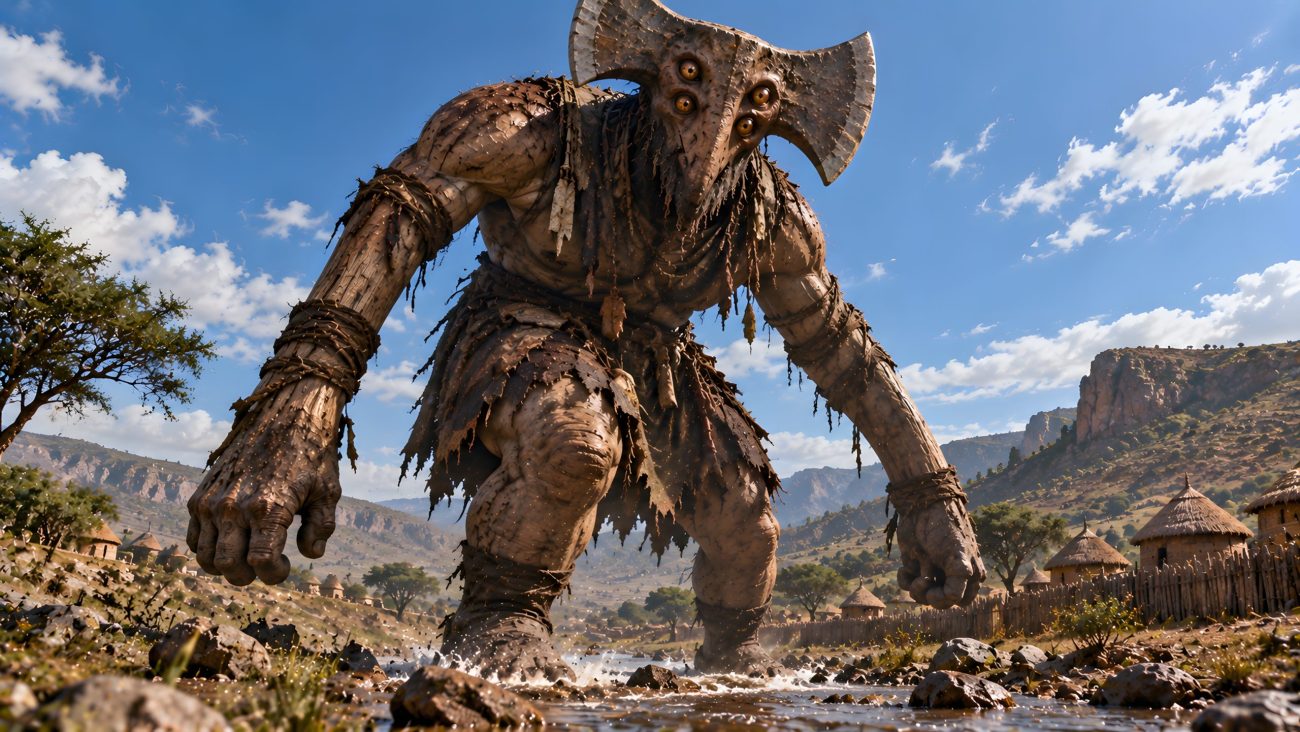
The Bulgu is a fearsome cannibalistic ogre in the folklore of the Guji Oromo people of Ethiopia. It has four eyes, a head shaped like an axe blade, arms resembling axe handles, and short, thick legs like pestles. Its frightening appearance reflects its monstrous nature and its appetite for human flesh.

In one tale, a brother and sister go to a river to fetch water, where they encounter a Bulgu. Before the children can react, the ogre seizes and devours the boy. After licking its lips, it threatens the surviving girl, warning that it will eat her and her entire family if she tells anyone what she has witnessed.

Terrified, the girl returns home in tears. When her father asks what happened to her brother, she claims that he wandered away into the brush. Unable to forget the boy’s death or the ogre’s threat, she refuses to eat for several days and grows dangerously weak. Eventually, she calls her father to her bedside and asks him to build nine tall, thick fences around their house. Once the nine palisades have been constructed from juniper, she finally reveals the truth. Enraged, her father builds a platform of branches above the hut to conceal her, takes his lance, and sets out to kill the Bulgu.

However, the Bulgu has overheard the girl’s confession. After the father leaves, the ogre approaches the house and mutters ten magical formulae, causing the nine gates and the door to burst open. It searches everywhere for the girl, who might have remained hidden if she had not broken wind in terror and revealed her position. When her parents return, they find that the Bulgu has devoured her, leaving behind only her middle finger.


Sources

“Bulgu.” A Book of Creatures, May 15, 2017. https://abookofcreatures.com/2017/05/15/bulgu/


Gumira

Tradition: Ossetian Mythology, Russian Mythology
Alternative Names: Gumirs, Humira
Category: Giant


The Myth

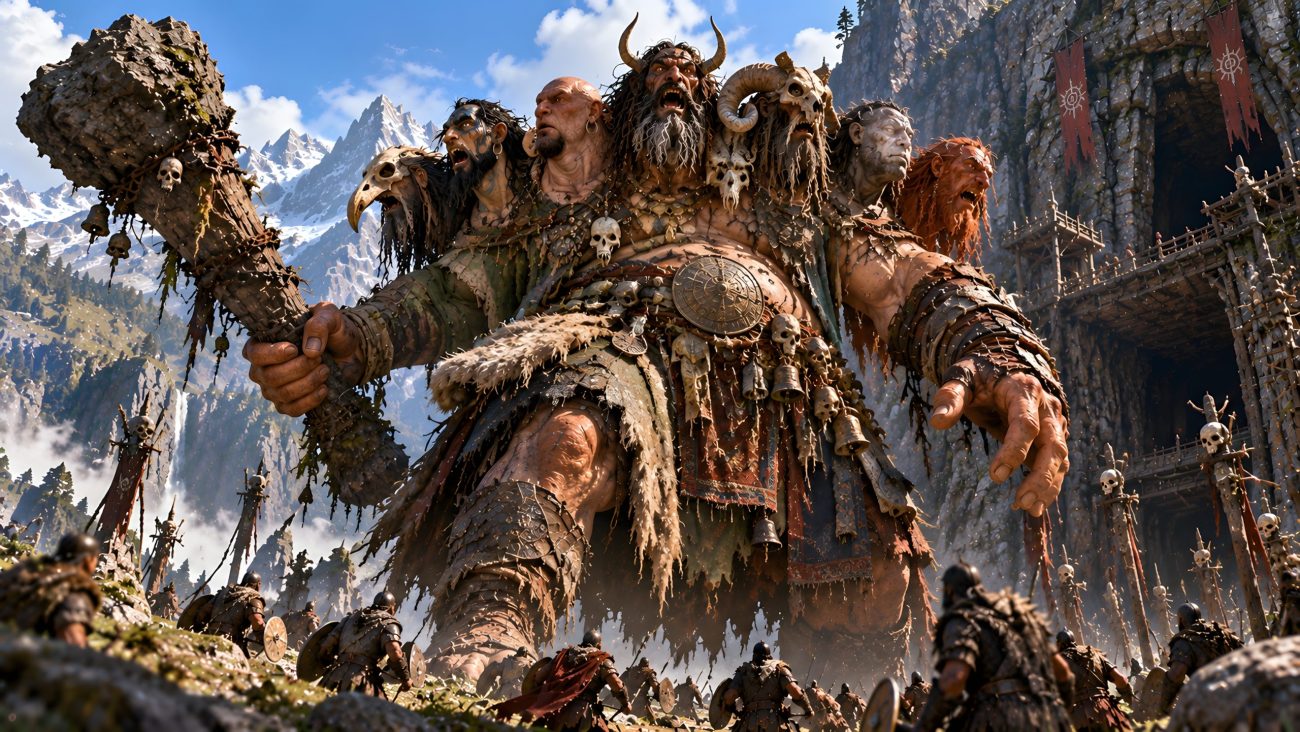
The Gumirs are monstrous seven-headed giants in Ossetian mythology, described as rough, powerful, and immensely strong beings. They dwell in caves and impregnable fortresses, inhabiting places that are difficult for ordinary people to reach. Their multiple heads and formidable strength distinguish them as fearsome figures in the supernatural world of Ossetian folklore.

In the Nart epic, the Gumirs appear as enemies of the Nart heroes, who are renowned for their courage and strength. The giants are described as constantly at odds with the Narts, placing them among the monstrous adversaries whom the heroes must confront.

The name Gumirs has been associated with the ancient Cimmerians. This proposed connection links the giants of Ossetian mythology with the name of an ancient people, although the precise origin of the mythological figures is not established by the tradition described here.


Sources

“Uaiugi.” New Bestiary (Bestiary.us). https://www.bestiary.us/uaiugi


Kokdzyamu

Tradition: Russian Mythology
Alternative Names: Kokdzyamu, Kadz yamu, Kalzamu, Kalama, Kalgama, Kalgomi, Kojamu, Kokgami
Category: Giant


The Myth

Kokdzyamu is an evil mountain spirit in the traditional beliefs of Indigenous peoples of the Russian Far East, including the Oroch, Orok, Udege, Nanai, and Ulch. According to local legends, it lives in caves and can appear as a frightening supernatural being. The spirit reflects the dangers associated with remote mountain landscapes and the fears that such places inspired.

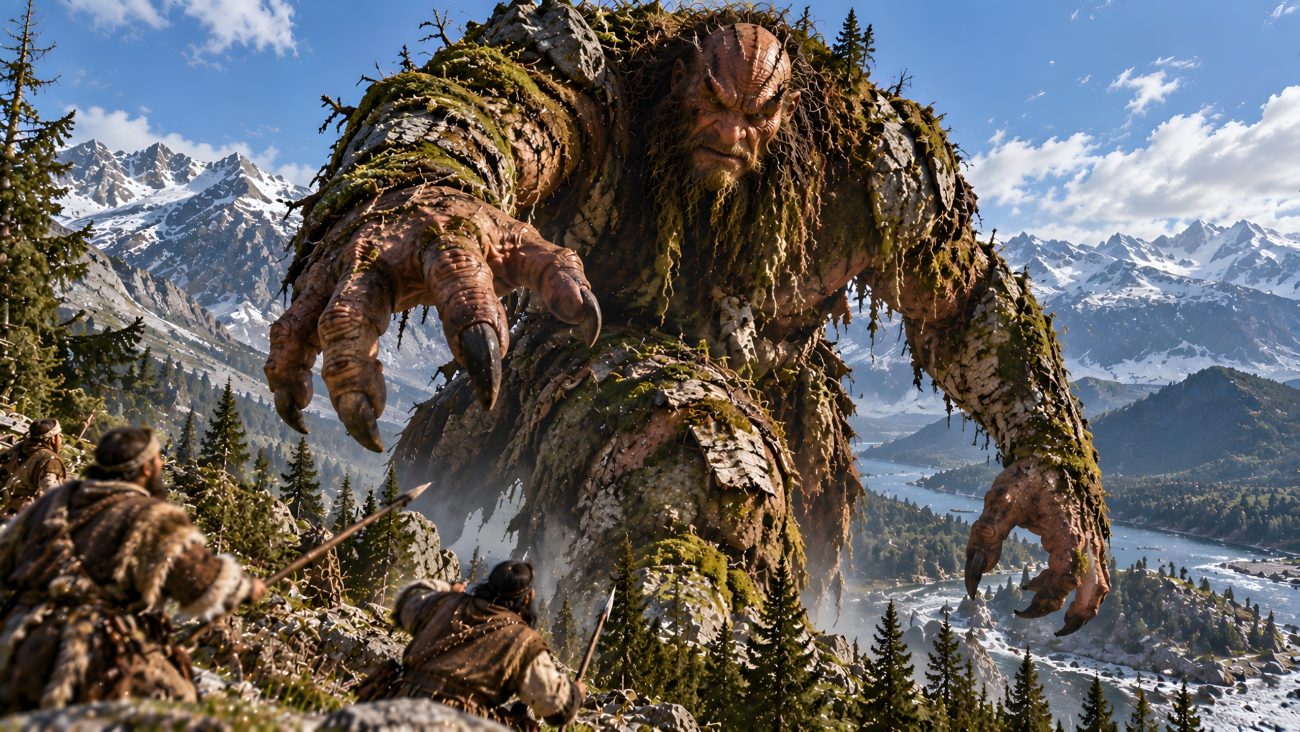
In a recorded account from the early twentieth century, a local informant described Kokdzyamu as a giant with a reddish-shaped head and three-fingered hands. The spirit could transform into an animal. It possessed an outer shell resembling a large rock covered with moss, which lay on the ground in the form of birch-bark cases. These cases could be mistaken for ordinary natural objects, making the spirit difficult to recognize.

The account warns that disturbing Kokdzyamu could be dangerous. A person might be attacked by a predator, or a tree or rock might fall, potentially breaking or dislocating a leg. The spirit’s ability to transform and conceal itself among the landscape made it a threat to people travelling through the mountains.

Kokdzyamu embodies the dangers and uncertainties of the natural world in the folklore of the Indigenous peoples of the Russian Far East. Stories about the spirit offered a supernatural explanation for frightening encounters and accidents in remote wilderness areas.


Sources

Kokdzyamu.” New Bestiary (Bestiary.us). https://www.bestiary.us/kokdzyamu


Mangus

Tradition: Mongolian Mythology
Alternative Names: Mangas, Mangasht, Mangashti, Mangas, Mangus, Manguz, Mangusai, Mangasdu
Category: Giant


The Myth

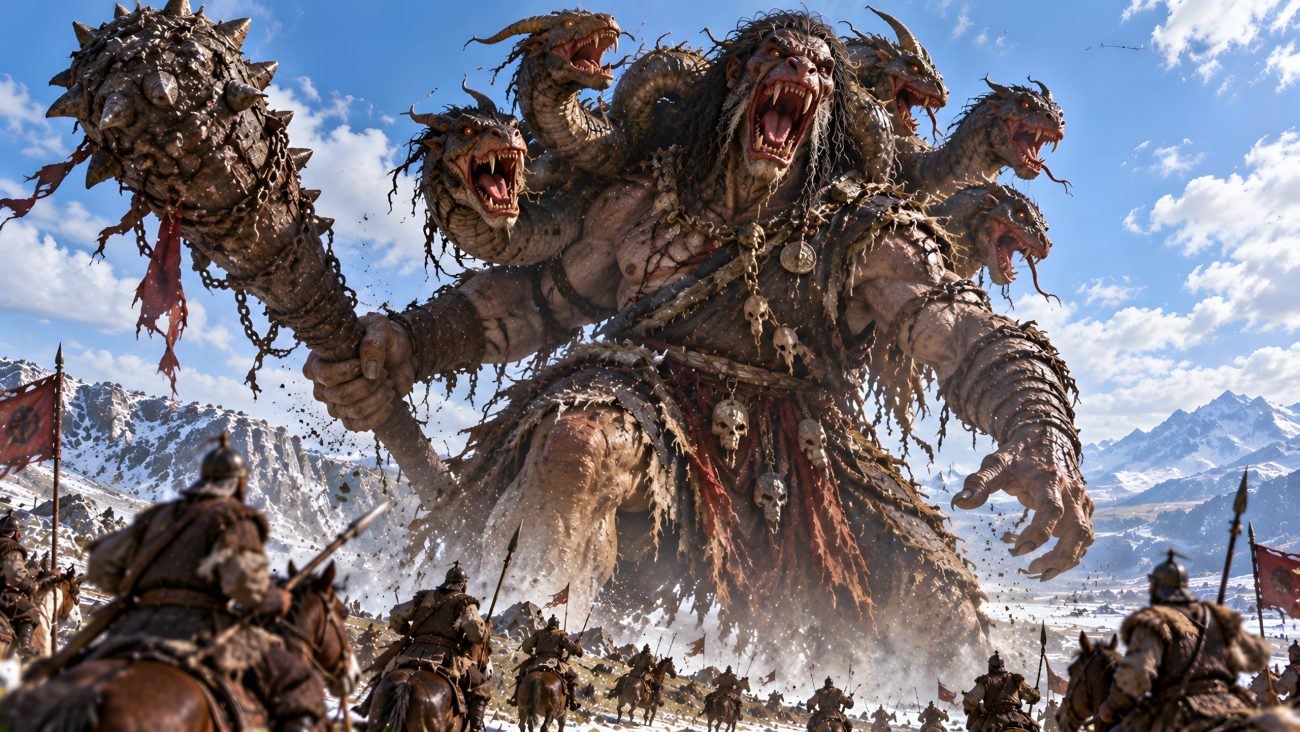
Mangus is a general name in the folklore of Mongolian peoples for various monsters, usually multi-headed giants with serpentine features. Unlike other demonic beings, such as shulmas and chotgor, mangus figures primarily appear as characters in epic and fairy-tale narratives. They are often depicted as enormous, powerful monsters with multiple heads, large mouths, and frightening appearances. Some possess snake-like bodies or other animal characteristics, while others resemble monstrous giants.

In Mongolian myths, mangus commonly serve as antagonists who threaten heroes and their communities. Their stories often involve battles against heroic figures, who must overcome the monsters through strength, cunning, or supernatural assistance. The mangus may guard remote places, dwell in underground lairs, or emerge from the wilderness to attack people. Their extraordinary physical power makes them formidable opponents, but they can also be defeated through the ingenuity of the heroes who confront them.

The appearance and characteristics of mangus vary across Mongolian traditions. Some versions portray them as multi-headed demons, while others emphasize their serpentine features or monstrous size. Related names occur among several peoples of Inner Asia, including the Buryats, Kalmyks, Altaians, Tuvans, and Yakuts. These names do not always refer to precisely the same kind of being, and their meanings and associations differ between traditions.

In some Mongolian tales, mangus figures are associated with the emergence of later monsters or supernatural beings. Their stories have also been interpreted as reflecting encounters between different communities, with the monsters sometimes representing threatening outsiders. However, the origins and historical significance of the mangus tradition remain uncertain. Across its many variations, the mangus remains a powerful monstrous adversary in the epic and fairy-tale worlds of Mongolian peoples.


Sources

“Mangus.” New Bestiary (Bestiary.us). https://www.bestiary.us/mangus


Geryon

Tradition: Greek Mythology
Alternative Names: Gēryṓn, Gēryónēs, Gēryoneús
Category: Giant


The Myth

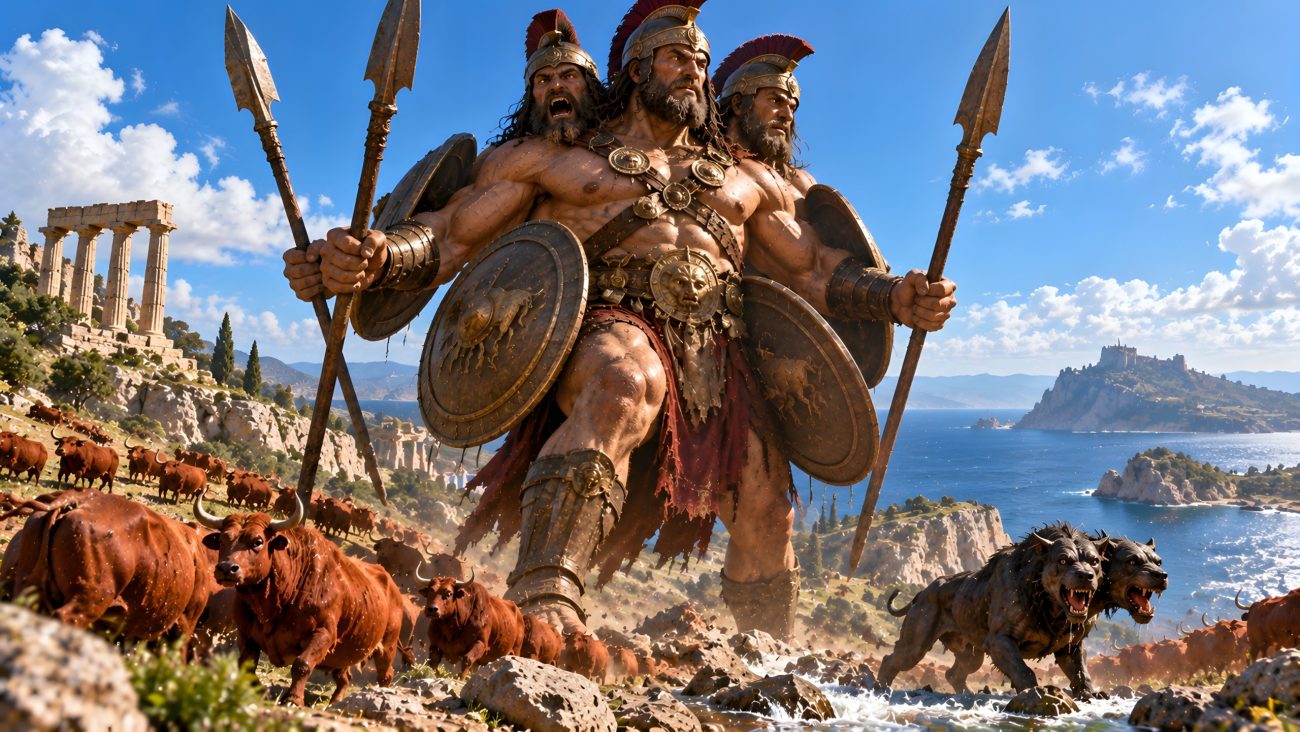
Geryon was a fearsome giant who dwelt on the island of Erytheia, in the far west of the Mediterranean, near the mythical land of the Hesperides. He was the son of Chrysaor and Callirrhoe, the grandson of Medusa, and the nephew of Pegasus. His name is associated with shouting, roaring, or crying out. Geryon was commonly depicted as a monstrous but largely humanoid warrior, although descriptions of his appearance differed between ancient authors. According to Hesiod, he possessed a single body with three heads, while other traditions described him as having three bodies, either with three heads or a single head. The poet Stesichorus described him as winged, with six hands and six feet, and some artistic representations portrayed him with three bodies joined to a single pair of legs.

Geryon was famed for his magnificent herd of red cattle, which he kept on Erytheia. The herd was guarded by Orthrus, a fearsome two-headed dog and brother of Cerberus, and by the herdsman Eurytion. Geryon’s cattle became the target of the Greek hero Heracles, who was ordered by King Eurystheus to bring them back as his tenth labour. To reach the distant island, Heracles crossed the scorching Libyan desert and eventually received a golden cup from the sun god Helios, which he used to sail across the sea.

Upon arriving at Erytheia, Heracles killed Orthrus with a mighty blow from his club. When Eurytion came to the dog’s aid, the hero killed him as well. Geryon soon learned of the attack and rushed to defend his cattle, carrying three shields, three spears, and wearing three helmets. He confronted Heracles near the River Anthemus, but the hero shot him with an arrow dipped in the poisonous blood of the Lernaean Hydra. The arrow pierced Geryon’s forehead, and the giant collapsed, his three-headed or three-bodied form falling like a flower whose petals scatter. Heracles then took possession of the cattle and began the long journey back to Eurystheus.

The journey home brought further dangers. In later Roman versions of the story, the cattle were partly stolen by Cacus, a fire-breathing monster who hid them in a cave on the Aventine Hill. Heracles eventually recovered them and killed Cacus. The goddess Hera also sent a gadfly to scatter the herd, forcing Heracles to spend a long time gathering the animals before he could finally deliver them to Eurystheus. Geryon’s defeat became one of the celebrated feats of Heracles, while the giant himself remained an unusual figure in Greek mythology because of the many different descriptions of his threefold body.


Sources

“Geryon.” Wikipedia: The Free Encyclopedia. Wikimedia Foundation. Accessed October 16, 2026. https://en.wikipedia.org/wiki/Geryon


Grýla

Tradition: Icelandic Mythology
Alternative Names: Gryla, Grýlu
Category: Giant


The Myth

Grýla is a monstrous being in Icelandic folklore who dwells in the wilderness and is traditionally portrayed as a hideous, greedy, troll-like crone. Her name appears in medieval Icelandic sources, including the Prose Edda, where she is listed among the names used for troll-women. A manuscript from the early fourteenth century also contains a list of expressions associated with Grýla that refer to foxes, suggesting a possible connection with the Arctic fox. The earliest clear references identifying Grýla as female and associating her with Christmas, however, date only from the seventeenth century.

In seventeenth-century poems, Grýla wanders between farms and human settlements, demanding charity from the people she encounters. Her requests often involve naughty children, reflecting her frightening reputation as a monster associated with the threat of child-eating. One poem even describes her wandering between farms during summer rather than at Christmas and portrays her as a hermaphrodite, illustrating how varied her early representations could be.

Grýla’s origins and original nature remain uncertain. Related figures appear in the folklore of Iceland and the Faroe Islands, and some have been connected with traditions involving disguises and masked performers. These parallels have led to the suggestion that Grýla may once have been associated with similar seasonal customs in Iceland. Early traditions do not consistently identify her as female, and she may originally have been imagined as a male monster rather than an ogress.

In modern Icelandic Christmas folklore, Grýla is best known as the mother of the Yule Lads, or jólasveinar. Her monstrous appearance and appetite for children remain part of her traditional image, although these frightening characteristics are often softened in depictions intended for younger audiences.


Sources

“Grýla.” Wikipedia: The Free Encyclopedia. Wikimedia Foundation. Accessed October 16, 2026. https://en.wikipedia.org/wiki/Gr%C3%BDla


Uadmers

Tradition: Ossetian Mythology, Russian Mythology
Alternative Names: Uadmerit, Uadmers
Category: Giant


The Myth

The Uadmers are giants in Ossetian folklore, described as some of the first intelligent beings created by God. However, they proved too strong and so enormous that they could not fit into the gorges of the Earth, which could barely support them. Their immense size and strength made them unsuitable for the world in which they had been created.

According to a popular version of the tradition, the Uadmers are the ancestors of the giants known as the Gumirs, who are associated with the Cimmerian people. Their place among the earliest beings in creation connects them with traditions about primordial giants who existed before later generations of humanity.


Sources

“Uadmery.” New Bestiary (Bestiary.us). https://www.bestiary.us/uadmery


Dzunuḵ̓wa

Tradition: Kwakwakaʼwakw, Nuu-chah-nulth Mythology, Canadian Mythology
Alternative Names: Tsonoqua, Tsonokwa, Basket Ogress
Category: Giant


The Myth

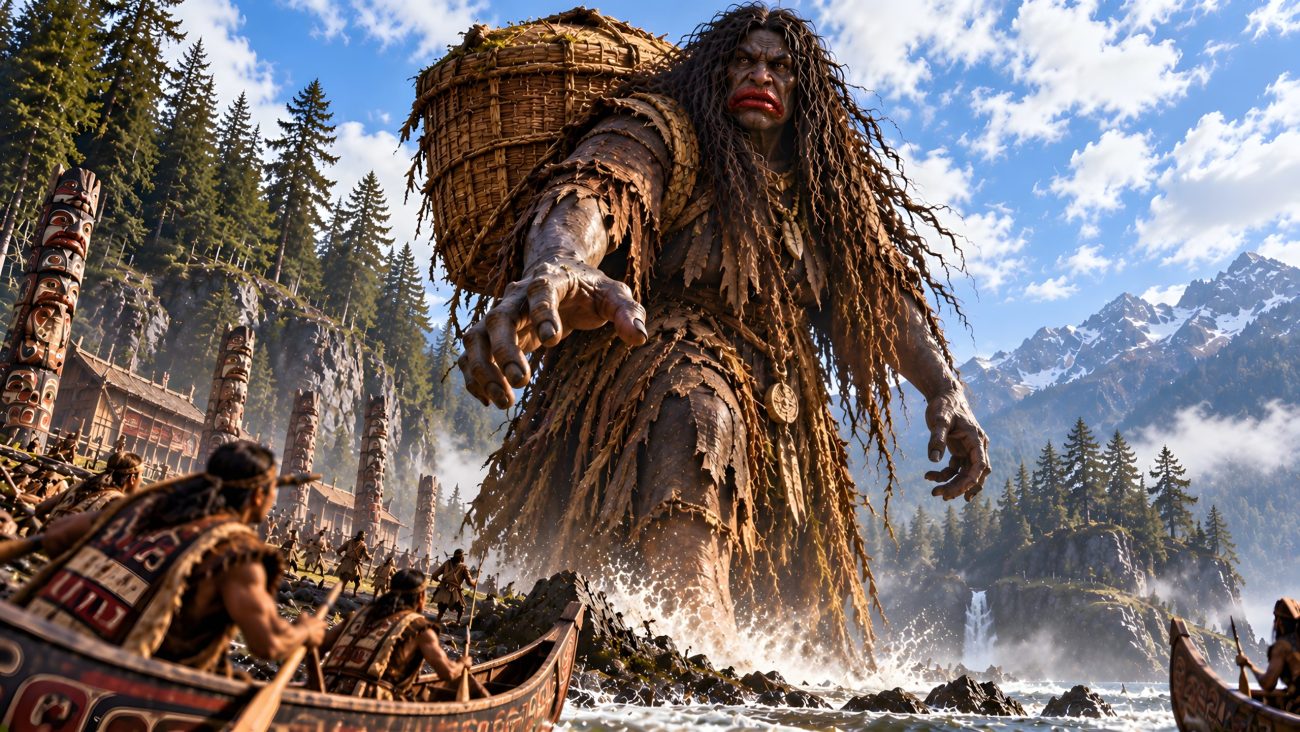
Dzunuḵ̓wa is a fearsome female monster in the mythologies of the Kwakwakaʼwakw and Nuu-chah-nulth peoples of the Pacific Northwest. She is traditionally depicted as a naked, black-skinned old monster with bedraggled hair and long, pendulous breasts. In masks and totem pole carvings, she is recognizable by her bright red, pursed lips, associated with her distinctive cry of “Hu!” According to tradition, the sound of wind blowing through cedar trees is sometimes said to be Dzunuḵ̓wa calling from the forest.

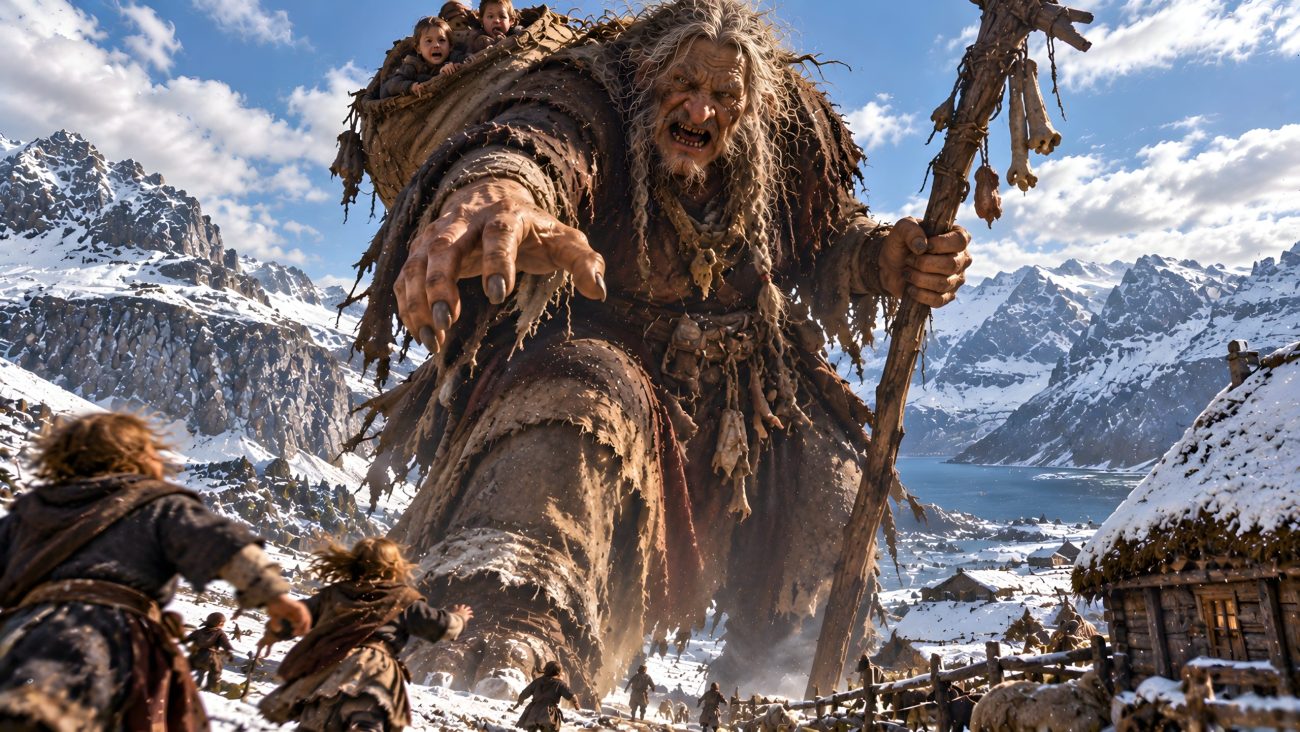
She is especially feared by children because she steals them and carries them away in a large basket to eat. Despite her terrifying reputation, Dzunuḵ̓wa is also associated with wealth and prosperity. She possesses great riches and may bestow them upon those who manage to gain control of her child. She is also regarded as an ancestor of the Namgis clan through her son, Tsilwalagame, giving her an important place in clan tradition.

Dzunuḵ̓wa possesses unusual powers. In some stories, she can return from the dead and regenerate wounds, abilities that allow her to revive her own children. However, she is also described as having poor eyesight and being drowsy and dim-witted, weaknesses that make it possible for people to evade or deceive her.

In one legend, a group of people tricks Dzunuḵ̓wa into falling into a pit of fire. They keep the fire burning for many days until her body is completely destroyed, preventing her from reviving herself. According to the story, the ashes rising from the fire transform into mosquitoes. Her legends therefore combine the frightening image of a child-eating ogress with themes of supernatural resilience, danger, and the possession of great wealth.


Sources

“Dzunukwa.” Wikipedia: The Free Encyclopedia. Wikimedia Foundation. Accessed October 16, 2026. https://en.wikipedia.org/wiki/Dzunukwa