Nai tiki

Tradition / Region: Fijian mythology
Alternate Names: —
Category: Forest dweller


The Myth

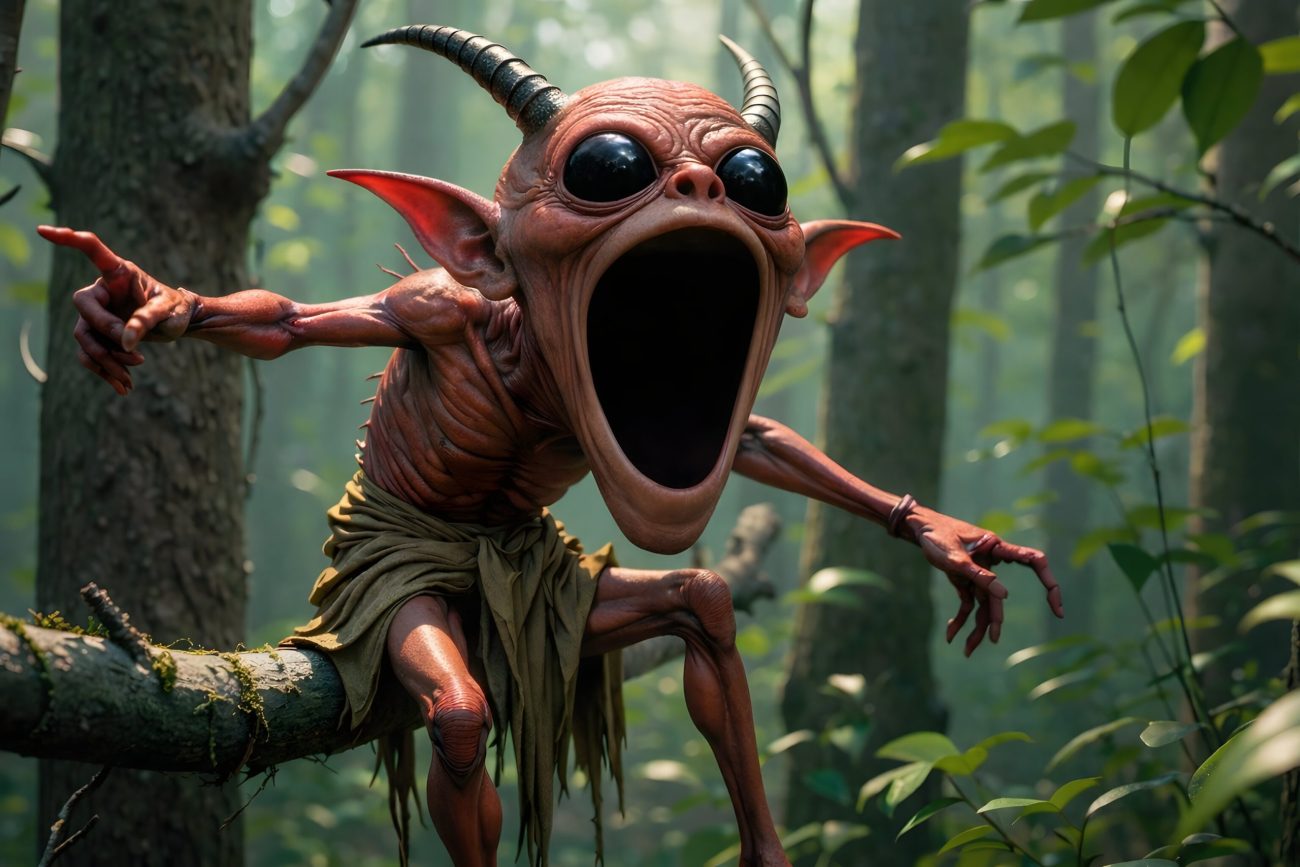
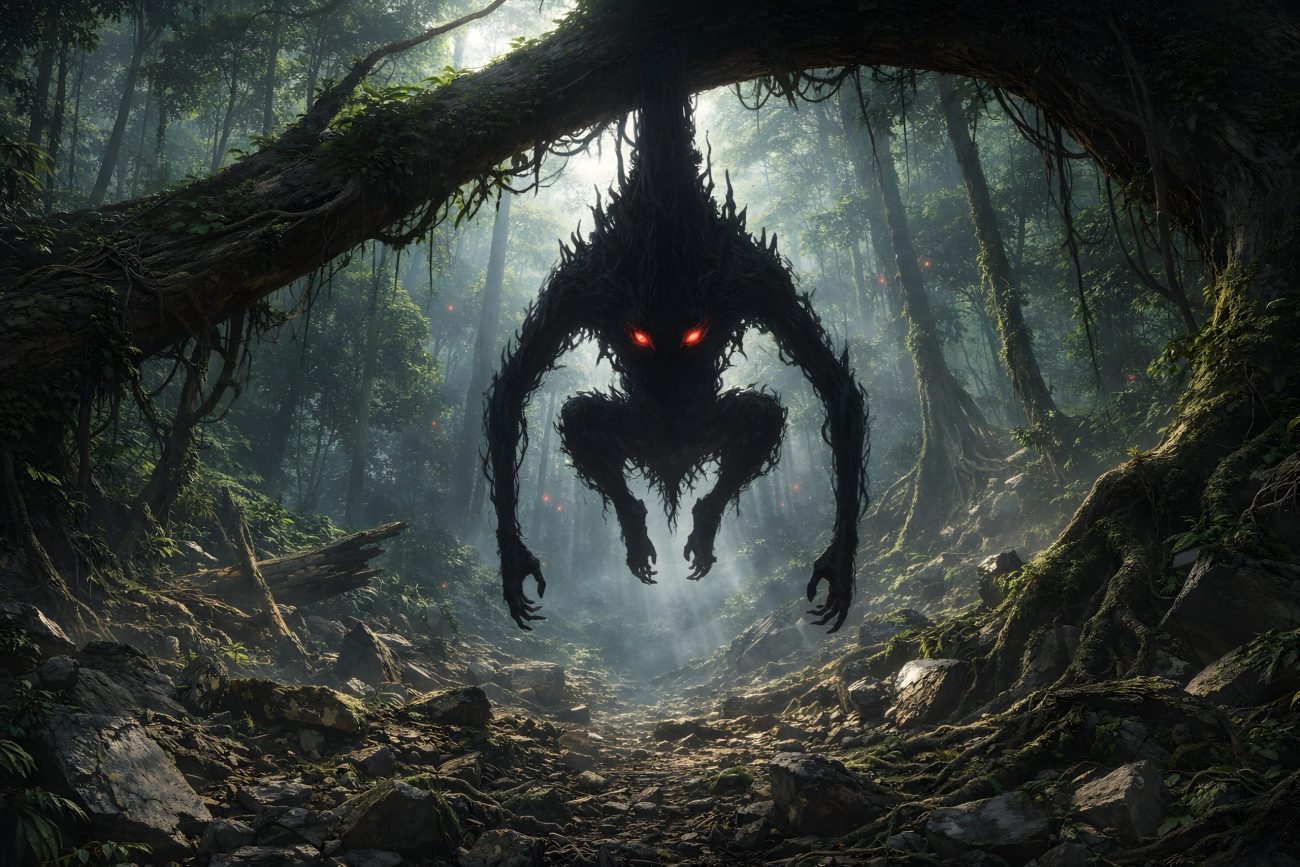
In the deep forests and high mountains of Fiji there is said to dwell a being called Nai Tiki, a creature neither fully man nor fully beast. Those who claim to have glimpsed him describe a powerful figure moving between the trees with unnatural speed, his form shifting between human outline and animal shadow.

Nai Tiki lives far from villages, in the wild places where thick roots twist across the earth and mist clings to the ridges. Hunters speak of sudden silence in the forest before his passing. Birds cease their calls. Leaves shudder though no wind blows. Then a shape darts through the undergrowth—faster than any boar, stronger than any warrior.

It is said that Nai Tiki possesses immense strength. He can uproot trees, split stones, and cross valleys in moments. No one can outrun him. Yet he does not appear without purpose. Some say he watches over the balance of the land, punishing those who disrespect the forest. Others whisper that he is unpredictable, dangerous to any who wander too far alone.

Nai Tiki is also believed to command the sky itself. When drought grips the land, sudden rain may fall after his presence is sensed in the hills. When storms threaten, the clouds may part without warning. Elders tell of times when the sun blazed after days of darkness, and they would murmur that Nai Tiki had chosen to calm the heavens.

Few have survived close encounters. Those who return speak in hushed voices of glowing eyes in the shadowed canopy and the feeling of being measured by something ancient and wild. Whether guardian or menace, Nai Tiki remains a powerful presence in the stories of Fiji—a reminder that the forests and mountains are not empty, and that forces older than mankind still move within them.


Sources

mythicalencyclopedia.com contributors. (n.d.). Fiji mythical creatures. In mythicalencyclopedia.com, from https://mythicalencyclopedia.com/fiji-mythical-creatures/
Woutermannetje

Tradition / Region: Dutch Mythology
Alternate Names: Woatermankes, Woudhermannekens, Wouterkens
Category: Gnome, Forest dweller


The Myth

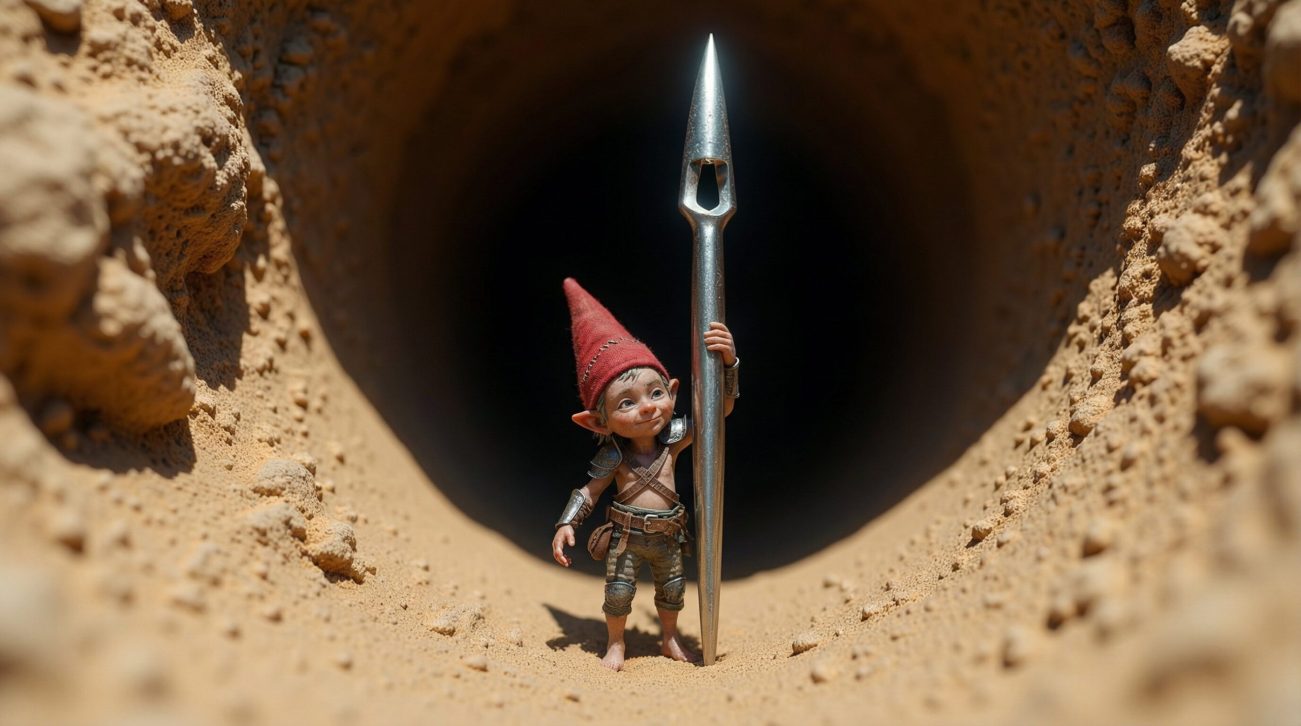
On the island of Ameland, people once spoke—half in fear, half in warning—of the Woutermannetjes, tiny man-like beings who lived among the dunes and in the nearby woods. They were said to come out at night, when paths were quiet and travelers were alone.

Those who wandered after dark risked an unpleasant encounter. The Woutermannetjes would creep close and prick walkers in the legs with pins, or, as later told to children, bite their legs without being seen. The pain was sudden and sharp, leaving the victim frightened and confused, never quite sure what had struck them.

Children, especially, were warned about them. Parents would say: “Be careful, or the woatermankes will take you away.” In this way, the little beings became part of everyday discipline and night-time fear, lurking just beyond the dunes or trees.

What the Woutermannetjes truly were was never entirely clear. Some believed their name came from water, making them spirits of wet ground and dunes. Others thought it came from woud—the forest—making them woodland beings. Older traditions blur the distinction even further. In earlier centuries, similar creatures were described as house spirits, helpers and tricksters who lived close to humans, while at the same time being linked to fauns or wild spirits of nature.

Thus the Woutermannetjes stood on a boundary: between house and wilderness, safety and fear, water and wood. Small, unseen, and sharp-toothed or sharp-pinned, they remained figures used to explain night terrors, restless dunes, and the uneasy feeling of being watched when walking alone after dark.


Sources

Abe de Verteller contributors. (n.d.). Van aardmannetje tot zwarte juffer: Een lijst van Nederlandse en Vlaamse elfen en geesten. In Abe de Verteller, from https://abedeverteller.nl/van-aardmannetje-tot-zwarte-juffer-een-lijst-van-nederlandse-en-vlaamse-elfen-en-geesten/


Rubberado

Tradition / Region: American Mythology
Alternate Names: —
Category: Forest dweller


The Myth

The Rubberado is a strange and comical creature known for its unusual body and peculiar way of moving. It cannot leap, fly, jump, climb, swim, run, walk, creep, or crawl. Instead, the Rubberado moves in only one way: it bounces.

From the moment it begins moving, the Rubberado bounces endlessly from place to place. Each time it lands, it laughs, and then springs up again, continuing this motion without pause. Its movement is uncontrollable and repetitive, as though its body were made entirely of rubber.

The Rubberado is said to have a tasty smell, though it is not edible. Anyone foolish enough to try to eat it is warned of the consequences. If a person does so, they will begin to bounce and laugh uncontrollably, just like the Rubberado itself. This condition does not pass quickly—the victim will continue to bounce and laugh for days and days, unable to stop.

Because of this, the Rubberado is regarded less as a dangerous creature and more as a source of endless trouble and ridicule. Its presence brings chaos not through violence, but through uncontrollable motion and laughter, turning anyone who interferes with it into a living reflection of its own absurd nature.

The Rubberado remains a reminder that not all monsters threaten with teeth or claws—some punish curiosity with laughter that never ends.


Gallery


Sources

Schwartz, A., & Rounds, G. (1978). Kickle Snifters and Other Fearsome Critters.


Interpretive Lenses

Religious Readings
  • Christian Ascetic Deep Dive
Philosophical Readings
  • Nietzschean Deep Dive
Psychological Readings
  • Jungian Deep Dive
Esoteric Deep Dive
  • Hermetic Deep Dive
Political / Social Readings
  • Marxist Deep Dive
Other
  • How to Invite The Rubberado

Tote-Road Shagamaw

Tradition / Region: American Mythology
Alternate Names: —
Category: Bear


The Myth

The Tote-Road Shagamaw is a strange forest creature spoken of by loggers and woodsmen from the Rangeley Lakes to the Allagash, and across into New Brunswick. Its existence is said to explain a long-standing mystery that has caused confusion, arguments, and even fistfights among experienced men of the woods.

The trouble begins with tracks. One day, men swear they have found bear tracks near camp. Soon after, these reports are denied and replaced by claims that the tracks belong to a moose instead. Such disagreements are taken seriously, since accusing a woodsman of confusing bear and moose tracks is considered a grave insult. Only a few old timber cruisers and rivermen are said to know the true explanation.

One such man was Gus Demo of Oldtown, Maine, who had hunted, trapped, and logged in the woods for forty years. While traveling through the forest, he came upon tracks that were clearly those of a moose. After following them for about eighty rods, the tracks abruptly became unmistakable bear tracks. After another eighty rods, they changed back again into moose tracks. Gus soon noticed that this change occurred exactly every quarter of a mile, and that the tracks always followed a tote road or blazed survey line through the forest.

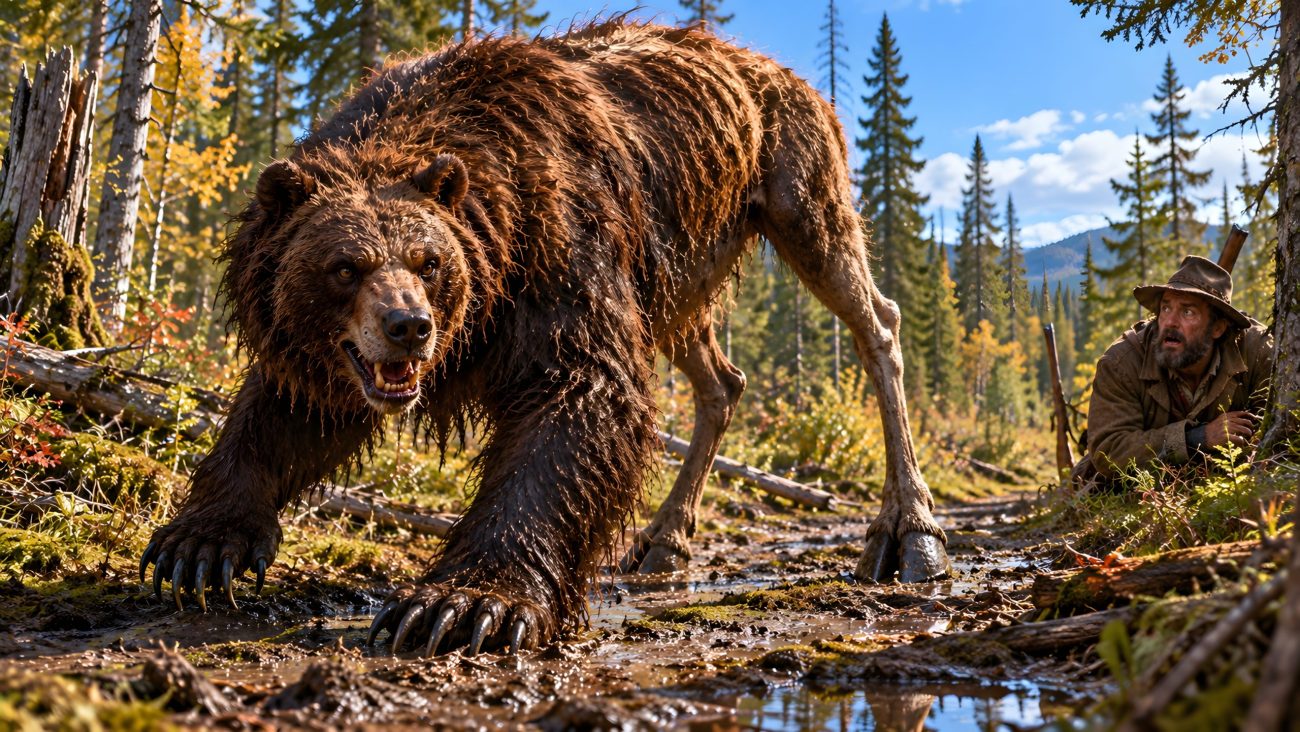
Eventually, Gus came close enough to see the creature itself. He observed that it had front feet like a bear’s and hind feet like those of a moose. It moved with great care, pacing steadily and taking exactly one yard per step. After walking for a time, the creature suddenly stopped, looked all around, and then turned sharply as if pivoting on a point. It then inverted itself, walking on its front feet alone, and continued on its measured path.

By examining the witness trees, Gus realized that the place where the Shagamaw inverted itself was a section corner. From this, he reasoned that the creature must once have been a highly imitative animal. By watching surveyors, timber cruisers, and trappers patiently follow straight lines through the forest, it had taken on the same habit.

According to this explanation, the Shagamaw can count only as high as 440, which equals a quarter of a mile measured in yards. When it reaches that limit, it must turn itself over to continue counting again from the beginning. Thus, the creature endlessly walks the tote roads, confusing men by leaving alternating bear and moose tracks, and quietly measuring the forest one quarter-mile at a time.

The Tote-Road Shagamaw remains a symbol of the woods’ ability to deceive even experienced eyes, and a reminder that not every mystery in the forest can be solved by tracks alone.


Sources

Cox, W. T. (1910). Fearsome Creatures of the Lumberwoods: With a Few Desert and Mountain Beasts.


Loviduch

Tradition / Region: Polish Mythology
Alternate Names: —
Category: Forest dweller, Demon


The Myth

Loviduch is a forest demon found in the folklore of the Lasowiaks, a subethnic group of the Lesser Poles living on the Tarnobrzeg Plain in southeastern Poland. According to beliefs recorded in the 19th century, the loviduch dwelled in the Sandomierz Forest, where it lay in wait for restless souls wandering far from their proper place.

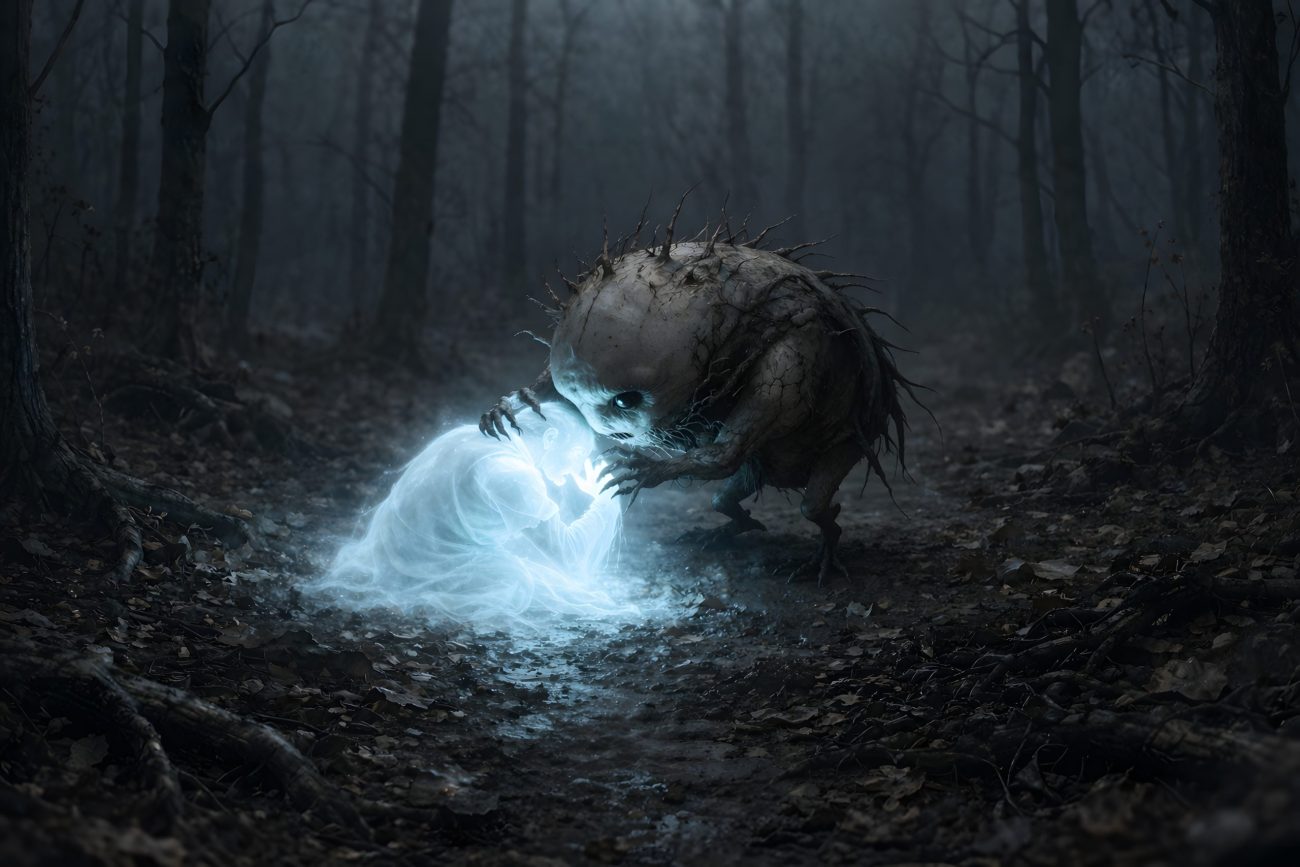
In appearance, the loviduch was described as strange and unsettling. It resembled a tuberous or onion-shaped body, set upon spiny, five-toed feet. Its limbs were short and thin, ending in long fingers armed with sharp claws. Though small and misshapen, it was considered fearsome because of its purpose rather than its strength.

The loviduch did not prey upon the living. Instead, it hunted ghosts and wandering spirits, capturing those restless souls that lingered in wastelands far from human settlements. Its dwelling was said to be the desolate, empty places, where such spirits were believed to roam. Once it seized a soul, the loviduch tormented it relentlessly, mocking it and making it cry, though it never destroyed it outright.

Despite its cruel treatment of spirits, the loviduch posed no danger to living people. Humans were not its concern, and it did not attack or harm them. Its role was limited entirely to the supernatural realm, acting as a tormentor of the dead who failed to find rest.

Over time, the name loviduch came to be applied jokingly or disparagingly to certain medical workers, though this usage bore no resemblance to the original being. Unlike these human namesakes, the true loviduch of folklore remained a creature concerned only with ghosts and spirits, dangerous solely to the dead and invisible to the living.


Sources

Bestiary.us contributors. (n.d.). lovidukh. In Bestiary.us, from https://www.bestiary.us/lovidukh


Bolts

Tradition / Region: Polish Mythology
Alternate Names: Errors
Category: Forest dweller, Demon


The Myth

Bolts are malicious forest or field demons known in the folk tales of Eastern Lesser Poland. They are believed to lure people away from proper paths, drawing travelers into wilderness, fields, or unfamiliar terrain where they lose their sense of direction.

These beings are closely associated with confusion and delusion, and are sometimes described as manifestations of madness or devilish influence. In local belief, bolts often appeared to people returning at night—especially those walking home from inns or taverns—leading them astray and preventing them from finding their way.

In the region of the Rzeszów Foothills, bolts were closely related to another figure known as the error, a demon said to sit at crossroads, sometimes beneath stones. Like the bolt, this being led nighttime travelers through open fields, causing spatial disorientation and helpless wandering. Because of these beliefs, people erected roadside shrines at such places and held special processions there, hoping to protect themselves from being misled.

Bolts were thought to nest near roads and highways, choosing places where travelers were most vulnerable. By means unknown, they caused sudden loss of orientation, making familiar routes feel unfamiliar. They seemed to take particular pleasure in confusing those who had spent the evening drinking, and many tales describe people arriving home at dawn ragged, bruised, and without their belongings, claiming that a bolt had led them astray.

In popular explanation, such misfortune was attributed not to human error, but to the direct action of these demons. To say that “a bolt went wild” became a way of explaining unexplained wandering, exhaustion, and loss.

Though later generations joked that the demon itself may have vanished, folklore preserves the belief that the experience of confusion in the night—of losing one’s way without knowing how—has never entirely disappeared.


Sources

Bestiary.us contributors. (n.d.). Bolts. In Bestiary.us, from https://www.bestiary.us/belty/pl


Petrykivka Mara

Tradition / Region: Ukrainian Mythology
Alternate Names: Petrikov Mara
Category: Forest dweller


The Myth

The Petrykivka Mara is a strange and grotesque figure from the folklore of Eastern Polesia. Unlike many beings called mara in Slavic traditions—where the name usually refers to a dangerous or demonic entity—this mara is considered harmless, though deeply unsettling in appearance and presence.

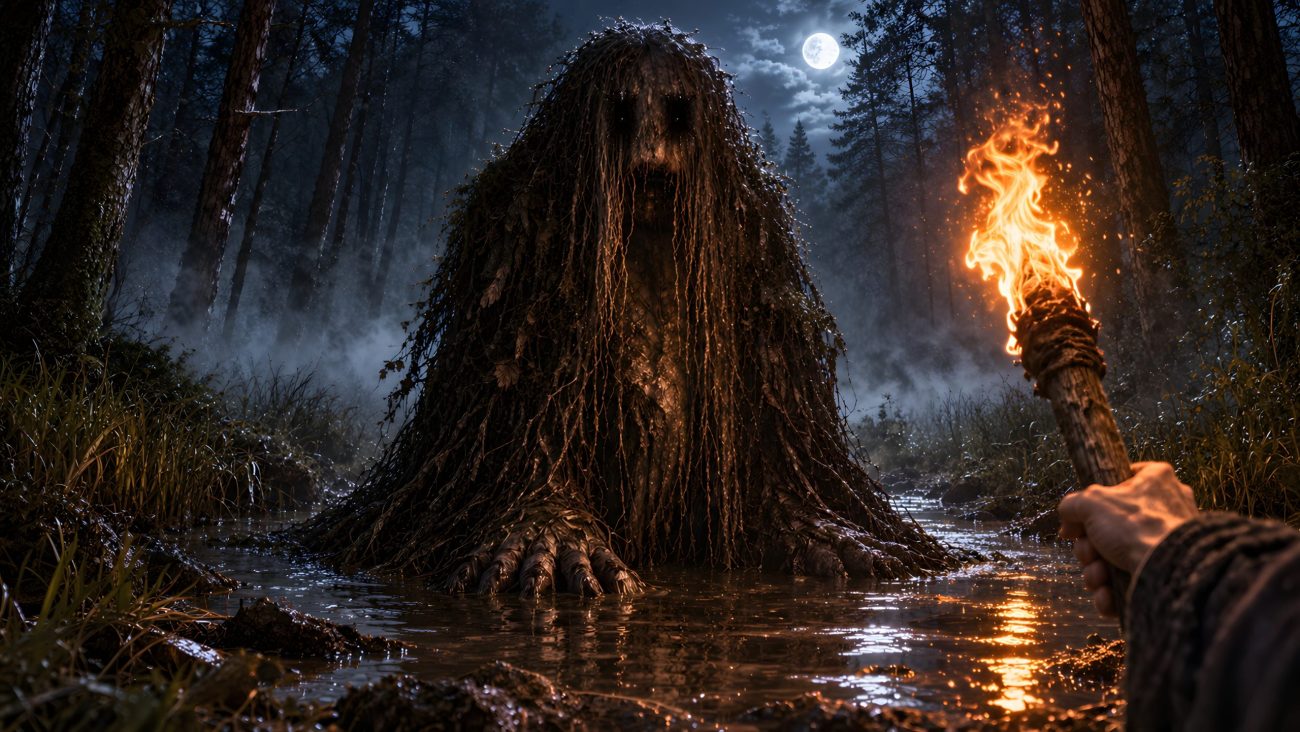
She is described as resembling a thick, upright log or resinous stump, standing vertically on very short legs shaped like badger paws. Her body is massive and heavy-looking, while her legs are disproportionately small. She is always described as black in color. Though frightening to look at, she does not attack or harm people. At most, she startles children or causes confusion and fear, sometimes even becoming a hazard simply by standing in the way.

When the mara moves, she emits metallic sounds, compared to distant blows on a cast-iron cauldron. These noises announce her presence before she is fully seen. Despite her intimidating size, she is said to be terrified of children, reacting to them with fear rather than aggression.

In later times, the mara came to be represented as a straw scare figure, dressed in rags. In this form, she appears suddenly, stands motionless, or slowly follows people who are walking. She never commits any harmful act, but her presence is described as oppressive, filling those who encounter her with a heavy sadness, as if their heart were being clawed at and their soul weighed down.

One well-known story comes from the town of Petrikov, where during the summer months, at dawn each day, a mara appeared at the entrance to the town. She took the form of a log twice the height of a man, standing on short badger-like legs. She would remain motionless, moaning with a human voice, and vanish again at dawn. How the people eventually rid themselves of her is unknown.

The memory of this being lived on not only in stories but also in speech. A saying arose that later became a proverb. When someone is annoying or persistently clinging, people say:
“I’m tired of you like the Petrikov mara. Why are you clinging to me like the Petrikov mara? Get off me, Petrikov mara.”

In this way, the Petrykivka Mara remains in folklore as a figure of silent oppression and strange persistence, frightening not through violence, but through her unsettling presence alone.


Sources

Bestiary.us contributors. (n.d.). Mara Petrikovskaya. In Bestiary.us, from https://www.bestiary.us/mara-petrikovskaya


Urhins

Tradition / Region: English Mythology
Alternate Names: Hurhins, Urchins
Category: Forest dweller


The Myth

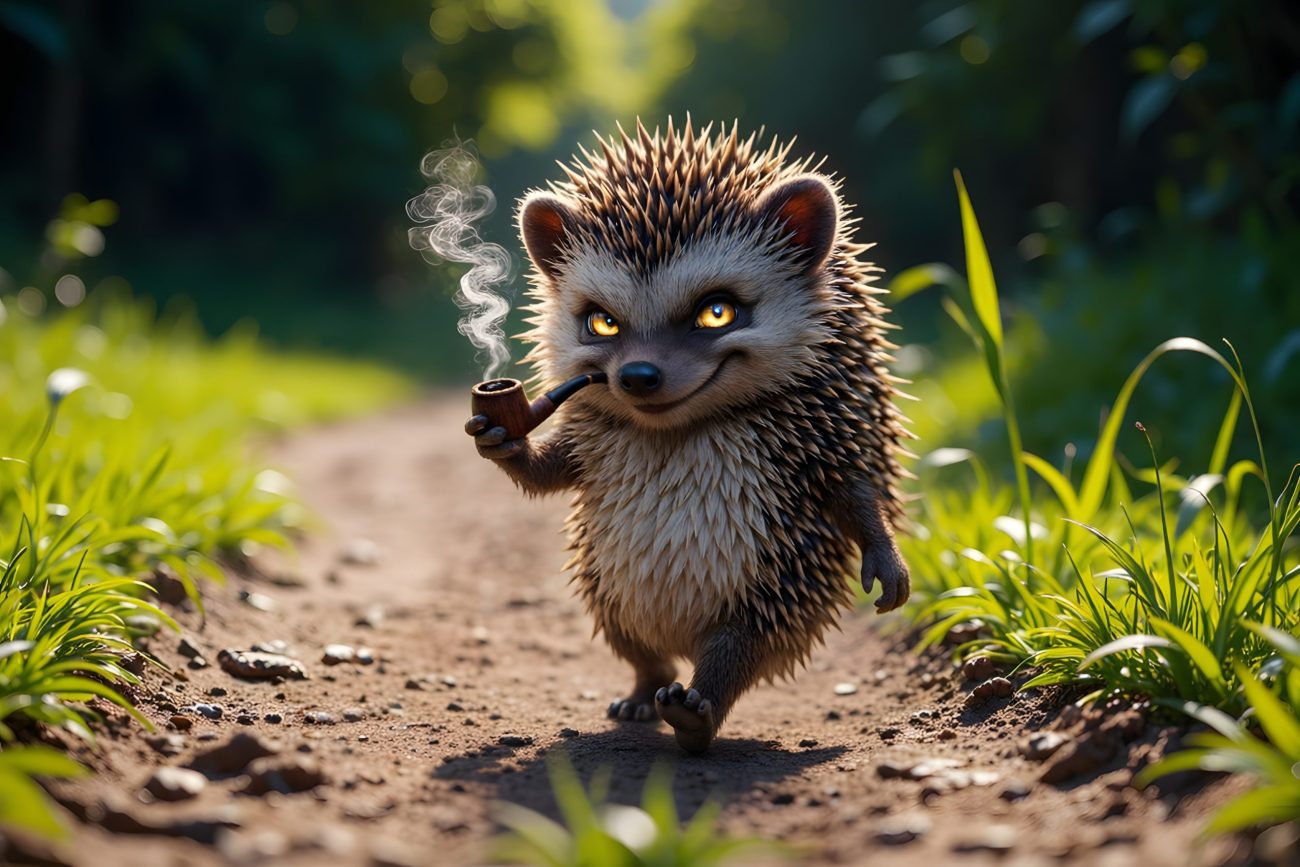
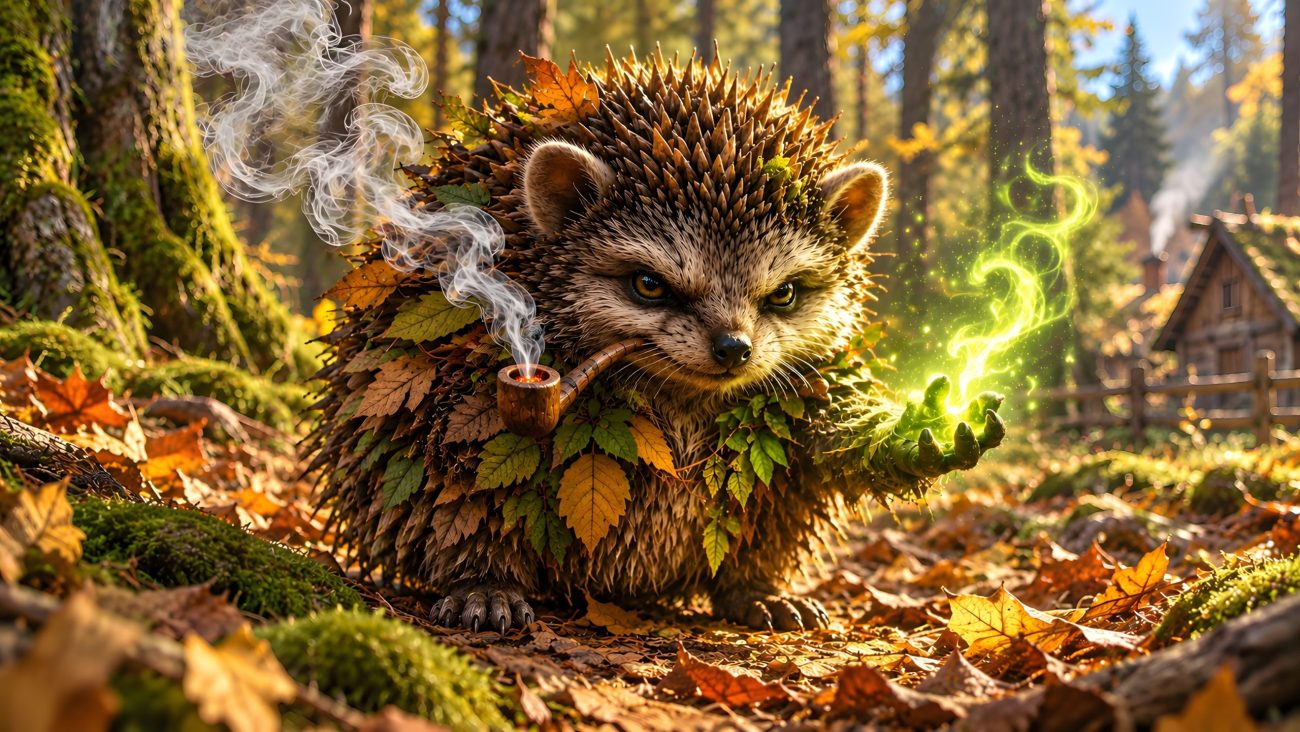
Urhins are small bogies or pixies in British folklore that take the form of hedgehogs. The name urhin or hurhin comes from a dialect word meaning “hedgehog,” and reflects both their appearance and their low, ground-dwelling nature.

These beings are imagined as small, prickly spirits, moving quietly through fields, gardens, and the edges of settlements. Though tiny, they are mischievous and capable of causing discomfort or fear, especially when encountered unexpectedly. Their hedgehog form allows them to remain unnoticed until they choose to reveal themselves.

Urhins are associated with trickery and torment, particularly toward humans who stray into places where such spirits dwell. They are not grand or powerful beings, but persistent and irritating, more likely to harass than to harm outright. Their presence is felt through unease, sudden disturbances, or the sense of being watched from low to the ground.

In English folklore and storytelling, urhins are grouped alongside other small supernatural beings such as fairies and sprites. They are part of the hidden population of the land, creatures that exist just beyond ordinary perception and whose behavior reflects the unpredictable nature of the unseen world.

Over time, the word “urchin” came to be used for mischievous children, echoing the playful yet troublesome qualities once attributed to these hedgehog-like spirits. Though their supernatural meaning has faded in everyday language, the image of the urhin remains rooted in folklore as a small, prickly trickster lurking close to the earth.


Sources

Bestiary.us contributors. (n.d.). Urhiny. In Bestiary.us, from https://www.bestiary.us/Urhiny


Lugovichok

Tradition / Region: Russian Mythology
Alternate Names: Meadow-goose (regional beliefs)
Category: Forest Dweller, Gnome


The Myth

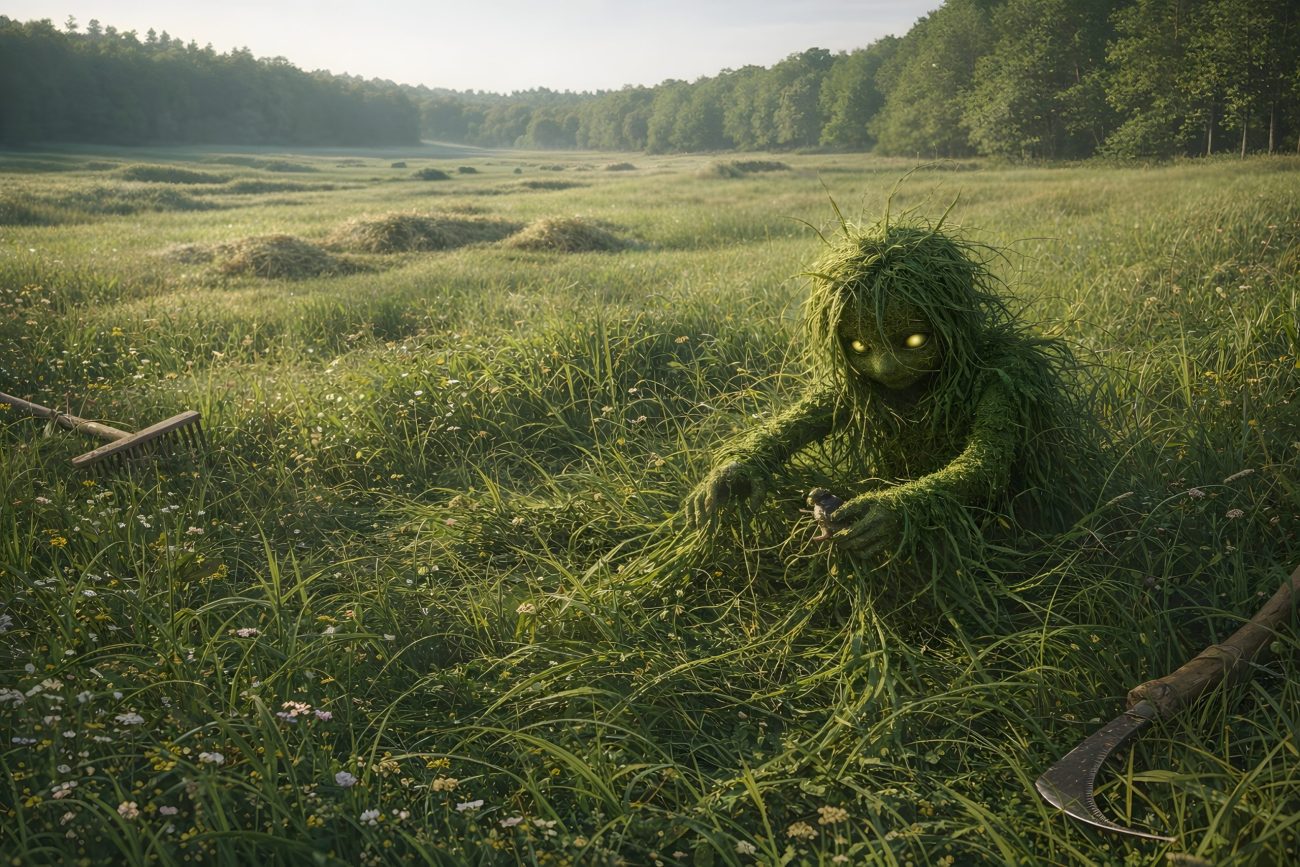
In Slavic mythology, Lugovichok is known as the spirit of the meadows. He is described as a small green man, clothed in grass and vegetation, and is considered one of the children of the field worker, a spirit connected with cultivated land and agricultural labor.

Lugovichok is believed to move swiftly through the meadows, catching birds and bringing them as food to his parent. During haymaking, he may secretly help people, ensuring that the work goes smoothly when it is done properly and at the right time.

However, Lugovichok is easily angered by neglect or improper behavior. When people delay mowing or fail to tend the meadow correctly, he may cause the grass to grow wildly and become tangled, braiding it so tightly that it cannot be cut or torn. In some cases, he is said to dry the grass at the root, ruining the hay altogether. If mowers arrive at the wrong time, Lugovichok can dull their scythes instantly or even break them completely, bringing work to a halt.

The name “Lugovichok” itself is rare and is recorded mainly in northwestern Russia. In other regions, related beliefs appear under different names. Peasants in the Tula province, for example, believed in shaggy meadow beings—alongside the field-goose and well-goose—who lived underground in burrows and emerged only at midday and just before sunset. At these times, such beings were considered dangerous and were thought capable of bringing illness or fever to humans.

Through these beliefs, Lugovichok represents both the helpful and harmful forces of the meadow—rewarding proper care and timing, but punishing neglect, impatience, or disrespect toward the land.


Sources

Bestiary.us contributors. (n.d.). Lugovichok. In Bestiary.us, from https://www.bestiary.us/Lugovichok


Lesavki

Tradition / Region: Belarusian Mythology
Alternate Names: Lesavkas
Category: Forest dweller


The Myth

Lesavki are described as small forest spirits in East Slavic folklore. According to some accounts, they are said to be the children of the Leshy and the Kikimora; in other versions, they are described as the Leshy’s grandfather and grandmother, reflecting differing traditions about their origin and place within the forest world.

In appearance, lesavki are said to be very small, gray, and hedgehog-like, resembling little shaggy balls of hair. They live hidden among last year’s fallen leaves on the forest floor, where they are easily overlooked. Their presence is more often sensed than seen.

Their period of activity lasts from late summer until mid-autumn. During this time, lesavki are constantly in motion: they revel, dance in circles, lift leaves, rustle, and scurry about, filling the forest with quiet movement and soft, restless sounds. After exhausting themselves, they are said to wash and then fall into a long sleep, remaining dormant for an extended period.

Lesavki are known for their mischievous behavior toward humans. They may lead travelers astray, sprinkle dust onto their heads, or wrap them in cobwebs, causing confusion and disorientation in the forest. Those who wander carelessly may suddenly lose their way, unaware that lesavki are nearby, quietly playing their tricks.

Through these stories, lesavki appear as small but active spirits of the forest floor, embodying its hidden life, movement, and playful danger, and reminding humans that the woods are never truly empty or still.


Sources

Bestiary.us contributors. (n.d.). Lesavki. In Bestiary.us, from https://www.bestiary.us/Lesavki