Mavo

Tradition: Belgian Mythology
Alternative Names: Mahvot, Mahvo, Malhvo
Category: Lizard


The Myth

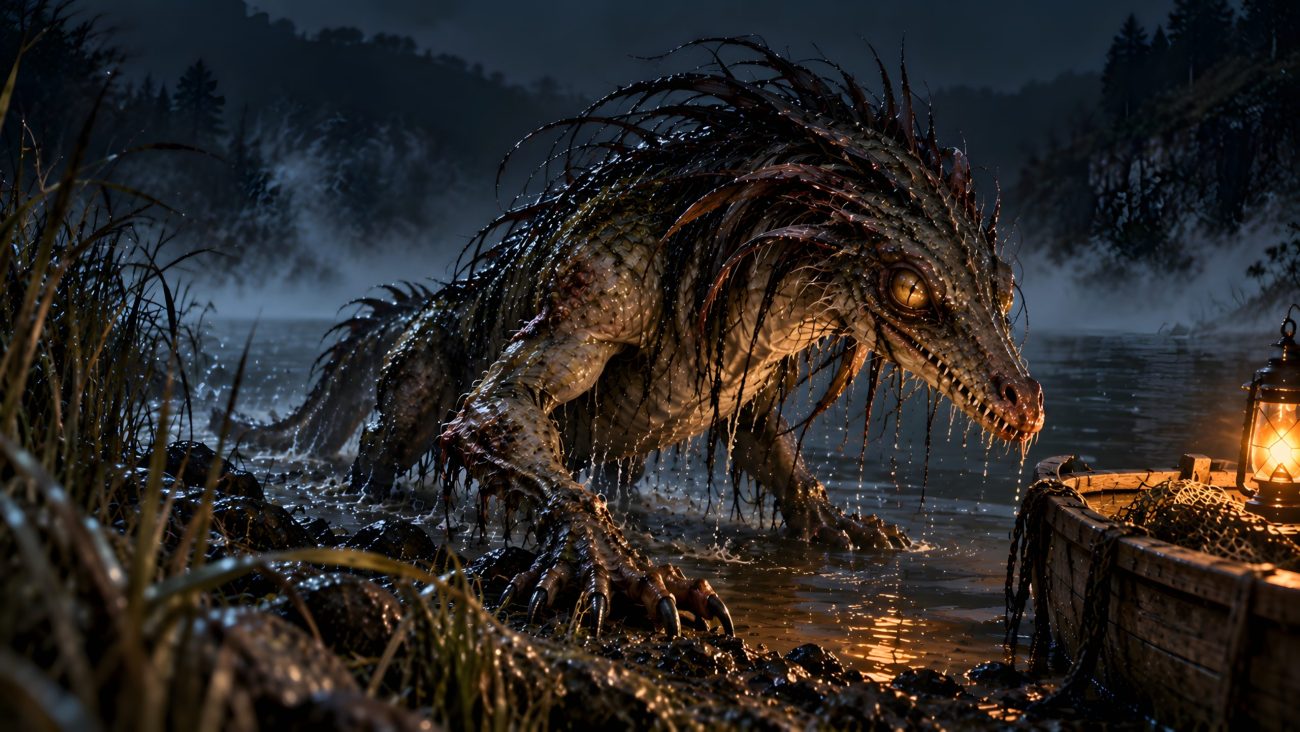
The Mavo is a monstrous amphibian resembling a giant lizard, said to be about the size of a calf. It inhabits the Meuse River in the Ardennes and scurries along the riverbed between Revin and Liège. The creature rarely comes onto land, but its appearance is considered a terrifying omen, for it is said to emerge shortly before great disasters such as destruction, plague, war, or pestilence.

A ninety-year-old woman, later deceased, was reportedly said to have seen the creature at Revin and Givet on a July night in 1870. The sighting became one of the tales surrounding the mysterious river monster that lurked beneath the waters of the Meuse.

The Mavo also serves a darker purpose in stories told to children. Angry mothers were said to call the creature from the water when their children misbehaved, using it to frighten them away from the river. The Mavo was imagined as a kind of water bogeyman that would drag into the water and devour any child foolish enough to play too close to the riverbank.

No one knows how many children the Mavo has supposedly eaten, but children were warned to fear it whenever their mothers invoked its name: “Here comes the Mahvo! And if you don’t shut up right now, he’ll eat you!” The threat was said to work without fail.


Sources

“Mavo.” New Bestiary (Bestiary.us). Accessed September 29, 2026. https://www.bestiary.us/Mavo

Deogen

Tradition: Belgian Mythology
Alternative Names: De-ohen, De Ochen
Category: Ghost


The Myth

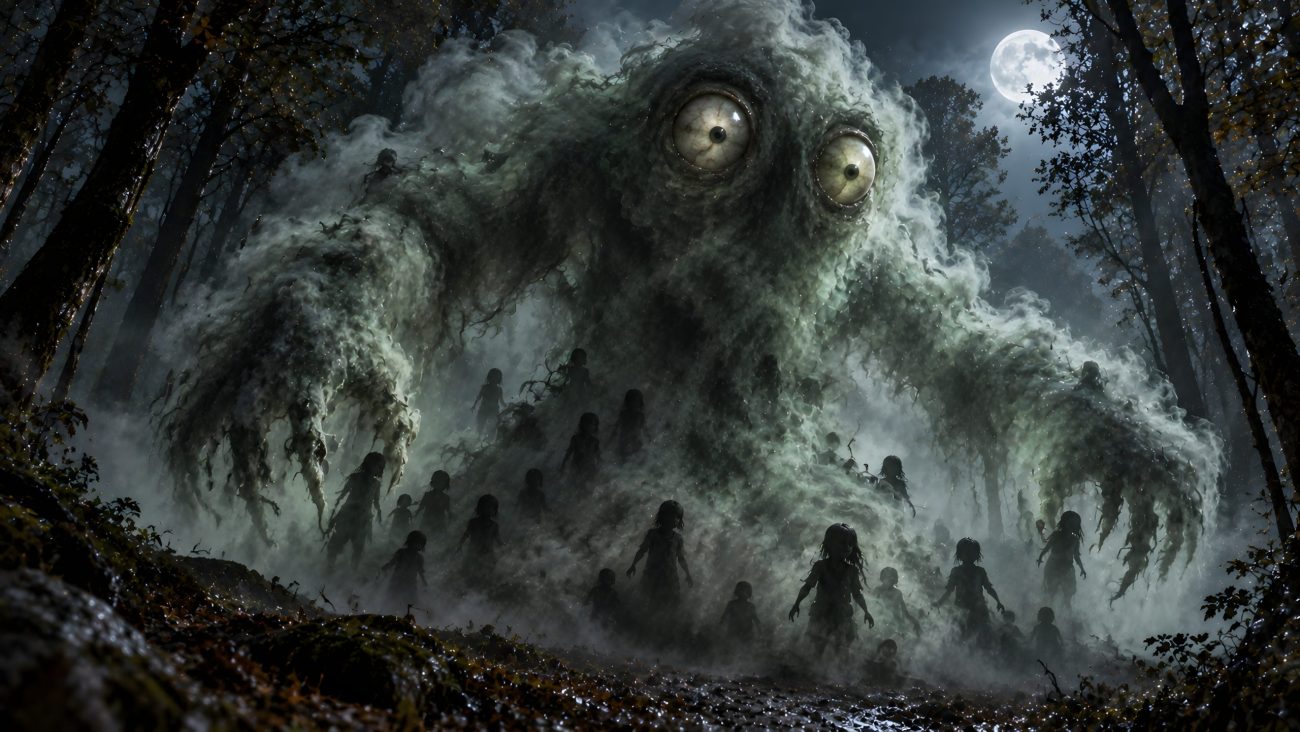
De-ohen appears as a huge, looming ghostly figure formed from a cloud of white or greenish fog. Its eyes bulge from the mist, giving the creature its name, derived from the Dutch “de ogen,” meaning “the eyes.” Alongside the towering figure come the shadowy forms of the children it has killed, their tiny silhouettes following behind it through the darkness.

The legend is associated with the Forêt de Soignes, the great forest on the southern outskirts of Brussels. Drivers travelling through the forest at night or at dusk, especially in foggy weather, were said to encounter black, ghostly figures darting through their headlights. Bloody handprints could appear on car windows, while the terrifying laughter and screams of invisible children seemed to surround the road. Behind the sounds came the tiny shadows of children, following in the footsteps of a huge, looming figure rising from the fog.

The story is tied to a tale of a local serial killer and his victims. As the legend spread, the number of children supposedly murdered in the forest grew enormously. A 1937 book, Children of the Haunted Forest, described how local nuns supposedly discovered the burned bodies of small children scattered throughout the Sonian Forest. The story claimed that as many as eighty children had been brutally murdered, their bodies burned and left throughout the woods.

De-ohen became a figure of frightening campfire stories, with people claiming that they had personally encountered the ghost in the forest. The tale presents the fog itself as something alive: a monstrous presence with enormous eyes, accompanied by the ghosts of the children lost within the woods.


Sources

“De Okhen.” New Bestiary (Bestiary.us). Accessed September 29, 2026. https://www.bestiary.us/de-okhen


Colôrobètch

Tradition: Belgian Mythology
Alternative Names: Colôrobètch, Colô Rodje Bètch, Red Beak, Red-Beaked Rooster
Category: Bird


The Myth

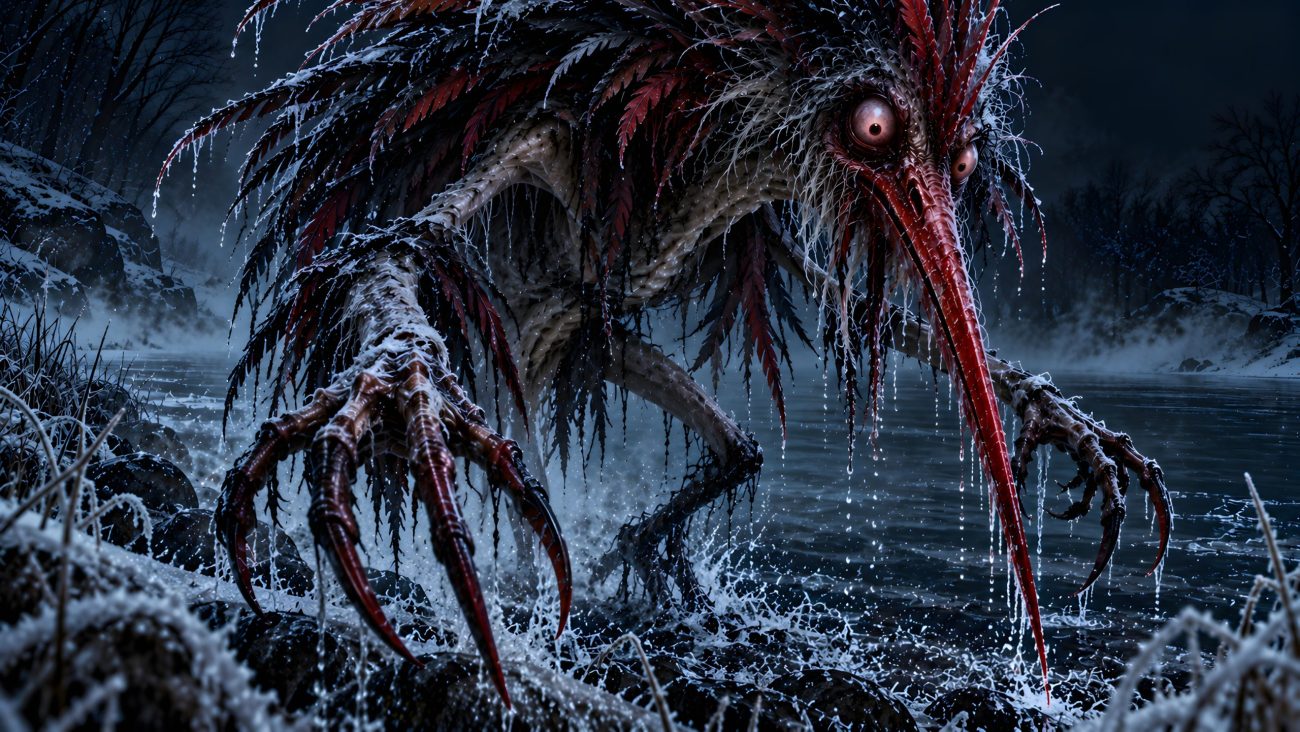
Colôrobètch is a frightening red-beaked creature used to embody childhood fears of the cold, punishment, and dangerous places. His most distinctive feature is his beak, stained red with blood, although it is uncertain whether he is truly a bird, a human being, or a grotesque mixture of the two.

Colôrobètch appears during winter, preying on children foolish enough to go outside without clothing warm enough to protect them from the icy wind. He nips at their exposed faces and hands until their skin becomes red, dry, cracked, and bleeding. His name is therefore tied directly to his blood-red beak and the injuries caused by the cold. He was a warning to children to protect themselves from the freezing winter air, which could bring frostbite to their noses and hands.

Around Andenne, Bastogne, Dinant, Huy, Neufchâteau, and Warsage, the creature is known as Colôrobètch. In On, Oignies, and Stavelot, he is simply called the Red Beak. His appearance changes from place to place: in Somme-Leuze he is imagined as a monstrous sparrow, while in Condroz and Hesbaye he takes the form of a pigeon. In Namur, he is specifically known as Colôrobètch or Colô Rodje Bètch, meaning the “Red-Beaked Rooster.”

In Andenne, the creature takes on an even darker form. There, Colôrobètch becomes a nocturnal water bogey who lurks around the Meuse and drags unwary children into its depths.


Sources

“Colorobetch.” A Book of Creatures. March 21, 2016. https://abookofcreatures.com/2016/03/21/colorobetch/


Hotteman

Tradition: Belgian Mythology
Alternative Names: Hotteman
Category: Ghost


The Myth

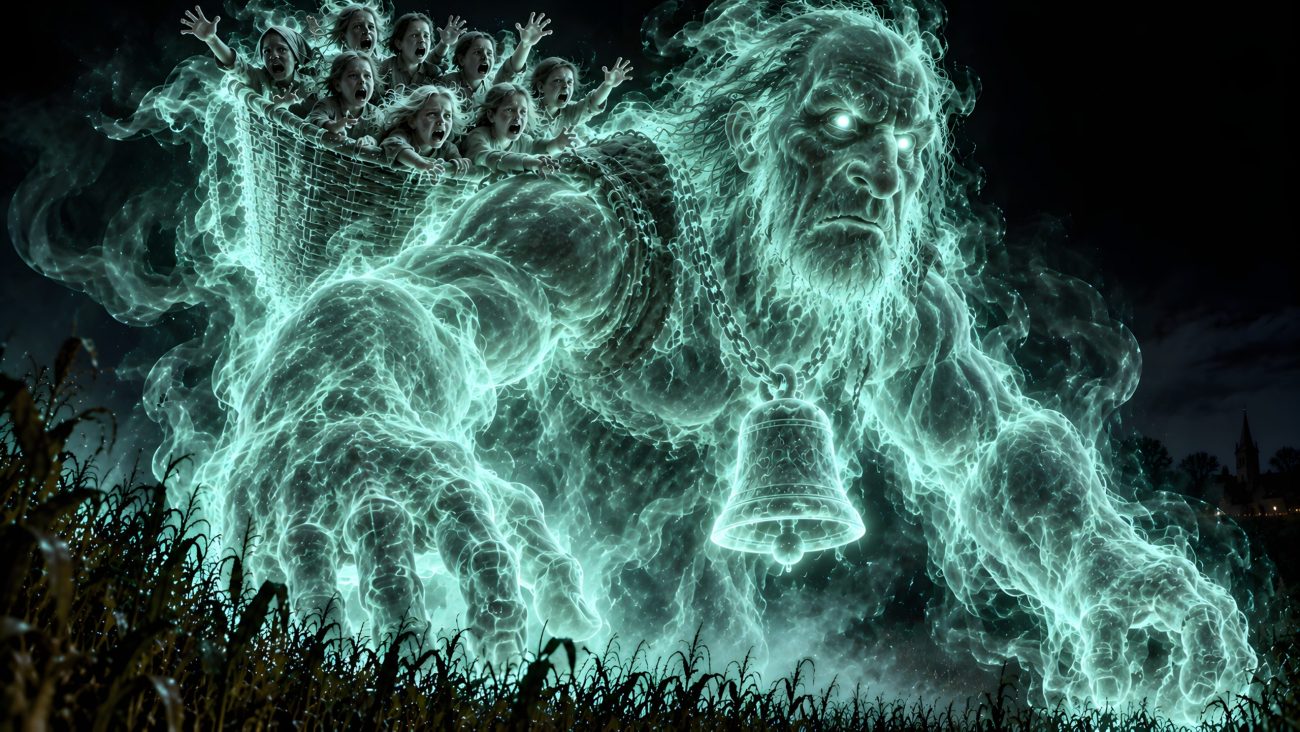
The Hotteman was the ghost of a pig herder. He was said to carry an enormous basket on his back, so large that it was as big as a table.

With this basket, the Hotteman would seize naughty children and carry them away. He was also said to cut off the toes of children who wandered into the grain fields. Mothers told their children these frightening stories to make them behave and keep them away from the crops.


Sources

“Aardmannetje tot zwarte juffer: een lijst van Nederlandse en Vlaamse elfen en geesten.” Abe de Verteller. Accessed September 29, 2026.
https://abedeverteller.nl/van-aardmannetje-tot-zwarte-juffer-een-lijst-van-nederlandse-en-vlaamse-elfen-en-geesten/


Heksen op Kruiwagenwielen

Tradition: Belgian Mythology
Alternative Names: Heksen op kruiwagenwielen
Category: Witch


The Myth

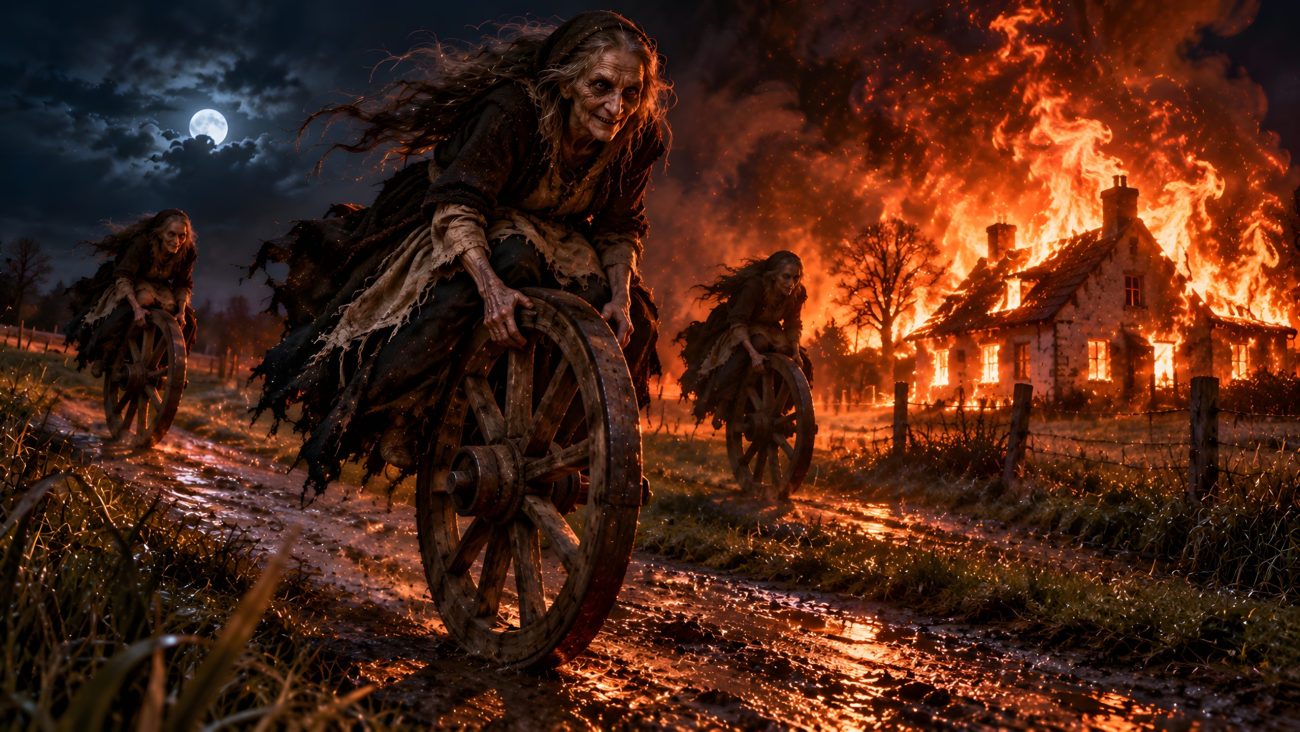
Three witches appeared at night riding upon the wheels of wheelbarrows. Two boys from Denderhoutem had gone to Steenhuize to court, but during their journey they lost their way in the darkness. After wandering for a long time, they reached an isolated house standing alone in the fields. There was no one to be seen, and not a single light burned inside.

A little farther along the road, they suddenly encountered a woman riding upon a wheelbarrow wheel. Without saying a word, she rode straight into the deserted house. The boys continued on their way, only to meet another woman riding upon a wheelbarrow wheel, and then a third.

When they had gone a little farther, curiosity and unease made them look back. The lonely house they had passed was now completely engulfed in flames and fire. Nearly dead with fright, the two boys hurried home.


Sources

De Cock, Alfons. Vlaamsche sagen uit den volksmond. Amsterdam: Maatschappij voor Goede en Goedkoope Lectuur, 1921.


Tooverpluimen

Tradition: Belgian Mythology
Alternative Names: The Magic Feathers, De Tooverpluimen
Category: Object


The Myth

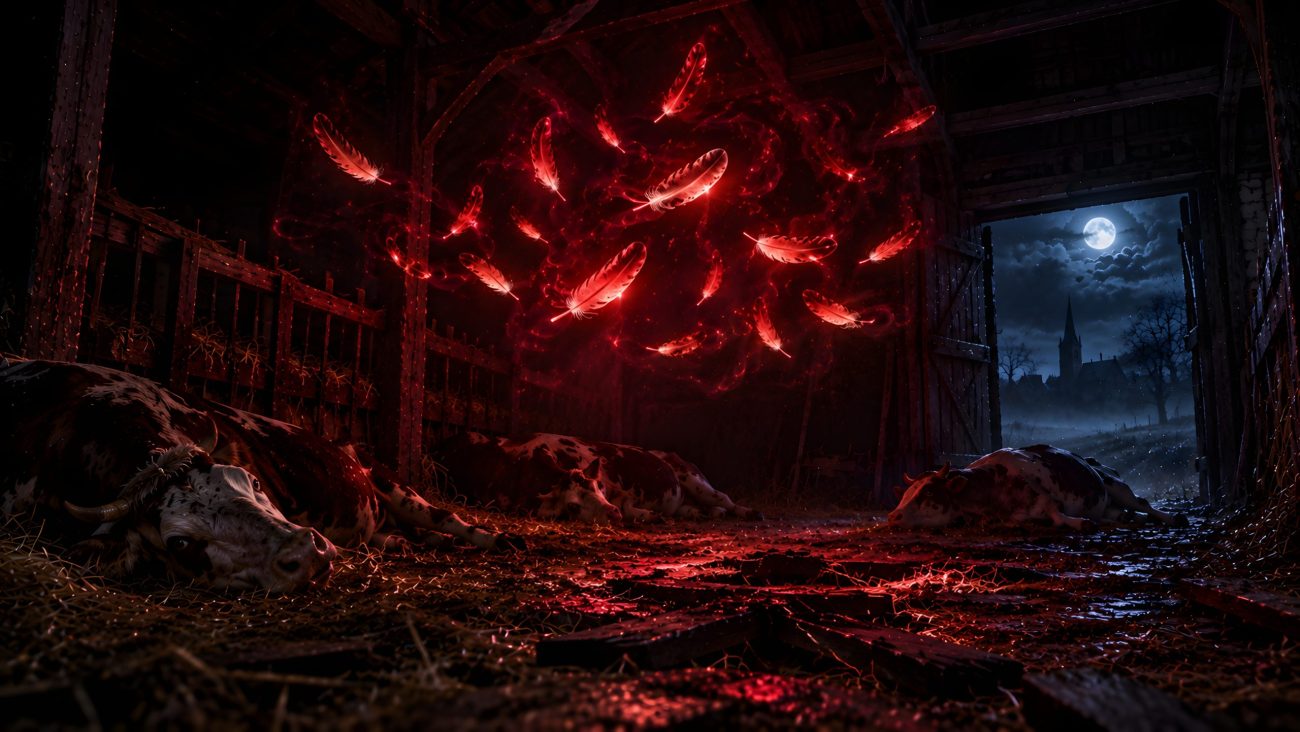
The Tooverpluimen are magical feathers hidden beneath the thresholds and feeding troughs of a farmer’s cowshed.

In Iddergem, a farmer discovered one morning that all three of his cows were dead, their necks twisted around. He bought new animals, but they suffered exactly the same fate. When he had no cattle left, the misfortune turned upon his children. They were struck by a strange bone disease that left them unable to support themselves on their own bones.

At last the priest was called. After much hesitation, he finally agreed to come to the farm. He ordered the thresholds, feeding troughs, and floor of the cowshed to be broken up.

Beneath the thresholds and troughs they discovered the hidden cause: the ground was filled with feathers.

Once the feathers were removed, the enchantment disappeared, and the deaths of the animals and illness afflicting the children came to an end.


Sources

De Cock, Alfons. Vlaamsche sagen uit den volksmond. Amsterdam: Maatschappij voor Goede en Goedkoope Lectuur, 1921.


Growing Ghost Beast

Tradition: Belgian Mythology
Alternative Names: Groeiend Spookdier
Category: Rat


The Myth

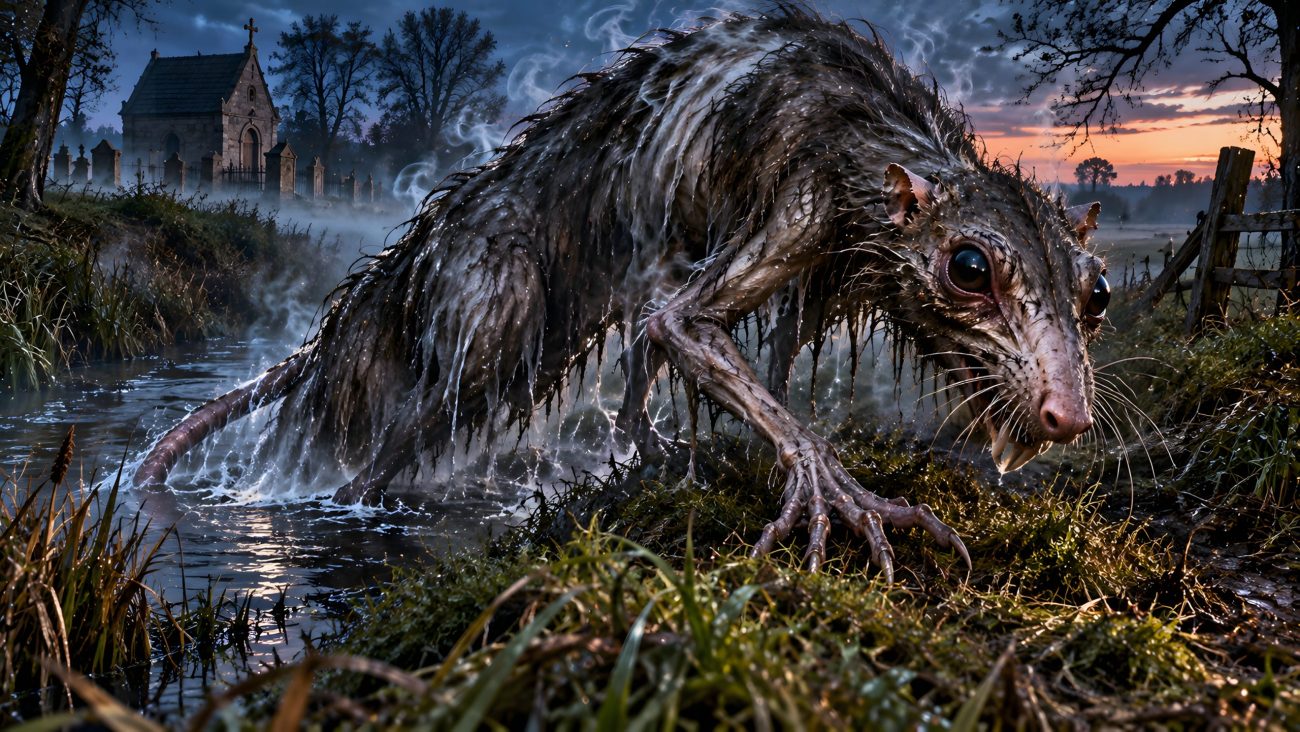
The Groeiend Spookdier first appeared as a small creature resembling a rat, but it possessed the strange ability to grow to an enormous size.

A man had lost his wife and went to the priest to report her death. At the cemetery, beside the charnel house, he knelt and prayed an Our Father for the repose of her soul. As he sat there, a great weight suddenly pressed down upon his shoulders. The mysterious burden soon disappeared, and the man was able to leave.

On his way home, a little animal resembling a rat suddenly emerged from a stream and ran between his legs. He continued on his way, but the strange creature followed him. As it went, it grew larger and larger until it became so enormous that the man could have ridden upon its back.

Not far from his home, the strange beast suddenly leapt back into the stream and disappeared beneath the water. The man never saw it again, and he had never encountered an animal like it before.


Sources

De Cock, Alfons. Vlaamsche sagen uit den volksmond. Amsterdam: Maatschappij voor Goede en Goedkoope Lectuur, 1921.


Bietebauw

Tradition: Belgian Mythology
Alternative names: Bitebau, Budde
Category: Demon


The Myth

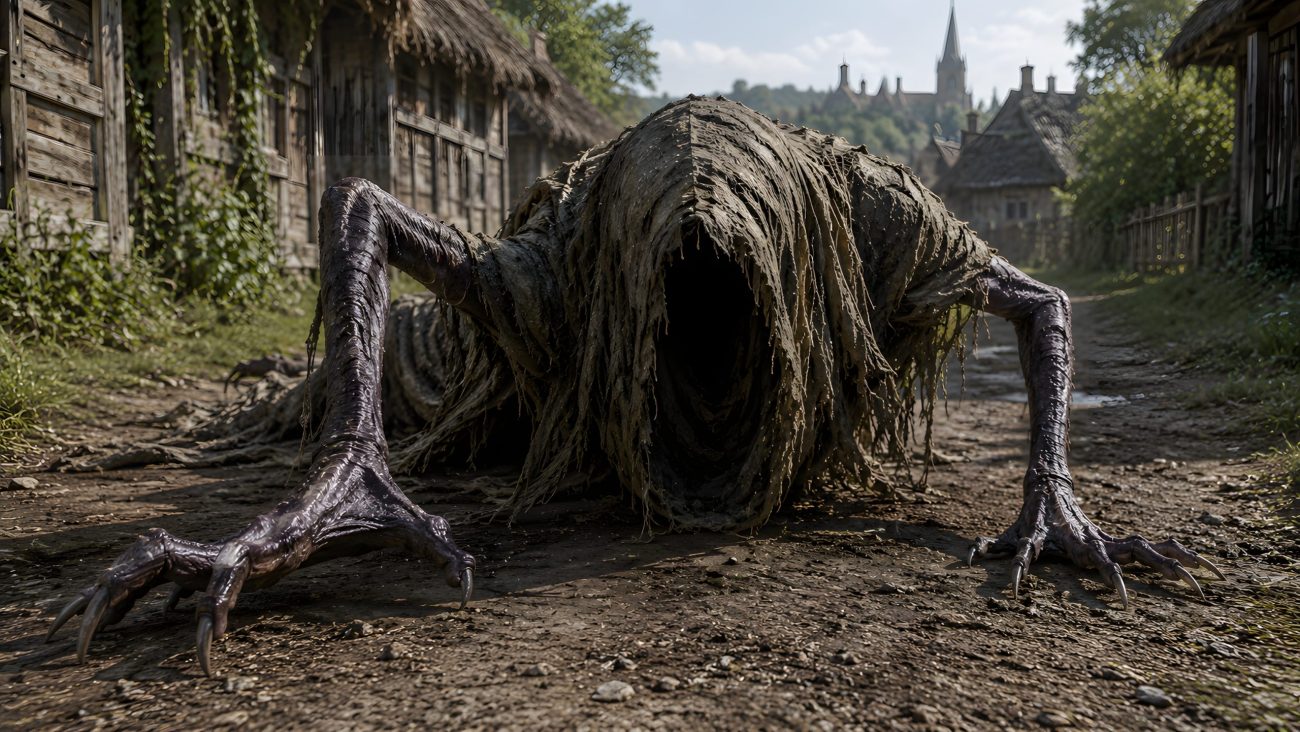
The Bietebauw is a frightening supernatural being from Flemish folklore, appearing as a boogeyman, devil-like creature, or ghost. In one recorded account from a 1595 witchcraft trial in Den Bosch, it is described as a black, crawling animal with no head and no tail.

In other traditions, the Bietebauw appears as a ghost in human form. People who were born with the caul were believed to be able to see it, while others could not. When it appeared to them, it could reveal a supernatural warning or prediction of something that was about to happen.

The Bietebauw was also used as a child-frightening figure, with Flemish traditions invoking it as a creature that would come from the black mountains and seize naughty children. In some older contexts it was associated with a devil or malevolent supernatural being.


Sources

“Van aardmannetje tot zwarte juffer: Een lijst van Nederlandse en Vlaamse elfen en geesten.” Abe de Verteller. Accessed August 29, 2026. https://abedeverteller.nl/van-aardmannetje-tot-zwarte-juffer-een-lijst-van-nederlandse-en-vlaamse-elfen-en-geesten/


Heksenkat van Kessel

Tradition / Region: Belgian Mythology
Alternative names: Witch Cat of Kessel
Category: Cat


The Myth

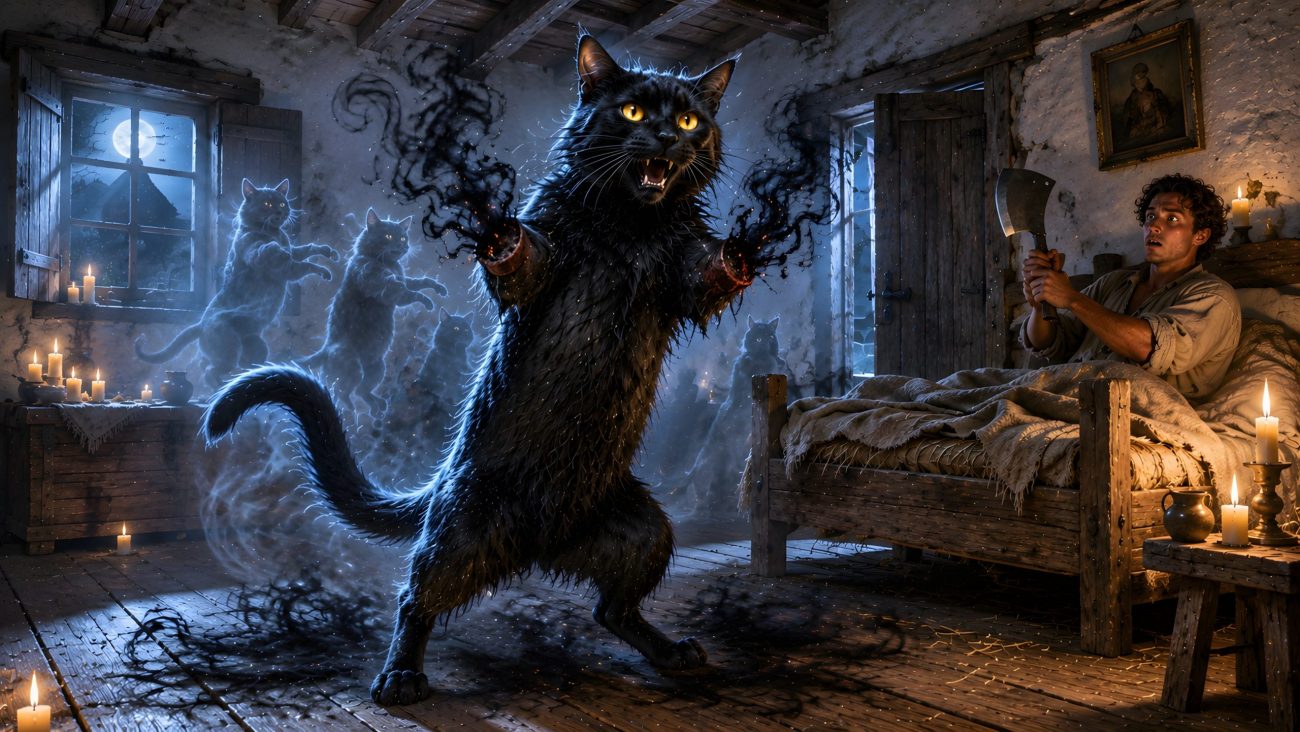
The Heksenkat appears as one of a group of ordinary-looking cats that secretly gather at night to perform eerie round dances. In reality, these cats are witches in animal form, and injuries inflicted upon them carry over to their human bodies.

According to the legend, a farmer in Kessel could never keep a farmhand for more than a day or two. Every servant abruptly left without explaining why. Eventually, the farmer decided to hire no one else, but one day a respectable young man insisted so strongly on working for him that the farmer reluctantly agreed.

On his first night, the servant was awakened by the sight of numerous cats dancing in a circle inside his room. Terrified, he remained still and said nothing to the farmer the following morning. Instead, he secretly armed himself with a large chopping knife before going to bed the next evening.

When the dancing cats returned, the servant calmly called out, Here, kitty. One of the cats approached him, and he hurled the blade, severing both of its front legs.

The next morning the farmer was horrified to discover his wife lying in bed covered in blood, both of her arms horribly cut off. The servant immediately gathered his belongings and fled.

Only then did the farmer realize the truth. His wife had been a witch who transformed herself into a cat each night to frighten away every servant, explaining why none of them had ever remained on the farm for long.


Sources

De Cock, Alfons. Vlaamsche sagen uit den volksmond. Amsterdam: Maatschappij voor Goede en Goedkoope Lectuur, 1921, p. 36.


Toverkat

Tradition / Region: Belgian Mythology
Alternative names: Magic Cat, Bewitched Cat
Category: Cat


The Myth

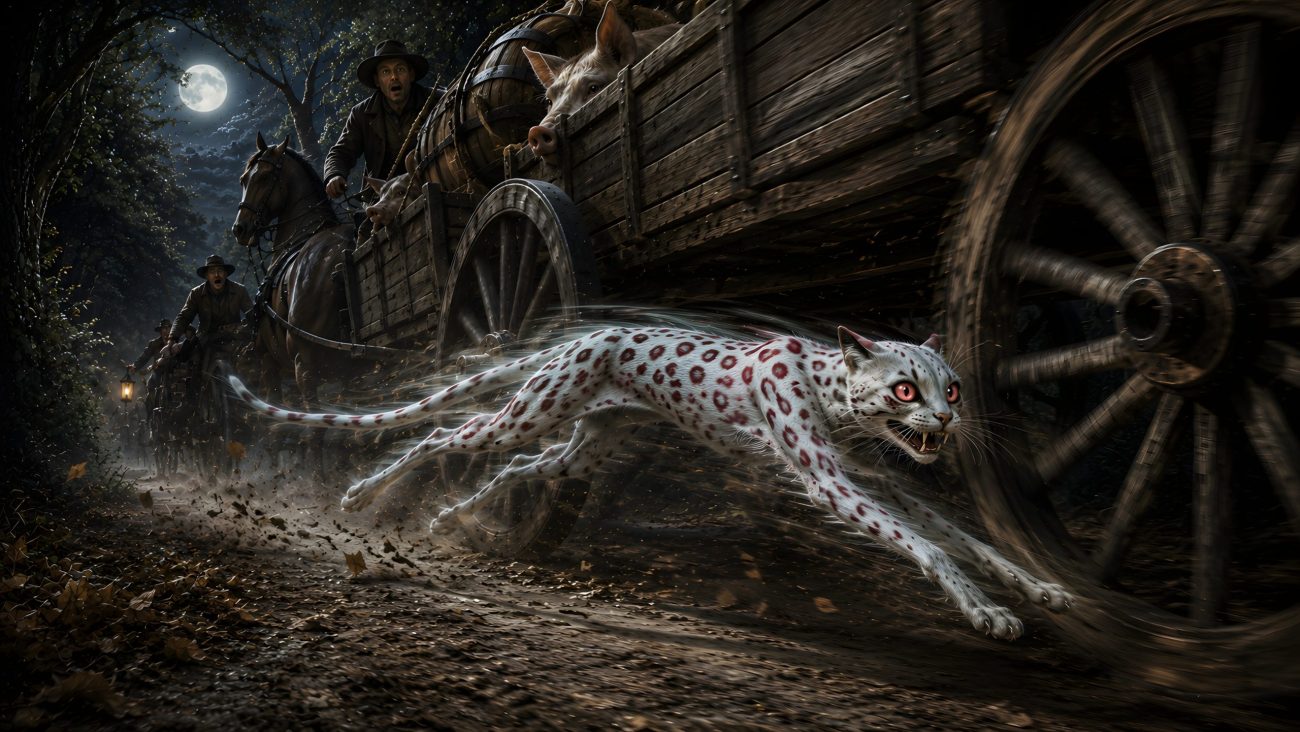
The Toverkat appears as a beautiful spotted cat with uncanny intelligence and supernatural abilities. It can escape any confinement, move with impossible speed, and seems impossible to capture. Rather than directly attacking people, it torments travelers and leads them into fear and confusion.

According to the legend, about fifty years before the story was recorded, three farmers were driving carts loaded with fat pigs to the market in Leuven on a bright September night. As they passed through the Bollo Woods near Tremelo, a beautiful spotted cat suddenly leapt from a thicket. It ran between the farmers’ legs and beneath the carts, meowing in an eerie and unsettling way.

One of the farmers suggested catching the animal. They seized the cat, tied it securely inside a sack, and continued their journey. Yet before they had gone ten paces, the cat was once again running beside them, despite the sack still being tightly fastened.

The strange cat continued to leap effortlessly through the spokes of the moving wagon wheels without suffering any injury, frightening the three men even more. After following them for another hour, they happened to meet a calf dealer on his way to the Leuven market. His cart was pulled by a large dog, and after hearing the farmers’ story, he confidently declared that his dog hated cats and would quickly deal with it.

The dog was released and charged toward the mysterious feline. In an instant, the cat sprang onto the dog’s back, dug its razor-sharp claws deep into its flesh, and clung to it as the terrified dog howled in pain. With the cat still on its back, the animal fled into the forest, disappearing forever.

The dog was never seen again. Left without his beast of burden, the calf dealer was forced to push his cart carrying the live calves all the way to Leuven himself. The tale endured as one of Flanders’ most famous stories of a supernatural or bewitched cat whose powers surpassed both humans and animals.


Sources

De Cock, Alfons. Vlaamsche sagen uit den volksmond. Amsterdam: Maatschappij voor Goede en Goedkoope Lectuur, 1921, p. 40.