Klakkaart

Tradition: Belgian Mythology
Alternative Names: Klakkaart
Category: Ghost


The Myth

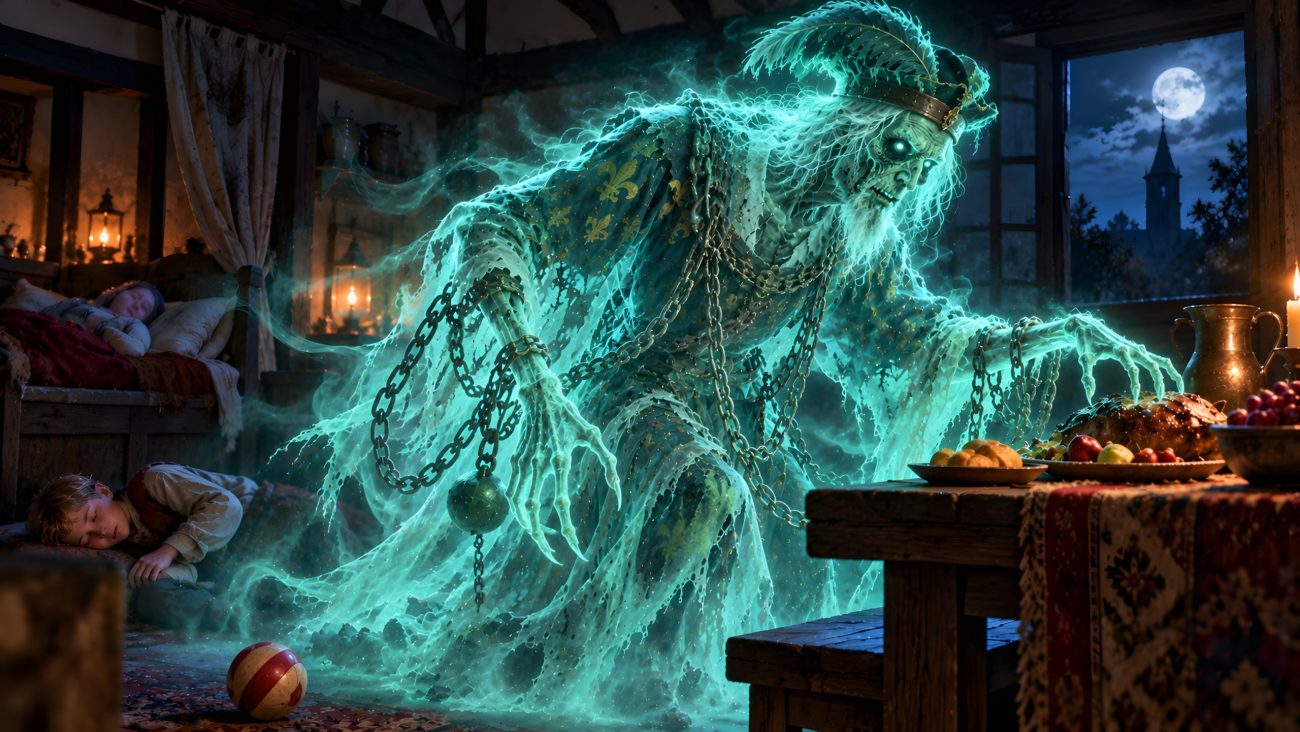
Klakkaart is the ghost of a French nobleman who was killed during the Battle of the Golden Spurs in Flanders. His spirit frightens women and children by rattling his chains, creating a terrifying noise as he moves about. Although invisible, he can enter houses unnoticed and search for delicious food.

When Klakkaart finds food to his liking, he uses his supernatural powers to make the household fall asleep, allowing him to enjoy himself without being disturbed. He also enjoys tormenting boys by placing a small ball used in the traditional game of kolf beside his hiding place. Anyone who touches the ball is suddenly struck with a sharp slap across the cheek, suffering the ghost’s mischievous punishment.


Sources

Van der Veen, Abe. “Van aardmannetje tot zwarte juffer: Een lijst van Nederlandse en Vlaamse elfen en geesten.” Abe de Verteller. https://abedeverteller.nl/van-aardmannetje-tot-zwarte-juffer-een-lijst-van-nederlandse-en-vlaamse-elfen-en-geesten/
Oelter Beast

Tradition: Belgian Mythology
Alternative Names: Een heer in een dier veranderd
Category: Forest dweller


The Myth

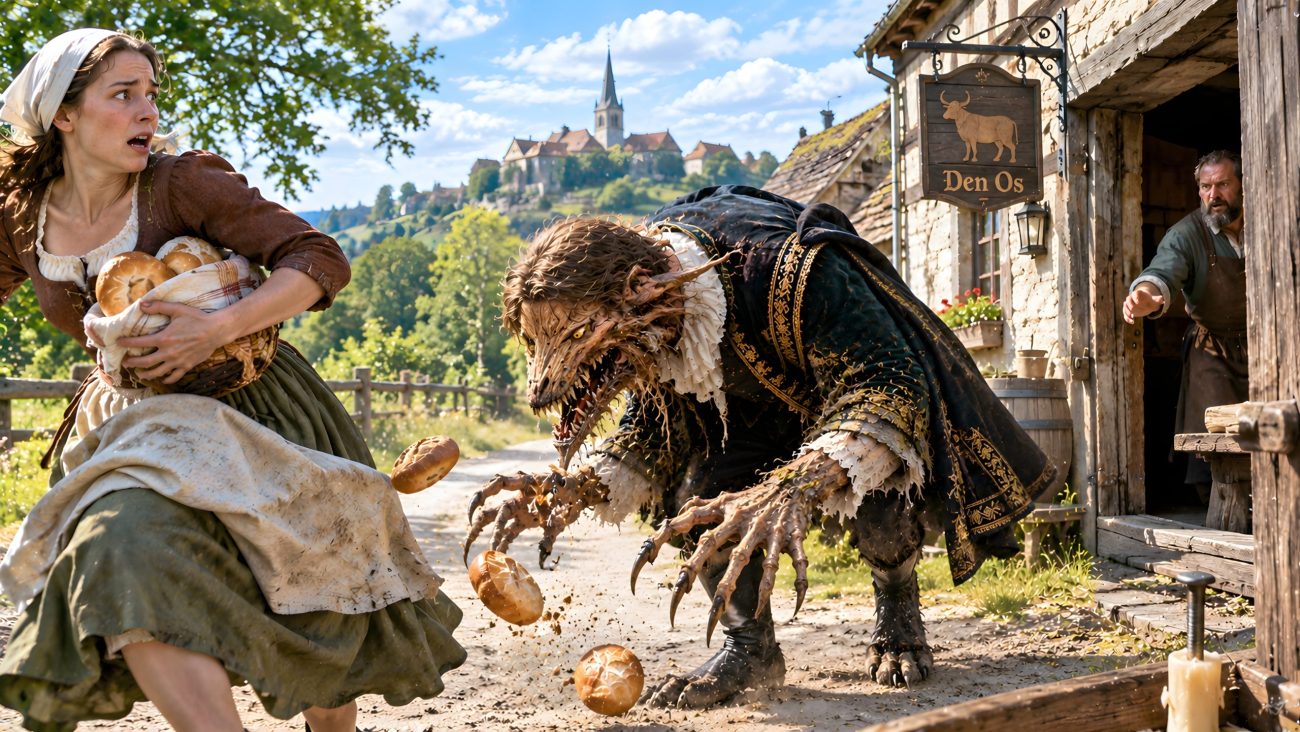
A mysterious gentleman with the power to transform into an animal once encountered a woman from Oelter who was returning from Ninove, where she had gone to buy three loaves of bread. Just outside the Geeraardsbergsestraat, she met the gentleman, who explained that he was also travelling to Oelter and asked whether he could accompany her. Glad of the company, the woman agreed and continued along the road with him.

As the gentleman approached her, he began to grow smaller and smaller. Suddenly, he transformed completely into a beast and began biting at the bread she was carrying. Terrified by the strange transformation, the woman fled as fast as she could, running until she reached the inn called Den Os. There, she recounted her frightening encounter. She had barely finished speaking when the door opened and the gentleman appeared inside the inn.

The innkeeper ordered the mysterious visitor to leave, but he refused to go. Finally, someone took a special nail from an Easter candle and placed it beneath the door. The moment the nail was laid there, the gentleman vanished. The strange encounter ended as suddenly as it had begun, leaving the woman and the inn’s occupants to wonder at the supernatural power of the mysterious shapeshifter.


Sources

De Cock, Alfons. Vlaamsche sagen uit den volksmond. Amsterdam: Maatschappij voor Goede en Goedkoope Lectuur, 1921.


Hellewagen

Tradition: Dutch Mythology, Belgian Mythology
Alternative Names: Spookwagen, Hell Wagon
Category: Flame


The Myth

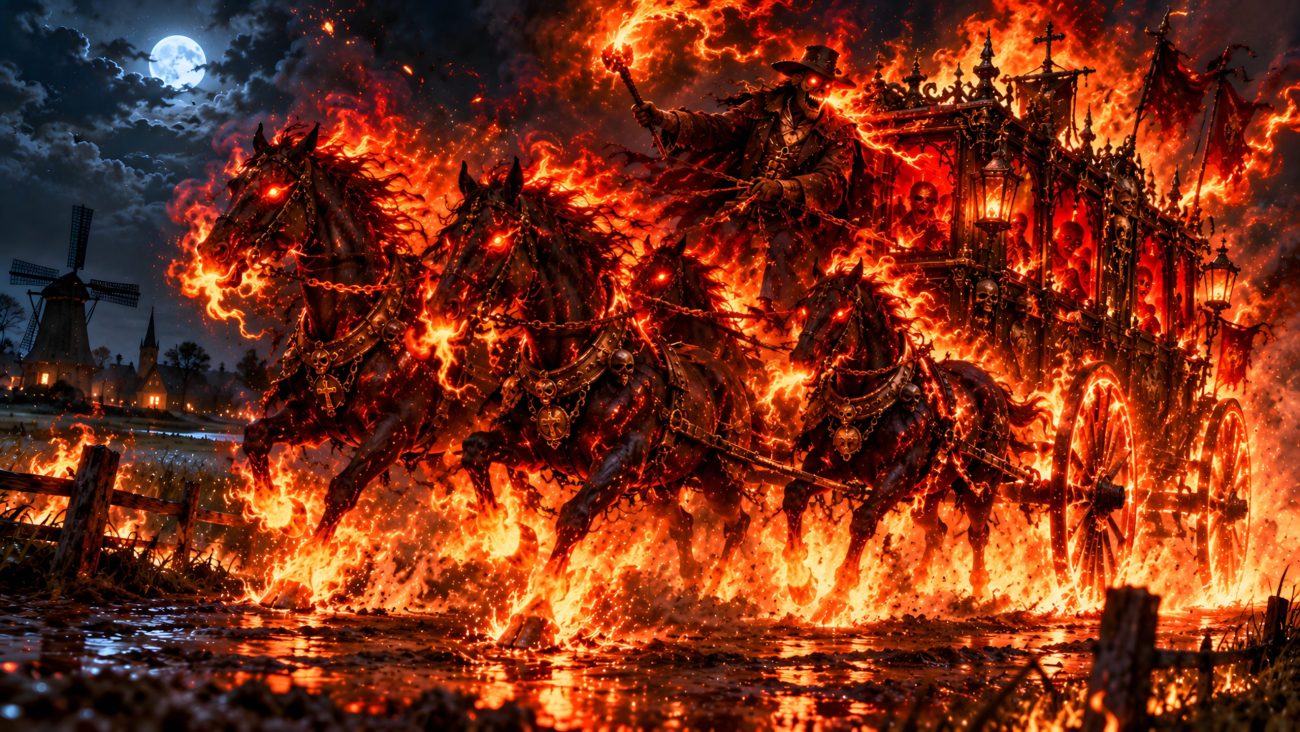
The Hellewagen, or Spookwagen, is a terrifying ghostly carriage that races through the night between midnight and one o’clock. It is drawn by black or invisible horses and sometimes travels through the air, accompanied by a deafening, hellish rumble. Inside the carriage, blood-red lights illuminate its interior, while its spectral coachman glows and spits fire. The entire vehicle shines with an ominous supernatural light as it thunders through the darkness.

The Hellewagen is said to be the punishment of wealthy sinners who exploited and oppressed the common people. In one tale, a late-night wanderer heard the carriage approaching with a tremendous clatter. Yet when it drew near, it suddenly vanished, only to reappear a few metres farther along the road. The apparition is believed to be the restless spirit of a dissolute nobleman, condemned to ride eternally through the night in his blazing carriage.


Sources

“Van aardmannetje tot zwarte juffer: Een lijst van Nederlandse en Vlaamse elfen en geesten.” Abe de Verteller. https://abedeverteller.nl/van-aardmannetje-tot-zwarte-juffer-een-lijst-van-nederlandse-en-vlaamse-elfen-en-geesten/

Glène Kerel

Tradition: Dutch Mythology, Belgian Mythology
Alternative Names: De Gloeiige (Engelsman), Gloeiende Gerrit, Gleunigen, Glende Kerels, Sjoufert
Category: Flame


The Myth

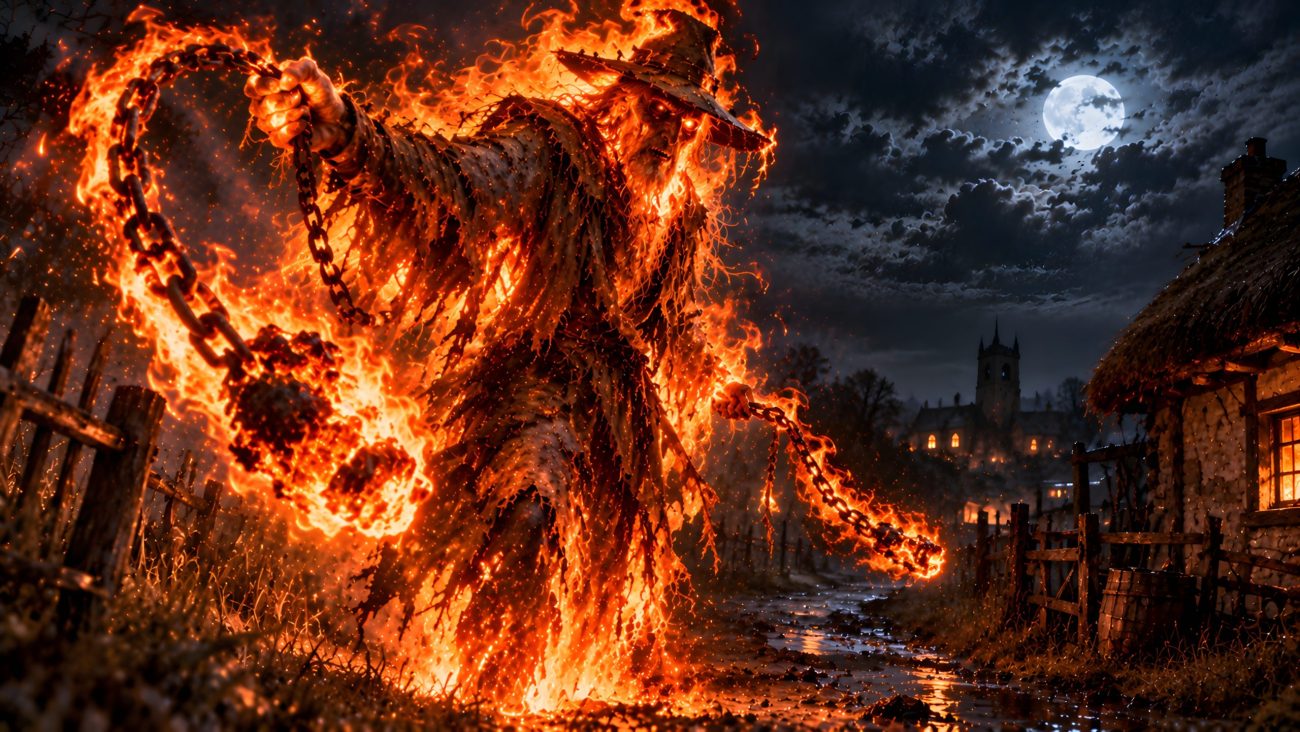
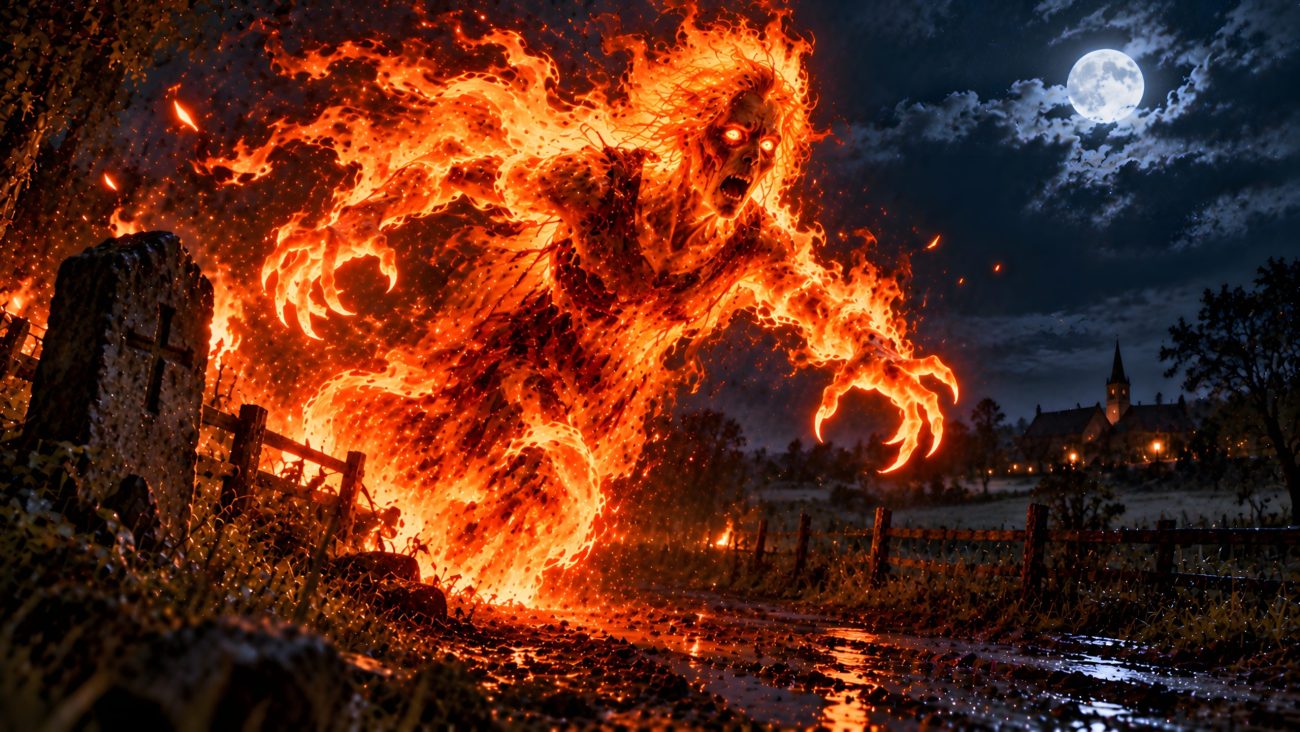
The Glène Kerel, also known as the Gloeiende Gerrit or Sjoufert, is a fiery ghostly figure condemned to burn because of a curse he brought upon himself during his lifetime. He usually appears as a living flame, but may also take the form of a blazing ball of fire, a fiery projectile, or a burning bundle of straw or thatch. The spirit is often said to have once been an unjust land surveyor, an arsonist, a thief, or a murderer. Many had sworn false oaths, declaring that they would burn forever if they were lying. After their deaths, these words became their eternal punishment.

The Glène Kerel wanders through the darkness as a burning apparition, frightening travellers and responding to those who call or whistle for him. Anyone who summons the fiery figure and then flees may discover a blackened handprint burned into their door the following morning. The spirit’s punishment is not limited to wandering the roads, however. During autumn, the fiery men are said to descend from the sky and scourge chimneys with burning chains. Sometimes they enter houses themselves, striking sinners with their chains and leaving painful burn marks as a sign of their supernatural punishment.

In Venlo, tradition held that the community had to provide the fiery man each year with a cartload of sand, several pairs of tin shoes, and seven and a half stuivers. These offerings formed part of the local relationship with the dangerous spirit, whose blazing appearance and burning chains made him a feared presence in the region.


Sources

“Van aardmannetje tot zwarte juffer: Een lijst van Nederlandse en Vlaamse elfen en geesten.” Abe de Verteller. https://abedeverteller.nl/van-aardmannetje-tot-zwarte-juffer-een-lijst-van-nederlandse-en-vlaamse-elfen-en-geesten/

Sjoufert

Tradition: Belgian Mythology
Alternative Names: Sjoferik, Schoferik, Schofet, Schoverd, Schoefer, Brandende Schoof
Category: Flame


The Myth

The Sjoufert is a terrifying supernatural apparition from Belgian Limburg folklore, appearing as a great ball of fire or a blazing human figure. It is often said to be the restless spirit of a man who moved a boundary stone to steal land from his neighbour. Such a man was sometimes believed to have sworn that he would burn if he had ever moved the stone, and after death his oath became a terrible reality. Condemned to wander as a fiery being, he haunts the landscape where his dishonesty brought him damnation.

Like a will-o’-the-wisp, the Sjoufert attempts to lead travellers astray, drawing them away from familiar paths with its glowing appearance. It is particularly dangerous to those who whistle in the darkness, for the sound attracts the spirit and causes it to approach. Anyone who fails to flee quickly enough risks being burned by the apparition until nothing remains but ashes.

Those who manage to escape and reach home safely may still discover a frightening sign of the encounter the following morning: a blackened handprint burned into the doorpost. The mark serves as a reminder that the Sjoufert’s fiery pursuit can reach beyond the lonely roads and into the lives of those unfortunate enough to cross its path.


Sources

“Van aardmannetje tot zwarte juffer: Een lijst van Nederlandse en Vlaamse elfen en geesten.” Abe de Verteller. https://abedeverteller.nl/van-aardmannetje-tot-zwarte-juffer-een-lijst-van-nederlandse-en-vlaamse-elfen-en-geesten/

Wanne Thekla

Tradition: Belgian Mythology
Alternative Names: Wanne Thekla
Category: Fairy


The Myth

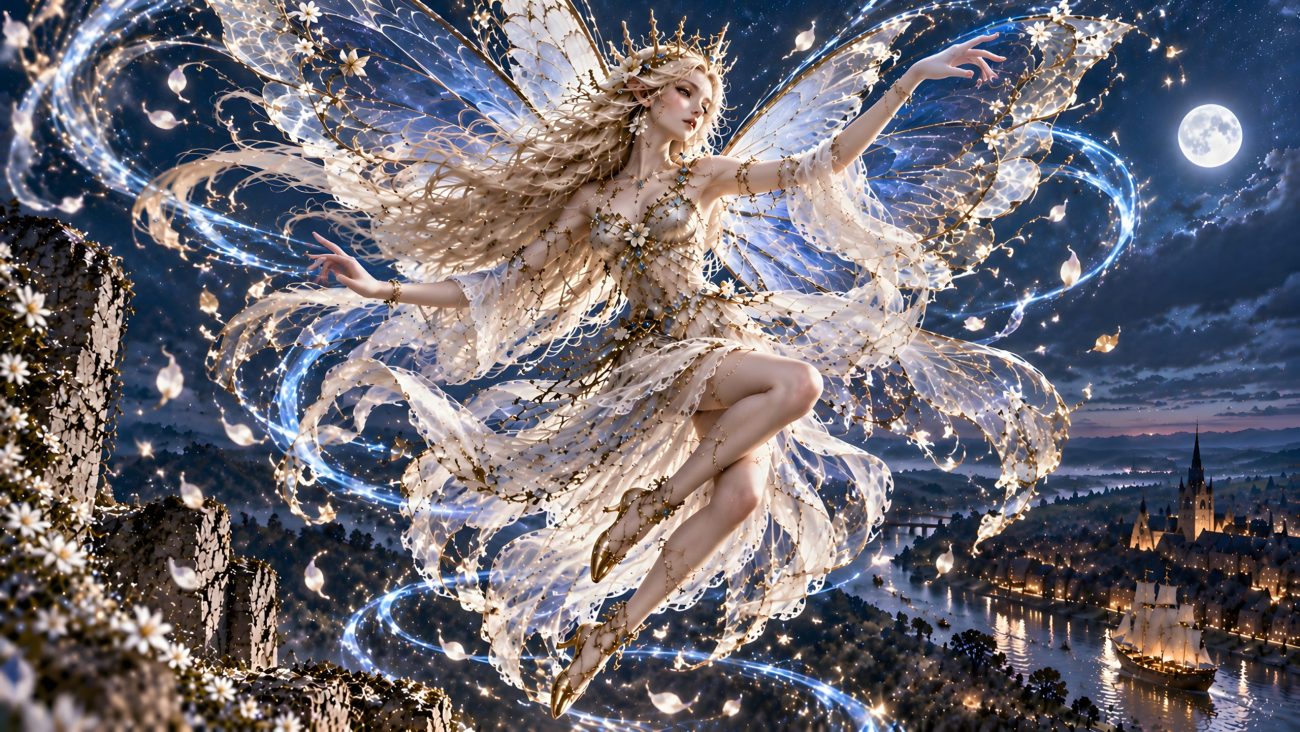
Wanne Thekla is the queen of the elves, witches, and spirits of the air in Flemish folklore. During the night, she descends from the supernatural world to the earth, where she dances and leaps beneath the darkness.

During her nocturnal visits, Wanne Thekla drinks at the Pottelberg. When morning approaches, she leaves the earthly world once again, sailing away aboard a magnificent ship that carries her along the River Leie.


Sources

“Van aardmannetje tot zwarte juffer: Een lijst van Nederlandse en Vlaamse elfen en geesten.” Abe de Verteller.
https://abedeverteller.nl/van-aardmannetje-tot-zwarte-juffer-een-lijst-van-nederlandse-en-vlaamse-elfen-en-geesten/

Dragon of Wasmes

Tradition: Belgian Mythology
Alternative Names: Gilles van Chin’s Dragon
Category: Dragon


The Myth

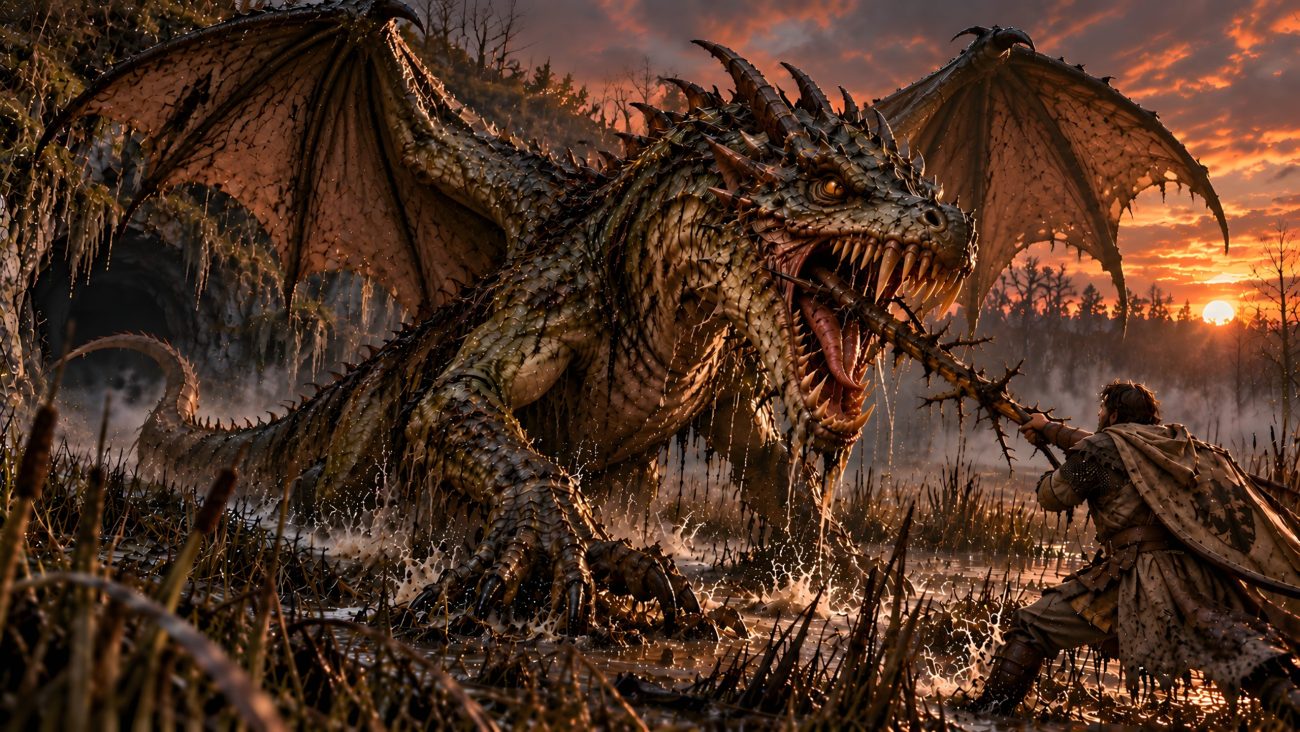
A fearsome dragon lived in the dangerous marshes of Wasmes, where it made its lair in a cave. The beast had captured a young girl and carried her into its den, holding her prisoner there.

In 1133, Gilles van Chin came to Wasmes and confronted the dragon. The battle lasted for hours, continuing until evening. In one telling of the tale, the imprisoned girl managed to help Gilles by giving him a thorny branch. He used it against the dragon, and the branch became lodged in the creature’s mouth.

At last Gilles struck the dragon through the heart and killed it. He then cut off its head and carried the monstrous trophy to Count Baldwin. The rescued girl was brought back to the village in triumph, freed from the creature that had held her captive in the marshes.


Sources

“Gilles van Chin.” Wikipedia, de vrije encyclopedie (Dutch Wikipedia). Wikimedia Foundation. Accessed September 30, 2026. https://nl.wikipedia.org/wiki/Gilles_van_Chin


Bokkenrijder

Tradition: Belgian Mythology, Dutch Mythology
Alternative Names: –
Category: Sheep


The Myth

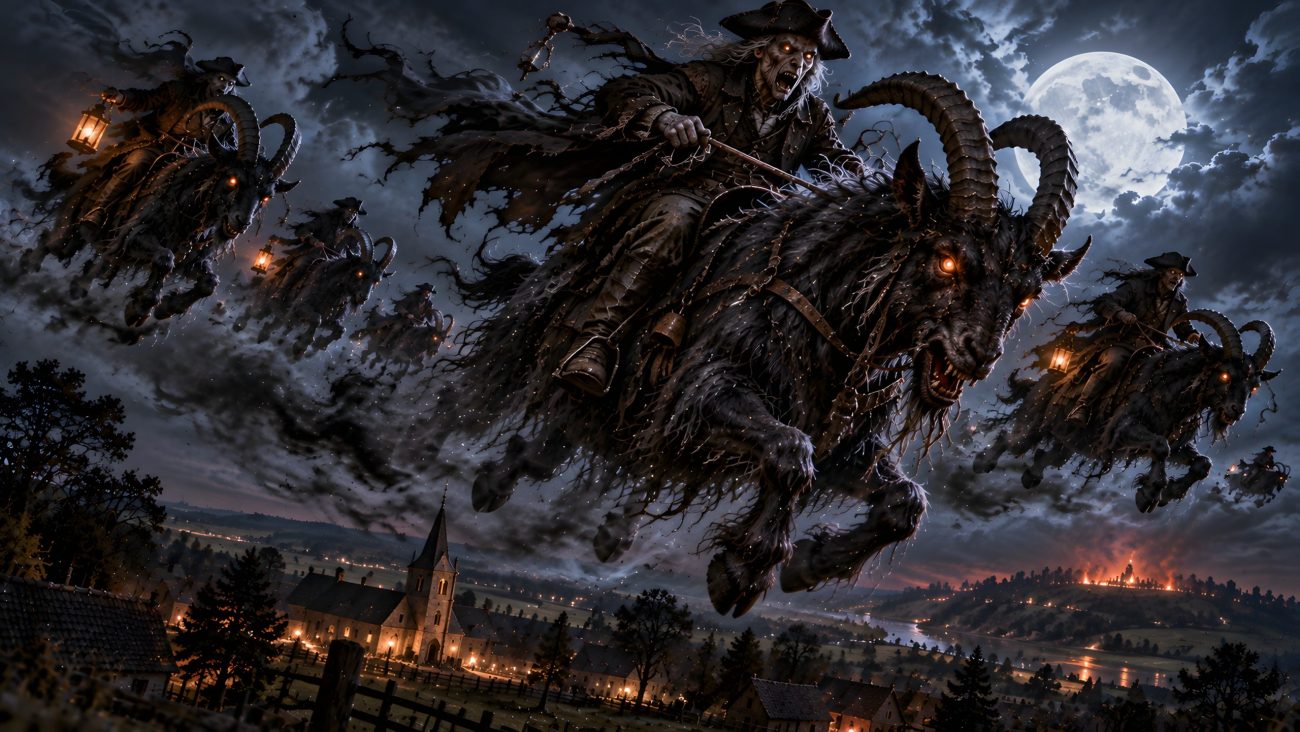
The Bokkenrijders were spirits who rode through the night sky upon goats. Mounted on their supernatural steeds, they could fly through the air by reciting a magical formula:

“Over huis, over tuin, over staak en dat tot Keulen in de wijnkelder!”

Once a year, the Bokkenrijders were said to ride to the Mookerheide, where they gathered to honor their master, the Devil.

The fear surrounding these spectral riders later became entangled with a very real band of robbers who operated throughout Limburg during the eighteenth century and called themselves Bokkenrijders as well. They appear to have exploited the existing fear of the supernatural riders. After being tortured, members of these gangs confessed to the most horrifying deeds, including having made a pact with the Devil and being able to fly through the air on the backs of goats.

More than 180 of these accused Bokkenrijders were eventually sentenced to death. Thus the name came to describe both the legendary spirits who supposedly crossed the night sky on goats and the eighteenth-century criminals who were accused of being their human counterparts.


Sources

“Aardmannetje tot zwarte juffer: een lijst van Nederlandse en Vlaamse elfen en geesten.” Abe de Verteller. Accessed September 30, 2026. https://abedeverteller.nl/van-aardmannetje-tot-zwarte-juffer-een-lijst-van-nederlandse-en-vlaamse-elfen-en-geesten/

Roesschaert

Tradition: Belgian Mythology
Alternative Names: Roessaart, Roesjhoart, Roesschaert
Category: Ghost, Witch, Dog


The Myth

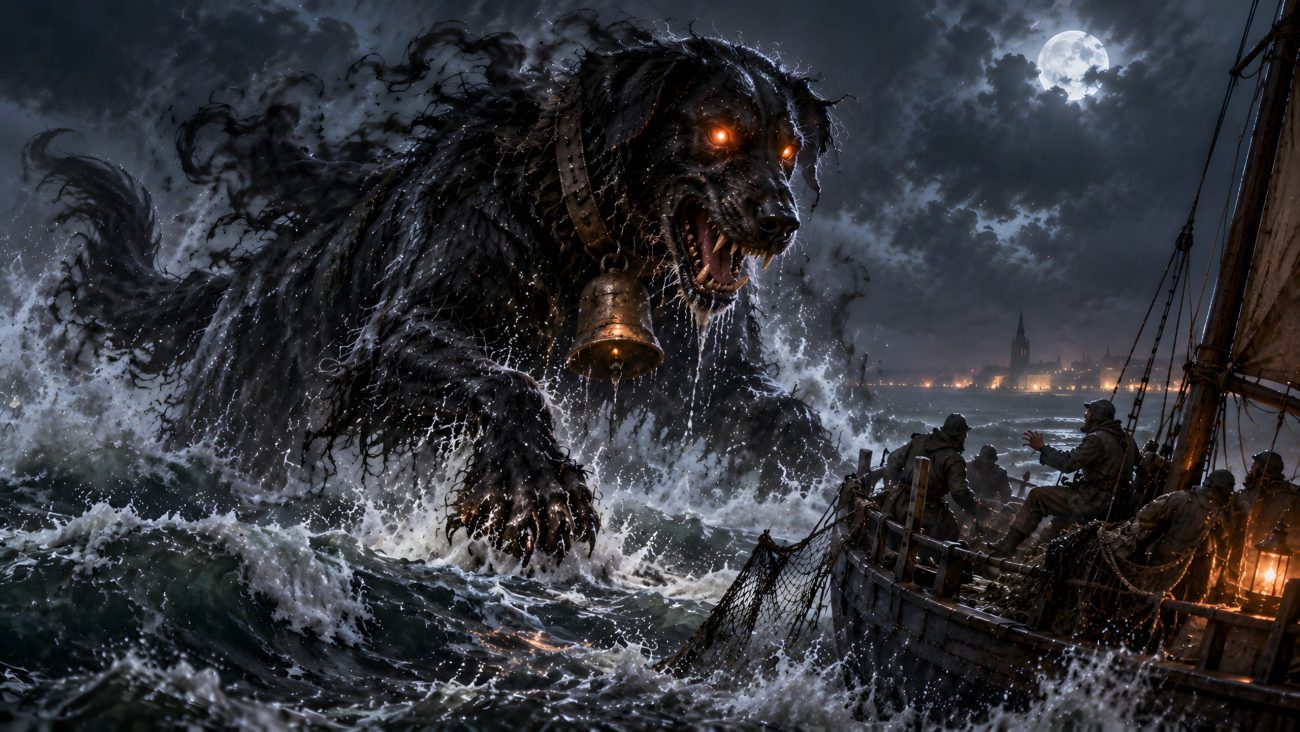
Roesschaert was the ghost of a burned witch. She could appear in several frightening forms, most notably as an enormous black dog with a bell around its neck. At other times she appeared as a cat or a donkey. Whatever form she took, her presence was accompanied by the sound “Roes, Roes, Roes,” from which her name was said to derive.

Roesschaert was especially troublesome to fishermen. She would destroy their fishing nets or try to overturn their boats, bringing danger to those working at sea.

She could also rise suddenly from the water itself, appearing without warning beside fishermen and sailors. From the sea she would seize them and drag them into the depths, making Roesschaert a particularly feared spirit along the Flemish coast.


Sources

“Aardmannetje tot zwarte juffer: een lijst van Nederlandse en Vlaamse elfen en geesten.” Abe de Verteller. Accessed September 30, 2026. https://abedeverteller.nl/van-aardmannetje-tot-zwarte-juffer-een-lijst-van-nederlandse-en-vlaamse-elfen-en-geesten/

Vurige Wagen

Tradition: Belgian Mythology, Dutch Mythology
Alternative Names: Korenwagen, Gloeiende Wagen, Hellewagen, Spookwagen
Category: Object


The Myth

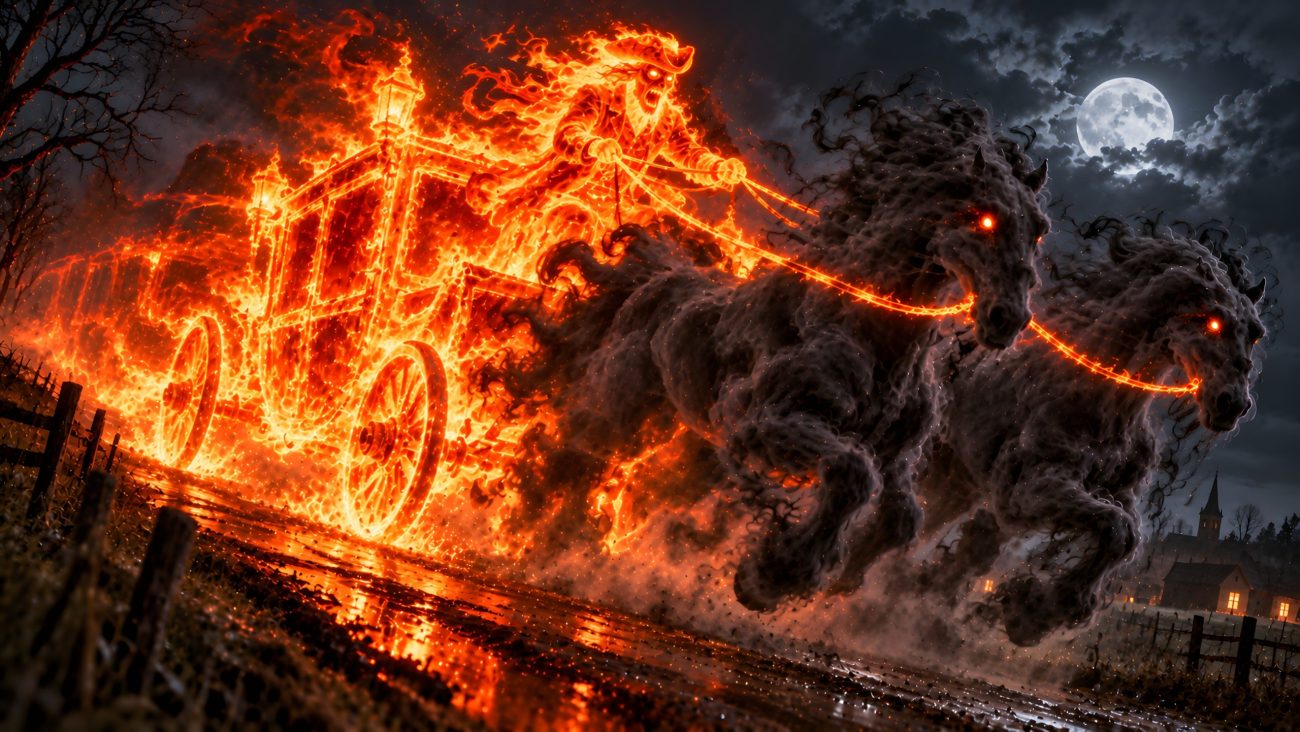
The Vurige Wagen is a glowing, fiery coach that appears at night, usually between midnight and one o’clock. It is drawn by black or invisible horses and sometimes rises into the air, racing through the darkness with an infernal roar.

Inside the coach, blood-red lights glow ominously, while the coachman himself shines with heat and spits fire. The terrifying vehicle is said to be the punishment of wealthy sinners who exploited and oppressed ordinary people during their lives.

One late-night traveller once heard the dreadful carriage thundering toward him. As the noise grew louder, he expected the fiery vehicle to rush past him, but when it came close, it suddenly vanished. Only a few metres farther away did it appear again, continuing its supernatural journey through the night.

The Vurige Wagen could also be understood as the restless spirit of a dissolute nobleman, condemned after death to drive eternally through the darkness in his blazing coach.


Sources

Reuland, Heinrich Adolph. Luxemburger Volksbücher: Geschichten und Sagen aus dem luxemburger Volksleben. Luxemburg: St. Paulus-Dr., 1892.