Black Cat of Denderleeuw

Tradition / Region: Belgian Mythology
Alternative names: None recorded
Category: Cat


The Myth

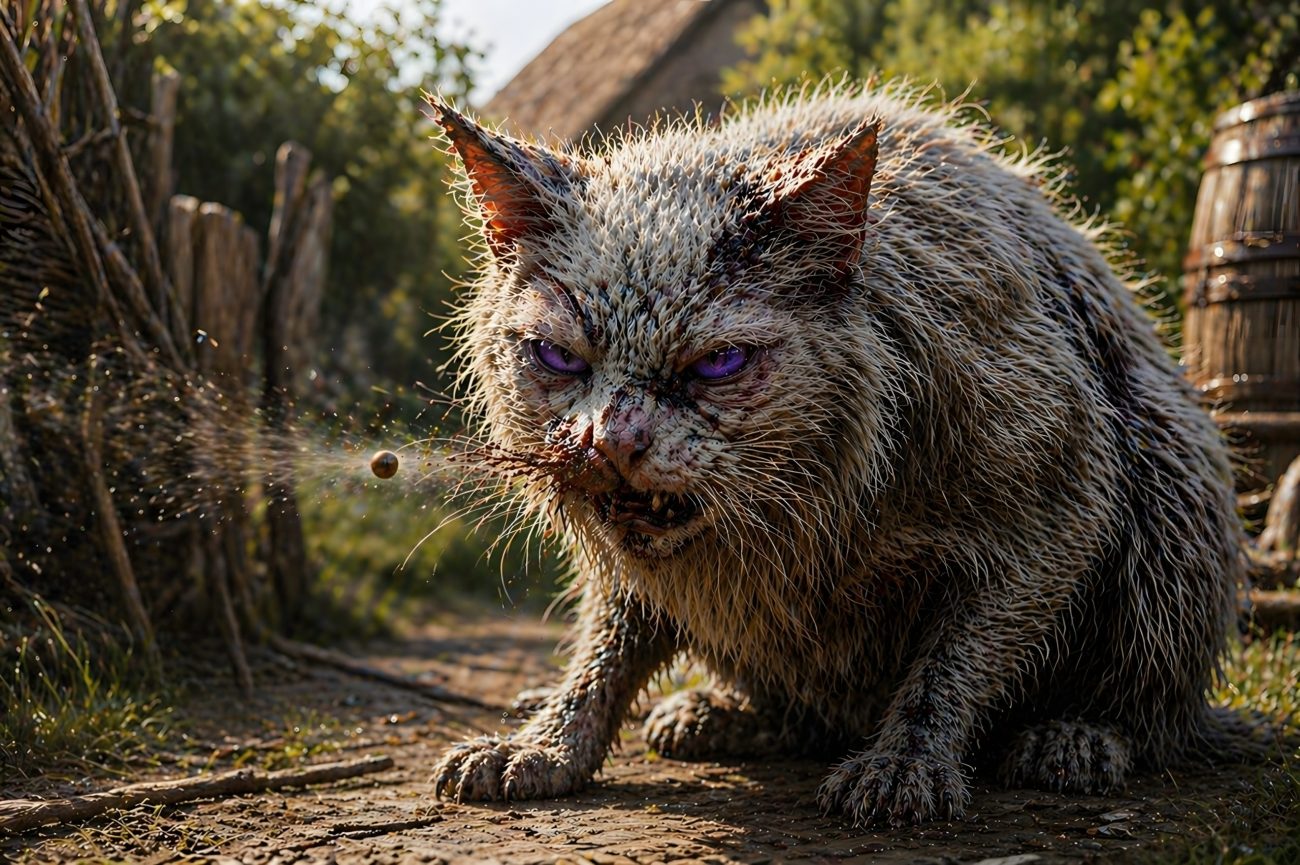
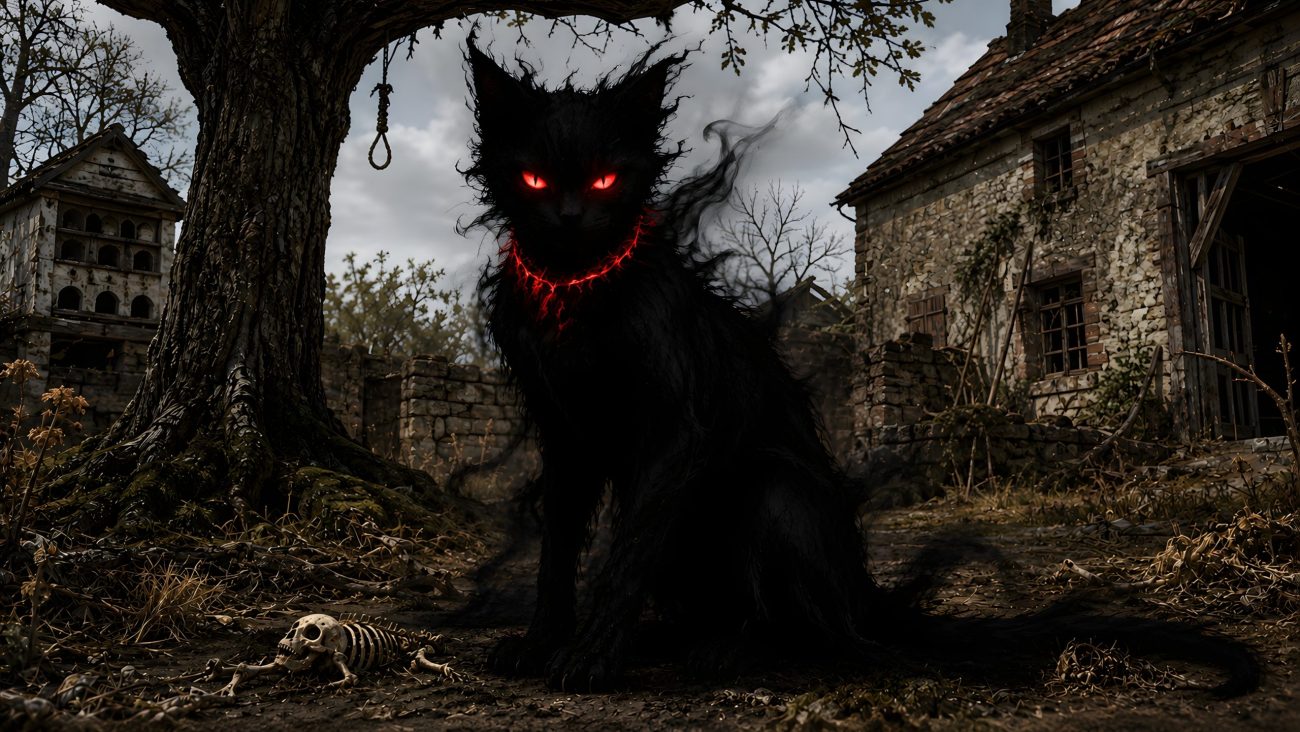
The Black Cat of Denderleeuw appears as an ordinary black cat whose death brings a powerful curse upon those responsible.

According to the legend, a black cat belonging to the Baetens household killed and ate one of their pigeons. Seeking revenge, the family hanged the cat from a tree. From that day onward, a curse fell upon the farm. For the next ten years, no cat could survive there. Every healthy young cat brought into the house soon began to waste away, weakened for no apparent reason, and died after only a short time. The strange succession of deaths was believed to be vengeance for the unjust killing of the black cat.


Sources

De Cock, Alfons. Vlaamsche sagen uit den volksmond. Amsterdam: Maatschappij voor Goede en Goedkoope Lectuur, 1921, p. 40.
Blonde Cats of Denderleeuw

Tradition / Region: Belgian Mythology
Alternative names: Three Blonde Cats
Category: Cat


The Myth

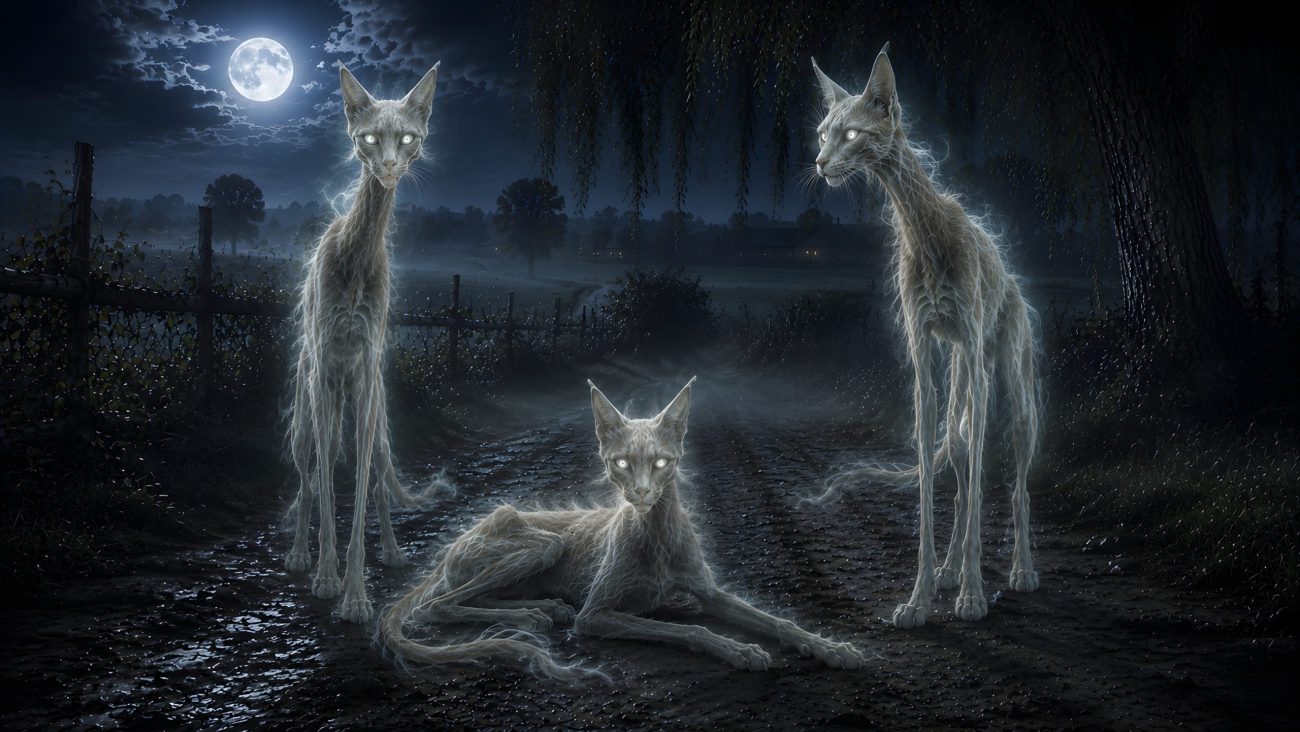
The Blonde Cats of Denderleeuw appear as three pale blonde cats that roam country roads at midnight. Although they resemble ordinary cats, they can speak with human voices and possess the supernatural ability to multiply endlessly, surrounding and overwhelming anyone they choose to follow.

According to the legend, a man named Jan Saeys was walking home around midnight after drinking. Along the road he encountered three blonde cats and jokingly greeted them, asking, Where are you going, beautiful little blonde cats?

To his horror, the cats answered him in human speech, repeating, Jan Saeys asks me, little blonde cat, where are you going? As they walked beside him, they continued repeating the same words over and over.

Meanwhile, the number of cats steadily increased. Three became many, and soon countless blonde cats surrounded him so densely that he could barely move his feet. Terrified, Jan instantly sobered and hurried home as fast as he could. With one final leap he threw himself inside his house and shut the door behind him.

No sooner had he entered than three tremendous knocks struck the door with such force that the entire house shook. The mysterious visitors never entered, but the terrifying encounter remained one of the supernatural cat legends of Denderleeuw.


Sources

De Cock, Alfons. Vlaamsche sagen uit den volksmond. Amsterdam: Maatschappij voor Goede en Goedkoope Lectuur, 1921, p. 40.

Black Cat of Keerbergen

Tradition / Region: Belgian Mythology
Alternative names: None recorded
Category: Cat


The Myth

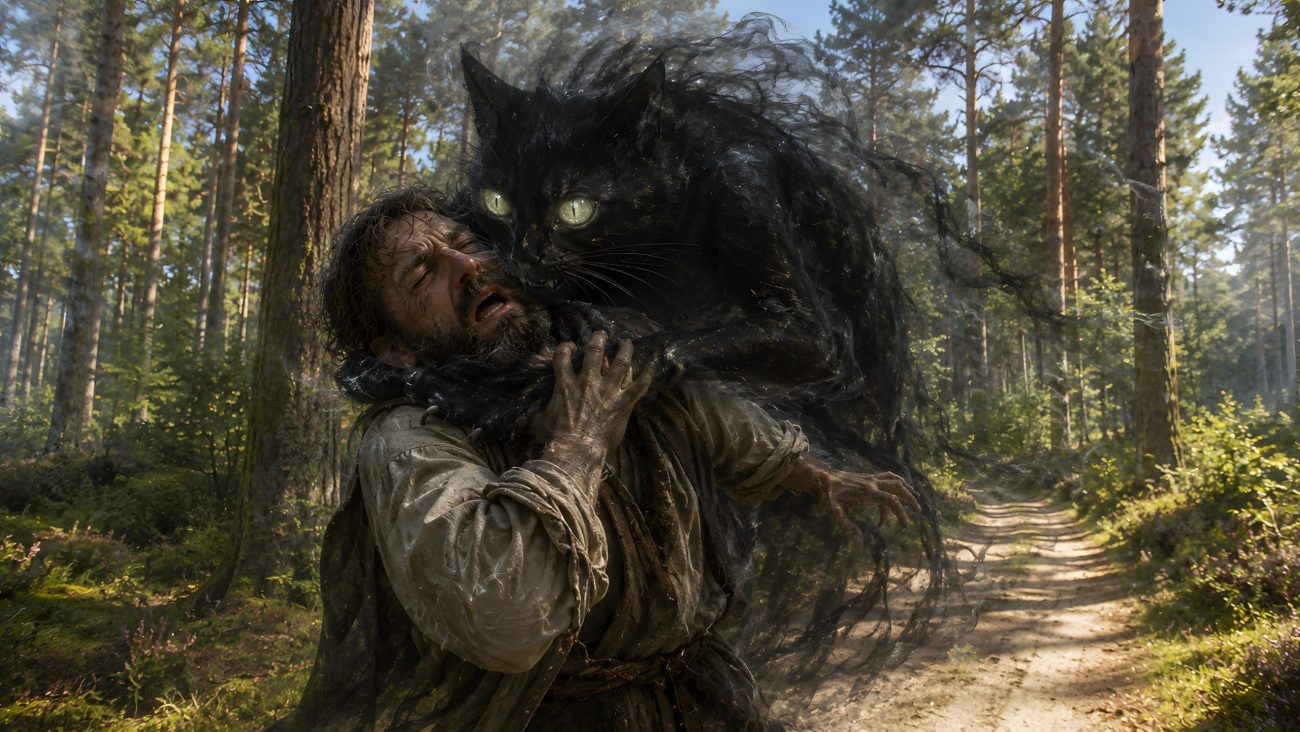
The Black Cat of Keerbergen appears as an ordinary but sinister black cat that suddenly leaps onto the shoulders of lone travelers at night. Once it has attached itself, it cannot be shaken off no matter how hard the victim struggles.

According to the legend, a farm laborer was walking home on a summer evening after working late at a nearby farm. His journey took him past a small pine wood when, without warning, a black cat sprang from one of the trees onto his shoulder. Terrified, he tried desperately to throw it off, shaking and striking at it, but the cat refused to let go.

Almost mad with fear, the man ran the rest of the way home. Only after he reached his house did the cat calmly jump down from his shoulder and disappear without a trace.

The laborer went straight to bed, deeply shaken by the encounter. Three days later, he died. According to the tradition, he had literally been frightened to death by the mysterious black cat.


Sources

De Cock, Alfons. Vlaamsche sagen uit den volksmond. Amsterdam: Maatschappij voor Goede en Goedkoope Lectuur, 1921, p. 40.

White Skull Cat

Tradition / Region: Belgian Mythology
Alternative names: White Cat
Category: Cat, Skeleton


The Myth

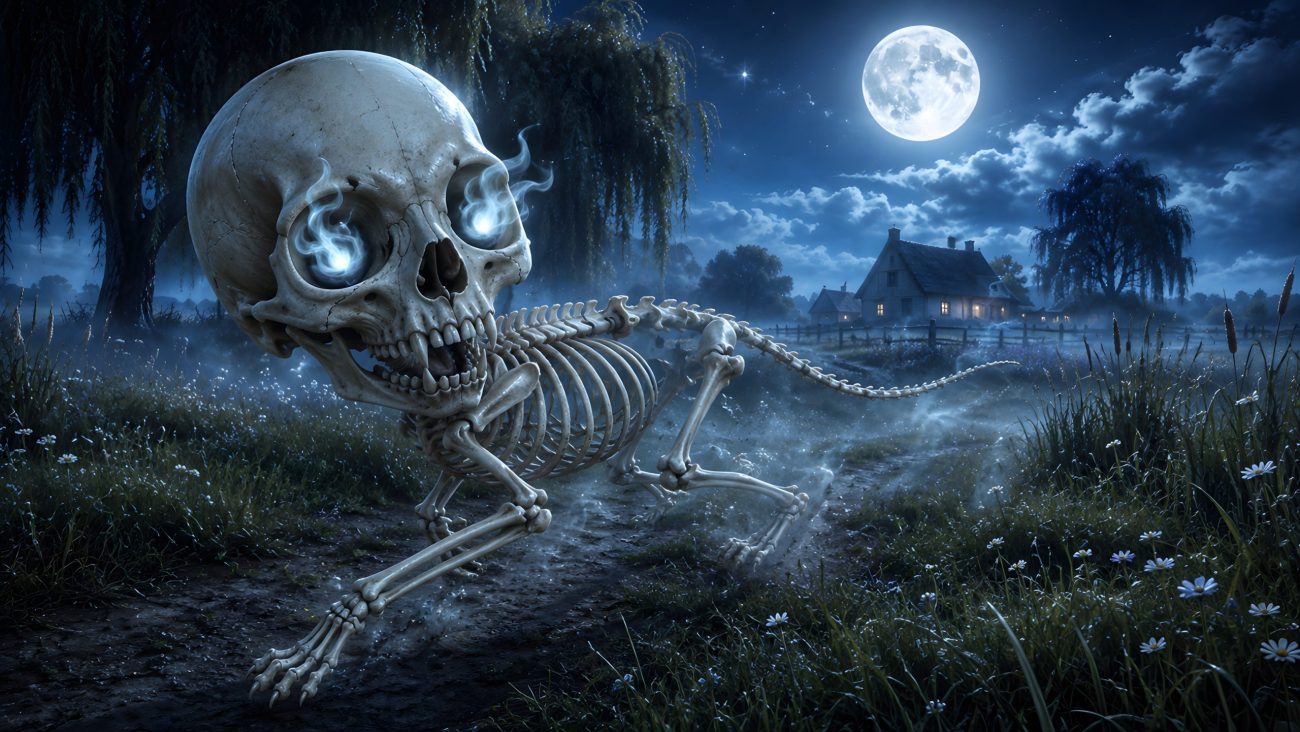
The White Skull Cat appears as a small white cat that can transform into a human skull.

According to the legend, a farmer known as Boerke Jans was walking home late one evening from the village square. Near the Lindo on the Windikeveld, a small white cat began walking ahead of him. He picked it up and carried it home inside his coat. Once home, he locked the cat inside his wardrobe for the night.

The following morning, when he opened the wardrobe, the cat had transformed into a human skull.

Terrified, Boerke Jans waited until midnight before carrying the skull back to the place where he had found the cat. As soon as he laid it on the ground, the skull instantly changed back into the white cat, which ran off across the fields and disappeared into the darkness.

The fright affected Boerke Jans so deeply that, according to the legend, he gradually wasted away from fear.


Sources

De Cock, Alfons. Vlaamsche sagen uit den volksmond. Amsterdam: Maatschappij voor Goede en Goedkoope Lectuur, 1921, p. 49.


Loekenbeer

Tradition / Region: Belgian Mythology
Alternative names: Lokkenbeer, Lokkeman
Category: Bear


The Myth

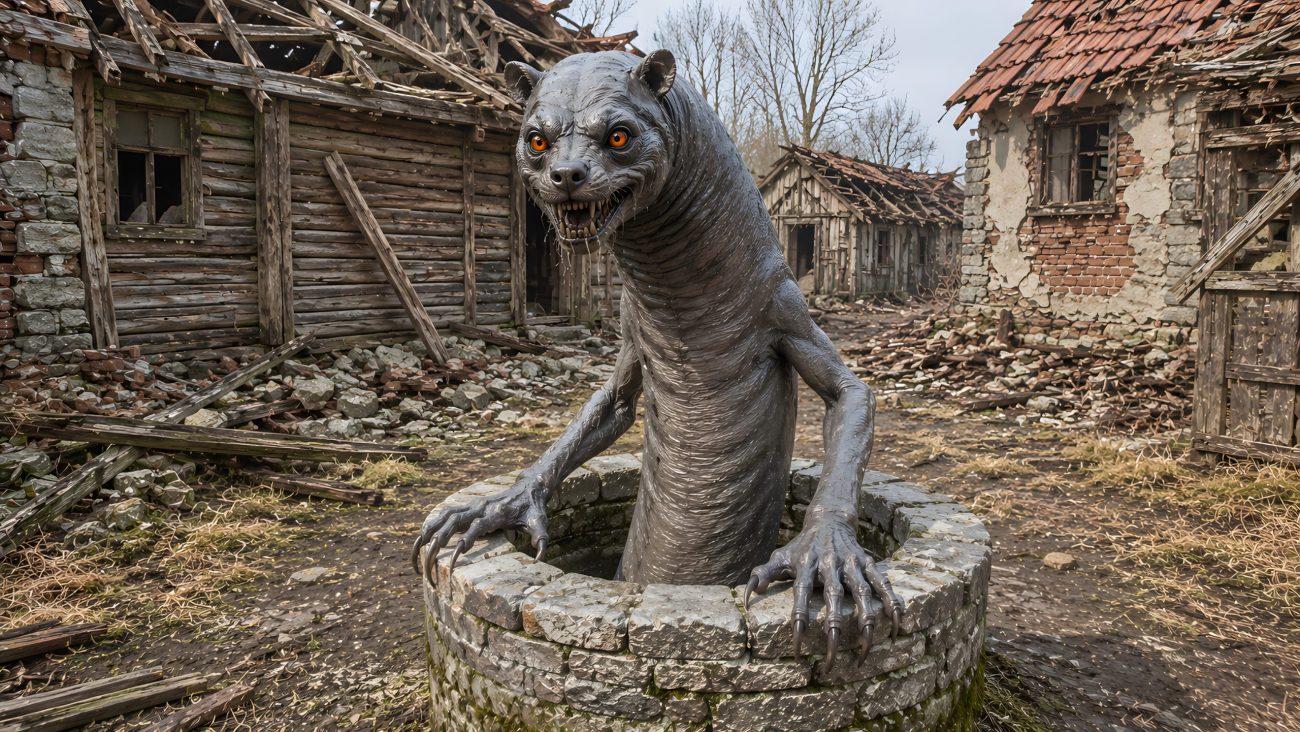
The Loekenbeer is a dangerous creature from Flemish folklore said to dwell in cesspits and wells. It is especially feared for luring children who wander too close to these places, dragging them into the water and drowning them.

The creature is also believed to hide in dark cellars, waiting unseen. Stories of the Loekenbeer served as a warning to children to stay away from deep wells, pits, and other hazardous places where the mysterious being was thought to lurk.


Sources

Abe van der Veen. (2014, July 8). Van aardmannetje tot zwarte juffer: Een lijst van Nederlandse en Vlaamse elfen en geesten. Abe de Verteller. Retrieved June 29, 2026, from https://abedeverteller.nl/van-aardmannetje-tot-zwarte-juffer-een-lijst-van-nederlandse-en-vlaamse-elfen-en-geesten/


Spookhoeve van Exaarde

Tradition / Region: Belgian Mythology
Alternative names: –
Category: Horse


The Myth

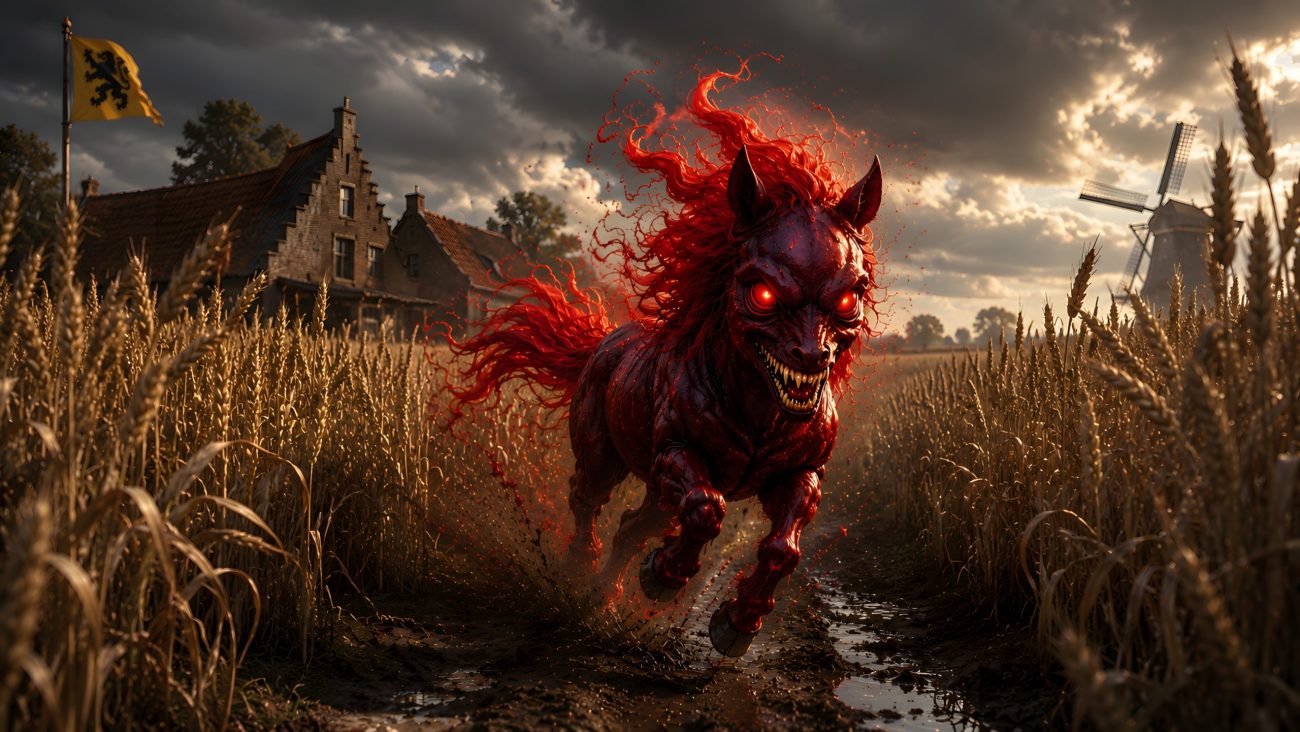
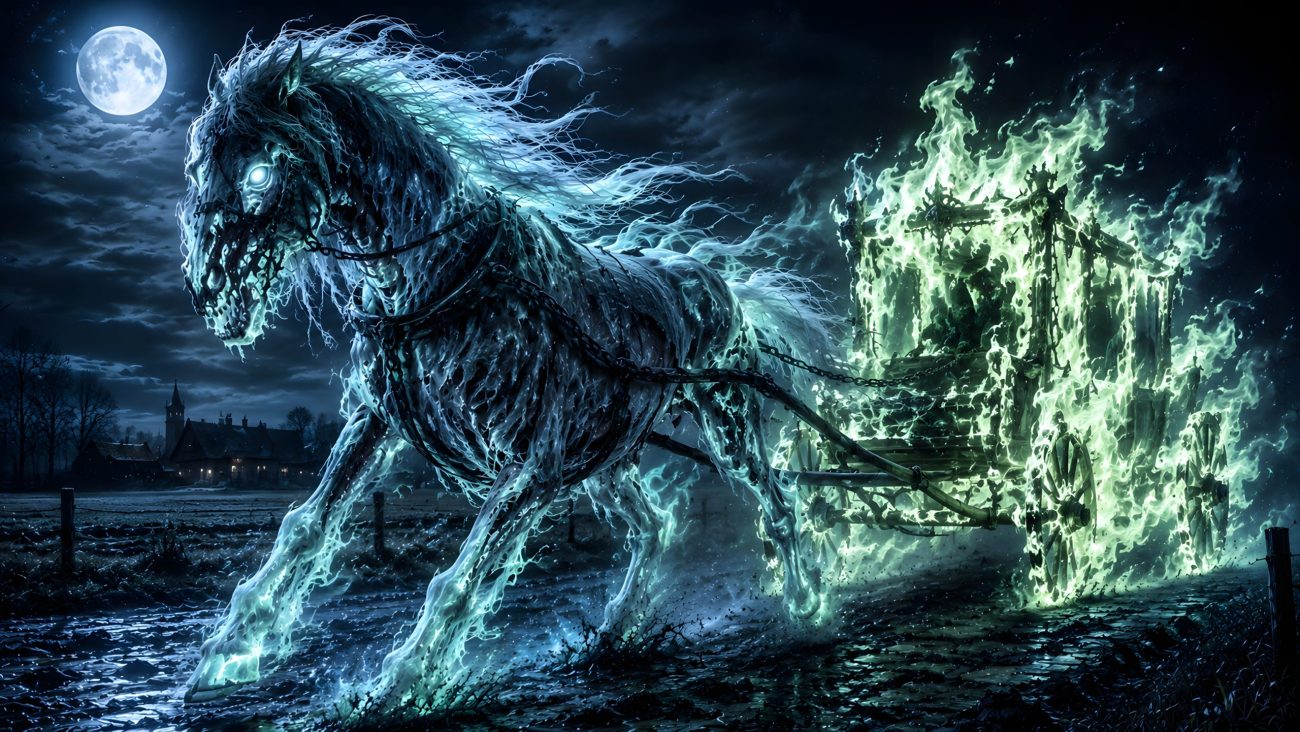
A farmhouse in the village of Exaarde was long believed to be haunted. One night, when a cow was about to calve, the household went to the stable and found a monstrous horse lying in front of the door. As they approached, the creature quietly moved aside to let them pass. After they had finished their work in the stable, the horse calmly returned to its original place.

In the nights that followed, the hauntings changed. Around midnight, the farmer often looked from his window and saw a fiery carriage drawn by two horses racing around the farmyard. The blazing apparition illuminated the entire courtyard as it thundered past.

The frightened family sought the advice of local priests. They instructed the farmer to search the farm carefully for any unusual sign. One morning he discovered the imprint of a horse’s hoof in the middle of the path. After hearing this, the priests nailed a horseshoe to the inside of the farm gate facing the road.

From that day onward, the haunting ceased. Years later, when the old gate was replaced, the family neglected to transfer the horseshoe to the new gate. The ghostly manifestations soon returned and continued until the horseshoe was once again fastened to the entrance, after which the haunting disappeared.


Sources

de Cock, A. (1921). De Nachtkoets (p. 114). In Vlaamsche sagen uit den volksmond. Maatschappij voor Goede en Goedkoope Lectuur. Retrieved June 29, 2026, from https://www.dbnl.org/tekst/cock001vlaa01_01/


Girlegei

Tradition / Region: Belgian Mythology
Alternative names: –
Category: Horse


The Myth

Girlegei is a mischievous spirit from Flemish folklore that was said to haunt the heathlands between Koekelare and Moere.

The creature was a shapeshifter capable of taking many forms. People most often encountered it as a horse, a cat, or a dog. In these disguises, it would appear at night and block the path of travelers, preventing them from continuing their journey.

According to tradition, the spell could only be broken by striking the creature or by reciting the Gospel of Saint John. When confronted in this way, Girlegei would flee into the air while laughing and repeatedly crying, “Girlegei, Girlegei!”


Sources

Abe van der Veen. (2014, July 8). Van aardmannetje tot zwarte juffer: Een lijst van Nederlandse en Vlaamse elfen en geesten. Abe de Verteller. Retrieved June 29, 2026, from https://abedeverteller.nl/van-aardmannetje-tot-zwarte-juffer-een-lijst-van-nederlandse-en-vlaamse-elfen-en-geesten/


Cat Witch of Heist op den Berg

Tradition / Region: Belgian Mythology
Alternate Names: —
Category: Cat, Witch


The Myth

During the time of Napoleon I, a Belgian soldier was returning home from war, passing through a Prussian village.

As he walked through the town, he noticed a woman sitting outside her house. She was smoking a pipe, but something about her seemed wrong—on her backside there was a dark, unnatural stain. The soldier immediately suspected that she was a witch.

Without hesitation, he took his rifle from his shoulder, loaded it with a consecrated bullet, and fired—just grazing her.

He then continued his journey back to Belgium, where he was required to stay for several days.

There, he encountered a woman who bore strange signs: she had a black patch at the back of her skirt and a wound on her nose that refused to heal. The injury lingered unnaturally, as if it could not recover.

It became clear that this was the same being he had shot before.

The wound remained open because it had been inflicted by a consecrated bullet—something believed to harm witches in a way that could not be undone.


Sources

de Cock, A. (1921). Vlaamsche sagen uit den volksmond. In Amsterdam: Maatschappij voor goede en goedkoope lectuur, from https://www.dbnl.org/tekst/cock001vlaa01_01/colofon.php p. 37.


Reus te Hammen

Tradition / Region: Belgian Mythology
Alternate Names: Giant of Hamme
Category: Giant


The Myth

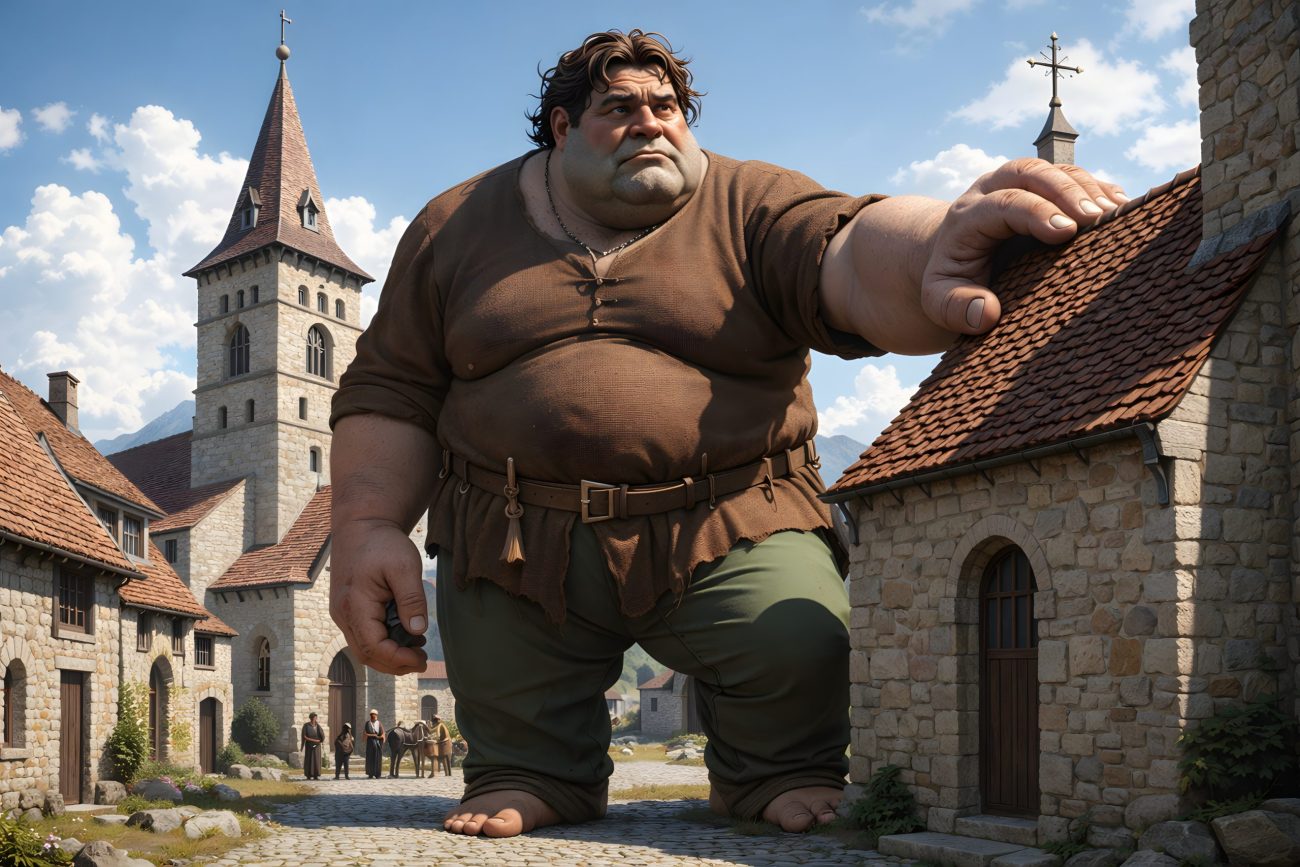
The Reus te Hammen refers to a legendary giant or giants associated with the town of Hamme in Flanders. The most tangible element of the legend is a massive bone kept in the local church, believed by the people to be the thigh bone of a giant.

According to tradition, this enormous bone was pulled from the river Durme long ago and preserved in the church, where it came to be treated almost like a sacred relic. Its unusual size reinforced the belief that giants once lived in the region.

Older accounts speak of two giants who lived on opposite sides of the river. They argued over who was taller and went to prove their size by reaching the roof of a church under construction, each able to place stones without the need for scaffolding.

In other versions, there were three giants who built a church in Hamme themselves, their height allowing them to work directly at roof level. One of them was said to cross the river simply by walking through it, unaffected by its depth.

Local traditions also preserve traces of their presence in the landscape. Certain paths and features, such as “giants’ roads,” were believed to mark where they once moved, and these places were treated with caution and respect.

The giant of Hamme was not just a distant myth but a figure tied to physical evidence, local geography, and enduring popular belief, linking the land, the people, and the memory of beings of immense size who once walked there.


Sources

de Cock, A. (1921). Vlaamsche sagen uit den volksmond. In Amsterdam: Maatschappij voor goede en goedkoope lectuur p. 154.


Tienuurshond

Tradition / Region: Dutch Mythology, Belgian Mythology
Alternate Names: Twaalfuurshond, Negenuurshond, Tienurenhond
Category: Dog, Ghost


The Myth

In parts of Utrecht and the region around Antwerp, people once spoke of a spectral animal known as the Tienuurshond.

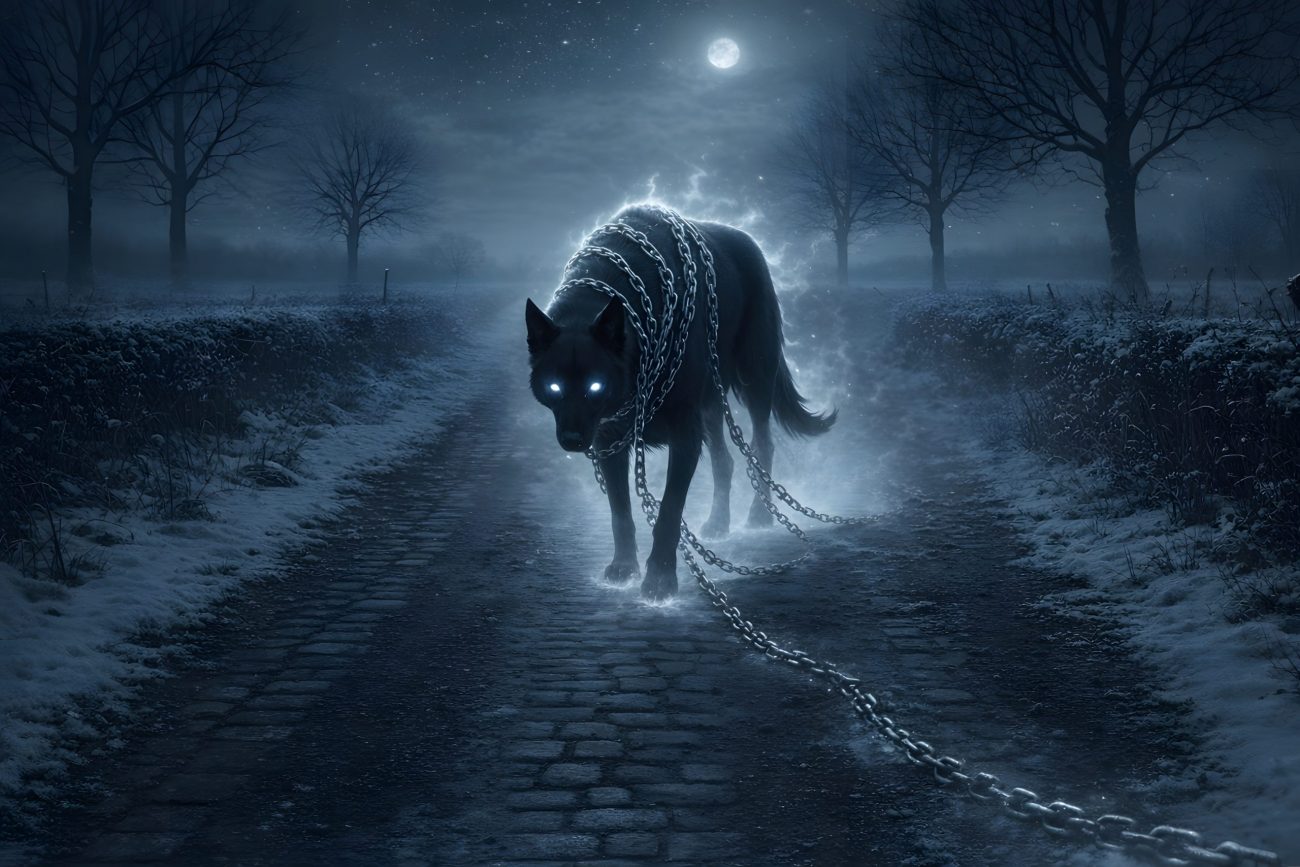
He was said to appear on lonely roads during winter evenings. At exactly the same hour each night — most often at ten o’clock — a large black dog would come into view ahead of a traveler. Around its body hung chains that rattled as it moved, their sound echoing through the cold darkness.

The creature did not usually attack. Instead, it walked in front of the traveler, leading the way along the road as though guiding them through the night. It remained just out of reach, always ahead, never allowing itself to be caught.

Because it appeared at a fixed hour, people gave it its name: the Ten-O’Clock Dog. In some places, where it was believed to appear at other times, it was known as the Nine-O’Clock Dog or the Twelve-O’Clock Dog instead.

Thus the Tienuurshond was remembered as a chained black hound of the winter roads, a ghostly figure that emerged at the appointed hour and walked before the lonely traveler until it vanished again into the night.


Sources

Abe de Verteller. (n.d.). Van aardmannetje tot zwarte juffer: Een lijst van Nederlandse en Vlaamse elfen en geesten. From https://abedeverteller.nl/van-aardmannetje-tot-zwarte-juffer-een-lijst-van-nederlandse-en-vlaamse-elfen-en-geesten/