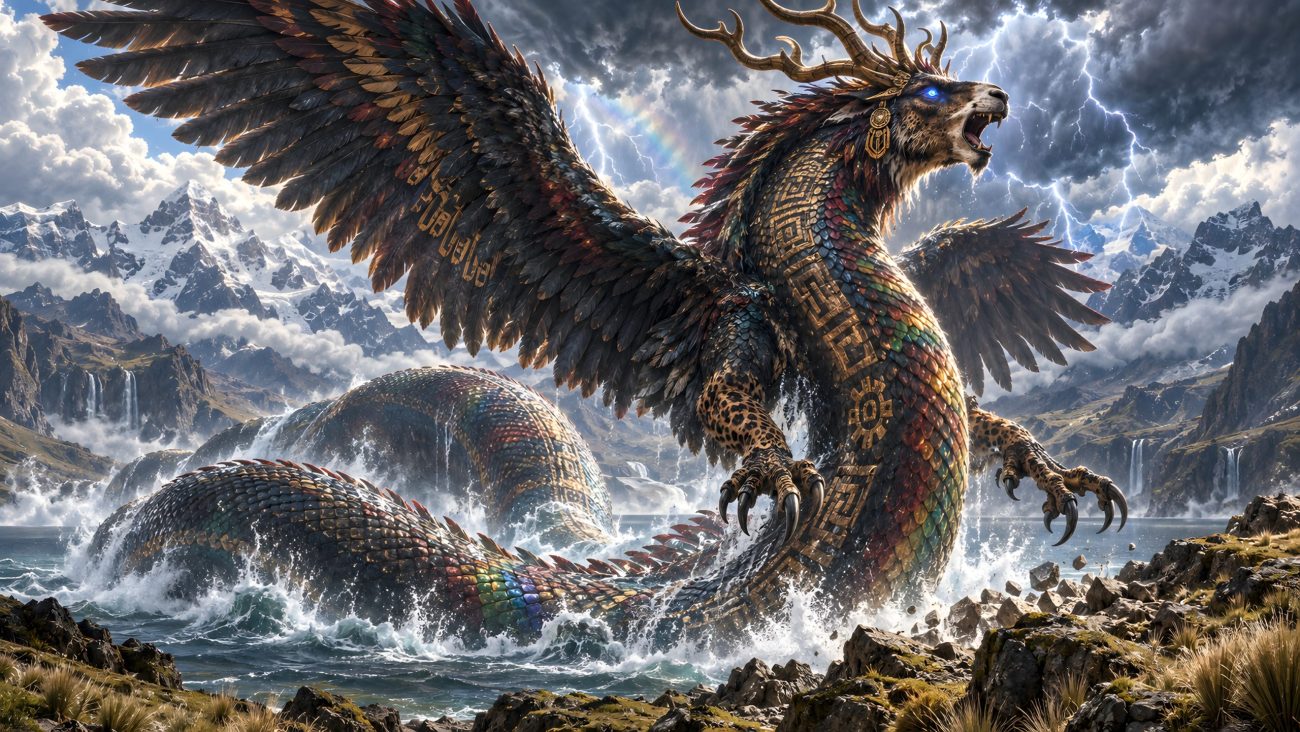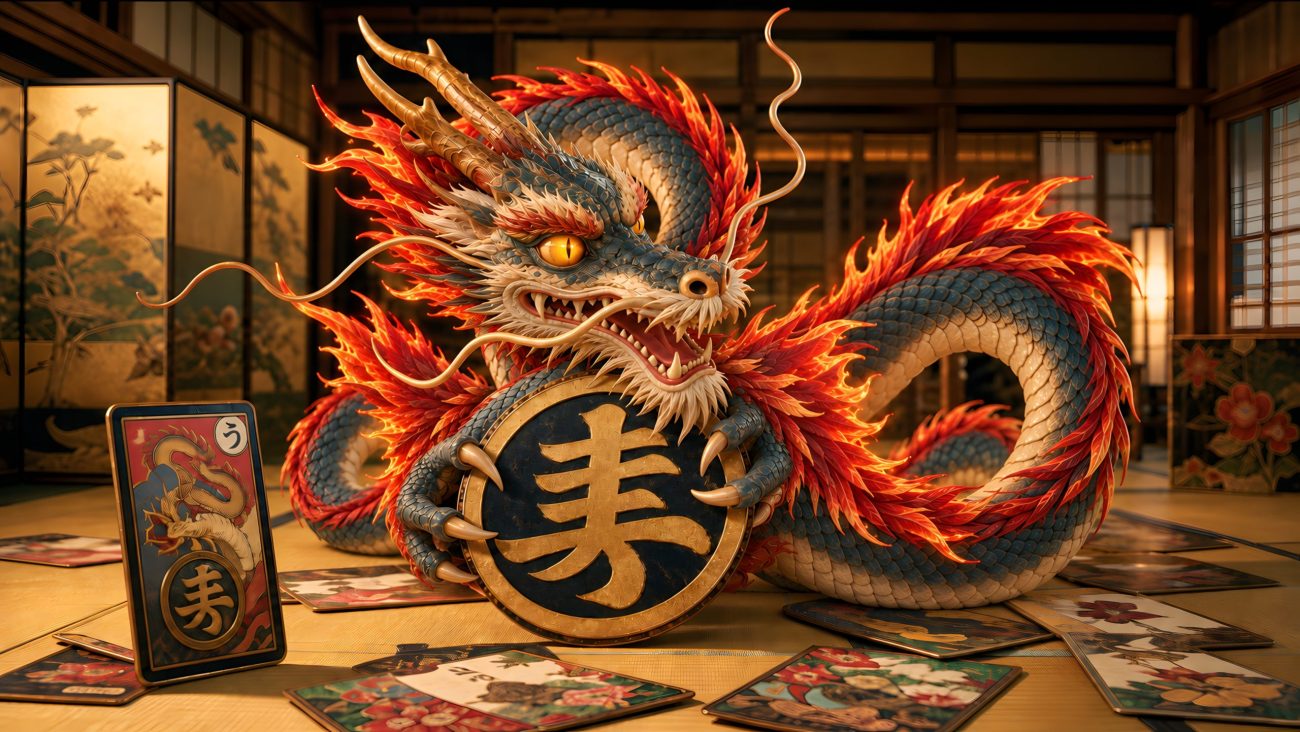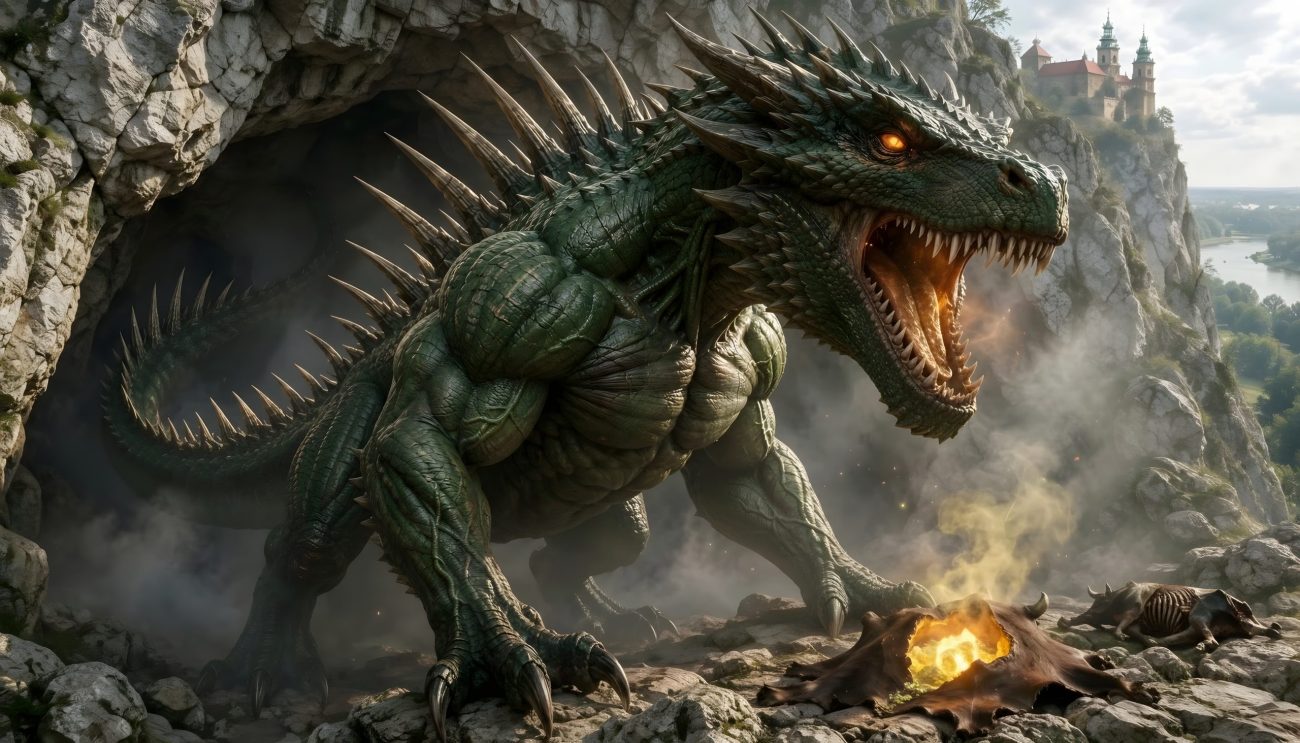
Zhu Yan

Tradition / Region: Ancient China
Alternate Names:
Category: Omen beast / monstrous ape


The Myth

In the ancient text Classic of Mountains and Seas, it is said that in the Western Mountains there exists a strange beast called Zhu Yan. Its form is like that of a powerful ape, but its head is white and its feet are red. It possesses immense strength and an unsettling presence.

Zhu Yan does not wander without consequence. When it appears in the world, its coming is taken as a sign of catastrophe. The sighting of this beast foretells the outbreak of great war, bringing violence and upheaval wherever its presence is known. Thus, Zhu Yan is remembered not for deeds it performs, but for the disaster that follows in its wake.


Interpretive Lenses

Religious Readings
Philosophical Readings
Psychological Readings
Esoteric Deep Dive
Political / Social Readings
Other

Huldra

Tradition / Region: Norwegian Mythology, Swedish Mythology
Alternate Names: Skogsrå, Tallemaja, Ulda, Hulder
Category: Fox, Forest dweller


The Myth

Deep within the Scandinavian forests, people spoke of the Huldra, a hidden woman who ruled the woods and the spaces between trees. She appeared as a beautiful young woman, dressed like a farmer’s daughter or forest maiden, her voice gentle and her manner inviting. Those who met her often believed they had encountered an ordinary human, for she moved easily among people and spoke their language. Yet the Huldra was never entirely what she seemed.

Those who looked too closely, or who followed her too far into the forest, might glimpse what she concealed. Beneath her skirt could be seen the tail of an animal, often that of a cow or fox, or her legs might be covered in coarse hair. Some said that if she turned her back, it was hollow like the inside of a rotting tree. For this reason she wore long clothing and kept her secrets well hidden, revealing them only to the careless or the doomed.

The Huldra was one of the rå, the wardens of the natural world, spirits who governed forests, waters, and mountains. As skogsrå, she claimed dominion over the woods and all who worked within them. Charcoal burners, who labored day and night tending their kilns, were said to be especially favored by her. While they slept from exhaustion, the Huldra would watch over the burning charcoal, waking them if danger threatened. In return, the men left food for her in a hidden place, knowing that respect earned protection.

Yet her kindness was matched by danger. Men who mocked her, tried to expose her secret, or followed her seduction without respect often lost their way in the forest, fell ill, or were never seen again. Some tales tell of men who were lured into marriage with a Huldra, only to discover her true nature too late. Others say that if she were treated well, baptized, or brought fully into the human world, her tail would fall away and she could live as a woman, though the forest would mourn her loss.

Thus the Huldra remained a presence both alluring and feared — a reminder that the forest was alive, watchful, and governed by powers older than humanity, rewarding respect and punishing arrogance in equal measure.


Zalzanagy

Tradition / Region: Dagestan (Rutuls, Avars, Andians, Botlikhs, Laks, and others)
Alternate Names: Untul Ebel, Yadlad Nin
Category: Disease spirit / evil spirit


The Myth

Zalzanagy was known among the peoples of Dagestan as the mother of illnesses, an evil spirit whose coming brought sickness and misfortune. She was said to appear as a woman of enormous stature, with a long nose, thick unkempt hair, and clothing of rags or long white or black garments. Wherever she showed herself, illness followed, and sometimes war, famine, or epidemic spread soon after. Yet it was believed that she could be appeased with food or old clothes, and that doing so might spare a household or an entire village.

Once, a young girl fell gravely ill, and her grandmother stayed by her side through the night. In those days there were no lamps, only torches. By the flickering light, the grandmother saw a strange, naked creature, small like a child, standing behind the half-open door. She leapt up and seized it, demanding to know who it was and why it had come. The creature answered, “Rub my body with oil.” Its body was hard and rough like oak bark. The grandmother rubbed two whole jars of oil into its skin until it was satisfied. After this, the girl recovered, and the illnesses that had plagued the village vanished.

Another tale tells of a shepherd named Surkhay, who lived long ago in the village of Shodroda and tended cattle at the Girgutl farm. One evening, after driving the cattle into the barn, he went to fetch water. Nearby he heard a sound like the moaning of a sick woman. Looking around, he saw a giant figure dressed in rags. He called out, but it did not answer. Realizing it was no human, and fearing an attack, he unleashed his two fierce dogs. Though the dogs feared no man, they fled at once from the creature. Surkhay then threw a stone at it, and then another. Fire burst from the creature’s mouth. When he threw a third stone, Surkhay collapsed and lost consciousness. He lay senseless for an entire day. When he awoke, he could not move. The village elders said he had encountered Untul Ebel, who had struck him with illness for his defiance.

There is also the story of Mariet, a woman from the village of Rutul. One day, after milking the cows and driving them into the barn, she went to bake bread. Near a bridge, she turned and saw a tall woman sitting upon a pile of stones. Her long, shaggy hair flowed freely, her face was strikingly beautiful, and she was dressed from head to toe in white. Mariet froze, unable to move as the woman smiled silently at her. Remembering her mother’s words, she said a prayer and threw a small piece of dough toward the woman. At once, the figure vanished. Mariet crossed the bridge, baked her bread, and returned home, never seeing the woman again that day. Soon after, however, she fell ill and remained so for a long time. People said that had Yadlad Nin appeared dressed in black instead of white, the sickness would have claimed many lives in the village.


Interpretive Lenses

Religious Readings
Philosophical Readings
Psychological Readings
Esoteric Deep Dive
Political / Social Readings
Other

Raróg

Tradition / Region: Polish Mythology
Alternate Names: Raroh, Raróg
Category: Bird, Spirit


The Myth

The Raróg is a being of fire, most often seen as a flaming falcon or hawk streaking across the sky. It is not a creature of nests or forests, but one bound to heat, flame, and the upper reaches of the world. When it moves, it may blaze like a living ember, spiral through the air like a whirlwind, or descend suddenly in a flash of fire.

Some traditions tell that the Raróg may be born in an unusual way. An egg kept warm upon a household stove for nine days and nights can hatch into the spirit. Once it comes into being, it does not remain fixed in shape. At times it appears as a fiery bird, at others as a dragon-like form, a small humanoid spirit, or a spinning column of flame. Like fire itself, its nature is unstable and ever-changing.

The Raróg is said to dwell at the crown of the Slavic world tree, where it guards the entrance to Vyraj, a warm and radiant realm associated with life, renewal, and the seasonal flight of birds away from winter. From this height, it watches the boundary between the human world and a distant paradise beyond decay and cold.

In some regions, particularly in Polish folklore, the Raróg appears in a smaller and gentler form. It is described as a tiny fire-bird that can be carried in a pocket and brings good fortune to the one who possesses it. Even in this form, it remains a creature of flame, closely tied to later legends of the Firebird, whose feathers continue to glow long after being plucked.

Across all its tellings, the Raróg endures as a living embodiment of fire itself — swift, radiant, and dangerous, forever moving between worlds in flickers of flame.