Ghost Creek Spirit

Tradition: Sioux Mythology, American Mythology
Alternative Names: Ghost of Ghost Creek, Wandering Warrior Spirit
Category: Ghost


The Myth

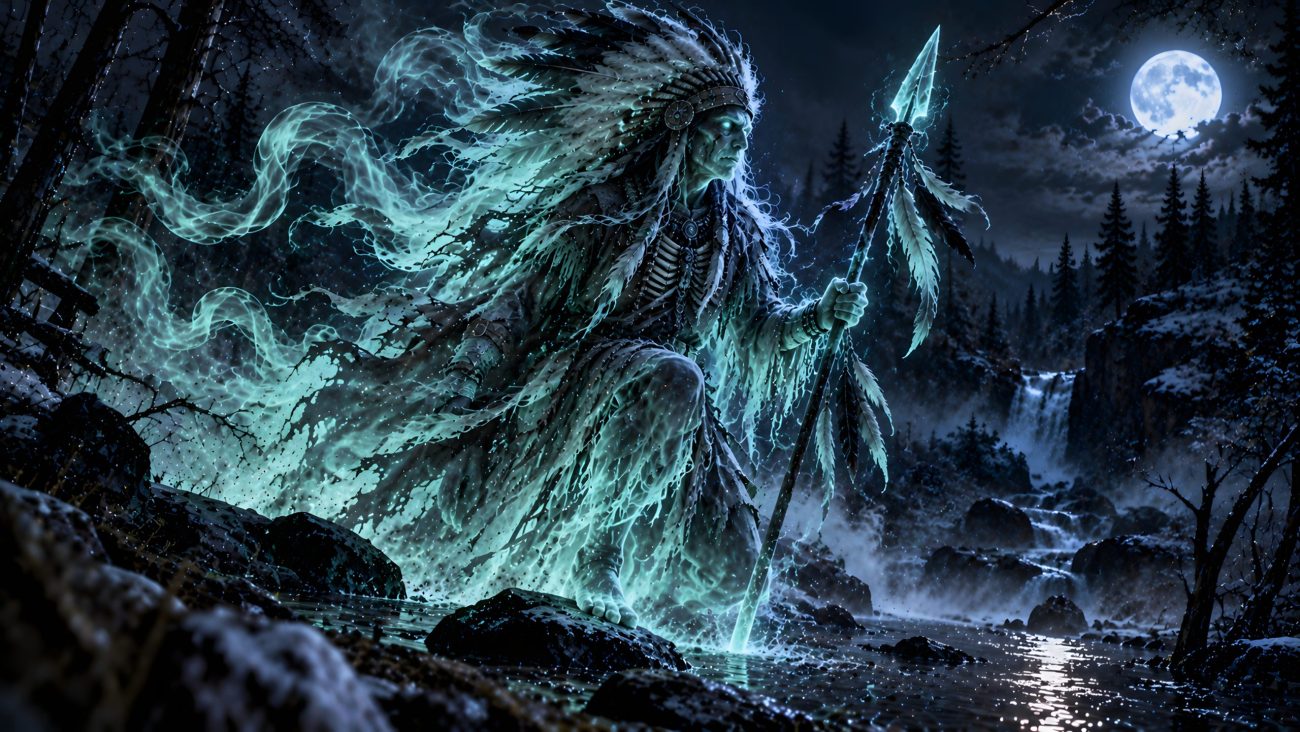
The Ghost Creek Spirit is the restless ghost of a great Sioux warrior who was killed by an enemy while hiding in the woods. According to the story, the warrior was ambushed and shot before he could defend himself. Because he was killed through treachery rather than in open battle, his spirit could not join his fallen companions in the Happy Hunting Grounds. Instead, he was condemned to wander the woods around a creek known as Ghost Creek, waiting for a brave person willing to listen to his story and help him obtain vengeance. The place was feared by travelers, for those who camped there were said to be disturbed by the ghost during the night, and those who fled from him or attacked him never returned home.

One cold autumn evening, two young warriors named Hake and Chaske sought shelter at Ghost Creek while traveling through enemy territory. A heavy snowstorm was approaching, and the thick woods offered protection from the wind. They built a small shelter from willow branches, prepared a meal of dried buffalo meat and buffalo tallow, and were about to eat when a man silently entered and sat beside them. Hake welcomed the stranger, offered him food and tea, and Chaske passed him a pipe. After eating and smoking, the stranger revealed that he was not a living man but the wandering spirit of a warrior slain in those woods. Unlike earlier travelers, who had fled or attacked him, the two young men had treated him with courage and hospitality.

The spirit asked Hake and Chaske to avenge his death by killing the enemy responsible and bringing him the man’s scalp. He explained that the killer lived in a large winter village beyond the hills and described how the two warriors could recognize him: an old man who rode a white horse, led a black horse, and drove a herd of approximately one hundred horses. After killing and scalping this man, the young warriors were to attack two additional enemies at the hunting grounds and then meet the spirit on a high knoll, where he would show them the location of the horses. Once they gave him the scalp of his killer, he promised, his spirit would finally disappear. He also warned them that snow would begin falling after his departure and conceal their trail, but they must travel for three days and nights without stopping to escape pursuit. The spirit further revealed that he was the grandfather of Pretty Feather, the young woman Hake hoped to marry, and the father of the great Medicine Man. In the surviving passage, the two friends follow his instructions by hiding in the brush and watching the enemy hunting party pass, preparing to carry out the spirit’s demand for vengeance.


Sources

McLaughlin, Marie L. Myths and Legends of the Sioux. Bismarck, N.D.: Bismarck Tribune Co., 1916. https://archive.org/search.php?query=creator%3A%22McLaughlin%2C+Marie+L.%2C+1842-%22
Plachka

Tradition: Belarusian Mythology
Alternative Names: Plachka
Category: Ghost


The Myth

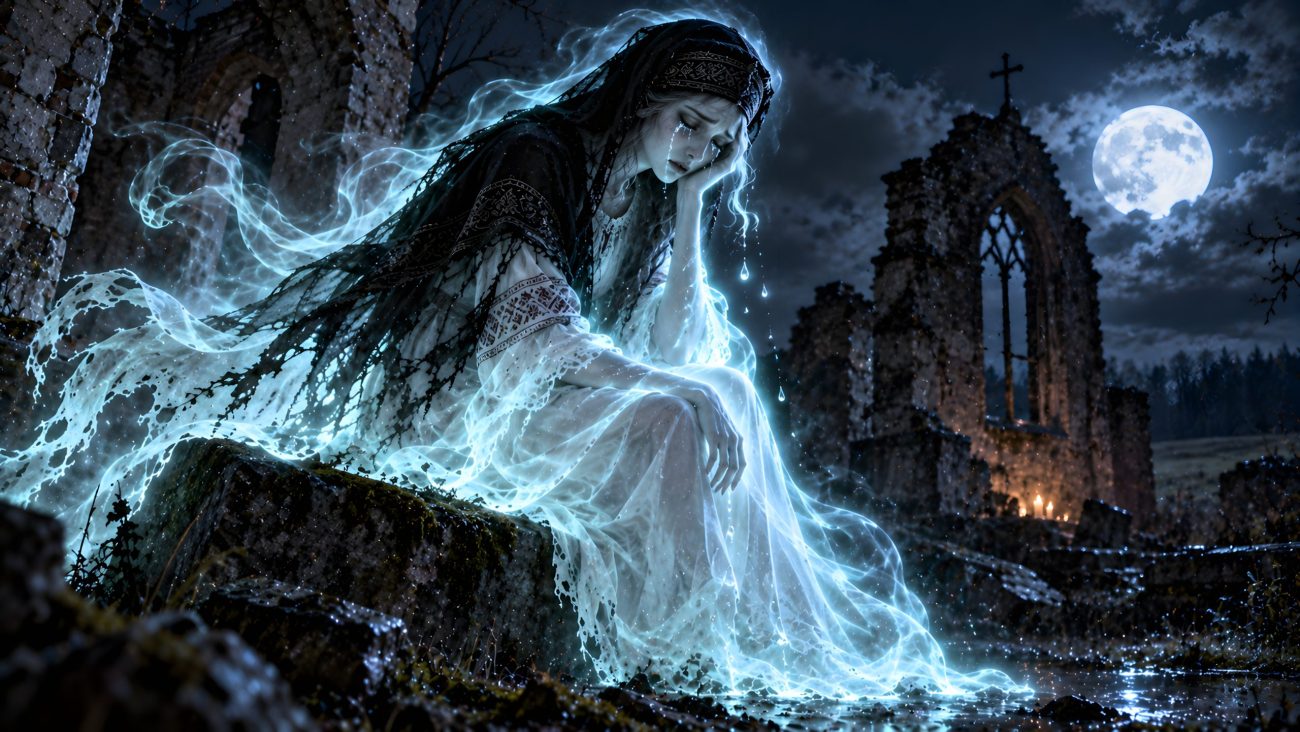
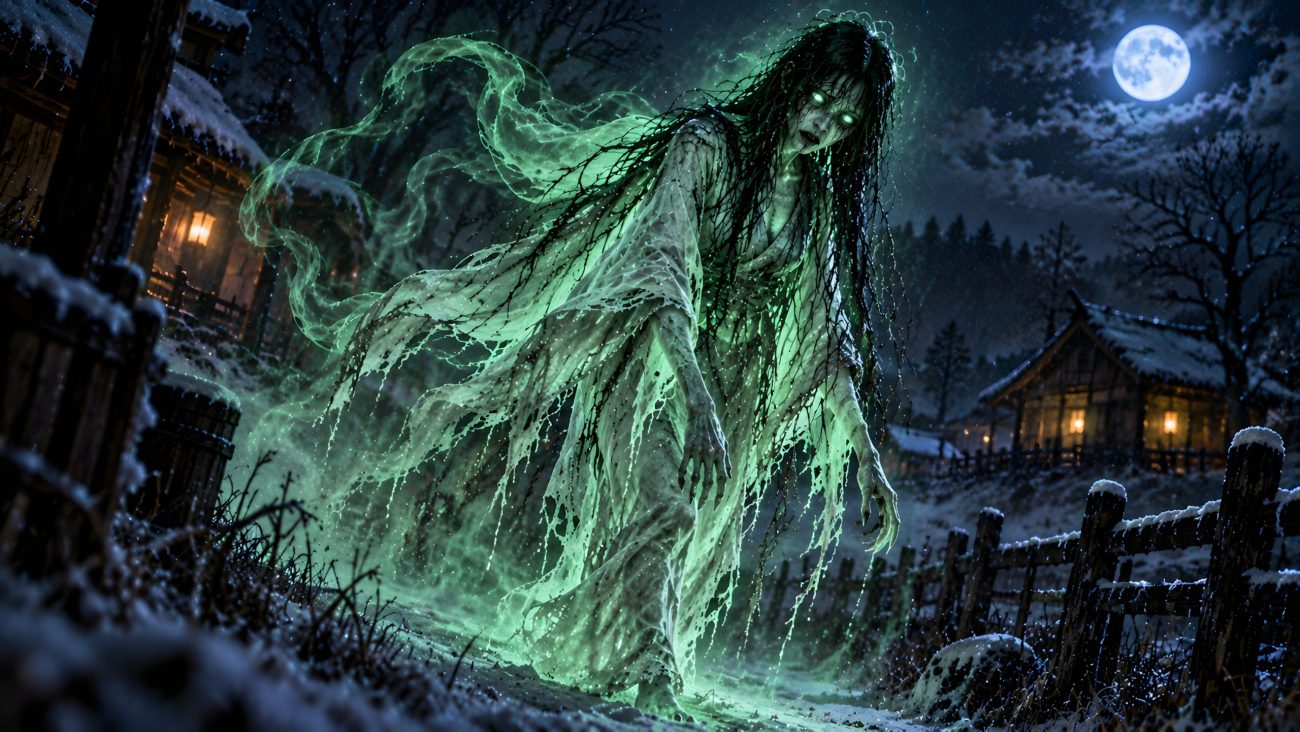
Plachka is a ghostly female figure from Belarusian folklore, particularly associated with the northern and northwestern regions of the country. She appears as an extraordinarily beautiful woman dressed in white, with a black headdress and a black kerchief draped over her shoulders. Her clothing is as white as snow, making the dark garments around her head and shoulders especially striking. Although she appears human, her presence is supernatural, and her beauty conceals a sorrowful and unsettling nature.

Plachka is known for her constant tears and mournful voice. Her face, tanned by the sun and wind, is described as beautiful and expressive, yet her eyes are always filled with emotion, and tears are perpetually falling from them. She most often appears in houses where no one lives anymore, in empty churches, and among ruins. She may also be seen beneath trees or in the middle of a field. When she sits on a stone, laments, or approaches people, she speaks in a plaintive voice and bursts into tears.

Those who encounter Plachka may hear her warn them not to trust the secret of their hearts to anyone. Her sorrowful appearance and mysterious words make her a haunting figure associated with abandoned places, loneliness, grief, and the dangers of revealing one’s innermost thoughts.


Sources

“Plachka.” New Bestiary (Bestiary.us). https://www.bestiary.us/plachka


Zimnica

Tradition: Polish Mythology
Alternative Names: Malaria
Category: Ghost


The Myth

Zimnica is a disease-causing specter in Slavic beliefs associated with fever, chills, and other painful ailments that could sometimes lead to death. It dwells in desolate wastelands but occasionally ventures into human settlements to attack their inhabitants. The spirit is difficult to escape or hide from, and even when seemingly captured, it vanishes into thin air, only to reappear moments later somewhere else.

Zimnica was associated with two distinct forms of illness. One caused bone pain and fractures in the joints, while the other, known as ograżka, brought intense chills and shaking. These manifestations made the specter a feared presence, particularly during periods of sickness.

Small children were considered especially vulnerable to Zimnica. To protect them during cold weather and illness, people would place a glass of honey beside a child’s bed as an offering intended to appease the spirit and prevent it from causing harm.


Sources

“Zimnica (mitologia).” Wikipedia, wolna encyklopedia. Wikimedia Foundation. Accessed October 16, 2026. https://pl.wikipedia.org/wiki/Zimnica_(mitologia)


Bhoota

Tradition: Indian Mythology
Alternative Names: Bhūta, Bhoots, Bhut
Category: Ghost


The Myth

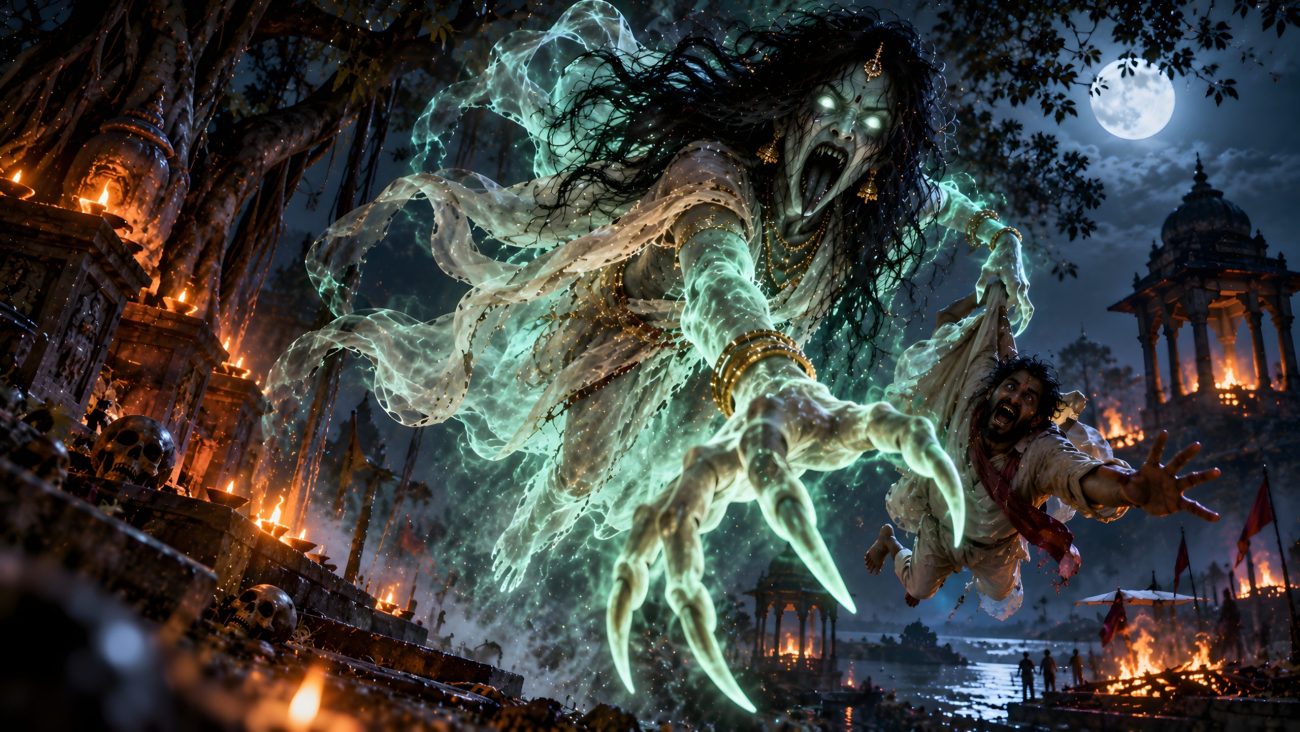
A bhoota is a supernatural being in the traditions and popular culture of the Indian subcontinent, usually understood as the ghost of a deceased person whose spirit cannot find rest. The reasons for a spirit becoming a bhoota vary between regions and communities. A violent death, unresolved matters from life, or the failure of surviving relatives to perform proper funeral rites may prevent the dead from moving on to their next existence. Consequently, bhootas are often restless and troubled spirits that linger among the living, haunting places connected to their deaths or former lives. They are particularly associated with cremation grounds, abandoned buildings, ruined palaces, old forts, and deserted houses.

Bhootas can usually appear in human form but are also capable of transforming into animals. Despite their convincing appearances, they may reveal their supernatural nature through distinctive features: their feet face backwards, they cast no shadows, and they often float above the ground to avoid touching the earth, which is considered sacred or semi-sacred in many traditions. They are frequently described as wearing white clothing, speaking in nasal voices, and lurking among the branches of particular trees. Some haunt specific houses, especially places where they were killed or which hold deep personal significance. They may also seek out milk, and consuming milk believed to have been contaminated by a bhoota is associated with spirit possession.

Stories about bhootas often involve travelers encountering an apparently ordinary stranger at night. A person might offer a lift to a beautiful woman standing beside a road or accompany someone walking through a forest, only gradually noticing that their companion wears white, speaks strangely, and never quite touches the ground. The realization that the stranger’s feet are reversed or that they cast no shadow reveals their true identity. Such tales portray bhootas as deceptive and unsettling beings whose human appearance conceals their supernatural nature.

A particular type of female bhoota is the churel, the spirit of a woman who died during pregnancy or childbirth. Churels may appear as ordinary women, but their feet or other features are reversed or unnaturally oriented. They can change their appearance and are said to lure young men at crossroads, in fields, and in other isolated places. Men who fall under their influence may be led to their deaths, although some stories describe relationships or even marriages between humans and churels. The broader concept of the bhoota also extends beyond the Indian subcontinent: in parts of Southeast Asia, related terms derived from Sanskrit refer to malevolent spirits or demonic giants, while in Pakistan the word may be used for both human ghosts and jinn-like beings.


Sources

“Bhoota (ghost).” Wikipedia: The Free Encyclopedia. Wikimedia Foundation. Accessed October 16, 2026. https://en.wikipedia.org/wiki/Bhoota_(ghost)


Villinger Thalfräule

Tradition: German Mythology
Alternative Names: Villingen Valley Maiden, Villinger Thalfräulein
Category: Ghost


The Myth

The Villinger Thalfräule is a haunting spirit said to wander the Villingen Valley between Mergentheim and Wachbach in Baden-Württemberg, Germany. According to local legend, she was once a countess of Wachbach, associated with the noble family whose residence later belonged to the von Adelsheim family. During her lifetime, she was infamous for her mercilessness, greed, and cruelty toward ordinary people. She owned magnificent horses that her servants washed with wine every day, yet she denied those same servants even a drop to drink. She also cheated the poor by selling them heavily diluted milk, justifying the deception with the saying, “Three pints of milk, one pint of water, makes a Maß.”

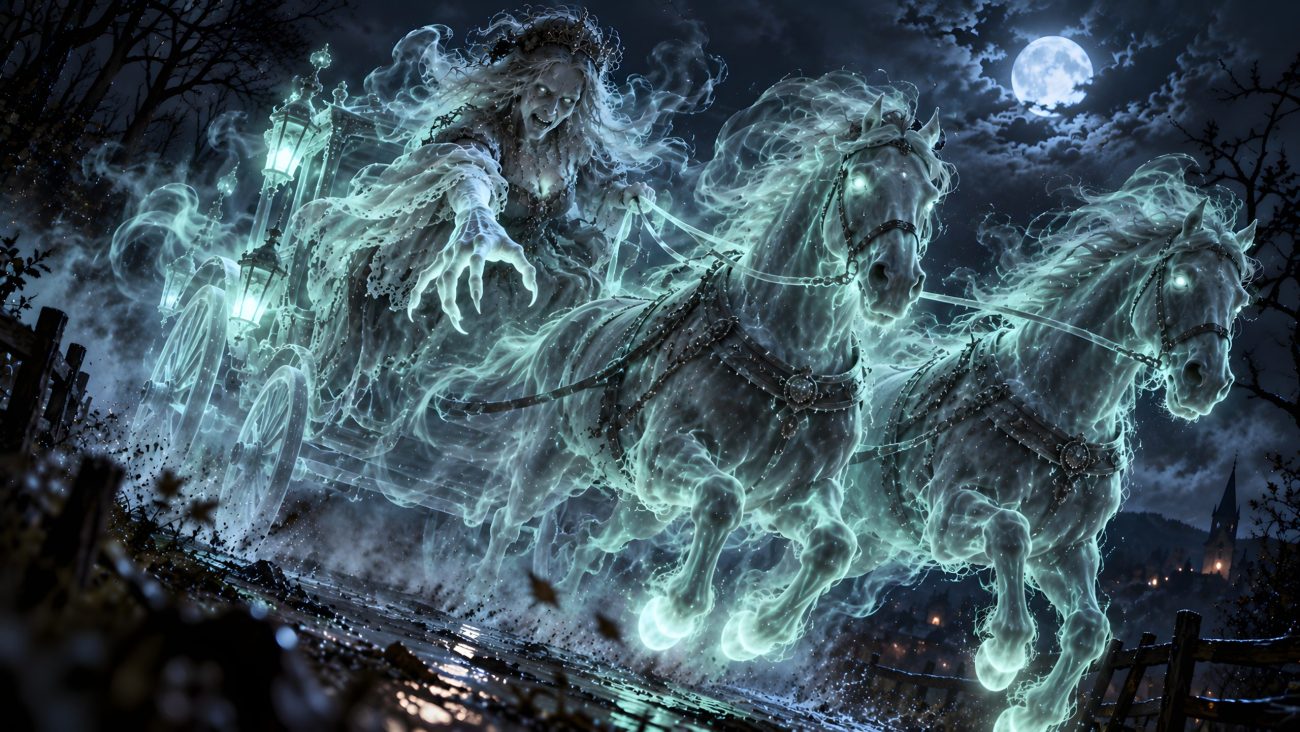
The countess’s cruelty extended to human life itself. One day, as she travelled through the valley in her sleigh, her servant noticed a man lying in the path and stopped the horses. The countess, concerned only with her fine animals and impatient to continue her journey, repeatedly ordered the servant to drive on. The man was run over and killed. The countess died soon afterward, but her wickedness condemned her to wander the earth as a restless spirit.

The Villinger Thalfräule is often heard calling out at night, “Go away, go away!” She is said to lure people and even entire wagons into the Villingerthälisbach stream, where a deep pool can drown them. She appears as a medium-sized, very old woman dressed in old-fashioned clothing and remains silent when encountered. In the Villinger Thalwald forest, she also misleads travelers and plays tricks on them, sometimes carrying away their bundles of firewood. Her haunting serves as a supernatural punishment for a life defined by greed, callousness, and contempt for the suffering of others.


Sources

“Das Thalfraeule.” SAGEN.at – Deutsche Sagen aus Baden-Württemberg. Reproduced by SAGEN.at. https://www.sagen.at/texte/sagen/deutschland/baden_wuerttemberg/thalfraeule.html


Poltergeist

Tradition: German Mythology
Alternative Names: Poltergeist, Rumbling Ghost, Noisy Spirit
Category: Ghost


The Myth

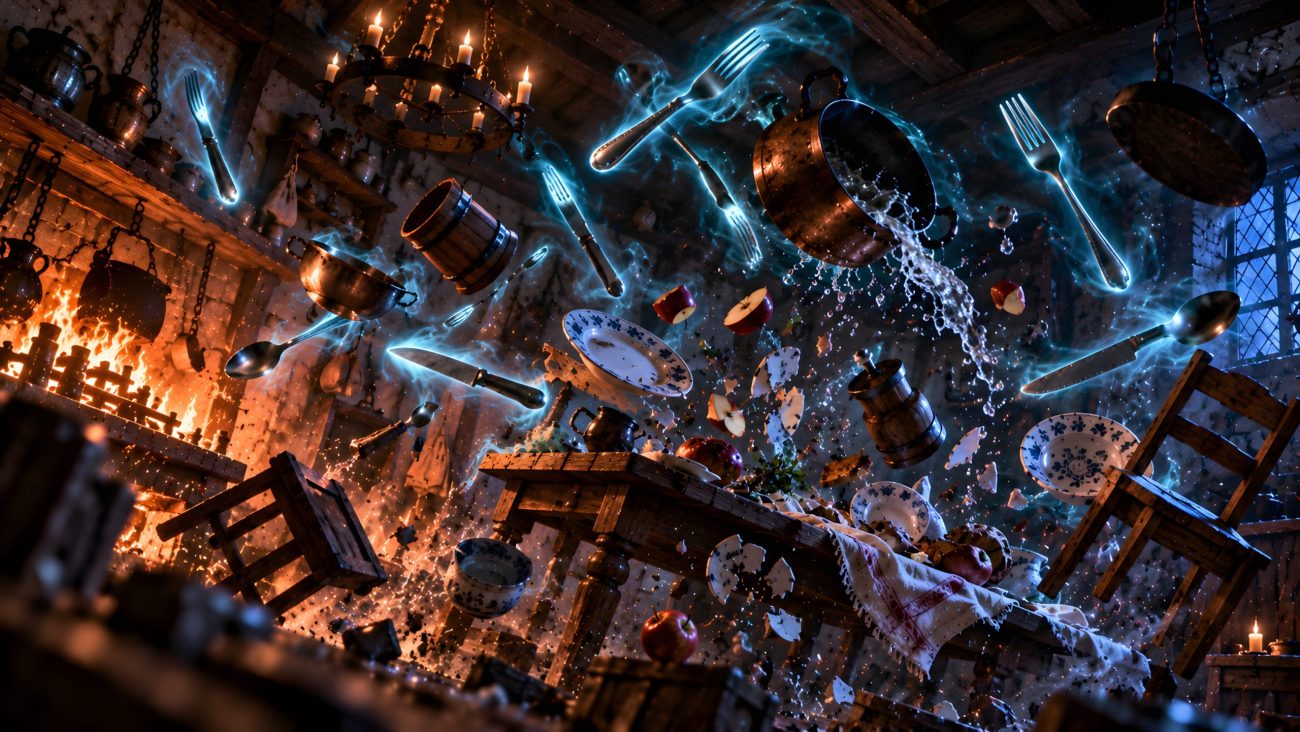
A poltergeist, whose name comes from the German words for “rumbling” and “spirit,” is a noisy and disruptive supernatural being in German folklore and ghostlore. Unlike ghosts that merely appear as apparitions, poltergeists are associated with physical disturbances in the places they haunt. They announce their presence through loud crashes, unexplained knocking, and other noises, while seemingly invisible forces move, overturn, or destroy objects around them.

Poltergeists are also said to torment people directly. They may pinch, bite, hit, or trip those who encounter them, while furniture and smaller objects such as cutlery can move or even levitate without an apparent cause. Other manifestations include foul smells, spontaneous fires, and electrical disturbances such as flickering lights. Their activity is often chaotic and destructive, making them particularly unsettling spirits in stories of haunted houses and unexplained disturbances.

Accounts of poltergeist-like phenomena occur across many cultures, including Brazil, Australia, the United States, Japan, and numerous European countries. Reports of such disturbances date back to at least the first century. Although traditionally understood as the work of ghosts or spirits, skeptical interpretations attribute these events to human trickery, sometimes involving young pranksters deceiving adults.


Sources

“Poltergeist.” Wikipedia: The Free Encyclopedia. Wikimedia Foundation. Accessed October 16, 2026. https://en.wikipedia.org/wiki/Poltergeist


Ewiger Jäger

Tradition: German Mythology
Alternative Names: Der ewige Jäger, Wilder Jäger, Weltsjäger, Weltschjägerle, Ruprecht, Hans, Riesenjäger
Category: Ghost


The Myth

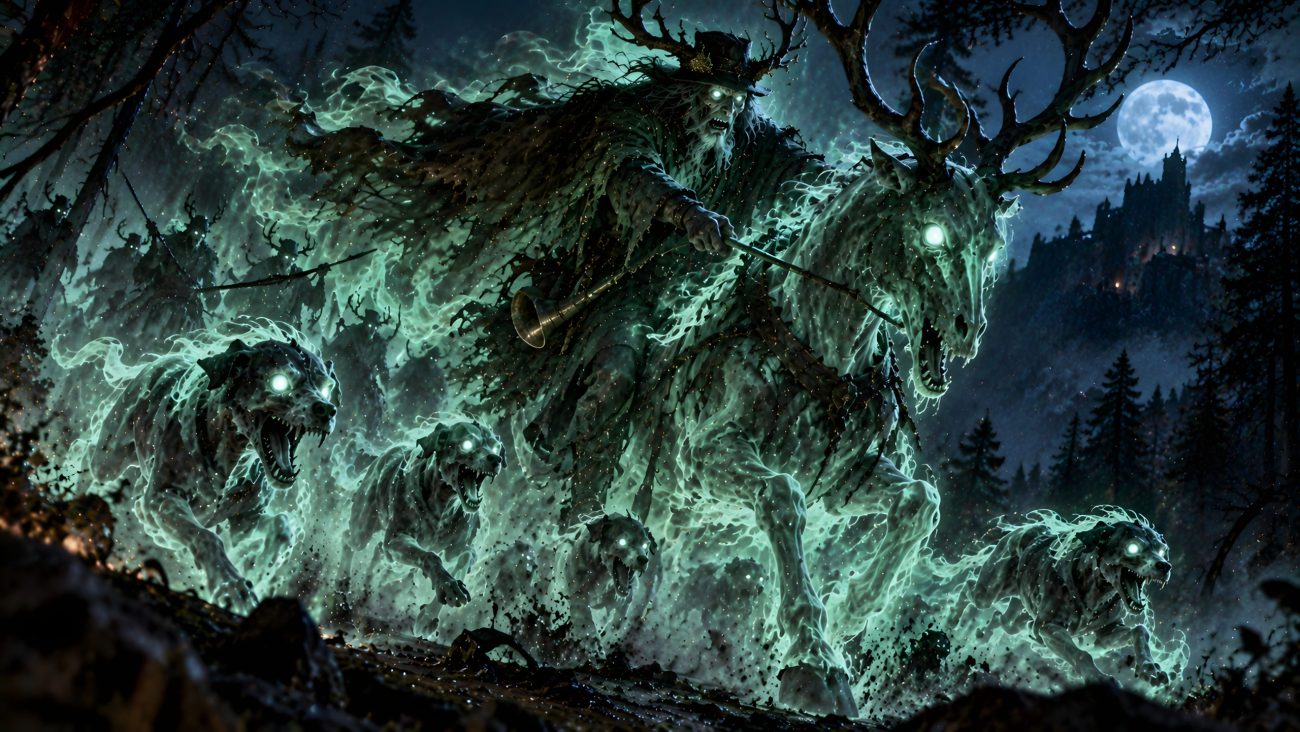
The Ewiger Jäger, meaning “Eternal Hunter,” is a supernatural huntsman found in German folklore and related traditions in Belgium and the United States. He is a ghostly figure condemned to hunt eternally, often appearing as a mysterious hunter pursuing his quarry through forests or racing through the night accompanied by dogs. His punishment is associated with an excessive passion for hunting, the violation of religious prohibitions, or acts of sacrilege. In Swabian tradition, he is also known as the Weltsjäger or Weltschjägerle, names reflecting his endless obligation to run and hunt throughout the world.

According to a legend recorded by the Brothers Grimm, Count Eberhard of Württemberg encountered the Ewiger Jäger while hunting in the woods. Hearing a loud rushing sound and the noises of a huntsman, the count dismounted and asked the ghost whether it intended to harm him. The apparition replied that it was once a human lord who had loved hunting so passionately that he begged God to allow him to continue hunting until Judgement Day. His wish was granted, but became an eternal punishment: for five and a half centuries, he had been chasing the same deer. The hunter told the count that his former identity and noble status remained undisclosed. When Eberhard asked to see his face, the ghost revealed a tiny, withered visage, no larger than a fist and wrinkled like a mushroom. The apparition then resumed its endless pursuit, leaving the horrified count to return home and abandon hunting. Ludwig Bechstein recorded a similar version, describing the hunter as a gnarled little man dressed in green. In this account, his eternal punishment resulted from hunting on a Sunday and violating the sacred day of rest.

Other regional legends describe different origins and appearances for the Eternal Hunter. In one Swabian tradition, he carries a hammer with which he strikes trees, producing a peculiar high-pitched sound. In another, he is a Freischütz, a marksman who sought unfailing magical bullets by shooting at the sun in the Devil’s name on Christmas Eve and Good Friday. For this sacrilege, he was condemned to hunt eternally at night, accompanied by barking dogs. A related hunter named Neck delighted in killing poachers and was cursed with eternal life after shooting five men on a Sunday. One of the dying poachers, himself armed with magical bullets, shot Neck through the heart. Since then, the cursed hunter has ridden through the woods on a stag, urging on little white dogs with cries of “Hu dock dock dock!” Other names associated with the Ewiger Jäger include Ruprecht, Hans, and Riesenjäger, meaning “Giant Hunter,” a title connected with accounts of his enormous stature. In Swabian tradition, he is also compared with the Wandering Jew, another figure condemned to travel endlessly around the world.


Sources

“Ewiger Jäger.” Wikipedia: The Free Encyclopedia. Wikimedia Foundation. Accessed October 16, 2026. https://en.wikipedia.org/wiki/Ewiger_J%C3%A4ger


Wylde Wrigge

Tradition: Dutch Mythology
Alternative Names: Wilde Wrigge, Wild Wrigge
Category: Ghost


The Myth

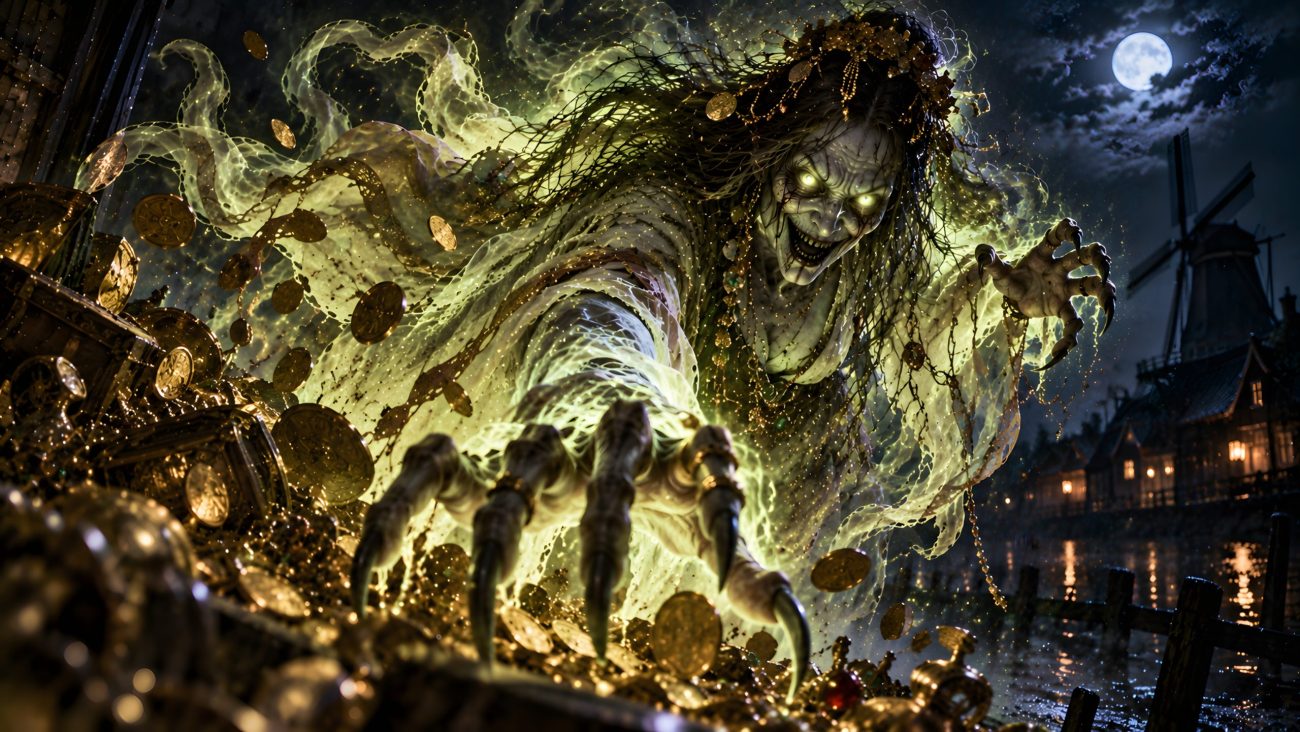
Wylde Wrigge is an evil spirit from Frisian folklore that perversely rewards wicked people with wealth. Rather than punishing them directly, the spirit makes bad people rich so that they become even more godless and ultimately more miserable. Its gifts are therefore a form of spiritual corruption, turning apparent good fortune into a source of moral decline and unhappiness.

The spirit is invoked in a traditional Frisian expression about someone who has become rich through sheer luck: “All his fortune was thrown through the window by the Wylde Wrigge.” The saying reflects the belief that sudden, undeserved wealth may not be a blessing at all, but the work of a malevolent supernatural force seeking to lead its beneficiaries further into wickedness.


Sources

Van der Veen, Abe. “Van aardmannetje tot zwarte juffer: Een lijst van Nederlandse en Vlaamse elfen en geesten.” Abe de Verteller. https://abedeverteller.nl/van-aardmannetje-tot-zwarte-juffer-een-lijst-van-nederlandse-en-vlaamse-elfen-en-geesten/


Vurige Landmeter

Tradition: Dutch Mythology
Alternative Names: Fiery Land Surveyor
Category: Ghost


The Myth

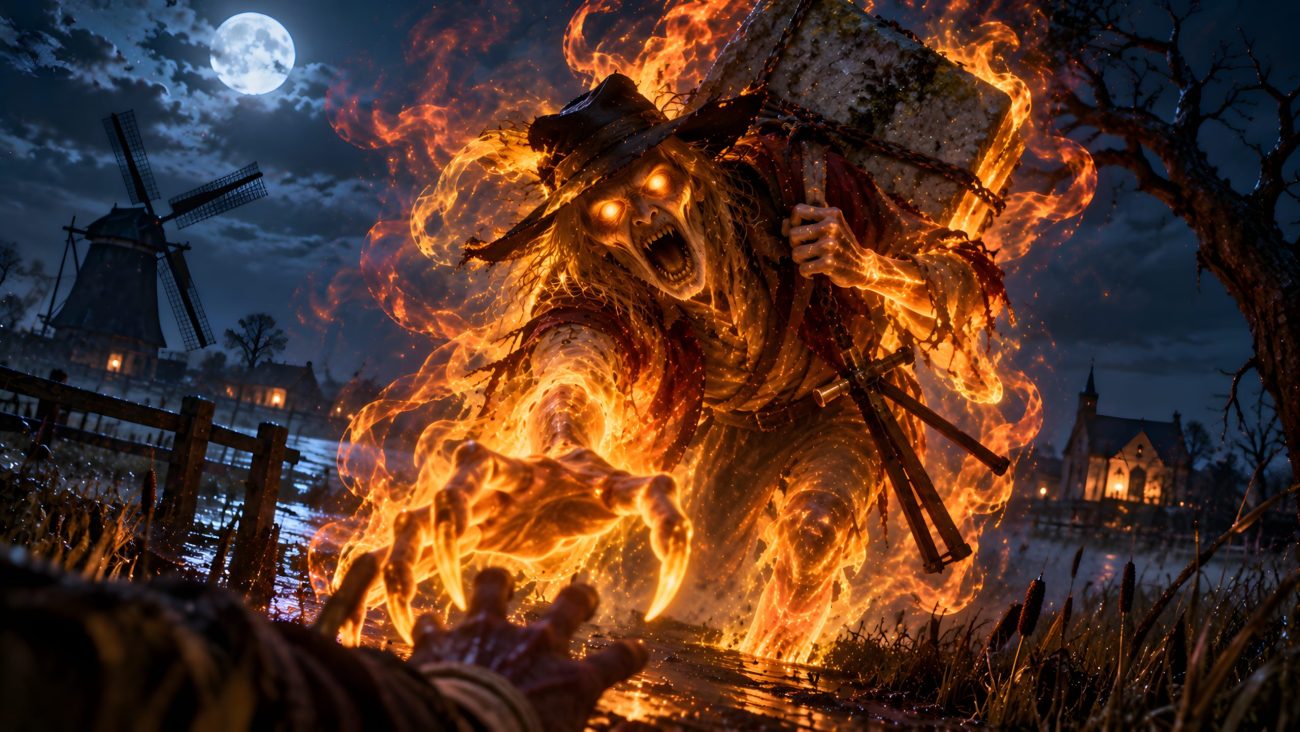
The Vurige Landmeter, or Fiery Land Surveyor, is a wandering spirit in Dutch folklore. It is the ghost of someone who moved a boundary stone or marker to alter the boundaries of a property. As punishment for this dishonest act, the spirit is condemned to wander eternally while carrying the stone on its back, unable to find rest.

Those who encounter the ghost may hear it lamenting, “Where shall I put it?” A person who knows the legend can answer, “Just put it back where you took it from!” By following this advice, the spirit can return the boundary stone to its original position and finally be released from its wandering. The tale serves as a supernatural warning against tampering with property boundaries and emphasizes that a wrongfully moved marker must be restored before the guilty soul can find peace.


Sources

Van der Veen, Abe. “Van aardmannetje tot zwarte juffer: Een lijst van Nederlandse en Vlaamse elfen en geesten.” Abe de Verteller. https://abedeverteller.nl/van-aardmannetje-tot-zwarte-juffer-een-lijst-van-nederlandse-en-vlaamse-elfen-en-geesten/


Nachtridders

Tradition: Dutch Mythology
Alternative Names: Nacht ridders, Night Riders
Category: Ghost


The Myth

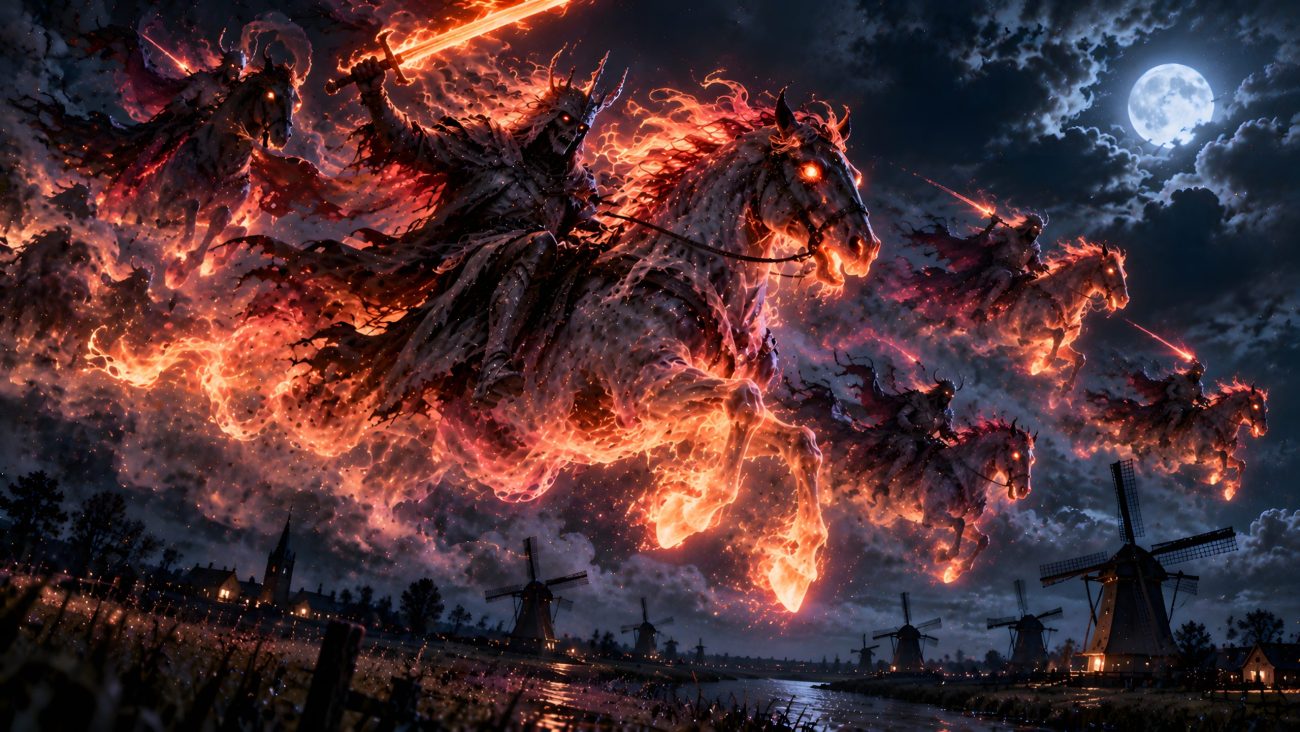
The Nachtridders are supernatural beings described in Dutch folklore as spirits or devils that create flames in the sky. According to the folklorist Buddingh, they ride horses through the air and regularly engage in battles with one another high above the ground. Their appearance was associated with mysterious aerial phenomena and fiery displays that could be seen in the night sky.


Sources

Van der Veen, Abe. “Van aardmannetje tot zwarte juffer: Een lijst van Nederlandse en Vlaamse elfen en geesten.” Abe de Verteller. https://abedeverteller.nl/van-aardmannetje-tot-zwarte-juffer-een-lijst-van-nederlandse-en-vlaamse-elfen-en-geesten/