Inmō Oni

Tradition / Region: Japanese Mythology
Alternative names: Possibly Immora Oni
Category: Bird


The Myth

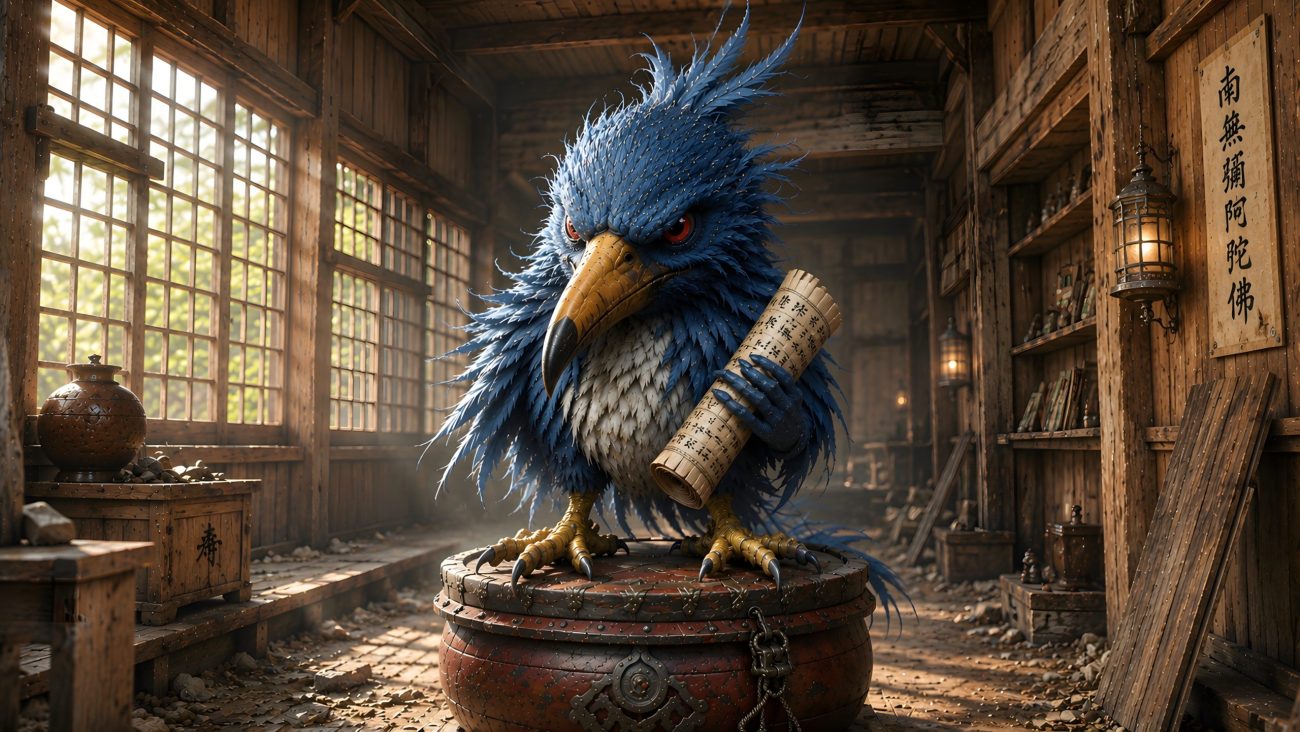
The Inmō Oni is a bird-like yōkai said to inhabit abandoned and neglected temples.

According to the legend, there was once a ruined temple in the castle town of Ina Takatō. Its former head priest, Mugai, had trained at the head temple in Kyoto, but he suddenly lost his sanity. He stopped chanting sutras, wandered aimlessly, and the temple gradually fell into decay.

When an official from the Takatō domain inspected the abandoned temple, he found a strange blue bird, about the size of a chicken, perched upon a wooden fish drum. The creature had long ornamental feathers growing from its head and held a Buddhist sutra in its beak. As soon as it noticed the visitor, it spread its wings and flew wildly around the temple hall.

The mysterious bird was identified as the Inmō Oni, a yōkai said to dwell within ruined temples. Of the priest Mugai, however, there was no trace, leaving only the strange bird as the temple’s silent inhabitant.


Sources

TYZ. (n.d.). 陰毛鬼 (Inmō Oni). In 新版TYZ 妖怪図鑑. Retrieved June 29, 2026, from https://tyz-yokai.blog.jp/archives/1072742115.html
Gumyōchō

Tradition / Region: Japanese Mythology
Alternative names: Meimyōchō, Seiseichō, Jivajivaka
Category: Bird


The Myth

The Gumyōchō, or Joint Life Bird, is a sacred bird described in the Amitabha Sutra as one of the six wondrous birds that dwell in the Pure Land. It has one body with two heads, and in some traditions it is also portrayed with a human face and the body of a bird. Its beautiful song proclaims the teachings of the Buddha, inspiring all who hear it to contemplate the Three Jewels: the Buddha, the Dharma, and the Sangha.

Another famous legend tells of the bird’s tragic fate.

Long ago, on a snowy mountain, there lived a Joint Life Bird whose two heads were named Karuda and Upakaruda. Although they shared a single body, each head had its own thoughts and emotions. When one remained awake, the other slept.

One day, while Upakaruda slept, Karuda found a beautiful Mathuka fruit and ate it without sharing. When Upakaruda awoke and realized what had happened, he became consumed by jealousy and resentment.

Later, Upakaruda discovered a poisonous fruit. Knowing it would kill them both, he deliberately ate it to take revenge on Karuda. The poison spread through their shared body, and both heads perished together.

The Buddha explained that this story reflected events from a previous life. Karuda was later reborn as Siddhartha Gautama, while Upakaruda was reborn as Devadatta, the Buddha’s jealous cousin and rival. Because they had once shared the same body, Devadatta’s hatred followed him into his next life, leading him to repeatedly oppose and seek to harm the Buddha.


Sources

TYZ. (n.d.). 共命鳥 (Gumyōchō). In 新版TYZ 妖怪図鑑. Retrieved June 29, 2026, from https://tyz-yokai.blog.jp/archives/1064714812.html


Onmoraki

Tradition / Region: Japanese Mythology
Alternative names: —
Category: Bird


The Myth

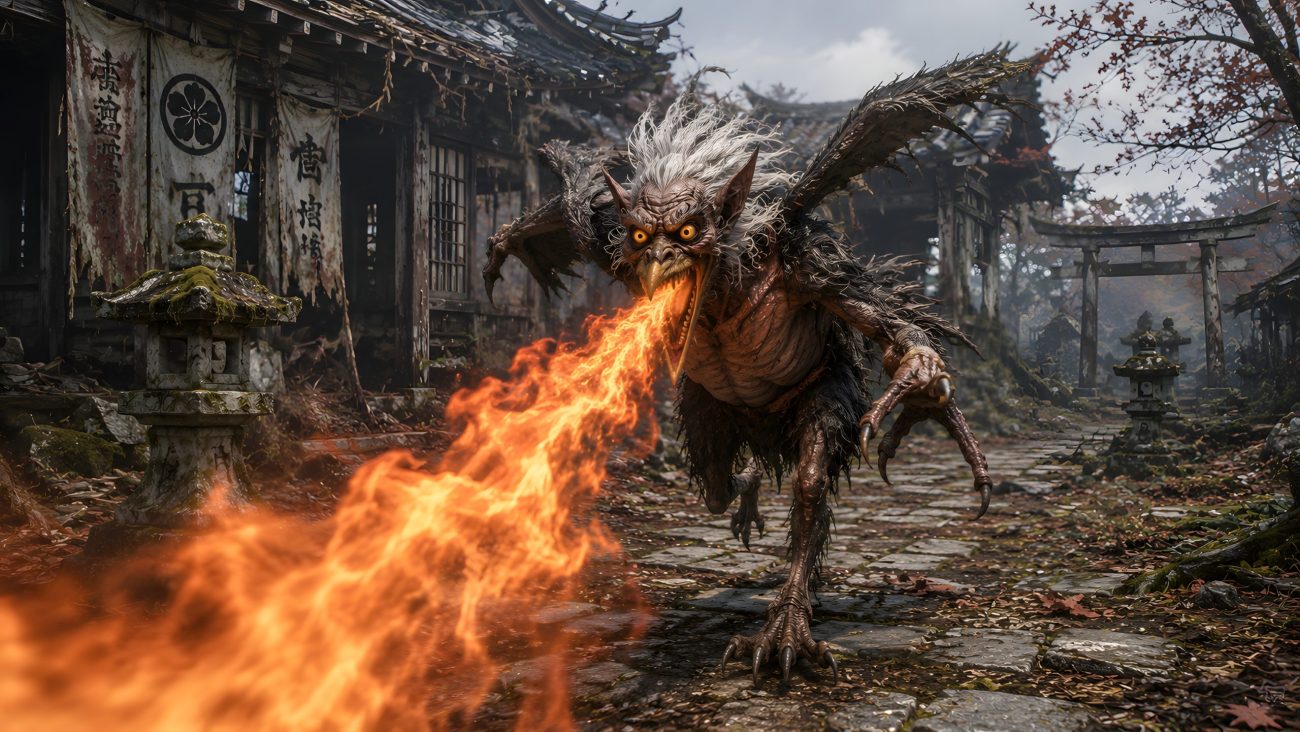
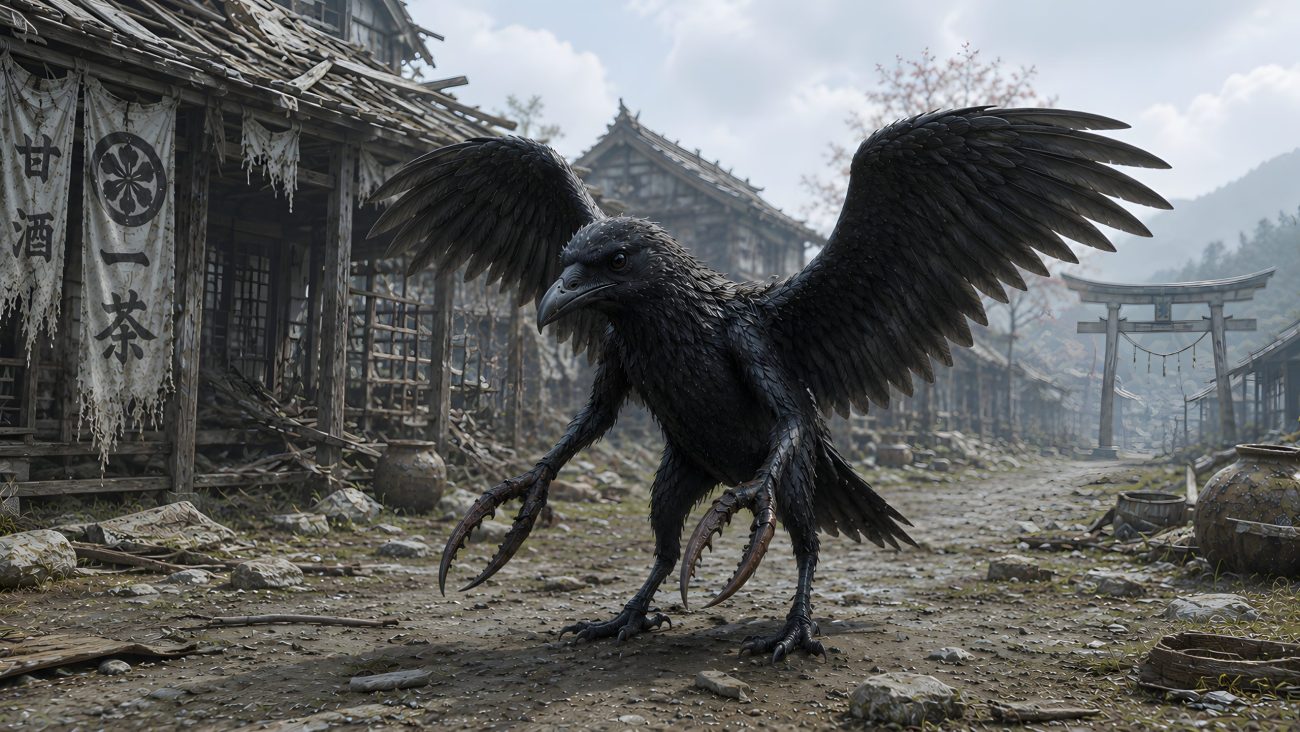
The Onmoraki is a grotesque bird-like yōkai born from the bodies of the recently deceased when they are not given sufficient memorial prayers. Unable to find peace, the lingering life force transforms into this demonic creature.

It appears as a large black bird covered in dark feathers, with a ghastly human face and brilliant eyes that glow like lanterns. It is also an excellent mimic, capable of perfectly imitating human voices while letting out shrill, terrifying cries.

Onmoraki haunt temples, especially those where priests have neglected their religious duties. They creep up to sleeping priests and, using the priest’s own voice, scold them for their failures. When the startled priest awakens and flees in terror, the Onmoraki disappears into the darkness, leaving only its eerie cries behind.

The creature serves as a supernatural reminder that the dead must be properly honored, for neglected memorial rites can give rise to demons instead of allowing the departed soul to find peace.


Sources

Meyer, M. (n.d.). Onmoraki. Yokai.com: The Illustrated Database of Japanese Folklore. Retrieved June 29, 2026, from https://yokai.com/onmoraki/.


Kamikiri

Tradition / Region: Japanese Mythology
Alternative names: Hair-Cutting
Category: Bird


The Myth

The Kamikiri is a mysterious yōkai blamed for the unexplained cutting of a person’s hair without them noticing. Victims would suddenly discover that part of their hair had been neatly cut away, even though no one had been seen approaching them.

Different traditions attributed these incidents to invisible hair-cutting insects, foxes, badgers, or the Kamikiri itself. In yōkai picture scrolls such as the Hyakkai Zukan, the Kamikiri is depicted as a tengu-like creature with enormous scissors in place of its hands, using them to silently snip the hair of unsuspecting people.

The Kamikiri later inspired the related yōkai known as the Amikiri (“Net-Cutter”), which first appeared in later illustrated collections of Japanese monsters.


Sources

TYZ. (n.d.). 神木 (Kamiki). In 新版TYZ 妖怪図鑑. Retrieved June 29, 2026, from https://tyz-yokai.blog.jp/archives/1010653484.html


Aosagibi

Tradition / Region: Japanese Mythology
Alternative names: Goi no Hikari (“Night Heron Light”)
Category: Bird


The Myth

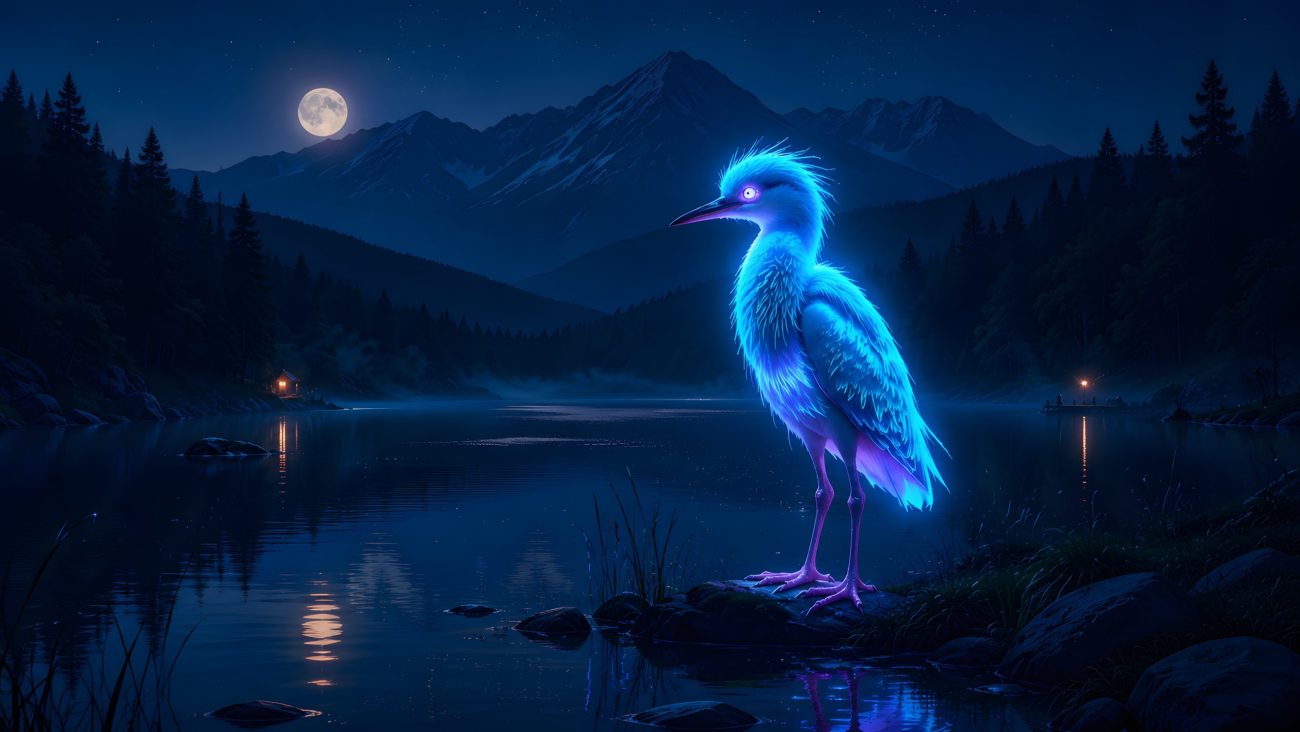
The Aosagibi is a mysterious yōkai created when an old heron—most commonly a black-crowned night heron—lives long enough to gain supernatural powers. These transformed birds appear around rivers, marshes, and reed-filled wetlands, especially on cool autumn nights.

As the heron ages, shining scales form upon its breast. With every breath, it exhales a fine yellow powder that drifts through the air. At night, its body glows with a bluish-white radiance, and the powder bursts into floating blue fireballs that drift over rivers, through the trees, or across the night sky.

Although these ghostly flames appear supernatural, they produce no heat and burn nothing they touch. Eventually, they fade away into the wind.

Despite their eerie appearance, Aosagibi are harmless. Like ordinary herons, they remain shy and avoid people, silently disappearing into the darkness when disturbed. Their glowing blue flames are often mistaken for other supernatural lights, but they are simply the strange manifestation of an ancient magical bird.


Sources

Yokai.com. (n.d.). Aosagibi. In Yokai.com: The Illustrated Database of Japanese Folklore. Retrieved June 29, 2026, from https://yokai.com/aosagibi/


Mizuguma

Tradition / Region: Japanese Mythology
Alternative names: Water Beast of Mizushima
Category: Bear


The Myth

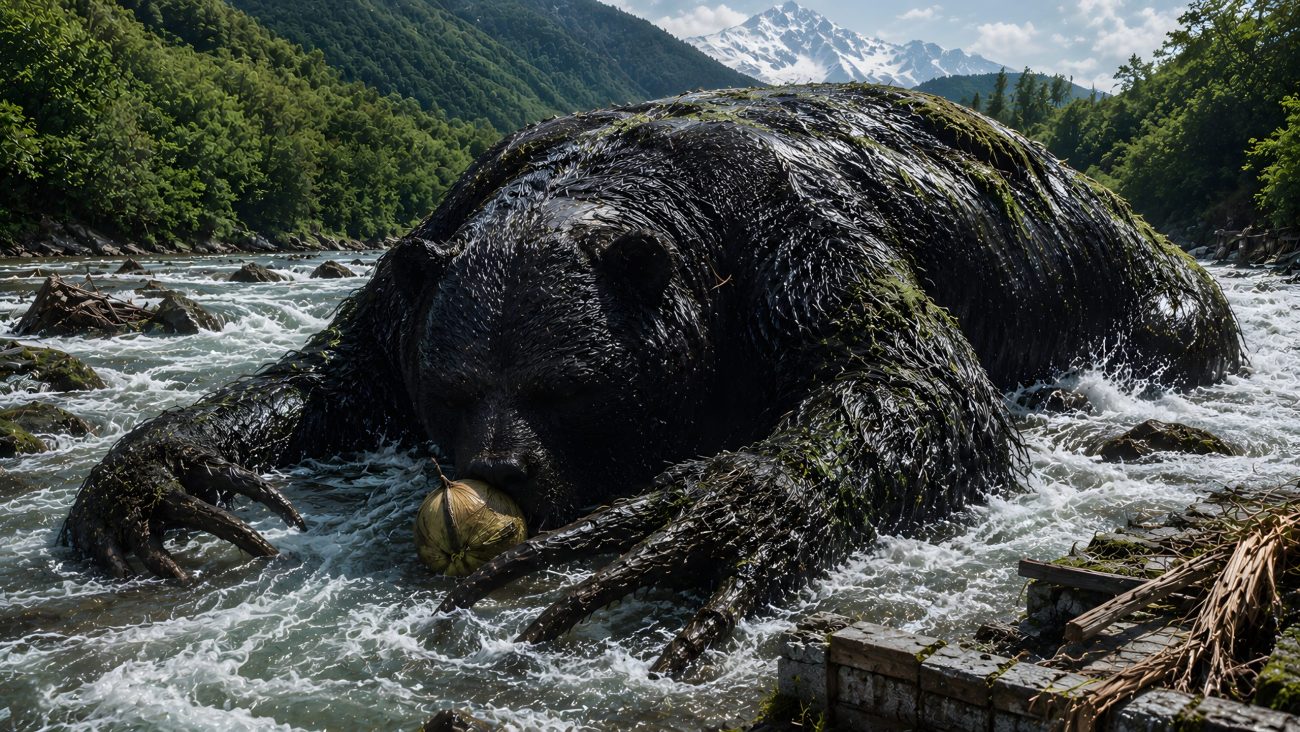
The Mizuguma, or Water Bear, is a mysterious black beast said to have lived in the depths beneath Mount Hakusan. It was believed to be responsible for the devastating floods that repeatedly struck the Tedori River during the 18th century.

During one of these floods, people noticed a huge black object protruding from the river. It resembled neither stone, wood, nor the body of a dead animal. Covered in black, leather-like skin, it had no visible eyes, nose, or head, only several branch-like limbs. Hoes and bamboo poles could not pierce its hide.

When a coconut floated downstream, the creature suddenly extended one of its limbs, seized the fruit, pressed it against its mouthless body, and drained the oil from within before letting the empty shell drift away. Realizing it was alive, the villagers tried to burn it with flaming straw. The fire finally split its hide, drawing black blood.

The wounded beast responded with a tremendous roar. Towering waves crashed onto the riverbanks, embankments burst apart, and floodwaters surged across the countryside. Wherever the creature rolled, deep pools formed, and the flooding continued to devastate the surrounding villages.

Unable to defeat it, the people prayed daily by reciting the Kannon Sutra for one hundred days. One night, a faint light appeared, and the black creature was seen swimming upstream toward the mountains. After its departure, the floodwaters receded, the river returned to normal, and the Water Bear was never seen again. It was thereafter believed to dwell once more in the deep abyss beneath Mount Hakusan.


Sources

TYZ. (n.d.). 水熊 (Mizuguma). In 新版TYZ 妖怪図鑑. Retrieved June 29, 2026, from https://tyz-yokai.blog.jp/archives/1071303462.html


Kawaguma

Tradition / Region: Japanese Mythology
Alternative names: Kawakuma
Category: Bear


The Myth

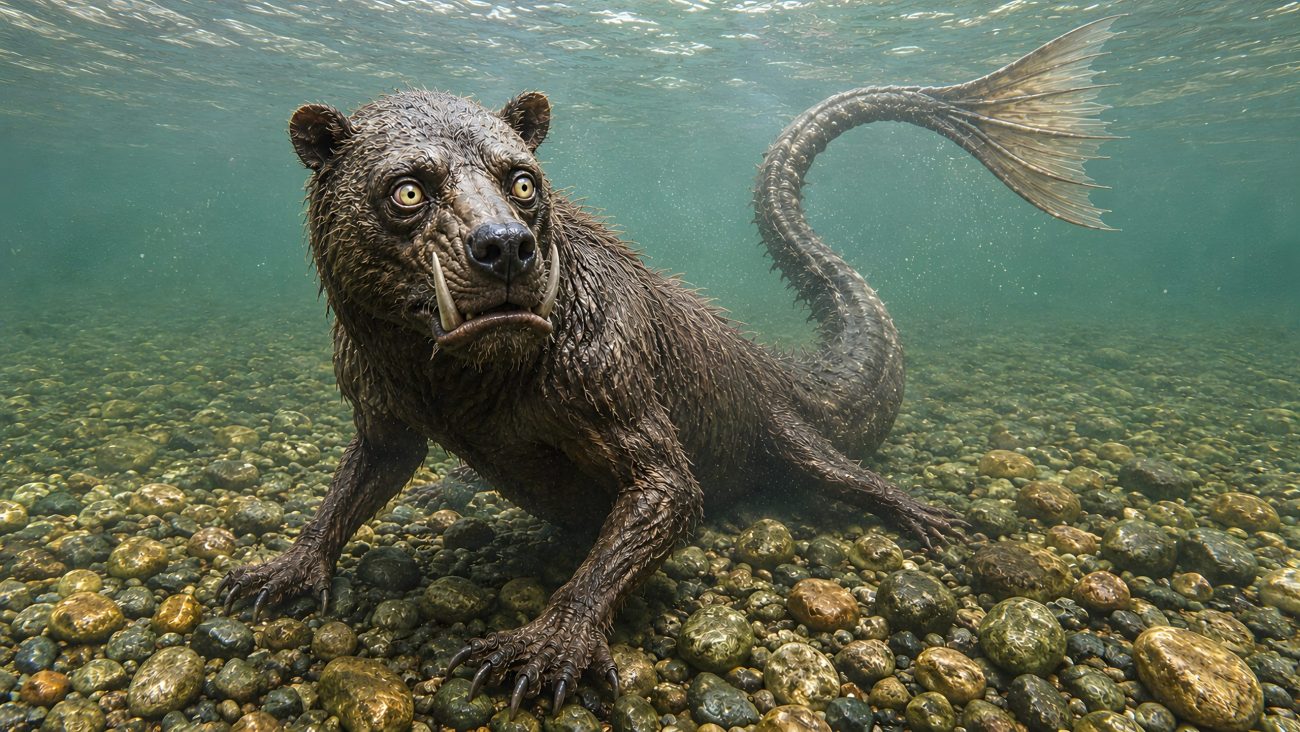
The Kawaguma, meaning “river bear,” is an aquatic yōkai said to inhabit the deep rivers of northern Japan, particularly the Omono River in Akita Prefecture and the Shinano River in Niigata Prefecture. Covered in black hair and rarely seen by humans, it spends most of its life hidden beneath the water.

Little is known about the Kawaguma’s habits because it remains at the bottom of deep rivers. It is sometimes curious enough to approach boats, clinging to their sides or stealing objects and dragging them back to its underwater lair. It is also blamed for digging into riverbanks, causing them to collapse and bringing about floods.

One famous legend tells of a lord who was hunting from a boat on the Omono River when a black, hairy hand suddenly reached up from the depths and snatched away his rifle. A skilled diver later recovered the weapon from the deepest part of the river, and it thereafter became known as the “Kawaguma gun,” remaining a treasured possession of the Satake clan.

Another tale recounts how a ferryman had just tied up his boat for the night when he heard a splash behind him. Looking back, he saw a pair of black, hairy hands gripping the side of the boat. Startled, he struck at them with a large knife. The following morning, a severed hand was found inside the boat. It resembled the paw of a cat but was covered in black fur, and everyone who saw it declared that it belonged to a Kawaguma.


Sources

Foster, M. D. (n.d.). Kawaguma. In Yokai.com: The Illustrated Database of Japanese Folklore. Retrieved June 29, 2026, from https://yokai.com/kawaguma/.


Onikuma

Tradition / Region: Japanese Mythology
Alternative names: Demon Bear
Category: Bear


The Myth

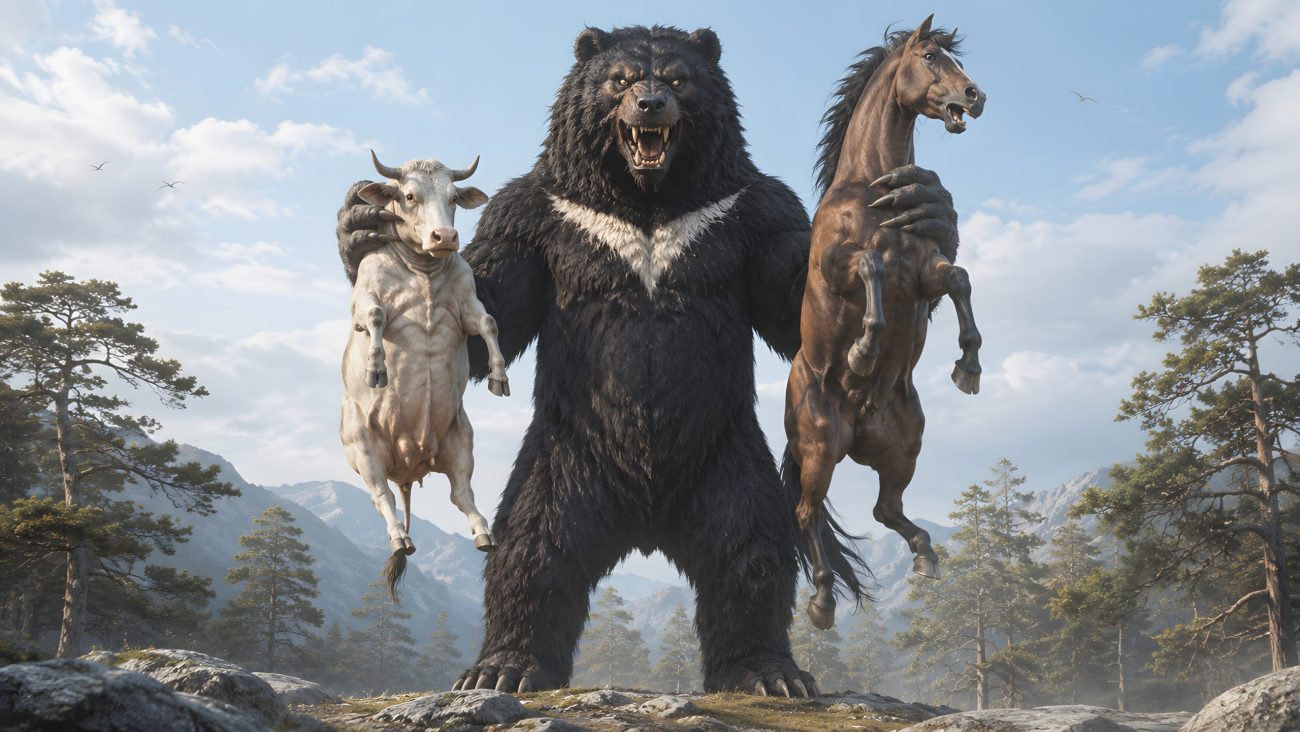
The Onikuma, meaning “demon bear,” is a fearsome yōkai said to originate in the mountain forests of Japan, particularly the Kiso Valley in Nagano Prefecture. It is believed that when an ordinary bear lives for many years, it transforms into an Onikuma, growing far larger than any natural bear and gaining immense supernatural strength.

Unlike ordinary bears, an Onikuma is able to walk upright on two legs. It is powerful enough to move enormous boulders that even groups of men cannot shift, and it can crush small animals with a single blow. Although it lives deep within remote mountain forests and is active mainly at night, it occasionally descends into nearby villages in search of food.

When an Onikuma enters human settlements, it is known for carrying away livestock such as horses and cattle before disappearing back into the mountains. Because of its tremendous strength, encounters with the creature are rare but often deadly, leaving villagers with little choice but to organize dangerous hunts.

Traditional accounts describe a special method for killing an Onikuma. Hunters blocked the entrance to its den with a massive wooden frame covered in wisteria vines. They then forced branches and brush through the narrow openings until the beast’s shelter became completely filled. Eventually the trapped Onikuma burst through the entrance, where hunters waited to attack it with long spears and rifles.

According to legend, several Onikuma were slain during the Kyōhō era (1716–1736). Their hides were said to be so enormous that each one could cover an area of more than six tatami mats. Large boulders scattered throughout the Kiso Valley are also known as “Onikuma stones,” as local tradition claims they were hurled down the mountainsides by these mighty demon bears. In Hokkaido, bears that attacked humans were likewise feared and referred to as Onikuma.


Sources

Foster, M. D. (n.d.). Onikuma. In Yokai.com: The Illustrated Database of Japanese Folklore. Retrieved June 29, 2026, from https://yokai.com/onikuma/.

Wikipedia contributors. (n.d.). Onikuma. In Wikipedia. Retrieved June 29, 2026, from https://en.wikipedia.org/wiki/Onikuma.


Kōmori-ba

Tradition / Region: Japanese Mythology
Alternative names: –
Category: Bat


The Myth

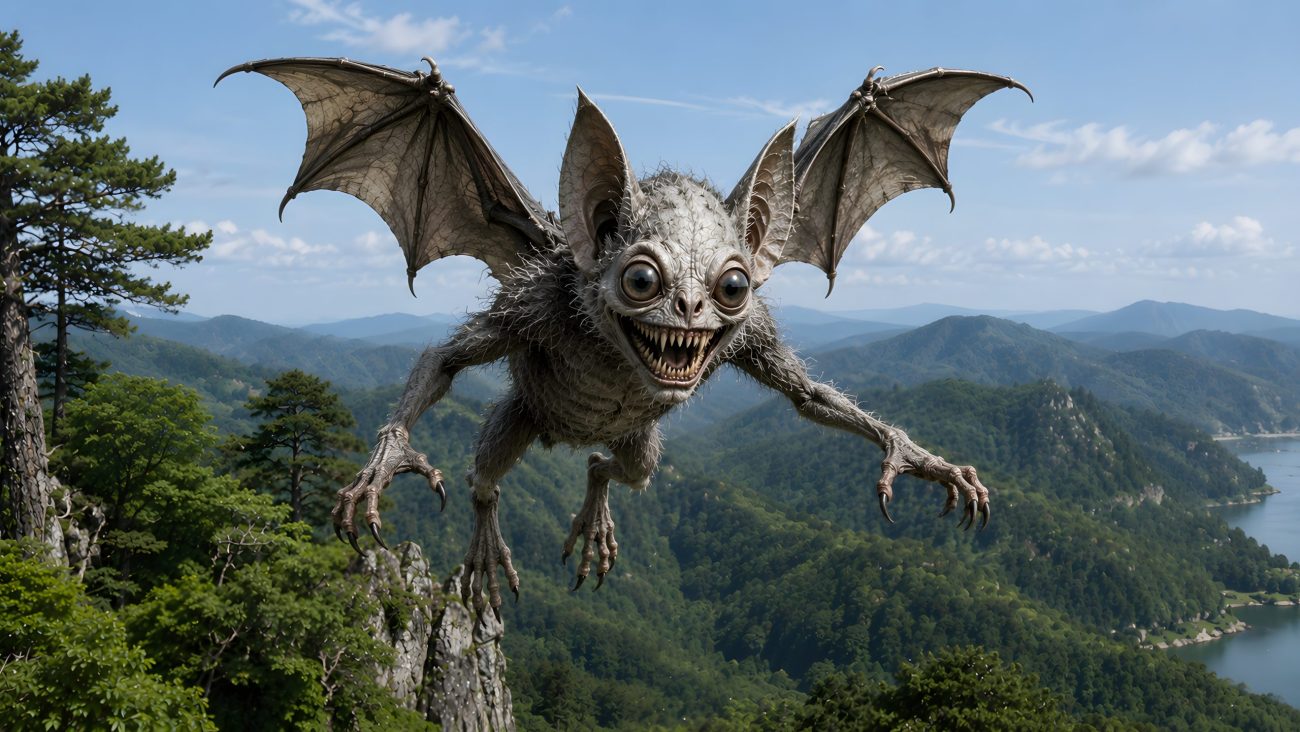
The Kōmori-ba is a bat-like yōkai that appears in the eighteenth-century illustrated collection Yōkai Chakutōchō. It is depicted among a gathering of supernatural creatures alongside a red oni and a skeleton monster.

Unlike an ordinary bat, the Kōmori-ba does not have wings formed by membranes stretching between its limbs. Instead, it possesses a pair of large wings that grow directly from its back, giving it a more monstrous appearance.

According to the illustration’s description, the Kōmori-ba attacks by targeting the eyes of its victims. Although little else is recorded about the creature, it is presented as one of the many strange yōkai that inhabit the supernatural world of Japanese folklore.


Sources

TYZ. (n.d.). 蝙蝠場 (Kōmori-ba). In 新版TYZ 妖怪図鑑. Retrieved June 29, 2026, from https://tyz-yokai.blog.jp/archives/1065732607.html


Kagewani

Tradition / Region: Japanese Mythology
Alternative names: Shadow Crocodile
Category: Crocodile


The Myth

Kagewani is a yōkai from the folklore of Yunotsu in Shimane Prefecture. Although its name means “Shadow Crocodile,” it is actually described as a supernatural shark.

According to legend, the creature swims beneath ships and watches the shadows of sailors reflected on the surface of the sea. If the Kagewani swallows a sailor’s shadow, that person is doomed to die.

One tale tells of a sailor who succeeded in shooting and killing a Kagewani while at sea. However, after returning home, he was walking along the beach when a fish bone pierced the sole of his foot. The wound proved fatal.

Later, the bone was identified as having belonged to the slain Kagewani, and the sailor’s death was regarded as the creature’s final act of vengeance.


Sources

TYZ. (n.d.). 影鰐 (Kagewani). In 新版TYZ 妖怪図鑑. Retrieved June 29, 2026, from https://tyz-yokai.blog.jp/archives/1010654388.html