Hoaya

Tradition / Region: Japanese Mythology
Alternative names: Boaya
Category: Crocodile


The Myth

Hoaya is a fearsome river monster described in the Edo-period works Nankai Kibun and Hyōryū Tenjiku Monogatari, which recount the travels of the sailor Sontaro after he drifted to foreign lands. The creature was said to inhabit the rivers of Banjarmasin in southern Borneo, where the local people greatly feared it and believed that killing one would inevitably bring misfortune.

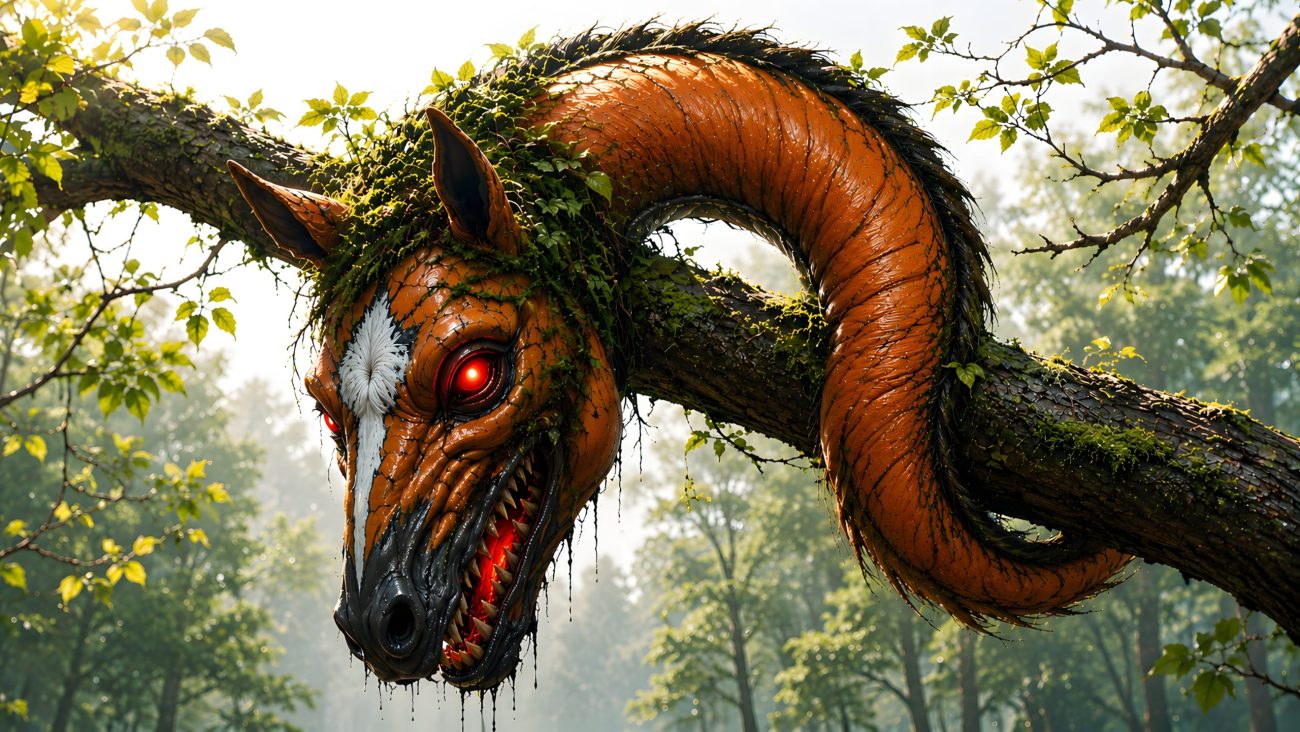
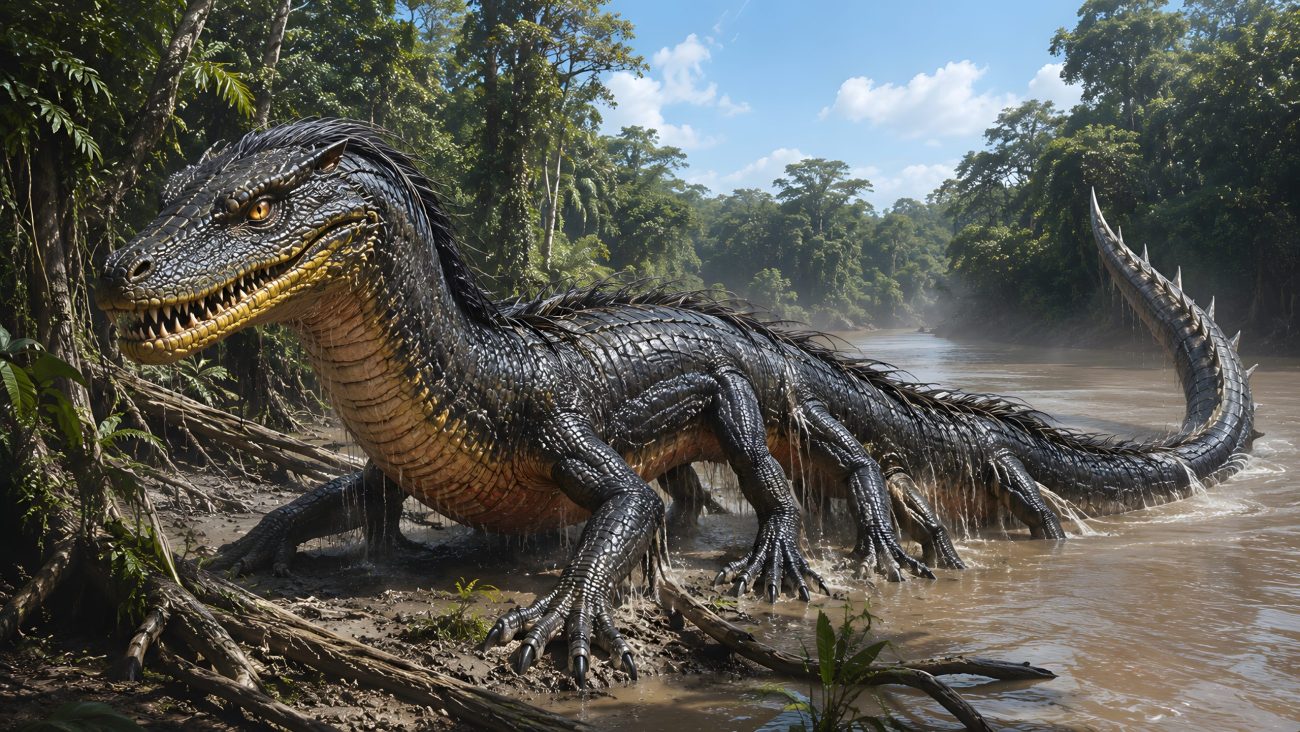
The monster was described as resembling a hornless dragon, with a stern face, long manes and ears, four arms, four legs ending in four claws each, and a body measuring between six and thirteen fathoms in length. It often clung to passing boats, frightening those aboard. In another account, its body is said to have been pale black with a yellow belly and lips, extremely hard scales, and a pointed tail ending in three ridges.

According to local belief, Hoaya climbed into the mountains each spring to lay thirty-six eggs, each about the size of a temari ball. After the young hatched and entered the rivers, the parent relentlessly pursued and devoured them until only one remained. That final offspring was then raised by the parent. Boats avoided Hoaya with their young, as they were believed to become especially aggressive.

One night, a Hoaya broke through the decaying fence surrounding a riverside bathing area and attacked a night watchman, biting off one of his legs. The creature became trapped inside the enclosure, where dozens of people eventually killed it after gunfire failed to penetrate its thick scales. The wounded watchman died the following day. Although the Hoaya’s body was thrown back into the river, no further misfortunes followed, despite the widespread belief that killing one of the creatures would bring disaster.

In Nankai Kibun, the creature is identified as Boaya, which is explained to be a crocodile, although its appearance and behavior are described in a far more legendary manner. The account also suggests that the hornless river dragons described in stories from Siam may have been the same creature.


Sources

Landtman, G. (1970). The Kiwai Papuans of British New Guinea; a nature-born instance of Rousseau’s ideal community. New York: Johnson Reprint Corp., p. 302.
Nouma

Tradition / Region: Japanese Mythology
Alternative names: Wild Horse
Category: Horse


The Myth

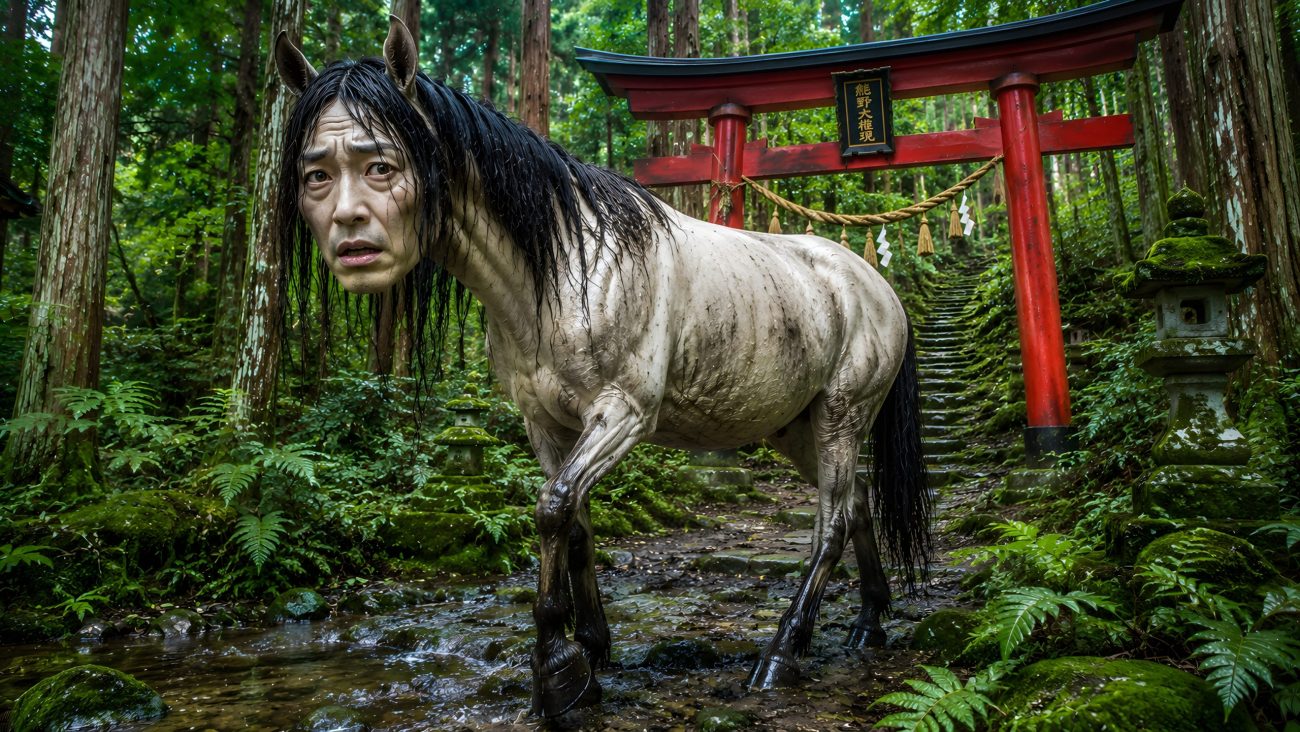
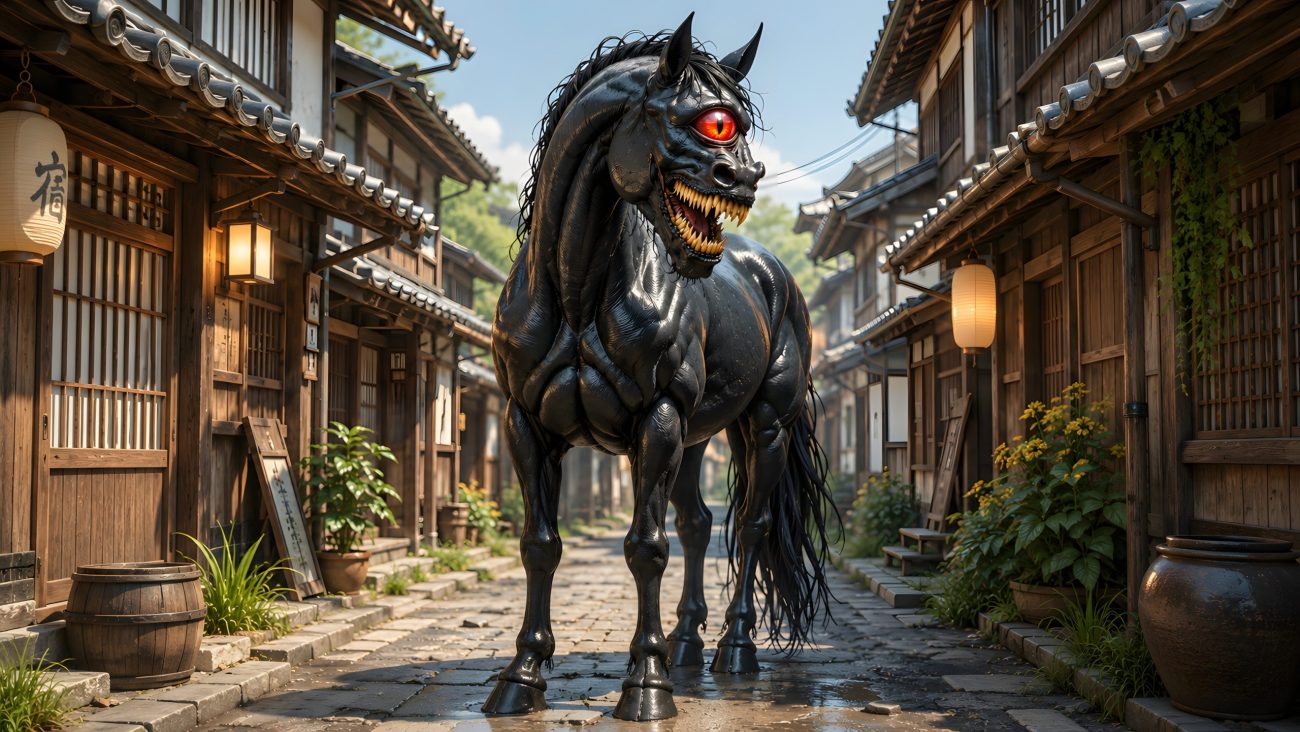
Nouma is a one-eyed man-eating yōkai from the folklore of Hinui Village in Ōchi District, Shimane Prefecture.

The creature is associated with the time when iron was produced in local tatara furnaces. One night, while a worker was sleeping at a smelting site, a mysterious woman suddenly appeared and lay over his body.

At the same time, the eerie neighing of the Nouma echoed in the distance. The creature gradually approached the furnace and peered inside through a high window. However, the moment it saw the woman, it immediately fled in terror.

The mysterious woman was later believed to have been Kanayago, the goddess of ironworking and metallurgy, whose presence protected the worker from the man-eating Nouma.


Sources

TYZ. (n.d.). 野馬 (Nouma). In 新版TYZ 妖怪図鑑. Retrieved June 29, 2026, from https://tyz-yokai.blog.jp/archives/1010655022.html


Umashika

Tradition / Region: Japanese Mythology
Alternative names: Foolish
Category: Horse


The Myth

Umashika is a yōkai depicted in Edo-period monster picture scrolls, including the Hyakki Yagyō Emaki preserved in the Matsui Bunko collection.

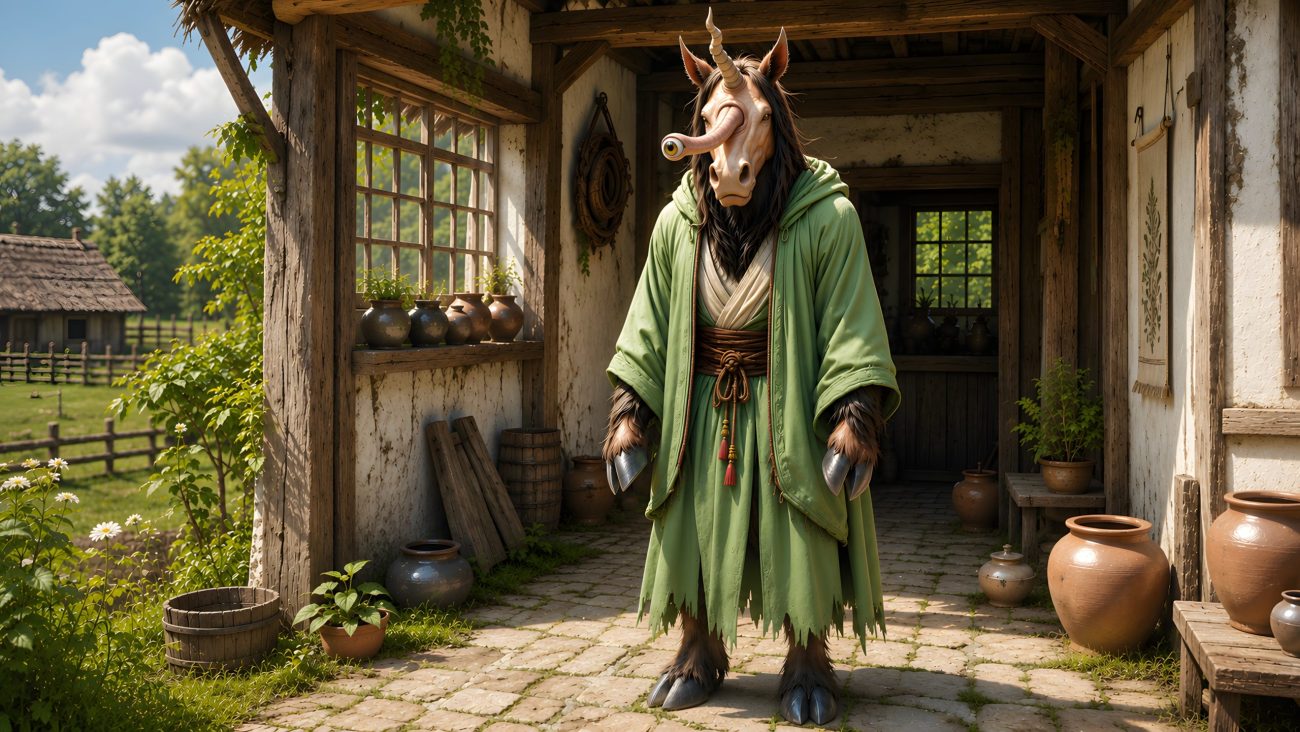
The creature has a beast-like appearance with a long face resembling that of a horse, deer-like hooves, and a single horn. It wears clothing and is distinguished by one eye that protrudes from its socket.

It is believed that Umashika was created through a visual play on the Japanese word baka (“fool”), giving the yōkai its unusual form rather than deriving it from an older folk tradition.


Sources

TYZ. (n.d.). 馬鹿 (Umashika). In 新版TYZ 妖怪図鑑. Retrieved June 29, 2026, from https://tyz-yokai.blog.jp/archives/1010655018.html.


Umadono

Tradition / Region: Japanese Mythology
Alternative names: Horse Lord
Category: Horse


The Myth

Umadono is a horse yōkai depicted in the 1788 illustrated work Yōkai Chakutōchō (A Record of the Arrival of Monsters) by Kitao Masami.

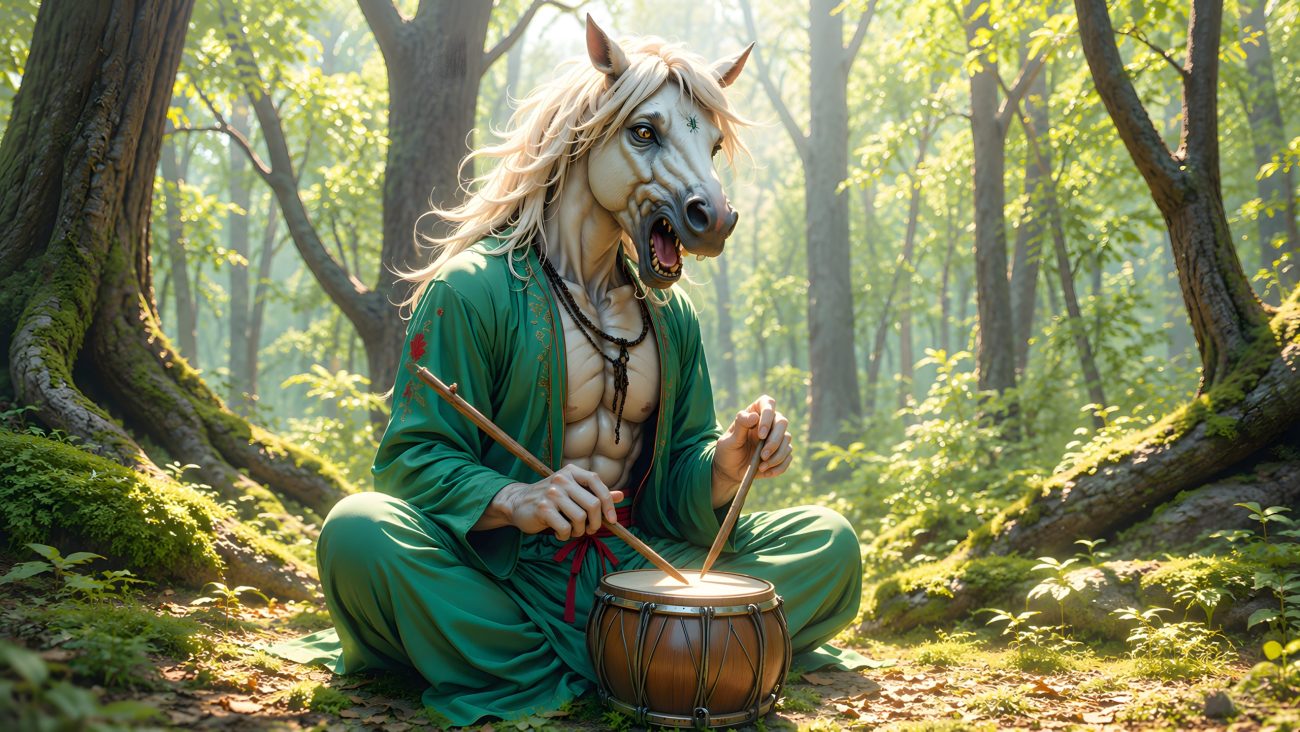
In the illustration, Umadono appears among a gathering of yōkai celebrating a feast on an inauspicious day. He is shown beating a drum while a cat dressed in similar clothing plays the shamisen and a fox performs the Shinoda-zuma dance. The accompanying text simply states, “Umadono is beating the drum.”

The image is based on a traditional Japanese metaphor in which “a horse beating a drum” refers to a stallion in heat. Similar depictions of horse monsters playing drums also appear in other kibyōshi (illustrated yellow-covered books) of the Edo period.


Sources

TYZ. (n.d.). 馬殿 (Umadono). In 新版TYZ 妖怪図鑑. Retrieved June 29, 2026, from https://tyz-yokai.blog.jp/archives/1010654092.html


Uma-ashi

Tradition / Region: Japanese Mythology
Alternative names: Horse Leg
Category: Horse


The Myth

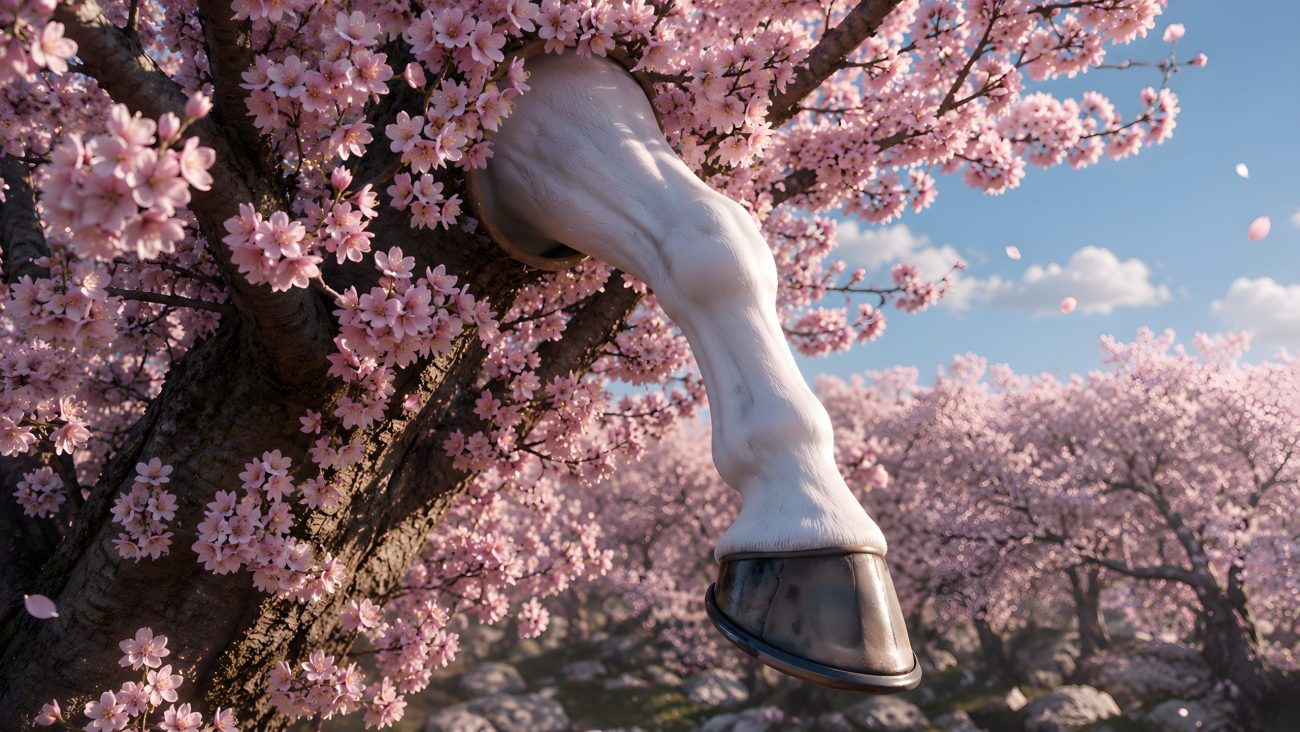
Uma-ashi is a strange supernatural phenomenon from the folklore of Fukuoka Prefecture in Japan. Rather than appearing as an entire horse, only an enormous horse’s leg manifests.

According to one legend, a horse’s leg hangs down at night from the branch of a tree growing out of an old wall. Anyone unfortunate enough to walk beneath it is kicked by the phantom limb.

Another tradition from Harukoga in Kurume City tells of a gigantic horse’s leg, about ten feet long, descending from a large hackberry tree at midnight. Local people attributed this eerie apparition to the magical powers of a tanuki (raccoon dog).


Sources

TYZ. (n.d.). 馬足 (Uma-ashi). In 新版TYZ 妖怪図鑑. Retrieved June 29, 2026, from https://tyz-yokai.blog.jp/archives/1010655024.html


Tetsume

Tradition / Region: Japanese Mythology
Alternative names: Iron Horse
Category: Horse


The Myth

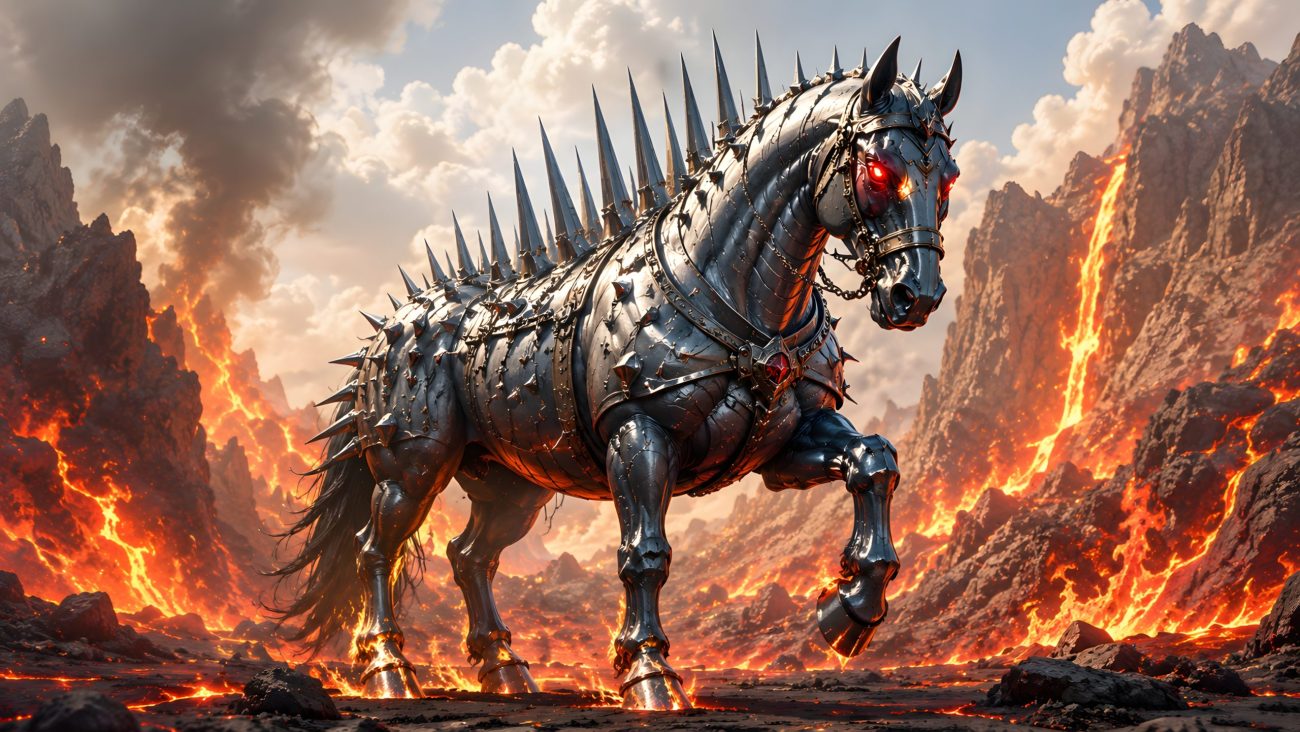
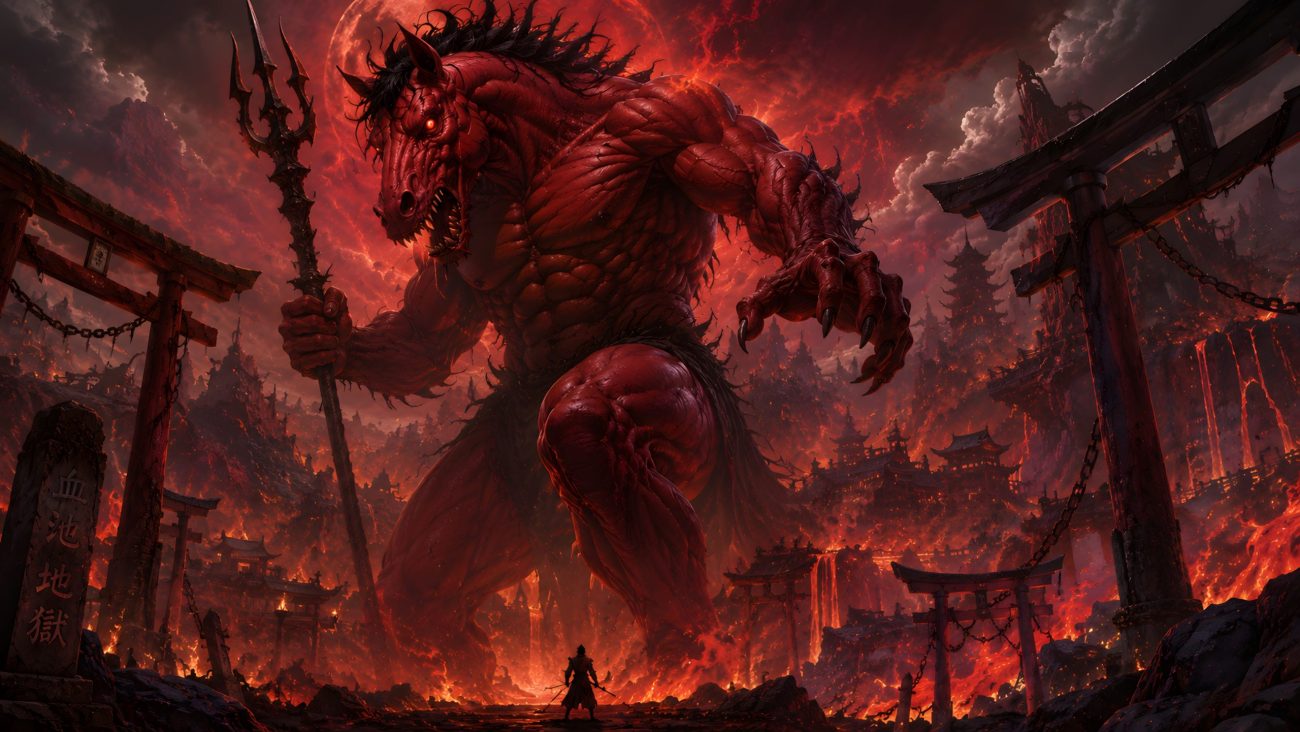
Tetsume, the Iron Horse, is one of the infernal creatures that inhabit the Iron Chariot, Iron Ox, Iron Donkey, and Iron Horse Hell, one of the Buddhist hells reserved for monks who have broken their religious vows. This realm is described in the Mahayana Lotus Sutra: Questions and Answers of Bodhisattva Retribution, included in the thirty-volume Buddha’s Name Sutra.

The hell is surrounded by four gates and an immense iron fortress. Within it, blazing fires rage as burning iron chariots race through the infernal landscape. Horse-headed rakshasas, iron oxen, iron donkeys, and the Iron Horse relentlessly torment the damned.

The Iron Horse is covered with a mane and tangled tail as sharp as sword blades. It breathes flames and smoke as it charges through the fiery realm.

Sinners are forced onto the backs of the Iron Horses, where they are cut by the razor-sharp mane and tail. Powerful blows from the creature’s tail crush their bodies. Although the condemned die from these agonies, they are immediately restored to life, only to endure the same punishments again for all eternity.


Sources

TYZ. (n.d.). 鉄目 (Tetsume). In 新版TYZ 妖怪図鑑. Retrieved June 29, 2026, from https://tyz-yokai.blog.jp/archives/1010655037.html


Tabibitoma

Tradition / Region: Japanese Mythology
Alternative names: Traveler’s Horse
Category: Horse


The Myth

The Tabibitoma is a folktale told in several regions of Japan, including Kyushu and the San’in region.

The story tells of two close friends, one the son of a wealthy family and the other from a poor household. Although their backgrounds differed, they set out together on a journey. When night fell, they found lodging in a stranger’s house.

During the night, the poor boy secretly watched the woman of the house behaving strangely beside the hearth. After raking the ashes, she sowed rice seeds into them. The rice instantly grew to maturity, and she harvested it to make dumplings.

The following morning, the travelers were served the dumplings. Despite his friend’s warnings not to eat them, the wealthy boy tasted one. The moment he swallowed it, he was transformed into a horse.

The woman placed a bridle on the transformed boy and led him away to work as a horse, while the poor traveler escaped. Along the road he met an old man, who listened to his story and revealed that an eggplant tree bearing seven eggplants facing east could reverse the enchantment. If one of those eggplants were fed to the horse, it would become human again.

After searching for several days, the poor boy finally found the magical tree. He returned to the house, where his friend had become weak and emaciated from hard labor in the fields. He forced the seven eggplants into the horse’s mouth, and the spell was immediately broken.

The two friends returned home and told their families what had happened. Deeply moved by the poor boy’s loyalty and courage, the wealthy boy’s father bestowed his fortune upon him. The two friends then lived happily together for the rest of their lives.


Sources

TYZ. (n.d.). 旅人馬 (Tabibitoma). In 新版TYZ 妖怪図鑑. Retrieved June 29, 2026, from https://tyz-yokai.blog.jp/archives/1010655044.html


Sagari

Tradition / Region: Japanese Mythology
Alternative names: –
Category: Horse


The Myth

Sagari is a yōkai found in the folklore of western Japan, particularly in Okayama and Kumamoto prefectures. It appears as the grotesque severed head of a horse hanging from the branches of hackberry trees.

The apparition suddenly drops down in front of travelers passing beneath the trees, startling them with its horrifying appearance. It does little else besides hanging from the branches, screaming and neighing with an unnatural cry.

Those who hear the Sagari’s eerie whinnying are said to be afflicted with a terrible fever.

According to tradition, the Sagari originates from the spirits of horses that die on the roadside and are abandoned where they fall. As the souls of these horses rise from their bodies, some become trapped in nearby hackberry trees. Unable to pass on to the next world, they transform into the yōkai known as Sagari.


Sources

Foster, M. D. (n.d.). Sagari. In Yokai.com: The Illustrated Database of Japanese Folklore. Retrieved June 29, 2026, from https://yokai.com/sagari/


Mezu

Tradition / Region: Japanese Mythology
Alternative names: Mezuki, Horse Head Demon
Category: Horse, Demon


The Myth

Mezu is one of the demon generals who guard the gates of hell in Japanese Buddhism. He appears as a powerful oni with the head of a horse and serves Great King Enma, the ruler of the underworld.

Together with his counterpart Gozu, who has the head of an ox, Mezu is among the first beings encountered by souls entering Jigoku. The two demons are immensely strong, possessing the power to move mountains, and rank among Enma’s chief servants. They oversee the punishment and torture of the wicked within hell.

If a soul attempts to escape from the underworld, Mezu and Gozu are dispatched to pursue and capture the fugitive, returning it to its rightful punishment.

Although Mezu and Gozu are the best-known of Enma’s servants, they are not the only animal-headed demons in hell. Other guardians with the heads of deer, tigers, lions, and boars also serve among the higher ranks, operating the torture chambers of Jigoku and supervising the torment of countless souls.

According to Buddhist tradition, Mezu and the other animal-headed demons ultimately trace their origins to Indian mythology, from which they spread to Japan through China along with Buddhism.


Sources

Foster, M. D. (n.d.). Mezu. In Yokai.com: The Illustrated Database of Japanese Folklore. Retrieved June 29, 2026, from https://yokai.com/mezu/


Kubiki-uma

Tradition / Region: Japanese Mythology
Alternative names: Headless Horse, Head-cutting Horse
Category: Horse


The Myth

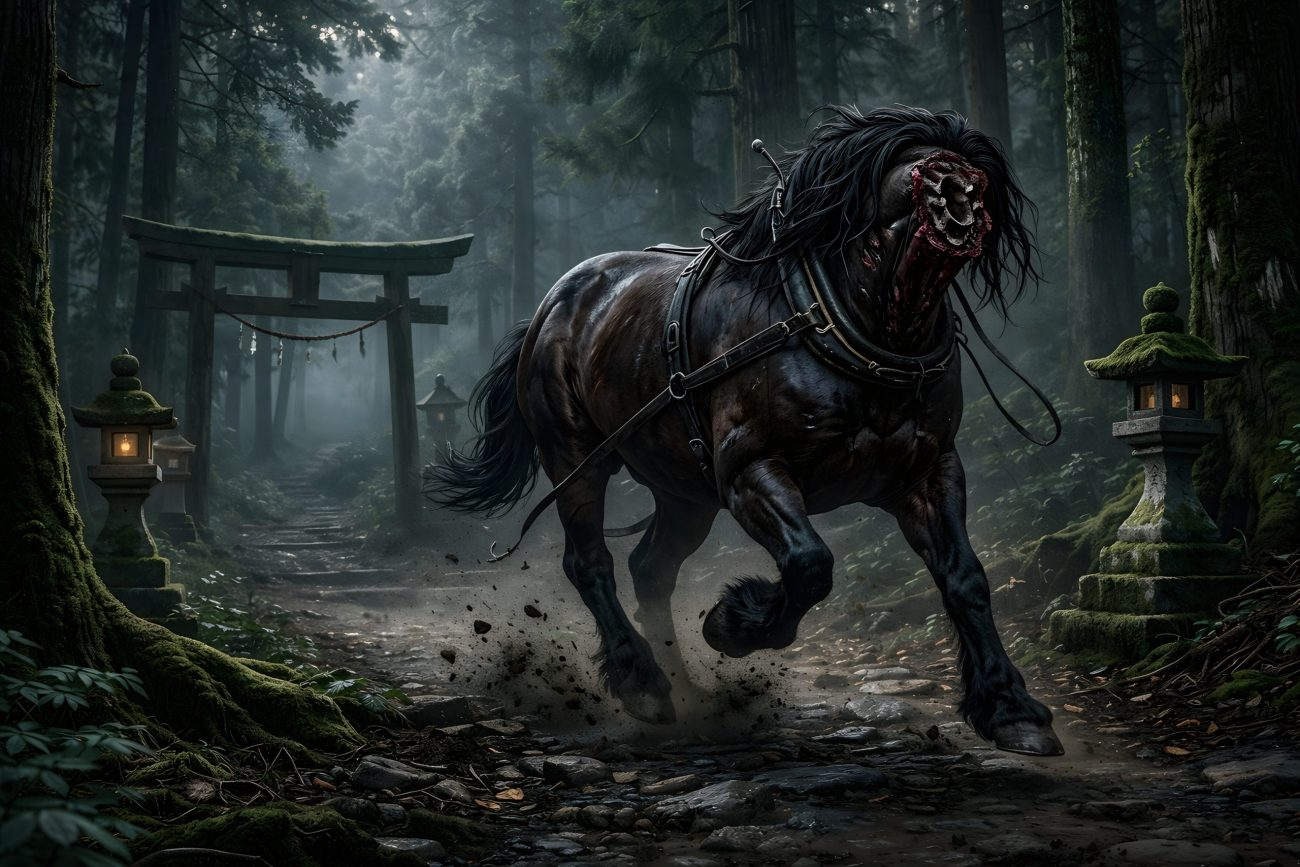
Kubiki-uma is a yōkai that appears as a horse without a head. It is known throughout various parts of Japan, although the traditions of Shikoku, particularly Tokushima Prefecture, are the most famous.

While the details differ from region to region, the stories generally agree that the headless horse appears at a specific place and time, wandering silently through the night. Sometimes it appears alone, while in other tales it carries a deity, a headless person, or a yōkai known as Yakō-san.

Encountering a Kubiki-uma is generally regarded as a sign of misfortune. However, in some areas, such as Tamagawa Town in Ehime Prefecture, seeing the headless horse is considered a good omen instead.

Various legends explain the origin of the Kubiki-uma. Some say it is the spirit of a horse that was loved by a princess but was killed out of jealousy. Other traditions claim it is the ghost of a horse slain together with the monk riding it, or of a horse killed by thieves after they broke into a temple.


Sources

TYZ. (n.d.). クビキ馬 (Kubiki-uma). In 新版TYZ 妖怪図鑑. Retrieved June 29, 2026, from https://tyz-yokai.blog.jp/archives/1010655026.html