Jasin Bird

Tradition / Region: Japanese Mythology
Alternative names: Jasintori; Jasin Bird
Category: Bird


The Myth

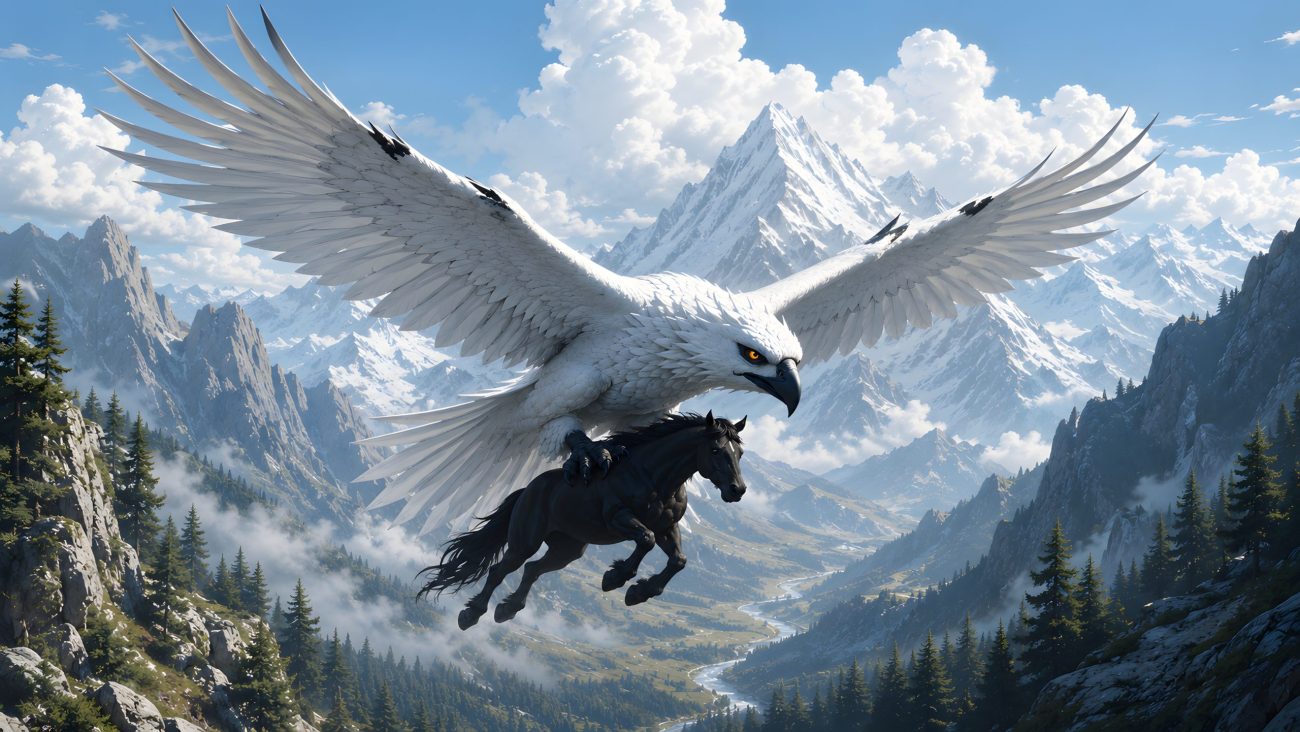
The Jasin Bird is a gigantic bird said to come from across the sea. Resembling an enormous hawk, it terrorized a village by flying in every night and carrying away oxen, horses, and other livestock. A samurai resolved to end the attacks by hiding inside the carcass of a dead horse, allowing the bird to seize him and carry him back to its nest.

At the nest, the samurai found the Jasin Bird feeding its chicks while a great serpent crawled nearby. He emerged from the horse’s body and slew the parent bird before killing all of its hungry young. The serpent escaped unharmed, and the samurai began the long journey home.

Unable to cross a great river, the samurai was met by a beautiful woman who revealed herself to be the serpent transformed into human form. Grateful that he had spared her life, she turned her own body into a bridge so he could cross the river and gave him a bamboo tube containing a miraculous medicine capable of curing every disease. After he reached the opposite bank, the serpent disappeared beneath the water.

The samurai never returned to his original village but settled in another land, marrying the daughter of an old woman who had lost her family to the Jasin Birds. Years later, the old woman accidentally poured out the miraculous medicine into her garden. A new healing herb sprang from the ground where it fell, and from that time onward the village lived in peace, for the Jasin Birds never returned.


Sources

Wikipedia contributors. (n.d.). Kurangaituku. In Wikipedia. Retrieved June 29, 2026, from https://en.wikipedia.org/wiki/Kurangaituku
Furari-bi

Tradition / Region: Japanese Mythology
Alternative names: Wandering Fire; Burari-bi
Category: Bird, Dog


The Myth

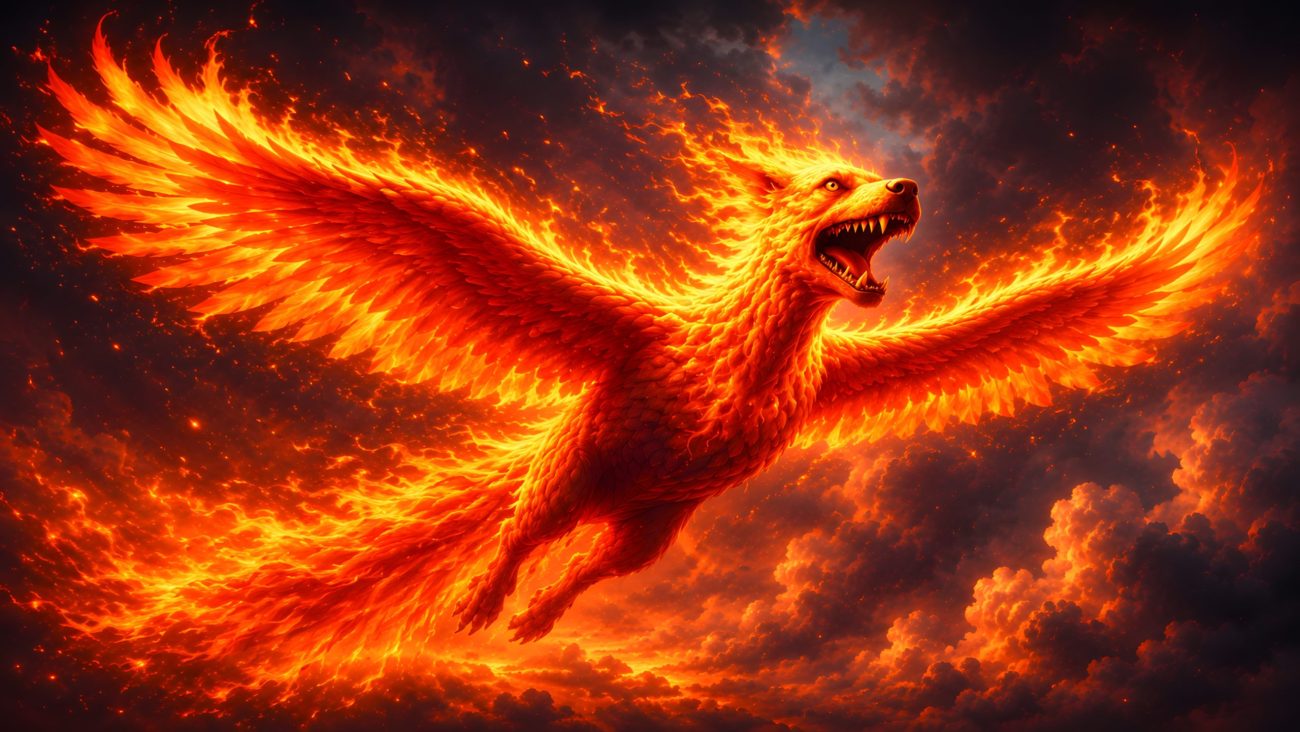
The Furari-bi (“Wandering Fire”) is a mysterious yokai depicted as a bird surrounded by flames. In some Edo-period illustrations, it has a bird’s body with a dog-like face emerging from the center of the fire, while in others it appears as a more conventional flaming bird. Another illustrated tradition refers to the same creature as Burari-bi.

Unlike many yokai, the Furari-bi is known almost entirely from illustrated monster scrolls, including the Hyakkai Zukan, Gazu Hyakki Yagyō, and the Hyakki Yagyō Emaki. These works portray it as a wandering mass of living fire in avian form, but they provide no accompanying story or explanation of its behavior.

Because the Furari-bi appears only in these illustrations, no traditional legend describing its origin or powers has survived. Modern interpretations of the yokai are therefore considered later speculation rather than part of the original folklore.


Sources

TYZ. (2016, May 21). 雉子娘 (Kiji Musume). In 新版TYZ 妖怪図鑑. Retrieved June 29, 2026, from https://tyz-yokai.blog.jp/archives/1057632664.html


Kunne Cikap

Tradition / Region: Japanese Mythology
Alternative names: Black Bird; Kunne Cikap-po
Category: Bird


The Myth

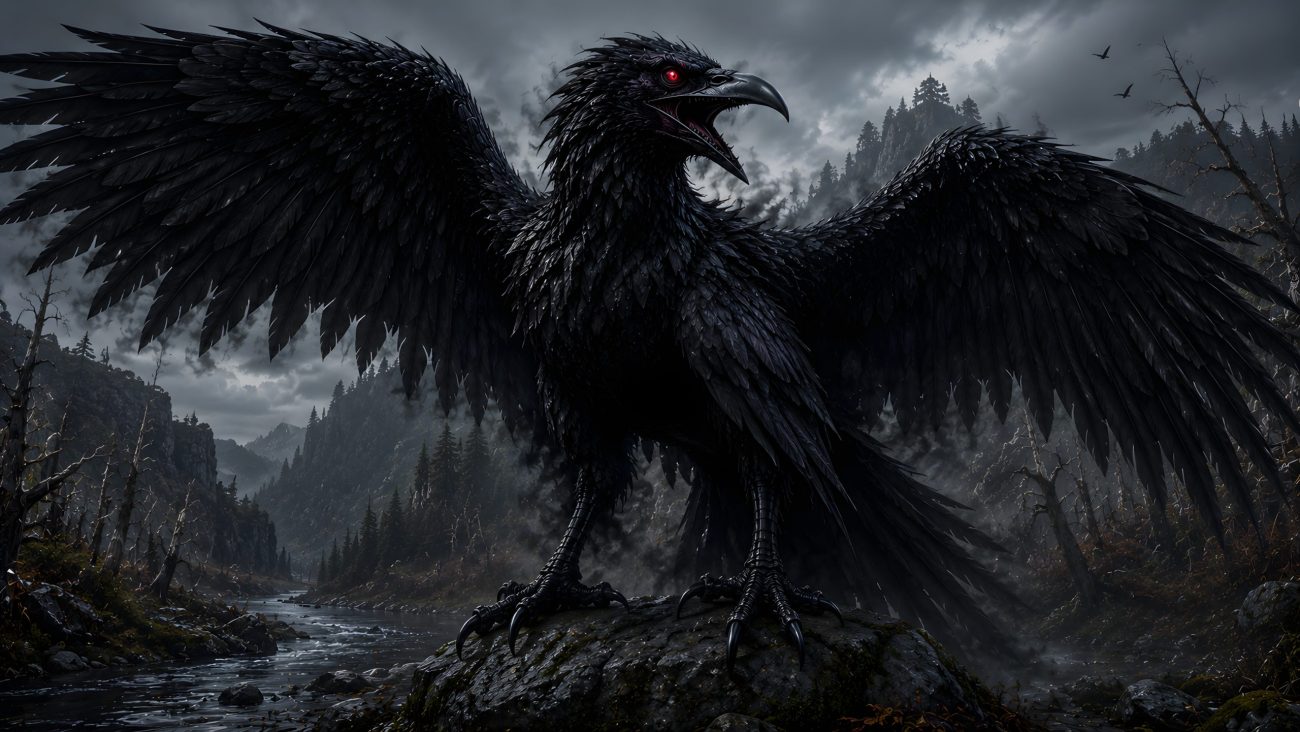
The Kunne Cikap (“Black Bird”) is a monstrous bird from Ainu tradition. It was said to dwell at the Black River (Kunne pe) in the northern lands until it was overcome by the culture hero Ponyaunpe during his adventures. It is paired with the Hure Cikap (“Red Bird”), another fearsome bird that lived in the Red Forest.

In later Ainu tradition and literature, the Kunne Cikap came to represent evil and ill omens. It is described as a black bird that gathers in flocks to peck at the bodies of the dead, becoming a symbol of darkness, falsehood, and malevolent forces. This image appears in Ainu poetry, where the bird is invoked as something that should not be feared despite its sinister reputation.


Sources

Wikipedia contributors. (n.d.). Kunne cikap. In Wikipedia. Retrieved June 29, 2026, from https://en.wikipedia.org/wiki/Kunne_cikap


Inmaraki

Tradition / Region: Japanese Mythology
Alternative names: Yinmaraki; Onmoraki (variant)
Category: Bird


The Myth

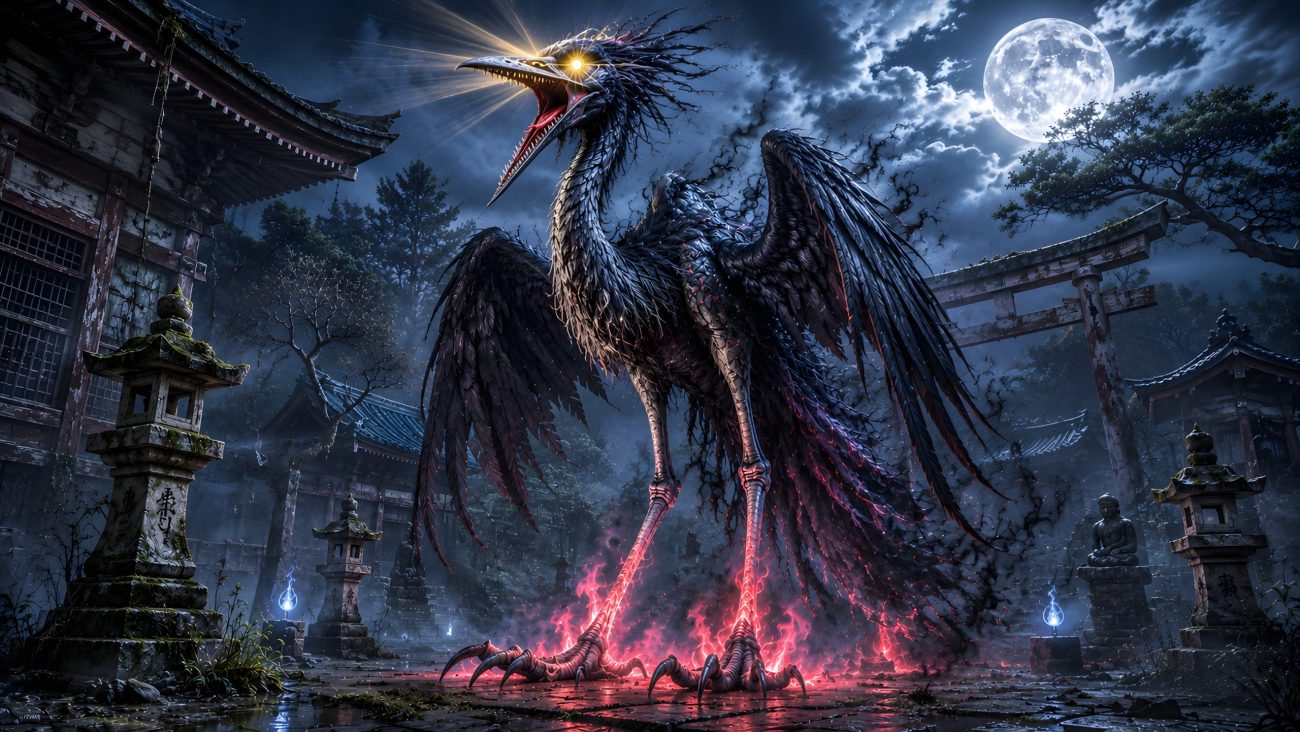
The Inmaraki is a monstrous bird that appears in the 1809 revenge tale Konjin Chōgorō Chūkō Monogatari. After the concubine Oyuki and her young son Tsuyuichi are cruelly abused and ultimately killed, their restless spirits unite into a single terrifying being. The creature appears as a black, crane-like bird with blazing eyes and a shrill cry, confronting the woman responsible for their suffering.

The Inmaraki is accompanied by the ghosts of Oyuki and her headless son, who continue to haunt their tormentor. As the apparitions appear again and again, they drive her into terror, madness, and eventually death, completing their revenge.

The creature is based on the older Onmoraki, a bird yokai said to arise from the lingering energy of a corpse. In Konjin Chōgorō Chūkō Monogatari, however, it is specifically called Inmaraki and is depicted as the physical manifestation of the vengeful spirits of the murdered mother and child, making it a distinct variation of the older legend.


Sources

TYZ. (2018, October 20). 陰摩羅鬼 (Inmaraki). In 新版TYZ 妖怪図鑑. Retrieved June 29, 2026, from https://tyz-yokai.blog.jp/archives/1072670895.html


Tōjukei

Tradition / Region: Japanese Mythology, Chinese Mythology
Alternative names: Spitting-Swallowing Chicken; Ribbon-Spitting Chicken
Category: Bird


The Myth

The Tōjukei is a legendary bird described in Chinese and Japanese tradition. It is said to resemble a pheasant or turkey and bears two green horns upon its head. During the clear days of spring and summer, the fleshy wattles hanging from its throat spread open, giving the impression that the bird is spitting out long ribbons, from which it takes its name.

Another tradition explains the name differently. It says that when the Tōjukei breathes toward the sun, its breath shines in five brilliant colors like a rainbow, resembling a brightly colored ribbon. Because of its unusual appearance and marvelous qualities, the bird became a popular subject in Japanese paintings and temple decorations.


Sources

TYZ. (2017, January 24). 吐綬鶏 (Tojukei). In 新版TYZ 妖怪図鑑. Retrieved June 29, 2026, from https://tyz-yokai.blog.jp/archives/1063934758.html


Kiji Musume

Tradition / Region: Japanese Mythology
Alternative names: Pheasant Maiden; Kiji-musume
Category: Bird


The Myth

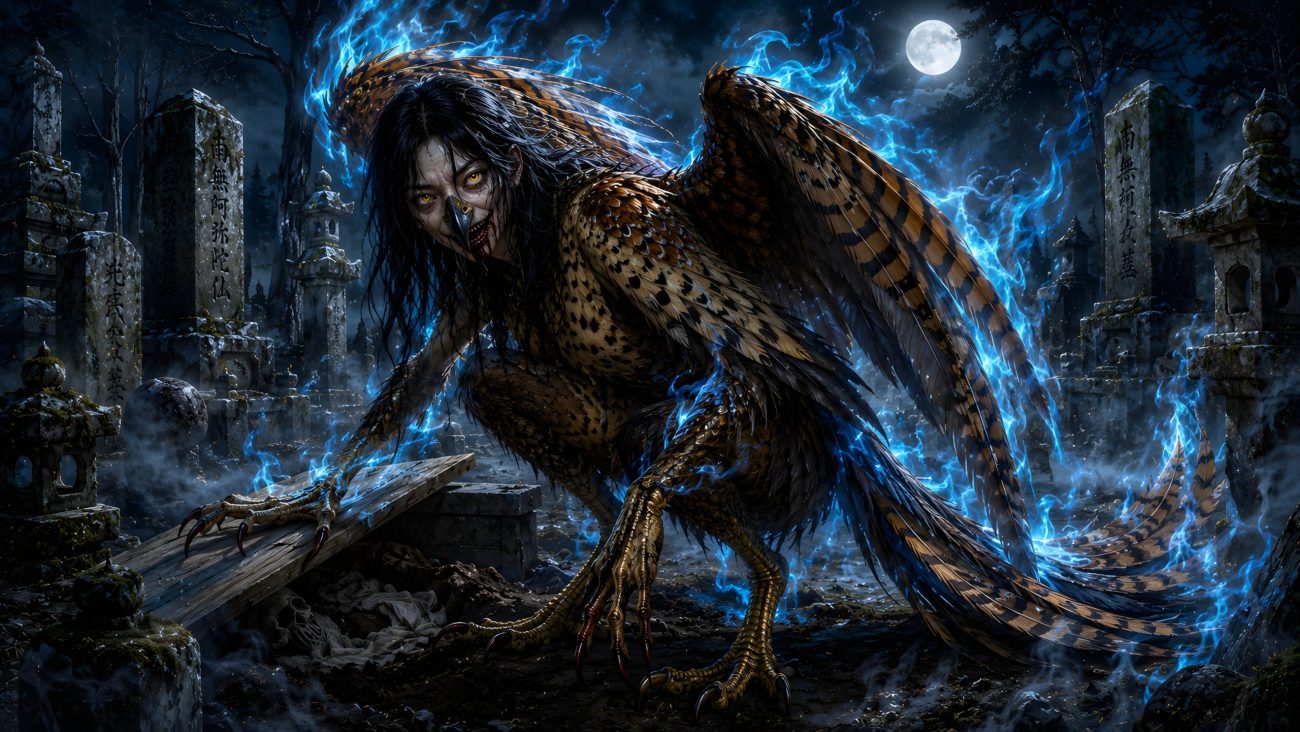
The Kiji Musume (“Pheasant Maiden”) is a yokai from the village of Tsuchibuchi in Iwate Prefecture. An elderly couple who longed for a child prayed every night to the local deity, asking for a child no matter what form it might take. After the wife dreamed of a flowering vine blooming in her robe, she gave birth to a beautiful daughter named Kosan, who grew into a lovely young woman and eventually married.

Soon after her marriage, Kosan began secretly leaving her bed each night, always returning with hands and feet as cold as ice. Suspicious, her husband followed her to the village cemetery, where he saw her digging up a fresh grave. Too terrified to watch further, he fled home without confronting her.

The following night, the husband and Kosan’s mother secretly watched together. They saw Kosan break open a coffin and devour the corpse inside with the appearance of a fearsome demon. Shocked, her mother cried out to her. Realizing her secret had been discovered, Kosan declared that the bond between them had come to an end. Blue flames burst from her body, and she transformed into a pheasant, flying away toward the mountains and never returning.


Sources

TYZ. (2016, May 21). 雉子娘 (Kiji Musume). In 新版TYZ 妖怪図鑑. Retrieved June 29, 2026, from https://tyz-yokai.blog.jp/archives/1057632664.html


Karyōbinga

Tradition / Region: Indian Mythology, Japanese Mythology
Alternative names: Kalavinka; Kalaviṅka; Karyōbinga
Category: Bird


The Myth

The Karyōbinga is a divine bird said to dwell in the Pure Land. It has the face of a human and the body of a bird, and its voice is so beautiful that it preaches the teachings of Buddhism through its song. In Buddhist art, it is sometimes shown playing a flute or another musical instrument as it sings.

The Karyōbinga is the Japanese form of the Sanskrit Kalaviṅka, a heavenly bird renowned for its incomparable voice. It is frequently depicted in temples and on Buddhist ornaments, often appearing beside the halo of Amida Buddha. The bird is also celebrated in gagaku, Japan’s classical court music, where the dance Karyōbinga portrays the celestial bird descending from the heavens to perform its graceful dance.


Sources

TYZ. (2009, July 26). 迦陵頻伽 (Karyōbinga / Kalyobinga). In 新版TYZ 妖怪図鑑. Retrieved June 29, 2026, from https://tyz-yokai.blog.jp/archives/1010655151.html


Pentachikoro Oyashi

Tradition / Region: Japanese Mythology
Alternative names: Pentachi-koro-oyashi; Ghost that Carries a Torch
Category: Bird


The Myth

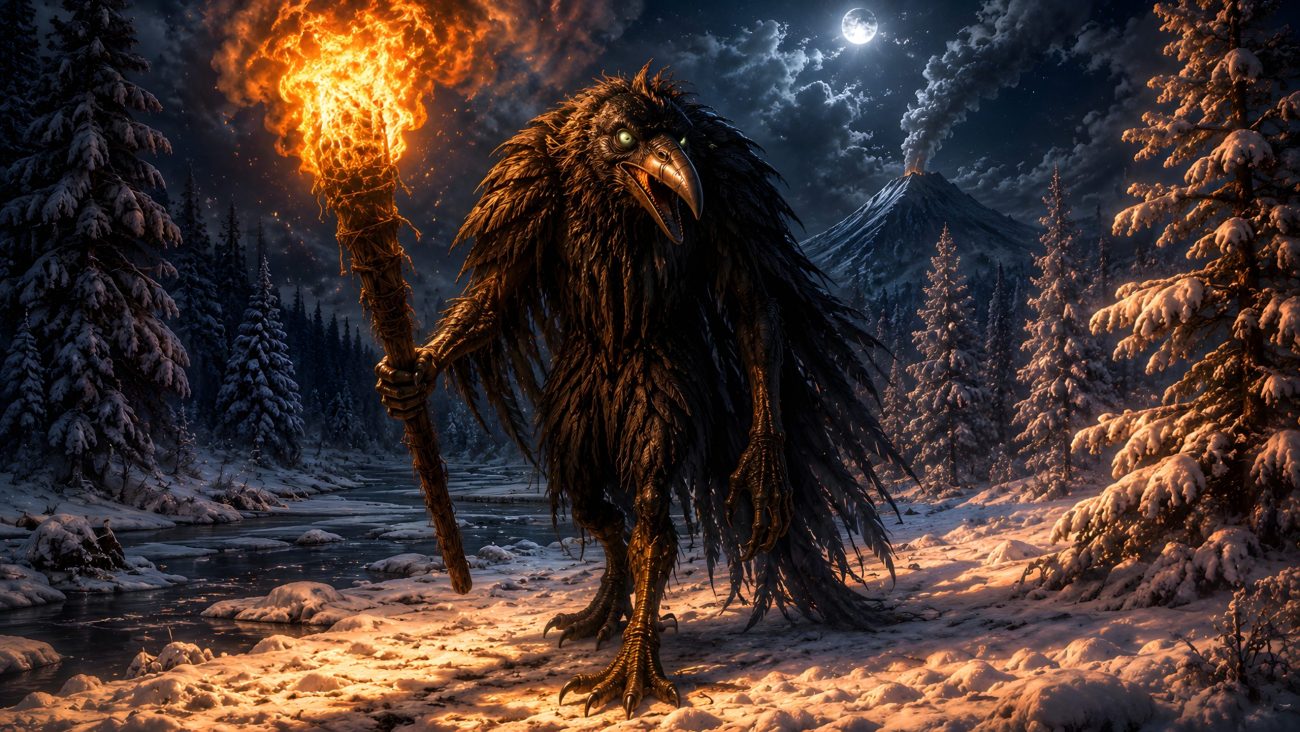
The Pentachikoro Oyashi is a supernatural being from the traditions of the Sakhalin Ainu. Its name means “Ghost that Carries a Torch,” and it is said to wander the night holding a blazing torch that frightens travelers.

One night, the chief of Toyukushi was traveling to the settlement of Kotankeshi when the torch-bearing apparition followed him. The light of its torch reflected across the snow, making the dark road as bright as day. Terrified, the chief reached Kotankeshi and reported that a monster had pursued him.

The brave chief of Kotankeshi set out with his sword to confront the creature. Before long, the mysterious torchlight appeared behind him, and the Pentachikoro Oyashi drew near. As it reached out to touch him, the chief thrust his sword into it. The creature writhed in agony before collapsing, while the chief himself fainted from the encounter. When others returned the following morning, they discovered that the slain monster was in fact a giant raven. The Pentachikoro Oyashi was said to be an evil raven that had disguised itself as a torch-bearing ghost.


Sources

TYZ. (2009, July 26). ペンタチコロオヤシ (Pentachikoro Oyashi). In 新版TYZ 妖怪図鑑. Retrieved June 29, 2026, from https://tyz-yokai.blog.jp/archives/1010654297.html


Tsuru-bakemono

Tradition / Region: Japanese Mythology
Alternative names: Crane Monster; Tsuru-bakemono
Category: Bird


The Myth

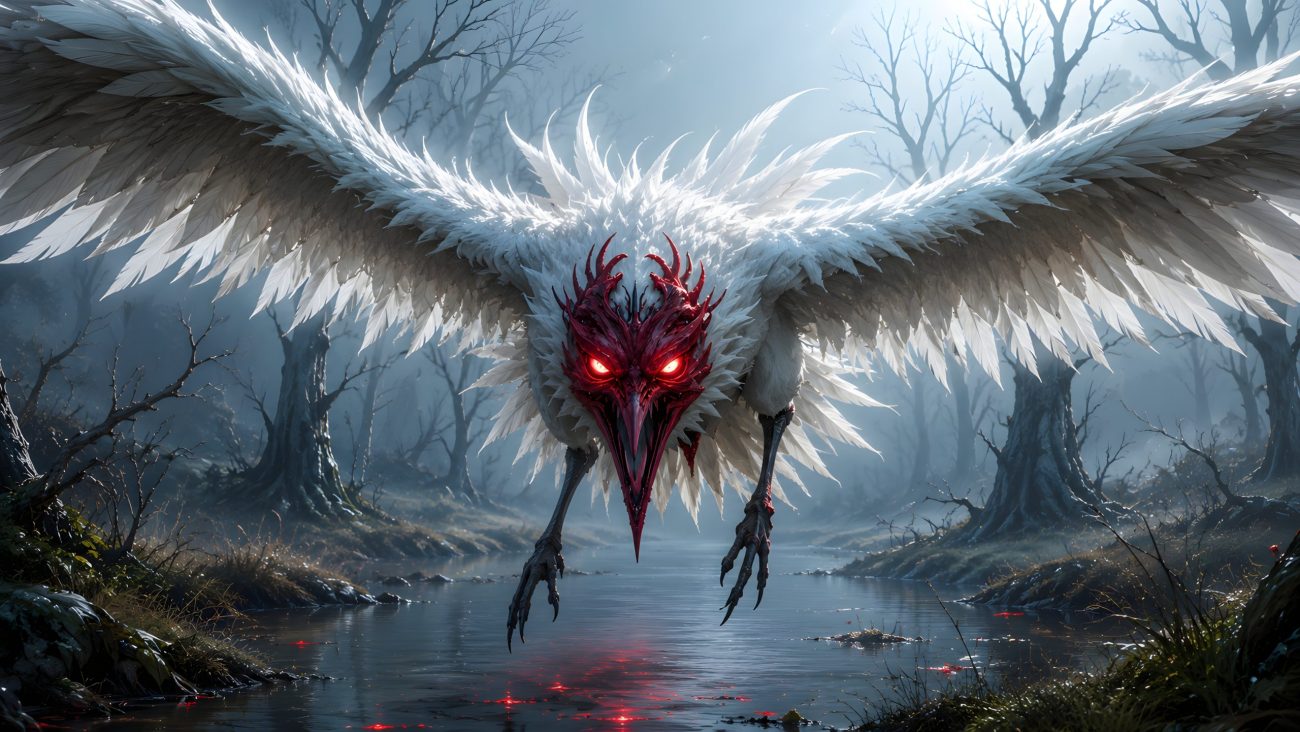
The Tsuru-bakemono is a yokai said to appear in the wetlands between Sanjo Town and Gomyō in present-day Niigata Prefecture. Travelers passing through the marshes at night may suddenly see a white, crane-like figure floating before their eyes.

Little else is recorded about the creature. It is simply described as a mysterious white apparition resembling a crane that haunts the marshes after dark, appearing unexpectedly before nighttime travelers.


Sources

TYZ. (2009, July 26). 鶴化け物 (Tsuru-bakemono). In 新版TYZ 妖怪図鑑. Retrieved June 29, 2026, from https://tyz-yokai.blog.jp/archives/1010653550.html


Kogarasu

Tradition / Region: Japanese Mythology
Alternative names: Old Crow
Category: Bird


The Myth

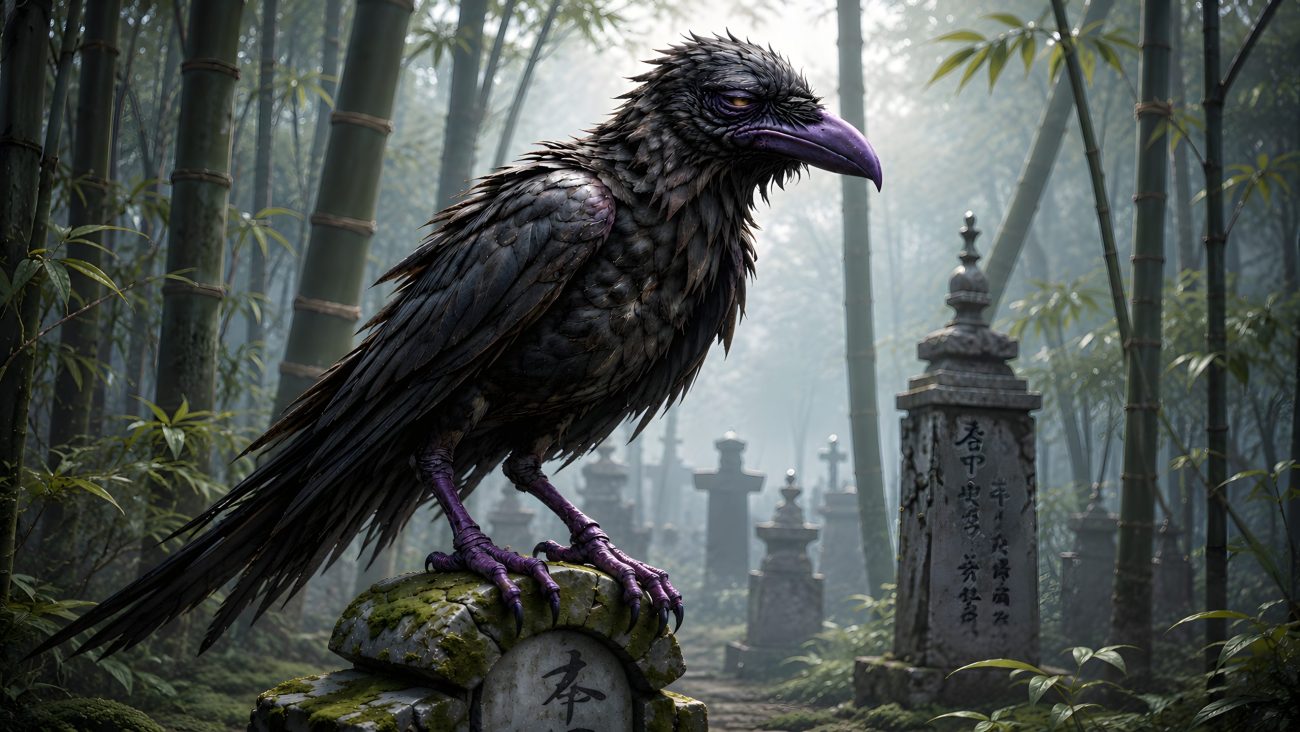
The Kogarasu (“Old Crow”) is a crow yokai from the Tosa Obake Zōshi (Tosa Ghost Scroll). According to the legend, it is an ordinary crow that has lived for a thousand years before transforming into a fearsome supernatural creature.

Unlike common crows, the Kogarasu remembers those who mistreated it during its lifetime. After gaining its yokai form, it takes revenge upon its former tormentors by digging up their graves after death and feeding upon their corpses. In this way, the creature punishes cruelty long after its victims have passed away.

The Kogarasu is portrayed as a grim embodiment of vengeance, demonstrating that even the smallest acts of malice toward living creatures may one day return to haunt those responsible. It remains one of the many strange yokai recorded in the Tosa Obake Zōshi, where ordinary animals become supernatural beings after surviving for an extraordinary length of time.


Sources

TYZ. (2009, July 26). 古烏 (Kogarasu). In 新版TYZ 妖怪図鑑. Retrieved June 29, 2026, from https://tyz-yokai.blog.jp/archives/1010652618.html