Mizuguma

Tradition / Region: Japanese Mythology
Alternative names: Water Beast of Mizushima
Category: Bear


The Myth

The Mizuguma, or Water Bear, is a mysterious black beast said to have lived in the depths beneath Mount Hakusan. It was believed to be responsible for the devastating floods that repeatedly struck the Tedori River during the 18th century.

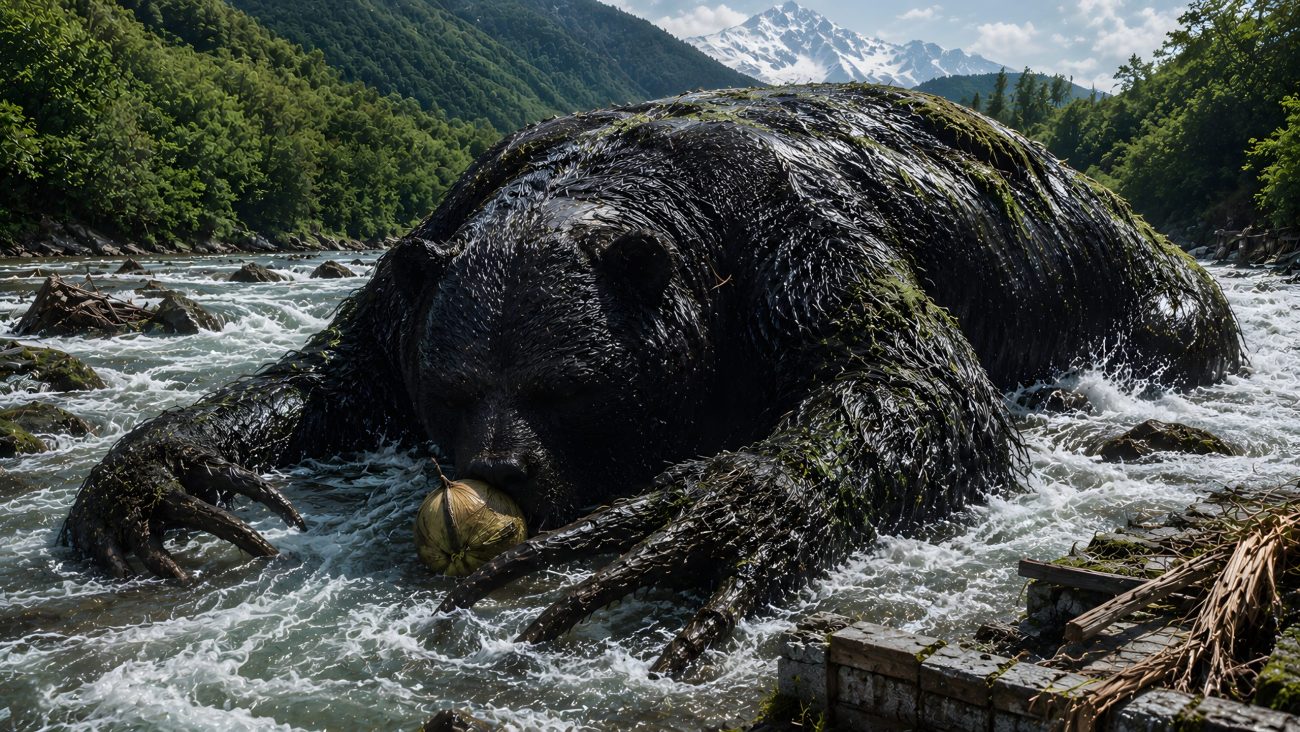
During one of these floods, people noticed a huge black object protruding from the river. It resembled neither stone, wood, nor the body of a dead animal. Covered in black, leather-like skin, it had no visible eyes, nose, or head, only several branch-like limbs. Hoes and bamboo poles could not pierce its hide.

When a coconut floated downstream, the creature suddenly extended one of its limbs, seized the fruit, pressed it against its mouthless body, and drained the oil from within before letting the empty shell drift away. Realizing it was alive, the villagers tried to burn it with flaming straw. The fire finally split its hide, drawing black blood.

The wounded beast responded with a tremendous roar. Towering waves crashed onto the riverbanks, embankments burst apart, and floodwaters surged across the countryside. Wherever the creature rolled, deep pools formed, and the flooding continued to devastate the surrounding villages.

Unable to defeat it, the people prayed daily by reciting the Kannon Sutra for one hundred days. One night, a faint light appeared, and the black creature was seen swimming upstream toward the mountains. After its departure, the floodwaters receded, the river returned to normal, and the Water Bear was never seen again. It was thereafter believed to dwell once more in the deep abyss beneath Mount Hakusan.


Sources

TYZ. (n.d.). 水熊 (Mizuguma). In 新版TYZ 妖怪図鑑. Retrieved June 29, 2026, from https://tyz-yokai.blog.jp/archives/1071303462.html
Kawaguma

Tradition / Region: Japanese Mythology
Alternative names: Kawakuma
Category: Bear


The Myth

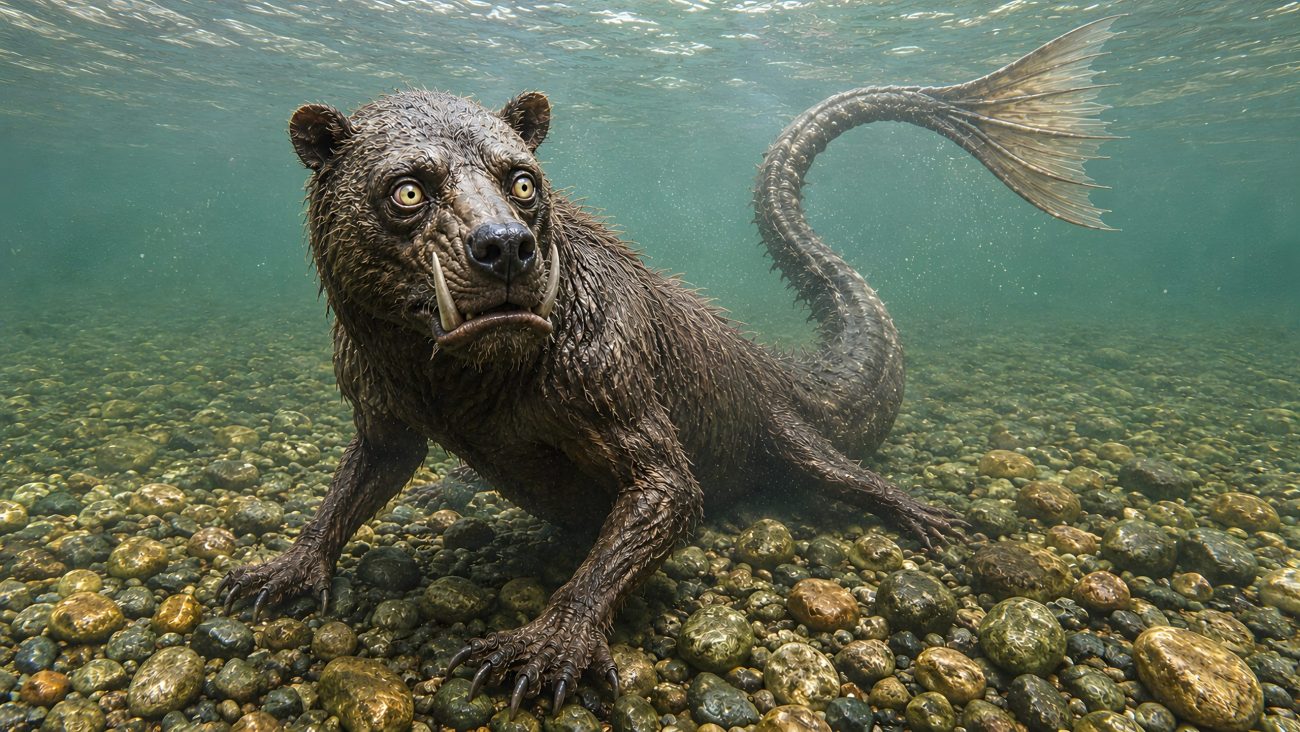
The Kawaguma, meaning “river bear,” is an aquatic yōkai said to inhabit the deep rivers of northern Japan, particularly the Omono River in Akita Prefecture and the Shinano River in Niigata Prefecture. Covered in black hair and rarely seen by humans, it spends most of its life hidden beneath the water.

Little is known about the Kawaguma’s habits because it remains at the bottom of deep rivers. It is sometimes curious enough to approach boats, clinging to their sides or stealing objects and dragging them back to its underwater lair. It is also blamed for digging into riverbanks, causing them to collapse and bringing about floods.

One famous legend tells of a lord who was hunting from a boat on the Omono River when a black, hairy hand suddenly reached up from the depths and snatched away his rifle. A skilled diver later recovered the weapon from the deepest part of the river, and it thereafter became known as the “Kawaguma gun,” remaining a treasured possession of the Satake clan.

Another tale recounts how a ferryman had just tied up his boat for the night when he heard a splash behind him. Looking back, he saw a pair of black, hairy hands gripping the side of the boat. Startled, he struck at them with a large knife. The following morning, a severed hand was found inside the boat. It resembled the paw of a cat but was covered in black fur, and everyone who saw it declared that it belonged to a Kawaguma.


Sources

Foster, M. D. (n.d.). Kawaguma. In Yokai.com: The Illustrated Database of Japanese Folklore. Retrieved June 29, 2026, from https://yokai.com/kawaguma/.


Onikuma

Tradition / Region: Japanese Mythology
Alternative names: Demon Bear
Category: Bear


The Myth

The Onikuma, meaning “demon bear,” is a fearsome yōkai said to originate in the mountain forests of Japan, particularly the Kiso Valley in Nagano Prefecture. It is believed that when an ordinary bear lives for many years, it transforms into an Onikuma, growing far larger than any natural bear and gaining immense supernatural strength.

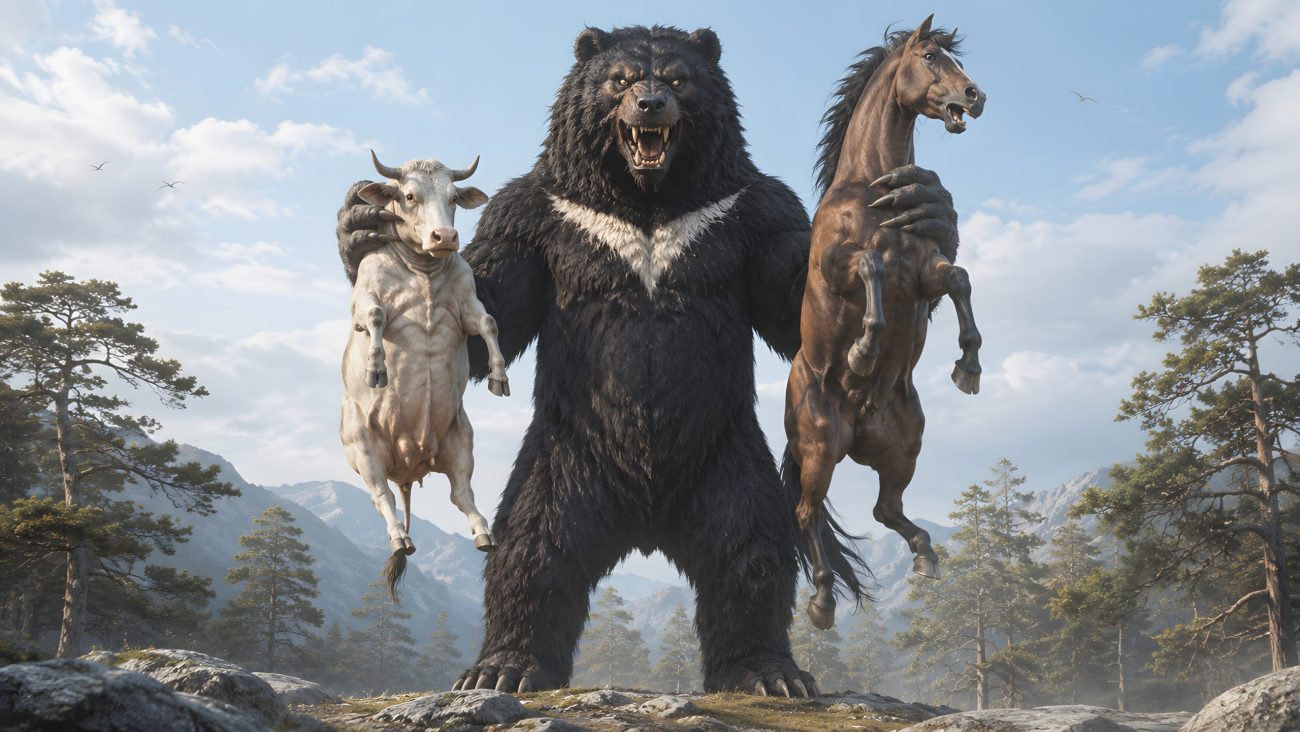
Unlike ordinary bears, an Onikuma is able to walk upright on two legs. It is powerful enough to move enormous boulders that even groups of men cannot shift, and it can crush small animals with a single blow. Although it lives deep within remote mountain forests and is active mainly at night, it occasionally descends into nearby villages in search of food.

When an Onikuma enters human settlements, it is known for carrying away livestock such as horses and cattle before disappearing back into the mountains. Because of its tremendous strength, encounters with the creature are rare but often deadly, leaving villagers with little choice but to organize dangerous hunts.

Traditional accounts describe a special method for killing an Onikuma. Hunters blocked the entrance to its den with a massive wooden frame covered in wisteria vines. They then forced branches and brush through the narrow openings until the beast’s shelter became completely filled. Eventually the trapped Onikuma burst through the entrance, where hunters waited to attack it with long spears and rifles.

According to legend, several Onikuma were slain during the Kyōhō era (1716–1736). Their hides were said to be so enormous that each one could cover an area of more than six tatami mats. Large boulders scattered throughout the Kiso Valley are also known as “Onikuma stones,” as local tradition claims they were hurled down the mountainsides by these mighty demon bears. In Hokkaido, bears that attacked humans were likewise feared and referred to as Onikuma.


Sources

Foster, M. D. (n.d.). Onikuma. In Yokai.com: The Illustrated Database of Japanese Folklore. Retrieved June 29, 2026, from https://yokai.com/onikuma/.

Wikipedia contributors. (n.d.). Onikuma. In Wikipedia. Retrieved June 29, 2026, from https://en.wikipedia.org/wiki/Onikuma.