Złydnia

Tradition: Polish Mythology
Alternative Names: Złydnie
Category: House dweller


The Myth

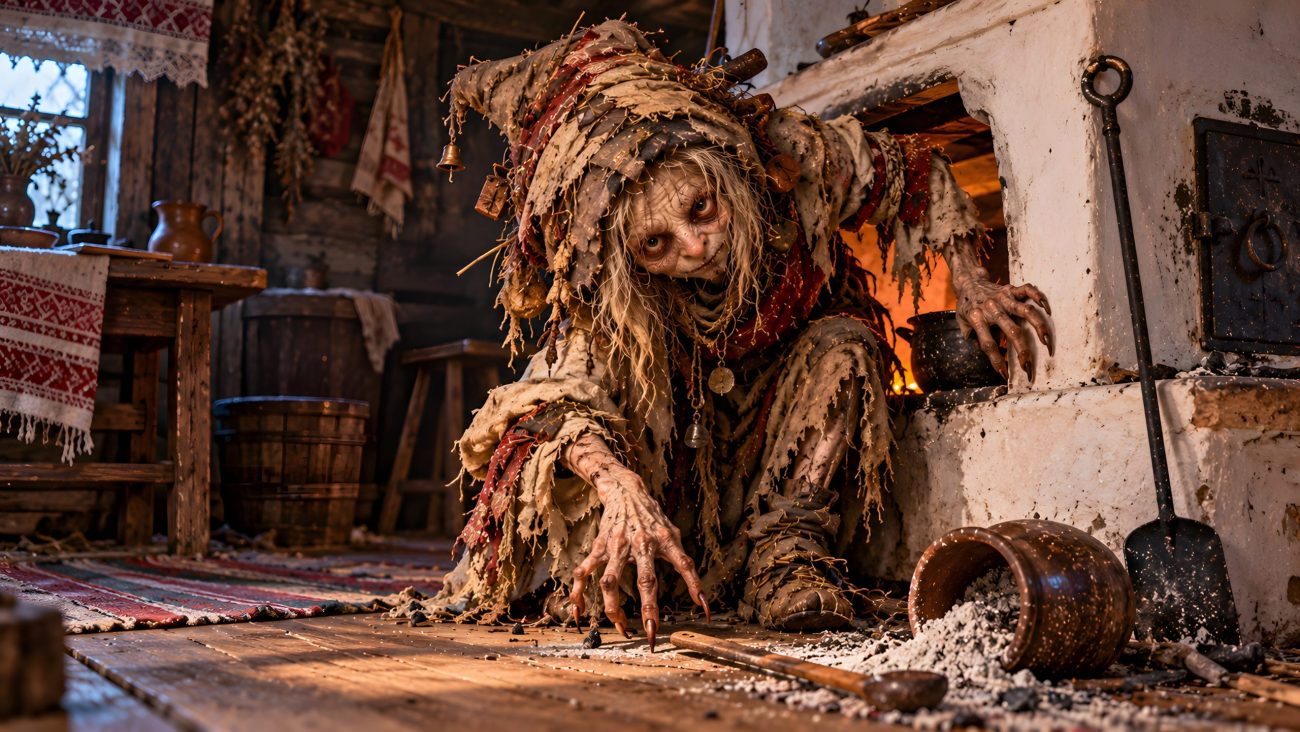
Złydnie are malicious supernatural beings in East Slavic folklore that bring misfortune to households and their inhabitants. They are associated particularly with the space behind the stove, where they settle after entering a home in groups. Their presence is dangerous because they drive away the household’s guardian spirits and replace them with an atmosphere of disorder, fear, and evil influence.

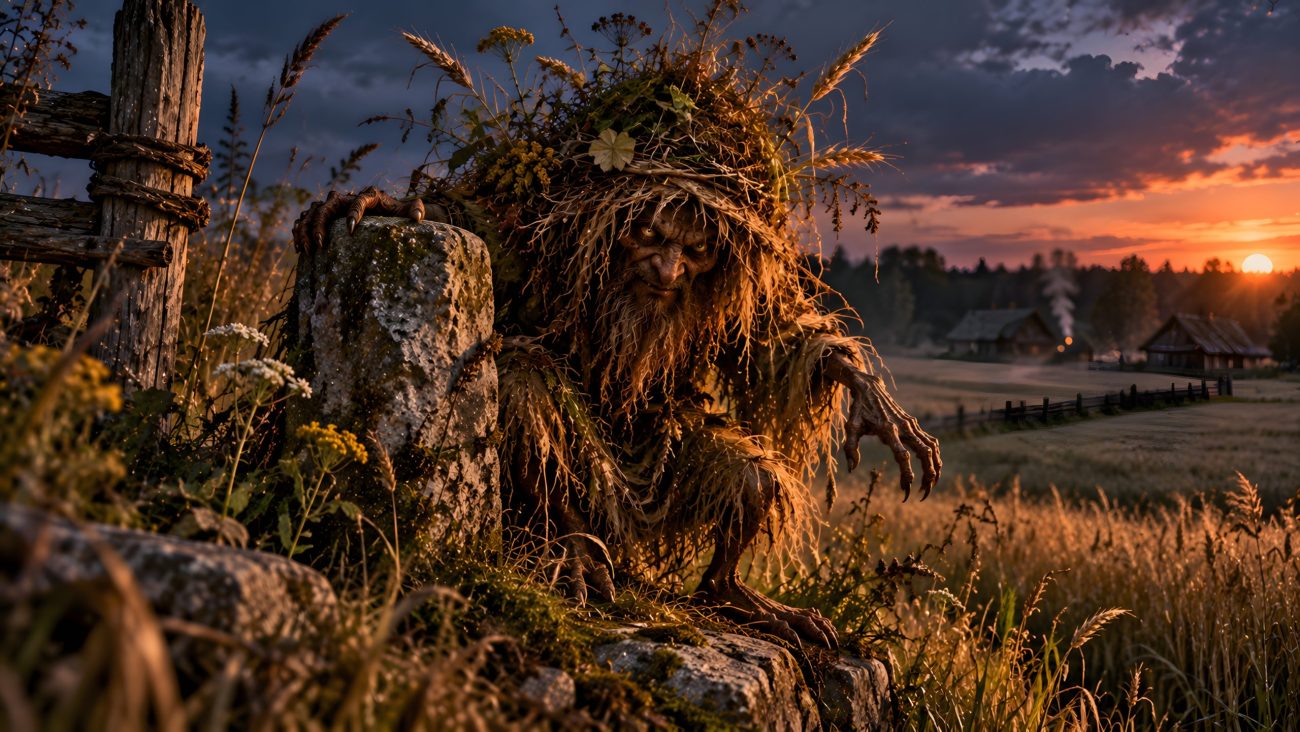
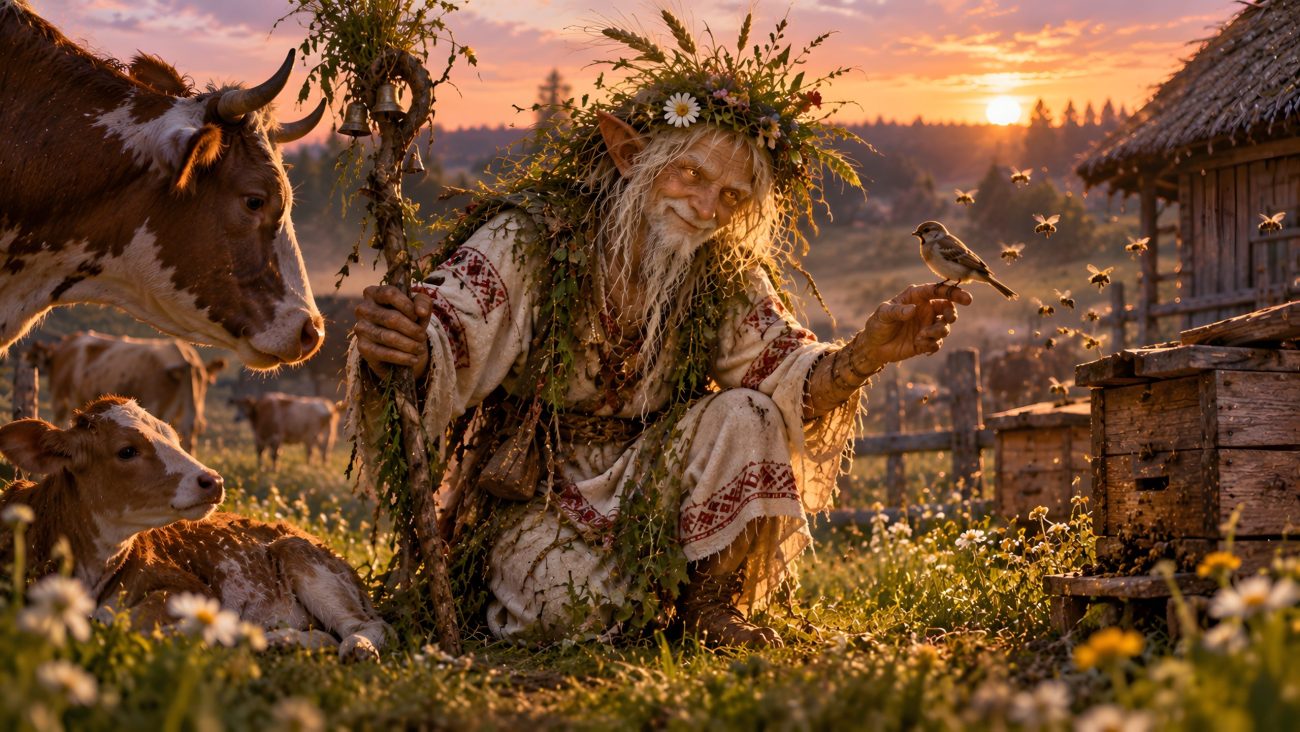
Złydnie were imagined as small, hunched, emaciated creatures with faces resembling those of old children. They wore oversized, torn clothing, including rags, shoes, and hats. Despite their diminutive appearance, they could cause considerable suffering. At night, they made noises around the house, overturned objects, and whispered terrible things into people’s ears, encouraging them to commit evil deeds.

Their harmful influence extended beyond the household. Złydnie tormented domestic animals and could attack people working in the fields. In invisible form, they sat on workers travelling to their fields and drained their strength. Their presence was also blamed for extreme psychological torment, with stories claiming that they could drive people mad and push them toward suicide by hanging or drowning.

Getting rid of Złydnie was difficult because they could escape and find another home. According to the tradition, they had to be caught at night and drowned in a swamp, preferably in a neighbouring village. Even this measure did not guarantee a permanent solution, as the creatures could emerge from the water and immediately seek a new household to inhabit.

Złydnie represent the destructive opposite of benevolent household spirits. Rather than protecting domestic life, they displace its guardians, undermine people’s strength, torment animals, and spread misfortune wherever they settle. Their association with the space behind the stove makes the home itself a battleground between protective household powers and malicious supernatural intruders.


Sources

“Złydnia.” Wikipedia, wolna encyklopedia. Wikimedia Foundation. Accessed October 18, 2026. https://pl.wikipedia.org/wiki/Z%C5%82ydnia
Uboże

Tradition: Polish Mythology
Alternative Names: Ubożęta, Uboża, Bożęta
Category: House dweller


The Myth

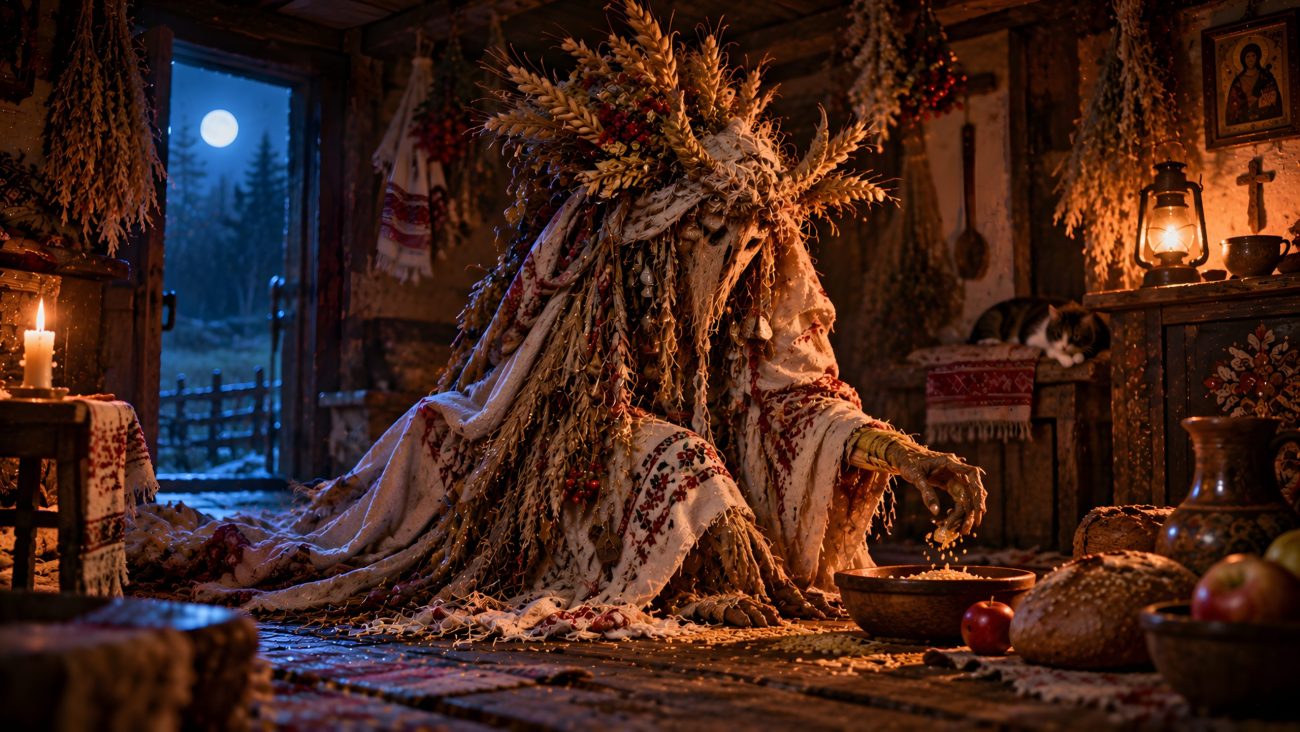
Uboże is a protective household spirit in Old Polish beliefs, associated with prosperity and the well-being of the home. The being was understood as a guardian that ensured wealth and good fortune for the household. According to some interpretations, Uboże originated from the souls of deceased ancestors, connecting the prosperity of the living family with the spirits of those who had come before them.

References to Uboże appear in Polish literature from the fifteenth and sixteenth centuries, after which the figure gradually disappeared from the written record. The spirit is comparable in function to the Domowik of Ruthenian beliefs, another supernatural being associated with the household.

A fragment of a fifteenth-century sermon provides a possible glimpse into practices associated with Uboże. It describes how leftovers from dinner were given to the poor, particularly on Thursdays. After eating, the poor were expected to drive away evil spirits. Although this account does not fully explain the relationship between the practice and Uboże, it suggests that food, household welfare, and protection against malevolent supernatural forces were connected in contemporary beliefs.

The name Uboże derives from the root bog-, associated with grace and wealth. Its meaning therefore fits the spirit’s role as a bringer of prosperity. Deriving the name from the word for poverty would contradict the being’s traditional function as a protector of household wealth and well-being.

Uboże represents an older Polish conception of domestic prosperity as something that could depend on supernatural protection. Its possible connection with deceased ancestors also suggests a relationship between household fortune and the continuing presence of the family dead. Although the figure eventually disappeared from the written record, historical references preserve evidence of beliefs in protective spirits that watched over the home and its material well-being.


Sources

“Uboże.” Wikipedia, wolna encyklopedia. Wikimedia Foundation. Accessed October 18, 2026. https://pl.wikipedia.org/wiki/Ubo%C5%BCe


Szpechotka

Tradition: Polish Mythology
Alternative Names: Szperhetka
Category: House dweller


The Myth

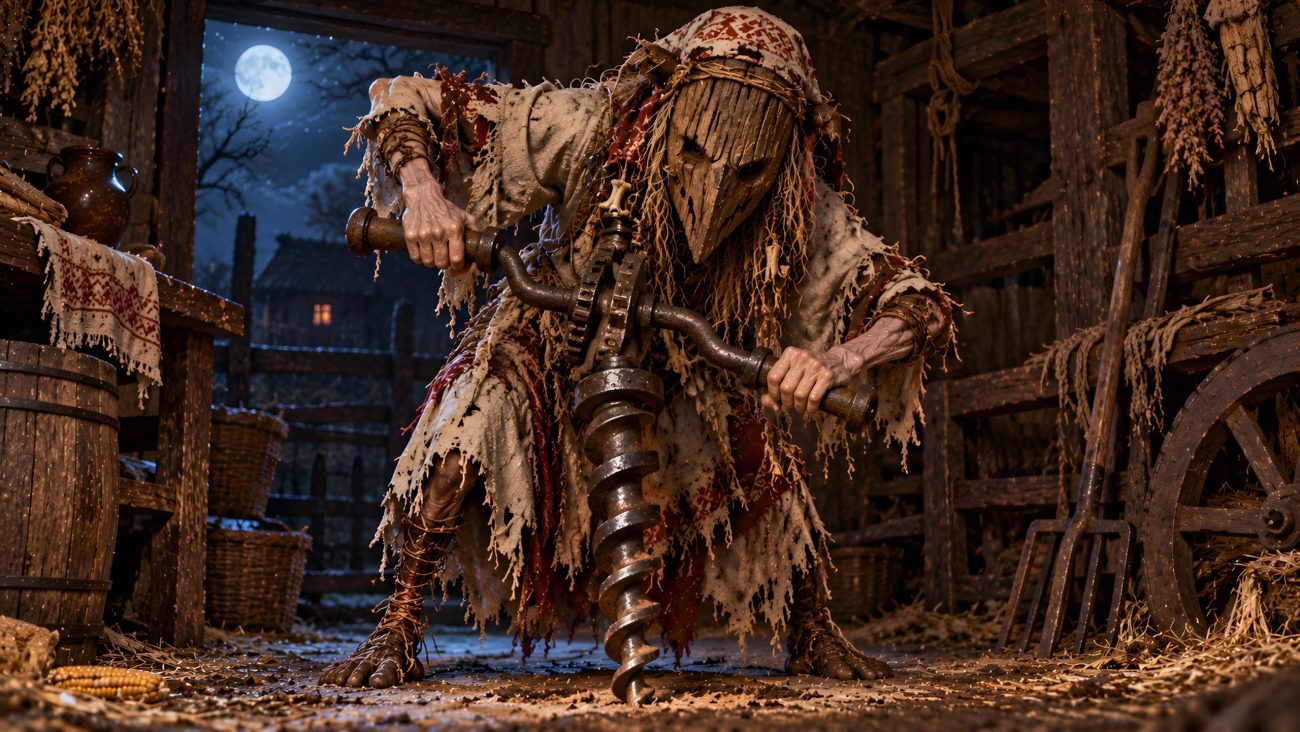
Szpechotka is a small demonic creature from Silesian folklore, associated with farms and the observance of religious fasting. Its role was to ensure that members of a household respected fasting rules, particularly on Ash Wednesday and Good Friday. Those who broke these religious obligations risked a terrifying punishment from the creature.

When someone in the household ate forbidden food during a fast, Szpechotka would visit them at night. Armed with a drill, the creature would bore a hole into the offender’s stomach and extract the food they had eaten. The attack took place while the victim slept, and through the creature’s supernatural power, the person would not wake during the ordeal.

The punishment was fatal. Rather than dying immediately, the victim would slowly perish from the damage inflicted during the night. By morning, the person would be dead, making the consequences of breaking the fast absolute and irreversible.

Szpechotka embodies the frightening consequences attached to the violation of religious obligations in traditional Silesian belief. Its role as a supernatural enforcer transformed fasting from a matter of personal discipline into a rule backed by a deadly threat. Through the image of a small farm demon wielding a drill, the tradition conveyed the seriousness of observing sacred days, especially Ash Wednesday and Good Friday.


Sources

“Szpechotka.” Wikipedia, wolna encyklopedia. Wikimedia Foundation. Accessed October 18, 2026. https://pl.wikipedia.org/wiki/Szpechotka


Billy Blind

Tradition: English Mythology, Scottish Mythology
Alternative Names: Billy Blin, Billy Blynde, Billie Blin, Belly Blin
Category: House dweller


The Myth

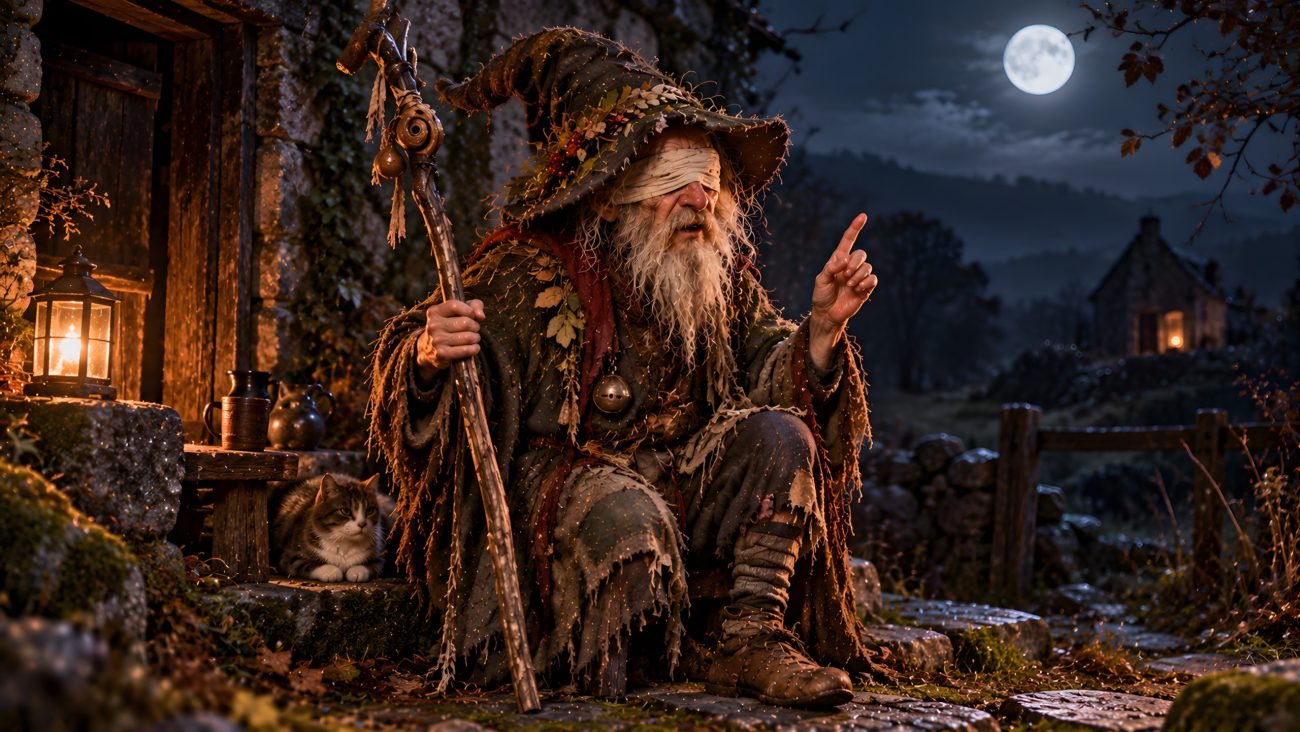
Billy Blind is a household spirit in English and Lowland Scottish folklore, similar to a brownie. Unlike many domestic spirits known for performing chores, Billy Blind is chiefly remembered for his appearances in traditional ballads, where he frequently offers advice to the human characters. His guidance can help them understand their circumstances and decide how to act.

Billy Blind’s appearance and exact nature are not described in the available account. His role is instead defined by his presence in ballad narratives, where he acts as a supernatural adviser who assists people through his knowledge and counsel. His association with the household-spirit tradition places him among the supernatural beings believed to exist alongside ordinary human life.

Some scholars have suggested that Billy Blind may preserve a folk memory of the Germanic god Woden, also known as Odin, particularly a more playful aspect of that deity. This remains a proposed interpretation rather than an established origin. He has also been speculated to be the same character as Blind Harie, described in Scottish tradition as the “blind man of the game.”

Billy Blind is therefore best understood through his function in traditional storytelling: a supernatural figure who appears at important moments to advise the characters. His connection to household spirits, together with the possible links to older Germanic mythology, gives him a place between domestic folklore and the supernatural advisers of traditional ballads.


Sources

“Billy Blind.” Wikipedia: The Free Encyclopedia. Wikimedia Foundation. Accessed October 18, 2026. https://en.wikipedia.org/wiki/Billy_Blind


Jack o’ the Bowl

Tradition: Swiss Mythology
Alternative Names: Jack-of-the-Bowl, Jean de la Boliéta, Napf-Hans
Category: House dweller


The Myth

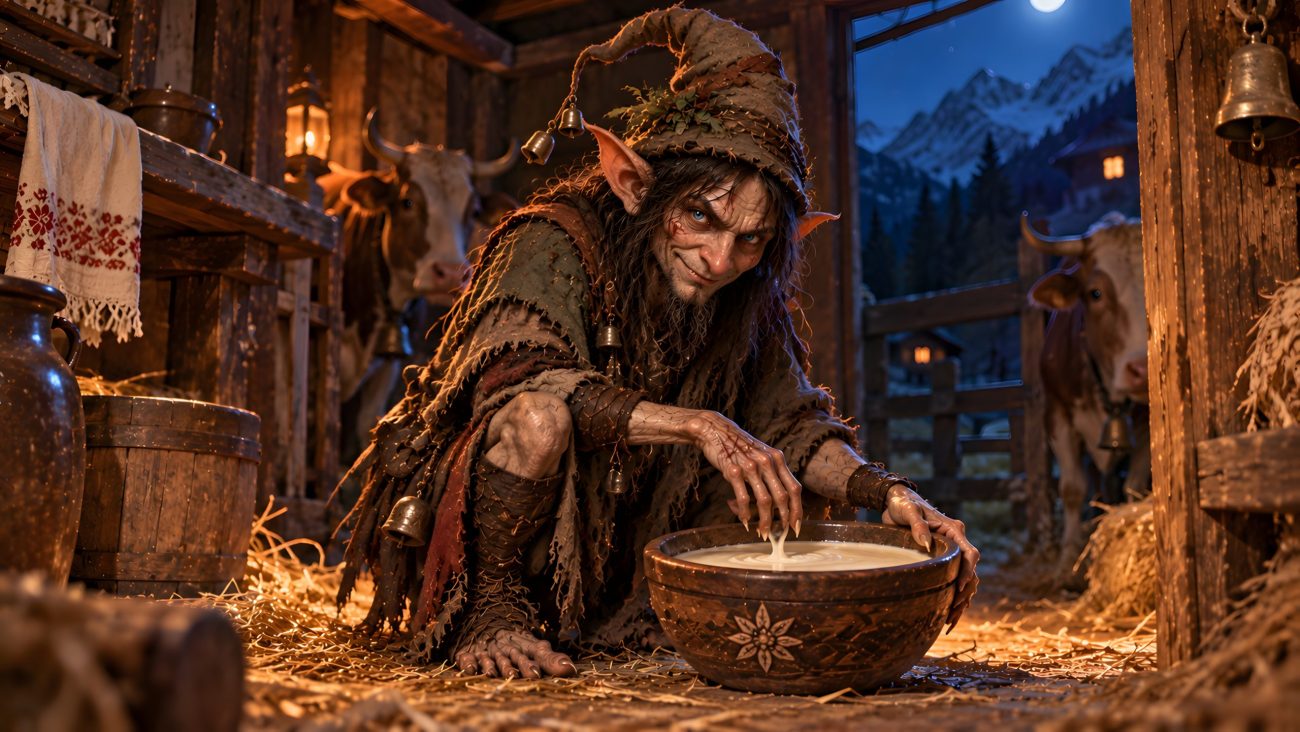
Jack o’ the Bowl is a helpful house spirit in Swiss folklore, described variously as a brownie or a kobold. He is known for protecting cattle and guiding them safely through dangerous mountain terrain. Despite the risks of grazing in such places, the cows under his care never suffer injury.

To earn his assistance, people leave a bowl of sweet cream for him each night. In return, Jack o’ the Bowl leads their cows to graze in places considered too dangerous for humans. He guides the animals across rocky mountain slopes where ordinary paths would be difficult to navigate, ensuring that the herd remains unharmed.

The route used by the spirit is said to remain clear of stones, regardless of how rocky the mountainside may be. This remarkable path became known as Boliéta’s Path, a lasting sign of the spirit’s supernatural assistance to the local herders.

Known in French as Jean de la Boliéta and in German as Napf-Hans, Jack o’ the Bowl represents the helpful household spirits believed to reward small offerings with valuable services. His legend connects domestic hospitality with the protection of livestock and the safe use of otherwise dangerous mountain pastures.


Sources

“Jack o’ the Bowl.” Wikipedia: The Free Encyclopedia. Wikimedia Foundation. Accessed October 18, 2026. https://en.wikipedia.org/wiki/Jack_o%27_the_bowl


Jievaras

Tradition: Lithuanian Mythology
Alternative Names: Jievaras
Category: House dweller


The Myth

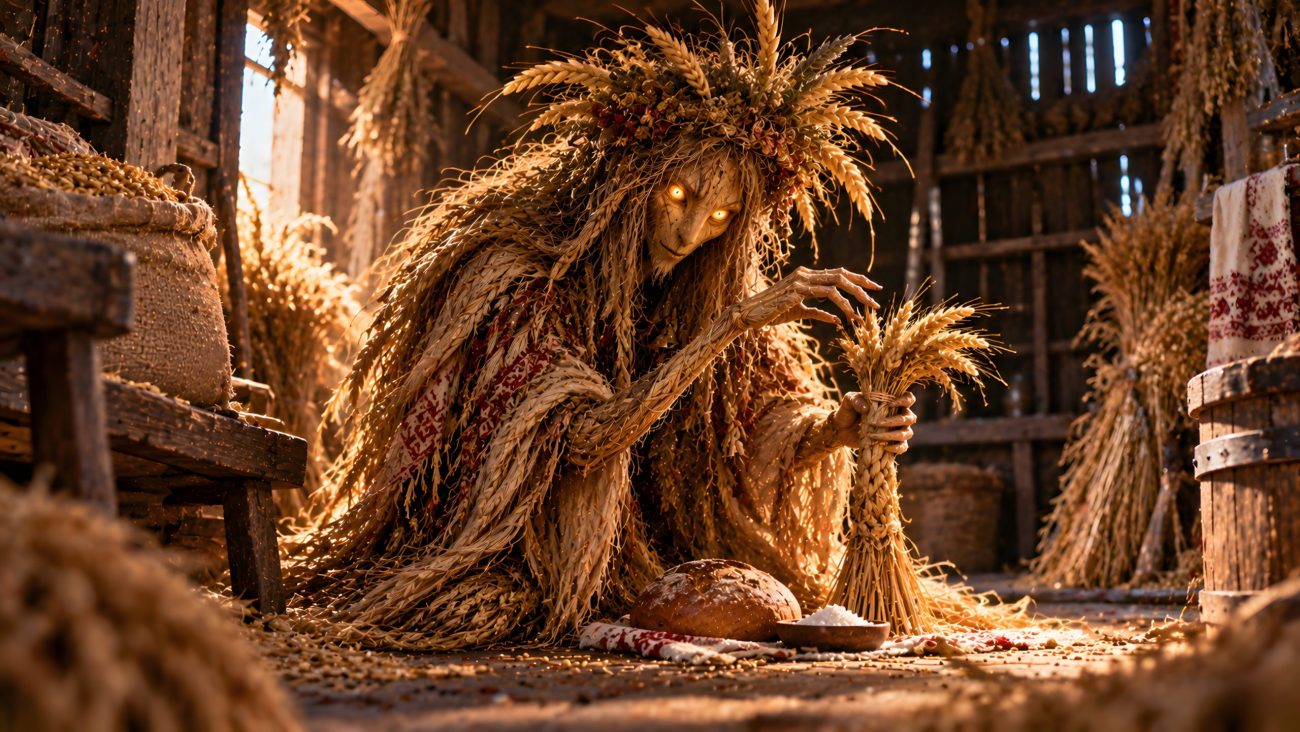
Jievaras is a protective spirit associated with grain and the prosperity of the harvest in Lithuanian mythology. Its role is connected to the cultivation of rye and the belief that the fertility of the land should be maintained through offerings and ritual observances. Although the available account does not describe Jievaras’s physical appearance, it presents the spirit as a guardian of agricultural abundance.

After the rye harvest, people made sacrifices to Jievaras. During the cutting of the grain, women deliberately left a few tufts uncut. These remaining stalks were later braided together into plaits, creating a focal point for the ritual. Bread and salt were placed beneath the braid as an offering to the spirit and the powers associated with the land.

During the ceremony, the women recited: Davei manei, Žemele, duodame ir tau — “You gave for us, Mother Earth, we are giving for you too.” The words expressed gratitude for the harvest and asked that the land continue to produce abundantly. The offering was therefore not simply a gift to Jievaras, but part of a reciprocal relationship with the earth, in which human beings returned something for the fertility they had received.

The tradition connects Jievaras with the preservation of grain and the renewal of agricultural prosperity. By leaving stalks uncut, braiding them, and placing bread and salt beneath them, people sought to honour the spirit and ensure that the fields would remain fruitful in future seasons.


Sources

“List of Lithuanian Gods and Mythological Figures.” Wikipedia: The Free Encyclopedia. Wikimedia Foundation. Accessed October 18, 2026. https://en.wikipedia.org/wiki/List_of_Lithuanian_gods_and_mythological_figures


Spinwijf

Tradition: Dutch Mythology
Alternative Names: Spinjuffer, Spin-An
Category: House dweller


The Myth

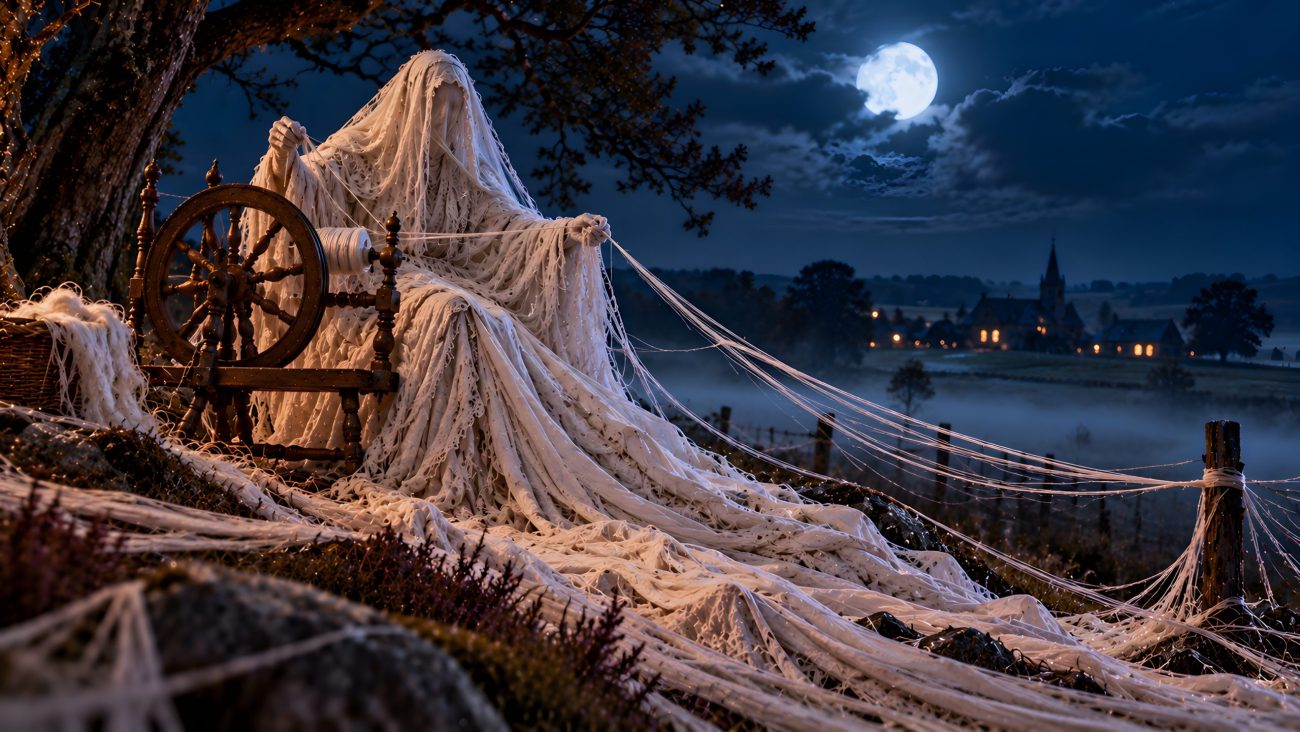
The Spinwijf is a mysterious old woman dressed in white who appears spinning by moonlight in lonely, secluded places. Her spinning produces exceptionally long threads, and she is known for using them to trap unsuspecting young men and girls. The creature is reported in Friesland, Drenthe, and Groningen, including the village of Jipsinghuizen.

In Jipsinghuizen, the Spinwijf lives on the Spinberg, where she can be seen spinning in the evening. She produces long threads that she stretches across the ground to make young men stumble. Once they fall, she captures them. Her spinning is therefore not merely a quiet domestic activity but a means of ensnaring people who wander too close to her secluded domain.

In Drenthe, another Spinwijf inhabits a field of grain. When a girl walks through the corn, the old woman seizes her and spins all the hair from her head. This frightening tale connects the spirit’s spinning directly to human hair, turning an ordinary agricultural landscape into a place of supernatural danger.

The Spinwijf combines the familiar image of an elderly woman spinning thread with a threatening supernatural nature. Her long threads become traps for young men, while her encounter with girls in the grain field results in the loss of their hair. These regional stories portray her as a dangerous figure who hides in isolated places and uses her spinning to capture or torment those who approach her.


Sources

Van der Veen, Abe. “Van aardmannetje tot zwarte juffer: Een lijst van Nederlandse en Vlaamse elfen en geesten.” Abe de Verteller. https://abedeverteller.nl/van-aardmannetje-tot-zwarte-juffer-een-lijst-van-nederlandse-en-vlaamse-elfen-en-geesten/


Yeongdong

Tradition: Korean Mythology
Alternative Names: Yeongdong (영동), Yeongdong (영등)
Category: House dweller


The Myth

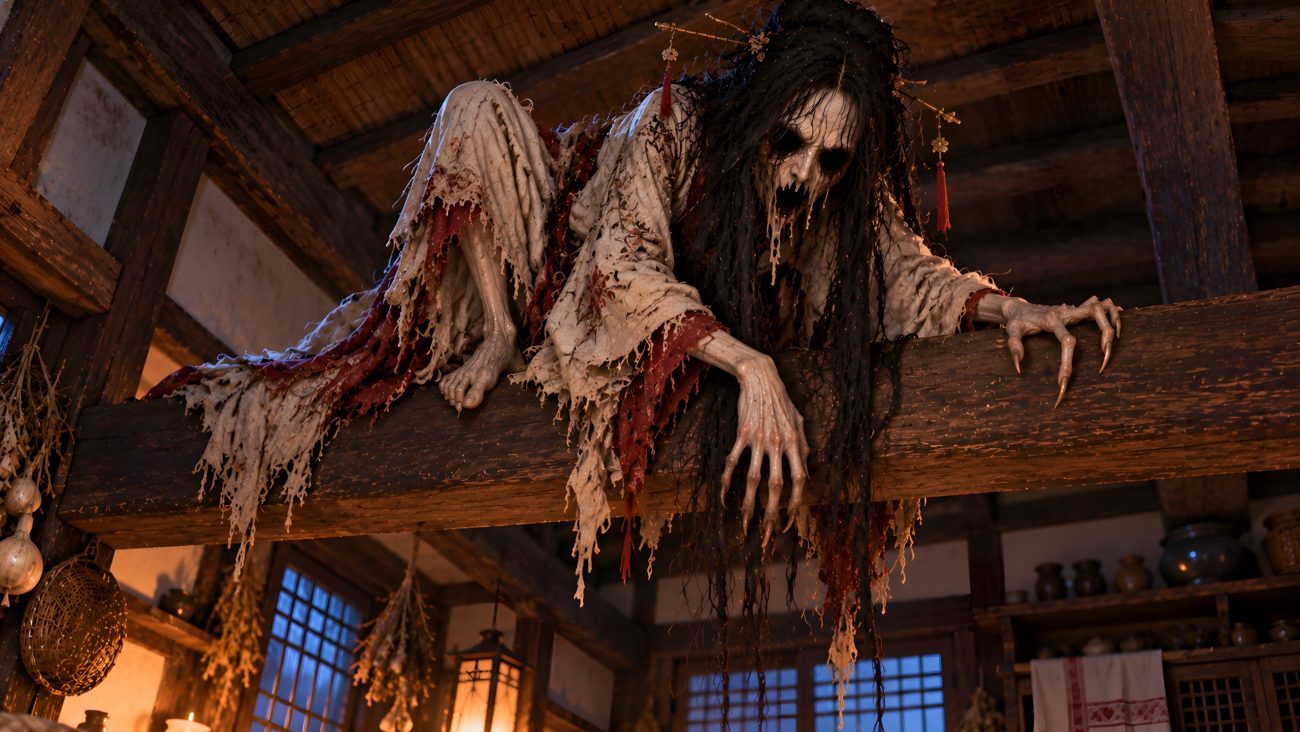
Yeongdong is a household spirit in Korean mythology responsible for maintaining cleanliness and order within the home. It is said to hide in the largest beam of a house during the second lunar month, where it strictly enforces domestic cleanliness. Those who allow their homes to become dirty or disorderly risk punishment from the spirit, which may set the house on fire.

According to one legend, Yeongdong was originally the soul of a fisherman who died after being bewitched by a beautiful woman from Maiden Island. His story connects the household spirit to a tragic death and a supernatural encounter, although the available account provides no further details about how he became associated with domestic order.

Yeongdong’s presence reflects the importance of cleanliness and proper household maintenance in Korean folklore. Although it serves as a guardian of order, its punishment for carelessness can be severe, making it a spirit that householders must respect rather than neglect.


Sources

“Endon.” New Bestiary (Bestiary.us). https://www.bestiary.us/endon


Mezhevik

Tradition: Russian Mythology
Alternative Names: Mezhevichok
Category: House dweller


The Myth

Mezhevik is a small male spirit who guards the boundaries between fields in Slavic mythology. He is described as a little man dressed in grass, with a dark, blackish appearance rather than the green colour that might be expected of a being associated with vegetation. He is considered one of the children of the field worker and is closely connected to the division and ownership of agricultural land.

Mezhevik protects field boundaries and ensures that they are respected. He is also known as the brother of the meadow-dweller, another spirit associated with agricultural land. Mezhevik runs along the boundaries he guards, helping to protect the land and its owners. He may also assist people working in the fields by bringing them food and drink.

Despite these helpful qualities, Mezhevik can become dangerous when he discovers someone sleeping on a boundary. He is said to attack such people with his hands and strangle them. His role as guardian therefore extends beyond protecting the physical divisions between properties: he also enforces the rules and customs associated with those boundaries.

A modern Novgorod bylinka describes the disputes that can arise when field boundaries are unclear. When cattle wander across disputed land, owners may argue over whose animals they are and seek help from sorcerers. The boundary man is the one who fights over these divisions, while the field man is described as the master of the entire field. This distinction places Mezhevik within a wider system of agricultural spirits, each responsible for a particular aspect of the cultivated landscape.


Sources

“Mezhevik.” New Bestiary (Bestiary.us). https://www.bestiary.us/mezhevik


Ludmurt

Tradition: Udmurt Mythology, Russian Mythology
Alternative Names: Mushvozmas
Category: House dweller


The Myth

Ludmurt is a small male spirit in Udmurt mythology responsible for meadows and fields. He is described as being no taller than a child and dressed in white. In the fields, he is believed to appear as an old man or as a bird, moving through the agricultural landscape he protects.

Ludmurt guards animals and oversees crops, fulfilling a dual role as a protector of livestock and a guardian of cultivated land. He is associated with the forest spirit Nilesmurt, of whom he is considered a relative or retinue member. His name literally means “field man,” connecting him directly to the meadows and fields under his care.

Before the first pasture of the year, people prayed to Ludmurt and asked him to guard and protect their cattle from wolves and other wild animals. These prayers reflected his importance to agricultural communities, whose livelihoods depended on the safety of their livestock and the success of their crops.

Ludmurt was sometimes called Mushvozmas, meaning “guardian of bees.” On August 1, when people began cutting honeycombs, a duck was sacrificed to him at an apiary. This offering acknowledged his role in protecting bees and the production of honey, extending his guardianship beyond fields and livestock to another important part of rural life.


Sources

“Ludmurt.” New Bestiary (Bestiary.us). https://www.bestiary.us/ludmurt