Norggens

Tradition: Austrian Mythology
Alternative Names: Norgg, Norgge, Nörgg, Nörggele
Category: House dweller


The Myth

Norggens are supernatural household helpers in Tyrolean folklore. They are generally helpful spirits, but their temperament can change dramatically when they are in a bad mood. Normally, they assist with domestic and agricultural work, yet when angered or mischievous, they become hot-tempered and capricious, causing trouble for the people they live among.

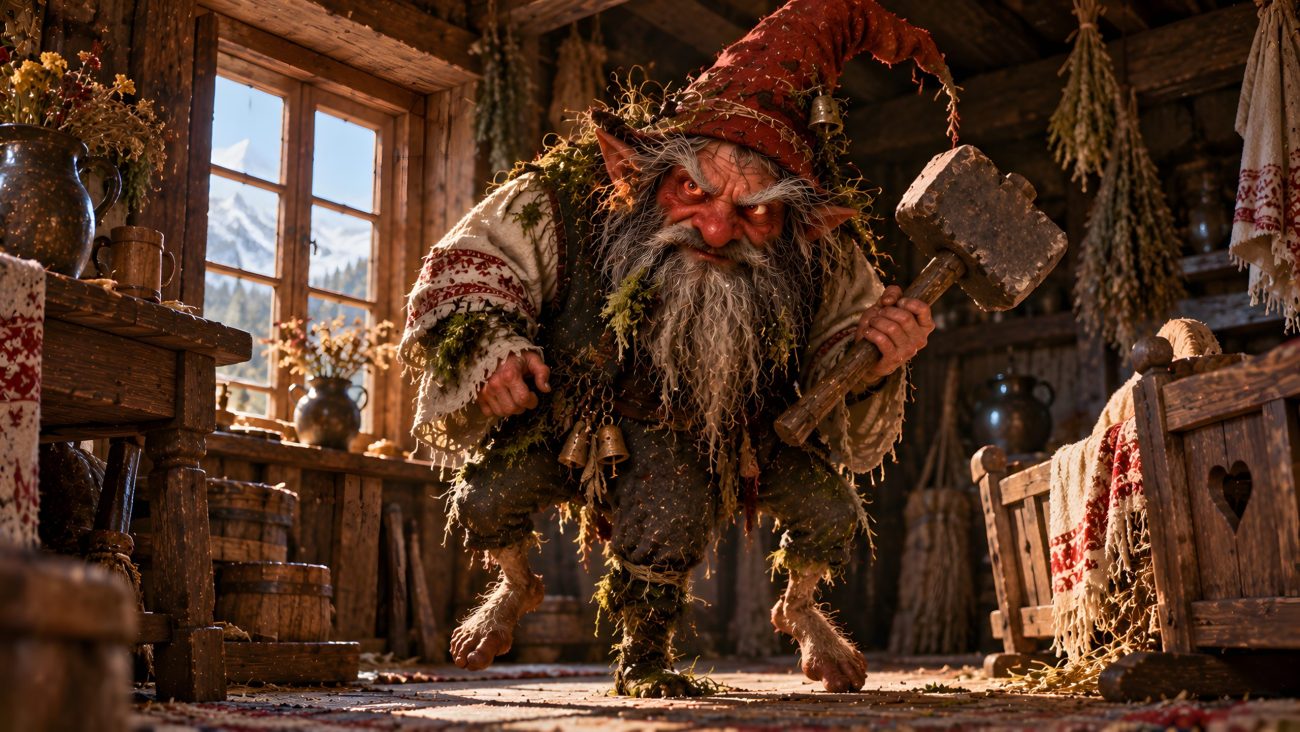
When a Norggen becomes troublesome, it may appear at night with a red face, three constantly trembling legs, two bare feet, bloodshot eyes, long beards, and bushy eyebrows. It can be found decorating clothing with strands of moss, wearing pointed hats, and carrying a large hammer. Norggens most often appear at night between the first quarter of the moon and the full moon, and they frequently dwell in forests, mountain caves, or even people’s homes.

One legend tells of a poor woman who asked a Norggen for shelter. He allowed her to stay in his house until January and rewarded her kindness generously. The baby never fell out of its cradle, the cow stopped kicking the milk pail, the potatoes did not rot, and the hens began laying eggs long before the first thaw. This story demonstrates the Norggen’s ability to bring good fortune and protect a household when treated kindly.

Another tale concerns a wealthy merchant who trespassed on a Norggen’s property. The spirit warned him that his wife would belong to him if she failed to guess his name three times in three months. The merchant returned home and told his wife everything. When the time came, they visited the forest to discover the spirit’s name. After several failed guesses, the merchant’s wife followed a path in the snow to a tiny house, where she saw a Norggen humming to himself. She heard him reveal that his name was Pursintziegel.

The next morning, the merchant’s wife guessed the name correctly. The Norggen turned green with rage, cursed, and vanished. He was never seen in those parts again. This legend portrays the Norggens as powerful and potentially dangerous spirits who can be outwitted through cleverness, but who do not tolerate trespassing or disrespect.


Sources

“Norggeny.” New Bestiary (Bestiary.us). https://www.bestiary.us/norggeny

Grogan

Tradition: Scottish Mythology, Irish Mythology
Alternative Names: Grogach, Grogan, Gruagach
Category: House dweller


The Myth

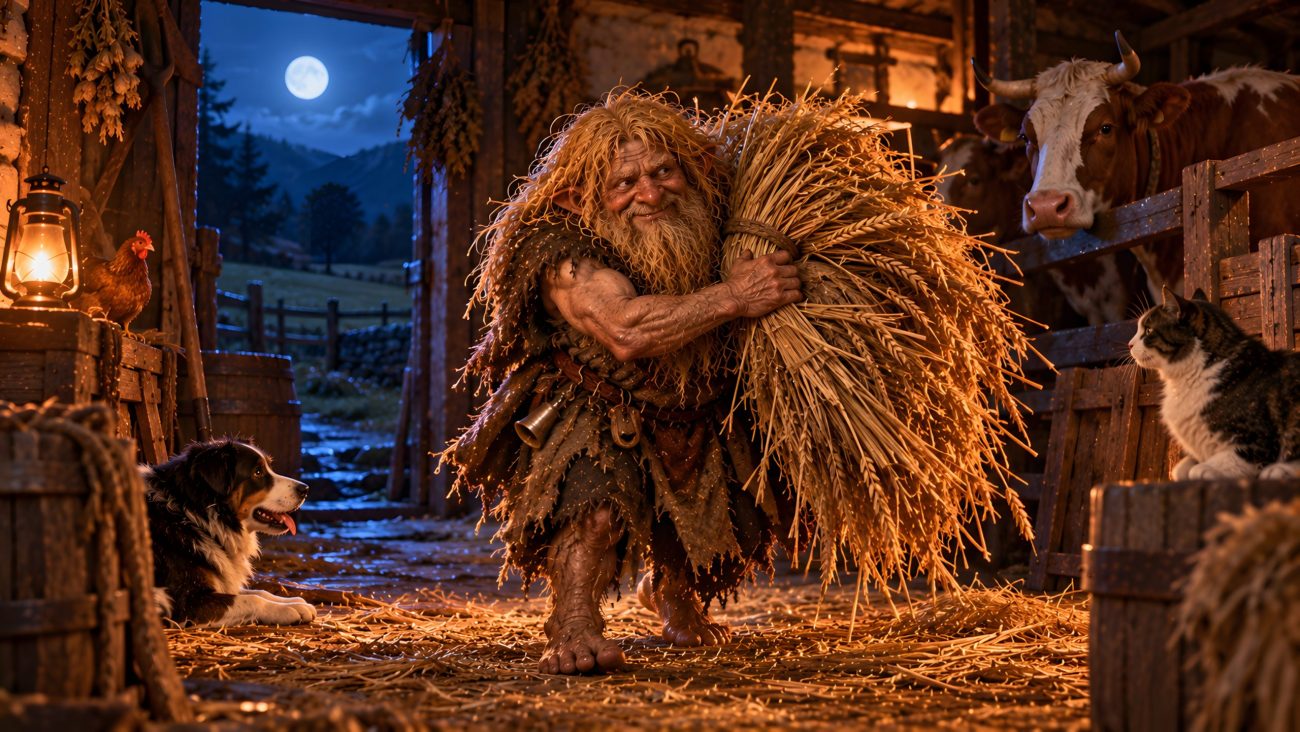
The Grogan is a short, hairy supernatural being known in Scottish and Irish folklore for its industrious nature. Similar to a brownie, it is a household spirit associated with farm work, though its appearance and behaviour vary between regional traditions. Descriptions portray it as a small, broad-shouldered, exceptionally strong creature, sometimes with a large head and a soft body that allows it to roll down hillsides as though it had no bones.

In Scotland, the Grogan is known for helping with agricultural labour. One story tells of a farmer who left a certain number of sheaves overnight for the Grogan to thresh the following morning. One night, the farmer forgot to leave the usual number of sheaves. The Grogan, assuming that it had to thresh the entire barn, set to work regardless. The next morning, the farmer found the creature dead on a pile of grain. The story warns of the consequences of overwork, even for a spirit renowned for its industry.

The Grogan also appears as a guardian of cattle. In the Scottish Highlands, the Gruagach was described as a handsome being with golden hair who watched over livestock and wore rich clothing. In Ulster, however, the Grogach was depicted as a naked, hairy male figure standing roughly four feet tall. One tale describes such a being tending a farmer’s flock. When the farmer’s daughter, believing its nakedness was a trick to frighten her away, sewed a shirt onto it, the creature wandered away weeping bitterly.

These traditions portray the Grogan as a powerful but sometimes vulnerable supernatural helper. Although it may work tirelessly for farmers or protect their animals, it can also suffer from excessive demands or be driven away by human interference. Its contrasting appearances and stories reflect the varied ways Scottish and Irish folklore imagined the relationship between supernatural beings and rural life.


Sources

“Grogan.” New Bestiary (Bestiary.us). https://www.bestiary.us/grogan


Booholdoy

Tradition: Buryat Folklore, Russian Mythology
Alternative Names: Bokholdoy
Category: House dweller


The Myth

Booholdoy is a supernatural being in Buryat folklore that is understood both as a household spirit and, more broadly, as a general term for harmful spirits. In the narrower sense, it belongs to the category of house spirits. In the broader sense, the name refers to an evil spirit into which a person’s soul transforms after death.

Booholdoy is associated with misfortune, illness, and damage to property. As a general designation for malevolent spirits, it represents a supernatural source of suffering that can affect both people and their possessions. Its presence is therefore linked to the dangers attributed to spirits that bring harm into the human world.

The tradition presents Booholdoy as more than a single, clearly defined creature. The name can describe a particular kind of household spirit or serve as a broader label for harmful supernatural beings. This wider meaning connects the spirit to Buryat beliefs about death, the transformation of the soul, and the supernatural origins of misfortune.


Sources

“Bookholdoi.” New Bestiary (Bestiary.us). https://www.bestiary.us/bookholdoi


Bukaritsa

Tradition: Russian Mythology
Alternative Names: Bukusetka
Category: House dweller


The Myth

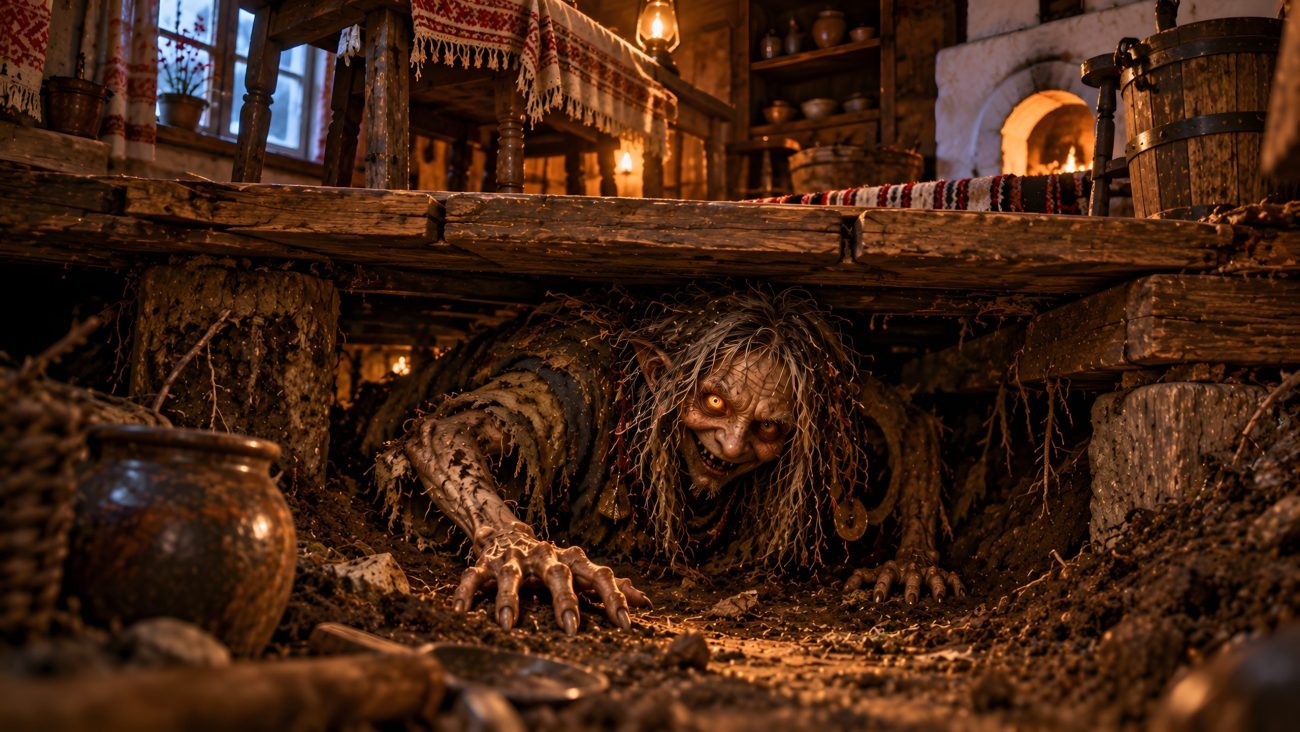
Bukaritsa is a mysterious creature in Russian folklore that lives underground within a house. It is also known as a frightening figure used by adults to scare children. Although its exact appearance is not described in the available account, its unusual dwelling place distinguishes it as a supernatural inhabitant of the home.

Bukaritsa is associated with the idea of a hidden creature living almost directly beneath people’s feet. A saying recorded in Tobolsk province warns that when someone begins talking about a neighbour, the neighbour may tell them about another beetle who lives almost in the same underground space. This expression evokes the strange presence of unseen beings dwelling beneath ordinary domestic life.

The creature is described as similar to the susedka, a Russian household spirit, as well as to the bogeyman. In Transbaikalia, a comparable being is known as Bukusetka. These similarities place Bukaritsa among the supernatural figures associated with the home and with frightening children, although the available account provides little further detail about its behaviour or powers.


Sources

“Bukarica.” New Bestiary (Bestiary.us). https://www.bestiary.us/bukarica


Pustodomka

Tradition: Russian Mythology
Alternative Names: Empty House Spirit, Kikimora
Category: House dweller


The Myth

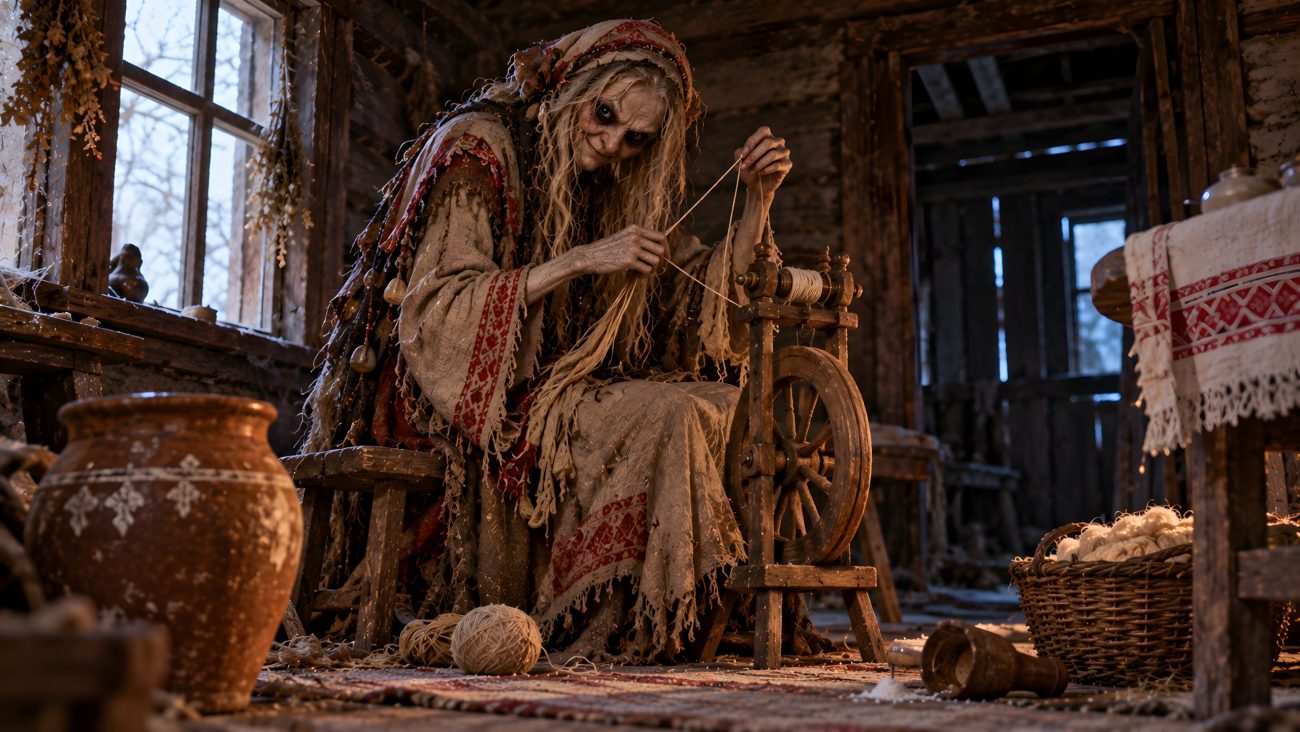
Pustodomka is a malevolent household spirit associated with an empty house. In some regions of Russia, including Perm, Tomsk, and Arkhangelsk, the name refers to a kikimora living in an unoccupied building. Although sometimes described as an independent supernatural being, Pustodomka is particularly associated with the domestic spirit’s ability to interfere with human lives and influence their fate.

According to beliefs recorded in the Arkhangelsk region, Pustodomka has the same occupation as the kikimora: she spins the “threads of fate” belonging to people. A story from the Russian North describes an empty-headed woman who repeatedly promises to attend a gathering but continually forgets. When she finally arrives, the girls hosting the party decide to teach her a lesson.

The girls give the woman a pot, a ball of spun yarn, and a salt shaker, then tell her to place the pots on her head and spin. When she begins spinning, the girls put their own pots on their heads as well. Pustodomka enters the house carrying the spinning wheel of the moiritsy, the spinning women, and sits down to spin. Her wheel is so small that she can barely tighten the spindle. She then begins to speak, complaining that the girls have chopped at her with an axe, pricked her with needles, and placed her on the table. The table, the spinning wheel, and the salt shaker each speak in turn, describing how the girls have mistreated them despite their willingness to put up with everything.

The story ends with Pustodomka becoming angry and attacking the girls. She strikes them with the spinning wheel and the pot, causing the pot to break and the spinning wheel to roll away. She beats every girl she can reach before leaving. The girls, however, laugh at the incident, treating it as a humorous mishap rather than a tragedy.

This legend portrays Pustodomka as a strange and potentially dangerous spirit whose relationship with people can turn hostile. Her association with spinning and the threads of fate links her to the kikimora, while the story emphasizes her unpredictable behaviour and the mischief that can arise when humans encounter the supernatural.


Sources

“Pustodomka.” New Bestiary (Bestiary.us). https://www.bestiary.us/pustodomka


Agun Oza

Tradition: Mari Mythology, Russian Mythology
Alternative Names: Agun-kugyza, Agun-kuguzya
Category: House dweller


The Myth

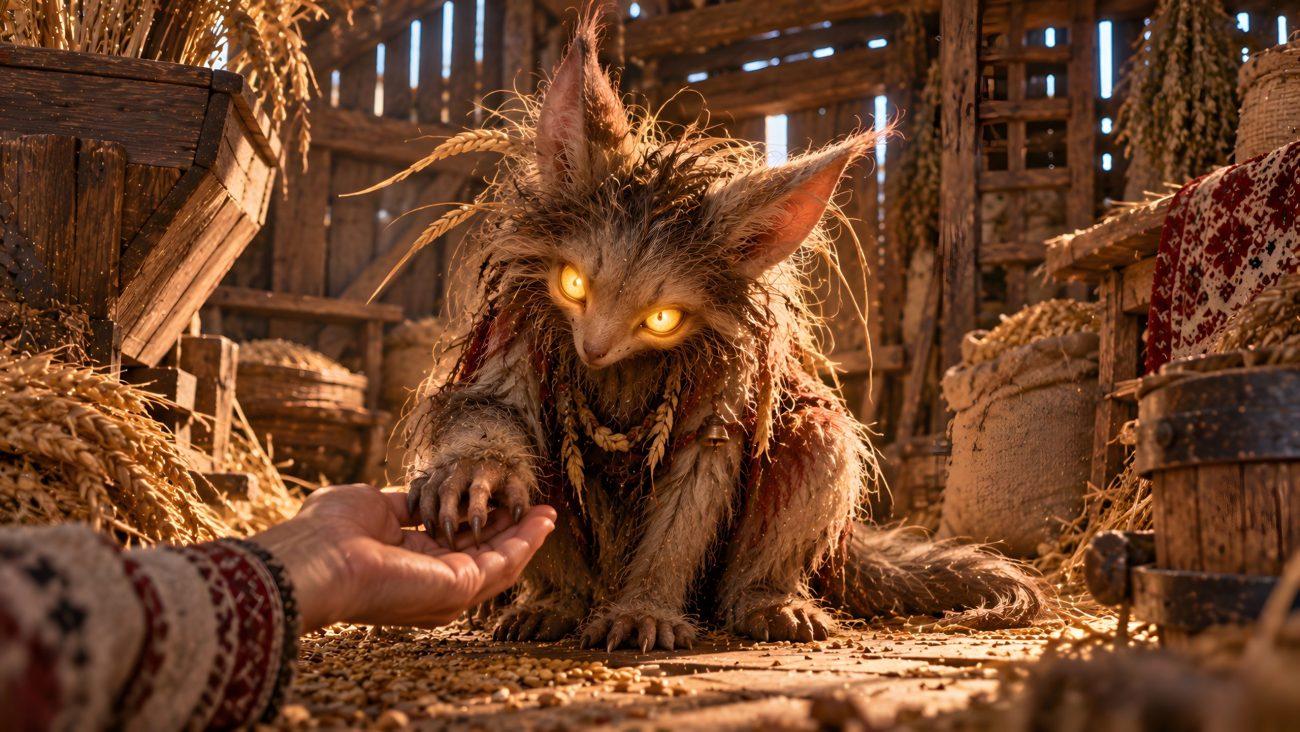
Agun Oza is a supernatural barn spirit in the folklore of the Mari people, described as a small animal-like creature with brightly glowing eyes. It lives in the barn, a place where sheaves, grain, and bread are dried, threshed, and stored. Although it is sometimes identified with the house spirit, known as the Pört oza, the source treats Agun Oza as a distinct being associated specifically with the barn.

Agun Oza plays a role in Christmas fortune-telling. In mythological tales, fortune-tellers visit the barn to learn what the coming year will bring. Agun Oza is believed to stroke the hands of those seeking predictions. If it strokes their hands with its bare paw, they will enjoy bread and prosperity throughout the year. If it strokes them with its furry paw, however, they will live in poverty. The spirit therefore determines whether the fortune-seeker can expect abundance or hardship.

The barn spirit dislikes lazy people and is said to frighten them. Its presence connects the prosperity of the household with the work performed in the barn, where grain and other essential foodstuffs are processed and preserved. Its role in fortune-telling makes it both a supernatural inhabitant of an agricultural building and an arbiter of future fortune.

According to Mari tradition, Agun Oza was appeased through an autumn sacrifice of a small animal. Parts of the sacrificed animal were buried beneath the barn. This offering reflects the importance attached to maintaining a relationship with the spirit that inhabited the place where the community’s grain and bread were prepared and stored.


Sources

“Agun-Oza.” New Bestiary (Bestiary.us). https://www.bestiary.us/agun-oza


Bindas

Tradition: Belarusian Mythology
Alternative Names: Bindas
Category: House dweller


The Myth

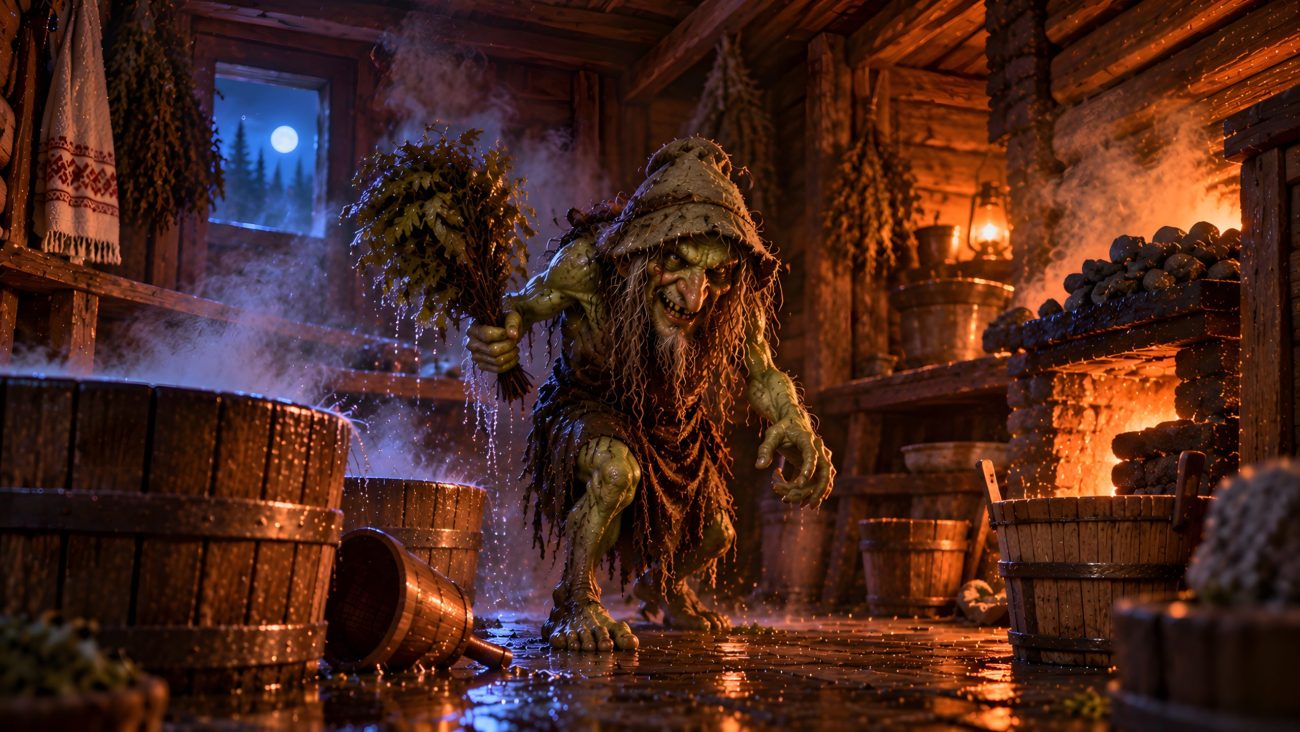
Bindas is a frightening supernatural being from the folklore of the Lepel region in northern Belarus. Described as a kind of bathhouse spirit, it was used by adults to frighten children and prevent them from entering the bathhouse without supervision. According to local tradition, Bindas would punish disobedient children who ventured inside when no adult was present.

The creature was said to splash naughty children with hot water and whip them with a nettle broom. These threats made Bindas an effective figure for warning children to stay away from the bathhouse on their own. The traditional warning was simple: children were told not to go to the bathhouse because a dangerous being was waiting there.

An account recorded by Tatyana Volodina preserves the warning in two forms: “Go to the bathhouse, sit down there” and “Don’t go to the bathhouse, there’s a bandit there!” The expressions reflect the use of Bindas as a frightening figure in children’s upbringing, with the threat of punishment reinforcing household rules about entering the bathhouse.

Bindas was therefore not simply a supernatural inhabitant of a building, but also a figure used to regulate children’s behaviour. Its reputation rested on the fear of being scalded or beaten with a nettle broom. The source suggests that the name may have Baltic origins, particularly in Latvian, where it is associated with meanings such as “executioner” or “butcher.”


Sources

“Bindas.” New Bestiary (Bestiary.us). https://www.bestiary.us/bindas


Gypnissen

Tradition: Belgian Mythology
Alternative Names: Gypnissen
Category: House dweller


The Myth

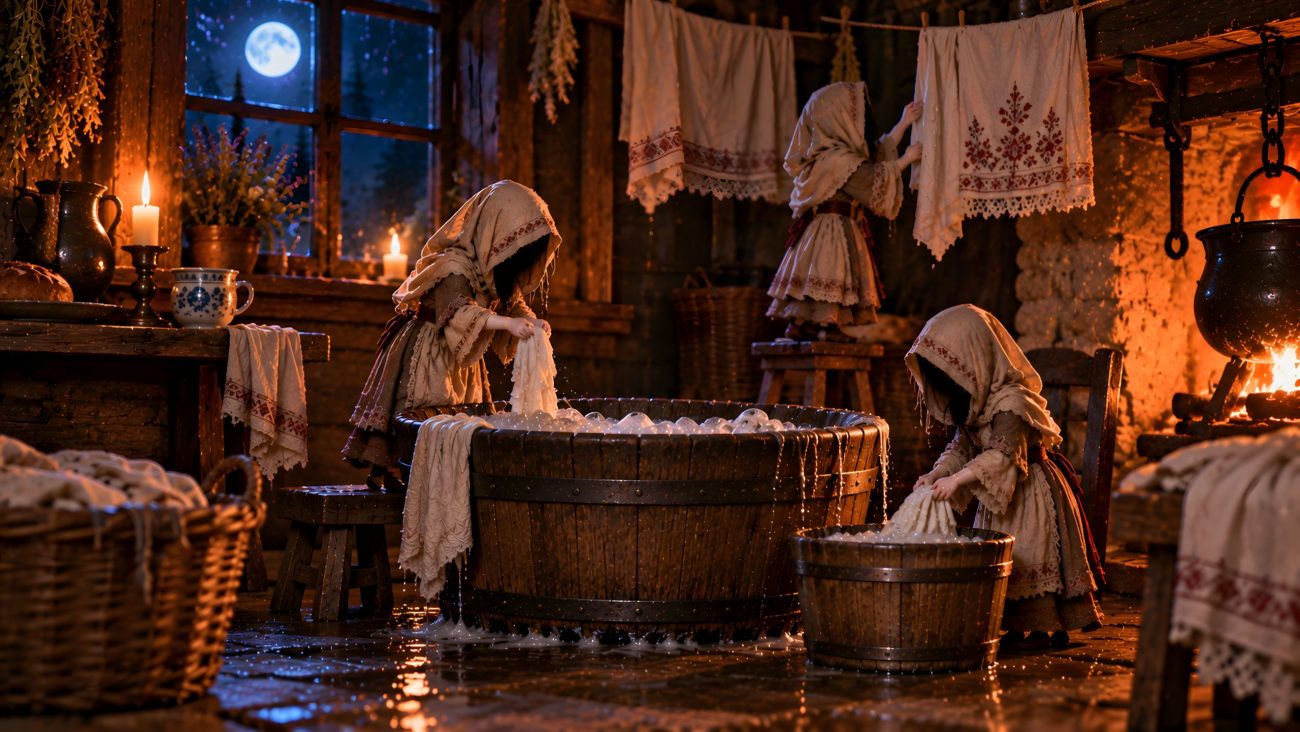
The Gypnissen are a kind of small, wondrous female beings said to have lived in a mysterious castle at Het Beggelken, in the Kluise district of Oordegem. According to local tradition, the castle could be built in a single night and disappear again by morning. The old people of the village told stories of the Gypnissen who inhabited this extraordinary place, describing them as supernatural women who helped local households without harming anyone.

The Gypnissen were especially known for washing clothes. When a household had laundry to be done, the inhabitants would prepare the washing in the evening and leave it ready for the little women. They would also provide a small pot of coffee and a sandwich as refreshments. By the following morning, all the clothes had been washed, while the coffee and sandwich had disappeared. The Gypnissen performed their work quietly and efficiently, asking for nothing more than this simple offering.

Unlike more threatening supernatural beings, the Gypnissen were considered harmless and helpful. Their mysterious labour allowed ordinary household chores to be completed overnight, while the food and drink left for them established a reciprocal relationship between humans and the supernatural world.

The account preserves local testimony supporting the belief in these beings. An elderly woman reportedly assured the storyteller that her own mother had associated with the Gypnissen. Older inhabitants of Oordegem were said to swear that the stories were true. A former schoolmate also described a similar tradition from the nearby parish of Kluizen, where the beings were known by another name that the storyteller could no longer remember. These accounts suggest that stories of small female spirits who secretly helped with domestic work circulated in several local communities.


Sources

De Cock, Alfons. Vlaamsche sagen uit den volksmond. Amsterdam: Maatschappij voor Goede en Goedkoope Lectuur, 1921. https://www.dbnl.org/tekst/cock001vlaa01_01/cock001vlaa01_01_0004.php#subnav-meer-btn


Ognevnik

Tradition: Belarusian Mythology
Alternative Names: Agnavik, Агнявік
Category: House dweller


The Myth

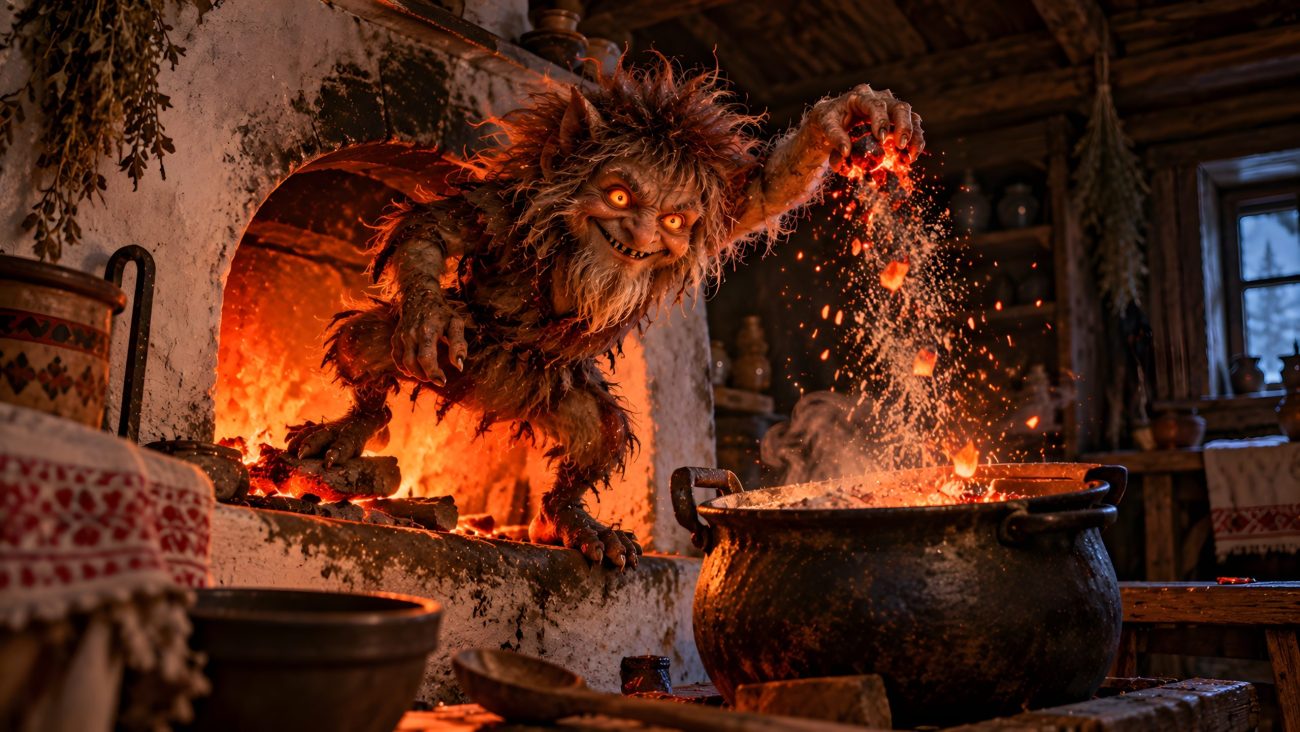
The Ognevnik is a small, furry household spirit that lives inside an oven. According to Belarusian beliefs, this peculiar creature spends its time around the stove, where it can interfere with the preparation of food. Rather than helping with cooking, the Ognevnik throws ashes onto food while it is being prepared, spoiling the meal.

The spirit is associated with the oven’s fire and the everyday activities that take place around it. One account from southeastern Belarus describes the Ognevnik as a tiny furry creature that lives in the stove and throws ashes into food out of boredom. Its presence turns an ordinary household task into a source of frustration for those cooking.

A local account recorded in 1999 describes the spirit as a small, furry being living in a stove. Another recollection from the village of Lenino, in the Dobrush district of the Gomel region, describes a little man who jumps around the crackling wood, holds hot coals in his hand, and throws them into the pots. The account also refers to the oven being full of fire, suggesting that the spirit’s activity is closely tied to the flames and burning fuel.

These descriptions portray the Ognevnik as a troublesome spirit of the hearth rather than a helpful household guardian. Its mischief centres on the oven, where it disrupts cooking by scattering ashes or throwing hot coals into food. Although the accounts describe its appearance somewhat differently, both present it as a small supernatural inhabitant of the stove whose behaviour makes domestic cooking difficult.


Sources

“Ognevik.” New Bestiary (Bestiary.us). https://www.bestiary.us/ognevik


Mare

Tradition: Belgian Mythology
Alternative Names: De Mare
Category: House dweller


The Myth

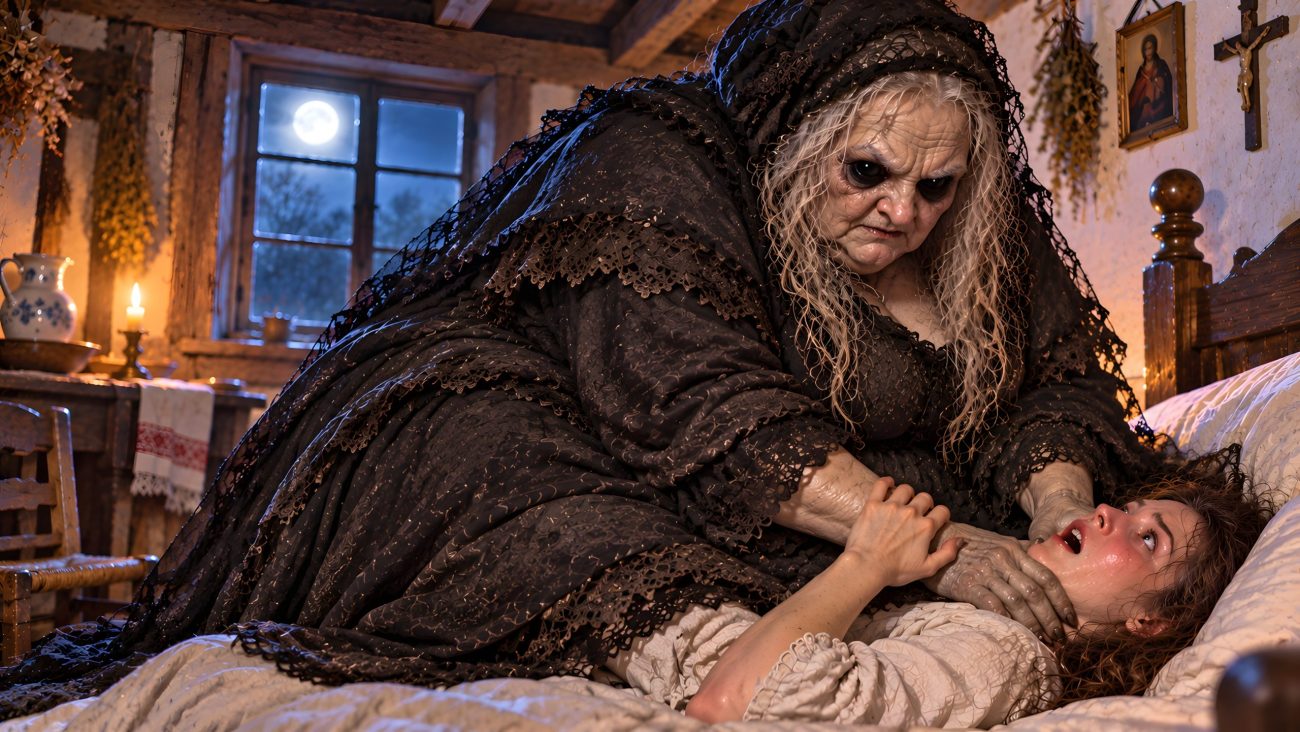
The Mare is a terrifying supernatural being that appears as an old, heavy woman dressed entirely in black. In a legend from Beveren-Waas, she attacks a woman who has returned to bed after rising early to prepare everything for her husband before he leaves for work. The Mare’s appearance is sudden and frightening, transforming an ordinary morning into a supernatural ordeal.

The woman had expected someone from the village, who customarily came to call her husband when it was time to leave for work. That morning, however, nobody appeared. After briefly going outside to look and listen, she returned indoors, locked the door, and lay down again. She had been resting for barely five minutes when she thought she heard the key turning in the front door and someone entering the room.

An old, stout woman dressed completely in black approached the bed and threw herself onto the woman. The supernatural attacker felt extraordinarily heavy, as though she weighed a hundred kilograms, pressing down on her victim. When the frightened woman tried to scream, she felt her throat being squeezed shut and could scarcely breathe, as if she were about to suffocate.

At the moment when the woman seemed close to suffocation, the Mare suddenly vanished. The victim was immediately able to breathe freely again. The account offers no explanation for the Mare’s origins or motives, but its attack resembles the frightening experience of being crushed and strangled while lying in bed. In this Flemish tradition, the Mare is remembered as a menacing nocturnal or early-morning presence capable of overwhelming a person with supernatural weight and leaving them struggling for breath.


Sources

De Cock, Alfons. Vlaamsche sagen uit den volksmond. Amsterdam: Maatschappij voor Goede en Goedkoope Lectuur, 1921. https://www.dbnl.org/tekst/cock001vlaa01_01/cock001vlaa01_01_0004.php#subnav-meer-btn