Hyōno-sen-shinryū

Tradition: Japanese mythology
Alternative Names: Hyōno-sen-shinryū, Divine Dragon of Mount Hyōno
Category: Dragon


The Myth

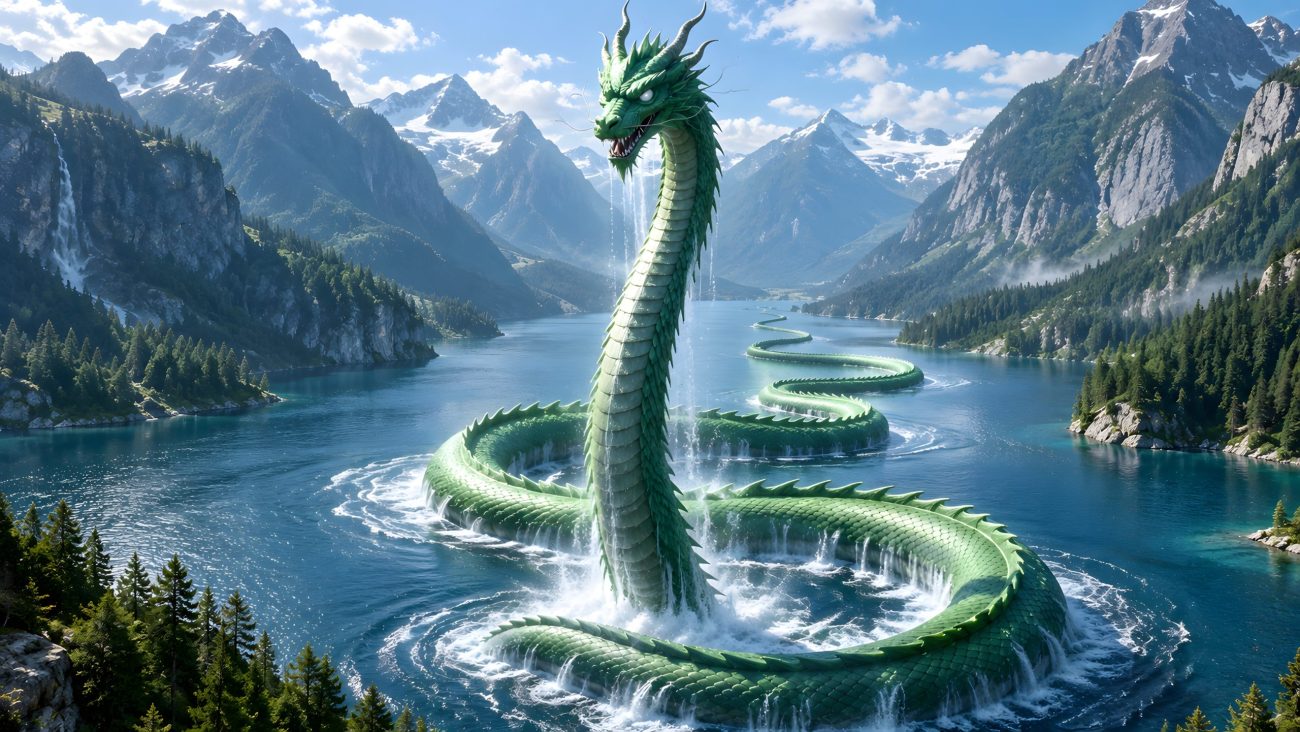
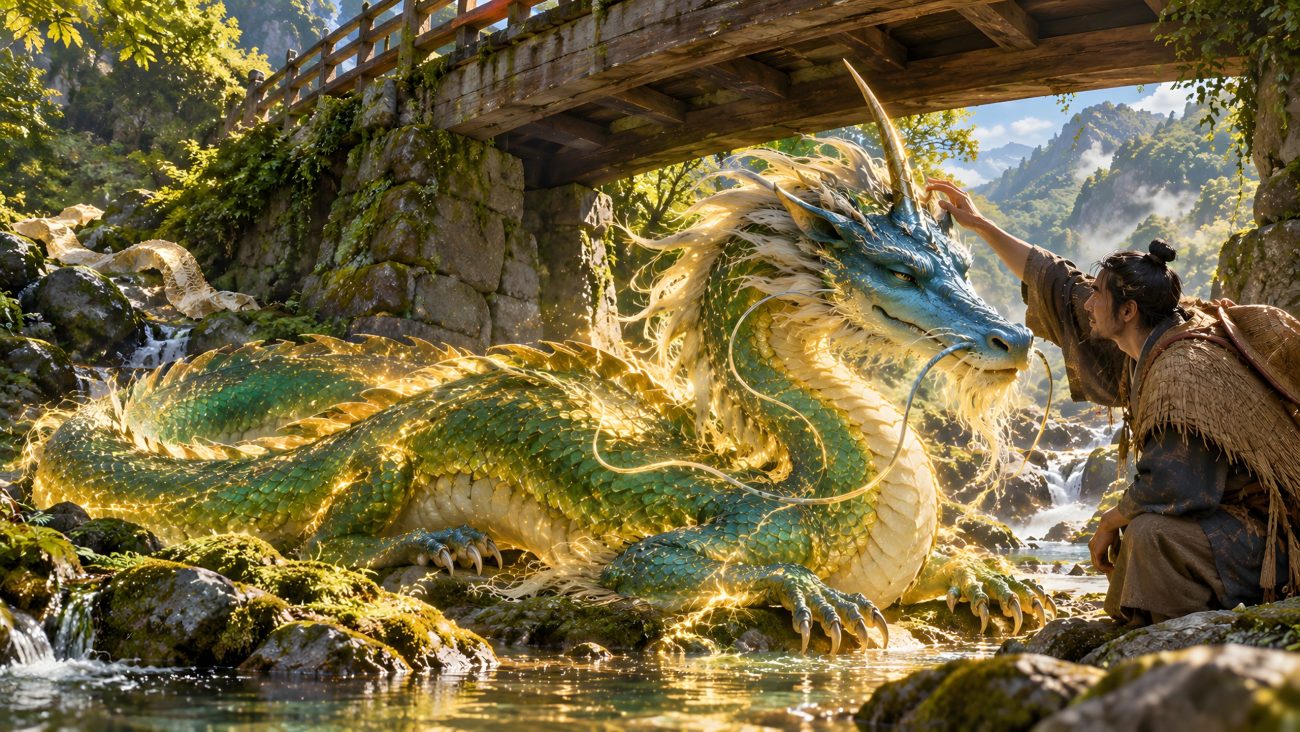
The Hyōno-sen-shinryū was a magnificent dragon said to dwell on Mount Hyōno, a sacred mountain whose territory stretched across Tajima, Harima, Mimasaka, and Inaba. It appeared as a creature about seven feet long, resembling a beautiful blue dragon from a painting. It had a single horn and four limbs, while its body was the color of leaves and seemed to shine with a golden light.

One day, a woman and child from Unawa Village went into a valley of the mountain with baskets on their backs. Beneath a bridge they encountered the strange creature and were so terrified that they immediately fled back to the village.

The villagers were experienced hunters and, upon hearing what the pair had seen, armed themselves and returned to the bridge. The creature showed neither fear nor hostility as the crowd approached. Once they examined it more closely, they realized that it was no ordinary monster but a beautiful dragon of extraordinary appearance.

One of the villagers approached the dragon and stroked its single horn. Rather than becoming angry, the creature appeared to enjoy the touch, remaining calm in the presence of the people.

Not long afterward, a golden-white hide measuring roughly eight fathoms was discovered abandoned in a valley farther into the mountains. The villagers believed that it belonged to the mysterious dragon beneath the bridge.

The creature was not regarded as an evil dragon or a venomous serpent. Instead, its appearance was taken as an auspicious sign, a divine creature that revealed itself in a peaceful and prosperous age.


Sources

Takahashi, Toshihiro. “氷野千神竜 [ひょうのせんしんりゅう] (Hyōno-sen-shinryū).” 新版TYZ 妖怪図鑑 (New TYZ Yokai Encyclopedia). September 25, 2016. https://tyz-yokai.blog.jp/archives/1061729315.html
Herensuge

Tradition: Basque mythology, Spanish Mythology
Alternative Names: Herensuge
Category: Dragon


The Myth

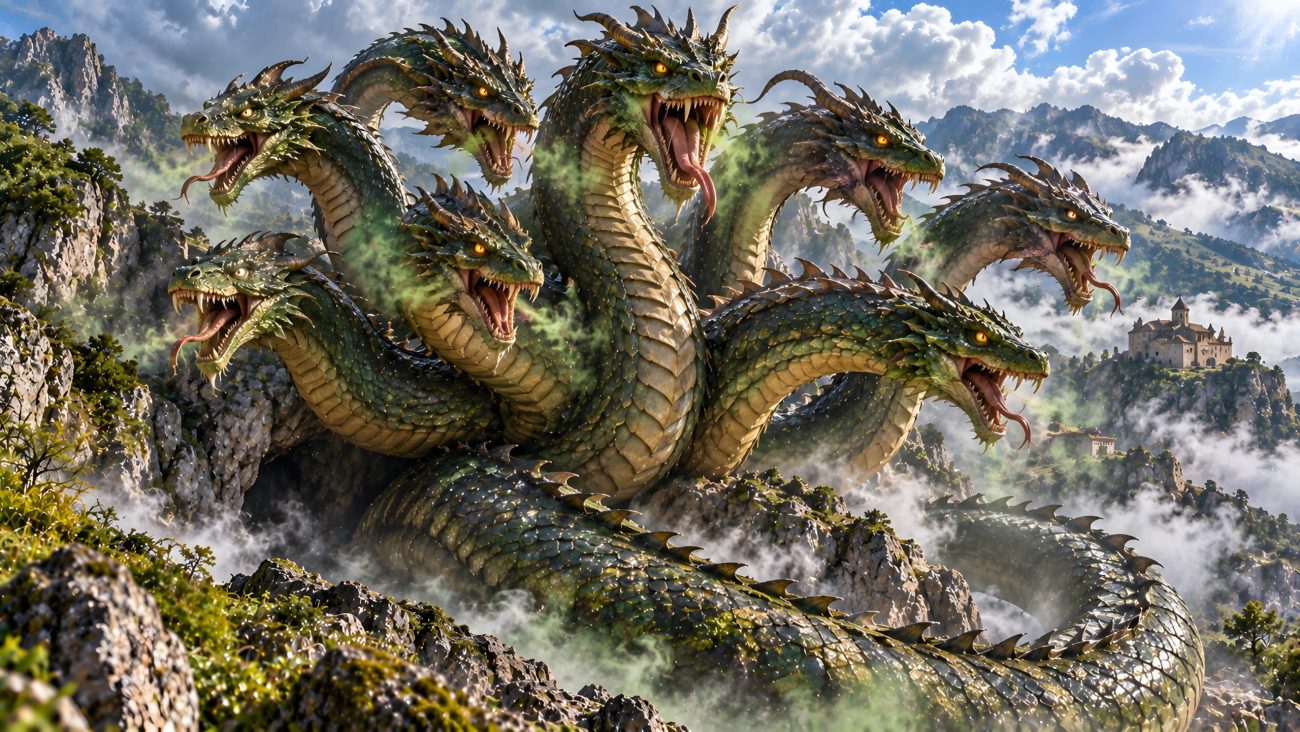
Herensuge is a fearsome Basque dragon that often takes the form of an enormous serpent. Some Herensuge have seven heads, with the seven young dragons believed to grow from the creature’s heads before eventually falling away when they become fully grown. The creature is associated with Sugaar, who is more commonly depicted as a serpent.

One of the most famous tales tells of the Navarrese knight Teodosio de Goñi, who was performing penance for killing his own parents in the Aralar Mountains. There he encountered a woman who had been given to the dragon as a ransom. Teodosio attempted to save her, but the dragon bit through the chains binding his ankles, leaving him unable to escape or fight it.

With no way to defeat the creature, Teodosio prayed to Saint Michael for salvation. In heaven, the archangel heard his plea, but would not enter the battle without God. Saint Michael finally descended with God above him and confronted the dragon. He struck off the Herensuge’s head, freeing Teodosio from his chains and bringing his long penance to an end.

The dragon also appears in tales of seven-headed serpents and princesses condemned to sacrifice. In one story, a prince falls in love with a king’s youngest daughter, only to learn that she has been chosen as the sacrifice to a seven-headed Herensuge. With help from the one-eyed giant Tartalo, the disguised prince battles the dragon three times and finally kills it, winning the princess’s hand.

Another tale tells of a young man who receives a magical stick from an old woman after generously giving her his entire cake. The stick can kill with a single blow. Eventually he reaches a kingdom where the people draw lots to determine who must be sacrificed to a Herensuge, and the king himself loses the drawing, meaning his daughter must die. The young man accompanies her to the dragon’s mountain and uses the magical stick to kill all seven of its heads. As a reward for saving the princess, he marries her.

Herensuge can also appear as a cursed human being. A young woman wandering through the countryside is captured by a serpent and held in a forest for three years. Eventually the creature tells her that he is actually a prince who was transformed into a Herensuge as punishment and will soon regain his human form. He gives her a distaff, spindle, and silk handkerchief and promises to marry her when his punishment ends.

When the young woman returns home, her father prevents her from leaving again, delaying her journey back to the prince. She eventually escapes and travels a great distance to his city, only to discover that he is about to marry another woman. She presents the objects he had given her, proving their earlier promise. The prince abandons the new marriage and instead marries the woman he had promised to wed.


Sources

“Herensuge.” Wikipedia: The Free Encyclopedia. Wikimedia Foundation. Accessed September 26, 2026. https://en.wikipedia.org/wiki/Herensuge


Konryū

Tradition: Japanese mythology
Alternative Names: Konryū, Long-Nosed Kulve Taro, Konryū Under the Nose
Category: Dragon


The Myth

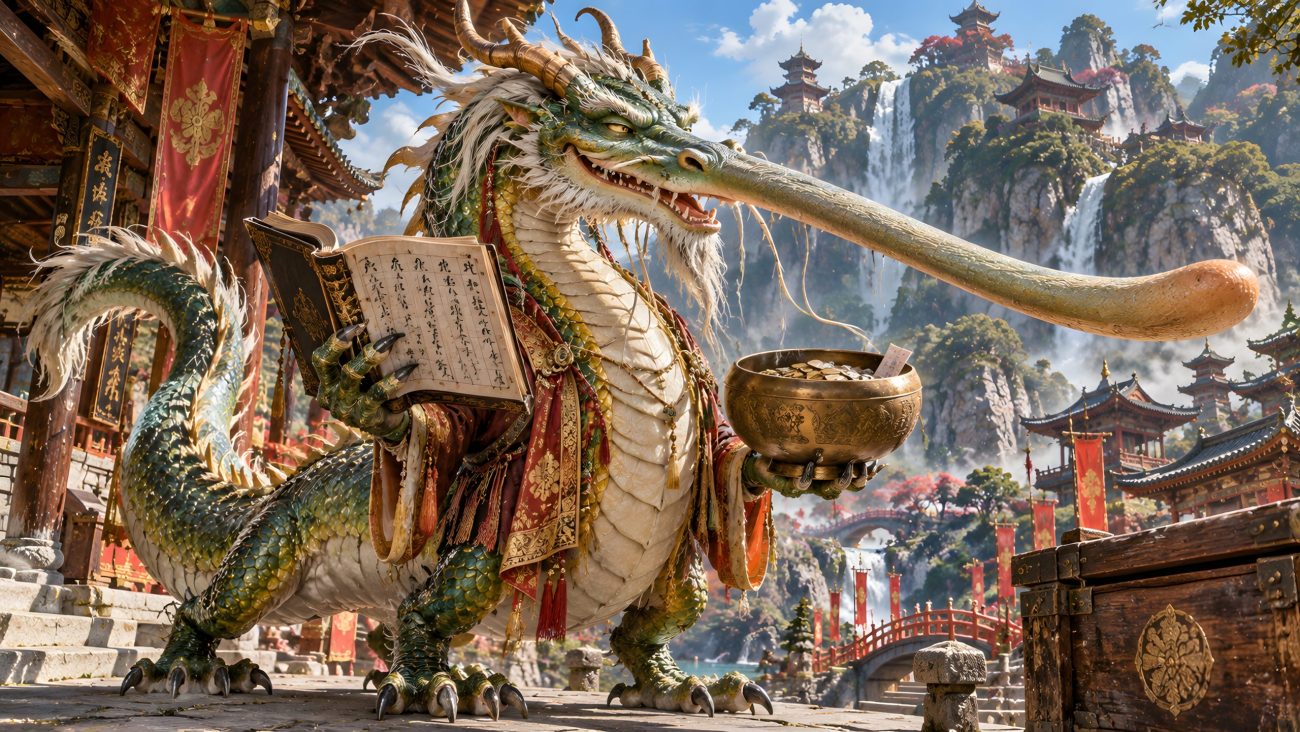
The Konryū is a long-nosed dragon depicted holding a donation ledger in one hand and a begging bowl in the other. It appears among the strange creatures of Fujyūkoku, the first fictional foreign country visited by Uritarō in Ikoku Manyū Uritarō Monogatari, a satirical journey through imaginary lands.

Fujyūkoku, also called Machigai-koku or the Unfree Country, is described as an isolated island more than 2,300 ri south of the equator. Though its civilization resembles that of contemporary Japan, it is filled with arrogant people who behave as though they own everything, timid commoners, and a society where lies, mistakes, and immorality are widespread.

Among the country’s strange inhabitants is the Konryū, known as the “Long-Nosed Kulve Taro” or the “Konryū under the nose.” Its peculiar appearance is a joke aimed at religious institutions. Temples and shrines solicit donations from people, recording the names of donors in their ledgers and receiving offerings in their begging bowls, supposedly for religious purposes but, as the satire suggests, ultimately to support the livelihoods of monks and priests themselves.

The dragon’s long nose and its association with begging and donation records turn this practice into a grotesque creature. The Konryū is therefore one of the many bizarre inhabitants of Fujyūkoku whose very appearance exposes some aspect of human behavior that the story’s satire seeks to ridicule.


Sources

Takahashi, Toshihiro. “鼻下昇竜 [はなのしたこんりゅう] (Hananoshita Konryū).” 新版TYZ 妖怪図鑑 (New TYZ Yokai Encyclopedia). October 21, 2024. https://tyz-yokai.blog.jp/archives/1082997793.html


Hakuryū

Tradition: Japanese mythology, Chinese Mythology
Alternative Names: Hakuryū, White Dragon
Category: Dragon


The Myth

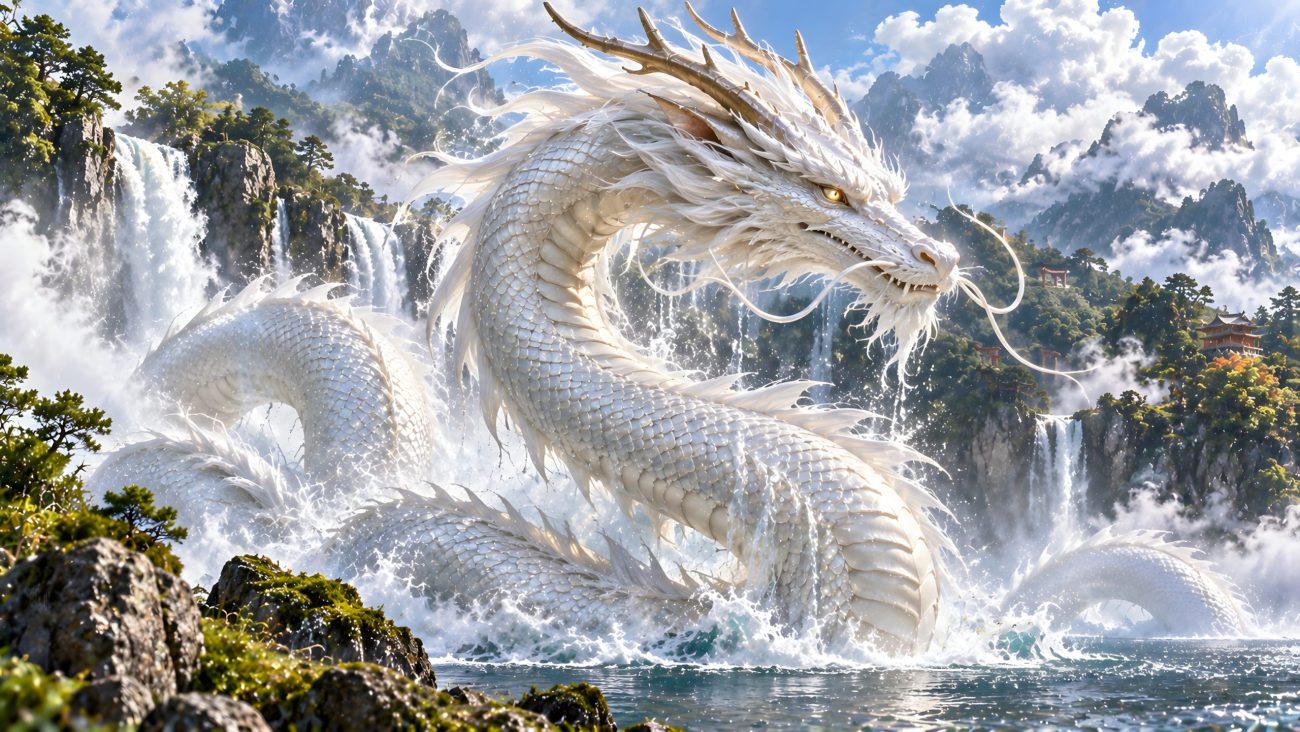
The Hakuryū is a white-bodied dragon, its pale form marking it as an auspicious and noble being. White dragons appear in legends, folktales, and the origin stories of temples and shrines, where they are often regarded as masters or gods of mountains, rivers, and lakes. In traditional dictionary definitions, the white dragon is described as a messenger of the Emperor of Heaven.

One of the oldest stories associated with the Hakuryū tells of a white dragon that descended to the Qingleng Abyss. There, it transformed itself into a fish and swam through the waters. A fisherman named Yu Qie encountered the fish and shot it in the eye.

The wounded dragon fled back to heaven and complained to the Emperor of Heaven about what had happened. But the Emperor rebuked it. Since the dragon had deliberately taken the form of a fish, he argued, it had placed itself among creatures naturally hunted by human beings. If Yu Qie had merely shot a fish, what crime had he committed?

The story was later used by Wu Zixu to warn the King of Wu. He explained that the white dragon was a noble creature of the Emperor of Heaven, while Yu Qie was merely a low-ranking official of the state of Song. Yet by disguising itself as a fish, the dragon had allowed itself to be treated like an ordinary creature. Likewise, if a ruler abandoned the dignity of his position and mingled with common people as though he were one of them, he could expose himself to dangers that would otherwise never reach him. The King of Wu was persuaded by the warning and changed his mind.

From this tale came the expression “white dragon in fish clothes,” describing a person of high status who disguises themselves in humble clothing, as well as the misfortunes that can result from such a disguise.

The Hakuryū could also appear as a terrifying force of nature. In 819, during the tenth year of the Kōnin era, a white dragon was said to have appeared in Kyoto amid a violent storm that damaged houses. White dragons were consequently associated not only with celestial power but with the destructive forces of wind and water.

The name Hakuryū could even be applied to the natural world: white, foaming streams and waterfalls were sometimes described as white dragons rushing through the landscape.


Sources

Takahashi, Toshihiro. “白竜 [はくりゅう] (Hakuryū).” 新版TYZ 妖怪図鑑 (New TYZ Yokai Encyclopedia). October 21, 2024. https://tyz-yokai.blog.jp/archives/1082944130.html


Grand’Goule

Tradition: French Mythology
Alternative Names: Grand’Goule, Grande Gueule, Bonne Sainte Vermine
Category: Dragon


The Myth

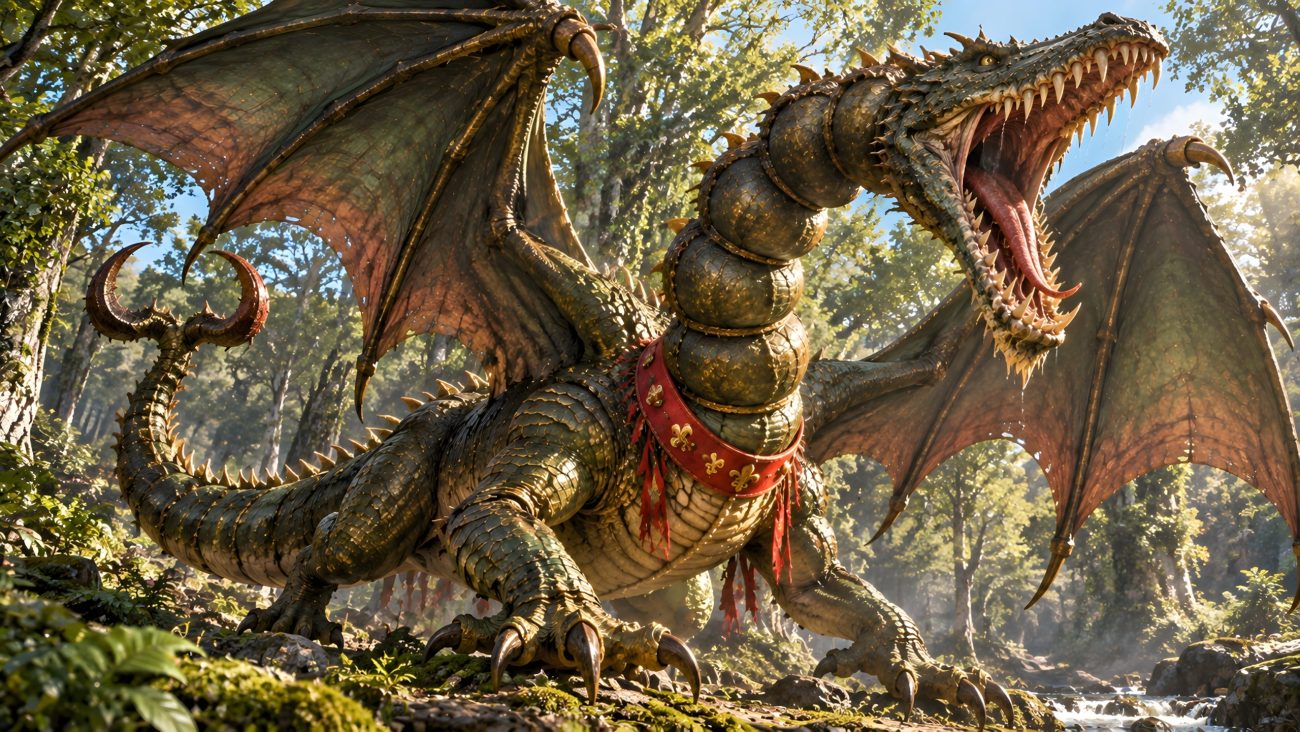
The Grand’Goule was a monstrous dragon with bat-like wings, a huge gaping mouth, hooked claws, and a forked stinger like that of a scorpion. Its body was bronze-green, with a red collar around its neck, and its enormous jaws gave it the name Grand’Goule, derived from grande gueule, meaning “great gullet” or simply “big mouth.”

The dragon terrorized the city of Poitiers until it was finally slain. Saint Radégonde of Poitiers is said to have destroyed the creature through fervent prayer. Her prayer became almost a weapon in itself, flying through the air like a projectile and striking the dragon with the force of a crossbow bolt.

The beast’s death is also remembered through the tale of a condemned criminal who volunteered to kill it in exchange for his life. He succeeded in bringing the monster down, but its poisonous breath killed him at the very moment of his triumph.

The Grand’Goule was not remembered solely as a monster. On rogation days it was brought out and carried in procession alongside the relic of the True Cross. Ribbons and banderoles adorned its great body, and people treated the dragon with a curious mixture of reverence and affection. Cherries, tarts, and pastries were thrown directly into its enormous mouth, including the golden-brown casse-museaux, “snout-breakers.” Because of this strange role as a beloved sacred monster, the Grand’Goule came to be affectionately known as the Bonne Sainte Vermine, the “Good Holy Vermin.”

Stories of the creature continued to be associated with a physical relic in Poitiers. The Scotsman John Lauder described seeing the remains of a hideous crocodile-like beast with a gigantic mouth, chained to a wall in a palace. It was said to be centuries old and to have killed several prisoners before a condemned man shot it and won his freedom. The claim that the creature had spontaneously generated from rotting matter in the prison was already met with doubt, but the monstrous remains themselves were treated as a relic of the old Grand’Goule.


Sources

“Grand’Goule.” A Book of Creatures. April 23, 2021. https://abookofcreatures.com/2021/04/23/grandgoule/


Gozuryū

Tradition: Japanese mythology
Alternative Names: Five-Headed Dragon, Dragon King, Dragon Demon, Poison Dragon
Category: Dragon


The Myth

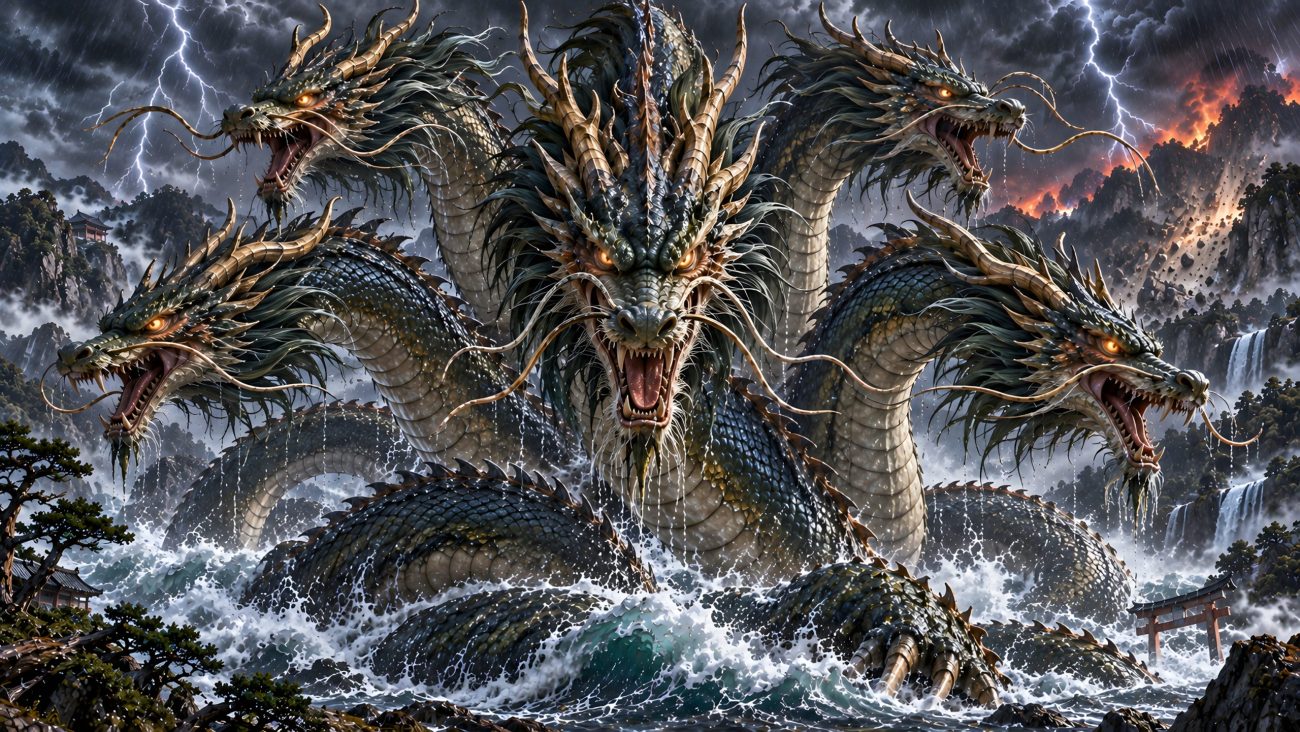
The Gozuryū was a fearsome dragon with five heads upon a single body, always surrounded by black clouds. It lived in a lake called Fukasawa between Kamakura and Kurage and ruled over the Thunder God, Wind God, Mountain God, and other demons. For roughly seven hundred years, from the age of Emperor Jimmu to the reign of Emperor Suinin, it brought disasters upon the land, causing floods and landslides, killing living creatures, and laying waste to the countryside.

During the reign of Emperor Keikō, the dragon’s cruelty became even worse. It began raining fire upon the land and killing people, forcing terrified inhabitants to hide in caves. Its influence reached even the imperial court: during the reign of Emperor Ankō it manipulated Minister En, while under Emperor Buretsu it manipulated Minister Kanamura, using them to spread evil and bring disorder to the world.

The dragon eventually emerged from the Tsumura sluice gate south of Fukasawa and began devouring human children. The place became known as Hatsukuizawa, “the Valley of First Eating.” A wealthy man living nearby suffered an especially terrible fate: all sixteen of his children were devoured by the dragon. Overcome with grief, he abandoned his home, and the site became known as Chōjazuka, “the Wealthy Man’s Mound.” Other families likewise lost their children and fled, giving another place the name Koshigoe, “Child-Death Crossing.” The dragon’s tyranny spread across eight neighboring provinces, where people were forced to offer their children as sacrifices.

Then, during the reign of Emperor Kinmei, a celestial maiden descended from heaven accompanied by a child. Celestial beings and dragon gods cast stones down from the clouds, stirring up sand from the seabed and raising a new island from the sea. This became Enoshima.

The maiden who descended upon the newborn island was Benzaiten, daughter of the Dragon King of Anavatapta. The five-headed dragon became captivated by her and crossed the water to declare his love. Benzaiten rejected him, telling him that he was unlike the dragon who should be worthy of her: both in heart and in form, he remained a creature who had repeatedly killed living beings.

The dragon was humbled by her words. He vowed to follow her teachings and abandoned his killing. From then on he accumulated virtue through compassion and refrained from harming living creatures.

Benzaiten remained upon Enoshima as Enoshima Myōjin, while the transformed dragon eventually made a final vow. He became a mountain on the opposite shore of the island, known as Ryūkuchi Mountain, and was thereafter enshrined as Koshikata Myōjin, also called Ryūkuchi Myōjin.


Sources

Takahashi, Toshihiro. “五頭竜 [ごずりゅう] (Gozuryū).” 新版TYZ 妖怪図鑑 (New TYZ Yokai Encyclopedia). October 21, 2024. https://tyz-yokai.blog.jp/archives/1082934018.html


Garyō

Tradition: Chinese mythology
Alternative Names: Garyō, Drawing the Dragon and Dotting Its Eyes
Category: Dragon


The Myth

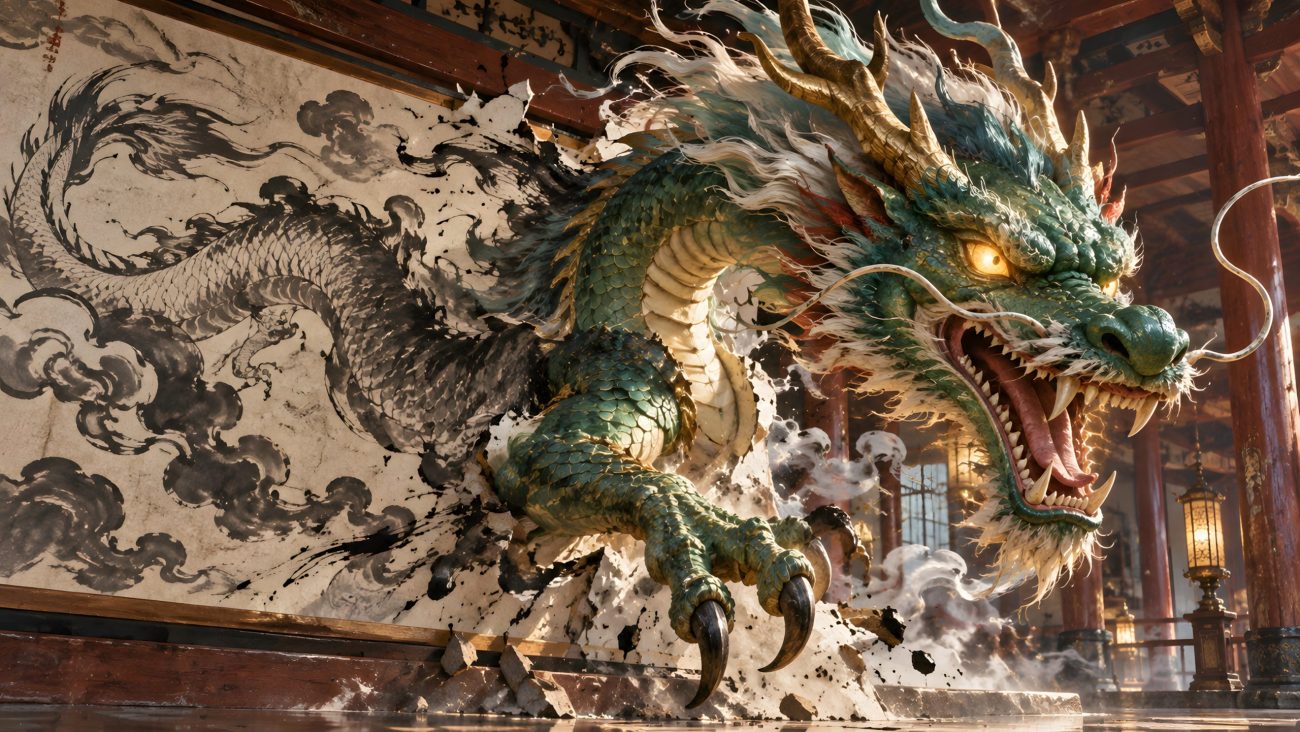
The Garyō is a dragon depicted in painted form, but one capable of becoming a living creature when its eyes are completed. Its most important feature is therefore the eyes: without them, the painted dragon remains motionless on the wall, but once they are added, the dragon can awaken and fly into heaven.

The story comes from the famous painter Zhang Sengyao of the Liang dynasty. When the Anle Temple in Jinling was being decorated, Zhang painted four white dragons upon its walls. Yet he deliberately left their eyes unfinished.

When people asked why, Zhang warned them that painting in the eyes would cause the dragons to fly away. They dismissed his warning as nonsense and insisted that he complete the paintings.

At last, Zhang took up his brush and dotted the eyes of two of the dragons. At that very moment, thunder and lightning erupted, the wall was broken apart, and the two dragons sprang from the painting and ascended into heaven upon the clouds.

The other two dragons remained upon the wall, still without eyes. They had been left untouched, and so the temple retained two dragons that never came to life.

From this tale came the expression of “drawing the dragon and dotting its eyes,” referring to the crucial final touch that brings an otherwise incomplete work to completion.


Sources

Takahashi, Toshihiro. “臥竜 [がりょう] (Garyō).” 新版TYZ 妖怪図鑑 (New TYZ Yokai Encyclopedia). October 21, 2024. https://tyz-yokai.blog.jp/archives/1083003608.html


Fukuryū

Tradition: Japanese mythology
Alternative Names: Fukuryū, Kai no Fukuryū, Gatten no Ryūō, Fortune Dragon
Category: Dragon


The Myth

The Fukuryū is depicted as a dragon rising toward heaven, its long body curling upward in a posture resembling a seahorse. It is associated with the dragon god of the ancient lake that once covered the Kōfu Basin, and is regarded as a guardian and bringer of fortune to the people.

Long ago, the Kōfu Basin was said to have been a vast lake. When Jizō Bodhisattva came to the region, he saw how difficult life was for the people living around the water and resolved to reclaim the lake. He consulted two nearby gods, who told him that the lake belonged to a powerful dragon god and that his cooperation would have to be sought.

The dragon god readily agreed. He declared that if giving up the lake would bring happiness to everyone, he would willingly surrender it. He also promised to protect the people before ascending into heaven.

Jizō then worked together with the local gods and Fudō Myōō to drain the enormous lake. One god bored holes through great rocks so that the water could escape, while another scattered the mountains that obstructed its passage. Fudō Myōō guided the waters toward the sea, until the lake was emptied and a vast basin remained. The land eventually became the flourishing center of Kai Province.

The dragon god is said to have left his name behind at the place where the plan to drain the lake was first conceived: Ryūō. His memory survived as the local Fukuryū, whose name is shortened from “Koshu Chingo Tsuina Shōfuku no Ryūjin,” meaning a guardian, exorcising, fortune-bringing dragon god of Kai. He is also called Gatten no Ryūō, “the Dragon King Who Grants All Wishes,” because he is believed to grant wishes for the happiness of the people.

The story of the dragon god forms part of the broader legend explaining the creation of the Kōfu Basin. The ancient tradition of Jizō opening and draining Lake Kōfu was already known in older accounts, but the surviving Kokubo Jizō Son Enki tells of Jizō, Gyōki, and the gods who opened the lake without mentioning a dragon god. The dragon’s role may therefore have been added to, or developed alongside, the older land-reclamation legend.


Sources

Takahashi, Toshihiro. “伏竜 [ふくりゅう] (Fukuryū).” 新版TYZ 妖怪図鑑 (New TYZ Yokai Encyclopedia). October 21, 2024. https://tyz-yokai.blog.jp/archives/1082959049.html


Dragon of Mordiford

Tradition: English Mythology
Alternative Names: Mordiford Dragon, Dragon of Mordiford
Category: Dragon


The Myth

The Dragon of Mordiford was a fearsome creature said to live in the woods and waterways around Mordiford, where the River Lugg meets the River Wye. Its form changes in the telling of the legend, sometimes appearing as a winged wyvern and sometimes as a great poisonous serpent.

In the tale of Maud and the wyvern, a young girl named Maud discovered a tiny, brightly colored creature prowling among some flowers in the forest. It had a snout and small translucent wings, and Maud, delighted to have found a new companion, carried it home. Her parents immediately recognized it as a young wyvern and ordered her to return it to the forest, warning that it would bring trouble to the village.

Maud pretended to obey, but secretly hid the creature in the woods. She began raising it as her pet, feeding it milk, playing with it, and watching it struggle to fly. The little creature grew enormously with each passing month. Its body became emerald green and its wings grew thick and powerful.

Eventually, milk was no longer enough. The dragon developed an enormous appetite for meat and began attacking the farms around Mordiford. It killed cows and sheep, and when the farmers tried to destroy it, the creature turned upon them as well, discovering that it liked human flesh.

Maud continued visiting her old companion and begged it to stop its killing. The dragon listened to no one except Maud, sparing her while destroying everything else that crossed its path.

The people of Mordiford could endure the attacks no longer, and the noblemen of the village were called upon to destroy the beast. A man of the Garstone family rode out in full armour to confront it. The dragon was almost invisible among the plants of the forest, but when the knight approached, it suddenly unleashed a blast of fire. He barely managed to deflect the flames.

Gathering himself, Garstone aimed his lance at the dragon’s throat and drove it straight through the beast, killing it.

Maud emerged from the forest when she saw what had happened. Overcome with rage and grief, she mourned the creature that had once been her beloved little pet.

Another tale gives the Dragon of Mordiford a more serpentine form. This creature lived in Haugh Wood and terrorized the surrounding countryside with its poisonous nature. Its attacks became so severe that the working population of Mordiford began to decline.

Eventually, a local convict offered to kill the serpent in exchange for a pardon. Once his pardon was promised, he obtained a bow, arrows, and a large cider barrel. He concealed himself inside the barrel beside the River Lugg, where the serpent came to drink.

When the dragon arrived at the river and began drinking, the convict fired an arrow through a hole in the barrel. The arrow struck the creature in the heart and killed it.

But the victory cost the convict his life. As the dying dragon’s poison flowed into the barrel, it poisoned and killed the man who had slain it.


Sources

“Dragon of Mordiford.” Wikipedia: The Free Encyclopedia. Wikimedia Foundation. Accessed September 20, 2026. https://en.wikipedia.org/wiki/Dragon_of_Mordiford


Fáfnir

Tradition: Norse mythology
Alternative Names: Fáfnir, Fafnir, Fáfnisbani
Category: Dragon


The Myth

Fáfnir was originally a dwarf who transformed himself into a great worm-dragon to guard a vast treasure. In his dragon form he was a huge, serpentine creature, described in the oldest accounts as flightless and snake-like. Later traditions give him shoulders, leaving open the possibility of legs or wings.

Fáfnir was the son of Hreiðmarr and the brother of Regin and Ótr. The trouble began when Odin, Loki, and Hœnir accidentally killed Ótr, who had taken the form of an otter. The gods were forced to pay Hreiðmarr a great ransom of gold. Loki obtained the treasure from the dwarf Andvari, including the cursed ring Andvaranaut and the Helm of Terror. Andvari warned that the treasure would bring death to whoever possessed it.

Hreiðmarr refused to share the treasure with his sons. Fáfnir became consumed by greed and killed his own father, taking the entire hoard for himself. He fled into the wilderness and settled at Gnitaheath, where his greed and corruption transformed him into a dragon. There he coiled himself around the treasure and guarded it, becoming increasingly vicious and ill-natured.

Fáfnir’s brother Regin eventually sought revenge and sent his foster son Sigurð to kill the dragon. He gave Sigurð the sword Gram and instructed him to hide in a pit beneath the path Fáfnir used when he went to drink. Sigurð followed the plan. As Fáfnir crawled over the pit, breathing poison before him, Sigurð thrust his sword upward into the dragon’s body, mortally wounding him.

As Fáfnir lay dying, he spoke to Sigurð and questioned him about his name and the reason for his attack. He warned the young warrior that the treasure would eventually bring about his death, just as it had brought destruction to its previous owners. Fáfnir then died from his wound.

Regin returned and asked Sigurð to prepare Fáfnir’s heart for him to eat. While roasting it, Sigurð touched the heart to see whether it was cooked and burned his finger. He instinctively put the finger into his mouth, and Fáfnir’s blood touched his tongue. Suddenly he could understand the speech of birds.

The birds warned Sigurð that Regin intended to betray and kill him so that he could take the treasure for himself. Sigurð listened to their warning, killed Regin, and took the treasure for himself. He loaded the hoard onto his horse Grani, carrying away the cursed wealth that had already destroyed Fáfnir and his family.


Sources

“Fáfnir.” Wikipedia: The Free Encyclopedia. Wikimedia Foundation. Accessed September 20, 2026. https://en.wikipedia.org/wiki/F%C3%A1fnir