Drac

Tradition: French Mythology
Alternative Names: Drac de Beaucaire, Invisible Demon
Category: Dragon


The Myth

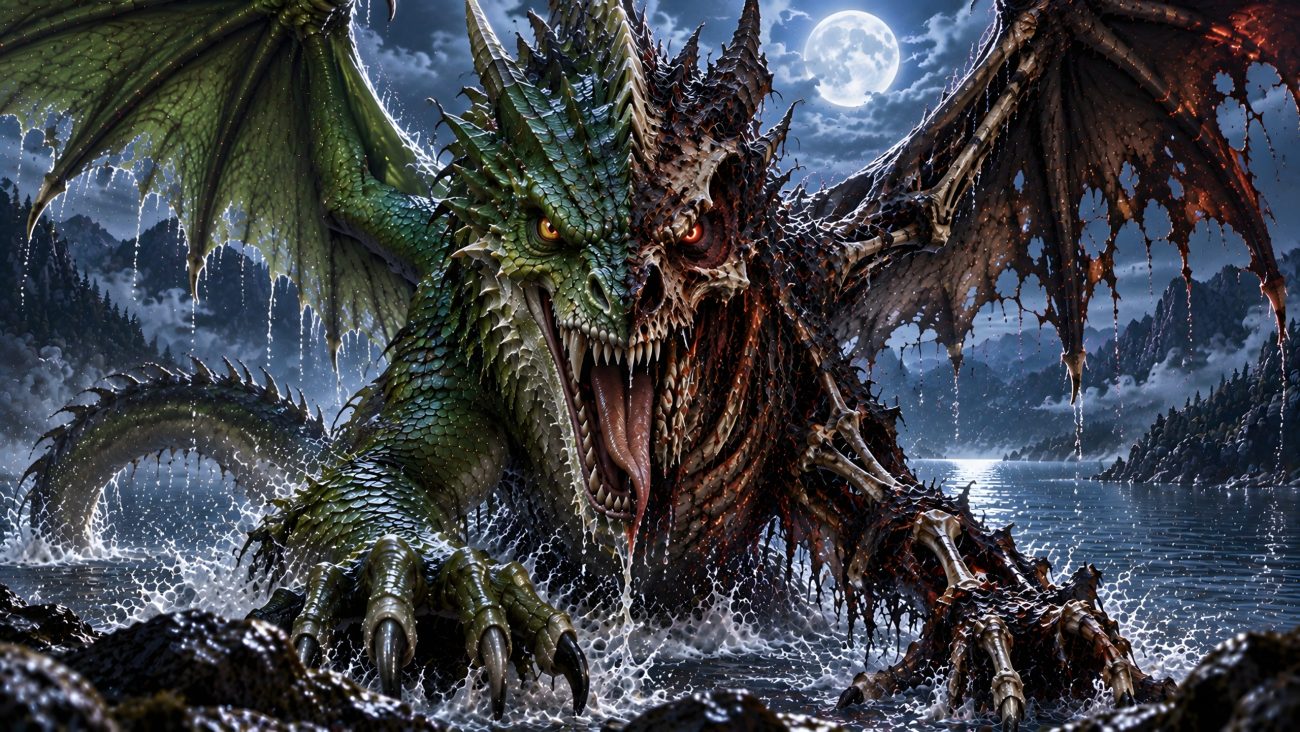
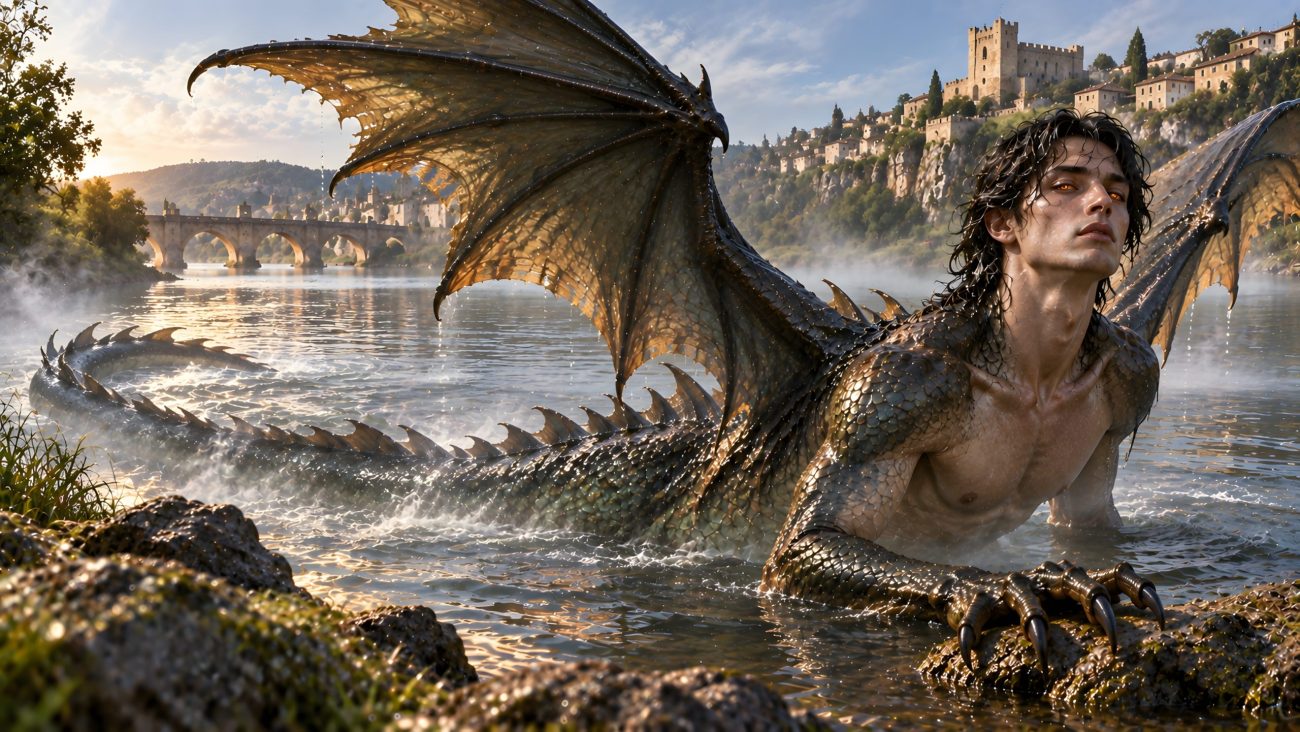
The Drac is a malevolent water dragon that haunts the Rhône River around Beaucaire. Its appearance can vary, but it is described as a winged amphibious creature with a reptilian body and the shoulders and head of a beautiful young man. The Drac possesses the power to become completely invisible, making it almost impossible to see or capture.

The Drac lured people into the river with its soft and enchanting voice before dragging them beneath the water. It was said to have killed thousands of knights and villagers, yet its ability to disappear from sight allowed it to escape those who tried to hunt it.

One day, a young woman was washing the cloths of her newborn child beside the river when she noticed a golden cup decorated with a pearl floating upon the water. She reached out to take it, but suddenly fell into the river. An invisible claw seized her wrist, and she lost consciousness.

When she awoke, she found herself inside a crystal cave. She could no longer remember how she had arrived there, for the Drac’s magic had erased her memories. Captivated by the creature’s voice and eyes, she became subject to its will. The Drac had chosen her to care for his child, and she became its wet nurse.

Every night, she rubbed a special balsam onto the child’s eyes. The ointment allowed the child to see its invisible father. As she performed this task, some of the balsam entered her own eyes, giving her the ability to see the Drac as well.

Seven years passed. The Drac’s child grew up, and the woman was no longer needed. Rather than killing her, the Drac released her from his enchantment and returned her to the riverbank.

She eventually found her way home, where she discovered that her husband had grown old and that her own child had grown up without remembering her. Yet the love between them remained, and she gradually returned to her former life. Even after her return, however, she was troubled by frequent dreams of dragons.

One day, while walking through the marketplace, she suddenly saw the Drac. She cried out, and the creature realized that she could see him. The Drac asked whether she could see him, and she answered that she could.

It placed one claw over her left eye and then over her right. When the claw covered her right eye, she could no longer see the Drac. The creature then tore out her right eye. She spent the rest of her life telling people what had happened to her, but those who heard the story believed that she had become insane.


Sources

“Drac.” Dragons Wiki. Fandom. Accessed September 20, 2026. https://dragons.fandom.com/wiki/Drac

Christchurch Dragon

Tradition: English Mythology
Alternative Names: Christchurch Dragon
Category: Dragon


The Myth

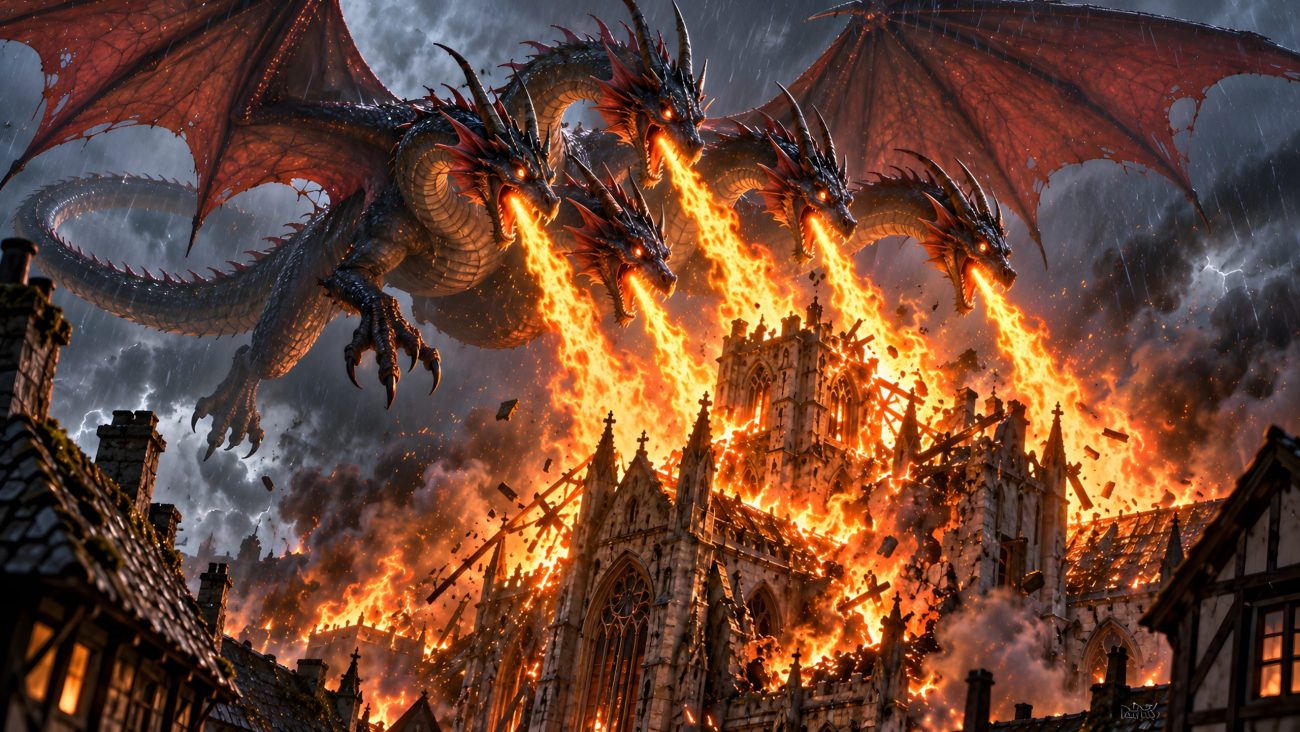
The Christchurch Dragon was an enormous dragon with five heads and a body of extraordinary length. It breathed sulphurous flames from its heads and flew in from the sea.

The creature appeared in Christchurch on the eve of the town’s annual fair. Nine canons from Laon Cathedral in France had arrived in the town during a torrential rainstorm, seeking shelter in the local minster church. The dean refused them, claiming that the doors of the newly built church were not yet secure. In truth, he feared that the canons’ shrine and relics of the Virgin Mary would attract more offerings than his own altars.

Unable to stay in the church, the canons were taken in by a group of merchants who gave up their rooms in a newly built lodging house. That night, the canons held mass there. They also cared for the daughter of a poor herdsman, a girl who had been born with a deformed foot. She spent the night praying before the canons’ portable altar, and by morning her foot had been miraculously healed.

The next morning the merchants went to the fair while the canons continued their journey. They had not travelled far when two horsemen came rushing after them with terrible news: a dragon had flown in from the sea and was setting Christchurch ablaze.

The canons hurried back to witness the destruction. The dragon was immense, stretching an incredible length, and its five heads poured sulphurous fire upon the town. One house after another burst into flames as the beast swept through Christchurch.

Yet the lodging house where the kindly merchants had sheltered the canons remained untouched, as did the herdsman’s shelter where the healed girl lived. The merchants themselves had also escaped, having left the fair early before the dragon appeared.

The minster church, however, had been completely destroyed.

The dean, realizing the destruction was upon him, tried to save his possessions. He loaded his most valuable goods onto a boat on the nearby river and attempted to escape with them. But the dragon swooped down upon the boat and burned it, reducing both the vessel and everything aboard to ashes.

Seeing what had happened, the dean finally understood the wrong he had committed. He prostrated himself before the canons’ shrine and prayed for forgiveness for his selfishness and the wrong he had done.


Sources

“Christchurch Dragon.” Wikipedia: The Free Encyclopedia. Wikimedia Foundation. Accessed September 20, 2026. https://en.wikipedia.org/wiki/Christchurch_Dragon


Daryū

Tradition: Chinese mythology
Alternative Names: Daryū, Daryu, Dajilong, Dōnglóng, Amadatsu, Crocodile Dragon, 鼉龍
Category: Dragon, Crocodile


The Myth

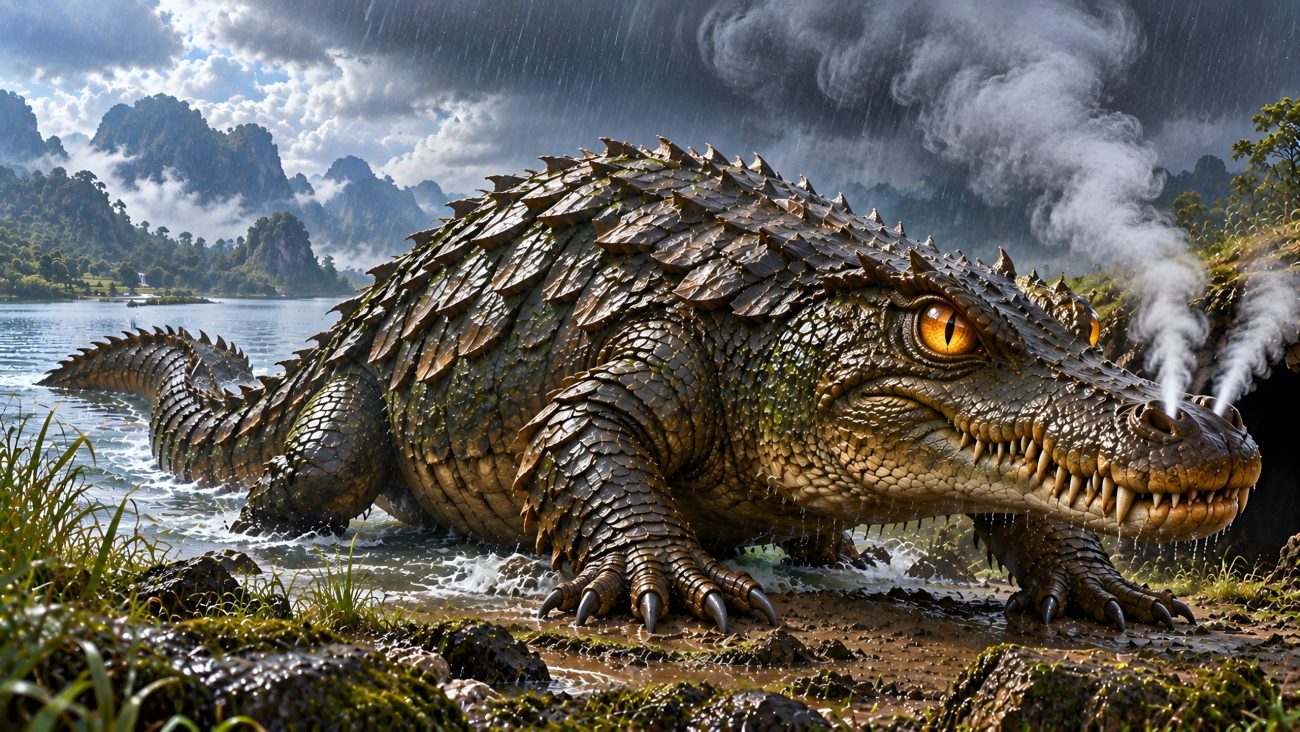
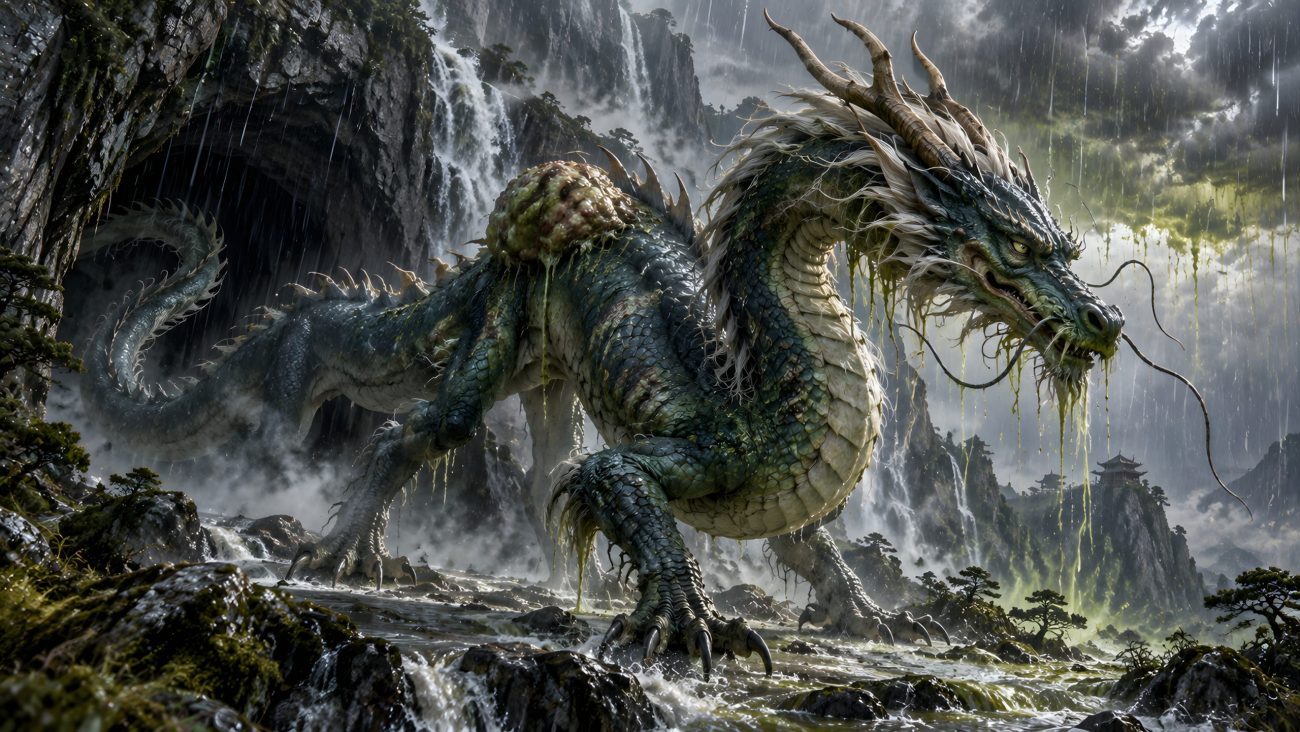
The Daryū is a type of dragon resembling a gigantic crocodile or other heavily scaled reptile. It is about one to two zhang long and has a sturdy body covered in hard scales. Its shape has been compared to a gecko or pangolin. Despite its great strength, it is said to be fond of sleeping and spends much of its time with its eyes closed.

The Daryū lives around the rivers and lakes of China, particularly the Yangtze River and Dongting Lake. Its burrows are said to extend extremely deep into the earth, making it difficult for fishermen to capture. They lure the creature from its burrow with bait before dragging it out with hooks.

At night the Daryū produces a terrifying cry that frightens sailors. This sound was known as the “Daryū drum” and was regarded as a sign by which rain could be predicted. The creature itself was also believed to possess the power to exhale air that formed clouds and brought rain.

Its hard scales or shell were believed to possess supernatural powers. They could be used to cure women’s diseases and were also considered effective against various evil spirits.

The Daryū was not merely a creature of Chinese books. In the southern Japanese islands, crocodile-like animals were sometimes reported under the name Daryū. On Amami Ōshima they were known locally as Amadatsu. On one occasion, people from Sumiyo village succeeded in capturing one. Although they feared that the creature was poisonous, they boiled and ate its flesh and found it remarkably delicious.

Another account describes a gigantic crocodile captured on Amami Ōshima in 1800, measuring around six metres in length. It was caught in a net and beaten by the islanders, and was depicted as a huge, hornless dragon.

Stories from the Satsunan Islands also tell of a fierce dragon appearing in the waters around Iwo Jima. Unlike the sleepy Daryū of Chinese descriptions, this creature was dangerous and would attack anyone it encountered, making it a source of fear among the islanders.

The Daryū was sometimes treated alongside other hornless rain dragons such as the Chiryū. Both were associated with rainfall and could be represented as enormous crocodile-like creatures.


Sources

Takahashi, Toshihiro. “地竜 [ちりゅう] (Chiryū).” 新版TYZ 妖怪図鑑 (New TYZ Yokai Encyclopedia). October 21, 2024. https://tyz-yokai.blog.jp/archives/1082955065.html


Chudo-Yudo

Tradition: Russian Mythology
Alternative Names: Chudo-Yudo, Chudo-Iudo, Чудо-Юдо, Chuda-Yuda
Category: Dragon


The Myth

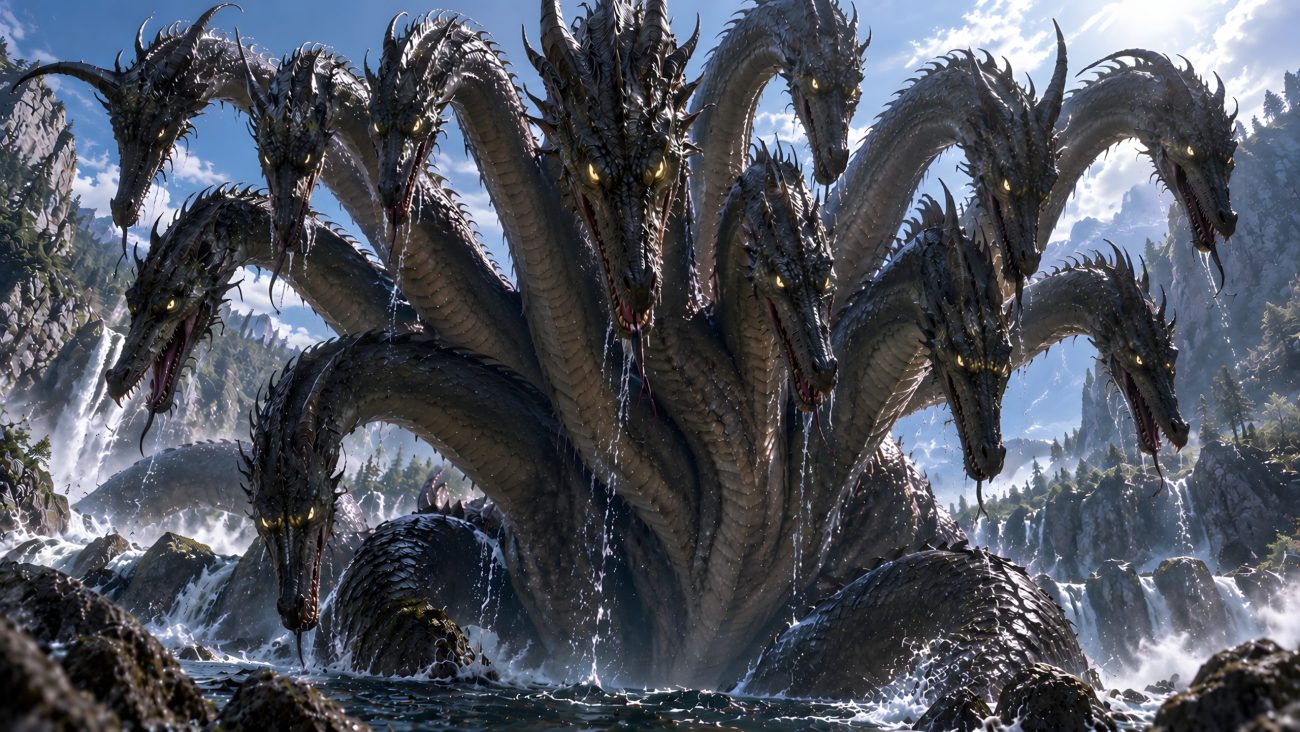
The Chudo-Yudo is a monstrous, many-headed dragon that dwells in or beyond the waters. It can take on human-like forms, speak like a person, and even ride a horse. Some tales portray it as the brother of Koschei the Deathless, born from Baba Yaga, while others present the creature as a monstrous embodiment of Baba Yaga herself.

The Chudo-Yudo is associated with the Water of Life and Death and may guard these magical waters. Its name was traditionally invoked during times of drought, when people sought relief from the absence of rain.

The creature appears with different numbers of heads, most famously six, nine, or twelve. In tales of Ivan Bykovich and the Storm-Bogatyr, these many-headed dragons emerge from the Black Sea and confront the heroes. They are monstrous serpents that must be fought and destroyed.

Yet cutting off the heads of a Chudo-Yudo is not enough. Even a severed head can be picked up and restored to the body. In one tale, the creature simply touches the severed head with a fiery finger and it becomes attached again, allowing the monster to continue fighting as though nothing had happened.

The Chuda-Yuda are sometimes encountered beyond the River Smorodina, a foul-smelling river that separates the world of the living from the realm of the dead. To reach their domain, a hero must cross the Kalinov Bridge, the White-Hot Bridge spanning the boundary between worlds.


Sources

“Slavic dragon.” Wikipedia: The Free Encyclopedia. Wikimedia Foundation. Accessed September 20, 2026. https://en.wikipedia.org/wiki/Slavic_dragon


Bukumir Dragon

Tradition: Montenegrin Mythology
Alternative Names: Lake Dragon of the Bukumirs
Category: Dragon


The Myth

A great dragon once lived in a lake near the lands of the Bukumirs, a nomadic people who lived in the surrounding area. At night the creature would emerge from the water and frighten the Bukumirs, coming from the lake after darkness had fallen.

The Bukumirs eventually discovered a way to drive the monster away. They built a great fire beneath the rocks and heated enormous stones until they were burning hot. Then they hurled the blazing stones into the lake.

The dragon’s wings caught fire from the scorching stones. Unable to remain in the lake, the wounded creature fled, but before it disappeared it placed a curse upon the Bukumirs.

The curse brought disaster upon the people. The Bukumirs turned against one another and began fighting among themselves until they ultimately disappeared.


Sources

“Bukumirsko Lake – The Heart of the Kučka Krajina Mountains.” Montenegro-for.me. July 2013. https://montenegro-for.me/2013/07/bukumirsko-lake-the-heart-of-the-kucka-krajina-mountains/


Chiryū

Tradition: Chinese mythology, Japanese mythology
Alternative Names: Chiryū, Chi Long, Chi, Ri, Amariyō, Amariyū, Rain Dragon, 螭龍
Category: Dragon


The Myth

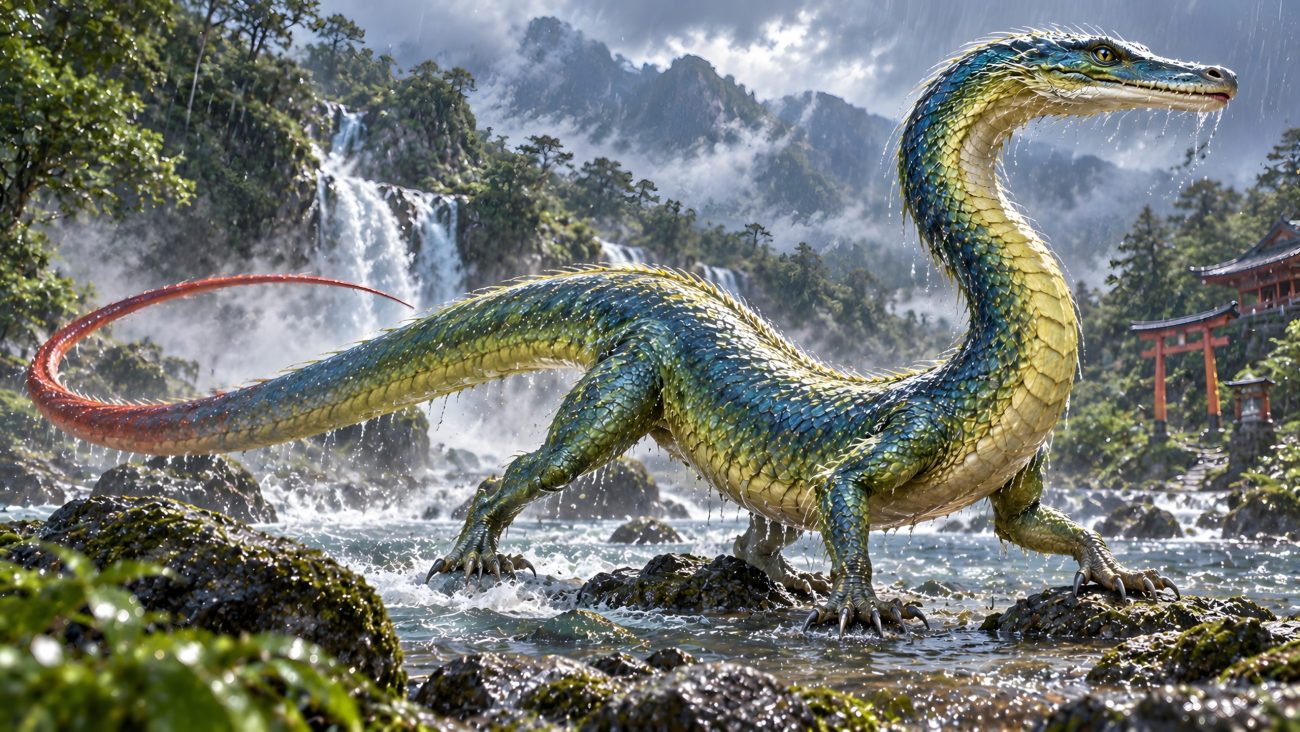
The Chiryū is a type of dragon without horns. It is described as red, white, blue, or yellowish-blue in color, with a long, slender tail. Some Japanese descriptions compare it to a mizuchi, but without horns, while others say that it resembles a large lizard.

The Chiryū was known in Japan through Chinese writings and was identified with the Rain Dragon, a dragon associated with bringing rain, as well as with the mizuchi, a dragon-serpent associated with watersides. Its lack of horns was considered one of its defining characteristics.

Chinese descriptions distinguish the Chiryū from other kinds of dragons according to their physical features. Scaled dragons are called Jiaolong, winged dragons are Yinglong, horned dragons are Qiulong, while dragons without horns are Chiryū.

In Japan, the Chiryū became known by the name Amariyō or Amariyū, meaning Rain Dragon. It was described as belonging to the dragon family, without horns, with a long thin tail and a body sometimes compared to that of a large lizard.

Because of its lizard-like appearance and its characteristic lack of horns, foreign reptiles displayed in Japan were sometimes casually described as “children of the Chiryū.”


Sources

Takahashi, Toshihiro. “地竜 [ちりゅう] (Chiryū).” 新版TYZ 妖怪図鑑 (New TYZ Yokai Encyclopedia). October 21, 2024. https://tyz-yokai.blog.jp/archives/1082955065.html


Byōryū

Tradition: Japanese mythology
Alternative Names: Byōryū, Sick Dragon, Disease Dragon
Category: Dragon


The Myth

The Byōryū is a dragon that has fallen ill. Its rain is said to have a foul smell, and unlike ordinary rain, it does not revive crops.

During the Jin dynasty, a prolonged drought struck Wei County. The people prayed to a dragon living inside a cave and asked it to bring rain. Rain soon began to fall, but the hermit Sun Deng recognized it as the rain of a sick dragon and warned that it would not restore the crops. When the people smelled the rainwater, they found that it was indeed foul-smelling.

The dragon living in the cave had a growth on its back. It took the form of an old man and approached Sun Deng, asking him to cure its illness. Sun Deng treated the dragon, and in gratitude the creature later brought rain once more. Before departing, it also dug a well and filled it with water.

Another tale tells of Ma Shihuang, a skilled veterinarian who lived during the time of the Yellow Emperor. A sick dragon came to him from the waves and asked to be treated. Ma Shihuang cured it with acupuncture and a decoction of licorice. Thereafter, whenever the dragon fell ill, it would emerge from the waves and return to Ma Shihuang for treatment. One morning, after being treated once again, the dragon carried Ma Shihuang away upon its back and disappeared.


Sources

Takahashi, Toshihiro. “病竜 [びょうりゅう] (Byōryū).” 新版TYZ 妖怪図鑑 (New TYZ Yokai Encyclopedia). October 21, 2024. https://tyz-yokai.blog.jp/archives/1082963220.html


Cathach

Tradition: Irish Mythology
Alternative Names: Cathach, Cathach of Inis Cathaig
Category: Dragon


The Myth

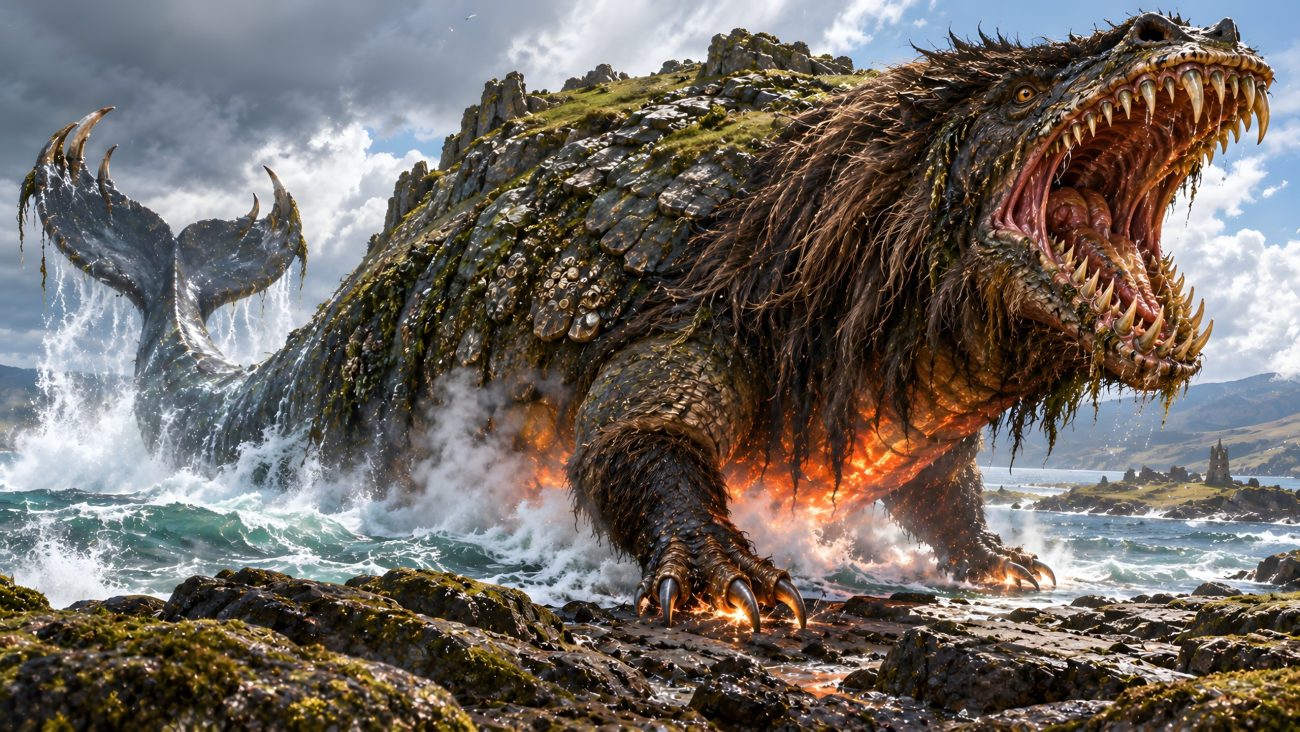
Cathach was the youngest of three dragon sisters, Dabran, Farbagh, and Cathach. They were the offspring of the gatekeeper of Hell and an all-devouring sow, and were nursed by the red demon of West Ireland. Cathach made her home on Inis Cathaig, now known as Scattery Island.

Cathach was a monstrous sight, larger than a small island herself. Her enormous back was rounded like an island and covered in scales and shells, while a rough, bristling mane like that of a boar covered the front of her body. Her cavernous mouth contained two rows of sharp teeth, and when she opened it her entrails could be seen within. A cruel eye gleamed from her head. She stood upon two short, thick, hairy legs armed with iron nails that struck sparks from the rocks as she walked. Her belly burned like a furnace, while behind her dragged the tail of a whale, armed with iron claws that carved furrows into the earth. She could move across land and swim through the sea with equal ease, causing the water around her to boil.

Cathach’s sisters eventually met their deaths. Farbagh was slain by Crohan, Sal, and Daltheen, the three sons of Toraliv M’Stairn, while Dabran was killed by Diarmuid O’Duibhne after the three brothers had set her to guard their forts.

When Cathach sensed that her sisters were gone, she erupted into a terrible rage. She ravaged the lands around the Shannon Estuary, from Limerick to the sea, destroying the countryside, sinking ships, and bringing commerce to a standstill for an entire year. When Crohan, Sal, and Daltheen returned and saw the devastation Cathach had caused, they were so overcome with despair that they threw themselves into the sea and died.

Yet Cathach herself was not defeated by warriors or mighty champions. When Saint Senan landed on Inis Cathaig, the dragon prepared to devour him. Instead, the saint calmly made the sign of the cross before her face and commanded her in the name of the Father, the Son, and the Holy Ghost to leave the island and harm no one wherever she went.

Cathach fell silent and obeyed. She left Inis Cathaig, disappeared into the estuary, and travelled to Sliab Collain without harming another person. It was said that if she still lived, she remained obedient to Saint Senan’s command.


Sources

“Cathach.” A Book of Creatures. November 15, 2019. https://abookofcreatures.com/2019/11/15/cathach/


Brosno Dragon

Tradition: Russian Mythology
Alternative Names: Brosnya, Бросня
Category: Dragon


The Myth

The Brosno Dragon, known as Brosnya, is a mysterious dragon-like creature said to dwell in the depths of Lake Brosno in western Russia. It is said to be an enormous lake monster, rarely seen and feared by those living around the lake.

During the eighteenth and nineteenth centuries, people told of a gigantic creature that would rise from the depths in the evening. Whenever anyone approached the shore or came too close, it would immediately disappear beneath the water again.

The creature also became the subject of darker tales. During the Second World War, it was said that Brosnya rose from the lake and swallowed a German airplane whole.

Some believe the monster may still lurk beneath Lake Brosno, although its existence remains uncertain. Explanations for sightings have included ordinary animals such as beavers or an exceptionally large pike.


Sources

“Brosno dragon.” Wikipedia: The Free Encyclopedia. Wikimedia Foundation. Accessed September 20, 2026. https://en.wikipedia.org/wiki/Brosno_dragon


Bisterne Dragon

Tradition: English Mythology
Alternative Names: Bisterne Dragon
Category: Dragon


The Myth

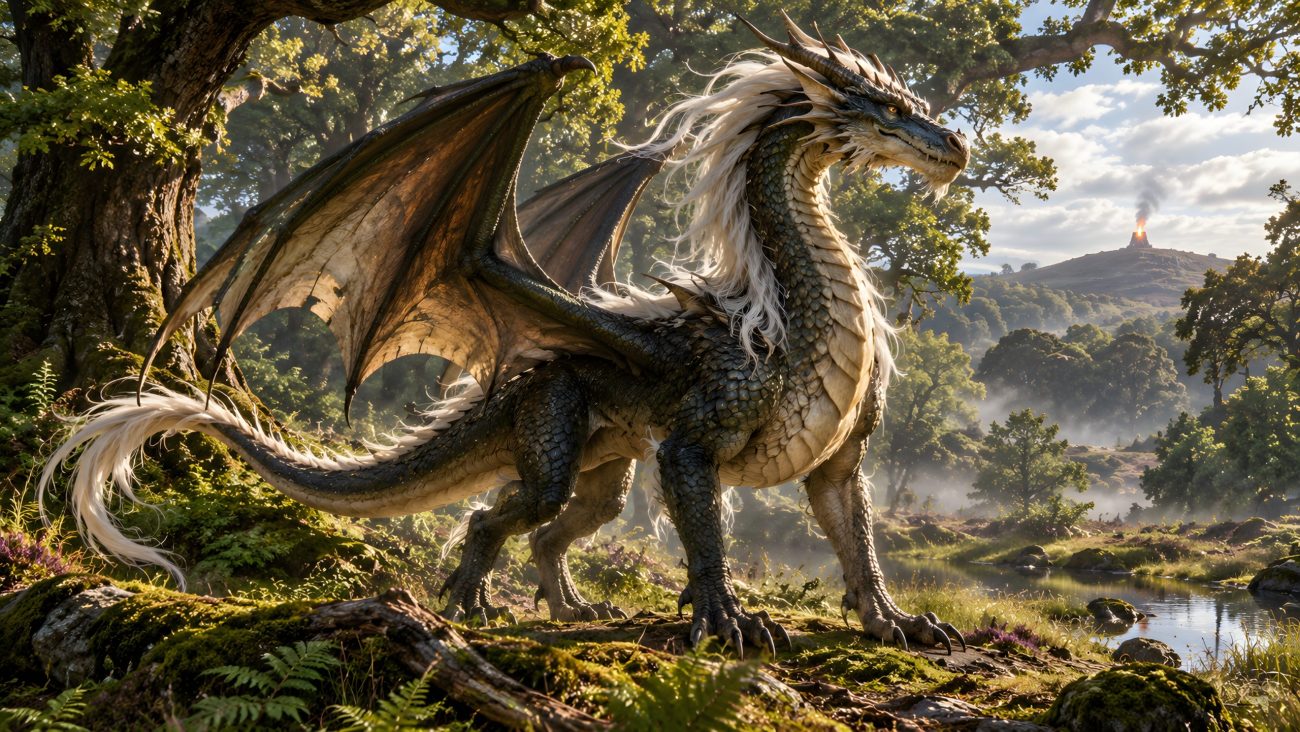
The Bisterne Dragon was a terrifying creature that made its lair at Burley Beacon, near Bisterne in the New Forest. From there it terrorized the surrounding countryside, preying upon both people and livestock. Each morning the dragon would fly from its den to Bisterne, where it was given milk.

A knight named Berkeley resolved to put an end to the beast. He built himself a small hiding place and waited with two dogs for the dragon to arrive. When the creature came for its milk, the dogs were unleashed and threw themselves upon it. The dragon fought back fiercely, killing both animals, but the attack gave the knight his opportunity. He sprang upon the distracted beast and engaged it in a desperate battle.

The struggle did not end quickly. The dragon and the knight fought their way through the forest until at last the creature was brought down near Lyndhurst. In the fight, however, the knight himself was left deeply shaken. The dragon was dead, but its slayer did not long survive his victory. After thirty days and thirty nights he returned to the place where the beast had fallen and died alone upon the hill.

His yew-wood bow fell beside his body. From it grew a yew tree, marking the place where the dragon’s killer met his own end.

The tale was also remembered with the name of Sir Maurice Berkeley, a man renowned for his strength and courage. The story tells that when the dragon had ravaged Hampshire and proved too dangerous for others to destroy, Maurice armed himself and went out to meet it. After a fierce encounter he succeeded in killing the beast, only to die himself soon afterward.

The dragon’s defeat also inspired stranger tales of how such a creature could be overcome. Its hide was said to be so formidable that ordinary weapons were useless, and in the telling that became popular around the New Forest, the knight covered his armour with glass so that the dragon could not harm him. Thus, through courage, cunning, and a long and bloody struggle, the creature that had terrorized the countryside was finally slain.


Sources

“Bisterne Dragon.” Wikipedia: The Free Encyclopedia. Wikimedia Foundation. Accessed September 20, 2026. https://en.wikipedia.org/wiki/Bisterne_Dragon