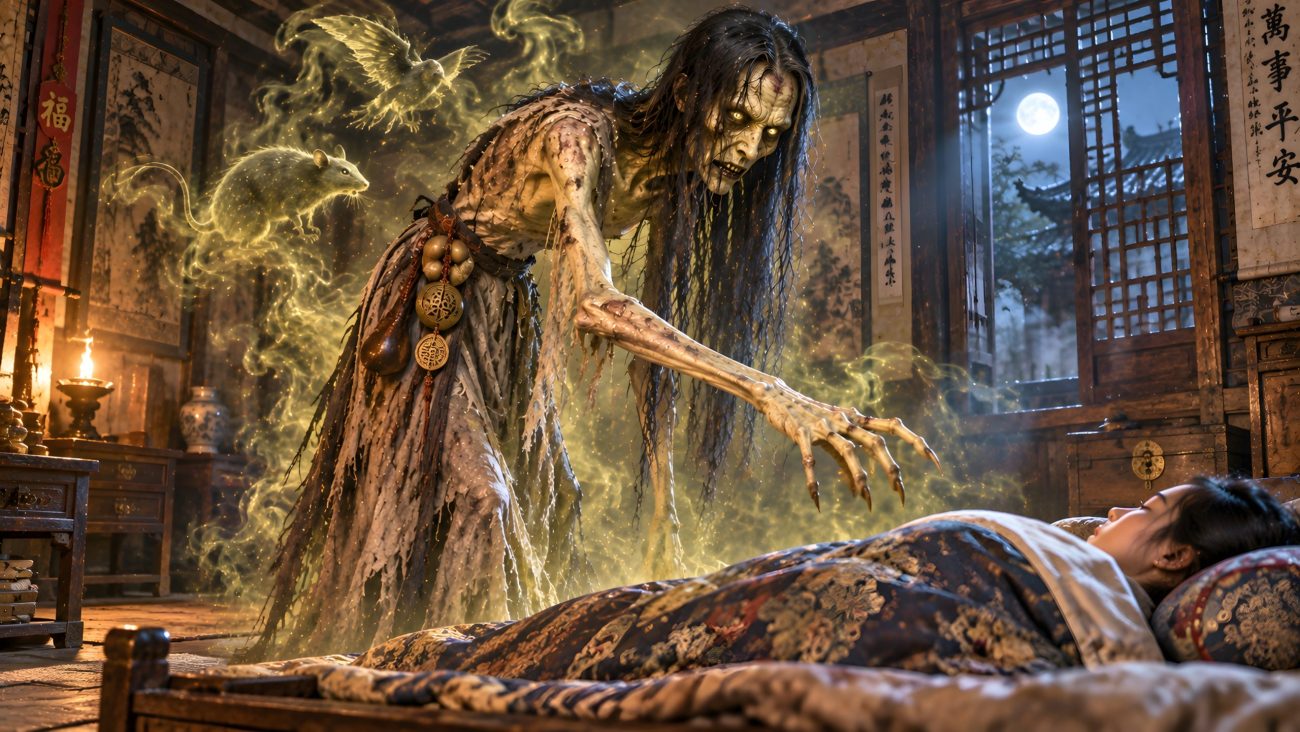
Water Mang Ghost

Tradition / Region: Chinese Mythology
Alternative names: Shuǐmǎng Guǐ (水莽鬼)
Category: Ghost


The Myth

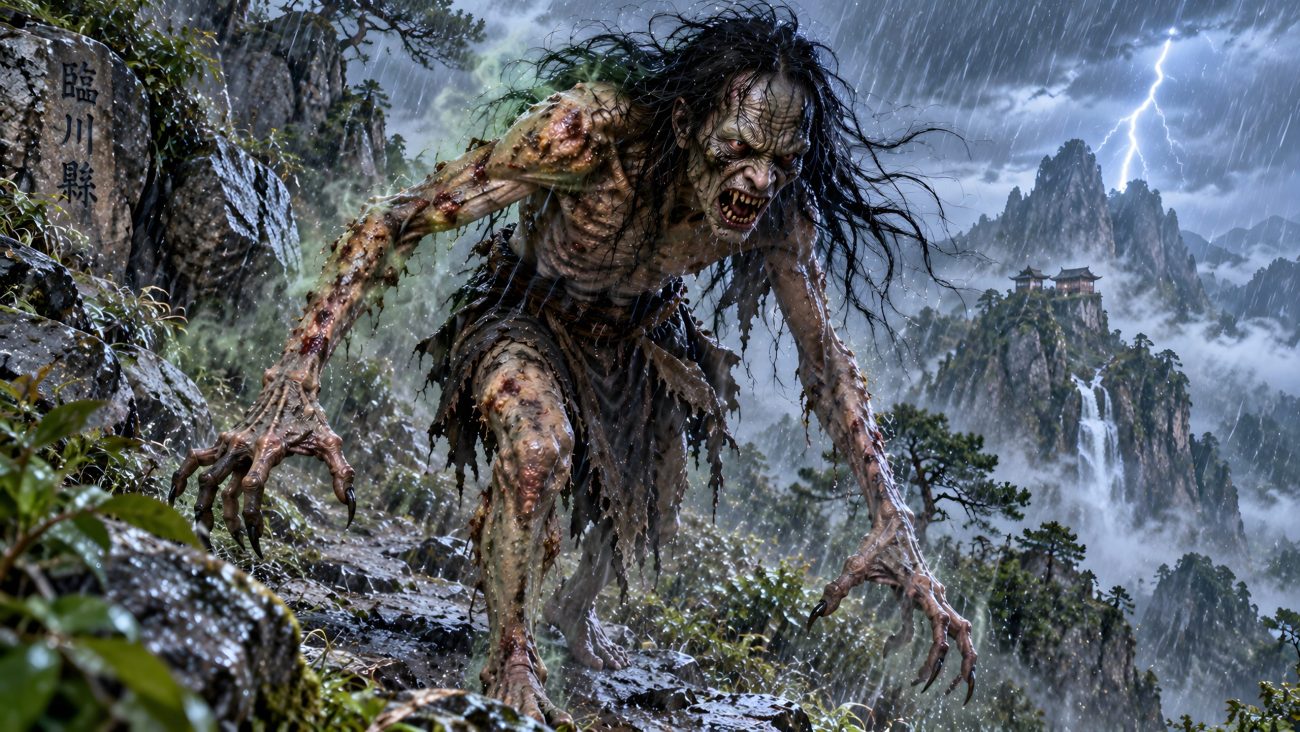
The Water Mang Ghost is the spirit of a person who died after accidentally eating the deadly Water Mang Grass, a poisonous vine resembling kudzu with purple flowers similar to those of a hyacinth bean. It appears as the ghost of its former human self, forever trapped between life and death, unable to pass on to the next world.

According to Chinese folklore, anyone who unknowingly consumes the Water Mang Grass dies almost instantly and becomes a Water Mang Ghost. Unlike ordinary spirits, these ghosts are denied reincarnation. To escape their fate, they must find another victim to die from the same poisonous plant and take their place in the cycle of suffering.

Because of this belief, the region around the Taohua River in Hunan Province was said to be haunted by unusually large numbers of Water Mang Ghosts. They were believed to lure or deceive travelers into eating the deadly vine, hoping to finally free themselves from their endless imprisonment.

The most famous account appears in Strange Tales from a Chinese Studio (Liaozhai Zhiyi), where the legend describes both the poisonous plant itself and the tragic fate awaiting those who die from it. The tale portrays the Water Mang Ghost not as a creature driven by malice alone, but as a desperate soul seeking release from a curse that can end only when another suffers the same death.

Thus the Water Mang Ghost is remembered as one of China’s most tragic supernatural beings—a victim transformed into a ghost by poisonous vegetation, condemned to wander the world until another unknowingly takes its place.


Sources

Wikipedia contributors. (n.d.). 水莽鬼. In 維基百科,自由的百科全書. Retrieved June 27, 2026, from https://zh.wikipedia.org/wiki/%E6%B0%B4%E8%8E%BD%E9%AC%BC


Chess Ghost

Tradition / Region: Chinese Mythology
Alternative names: Qi Gui (棋鬼), Chi Gui (痴鬼, “Obsessed Ghost”)
Category: Ghost


The Myth

The Chess Ghost appears as the restless spirit of a person so utterly consumed by the game of Go (Weiqi) that even death could not break the obsession. It resembles an ordinary human ghost, forever seeking opponents and wandering wherever games of strategy are played. Though incorporeal, its mind remains entirely fixed upon the board, unable to think of anything except the next move.

According to Chinese legend, the Chess Ghost was once a man whose overwhelming passion for the game caused him to squander his wealth and neglect his family until his life fell into ruin. After death, he was condemned to the realm of the Hungry Ghosts as punishment for allowing obsession to consume his existence.

Even in the afterlife, however, he could not abandon his addiction. Rather than seeking redemption or preparing for reincarnation, he spent his time searching endlessly for games of Go. When the moment finally came for his soul to be reborn, he ignored the opportunity because he was too absorbed in a match. Having missed his chance, he remained trapped as a wandering ghost.

The most famous account appears in Strange Tales from a Chinese Studio (Liaozhai Zhiyi), where the Chess Ghost continues to haunt the living, driven not by hatred or revenge but by an irresistible desire to play. Other classical works similarly portray the spirit as caring little about its earthly life and focusing instead on its endless existence after death, forever captivated by the game that destroyed it.

Thus the Chess Ghost is remembered as a supernatural warning against obsession—a spirit whose love of strategy became so consuming that it sacrificed wealth, family, salvation, and even the possibility of rebirth, remaining forever bound to an unfinished game.


Sources

Wikipedia contributors. (n.d.). 棋鬼. In 維基百科,自由的百科全書. Retrieved June 27, 2026, from https://zh.wikipedia.org/wiki/%E6%A3%8B%E9%AC%BC


Pipa Ghost

Tradition / Region: Chinese Mythology
Alternative names: Pipa Spirit
Category: Ghost, Object


The Myth

The Pipa Ghost is an invisible malevolent spirit said to inhabit a pipa, the traditional Chinese lute, from which it takes its name. Though normally unseen, it can speak and possesses supernatural intelligence. Once released, it is capable of entering human beings, causing mysterious illnesses and spreading misfortune throughout entire communities.

According to ancient Chinese legend, the Pipa Ghost is a soul that has taken residence within a pipa. By night it leaves its hiding place to hunt, feeding upon the internal organs of both humans and animals. Those it attacks soon waste away and die, while villages plagued by its presence suffer sickness, livestock deaths, and widespread calamity.

Some traditions claim the spirit remains sealed inside household vessels or beneath tightly covered pots. If a pot is broken or its lid left carelessly open, the Pipa Ghost escapes and begins haunting the household. Anyone suspected of being possessed by the spirit is believed to endanger the entire village.

Among the Dai people of Yunnan, the fear of the Pipa Ghost became deeply rooted in local belief. Families accused of harboring one of these spirits were often completely ostracized. Those believed to be possessed could be expelled from the village, their homes burned, and, in extreme cases, attacked or even killed by frightened neighbors. It was also believed that someone carrying the Pipa Ghost could marry only another person similarly afflicted, lest the spirit spread into another family.

To rid a community of the demon, shamans performed exorcisms and special ceremonies intended to capture or destroy the spirit. During times of plague, entire villages gathered to conduct rituals in which the Pipa Ghost was symbolically hunted down and burned, believing this would end the epidemic and restore harmony.

Thus the Pipa Ghost is remembered as one of China’s most feared possessing spirits—a hidden demon that spreads disease, devours life from within, and turns fear itself into a force capable of destroying entire communities.


Sources

Wikipedia contributors. (n.d.). 琵琶鬼. In 維基百科,自由的百科全書. Retrieved June 27, 2026, from https://zh.wikipedia.org/wiki/%E7%90%B5%E7%90%B6%E9%AC%BC


Jealous Woman of the Ferry

Tradition / Region: Chinese Mythology
Alternative names: Jealous Woman’s Ferry
Category: Ghost


The Myth

The Jealous Woman is the ghost of Duan, the wife of Liu Boyu during the Jin Dynasty. She was infamous for her fierce jealousy and eventually became a dangerous spirit associated with a river crossing where she met her death.

One day, while reciting the Ode to the Goddess of the Luo River, Liu Boyu admired the beauty and grace of the water goddess and remarked that he would have no regrets if he had such a wife. Enraged by what she considered an insult, Duan exclaimed that if the goddess of the river was so wonderful, then she herself would become a water goddess after death. With those words, she threw herself into the river and drowned.

After her death, strange events began to occur at the ferry where she had perished. Beautiful women who attempted to cross the river while dressed elegantly or wearing fine makeup would suddenly encounter fierce winds and rough waters. Their boats were endangered by violent waves, as though some unseen force sought to harm them.

Ugly or plainly dressed women, however, crossed the river without trouble. Even if they wore their finest clothes, the waters remained calm and peaceful.

People believed that the spirit of Duan had become jealous of the beauty of other women and attacked them out of envy. To warn travelers, a stone monument was erected beside the crossing bearing the inscription “Jealous Woman’s Ferry.”

Thus the Jealous Woman was remembered as a vengeful water spirit whose envy survived even death, disturbing the river and punishing those whose beauty she could no longer bear.


Sources

Wikipedia contributors. (n.d.). 妒婦津. In 維基百科,自由的百科全書. Retrieved June 20, 2026, from https://zh.wikipedia.org/wiki/%E5%A6%92%E5%A6%87%E6%B4%A5


Baihuoni

Tradition / Region: Chinese Mythology
Alternative names: Baihuoni
Category: Ghost


The Myth

Baihuoni is a feared ghost in the traditions of the Lisu people of Yunnan. It is especially associated with illness and is believed to prey upon the most vulnerable members of the community.

According to tradition, Baihuoni causes sickness in children younger than eight years old and in pregnant women. Because of this, mothers and young children are considered particularly vulnerable to its influence.

To protect families from the spirit, people in the Bijiang region traditionally make offerings to Baihuoni. Pigs or chickens are sacrificed in order to appease the ghost and prevent it from bringing disease upon pregnant women and children.

Thus, Baihuoni is remembered as a dangerous spirit whose presence is linked to sickness, and whose wrath must be calmed through ritual offerings to safeguard mothers and the young.


Sources

Wikipedia contributors. (n.d.). 摆货尼. In 维基百科,自由的百科全书. Retrieved June 20, 2026, from https://zh.wikipedia.org/wiki/%E6%91%86%E8%B4%A7%E5%B0%BC


Yeti

Tradition / Region: Bhutan Mythology, Nepali Mythology, Indian Mythology, Chinese Mythology, Russian Mythology
Alternate Names: Abominable Snowman, Mi-rgod, Wild Man
Category: Mountain Dweller


The Myth

The Yeti is a legendary ape-like being said to inhabit the remote mountains and glaciers of the Himalayas. Descriptions vary between regions, but it is most often portrayed as a massive hairy humanoid creature that walks upright like a man. Its body is covered in dark or reddish fur, and it is associated with enormous footprints found in snow and ice. In older Himalayan traditions, the Yeti was not merely viewed as an animal but as a mysterious supernatural being connected to mountains, wilderness, and spiritual power.

Among several Himalayan peoples, especially before the spread of Buddhism, the Yeti was tied to religious beliefs. Some Lepcha traditions described a “Glacier Being” worshipped as a spirit or god of the hunt. Followers of the ancient Bön religion believed the blood of the wild mountain being possessed ritual power and could be used in spiritual ceremonies. In these stories the creature was depicted carrying large stones as weapons and roaming isolated snowy valleys far from human settlements.

In Tibetan Buddhist traditions, the Yeti became less of a god and more of a powerful nonhuman creature living beyond civilization. Some stories describe Yetis helping monks, saints, or religious figures after being tamed through spiritual teachings. Images of Yetis were sometimes carried in ceremonies as protective guardians against evil spirits. Despite this, encountering one was usually considered a terrible omen. Hearing its cries or glimpsing it in the mountains was believed to foretell danger, death, or misfortune unless the witness performed religious acts to cleanse the bad luck.

The Yeti became widely known outside the Himalayas during the nineteenth century when explorers and travelers reported seeing strange footprints and hairy creatures in remote mountain regions. Trekkers described tall bipedal figures covered in dark hair fleeing across snowy slopes, while guides told stories of wild mountain men wandering glaciers and forests. Reports of massive footprints in the snow became especially famous, though many later believed they may have belonged to bears or other animals distorted by melting ice.

Despite skepticism and many suspected hoaxes, the legend of the Yeti endured throughout the Himalayas and later spread into global popular culture as the “Abominable Snowman.” In folklore, however, the creature remained something more mysterious than a simple monster: a hidden being of the mountains, existing somewhere between animal, spirit, and wild man.


Sources

Wikipedia contributors. (n.d.). Yeti – Pre-19th century. In Wikipedia, from https://en.wikipedia.org/wiki/Yeti#Pre-19th_century


Zhu Nuo

Tradition / Region: Chinese mythology
Alternate Names: Guan Guan, Crested Beast
Category: Fox


The Myth

In the mountains described in ancient records, there was said to live a strange creature known as the Crested Ibis Beast.

It was shaped like a fox, but its body was not entirely of the land. From its sides grew wings like those of a fish, strange and otherworldly, as though it belonged partly to the waters as well as the mountains. The creature dwelled in barren places where few trees grew, among blue waters and rocky slopes where great snakes also lived.

When it cried out, it spoke its own name. The sound carried far across the mountains, and people believed that when this call was heard, unrest and fear would soon spread through the land. Its appearance was taken as an omen, a sign that something troubling was about to happen.

Thus the fox-winged beast of the mountains was remembered as a herald of disturbance — a creature neither wholly of sky nor earth, whose voice alone could unsettle a country.


Sources

Wikipedia contributors. (n.d.). 朱獳. In Wikipedia. Retrieved March 1, 2026, from https://zh.wikipedia.org/wiki/%E6%9C%B1%E7%8D%B3.


Tree Demon

Tradition / Region: Chinese mythology
Alternate Names: Dryad, Tree Spirit, Tree Monster
Category: Plant


The Myth

It is said that trees which stand for many centuries may gather the energy of heaven and earth, drinking in the light of the sun and the glow of the moon. When this power grows strong enough, the tree awakens into a spirit and leaves its ordinary nature behind.

Ancient writings tell of such beings. Some say that the spirit of a thousand-year-old tree may wander the world in animal form, appearing as a blue ox or a strange green sheep. Others say that once a tree becomes a spirit, its branches, leaves, and flowers carry healing power, able to cure illness or drive away harm.

Not all tree spirits are gentle. Some tales speak of beings that stretch dark hands from trunks or branches, reaching toward human dwellings in hunger. One story tells of a great ginkgo tree that revealed its nature when a hand reached from outside a window, begging for food. When the household tricked it with a firecracker, the tree was blasted apart, revealing the spirit hidden within.

In old romances and strange tales, tree spirits often take human shape. Pine, cypress, bamboo, plum, and apricot were said to appear as wandering immortals or mysterious guests. In other stories, they ruled over ghosts. One powerful tree demon was said to command spirits of the dead, sending them to lure men so that the tree might feed on their life force and strengthen its power.

There are also tales of warrior spirits born from trees. Two such beings, formed from a peach tree and a willow, served in battle and possessed keen sight that allowed them to perceive events far away. Only when their original trees were burned did their power fade and their spirits depart.

Thus the tree demon appears in many forms — healer, wanderer, deceiver, or tyrant. Whether gentle or cruel, all share the same origin: a tree that stood long enough for the world’s hidden breath to awaken something living within it.


Sources

Wikipedia contributors. (n.d.). 樹妖. In Wikipedia. Retrieved March 1, 2026, from https://zh.wikipedia.org/wiki/%E6%A8%B9%E5%A6%96


Guā Jīng

Tradition / Region: Chinese Mythology
Alternate Names: Melon Spirit, Melon Essence
Category: Plant


The Myth

In old stories performed on the stage, there is mention of the Guā Jīng, the spirit of a melon that had taken on life and will of its own.

When Liu Zhiyuan and Li Sanniang were separated by hardship and intrigue, enemies plotted against Liu Zhiyuan and sent him into a melon garden. There he was told that a dangerous melon spirit lived among the vines and that he must destroy it.

Liu Zhiyuan went to the garden prepared for battle, expecting a monster to emerge from the plants. But the being he encountered was not what he had been led to believe. The melon spirit revealed itself as a creature transformed by heavenly powers, not a demon seeking harm.

Instead of fighting him, the spirit aided him. It brought armor for his protection and stood beside him in the trials that followed. For ten days it fought in the unseen realms, moving between the world of men and the world below, until at last it departed into the earth.

Before leaving, the Guā Jīng left behind a military book and a sword. With these gifts, Liu Zhiyuan gained the knowledge and strength he needed to face his enemies and continue his path.

Thus the melon spirit was remembered not as a creature of danger, but as one of hidden purpose — a plant transformed by heaven, appearing at a turning point to guide a man toward his destiny.


Sources

Wikipedia contributors. (n.d.). 瓜精. In Wikipedia. Retrieved March 1, 2026, from https://zh.wikipedia.org/wiki/%E7%93%9C%E7%B2%BE


Basho no Sei

Tradition / Region: Chinese Mythology, Vietnamese Mythology
Alternate Names: Basho Essence, Banana Spirit, Plantain Ghost
Category: Plant


The Myth

In old stories it is said that even plants may awaken into spirits if they endure long enough in the world. Among the most well known of these is the Basho no Sei, the spirit of the bashō, or plantain tree.

When a banana plant grows old and stands for many years, people believed it could gather strange energy from wind, rain, and moonlight. Over time, this energy would give rise to a spirit within the trunk and leaves. At last, the tree might shed its stillness and take on a ghostly life of its own.

Such spirits were said to appear most often in the form of a woman. In Chinese tales, the banana essence sometimes took human shape to approach travelers or householders at night. Some versions say it deceived people with beauty and soft speech, only to bring harm once it had drawn close.

One story tells of a young monk studying late into the night in a quiet temple in Shinshu. As he read, a beautiful woman entered and spoke gently to him, trying to charm him with her presence. The monk sensed something unnatural and grew angry. Grasping a short blade, he struck at her, and she fled into the darkness, leaving a trail of blood.

At dawn, the monk followed the drops of blood into the courtyard. There he found that the temple’s plantain tree had been cut deeply into its trunk, and its sap ran down like the blood he had seen. From this he understood that the visitor of the night had been the spirit of the bashō itself.

Such tales spread across lands and generations, and people came to say that the banana plant, though soft and harmless in appearance, might hide a spirit if it lived long enough. For this reason, groves of old plantains were sometimes regarded with caution, as places where a quiet tree might one day step into the world in human form.


Sources

Wikipedia contributors. (n.d.). 菟菟鬼. In Wikipedia. Retrieved March 1, 2026, from https://zh.wikipedia.org/wiki/%E8%8A%AD%E8%95%89%E9%AC%BC