Genbu

Tradition: Chinese Mythology, Japanese Mythology
Alternative Names: 玄武, Xuanwu, Black Tortoise, Black Warrior, Genbu
Category: Turtle


The Myth

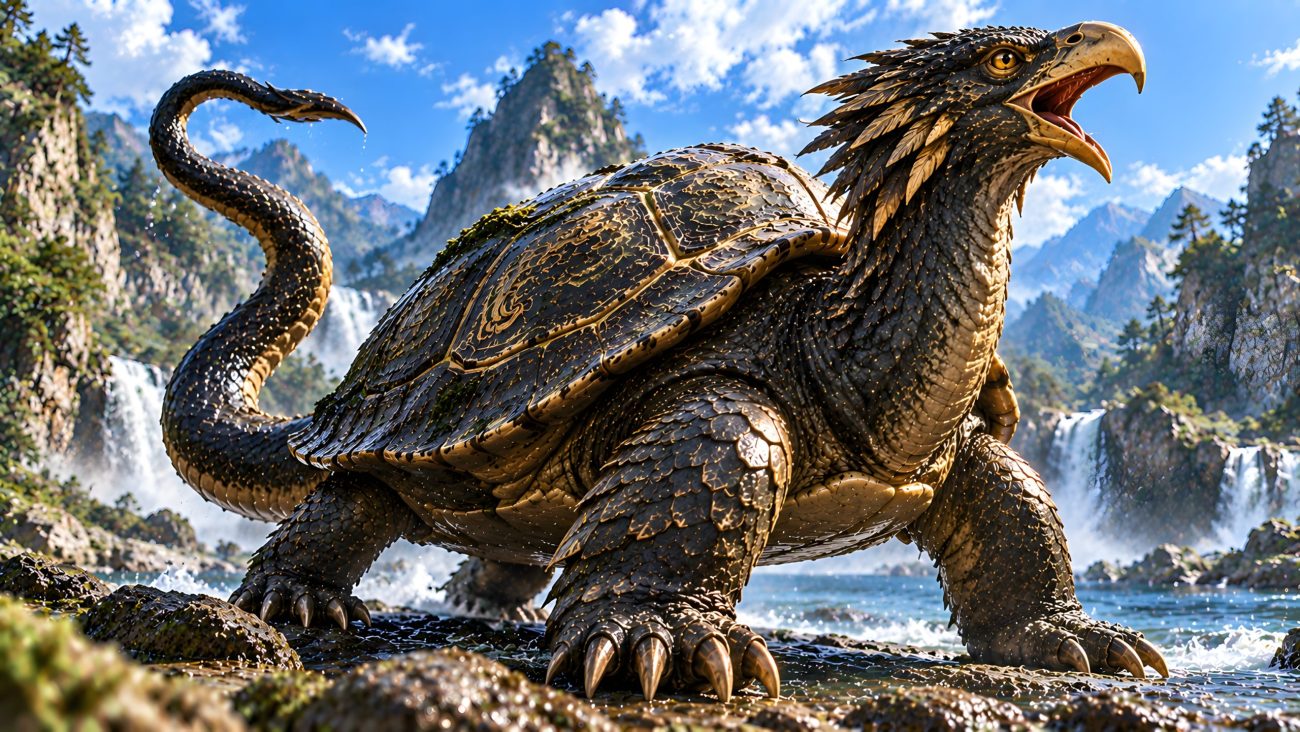
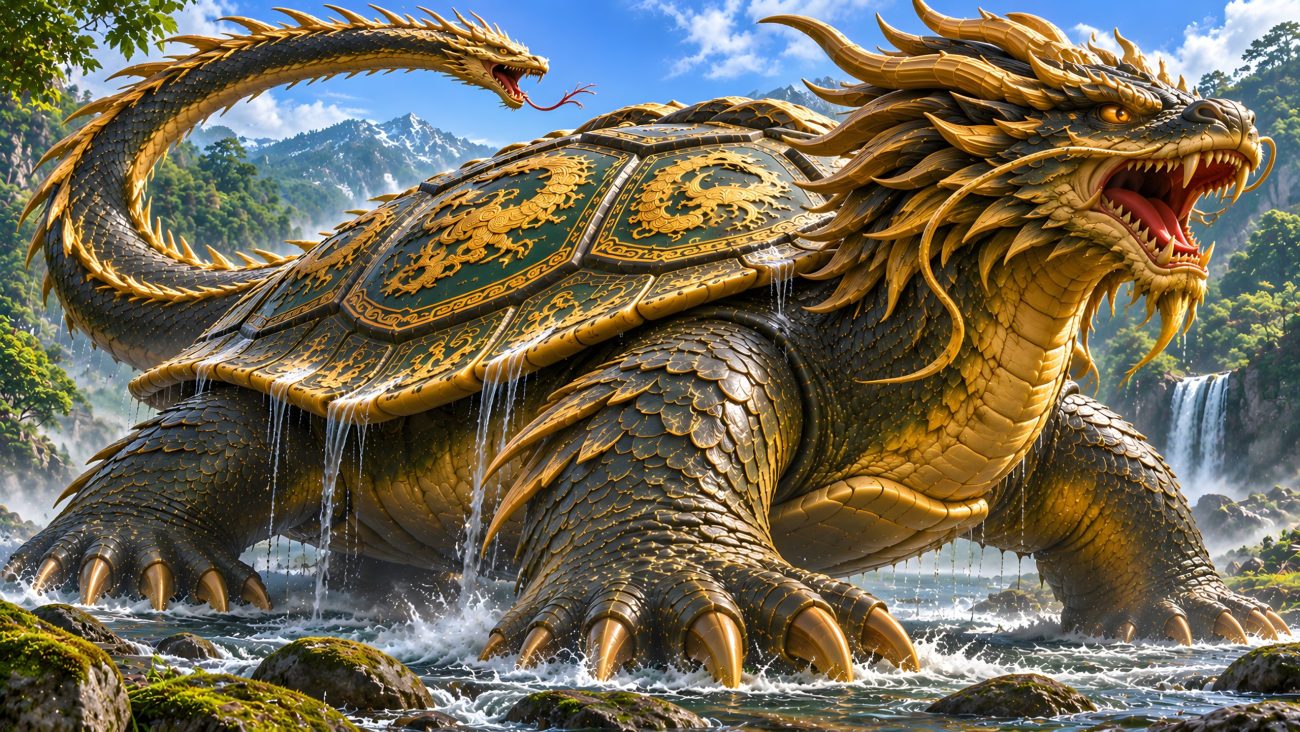
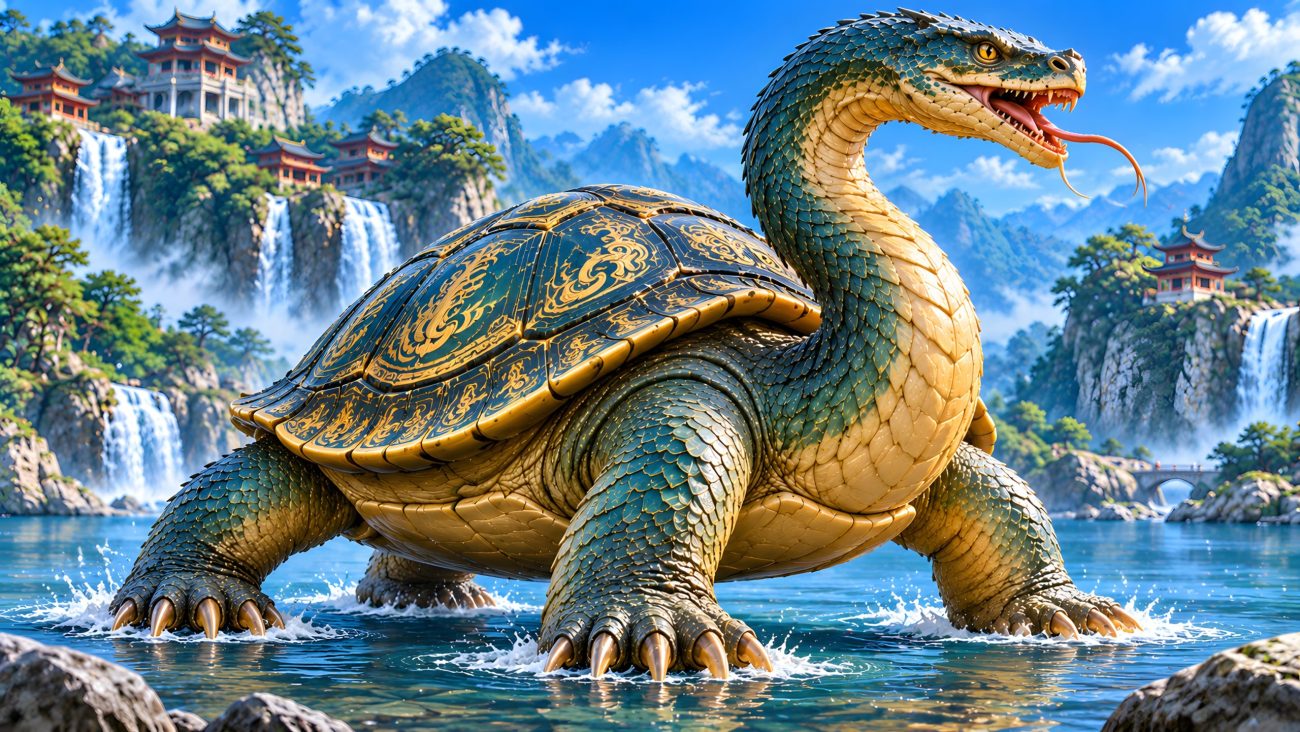
Genbu is one of the Four Symbols, the four sacred creatures that guard the cardinal directions in Chinese cosmology. It protects the north and is associated with the element of water and the season of winter. Genbu is usually depicted as a large tortoise entwined with a serpent, or as a creature whose tail takes the form of a snake.

The creature’s name combines gen, meaning black, with bu, associated with martial strength or armour. Ancient Chinese texts describe Genbu as a northern deity connected with water. The tortoise and serpent became linked in traditional explanations of the creature, including the belief that the serpent represented the tortoise’s male counterpart. However, some sources use Genbu simply as another name for a tortoise.

Together with the Azure Dragon of the east, the White Tiger of the west, and the Vermilion Bird of the south, Genbu became an important symbol of direction and protection. Through the transmission of Chinese culture to Japan, it also appeared in Japanese paintings, decorative objects, and other artistic traditions.


Sources

“Genbu (Xuanwu).” 新版TYZ 妖怪図鑑 (New TYZ Yokai Encyclopedia). https://tyz-yokai.blog.jp/archives/1085334207.html
    Bixi

    Tradition: Chinese Mythology
    Alternative Names: 貔屭, Bixi, Guifu, Baxia, Tianxia, Longgui, Dragon Turtle
    Category: Turtle


    The Myth

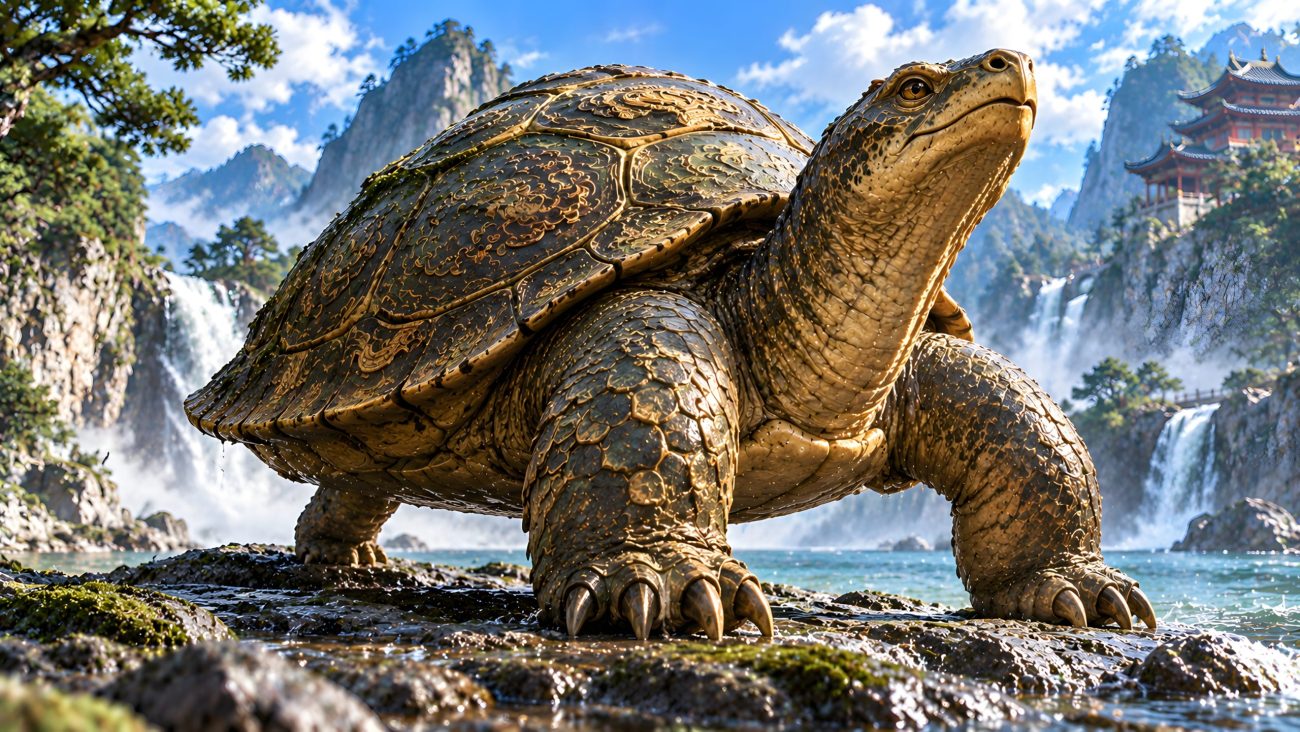
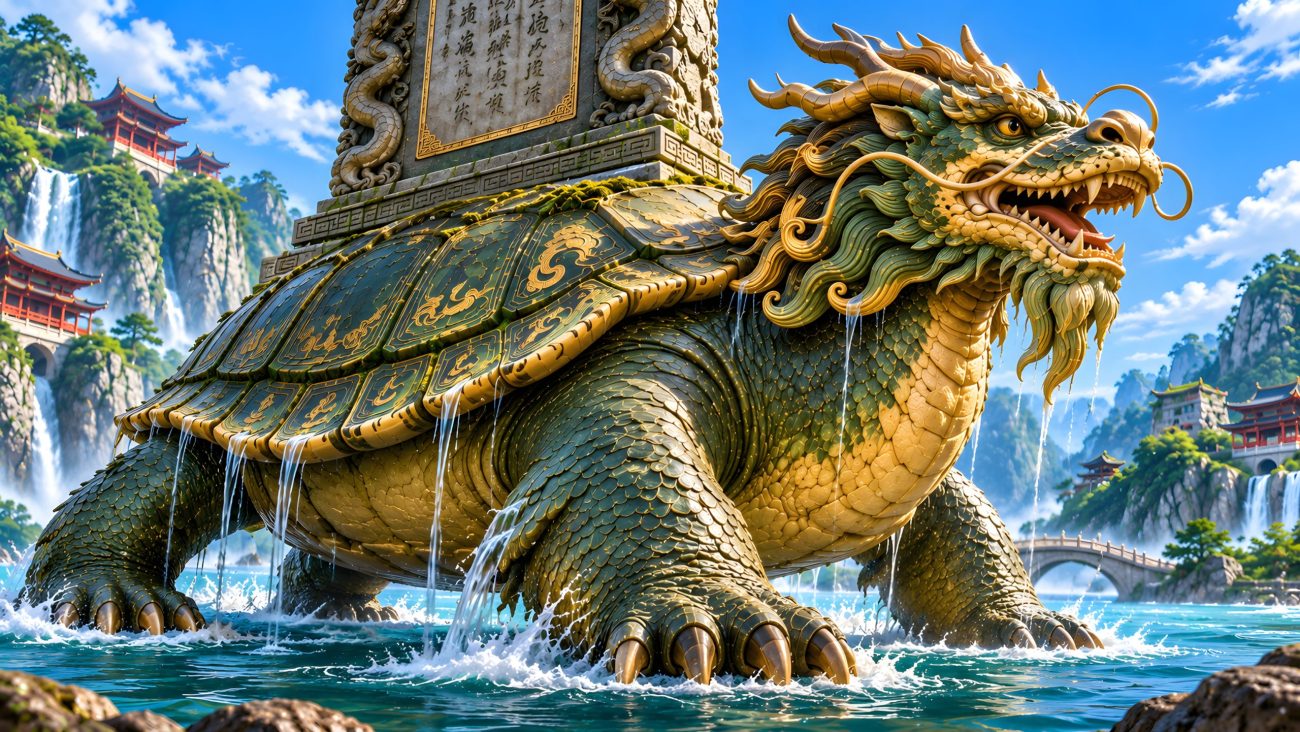
    Bixi is one of the Nine Sons of the Dragon in Chinese mythology. It resembles a giant turtle, but unlike an ordinary turtle, it has teeth and immense strength. It is famous for carrying heavy loads and is traditionally depicted supporting stone steles and monuments.

    According to legend, Bixi once carried mountains across the land and stirred up storms in rivers, lakes, and seas. When the legendary ruler Yu the Great controlled the floods, he subdued Bixi and commanded it to help move mountains, dig channels, and clear riverbeds. After the floods were brought under control, Yu feared that Bixi would return to causing trouble. He therefore placed a massive stone monument recording his achievements on its back, weighing it down and preventing it from roaming freely.

    Bixi became a symbol of strength, endurance, and the bearing of heavy burdens. Its likeness is commonly carved at the bases of important stone monuments throughout China and other parts of East Asia. Some later tales also describe Bixi spirits transforming into women.


    Sources

    “赑屃 (Bìxì).” Chinese Wikipedia. Wikimedia Foundation. https://zh.wikipedia.org/wiki/%E8%B4%94%E5%B1%AD


    Jíchō

    Tradition: Chinese Mythology
    Alternative Names: 吉弔, Chō
    Category: Turtle


    The Myth

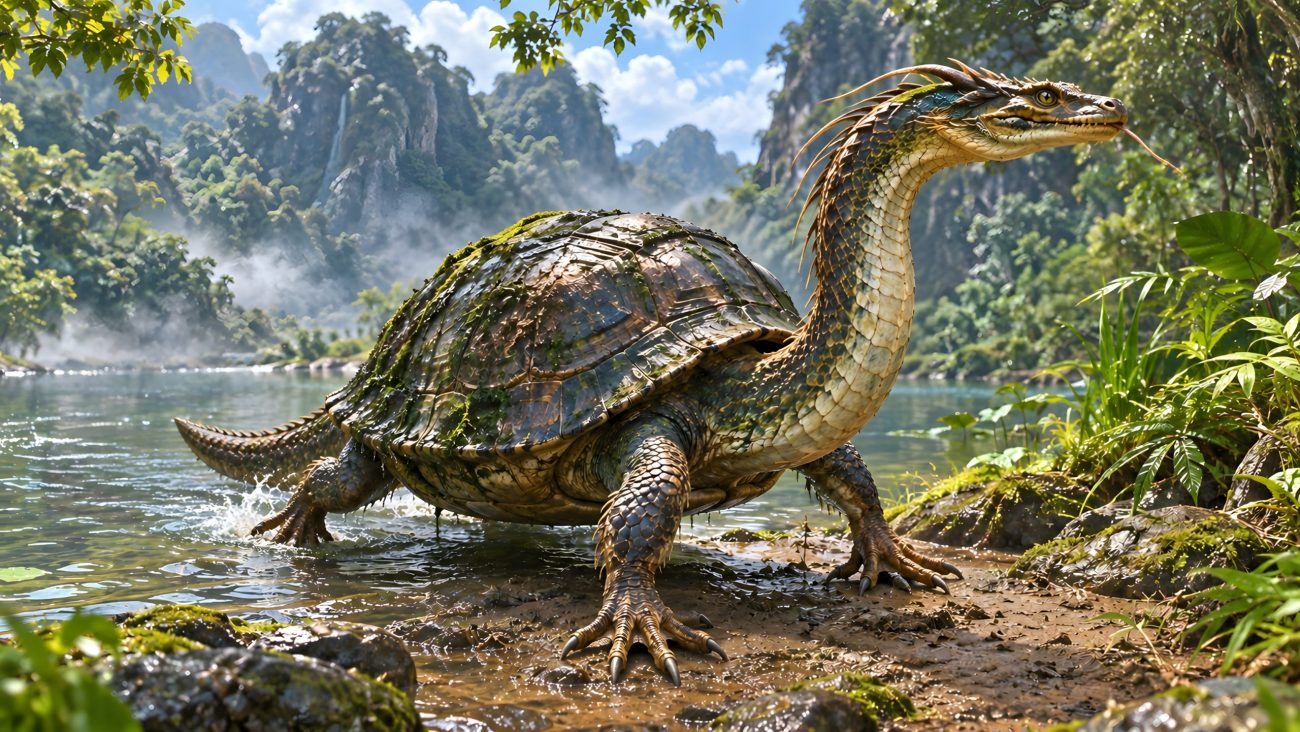
    The Jíchō is a turtle-like creature believed to be born from the eggs of dragons. According to the Wakan Sansai Zue, which draws on the Chinese Bencao Gangmu, dragons always lay two eggs, one of which may produce a Jíchō with the head of a snake and the body of a turtle. It inhabits the Lingnan region of southern China, living in water or among trees.

    The Jíchō’s fat, known as chōshi, was traditionally believed to treat malignant swellings and deafness. It was said to seep away easily through ordinary containers, so it had to be stored in special vessels to prevent it from leaking.

    A pale blue-yellow substance resembling cattail fluff, sometimes found clinging to driftwood near water, was also believed to be the Jíchō’s reproductive fluid and was called shishōka. Traditional texts attributed medicinal properties to it and described its use in sexual health practices. However, later Japanese naturalists disputed this explanation, identifying the substance found in Lake Biwa and elsewhere as a natural material rather than the essence of a mythical creature.


    Sources

    “Kitcho.” 新版TYZ 妖怪図鑑 (New TYZ Yokai Encyclopedia). https://tyz-yokai.blog.jp/archives/1083015723.html


    Jiǔwěi Guī

    Tradition: Chinese Mythology
    Alternative Names: 九尾龟, Nine-Tailed Turtle
    Category: Turtle


    The Myth

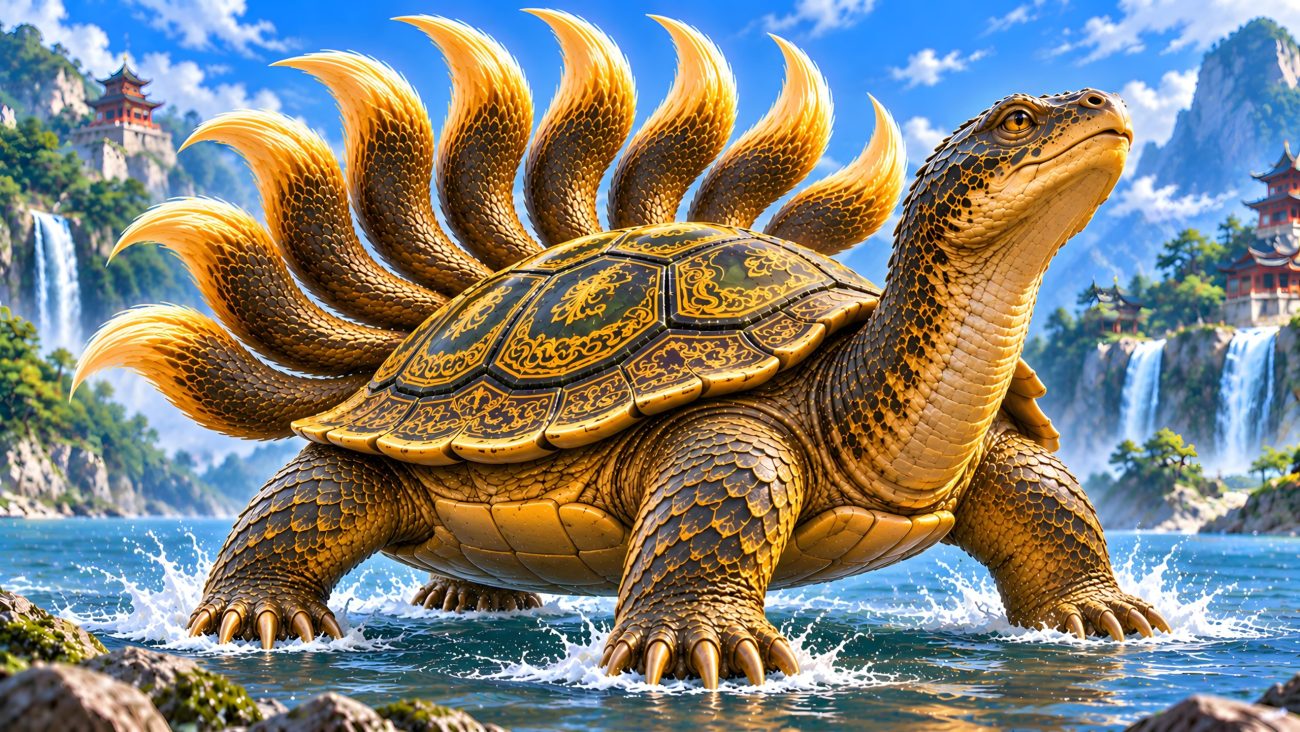
    The Jiǔwěi Guī is a supernatural turtle from Chinese folklore, described as being over one chi in diameter and possessing nine tails.

    According to a tale recorded by Lu Can in the Gengbian, a man named Wang, known as the Butcher, and his son encountered a fisherman carrying a huge turtle. They bought it and placed it beneath a pillar, intending to cook it into soup. A merchant from Jiangxi recognised the creature as a sacred Nine-Tailed Turtle and offered to buy it. To prove its identity, he stepped on its shell, revealing four small tails on each side in addition to its main tail.

    Wang refused to sell the turtle, and he and his son cooked and ate it. That night, a great flood surged inland from the sea, covering the land with water three feet deep. When the waters receded, the merchant visited Wang’s home and found only their clothes and bedding. The father and son had disappeared. People believed that the spirits of the underwater realm had taken them away and killed them.


    Sources

    “九尾龟 (Nine-Tailed Turtle).” Chinese Wikipedia. Wikimedia Foundation. https://zh.wikipedia.org/wiki/%E4%B9%9D%E5%B0%BE%E9%BE%9C


    Zhubieyu

    Tradition: Chinese Mythology
    Alternative Names: Pearl Turtle, 珠鳖鱼
    Category: Turtle


    The Myth

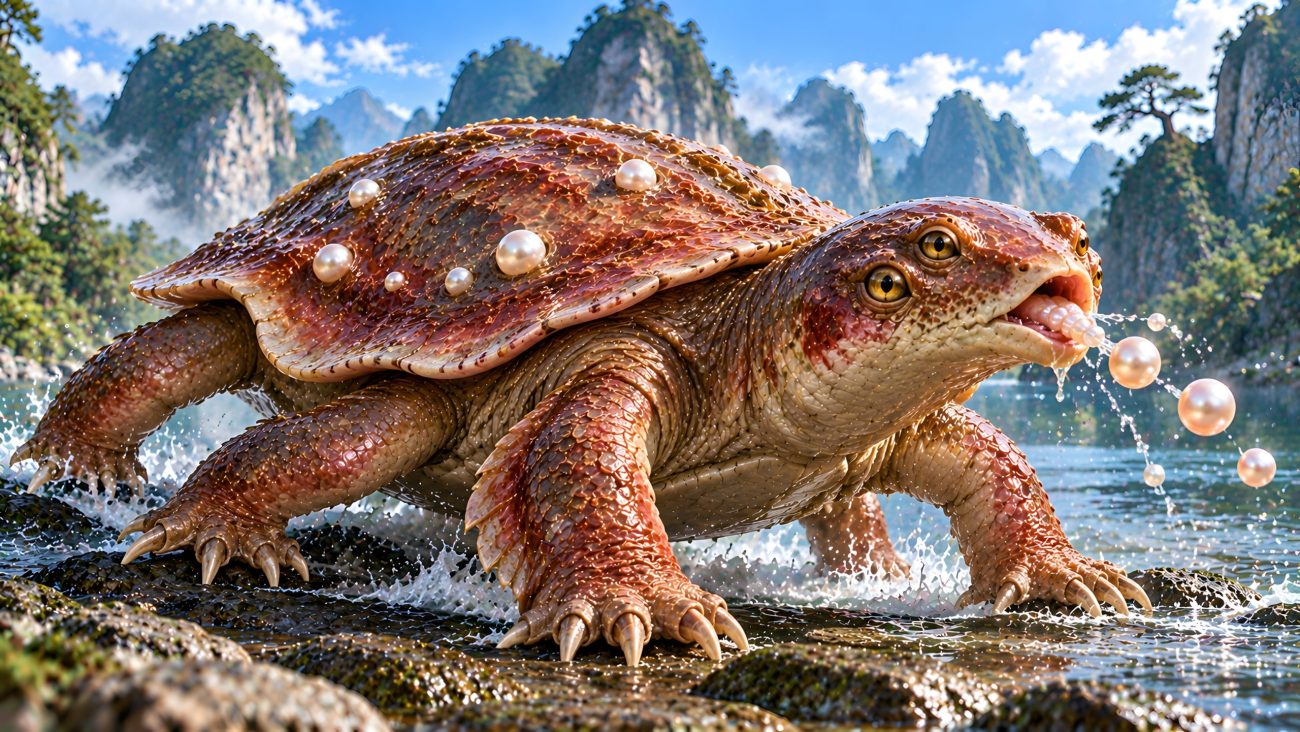
    The Zhubieyu is an unusual aquatic creature found in the Li River and Yu Lake near Vine Mountain in Chinese tradition. It resembles a lung or a piece of dried meat, with four eyes and six legs. The creature contains pearls and can spit them out. Its flesh tastes both sweet and sour.

    The Zhubieyu is considered a delicacy, and eating it is believed to protect against seasonal epidemics and furunculosis. The scholar Guo Pu described these creatures as “floating lungs” embodying Heaven, Earth, and humanity, remarking on the irony that their usefulness leads to their capture and consumption.

    The Zhubieyu is thought to resemble a softshell turtle, sometimes described as a red or pearled softshell.


    Sources

    “Zhubieyu.” A Book of Creatures, July 17, 2015. https://abookofcreatures.com/2015/07/17/zhubieyu/


    Xuán Guī

    Tradition: Chinese Mythology
    Alternative Names: 旋龟, Whirling Turtle
    Category: Turtle


    The Myth

    The Xuán Guī is a strange turtle described in the ancient Chinese text Classic of Mountains and Seas. It resembles an ordinary turtle, with a black body, but has the head of a bird and a tail resembling that of a snake. Its cry sounds like wood being struck or split.

    The Xuán Guī lives on Niuyang Mountain, where the Guai River originates. According to the Classic of Mountains and Seas, wearing this creature was believed to prevent deafness and could also help treat calluses on the hands and feet.


    Sources

    “旋龟 (Xuánguī).” Chinese Wikipedia. Wikimedia Foundation. https://zh.wikipedia.org/wiki/%E6%97%8B%E9%BE%9F


    San Zu Gui

    Tradition: Chinese Mythology
    Alternative Names: 三足龟, Three-Legged Turtle, Bèn
    Category: Turtle


    The Myth

    The San Zu Gui is a legendary turtle from Chinese tradition with two legs at the front and only one at the rear. According to the Shan Hai Jing (Classic of Mountains and Seas), three-legged turtles inhabit the Kuang River, which flows southwest into the Yi River. Eating one was believed to prevent serious illness and reduce swelling.

    The Erya, an ancient Chinese dictionary, gives the three-legged turtle the alternative name Bèn (贲). It also records a distinction between three-legged softshell turtles and three-legged turtles.


    Sources

    “三足龟 (Three-Legged Turtle).” Chinese Wikipedia. Wikimedia Foundation. https://zh.wikipedia.org/wiki/%E4%B8%89%E8%B6%B3%E9%BE%9F


    Heshangyu

    Tradition: Chinese Mythology
    Alternative Names: , Monk Fish, Bōzufish
    Category: Turtle


    The Myth

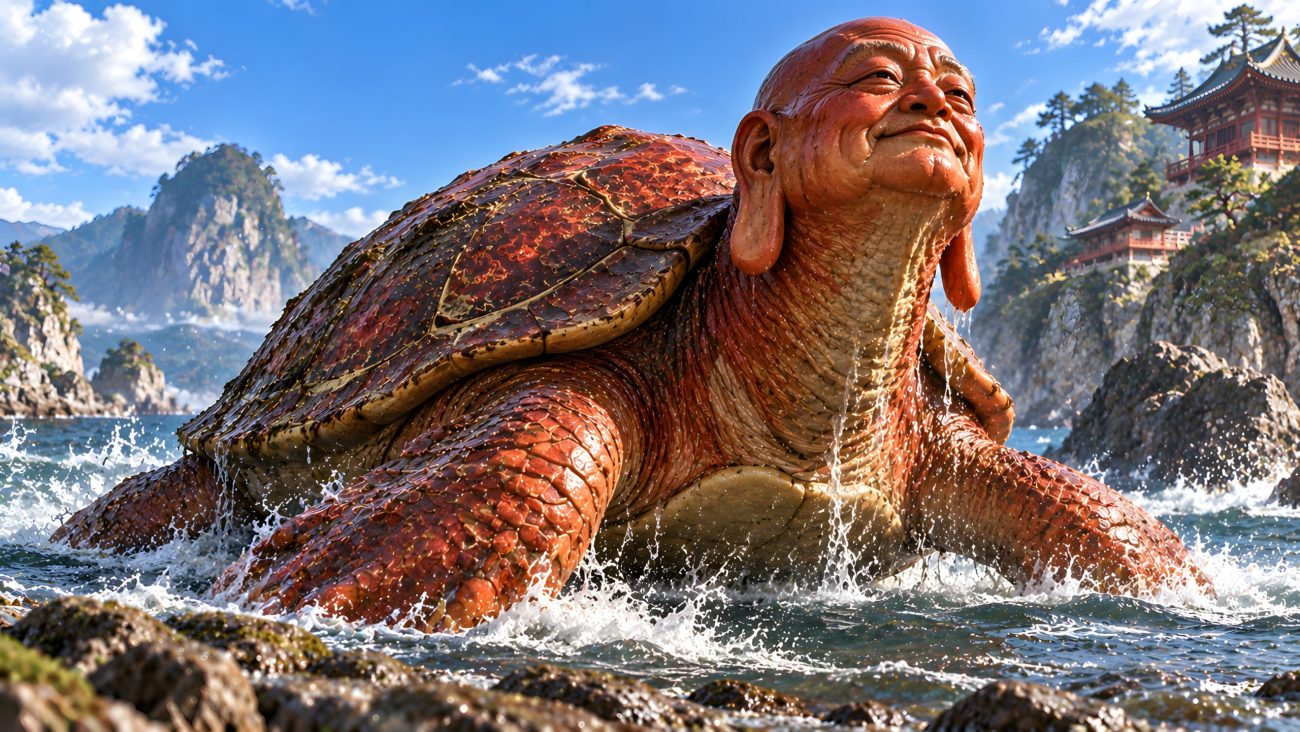
    The Heshangyu is a red supernatural creature said to inhabit the East China Sea. It has the head of a Buddhist monk and the body of a turtle. The Ming dynasty illustrated work Sancai Tuhui describes it as having a monk-like head, a turtle-shaped body, and red colouring.

    In the Japanese encyclopaedia Wakan Sansai Zue, Terajima Ryōan identified the Heshangyu with the Umibōzu, a supernatural sea spirit associated with Japan’s western seas. In 1709, Kaibara Ekiken’s Yamato Honzō also recorded the name Bōzufish, although it provided little additional description.

    The folklorist Kenji Murakami suggested that the creature may have originated from people interpreting sea turtles as supernatural beings.


    Sources

    “和尚鱼 (Héshàng yú).” Chinese Wikipedia. Wikimedia Foundation. https://zh.wikipedia.org/wiki/%E5%92%8C%E5%B0%9A%E9%B1%BC


    Yù

    Tradition: Chinese Mythology
    Alternative Names: 蜮, Duǎnhú (短狐)
    Category: Turtle


    The Myth

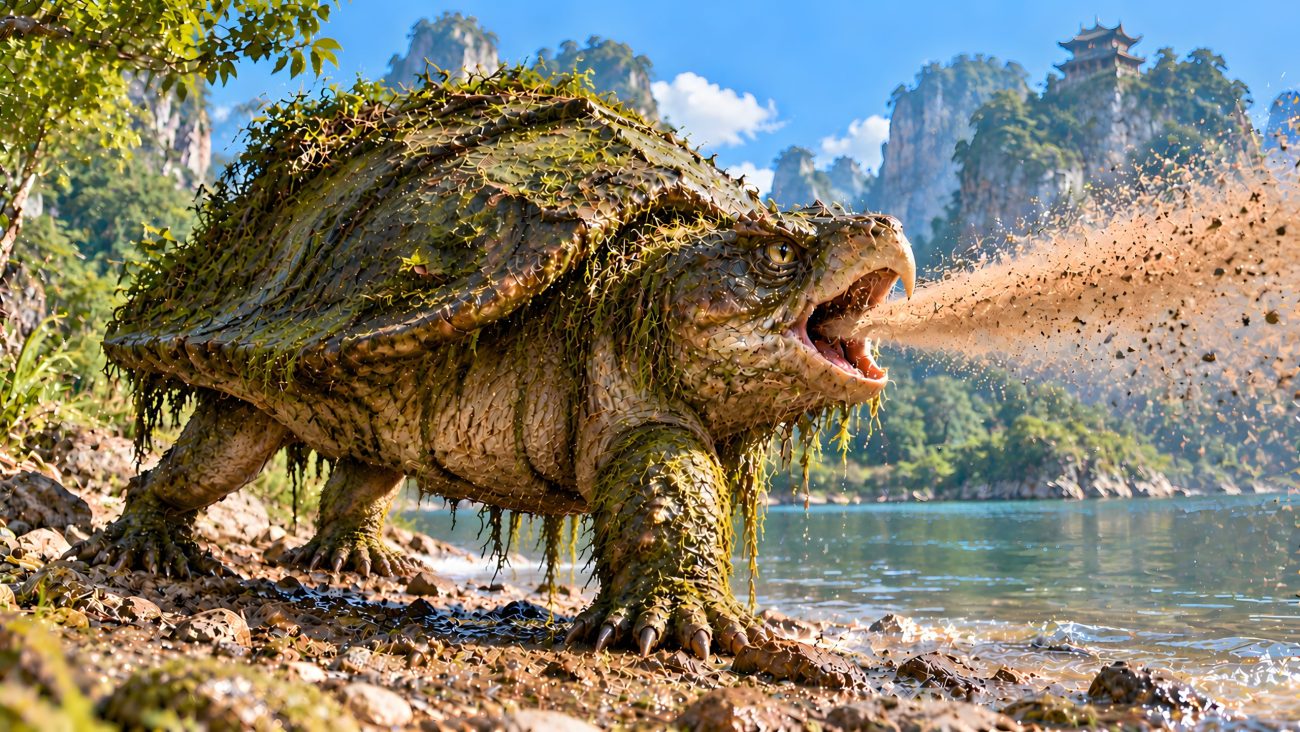
    The Yù is a dangerous supernatural creature from Chinese mythology, also known as the Duǎnhú, or Short Fox. It resembles a turtle or soft-shelled turtle, with a strange and threatening nature that makes it feared by those who encounter it. Despite its turtle-like appearance, the Yù possesses a deadly supernatural ability that allows it to attack people from a distance.

    The Yù attacks by taking sand into its mouth and shooting it at its victims. Anyone struck by this supernatural sand may suffer violent muscle spasms, severe headaches, and fever. The creature’s attack can cause increasingly serious illness, and those afflicted may die if the effects are severe enough. The Yù is therefore feared as a hidden menace capable of inflicting deadly harm without directly biting or clawing its prey.


    Sources

    “蜮 (Yù).” Chinese Wikipedia. Wikimedia Foundation. Accessed October 12, 2026. https://zh.wikipedia.org/wiki/%E8%9C%AE


    Jidiao

    Tradition: Chinese mythology
    Alternative Names: Jidiao, 吉弔
    Category: Dragon, Turtle


    The Myth

    Jidiao has the body and shell of a turtle, but its head resembles that of a dragon or snake. Its legs resemble the feet of a bird, with four toes. It is an aquatic creature, though it can also live among trees.

    Jidiao is said to live in southern China, particularly around Guangdong and Guangxi, and in areas near the border with Vietnam. It inhabits places near water as well as forests.

    According to one tradition, when a dragon lays eggs, it produces two eggs. One hatches into a dragon, while the other becomes a Jidiao. Another account says that a dragon produces three eggs, one of which becomes a Jidiao.

    The Jidiao has an unusually long head and tail, so that they cannot both be withdrawn completely into its turtle shell.

    Ancient accounts also describe a special fat or oil obtained from the Jidiao. This substance was said to be extremely light and capable of penetrating materials more effectively than clarified butter. It was collected in containers, with eggshells said to be the only vessels that would not allow it to leak through. The fat was used medicinally against poisonous swellings and injuries caused by leeches.


    Sources

    “吉弔 (Jídiào).” Chinese Wikipedia. Wikimedia Foundation. Accessed September 19, 2026. https://zh.wikipedia.org/wiki/%E5%90%89%E5%BC%94