Earth Cat

Tradition / Region: Russian Mythology
Alternative names:
Category: Cat


The Myth

The Earth Cat is an underground wildcat believed by the people of the Ural Mountains to guard hidden treasures beneath the earth.

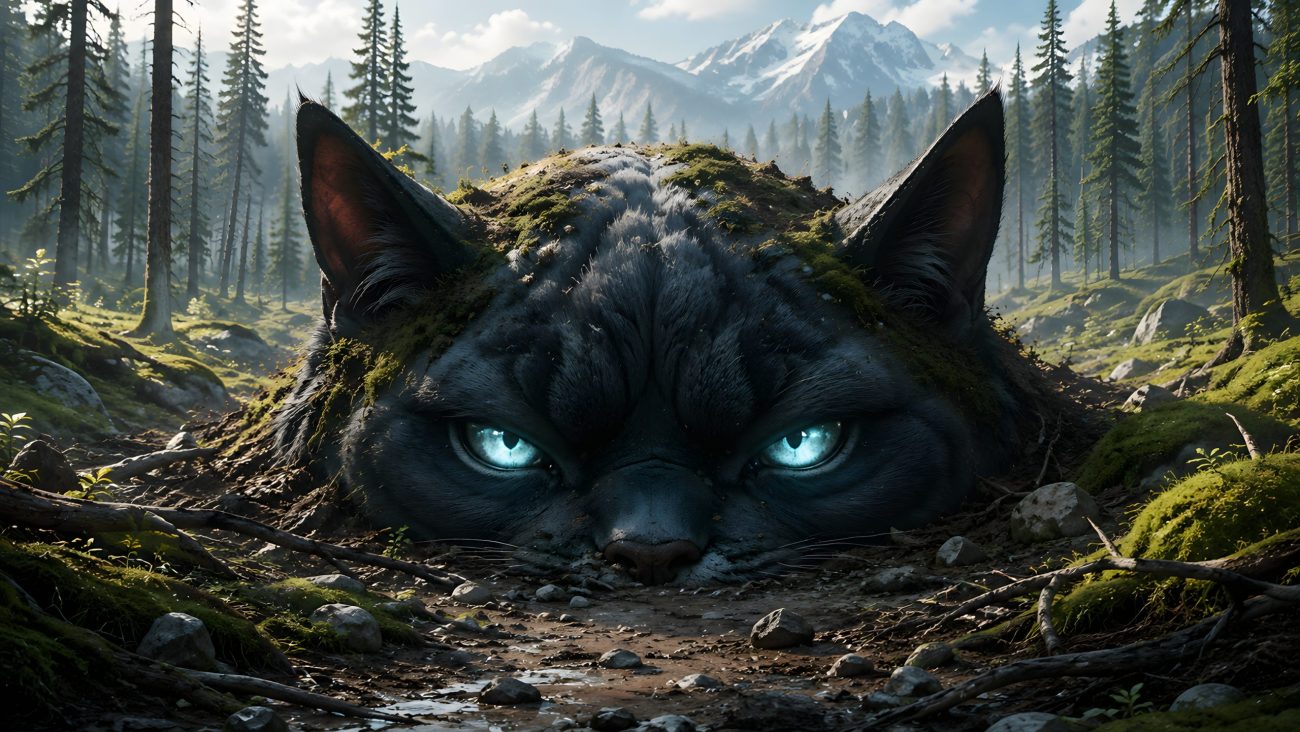
One of its best-known appearances is in Pavel Bazhov’s tale “Cat’s Ears.” In the story, a girl named Dunyakha encounters what first appears to be two mysterious fires with a small mound between them that resembles a cat’s head. As she watches, the fiery “ears” grow larger, then shift aside as if the cat is moving. The strange apparition is said to appear in places where copper and gold lie buried underground.

The Earth Cat is described as a supernatural manifestation of the underground world rather than an ordinary animal. It is closely associated with hidden mineral wealth, appearing above deposits of valuable ore while silently guarding the treasures beneath the earth.


Sources

“Земляная кошка (Zemlyanaya Koshka).” New Bestiary (Bestiary.us). Accessed July 28, 2026. https://www.bestiary.us/zemljanaja-koshka


Drommelkater

Tradition / Region: Dutch Mythology
Alternative names: Duivelkater
Category: Cat


The Myth

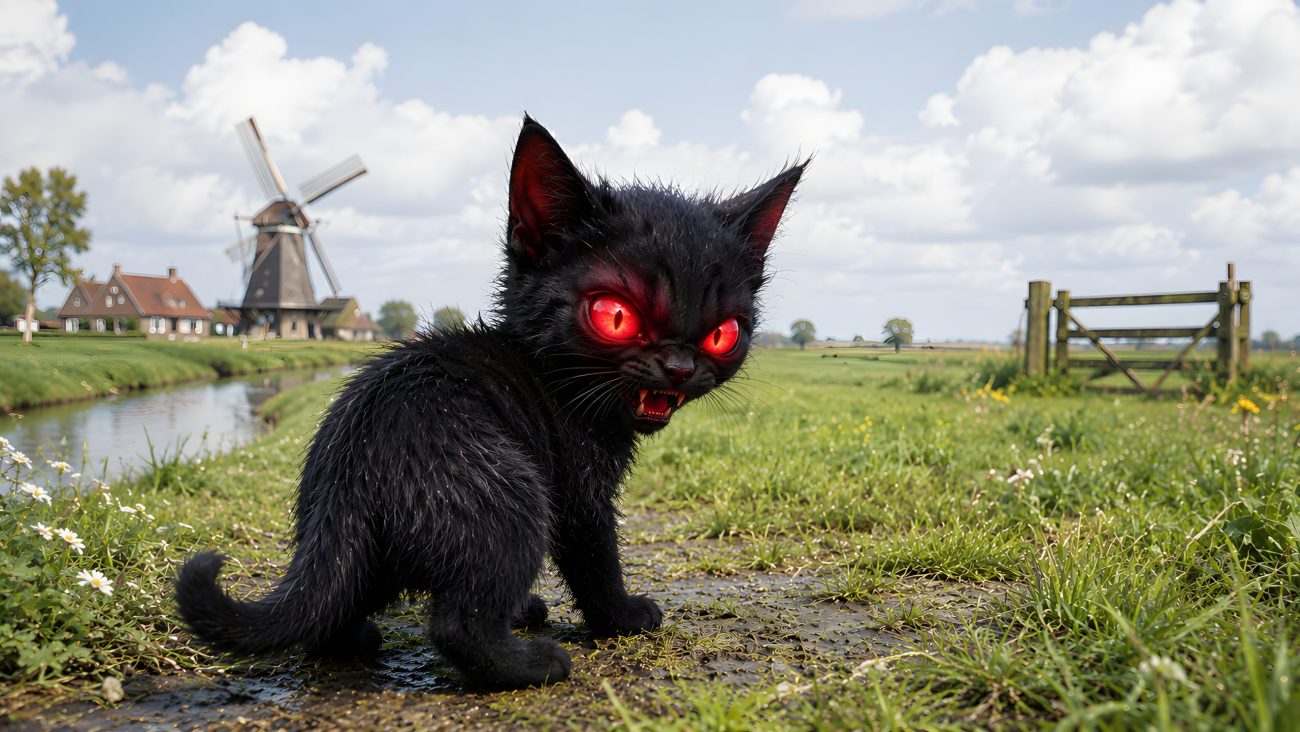
The Drommelkater is a name for the Devil when he appears in the form of a large black cat with glowing eyes. As a supernatural creature, it was regarded as a frightening manifestation of the Devil himself, haunting those who encountered it.

The name also became attached to a traditional loaf of bread known as a duivelkater (“devil’s cat”). According to folklore, this bread replaced an older ritual in which a live cat was buried or burned as an offering to the Devil. The loaf came to symbolize that former sacrifice, preserving its memory while replacing the living offering.


Sources

Van der Veen, Abe J. “Van aardmannetje tot zwarte juffer: Een lijst van Nederlandse en Vlaamse elfen en geesten.” Abe de Verteller. Accessed July 28, 2026. https://abedeverteller.nl/van-aardmannetje-tot-zwarte-juffer-een-lijst-van-nederlandse-en-vlaamse-elfen-en-geesten/


Chordeva

Tradition / Region: Bengali mythology, Indian Mythology
Alternative names:
Category: Cat


The Myth

The Chordeva is a vampiric witch feared throughout the folklore of Bengal. It possesses supernatural powers and commonly takes the form of a cat to hunt its victims.

Rather than attacking the healthy, the Chordeva stalks the elderly, the sick, and the dying. It hastens their deaths by stealing their food or poisoning what little nourishment they have left. The creature can also kill instantly by simply licking its victim. Because of this belief, cats were traditionally kept away from those near death.

Although it resembles an ordinary cat, the Chordeva is said to produce a distinctive mewing cry that reveals its true nature. It is also repelled by water and can transform into a monstrous werecat when threatened. In this form, it is said to be completely invulnerable to harm.

The Chordeva can assume a human appearance as well. While disguised as a person, it may be destroyed like a traditional vampire, by driving a wooden stake through its heart or exposing it to prolonged sunlight. If slain while in cat form, it immediately reverts to its human shape, bearing the same wounds that killed it, allowing people to identify the hidden vampire and destroy it permanently.


Sources

Bane, Theresa. Encyclopedia of Vampire Mythology. Jefferson, NC: McFarland & Company, 2010, p. 45.


Cath Palug

Tradition / Region: Welsh Mythology
Alternative names: Cath Paluc, Cath Balug, Chapalu
Category: Cat


The Myth

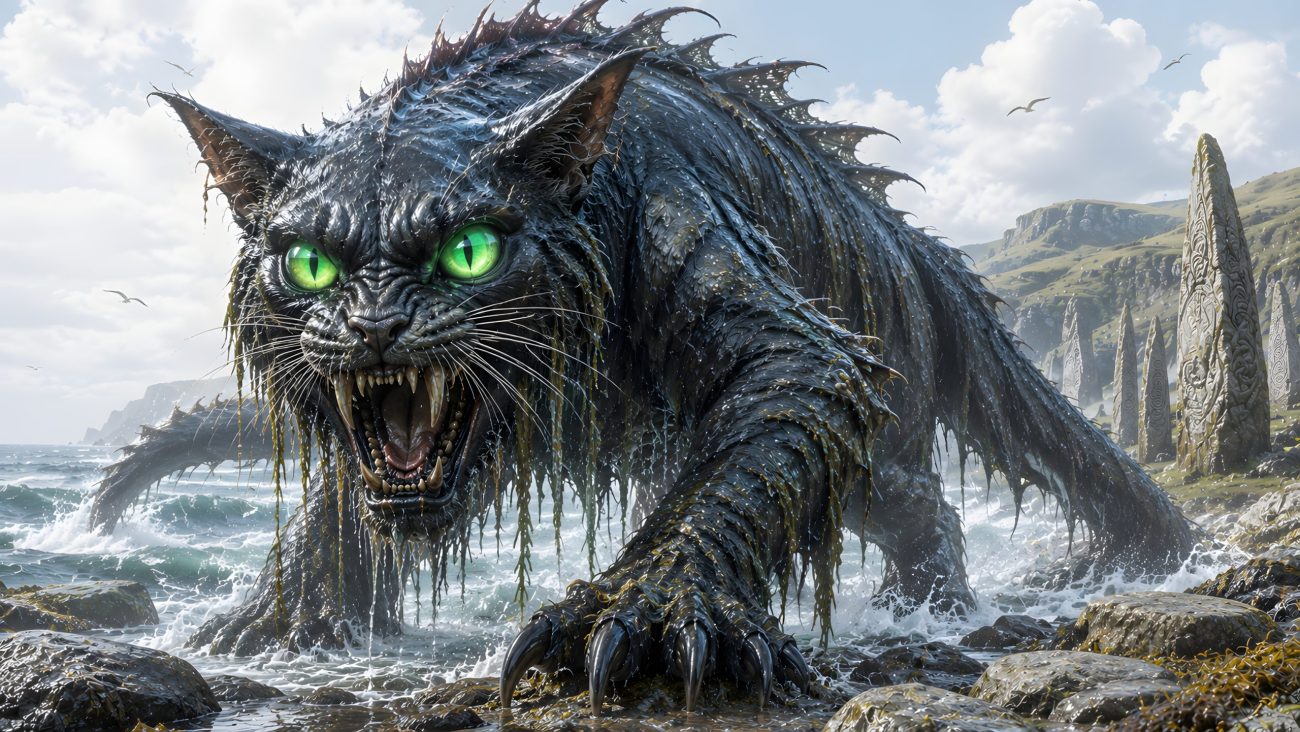
Cath Palug was a monstrous cat whose legend became closely associated with the tales of King Arthur. According to Welsh tradition, it was born as a kitten from the great white sow Henwen in Gwynedd. The kitten was cast into the sea but crossed the Menai Strait to the Isle of Anglesey, where it was raised by the sons of Palug. As it grew, it became one of the island’s greatest plagues.

The beast haunted the waters and shores of Anglesey, where it slaughtered countless warriors. One Welsh tradition tells that 180 men fell before the monster before the hero Cai (Kay) confronted it and finally slew it.

In later Arthurian romances, the story changed, replacing Cai with King Arthur himself. Some tales place the monster beside lakes or marshes, where it is described as an enormous black cat—or even a strange fish-like cat—that terrorized all who approached. In one famous version, a fisherman caught a small black kitten in his net after breaking a sacred vow. The kitten grew into a gigantic monster that killed the fisherman, his family, and every traveler who came near the lake until Arthur destroyed it.

Not every legend grants Arthur victory. Some medieval French stories claim the monstrous cat defeated the king, knocking him into a bog before killing him. These versions were widely regarded by other medieval writers as hostile tales intended to mock the Arthurian tradition.

Whether slain by Cai or Arthur, Cath Palug remains one of the most famous monstrous cats of Celtic legend, remembered as a deadly beast born from an unnatural birth whose reign of terror ended only after a legendary battle.


Sources

“Cat-sìth.” Wikipedia: The Free Encyclopedia. Wikimedia Foundation. Accessed July 28, 2026. https://en.wikipedia.org/wiki/Cat-s%C3%ACth


Cactus Cat

Tradition / Region: American Mythology
Alternative names:
Category: Cat


The Myth

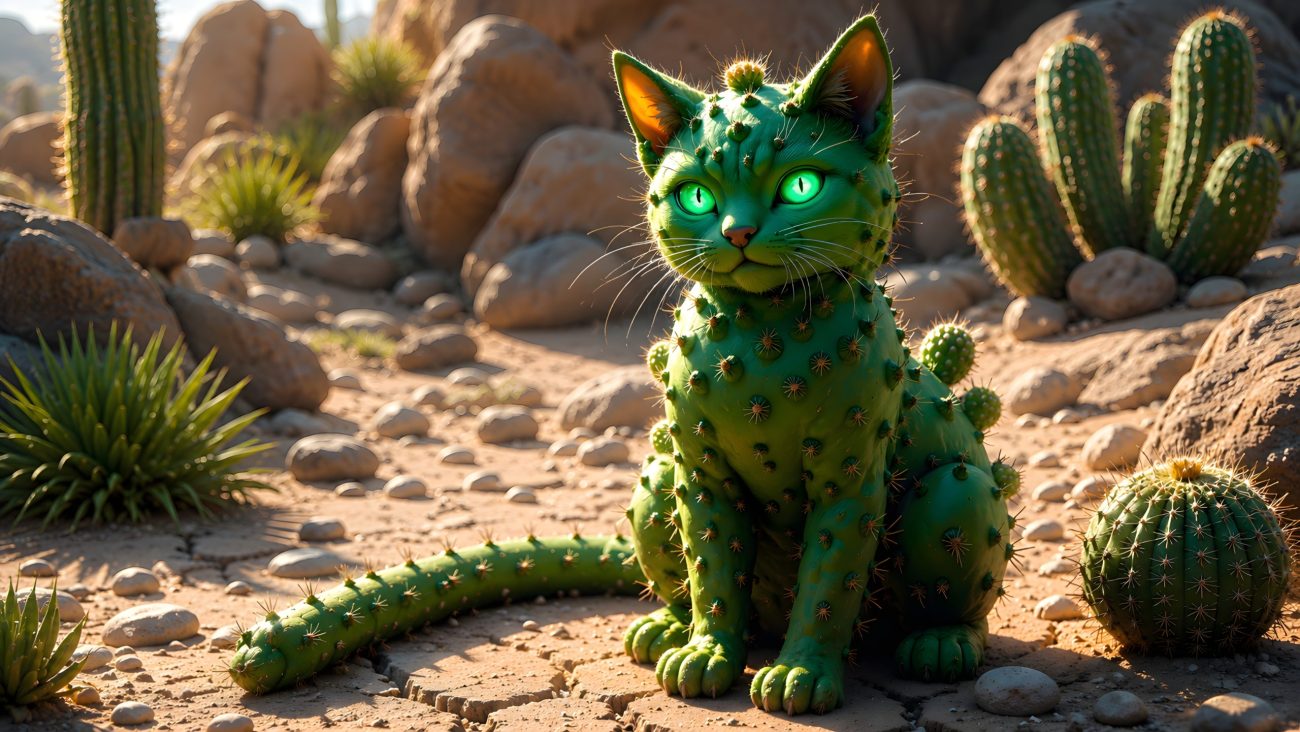
The Cactus Cat is a legendary creature of the American Southwest, resembling a bobcat covered in sharp, cactus-like spines. Long thorns project from its legs, and its branching, armored tail is likewise covered in deadly spikes. Its coat blends perfectly with the desert, making it almost impossible to spot.

According to legend, the Cactus Cat emerges at night to slash giant cacti with its thorn-covered body. The cuts allow the cactus juice to flow freely. After leaving the sap to ferment for several nights, the creature returns to drink the intoxicating liquid.

The Cactus Cat is closely associated with the harsh deserts of the American Southwest and is often regarded as a living embodiment of the desert itself. It was said to haunt the arid wilderness, where its camouflage and thorny body made it perfectly adapted to its unforgiving home.

The legend was passed down through oral tradition and was later shared among frontiersmen, miners, and cowboys, ensuring that tales of the mysterious, spine-covered feline continued to roam the deserts long after its supposed tracks had vanished.


Sources

“Cactus Cat.” Wikipedia: The Free Encyclopedia. Wikimedia Foundation. Accessed July 28, 2026. https://en.wikipedia.org/wiki/Cactus_cat


Ball-Tailed Cat

Tradition / Region: American Mythology
Alternative names: Dingmaul, Sliver Cat
Category: Cat


The Myth

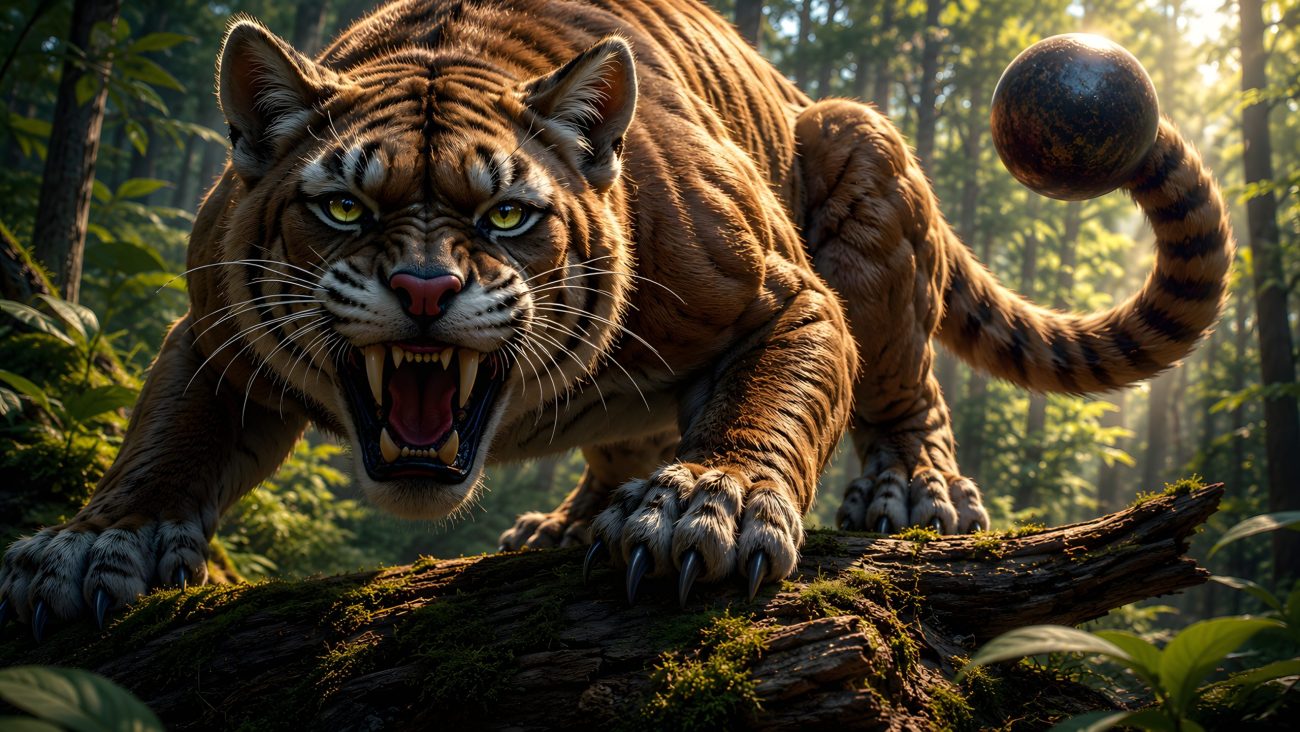
The Ball-Tailed Cat is a fearsome beast said to resemble a mountain lion, distinguished by an extraordinarily long tail ending in a heavy, solid ball.

The creature hunts by swinging its powerful tail with tremendous force, striking prey unconscious before moving in to kill it. Travelers who wandered too close were said to be knocked senseless by a single blow from the tail.

Some stories describe a more dangerous variety known as the Sliver Cat. Instead of a smooth club, one side of its tail ends in sharp spikes. After stunning its victim with the smooth side, it turns the tail and drives the spiked side into its prey, holding it fast before delivering the final attack.

Another variant, the Dingmaul, is similarly known for using its massive tail as its primary weapon, making the Ball-Tailed Cat one of the most feared creatures said to roam the forests of North America.


Sources

“Ball-tailed Cat.” Wikipedia: The Free Encyclopedia. Wikimedia Foundation. Accessed July 28, 2026. https://en.wikipedia.org/wiki/Ball-tailed_cat


Arima Bake-neko

Tradition / Region: Japanese Mythology
Alternative names: Arima Monster Cat
Category: Cat


The Myth

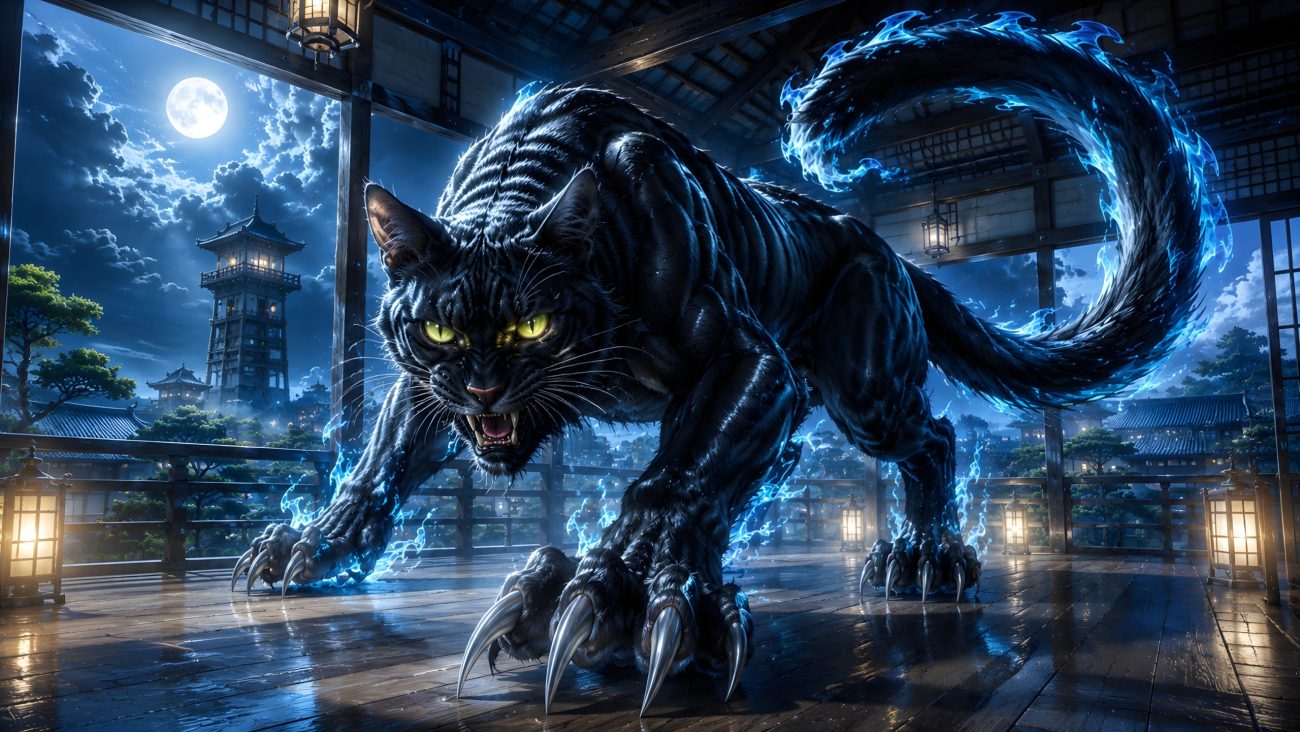
The Arima Bake-neko is one of Japan’s most famous monster cat legends. The story takes place at the Edo residence of the Arima clan during the rule of Lord Arima Yoriyuki.

During a banquet, a wild dog burst into the palace while chasing a kitten. As the dog lunged toward the lord, a lady-in-waiting named Otaki struck it dead with an iron ladle, saving his life. When the lord offered her a reward, she asked only that the frightened kitten be spared. Impressed by her courage and kindness, the lord took her as his concubine.

Otaki’s rise provoked the jealousy of the other women in the household, especially the head lady-in-waiting, Iwanami, who relentlessly tormented her. Unable to endure the abuse any longer, Otaki took her own life.

The kitten she had rescued, now named Tama, licked Otaki’s spilled blood and transformed into a monstrous cat. Seeking revenge, it burst into the palace and killed Iwanami by tearing out her throat. Afterward, the women responsible for tormenting Otaki died one after another under mysterious circumstances.

The monster’s vengeance grew ever more savage. It murdered the pregnant concubine Otoyo, ripping open her body and killing both her unborn child and her maid. It even attacked Lord Yoriyuki himself while he walked in the garden, but the guard Yamamura Tenzen struck the creature between the eyes with his sword, forcing it to flee.

When Tenzen returned home, he discovered that his elderly mother bore the same wound. He realized the monster cat had already killed and devoured her, assuming her appearance to hide among the living.

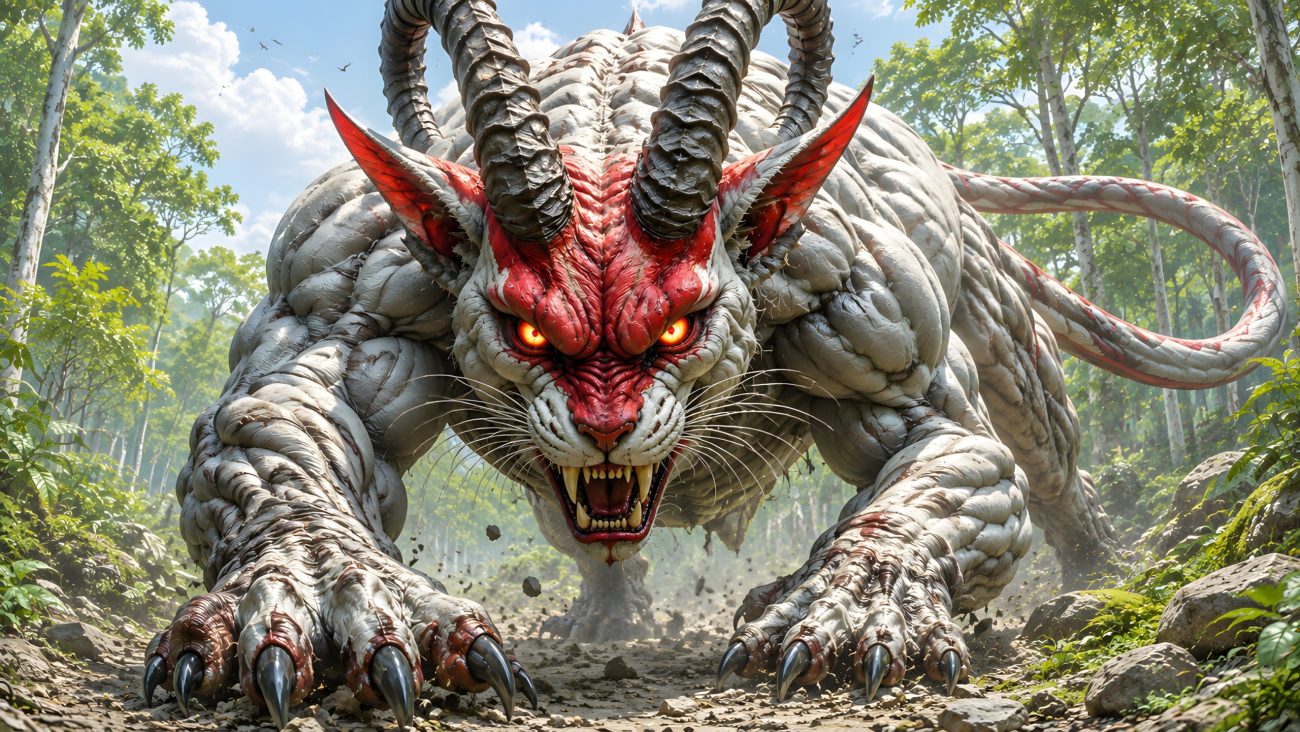
Joining forces with the former sumo wrestler Onogawa Kisaburō, Tenzen hunted the creature to the Arima residence’s great fire watchtower, where it had made its lair. There the monster revealed its true form, but together the two men defeated and killed it, finally ending the cat’s bloody revenge.


Sources

Takahashi, Toshihiro. “有馬の化け猫 (Arima-ba-neko).” 新版TYZ 妖怪図鑑 (New TYZ Yokai Encyclopedia). February 11, 2018. Accessed July 27, 2026. https://tyz-yokai.blog.jp/archives/1069687960.html.
Arassas

Tradition / Region: French Mythology
Alternative names:
Category: Cat


The Myth

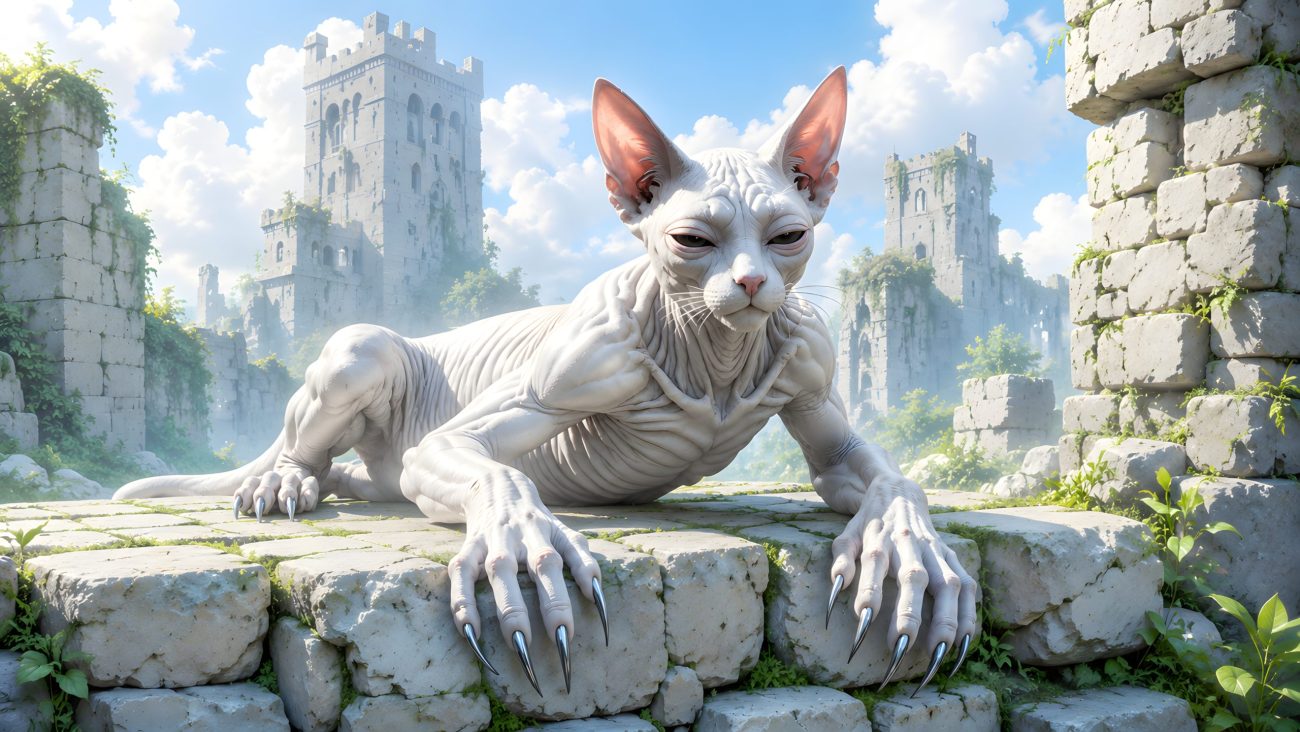
The Arassas is a strange creature with the head of a cat and the body of a lizard. Its gray skin blends with old stone, allowing it to hide among ruined houses, crumbling walls, and abandoned places where it makes its home.

Its most feared power is its gaze. Anyone who looks into its eyes dies instantly. The Arassas also possesses a venomous bite capable of killing those unfortunate enough to be struck by it.

Although deadly, the Arassas is not said to hunt people relentlessly. It remains hidden among ancient ruins, emerging only when disturbed. Children are traditionally believed to be unharmed by the creature, while adults who venture carelessly into its domain risk falling victim to its fatal stare.

The Arassas is also described as shy and occasionally playful, yet it never forgives those who intrude upon its refuge. Travelers are warned to avoid deserted buildings and ruined walls, for the creature may be waiting silently among the stones, nearly impossible to distinguish from the crumbling masonry until it is too late.


Sources

Countess Sica. “Arassas.” A Book of Creatures. November 18, 2019. Accessed July 27, 2026. https://abookofcreatures.com/2019/11/18/arassas/


Cat Witch of Heist op den Berg

Tradition / Region: Belgian Mythology
Alternate Names:
Category: Cat, Witch


The Myth

During the time of Napoleon I, a Belgian soldier was returning home from war, passing through a Prussian village.

As he walked through the town, he noticed a woman sitting outside her house. She was smoking a pipe, but something about her seemed wrong—on her backside there was a dark, unnatural stain. The soldier immediately suspected that she was a witch.

Without hesitation, he took his rifle from his shoulder, loaded it with a consecrated bullet, and fired—just grazing her.

He then continued his journey back to Belgium, where he was required to stay for several days.

There, he encountered a woman who bore strange signs: she had a black patch at the back of her skirt and a wound on her nose that refused to heal. The injury lingered unnaturally, as if it could not recover.

It became clear that this was the same being he had shot before.

The wound remained open because it had been inflicted by a consecrated bullet—something believed to harm witches in a way that could not be undone.


Sources

de Cock, A. (1921). Vlaamsche sagen uit den volksmond. In Amsterdam: Maatschappij voor goede en goedkoope lectuur, from https://www.dbnl.org/tekst/cock001vlaa01_01/colofon.php p. 37.


Prachatice Cat

Tradition / Region: Czech Mythology
Alternate Names: —
Category: Cat


The Myth

The Prachatice Cat is a sinister manifestation of cats acting under supernatural influence, capable of intelligence, coordination, and deadly intent.

One night, after a village celebration, a drunken farmer stumbled home and heard strange music coming from his barn. Curious, he opened the doors and let the moonlight reveal the scene inside.

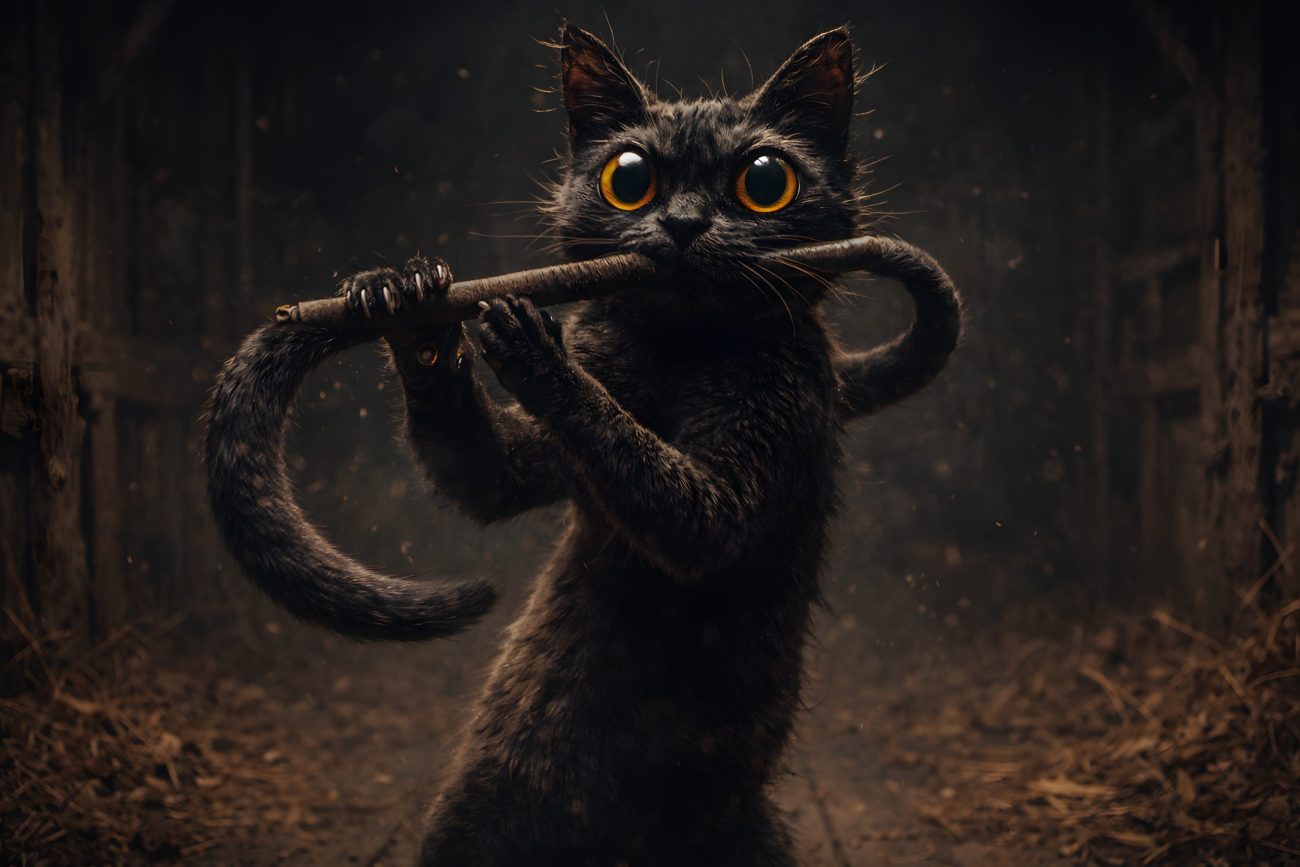
There, a gathering of cats had assembled. They were not behaving like ordinary animals—each cat held its own tail in its mouth and played it like a musical instrument, producing eerie sounds like flutes and pipes. In the center, a dance was taking place: a cat whirled together with the farmer’s own large black tomcat.

The spectacle was unnatural and unsettling, but the farmer reacted with anger rather than fear. He cursed his cat and threatened it, dismissing what he had seen as drunken nonsense. Then he went inside and fell asleep.

During the night, the black cat entered the house silently. It approached the sleeping man and, in a calculated act of revenge, forced its tail down his throat, suffocating him.

By morning, the farmer was dead.

The story left behind a lasting warning, remembered in local tradition:
cats are not always harmless creatures, and what appears tame may conceal something dangerous.

The Prachatice Cat embodies the idea that animals—especially cats—can serve as vessels of hidden forces, capable of turning against humans when disrespected or provoked.


Sources

sagen.at contributors. (n.d.). Katzenmusik. In sagen.at, from https://www.sagen.at/texte/sagen/tschechien/watzlik/katzenmusik.html