Mulderskat

Tradition / Region: Dutch Mythology
Alternative names: Miller’s Cat, Witch Cat
Category: Cat


The Myth

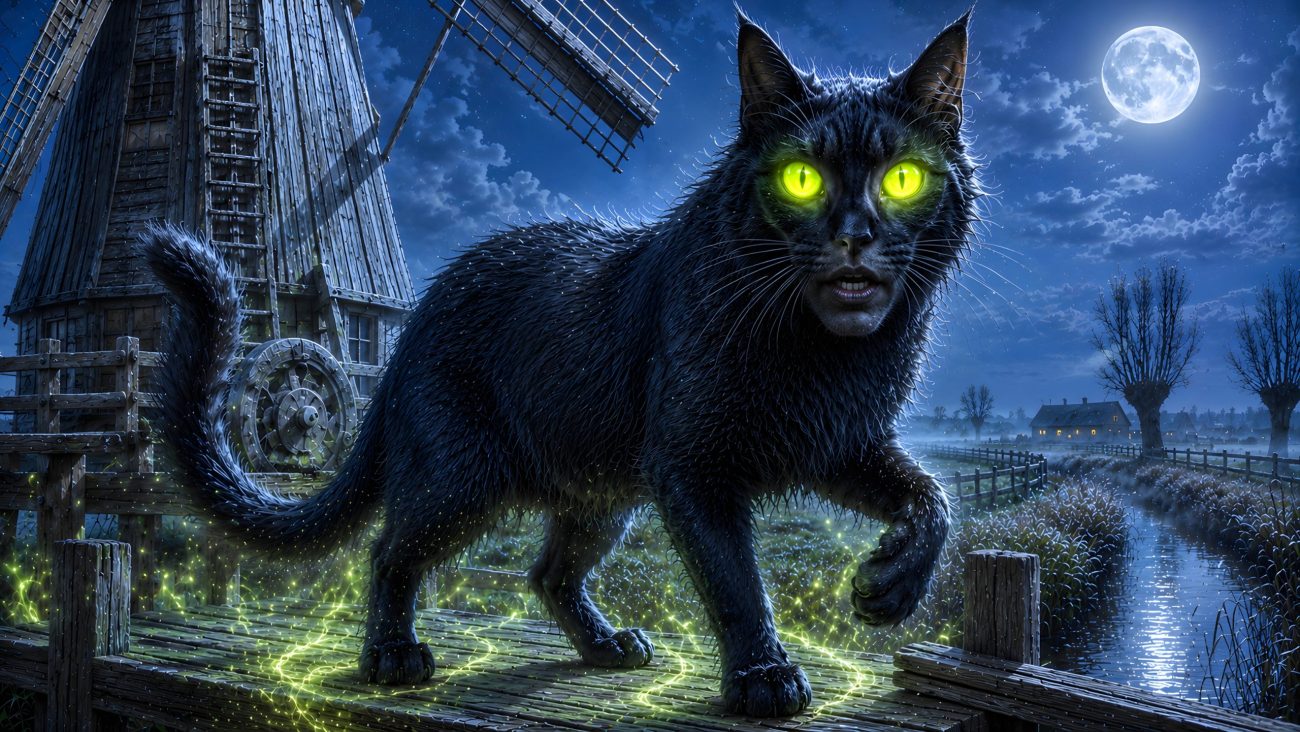
The Mulderskat appears as a large black cat with glowing yellow or green eyes. Unlike an ordinary cat, it can speak in a human voice and serves as the animal form of a witch. Although it behaves like a normal feline, injuries inflicted upon the cat are reflected on the witch after she resumes her human form.

According to the legend, a miller living in Veendam could never keep a farmhand for very long. Every servant eventually abandoned the mill because the miller’s wife was secretly believed to be a witch.

One night, a new farmhand climbed onto the mill to turn its cap into the wind. There he found a large cat sitting in the darkness, its eyes shining brightly. To his surprise, the cat spoke to him, warning him that the Wicked Bonde would soon arrive.

Unlike the previous servants, the young man was not afraid. Realizing that the strange animal was a witch in disguise, he grabbed a piece of wood and struck the cat with a powerful blow. Crying out in pain, the cat fled into the darkness.

The following morning, the miller’s wife could not get out of bed. Her head was heavily bandaged, bearing the same wound that the cat had received the night before. Forced to explain herself, she admitted that she had inherited witchcraft from her mother and begged the doctor to free her from the curse.

The doctor knew of an old remedy. On a dark evening, the woman had to travel to the Wildeveld, where three ancient hollow willow trees stood beside a meadow. Wearing a gray woolen cap, she had to lure a mysterious owl that lived inside one of the hollow trees. The owl had to scratch the cap from her head, for only then could the witchcraft be removed.

After recovering from her wounds, the miller’s wife followed the doctor’s instructions. She went to the old willow trees and whistled until the owl landed on her cap and clawed it from her head. The owl immediately carried the cap into its hollow tree and disappeared.

No one ever discovered what became of the cap, but from that day onward, the miller’s wife was cured of her witchcraft, and the strange speaking Mulderskat was never seen again.


Sources

Ter Laan, K. Groninger volksleven. I. Verhalende folklore. Groningen: J.B. Wolters, 1959. 1st ed.
Brommende Katten

Tradition / Region: Dutch Mythology
Alternative names: Demonic Cats, Witch Cats
Category: Cat


The Myth

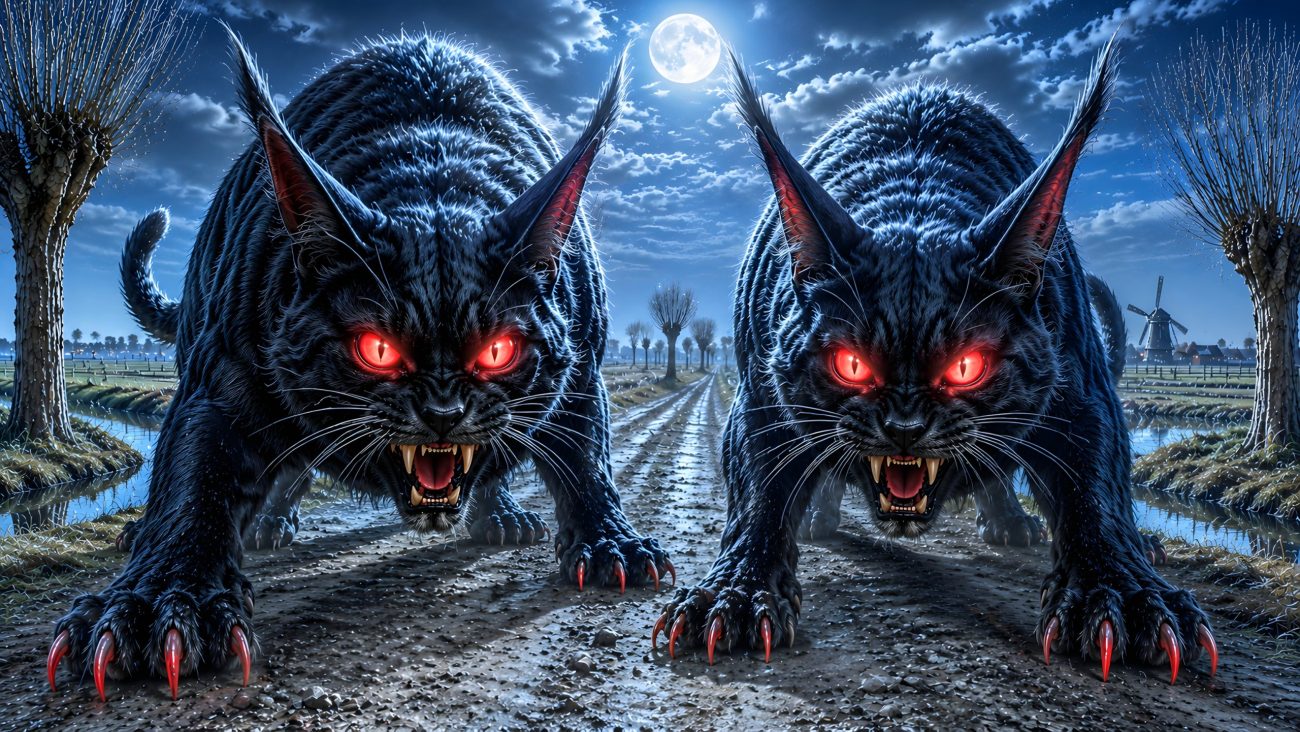
The Brommende Katten appear as two unusually large and aggressive cats that block lonely roads after dark. They refuse to move aside, attack anyone who challenges them, and possess supernatural strength far beyond that of ordinary cats. Like many spectral animals in Dutch folklore, they can only be driven away by silver.

According to the legend, a farmhand was returning home late one evening to his farm near Hoeksmeer when he found two large cats sitting in the middle of the road. The animals growled continuously and refused to let him pass, as though the road belonged entirely to them.

Growing impatient, the farmhand picked up a stone to drive them away, but it had no effect. Instead, one cat leapt directly at his chest while the other clung to his trousers. He drew his iron knife to defend himself, but the weapon proved completely useless against the creatures. The cats were so fierce that he feared they would tear him apart.

In desperation, he searched his pockets and found nothing except a single silver quarter coin. The moment he grasped the coin, the situation changed. The cats suddenly lost their courage and fled as quickly as they had appeared.

The farmhand later learned that ordinary iron could not harm such supernatural cats, but silver possessed the power to overcome them. Had he carried a silver knife instead of an iron one, it would have served just as well. Thanks only to the silver coin in his pocket, he escaped the attack of the demonic cats unharmed.


Sources

Ter Laan, K. Groninger volksleven. I. Verhalende folklore. Groningen: J.B. Wolters, 1959. 1st ed.


Swengkat

Tradition / Region: Dutch Mythology
Alternative names: Kat op de Sweng, Swengkat van Slochteren
Category: Cat


The Myth

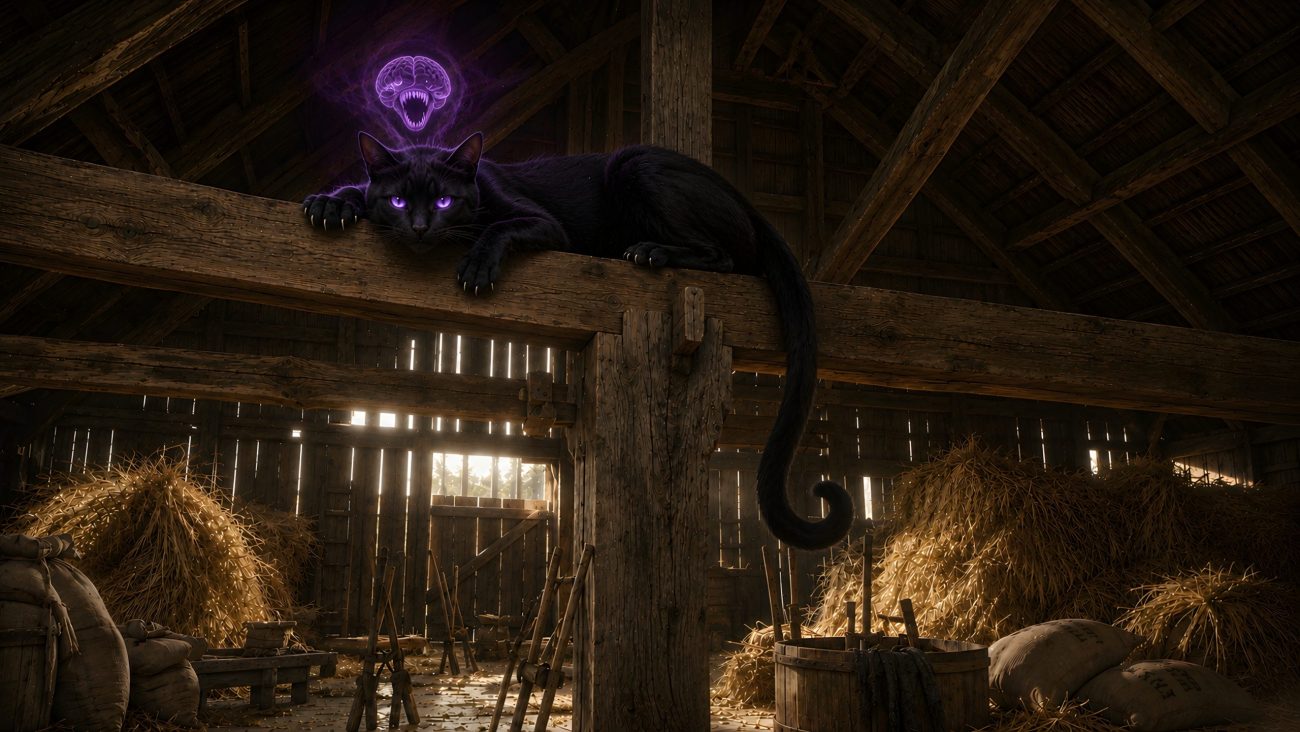
The Swengkat appeared as a large cat sitting silently on the sweng, the crossbeam above the threshing floor inside a barn. It watched the workers with unusual intelligence, staring as though it understood every word they spoke.

According to a folktale from Slochteren, several men were threshing grain with flails, walking back and forth across the barn floor. Throughout their work, a large cat remained perched on the wooden beam above them. One of the workers remarked that the cat seemed to be listening to everything they said, while another admitted that the animal’s unwavering stare made him uneasy.

When the men passed beneath the beam for the third time, the uneasy worker decided to strike the cat. He swung the wooden head of his flail at the animal, causing it to cry out and flee.

At that exact same moment, elsewhere in the farmhouse, the farmer’s wife was found lying in the front room with a broken leg. The incident was understood as proof that the cat had actually been the woman in the form of a witch, and that the injury inflicted upon the animal had appeared on her real body after she resumed her human shape.


Sources

Ter Laan, K. Groninger volksleven. I. Verhalende folklore. Groningen: J.B. Wolters, 1959. 1st ed.


Drommelkater

Tradition / Region: Dutch Mythology
Alternative names: Duivelkater
Category: Cat


The Myth

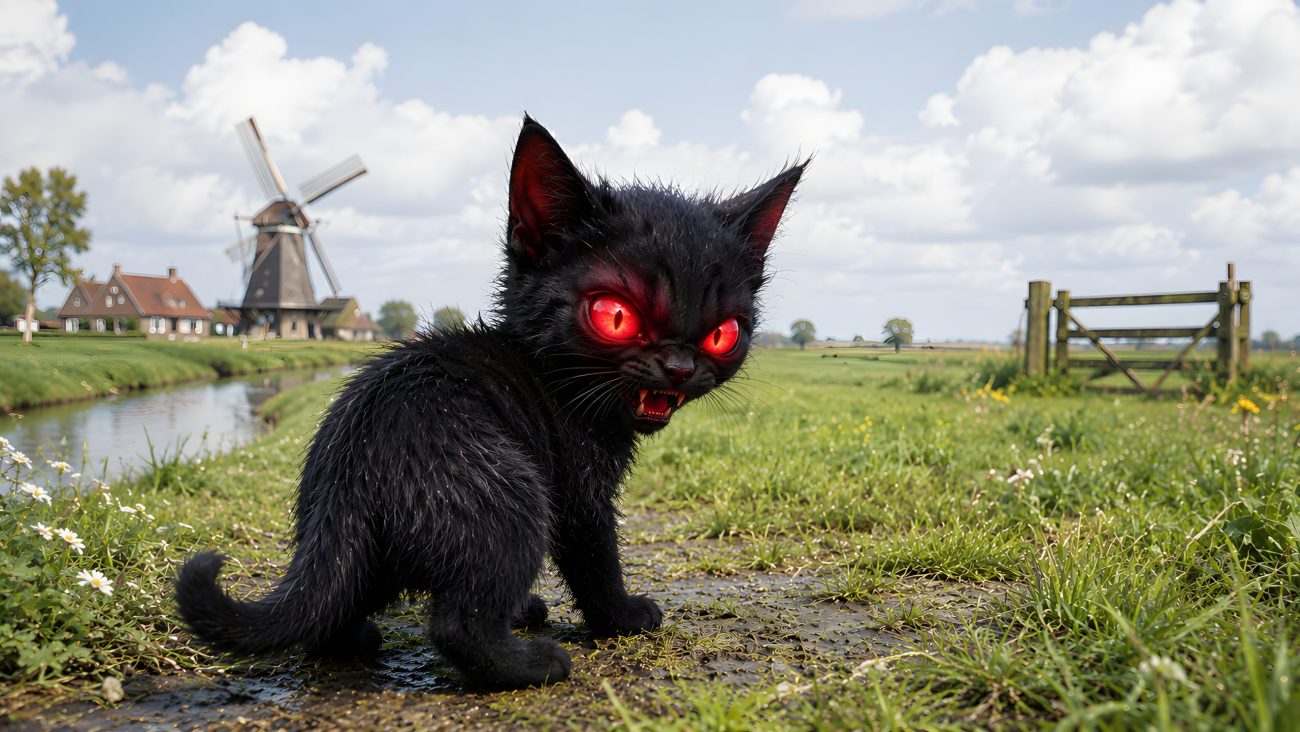
The Drommelkater is a name for the Devil when he appears in the form of a large black cat with glowing eyes. As a supernatural creature, it was regarded as a frightening manifestation of the Devil himself, haunting those who encountered it.

The name also became attached to a traditional loaf of bread known as a duivelkater (“devil’s cat”). According to folklore, this bread replaced an older ritual in which a live cat was buried or burned as an offering to the Devil. The loaf came to symbolize that former sacrifice, preserving its memory while replacing the living offering.


Sources

Van der Veen, Abe J. “Van aardmannetje tot zwarte juffer: Een lijst van Nederlandse en Vlaamse elfen en geesten.” Abe de Verteller. Accessed July 28, 2026. https://abedeverteller.nl/van-aardmannetje-tot-zwarte-juffer-een-lijst-van-nederlandse-en-vlaamse-elfen-en-geesten/