Nabeshima-ba-neko

Tradition / Region: Japanese Mythology
Alternative names: Nabeshima Cat, Nabeshima Cat Incident (鍋島の化け猫), Nabeshima Ghost Cat
Category: Cat


The Myth

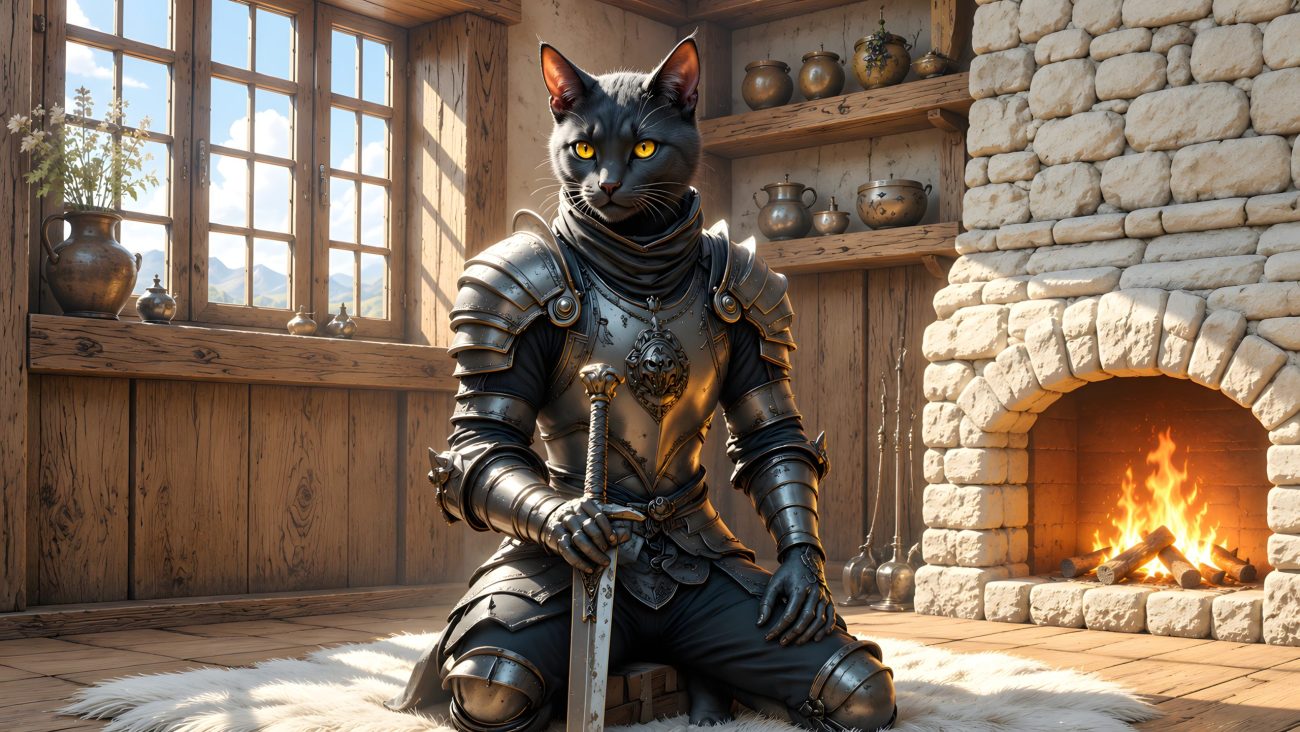
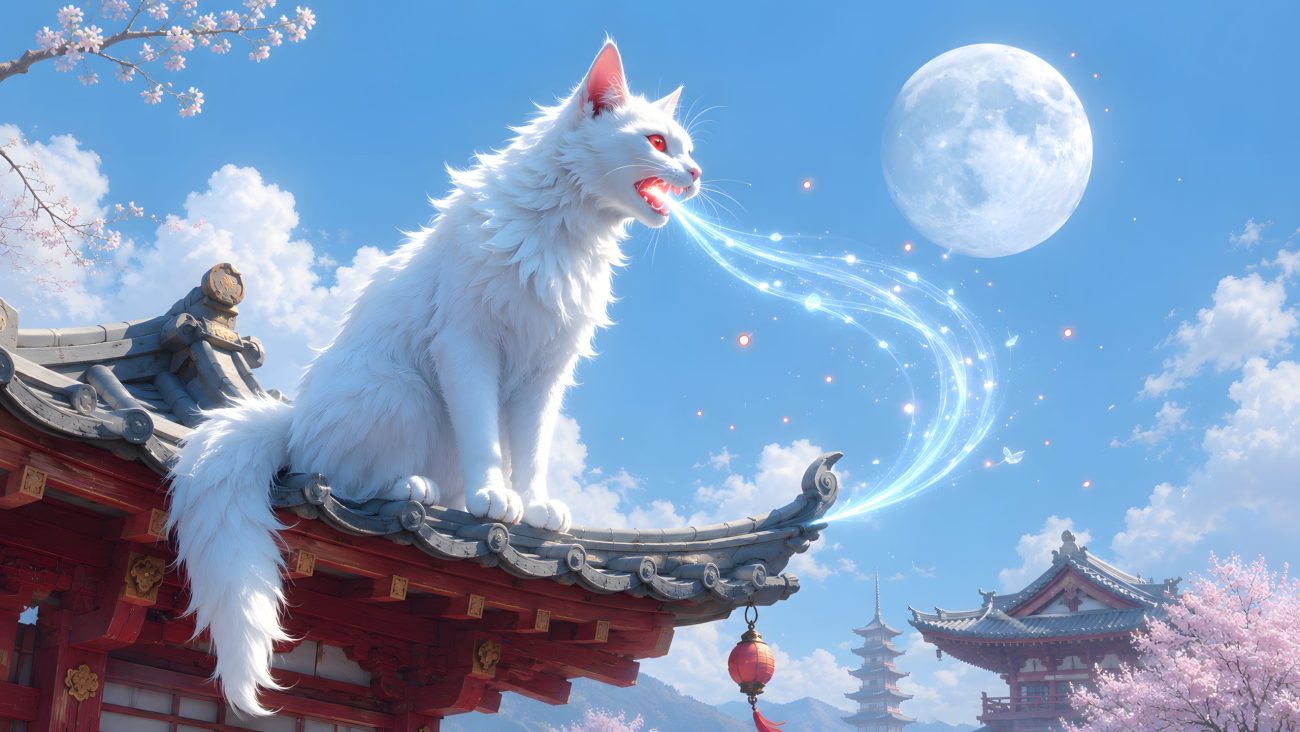
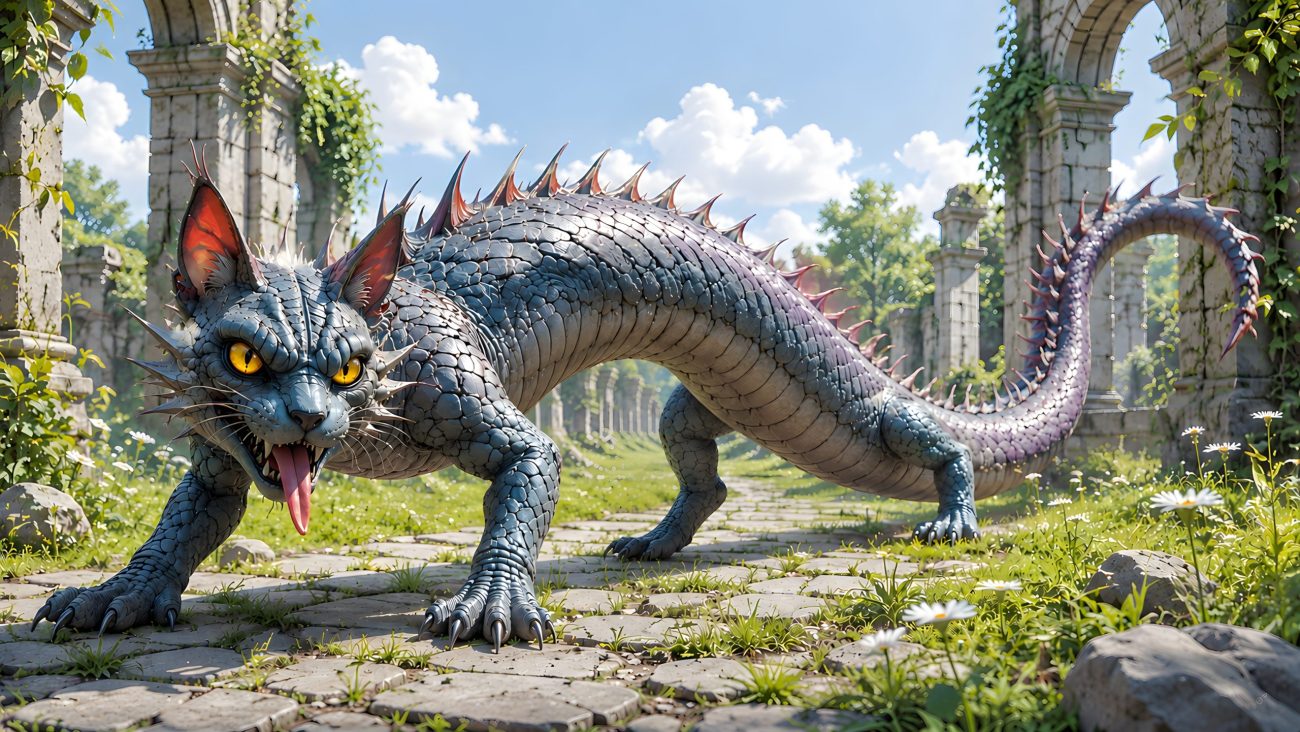
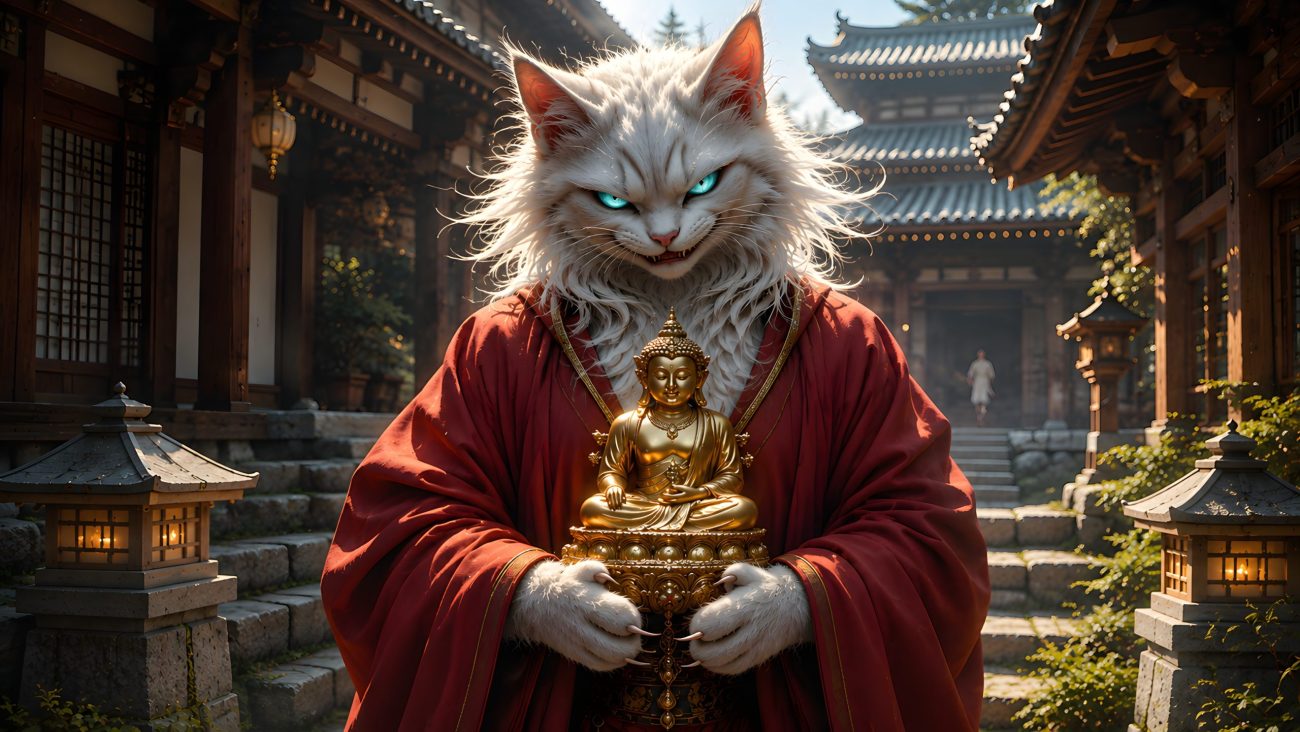
The Nabeshima-ba-neko is one of Japan’s Three Great Monster Cat Tales, alongside the monster cats of Okazaki and Arima. The story grew out of rumors surrounding a family dispute in the Saga Domain and later became famous through kabuki plays, storytelling, and numerous films.

The tale begins when Nabeshima Mitsushige, the second lord of the Saga Domain, kills Matashichiro, the blind head of the Ryuzoji family, during a game of Go after becoming enraged at losing. His retainers conceal the murder from the public.

When Matashichiro’s mother, Omasa, learns that Mitsushige was responsible for her son’s disappearance, she is overcome with grief. Before taking her own life, she entrusts her beloved cat Koma (also called Tama) with avenging her family. The cat drinks Omasa’s blood and disappears.

Soon afterward, supernatural events begin to plague Mitsushige and his household. During a cherry blossom viewing at the Nabeshima residence, the monstrous cat appears, murders several ladies-in-waiting, and attacks Mitsushige before being driven away by the retainer Komori Hanzaemon.

Seeking revenge against Hanzaemon, the cat kills and devours his mother and wife, assuming their appearances in an attempt to murder him. When its disguise is discovered, it escapes on a black cloud.

The curse continues. Mitsushige suffers terrifying hallucinations every night, gradually descending into madness and illness. While his concubine Otoyo-no-kata nurses him, she begins displaying bizarre behavior, secretly eating carp alive from the palace pond and licking oil from lamps during the night.

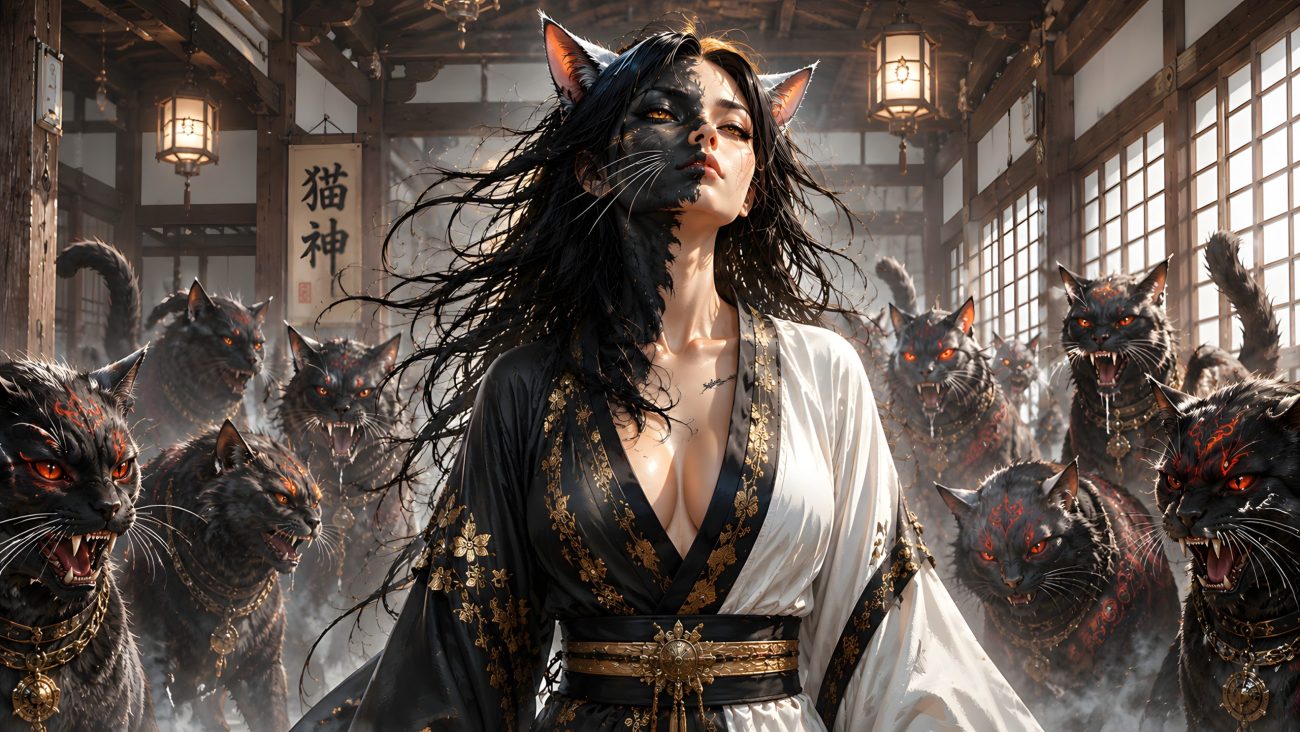
Suspicious, Hanzaemon follows her and sees her shadow on a paper screen transform into a gigantic cat. The monster has murdered and eaten Otoyo-no-kata, stolen her appearance, and infiltrated Saga Castle. From its hiding place in the Ume Palace, it torments Mitsushige while commanding other monstrous cats disguised as ladies-in-waiting to abduct children from the town for food.

Determined to end the curse, Komori Hanzaemon and Ito Sota confront the monster and its feline followers inside the palace. After the lesser cats are destroyed, the monstrous cat flees to a cave on Mount Hōman. The two warriors pursue it, slay the creature, and finally bring the haunting to an end.

According to the legend, the cat’s body was buried on the mountain, where it was later worshipped as a deity.


Sources

Takahashi, Toshihiro. “鍋島の化け猫 (Nabeshima-ba-neko).” 新版TYZ 妖怪図鑑 (New TYZ Yokai Encyclopedia). Accessed July 28, 2026. https://tyz-yokai.blog.jp/archives/1069592528.html
Motokimura-bakemono

Tradition / Region: Japanese Mythology
Alternative Name:
Category: Cat


The Myth

According to the Chikuzen no Kuni Zoku Fudoki, a mysterious monster began terrorizing Motoki Village around 1680. It visited the village headman’s house almost every night, tormenting the women. Guards assigned to protect the house were overcome by an unnatural drowsiness, allowing the creature to enter unnoticed.

The monster raped and impregnated women in the village, who later gave birth to strange infants that eventually died. Believing foxes or badgers were responsible, the villagers stationed powerful hunting dogs around the village, but the dogs were so terrified that they refused to approach the creature.

The attacks continued for years. In 1685, the local lord sent two exceptionally fierce dogs to guard the village. When the monster finally returned, one of the dogs confronted it in a violent battle. Neither gained the upper hand, and the monster escaped, leaving the dog with a deep, razor-like wound across its nose. After this encounter, the creature was never seen in the village again.

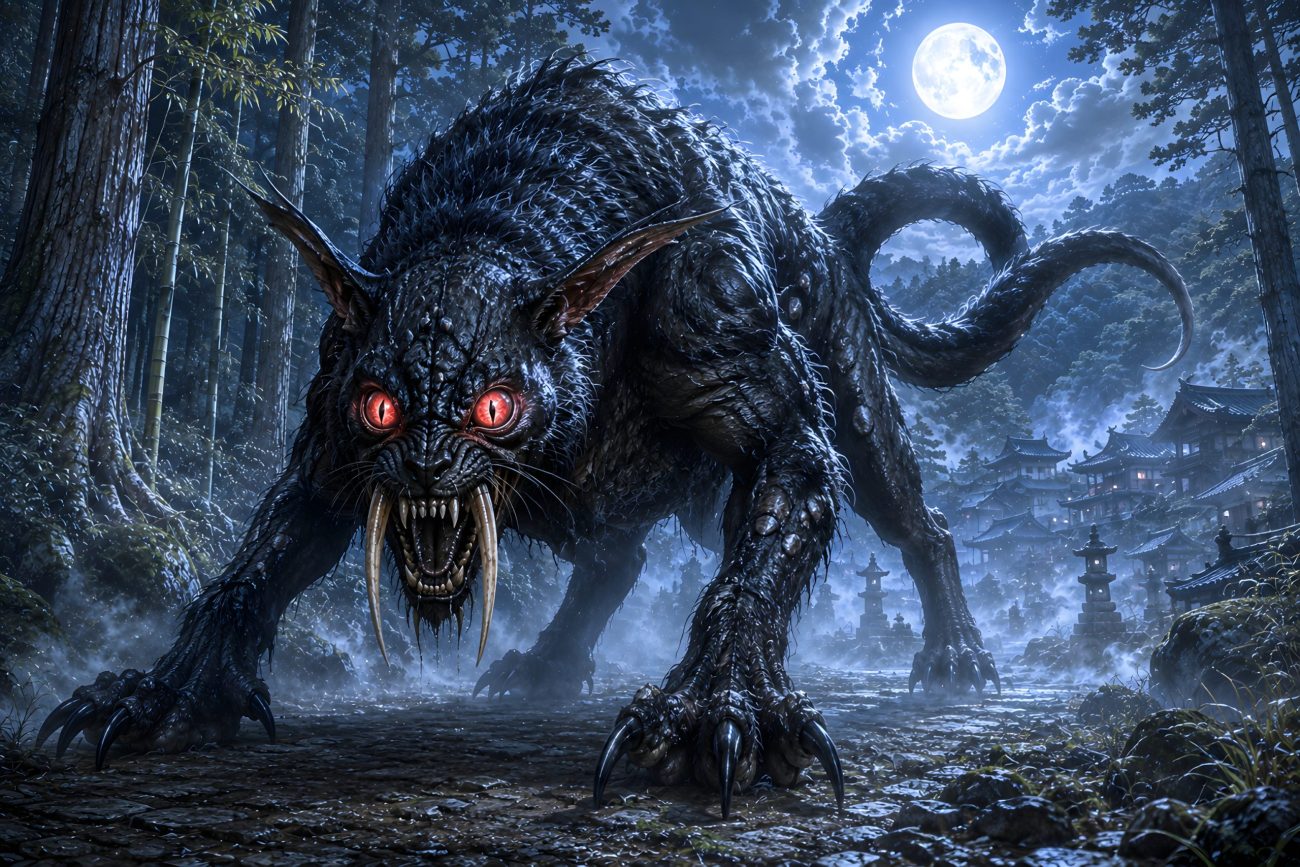
Some time later, a hunter discovered a strange beast in the nearby mountains unlike any known animal—not a boar, fox, badger, or any familiar creature. It was believed to be the same monster that had terrorized Motoki Village.

Some later traditions claim the creature was finally destroyed in 1694, and that its bones were discovered beneath a floor in 1699. A copied report attributed to the village headman included a drawing of the monster’s skull. The Kaikidan Ekotoba also depicts the creature as two black, sharp-fanged beasts of unknown name, alongside an unexplained illustration of a cat wearing a towel with a forked tail.


Sources

Takahashi, Toshihiro. “元木村の化け物 (Motokimura-bakemono).” 新版TYZ 妖怪図鑑 (New TYZ Yokai Encyclopedia). Accessed July 28, 2026. https://tyz-yokai.blog.jp/archives/1045123320.html


Myōki

Tradition / Region: Japanese Mythology
Alternative name: –
Category: Cat


The Myth

The Myōki is a cat-headed disease demon believed to bring illness. It is mentioned in medieval Japanese texts such as the Denshibyō Kanjinshō.

According to descriptions in Denshibyō Shujuji and Keiran Shūyōshū, the Myōki has the head of a cat and the body of a human, and wears red robes. It holds Hyakkō Henshō-Ō (Dainichi Nyorai / Mahāvairocana) in its left hand while striking the chest of sick people with its right hand, causing disease.

Illustrations matching this description are preserved in manuscripts of Denshibyō Shujuji, including copies kept at Kinzan-ji Temple in Okayama.


Sources

Takahashi, Toshihiro. “猫鬼 (Myōki).” 新版TYZ 妖怪図鑑 (New TYZ Yokai Encyclopedia). Accessed July 28, 2026. https://tyz-yokai.blog.jp/archives/1077741575.html


Matagot

Tradition / Region: French Mythology
Alternative names: Money Cat, Magician Cat
Category: Cat


The Myth

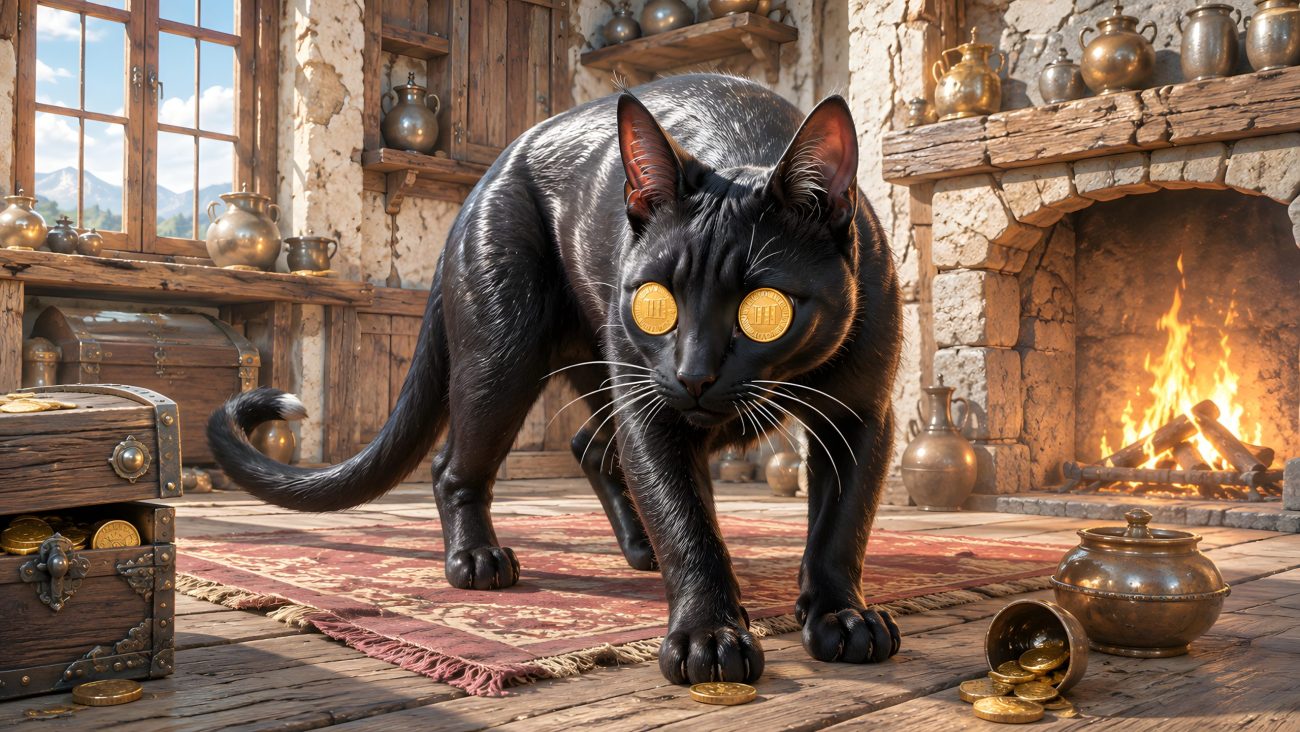
The Matagot is a supernatural spirit that most often appears as a black cat. While many Matagots are considered evil, some are believed to reward those who treat them properly with great wealth.

According to the legend, a wealth-bringing Matagot must first be lured with a fat, fresh chicken. Once captured, its new owner must carry it home without ever looking back. From then on, the Matagot must always receive the first bite of food and the first drink at every meal and be provided with a comfortable place to sleep.

If treated with this respect, the Matagot rewards its owner by leaving a solid gold coin every morning.

However, the creature demands lifelong devotion. In the traditions of Gascony, an owner must pass the Matagot on to someone else before dying. Anyone who keeps the spirit until death is said to suffer a long and agonizing end, unable to die until the Matagot has been released to a new master.


Sources

“Matagot.” Wikipedia: The Free Encyclopedia. Wikimedia Foundation. Accessed July 28, 2026. https://en.wikipedia.org/wiki/Matagot


Koshkalachen

Tradition / Region: Belarusian Mythology
Alternative names: Kashkalachenya, Kotalak (Polish)
Category: Cat


The Myth

The Koshkalachen is a werecat from Belarusian folklore, a shapeshifting creature that takes the form of a cat. According to Belarusian tradition, werewolves could appear not only as wolves but also as toads, frogs, and cats.

One tale tells of a wandering werecat searching for food. Passing a small house, it saw a cat chasing mice and transformed into a magpie to perch on the roof unnoticed. The cat refused to let the stranger approach, so the werecat waited until sunset. As darkness fell, the household cat transformed into a beautiful maiden, revealing that she too was a werecat.

Captivated by her beauty, the werecat leapt from the roof and transformed into a man. The two spent the evening playing and talking together. At midnight, however, an owl cried out from the roof in a child’s voice. The forest stirred, streams roared, the girls transformed into mermaids and fled into the water, while the maiden turned back into a cat and ran inside the house. The male werecat likewise reverted to his feline form.

Unlike ordinary werewolves, the Koshkalachen is almost always found in the shape of a cat and is only believed to return to human form at night.


Sources

“Кошкалачень (Koshkalacheń).” New Bestiary (Bestiary.us). Accessed July 28, 2026. https://www.bestiary.us/koshkalachen


Karakura

Tradition / Region: Turkish Mythology
Alternative names: Qaraqura (Turkish spelling)
Category: Cat


The Myth

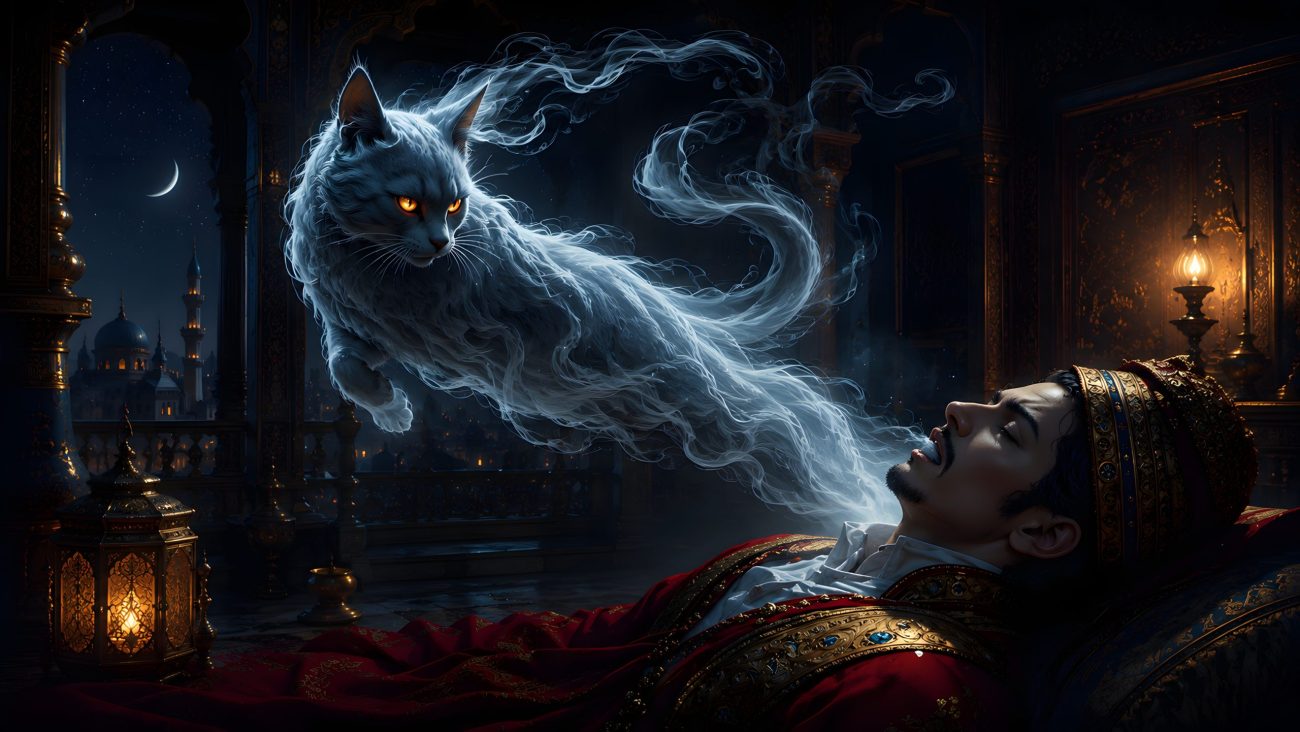
The Karakura is a cat-like nightmare spirit that attacks people while they sleep. It silently creeps onto the chest of a sleeping person, making it difficult or impossible to breathe, and may even tear out the victim’s lungs. In Anatolian folklore, it is sometimes described as a cat-sized animal, while in other traditions it is regarded as an invisible or abstract spirit.

A person afflicted by the Karakura suddenly feels a crushing weight pressing on the chest. Although fully aware of their surroundings, they cannot move, speak, or call for help. The only way to drive the creature away is to recite verses from the Qur’an. According to tradition, the Karakura quietly opens its eyes, but by the time the recitation is finished, it has already disappeared.

To protect against the Karakura, people were advised to place a knife or at least a piece of iron beneath their pillow before going to bed and to recite verses from the Qur’an before sleeping.

The Karakura is also said to fear daylight and cannot move once the sun rises, meaning it can only be encountered during the night.


Sources

“Kara Kura.” New Bestiary (Bestiary.us). Accessed July 28, 2026. https://www.bestiary.us/kara-kura


Hombre Gato

Tradition / Region: Argentinian Mythology
Alternative names: Catman
Category: Cat


The Myth

The Hombre Gato (“Catman”) is a legendary creature from Argentine folklore that combines both human and feline features.

According to the legend, the Hombre Gato emerges only at night, wandering through villages and rural areas in search of prey. It is said to attack both humans and animals under the cover of darkness, much like a werewolf.

Stories of the creature are especially common in the Argentine countryside. While many people regard the Hombre Gato as a fictional legend, others claim to have heard its eerie cries or even encountered the mysterious being during the night. The tale remains one of Argentina’s best-known modern urban legends and has inspired numerous works of fiction and documentaries.


Sources

“Hombre Gato.” Wikipedia: The Free Encyclopedia. Wikimedia Foundation. Accessed July 28, 2026. https://en.wikipedia.org/wiki/Hombre_Gato


Gotoku Neko

Tradition / Region: Japanese Mythology
Alternative names: Trivet Cat
Category: Cat


The Myth

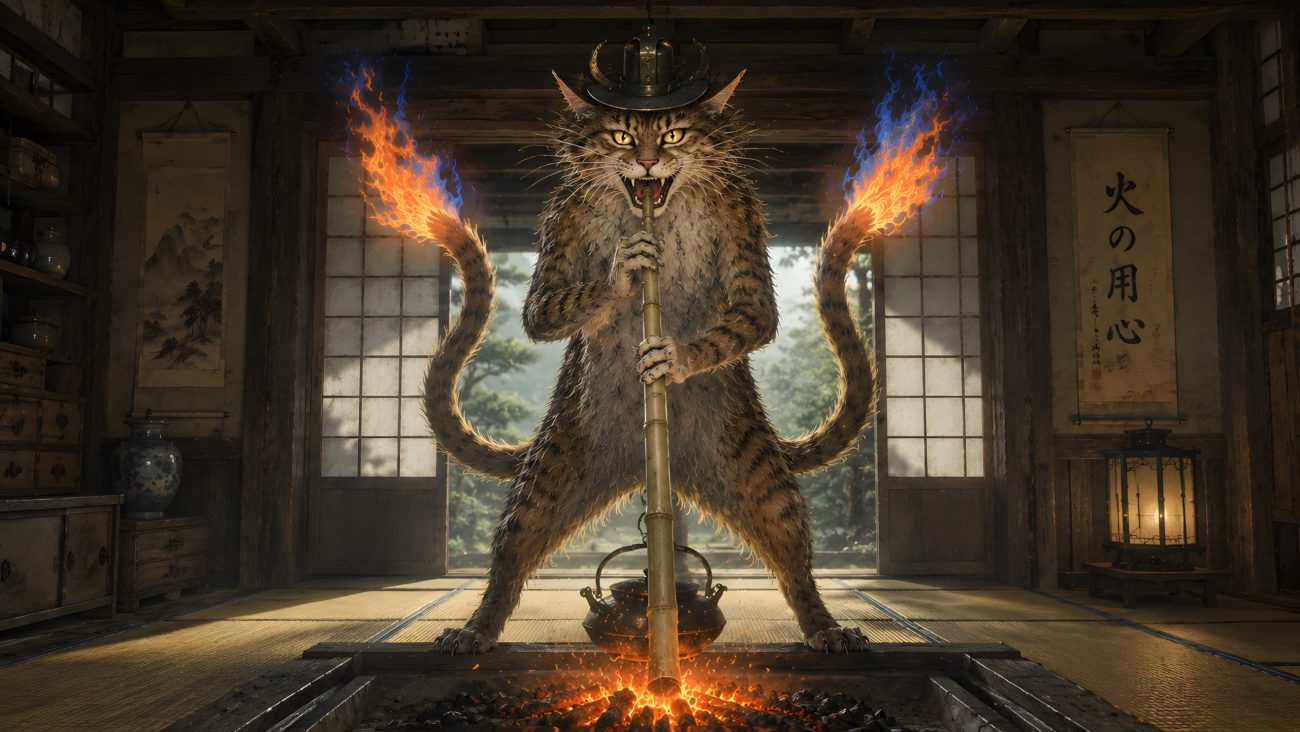
The Gotoku Neko is a type of nekomata, a supernatural two-tailed cat. It is recognized by the upside-down iron trivet it wears on its head like a hat, while the tips of its twin tails burn with bright flames.

Like ordinary cats, Gotoku Neko are drawn to the warmth of fireplaces. They linger around the hearth, using bamboo pipes to blow air onto the fire and keep the flames burning.

According to its creator, Toriyama Sekien, the Gotoku Neko is also remarkably forgetful. This trait comes from a humorous wordplay connecting the creature’s name with a story about a nobleman who forgot two of the seven virtues during a ceremonial dance and became known for performing only the “five virtues” (gotoku).

The fiery tails of the Gotoku Neko also reflect an old Japanese superstition that allowing a cat to sleep too close to the hearth could bring disaster. Sparks might ignite the cat’s tail, causing the frightened animal to run through the house and accidentally set the entire building ablaze.


Sources

Meyer, Matthew. “Gotoku Neko.” Yokai.com: The Illustrated Database of Japanese Folklore. Accessed July 28, 2026. https://yokai.com/gotokuneko/


Jinhua Cat

Tradition / Region: Chinese Mythology
Alternative names: Jinhua Cat Demon, Cat Demon
Category: Cat


The Myth

The Jinhua Cat is a cat spirit said to arise when a cat has been kept for more than three years. According to tradition, it climbs onto rooftops at midnight and absorbs the essence of the moon. After repeatedly feeding on moonlight, it transforms into a powerful cat demon.

Once transformed, the Jinhua Cat preys upon humans by taking on human form. It appears as a handsome young man to women and as a beautiful woman to men, seducing its victims. Before entering a household, it urinates in the family’s drinking water. Anyone who drinks the contaminated water becomes bewitched, unable to perceive the demon’s true feline form, and gradually falls ill.

One famous tale tells of a young woman in Lin’an who was secretly visited by an extraordinarily handsome youth. He provided food and drink instantly and behaved like an ordinary person, yet no one else could see him. Sorcerers failed to drive him away until an old noodle seller recognized the visitor as a Jinhua Cat Demon and successfully exorcised it.

Chinese tradition also warned against keeping pure white cats in the Jinhua region, believing they could absorb moonlight, become spirits, and bring misfortune to their owners.


Sources

“金華貓 (Jinhua Cat).” Chinese Wikipedia. Wikimedia Foundation. Accessed July 28, 2026. https://zh.wikipedia.org/wiki/金華貓


Dard

Tradition / Region: French Mythology
Alternative names:
Category: Cat


The Myth

The Dard is a strange creature from the French department of Vienne, combining the features of several animals. It has the head of a cat, the long body of a serpent with four legs, a short viper-like tail, and a mane running along its spine.

The creature is known to steal milk directly from cows and is feared for its piercing, terrifying whistle. Although it is not venomous, the Dard has a powerful bite and will viciously attack anything that provokes it.

Local tradition claimed that the Dard’s distinctive appearance was preserved in the stone carvings of certain churches in Vienne, where its cat-like head and serpentine body could still be recognized.


Sources

Countess Sica. “Dard.” A Book of Creatures. November 22, 2019. Accessed July 27, 2026. https://abookofcreatures.com/2019/11/22/dard/