Skogkatt

Tradition / Region: Norwegian mythology
Alternate Names: Forest Cat, Mountain Cat
Category: Cat


The Myth

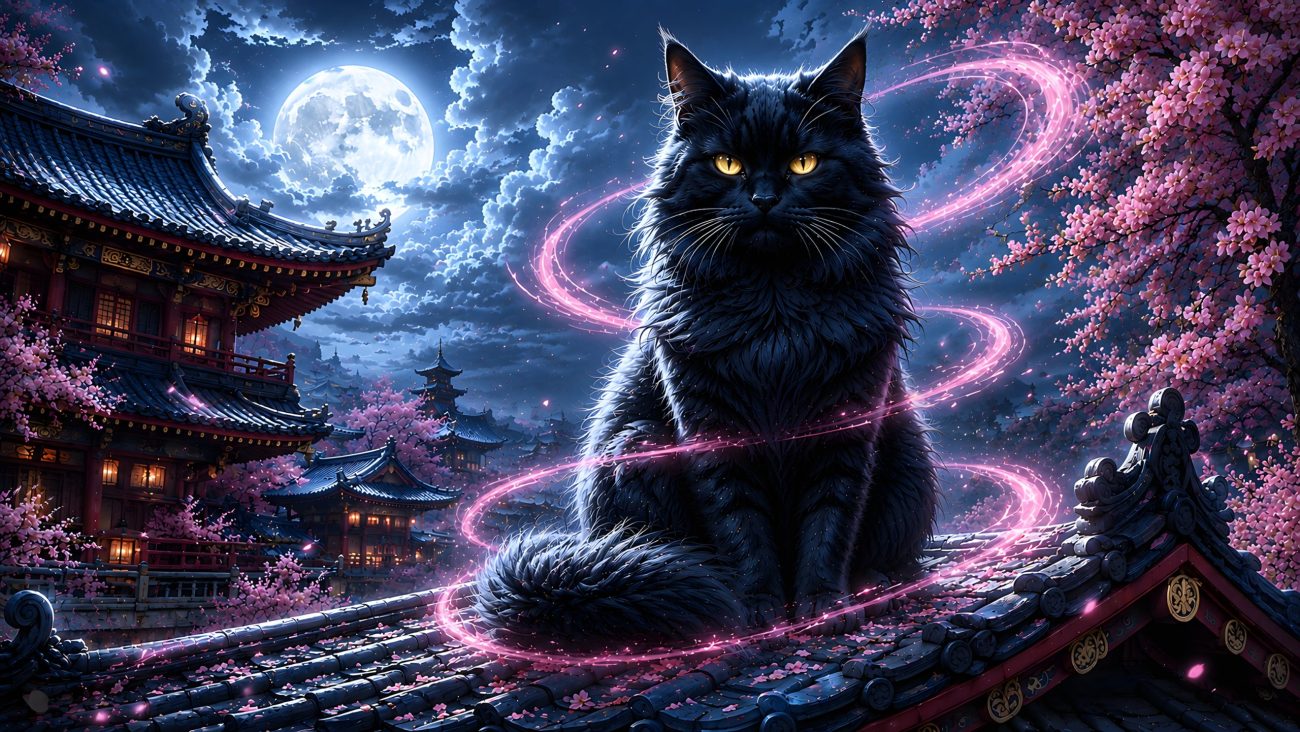
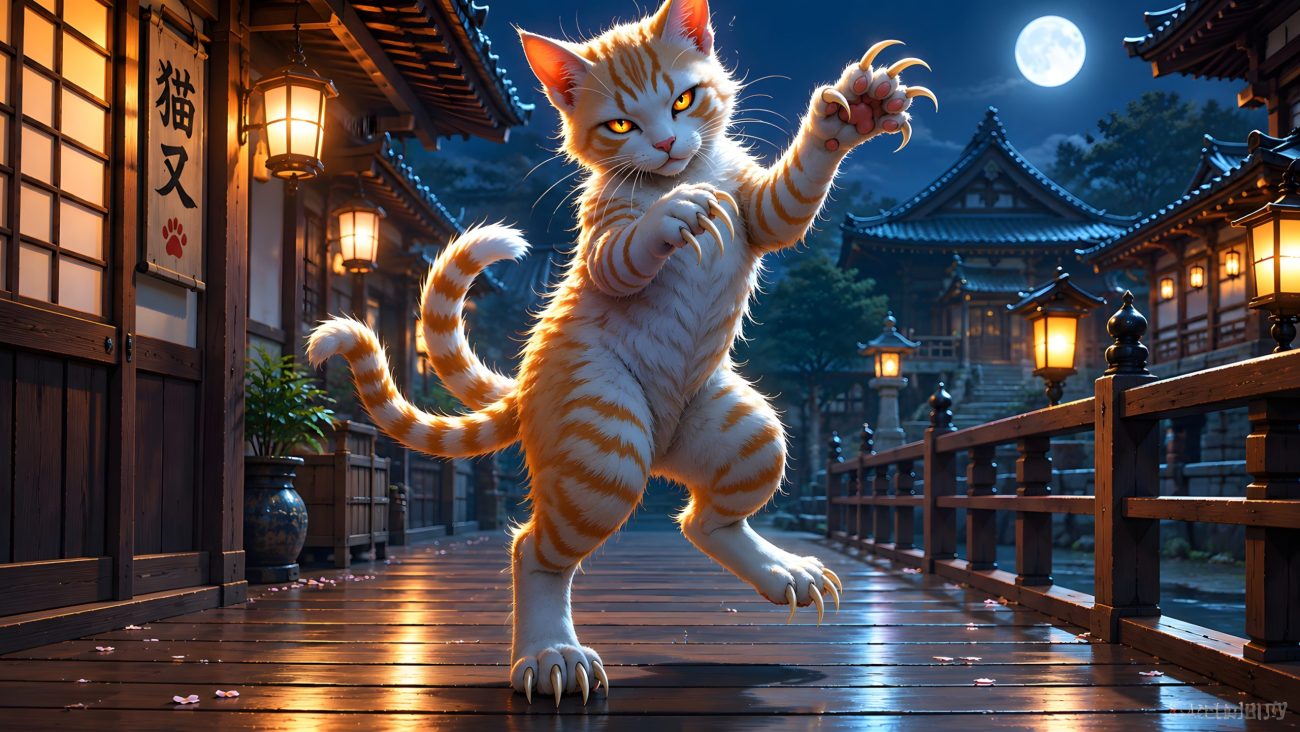
In the old Norse lands, where mountains rose sharply from forest and stone, people believed that not every path was meant for human feet. Some heights belonged to other beings—watchers who moved where men could not follow. Among them was the Skogkatt, a forest cat spoken of not as an animal, but as a fairy creature shaped by the land itself.

The Skogkatt was said to dwell in the mountains, not in villages or hearth-lit halls. Forests marked its boundary, cliffs its true home. Where rock faces rose sheer and unforgiving, the Skogkatt climbed without hesitation. Places that halted hunters, travelers, and even other animals offered it no resistance. Its movement defied expectation, as though the mountain itself allowed its passage.

This ability was not admired for grace, but respected for its meaning. In Norse belief, skill without purpose was rare. To climb where others could not was not merely strength—it was permission. The Skogkatt did not struggle against the mountain; it belonged to it. It left no tracks, no broken stone, no trail to follow. Where it went, humans were reminded of their limits.

Unlike house cats, the Skogkatt was never tame. It was not kept, trained, or claimed. To encounter one was not ownership, but coincidence—a brief crossing between human movement and something older. It did not linger, and it did not respond to being seen. Its presence was not an invitation, but a warning.

The mountains themselves shaped the creature’s meaning. In Norse thought, high places were realms of endurance, silence, and judgment. Storms gathered there without warning. Paths vanished beneath snow and stone. That the Skogkatt moved freely among these dangers marked it as a being unafraid of isolation, thriving where dependence failed.

Later generations would wonder whether the Skogkatt lived on in flesh rather than story, embodied in the great forest cats of Norway—powerful climbers with thick coats and unshakable balance. But folklore does not concern itself with proof. What mattered was not whether the Skogkatt endured, but what it taught.

Through the Skogkatt, people learned that the land does not yield itself equally to all. Some beings walk where others must stop. To follow blindly is to fall. Wisdom lies in knowing when a path is not meant for you.

And so the Skogkatt remains where it has always been—high above the treeline, moving along stone faces untouched by human hands. A quiet presence in the mountains, reminding those below that not every height is meant to be conquered, and not every creature is meant to come down.


Sources

Wikipedia contributors. (n.d.). Norwegian Forest Cat. In Wikipedia, The Free Encyclopedia, from https://en.wikipedia.org/wiki/Norwegian_Forest_Cat


Mishipeshu

Tradition / Region: Algonquian Mythology, American Mythology
Alternate Names: Mishibijiw, Mishipeshu
Category: Cat


The Myth

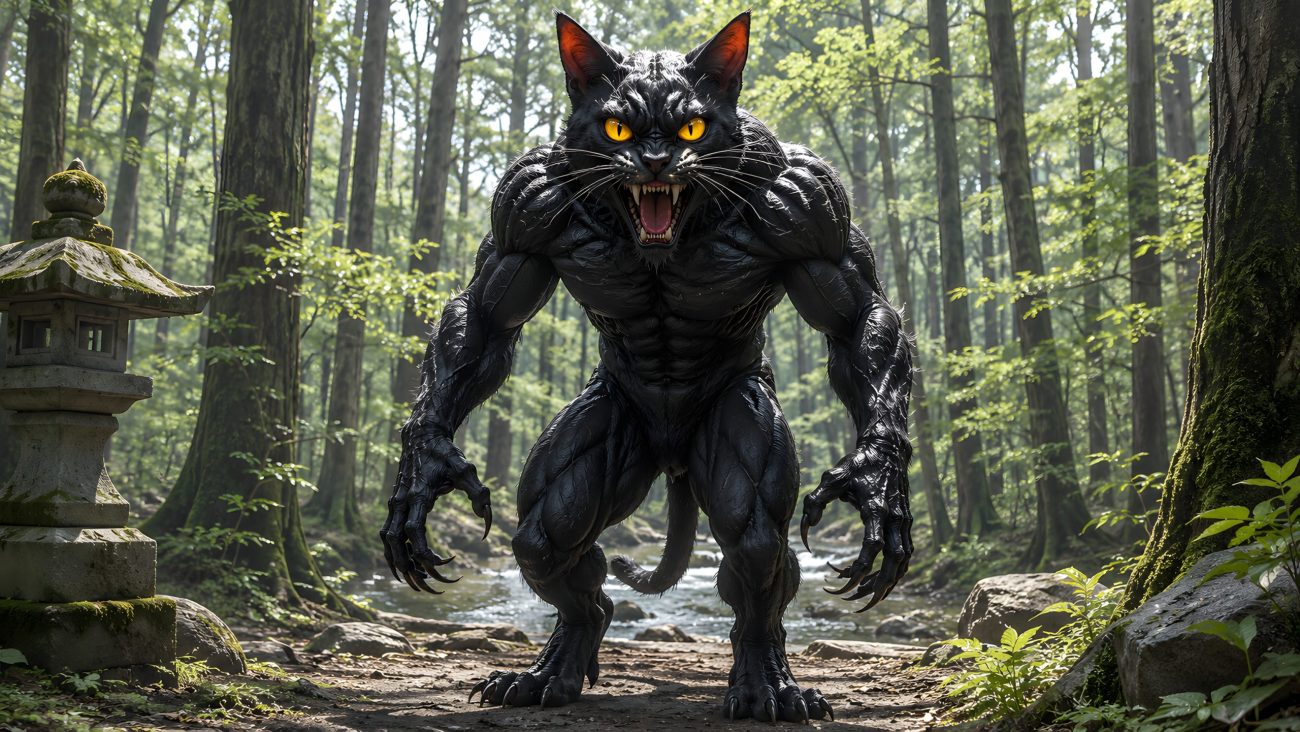
The Micibichi is a powerful being said to dwell in deep lakes, rivers, and underground waters. It is most often described as a great feline, resembling a lynx or panther, but far larger and more dangerous than any ordinary animal. Its body is sleek and muscular, armed with sharp claws, and it moves with sudden speed. Though it is a creature of the water, it also inhabits caves and places beneath the earth.

In many tellings, the Micibichi has a humanoid head, sometimes bearing horns, and its eyes shine with unnatural awareness. It is closely associated with copper and other riches hidden within the earth, and is said to guard these resources fiercely. For this reason, it is both feared and respected as a powerful spirit tied to survival and wealth.

The Micibichi rules liminal places where land, water, and the underground meet. It creates whirlpools, sudden storms, and dangerous currents, and is blamed for drownings and disappearances. Canoes that pass over its domain without proper respect may be overturned, and travelers pulled beneath the surface. Yet the Micibichi is not always hostile. Fishermen and travelers who offer tobacco, food, or other gifts may pass safely, believing the spirit has accepted their acknowledgment.

The creature is said to change in size. At times it may appear no larger than a common lynx; at other times it grows into a monstrous panther capable of crushing canoes and dragging prey into the depths. Its presence is often known before it is seen, through disturbances in the water or unexplained sounds rising from below.

In the wider order of the world, the Micibichi is understood as a counterpart to the great sky beings, dwelling below while others rule above. Its power balances the forces of the heavens, and its actions shape the fate of those who depend on water for travel, food, and life itself.

Thus the Micibichi remains a feared and revered spirit of the deep—guardian of waters and hidden riches, a being that punishes carelessness and rewards respect, and whose domain marks the boundary between the human world and forces far older and stronger than humankind.


Sources

Wikipedia contributors. (n.d.). Underwater panther. In Wikipedia. Retrieved June 29, 2026, from https://en.wikipedia.org/wiki/Underwater_panther