Tradition: Tanzanian Mythology
Alternative Names: Wakoningo; Wadaatimba
Category: Dwarf
The Myth
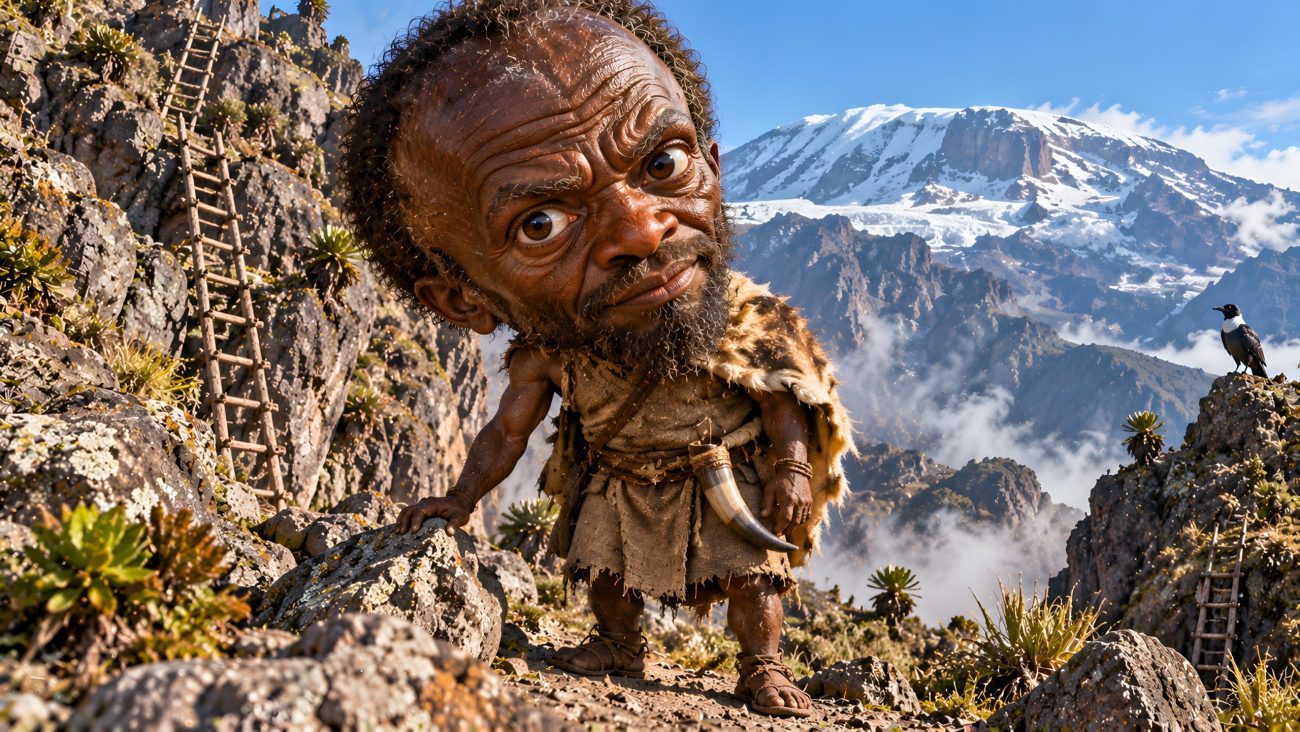
The Wakonyingo are a mysterious people of dwarfs said to live on Mount Kilimanjaro. They have enormous, misshapen heads and are much smaller than ordinary people. They withdrew into the mountains when advancing tribes drove them from their former homes, taking refuge high among the inaccessible slopes. Their settlements are reached by remarkable ladders fastened directly to the mountainsides, climbing so high that they seem to disappear into the sky.
Despite their strange appearance, the Wakonyingo are not portrayed as wholly hostile. They are said to feel compassion for people in need and sometimes help those who show them kindness. They are also connected with magical knowledge and are believed to possess spells capable of protecting crops from insects and other pests, as well as magic for closing roads so that enemies cannot enter their territory.
The Wakonyingo are said to descend from human children, although their enormous heads set them apart from ordinary people. They do not lie down to sleep. Instead, they sit upright against the walls of their huts, because their heads are so large that lying down would cause them to fall. Their unusual size also affects the way they dress: when one of the dwarfs falls, his companions must use their horns to lift him back up.
One story tells of two brothers, Mkunare and Kanyanga, who lived with their father in poverty. They had nothing, not even a cow, and Mkunare decided to travel to Mount Kilimanjaro, where they had heard that a chief who possessed many cattle lived. Along the road he met an old woman whose eyes were so badly affected that she could barely see. She asked him to lick her eyes so that her sight would return, promising to tell him how to find the chief. Mkunare helped her, but when she gave him directions, he ignored her request to treat her respectfully and continued on his way.
Eventually Mkunare reached the Wakonyingo settlement and saw what he expected to be a community of adults. Instead, everyone was no taller than a small herding boy. He asked where their fathers and older brothers were, and they assured him that the elders would return soon. The Wakonyingo then slaughtered an animal for dinner, but refused to give Mkunare any food, telling him to wait until their fathers and brothers came home. Hungry and disappointed, he left.
On his journey home he became lost and wandered for almost a month before finally finding his way back. He told his family about the strange little people living on Kilimanjaro and the great herds of cattle belonging to their chief.
Kanyanga then decided to try his luck. He too encountered an old woman and fulfilled her request, treating her with kindness. She directed him toward the chief’s settlement and told him to greet the Wakonyingo respectfully when he arrived. Kanyanga followed her instructions. The Wakonyingo welcomed him warmly, took him before their chief, and provided him with food and shelter.
In return for his kindness, Kanyanga was taught their magical knowledge. The Wakonyingo showed him spells that could protect crops from insects and other pests and taught him how to magically close roads so that enemies could not enter their territory. Before he left, the Wakonyingo rewarded him with cattle and goats. Kanyanga returned home driving a large herd, while his brother Mkunare remained poor.
The people remembered the story in a song that contrasted the fortunes of the two brothers and warned against despising the mysterious little people of the mountain:
“O Mkunare, wait until the fathers come!
What right did you have to despise the ‘little people’?”
The Wakonyingo were not believed to be creatures of the sky, although their lofty mountain homes and immense ladders gave them an appearance of belonging to the heavens. Their world remained firmly connected to the mountains of Kilimanjaro, where they lived apart from ordinary people and guarded their own strange knowledge.
Sources
“Vakoningo.” New Bestiary (Bestiary.us). Accessed October 4, 2026. https://www.bestiary.us/vakoningo