Indombe

Tradition / Region: Congo Mythology
Alternative names: The Copper Snake, The Fire Serpent
Category: Snake


The Myth

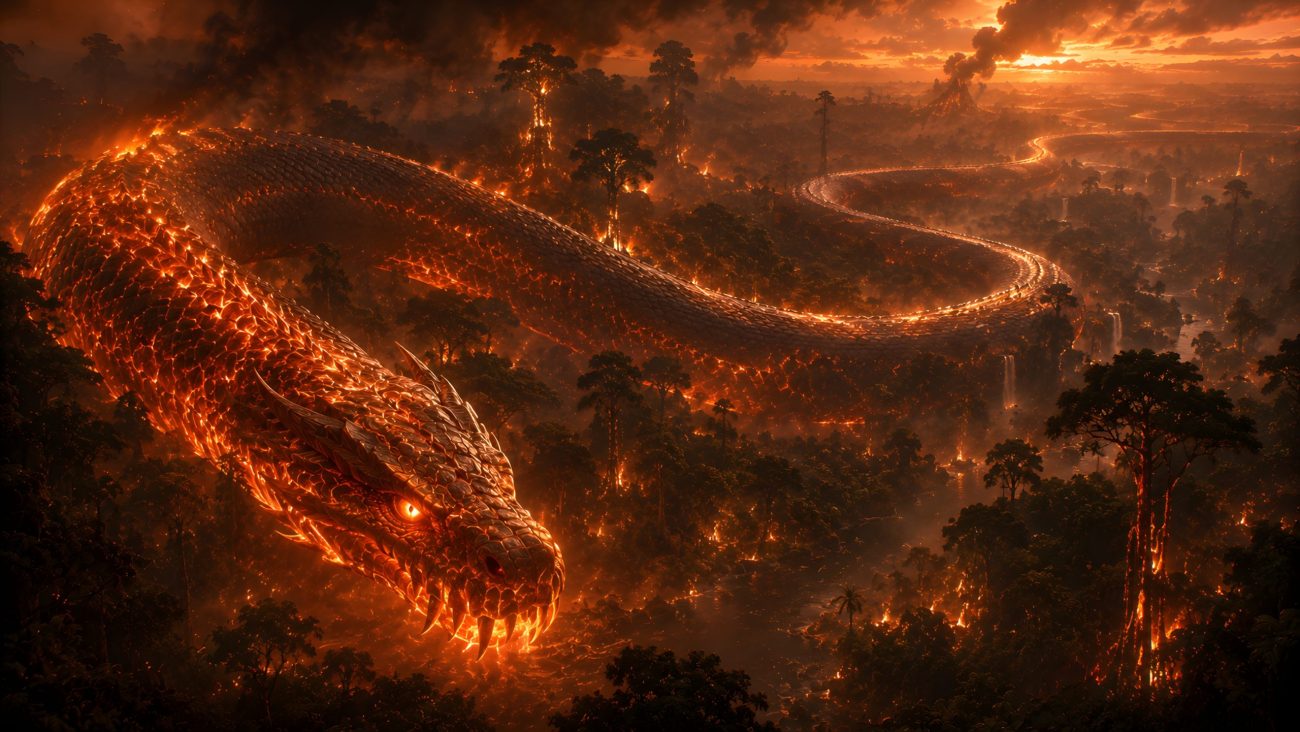
Indombe is a colossal supernatural serpent from Bakongo tradition, feared and revered as a being of fire, motherhood, death, and transformation. She is described as an enormous copper-colored snake more than three feet wide and several miles long, dwelling high within the forests of the Congo. Her glowing body radiates intense inner heat, shining red like burning metal beneath the setting sun.

Ancient stories associate Indombe with fire, sunset, fertility, and destructive spiritual power. She is considered immeasurably ancient, older than villages and kingdoms, and connected to forces beyond ordinary human understanding.

The best-known legend of Indombe begins when the hero and culture figure Itonde entered the forest with his brother Lofale. Their sister-in-law, pregnant and overcome by strange cravings, desired snake meat, and the brothers searched the wilderness to find it.

Deep in the forest they encountered Indombe coiled around a giant tree, blazing with fiery light so bright that it illuminated the forest canopy like a second sun. Itonde called for the serpent to descend, but Indombe became enraged when he attempted to summon her through chants and magical words.

In fury, the giant snake pressed her burning-hot head against Itonde’s shoulder, scorching him nearly to death. Yet Itonde possessed a magical bell capable of restoring his strength and healing his wounds. Each time he rang the bell, his power increased while Indombe weakened.

Fearing the coming of night, Itonde even captured the sun itself to prevent darkness from aiding the serpent. After a long struggle, he finally subdued Indombe and carried her triumphantly back toward his village.

But the serpent proved far more dangerous than expected. The moment Itonde set her down outside the village gates, Indombe coiled around the settlement and swallowed every inhabitant whole.

Enraged, Itonde killed the serpent with an enchanted machete, slicing her body apart and frying the pieces in oil. Before dying, however, Indombe warned him that every fragment of her body had to be consumed completely or she would return.

Itonde ate everything except the head, which he hid beneath his bed.

The following morning, Indombe returned as a ghostly spirit serpent.

Rather than seeking revenge, the spectral Indombe explained that because part of her remained uneaten, her spirit could never fully die. She then guided Itonde to a beautiful new land free from sickness and suffering, offering him a new beginning.

Before disappearing forever, the spirit serpent granted Itonde a new name and destiny. She then coiled herself one final time and vanished into the river depths.

Indombe remains one of the most symbolic serpent beings in Central African mythology. She represents both destruction and renewal, death and motherhood, fire and rebirth. In many interpretations, she embodies the dangerous but necessary forces of transformation that destroy old worlds so new ones may emerge.


Sources

A Book of Creatures. (2016, November 11). Indombe. Retrieved May 15, 2026, from https://abookofcreatures.com/2016/11/11/indombe/

Lake Tanganyika Monster

Tradition / Region: Congo Mythology, Burundi Mythology, Tanzania Mythology, Zambia Mythology
Alternative names: Tanganyika Serpent, Tanganyika Lake Monster
Category: Snake


The Myth

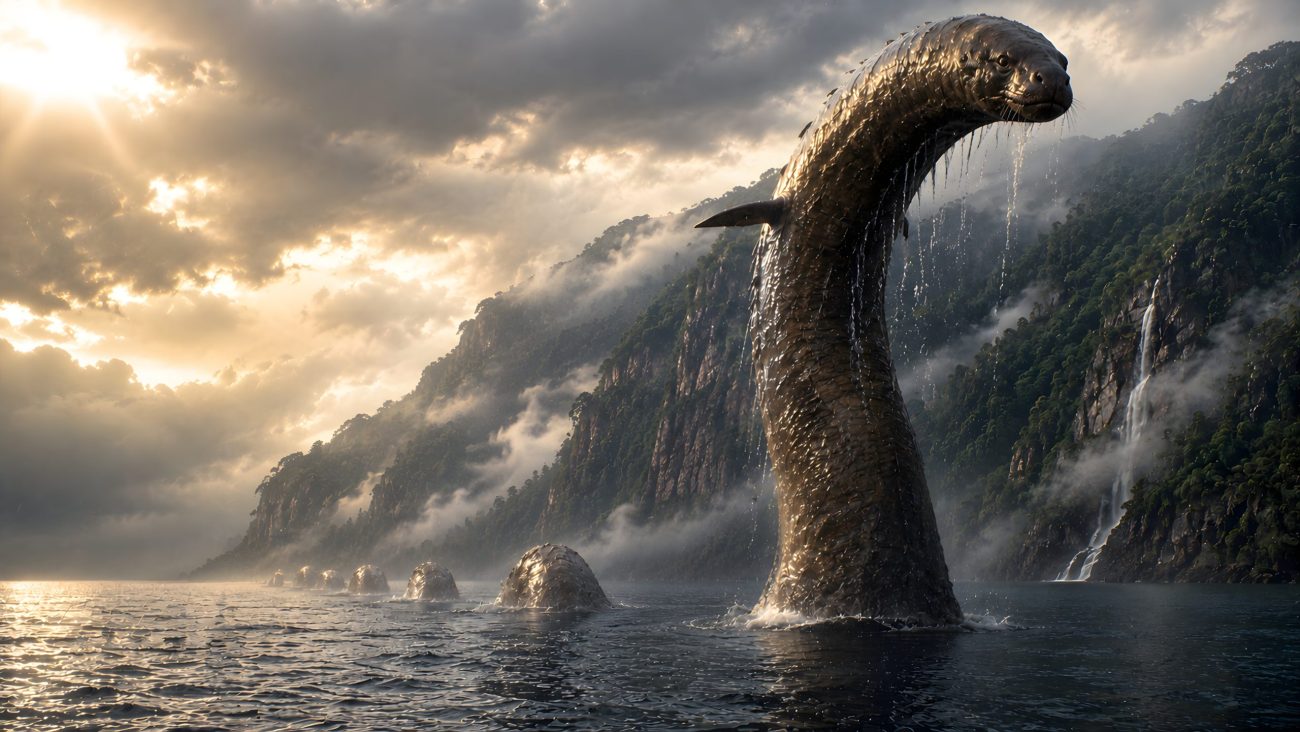
Deep beneath the dark waters of Lake Tanganyika, one of Africa’s oldest and deepest lakes, legends speak of an enormous serpentine creature that occasionally rises from the depths. Witnesses describe it as colossal, ancient, and unlike any known animal — a monstrous being whose body coils vertically above the water in gigantic loops.

Stories surrounding the creature have circulated for generations among the peoples living around the lake. Fishermen, colonial travelers, missionaries, and hunters all reported strange sightings far out on the water or near isolated rocky shores. Some tales describe it as a giant serpent; others compare it to an immense aquatic mammal or prehistoric saurian.

One of the earliest reports appeared in the late nineteenth century, when missionaries near the lake spoke of a massive “sea serpent” more than thirty feet long resting on the shore before sliding back into the water.

The most famous sighting occurred in 1914 near the Burundian side of the lake. German doctor M. V. Thierfelder and a companion were traveling near a rocky bay when they suddenly saw a gigantic creature emerging from the water.

The beast moved unlike an ordinary snake. Instead of writhing horizontally, enormous loops of its body rose vertically from the lake in slow, majestic undulations. Thierfelder counted as many as six coils arching above the surface at once.

He described the creature as bright brown in color, thick-bodied, and apparently covered not in scales but in a smooth, fleece-like skin. It possessed no visible legs or fins, although thin fin-like appendages appeared near the head. Its head itself was narrow and mammalian rather than reptilian, resembling something between a serpent and a manatee.

The gigantic animal glided silently among a group of otters before turning and disappearing back into the deeper waters of the lake.

Local workers accompanying the expedition claimed that nearby people believed the monster appeared only once every several years. Other traditions around Lake Tanganyika speak of enormous lake spirits, giant fish capable of overturning canoes, and mysterious aquatic beings inhabiting the unfathomable depths.

Additional reports later described strange clawed tracks along the shoreline, gigantic tail marks in the mud, and massive shapes mistaken for islands before suddenly diving beneath the water.

Because Lake Tanganyika is extraordinarily deep and ancient, the monster became associated with ideas of primordial survival — a relic from an older world hidden beneath dark freshwater trenches untouched by humans.

Modern interpretations vary widely. Some believe the sightings were exaggerated encounters with large aquatic animals or optical illusions caused by waves and light. Others connect the creature to African serpent-dragon traditions such as the Lukwata of Lake Victoria.

Yet the legend persists because of the unsettling consistency of certain descriptions: immense size, vertical coils rising from the lake, mammal-like features, and silent movement through deep water.

To this day, Lake Tanganyika retains an atmosphere of mystery. Its vast dark waters, immense depth, and isolated shores continue to inspire stories of ancient creatures still hidden beneath the surface.


Sources

Cryptid Archives. (n.d.). Lake Tanganyika monster. Retrieved May 15, 2026, from https://cryptidarchives.fandom.com/wiki/Lake_Tanganyika_monster