Tradition / Region: Congo Mythology, Burundi Mythology, Tanzania Mythology, Zambia Mythology
Alternative names: Tanganyika Serpent, Tanganyika Lake Monster
Category: Snake
The Myth
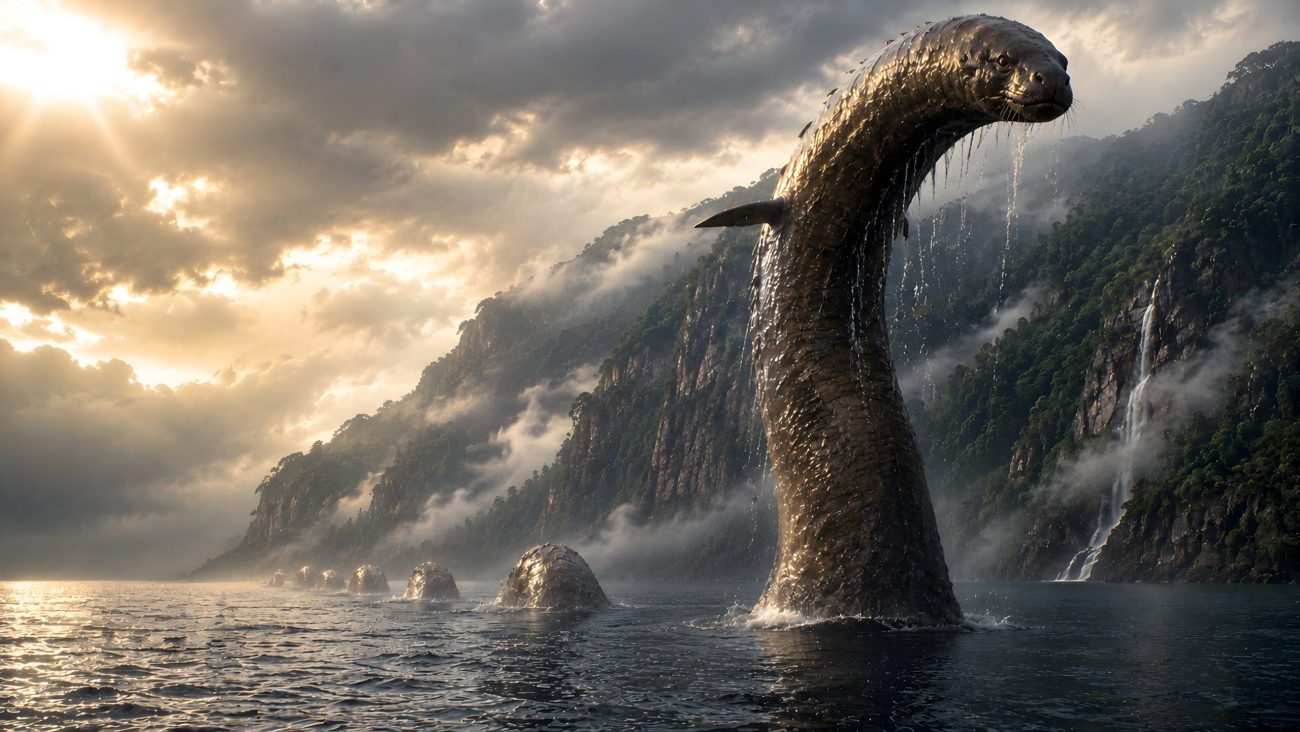
Deep beneath the dark waters of Lake Tanganyika, one of Africa’s oldest and deepest lakes, legends speak of an enormous serpentine creature that occasionally rises from the depths. Witnesses describe it as colossal, ancient, and unlike any known animal — a monstrous being whose body coils vertically above the water in gigantic loops.
Stories surrounding the creature have circulated for generations among the peoples living around the lake. Fishermen, colonial travelers, missionaries, and hunters all reported strange sightings far out on the water or near isolated rocky shores. Some tales describe it as a giant serpent; others compare it to an immense aquatic mammal or prehistoric saurian.
One of the earliest reports appeared in the late nineteenth century, when missionaries near the lake spoke of a massive “sea serpent” more than thirty feet long resting on the shore before sliding back into the water.
The most famous sighting occurred in 1914 near the Burundian side of the lake. German doctor M. V. Thierfelder and a companion were traveling near a rocky bay when they suddenly saw a gigantic creature emerging from the water.
The beast moved unlike an ordinary snake. Instead of writhing horizontally, enormous loops of its body rose vertically from the lake in slow, majestic undulations. Thierfelder counted as many as six coils arching above the surface at once.
He described the creature as bright brown in color, thick-bodied, and apparently covered not in scales but in a smooth, fleece-like skin. It possessed no visible legs or fins, although thin fin-like appendages appeared near the head. Its head itself was narrow and mammalian rather than reptilian, resembling something between a serpent and a manatee.
The gigantic animal glided silently among a group of otters before turning and disappearing back into the deeper waters of the lake.
Local workers accompanying the expedition claimed that nearby people believed the monster appeared only once every several years. Other traditions around Lake Tanganyika speak of enormous lake spirits, giant fish capable of overturning canoes, and mysterious aquatic beings inhabiting the unfathomable depths.
Additional reports later described strange clawed tracks along the shoreline, gigantic tail marks in the mud, and massive shapes mistaken for islands before suddenly diving beneath the water.
Because Lake Tanganyika is extraordinarily deep and ancient, the monster became associated with ideas of primordial survival — a relic from an older world hidden beneath dark freshwater trenches untouched by humans.
Modern interpretations vary widely. Some believe the sightings were exaggerated encounters with large aquatic animals or optical illusions caused by waves and light. Others connect the creature to African serpent-dragon traditions such as the Lukwata of Lake Victoria.
Yet the legend persists because of the unsettling consistency of certain descriptions: immense size, vertical coils rising from the lake, mammal-like features, and silent movement through deep water.
To this day, Lake Tanganyika retains an atmosphere of mystery. Its vast dark waters, immense depth, and isolated shores continue to inspire stories of ancient creatures still hidden beneath the surface.
Sources
Cryptid Archives. (n.d.). Lake Tanganyika monster. Retrieved May 15, 2026, from https://cryptidarchives.fandom.com/wiki/Lake_Tanganyika_monster