Antonen

Tradition / Region: Belgian Mythology
Alternate Names:
Category: Gnome


The Myth

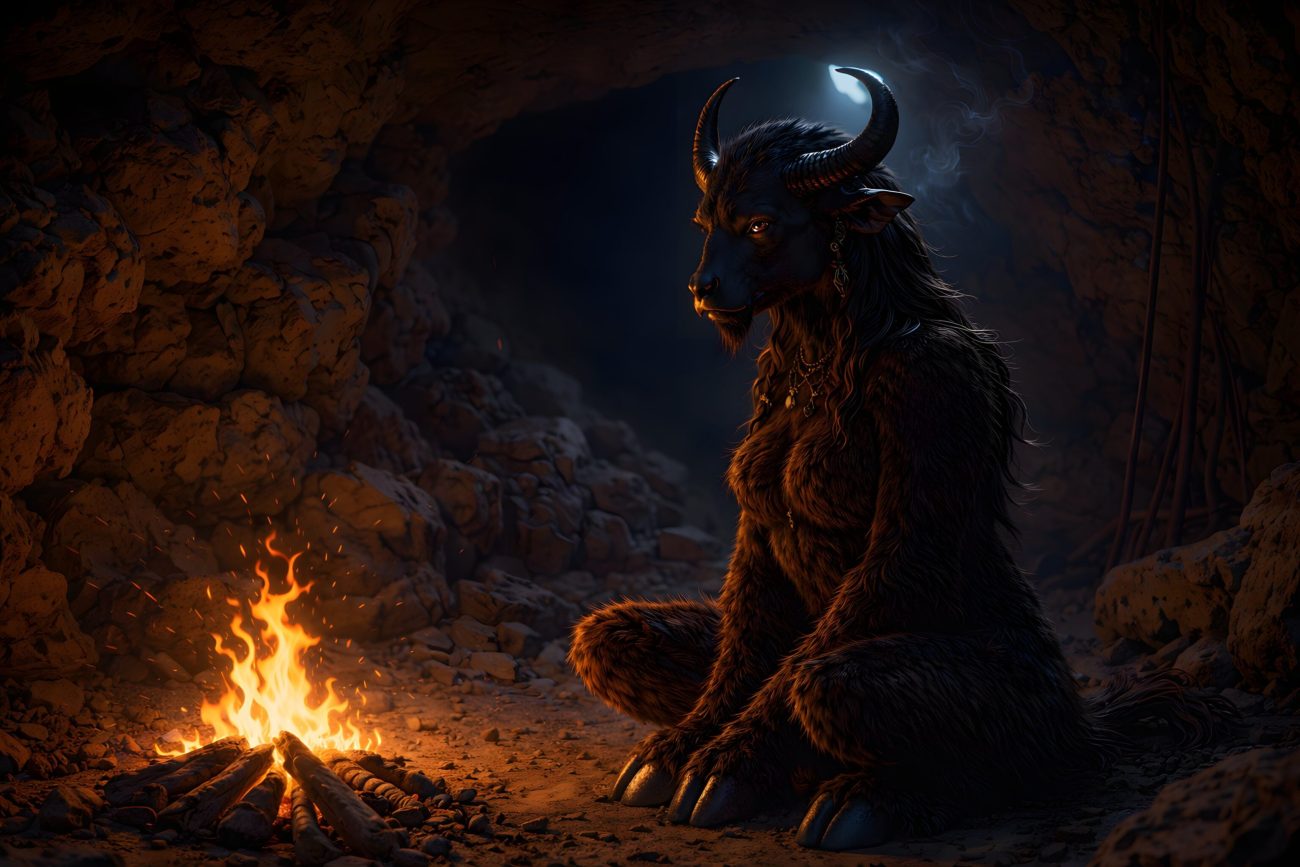
In the villages of Ophoven and Molenbeersel, people once spoke of strange little beings known as the Antonen. They were a kind of earth spirit, much like the aardmannetjes, but darker and more secretive. Their skin was said to be black, and they lived hidden away from human sight, close to the ground and the old places of the land.

The Antonen were said to worship a golden calf, which they had buried in a secret place known only to them. There, underground and unseen, they honored it in silence, guarding both the idol and its location with great care.

For a long time they remained near the villages, unseen but present. Then the church bells began to ring the Angelus. The sound of the bells carried across fields and forests, cutting through earth and air alike. At the first ringing, the Antonen fled in terror. The holy sound was unbearable to them, and they abandoned their hidden places, their buried calf, and the land they had once inhabited.

After that, they were never seen again. Yet people say that wherever the Antonen once lived, the ground still remembers them—and that somewhere beneath the earth, the golden calf may still lie buried, waiting in silence.


Gallery


Sources

Abe de Verteller contributors. (n.d.). Van aardmannetje tot zwarte juffer: Een lijst van Nederlandse en Vlaamse elfen en geesten. In Abe de Verteller, from https://abedeverteller.nl/van-aardmannetje-tot-zwarte-juffer-een-lijst-van-nederlandse-en-vlaamse-elfen-en-geesten/


Interpretive Lenses

Religious Readings
  • Christian Ascetic Deep Dive
Philosophical Readings
  • Nietzschean Deep Dive
Psychological Readings
  • Jungian Deep Dive
Esoteric Deep Dive
  • Hermetic Deep Dive
Political / Social Readings
  • Marxist Deep Dive
Other
  • How to Invite The Antonen

Ear People

Tradition / Region: Chinese mythology
Alternate Names: Man in the Ear
Category: Gnome


The Myth

There was once a man named Tan Jinxuan who devoted himself to inner cultivation. He practiced breathing and stillness, enduring heat and cold alike, believing that persistence would bring insight. For many months nothing happened—until one day, as he sat quietly, he heard a faint whisper inside his ear, as soft as the buzzing of a fly.

The voice said, “You can see me.”

When Tan opened his eyes, the sound vanished. When he closed them and calmed his mind, the whisper returned. Each time he sat in meditation, the tiny voice spoke again, and Tan grew convinced that something truly lived within his ear.

One day, when the voice spoke once more, Tan answered it. At that moment, a tiny being leapt out from his ear and fell spinning onto the ground. It was no more than three inches tall, shaped like a small man with a fierce face like a yaksha, savage and sharp-eyed despite its size.

Tan stared in astonishment as the little creature whirled about, real and solid, no longer hidden. Before he could grasp it or speak further, it vanished as suddenly as it had appeared, leaving Tan alone with the certainty that unseen beings dwell closer to humans than anyone suspects.

Thus it was said that some spirits live not in forests or mountains, but within the body itself—heard only in silence, seen only by those who dare to listen.


Gallery


Sources

Wikipedia contributors. (n.d.). 耳中人. In Wikipedia, The Free Encyclopedia, from https://zh.wikipedia.org/wiki/%E8%80%B3%E4%B8%AD%E4%BA%BA


Interpretive Lenses

Religious Readings
  • Christian Ascetic Deep Dive
Philosophical Readings
  • Nietzschean Deep Dive
Psychological Readings
  • Jungian Deep Dive
Esoteric Deep Dive
  • Hermetic Deep Dive
Political / Social Readings
  • Marxist Deep Dive
Other
  • How to Invite The Ear People

Aardmannetje

Tradition / Region: Dutch mythology, Friesland
Alternate Names: Aardman; Ierdmantsje
Category: Gnome, fire


The Myth

Beneath fields, hills, and old farmyards live the aardmannetjes, small earth beings usually dressed in green. They dwell unseen beneath the ground, moving quietly through the soil, and though most people never glimpse them, their presence is felt in subtle ways.

The aardmannetjes help humans with their work, but only if they are not watched. Crops grow straighter, tools are found where they were lost, and tasks seem to finish themselves overnight. Yet they do not tolerate curiosity. Anyone who spies on them risks punishment, for the aardmannetjes are said to blow out the eye of those who try to observe them.

They are also known to steal human children, leaving one of their own in the cradle instead. The small pipes sometimes found sticking out of the ground are said to be aardmanspijpjes, openings to their hidden homes. Whoever builds a house on land where aardmannetjes live invites disaster: such houses are doomed to be destroyed by fire or storm, again and again.

In Friesland, the ierdmantsjes are said to dance in the middle of cornfields, singing a strange song: “Monday, Tuesday, Wednesday.” Once, a hunchback overheard them and dared to finish the song with “Thursday, Friday.” Instead of punishing him, the earth beings laughed and rewarded him by removing his hump.

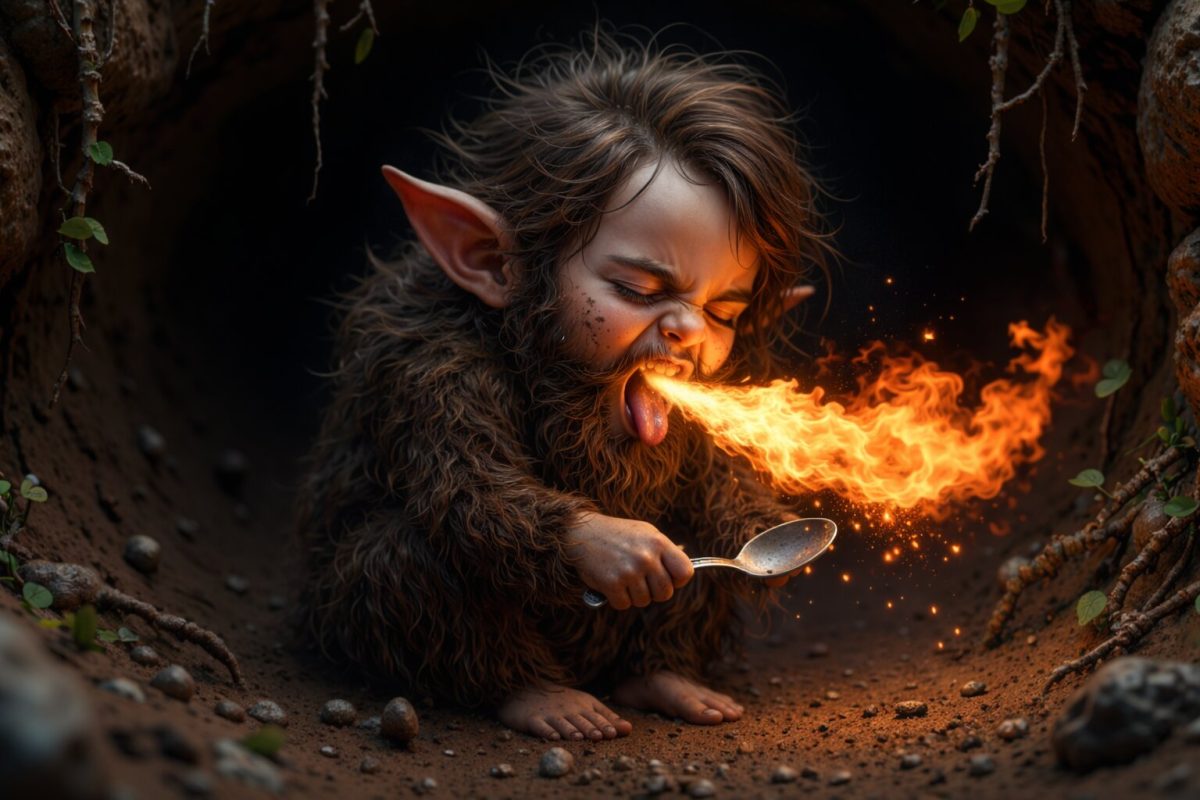
In another tale, a mighty, hairy aardman lived in the Aardjesberg near Bussum. Each year he demanded a maiden as his bride. When no maidens were left, his rage grew uncontrollable. He spewed fire from his mouth, and the nearby village was burned to the ground, house by house, until nothing remained.

Thus the aardmannetjes are remembered as helpers and destroyers alike—generous when respected, merciless when crossed—guardians of the earth who demand silence, distance, and humility from those who live above them.


Gallery


Sources

Abe de Verteller contributors. (n.d.). Van aardmannetje tot zwarte juffer: Een lijst van Nederlandse en Vlaamse elfen en geesten. In Abe de Verteller, from https://abedeverteller.nl/van-aardmannetje-tot-zwarte-juffer-een-lijst-van-nederlandse-en-vlaamse-elfen-en-geesten/


Interpretive Lenses

Religious Readings
  • Christian Ascetic Deep Dive
Philosophical Readings
  • Nietzschean Deep Dive
Psychological Readings
  • Jungian Deep Dive
Esoteric Deep Dive
  • Hermetic Deep Dive
Political / Social Readings
  • Marxist Deep Dive
Other
  • How to Invite The Aardmannetje

Bull of Heaven

Tradition / Region: Mesopotamian mythology
Alternate Names:
Category: Cow


The Myth

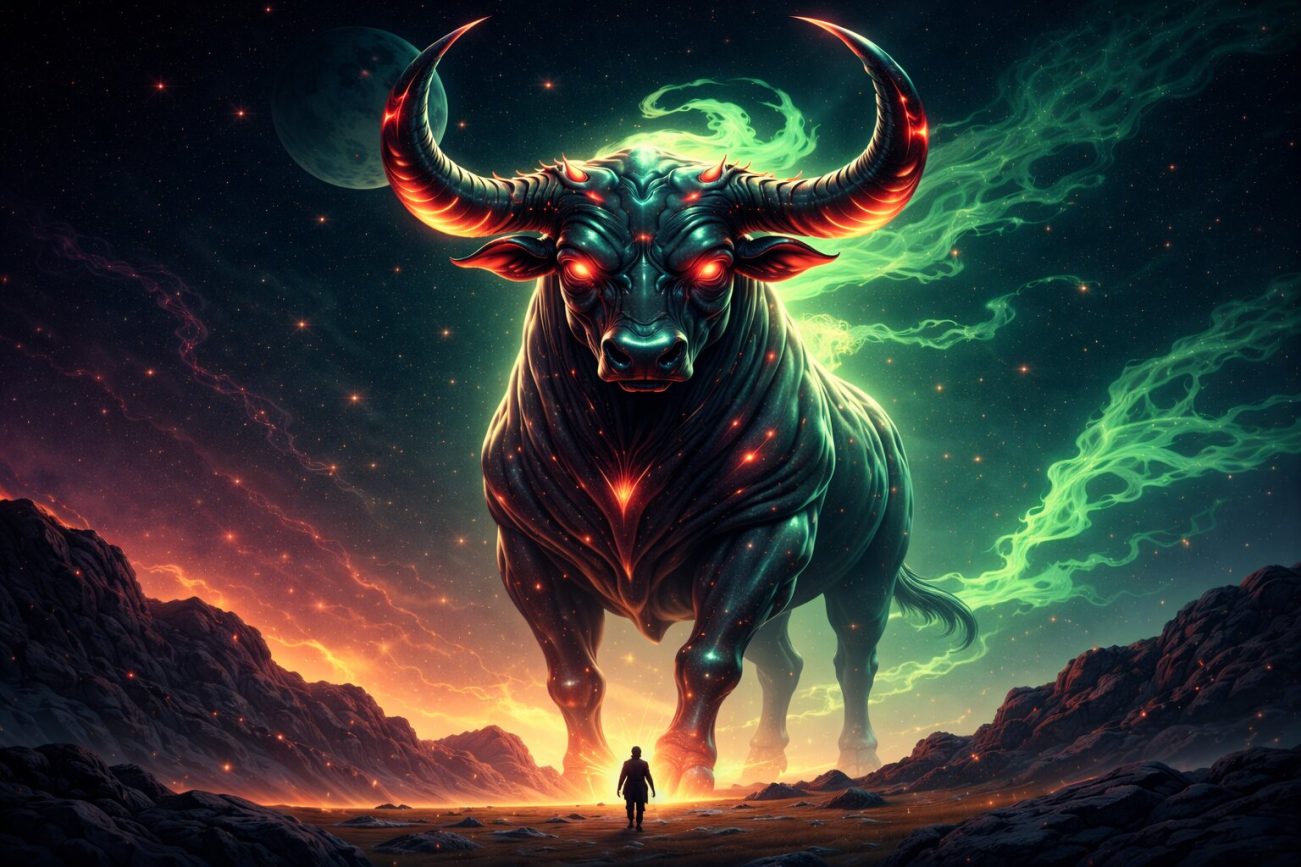
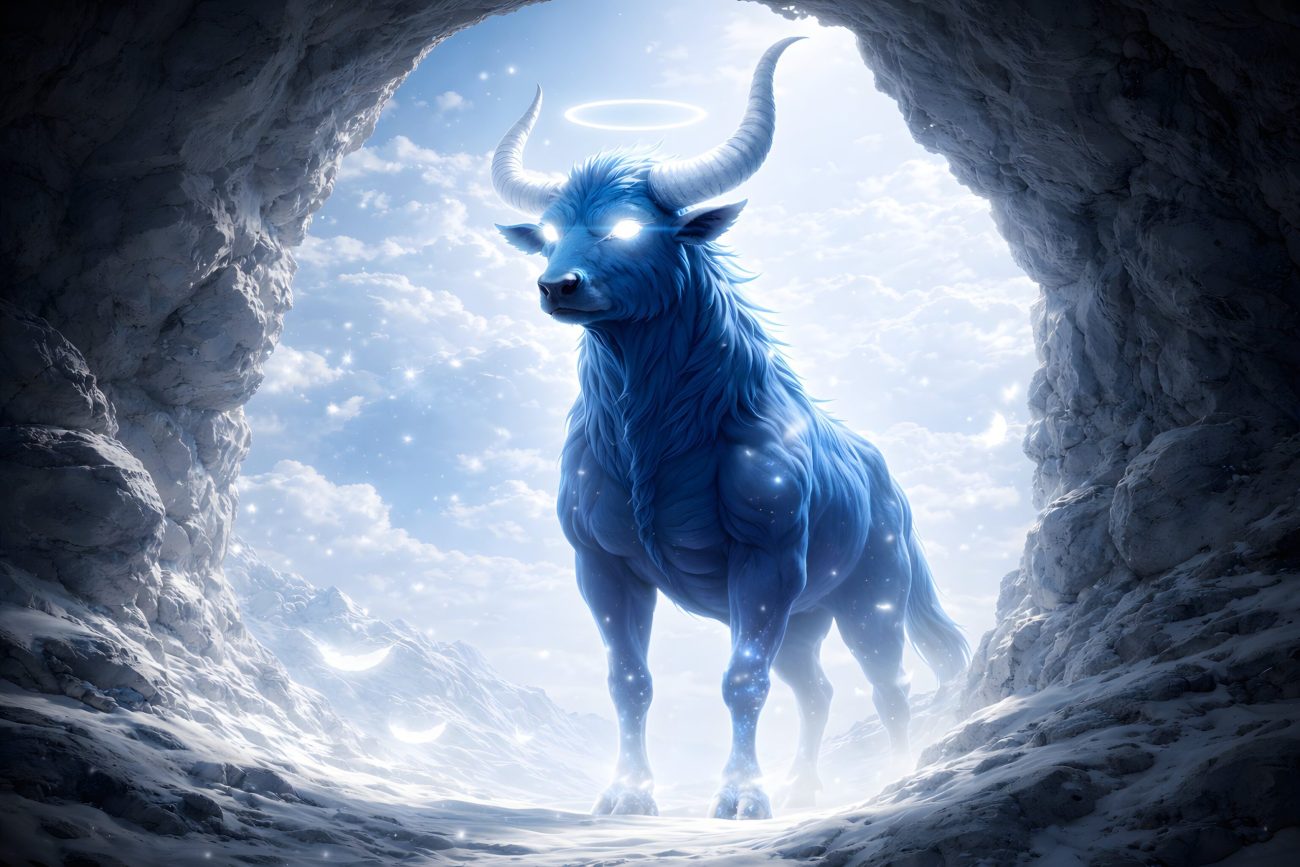
The Bull of Heaven was a creature of immense and terrifying power, kept under restraint by the gods because its release meant ruin for the world. When it was allowed to roam the earth, famine and destruction were sure to follow.

After the hero Gilgamesh returned to Uruk in triumph, the goddess Ishtar desired him and offered herself as his consort. Gilgamesh rejected her, reminding her of the many lovers she had ruined and cast aside. Humiliated and enraged, Ishtar ascended to the heavens and demanded that her father, the sky-god Anu, release the Bull of Heaven so she might punish Gilgamesh.

Anu warned her that unleashing the Bull would bring years of famine and suffering. Ishtar answered that she had prepared stores of grain enough for gods, humans, and beasts alike. At last, Anu relented and handed the Bull of Heaven over to her.

Ishtar released the Bull upon the land. With its first breath, the earth split open and swallowed a hundred men. With its second breath, another chasm opened, claiming two hundred more. Fields were ruined, the ground cracked beneath its hooves, and terror spread through Uruk as the monstrous bull ravaged the land.

Gilgamesh went out to face the Bull, joined by his companion Enkidu. As the creature charged, Enkidu seized it from behind, gripping its tail and holding it fast. In that moment, Gilgamesh struck, plunging his sword into the Bull’s neck and killing it. They cut out its heart and offered it to the sun-god Shamash in thanks.

When Ishtar saw the Bull of Heaven slain, she climbed the walls of Uruk and cursed Gilgamesh. In defiance, Enkidu tore the Bull’s thigh from its body and hurled it at her. Ishtar gathered her followers and mourned the fallen beast.

But the killing of a divine creature could not go unpunished. The gods met in council and decreed that one of the two heroes must die. Their judgment fell upon Enkidu. Soon after, he was struck by illness and died, having visions of the Underworld before his end.

The death of Enkidu shattered Gilgamesh’s heart and marked the turning point of his life. From the slaying of the Bull of Heaven came not triumph, but grief—and the beginning of Gilgamesh’s search for meaning beyond strength and glory.


Gallery


Sources

Jacobsen, T. (1976). The Treasures of Darkness: A History of Mesopotamian Religion. Yale University Press, pp. 195–215.

Wikipedia contributors. (n.d.). Bull of Heaven. In Wikipedia, The Free Encyclopedia, from https://en.wikipedia.org/wiki/Bull_of_Heaven


Interpretive Lenses

Religious Readings
  • Christian Ascetic Deep Dive
Philosophical Readings
  • Nietzschean Deep Dive
Psychological Readings
  • Jungian Deep Dive
Esoteric Deep Dive
  • Hermetic Deep Dive
Political / Social Readings
  • Marxist Deep Dive
Other
  • How to Invite The Bull of Heaven

Buzhai

Tradition / Region: Kazakh mythology
Alternate Names:
Category: Bogeyman, Cow


The Myth

Across the steppes and valleys of Kazakhstan, parents once warned their children of a being called the Buzhai. It was not like other creatures of legend, for it had no fixed shape or face. No one could say what it truly looked like, and that was what made it feared.

The Buzhai was never seen clearly. It was said to linger in shadows, to hide in dark corners, or to wait just beyond the doorway when night fell. Its power did not lie in claws or teeth, but in uncertainty. Children were told that if they ignored their elders or misbehaved, the Buzhai might come for them, emerging from the darkness without warning.

Because it had no form, every child imagined it differently. To some it was enormous and looming, to others a strange animal with watching eyes, to others still something formless that could not be escaped once noticed. What mattered was not what it was, but that it might be there.

In this way, the Buzhai lived in the imagination rather than the world, a presence felt rather than seen. It endured as a shadow of the unknown, passed from voice to voice, reminding the young that unseen forces might be drawn close by careless behavior, and that the dark always listens.


Gallery


Sources

Bestiary.us. (n.d.). Bézhəi, from https://www.bestiary.us/b%D3%A9zh%D3%99i


Interpretive Lenses

Religious Readings
  • Christian Ascetic Deep Dive
Philosophical Readings
  • Nietzschean Deep Dive
Psychological Readings
  • Jungian Deep Dive
Esoteric Deep Dive
  • Hermetic Deep Dive
Political / Social Readings
  • Marxist Deep Dive
Other
  • How to Invite The Buzhai

Buntcow

Tradition / Region: German mythology
Alternate Names:
Category: Cow


The Myth

Long ago, there were two herders whose ways shaped their cattle as much as their hands ever could. One was called Rohrdommel, the Bittern, and the other Wiedehopf, the Hoopoe. Both tended cows with care, yet each chose a very different path.

Rohrdommel led his herd into wide meadows rich with flowers and grass. The land was fertile but not heavy, and the cows that grazed there grew lively and bold. They leapt and ran, full of restless joy. When evening came and it was time to return home, Rohrdommel called out to them, crying, “Bunt, herüm!” — “Colorful cow, come around!” But the cows ignored him, dancing and scattering through the fields, unwilling to be gathered.

Wiedehopf, meanwhile, drove his cattle into high, barren hills where the wind blew sand across the ground and food was scarce. There his cows grew thin and weak. When he called to them, urging them to rise and follow, they could not. They lay where they had fallen, too exhausted to stand, no matter how loudly he cried, “Up, up, up!”

So it was said that Rohrdommel’s cows became spirited and wild, while Wiedehopf’s remained frail and helpless, each herd reflecting the land and care chosen for them. In time, the herders themselves vanished from the world of people and were transformed into birds.

Even now, their voices remain. Over the meadows, the Bittern still cries “Bunt, herüm!”, and across the hills the Hoopoe answers “Up, up, up!”—echoes of a time when cattle danced or lay still, and when herders shaped the fate of their herds by the paths they chose.


Gallery


Sources


Interpretive Lenses

Religious Readings
  • Christian Ascetic Deep Dive
Philosophical Readings
  • Nietzschean Deep Dive
Psychological Readings
  • Jungian Deep Dive
Esoteric Deep Dive
  • Hermetic Deep Dive
Political / Social Readings
  • Marxist Deep Dive
Other
  • How to Invite The Buntcow

Bull Demon King

Tradition / Region: Chinese mythology
Alternate Names: Niú Mówáng
Category: Cow


The Myth

The Bull Demon King was one of the greatest demon lords of the age, feared across mountains and valleys for his immense strength and terrifying presence. He ruled from his cavern on Thunder-Accumulating Mountain, commanding legions of lesser demons and living as a sovereign in his own right. He was the husband of Princess Iron Fan and the father of Red Boy, a fearsome child-demon whose power rivaled that of seasoned warriors.

In the days before Sun Wukong’s rebellion against Heaven, the Bull Demon King stood among a brotherhood of seven mighty demon kings. Together they swore oaths of loyalty, each proclaiming himself a ruler equal to Heaven. Among them, the Bull Demon King was the eldest and most respected, a figure of authority even the Monkey King acknowledged.

Later, when Tang Sanzang and his disciples journeyed westward, they came upon the Flaming Mountains, where fire burned endlessly and blocked their path. To extinguish the flames, Sun Wukong sought the Banana Leaf Fan, a powerful artifact owned by Princess Iron Fan. Trickery and persuasion failed, and the conflict drew out the Bull Demon King himself.

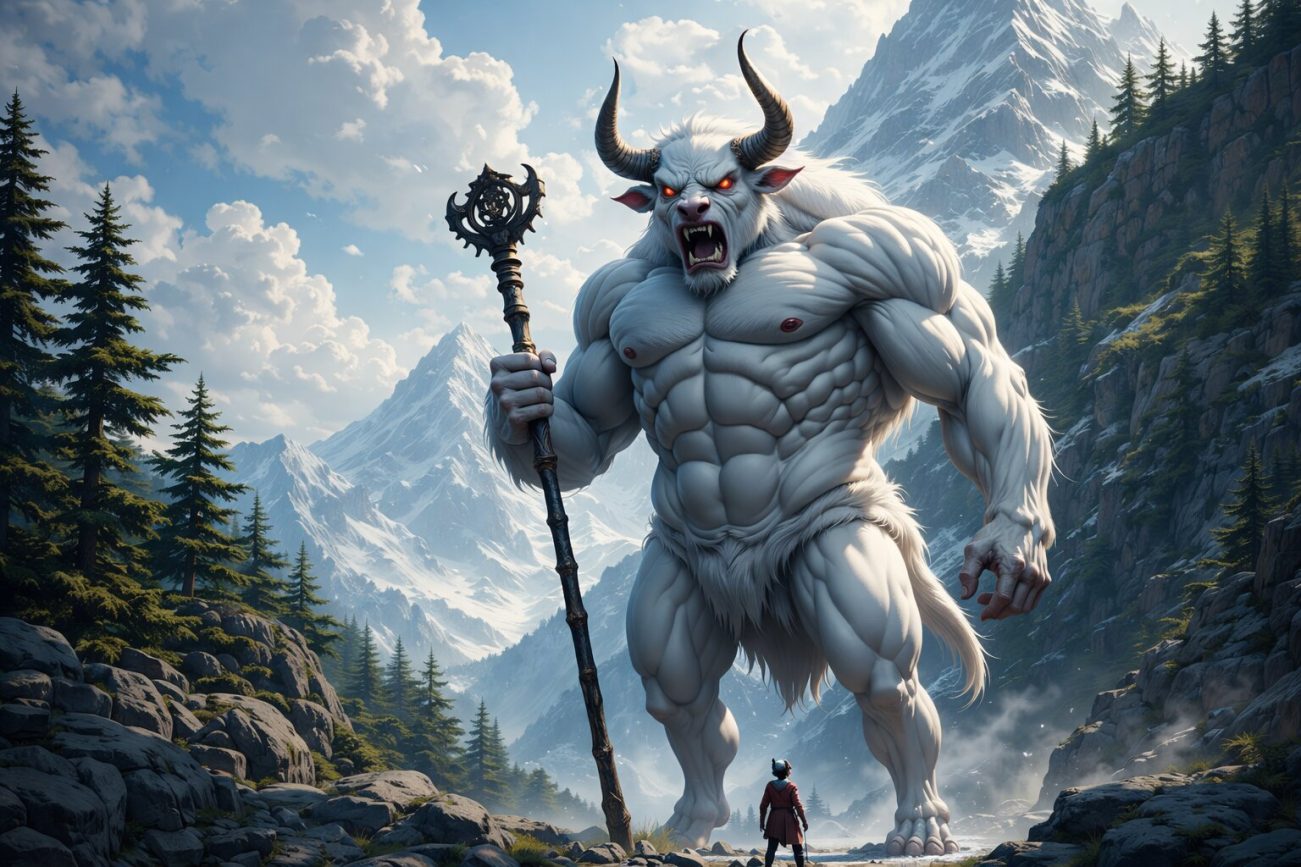
When he entered battle, the Bull Demon King revealed his true form: a colossal white bull, towering hundreds of feet tall, shaking the land with each step. He fought Sun Wukong with overwhelming force, wielding weapons and magic alike. Like the Monkey King, he could change his shape, using disguise and deception to outwit his enemies, even taking on the form of others to reclaim what was taken from him.

The struggle between the two shook mountains and skies, but even the Bull Demon King’s strength was not limitless. At last, the heavens intervened. Celestial generals descended, surrounding him and breaking his resistance. Bound and subdued, the Bull Demon King was taken away to face judgment under higher divine authority.

Thus ended the reign of one of the greatest demon sovereigns of the age—a being of immense power and pride, whose clash with Sun Wukong became one of the most fearsome and unforgettable trials on the journey to the West.


Gallery


Sources

Cheng’en, W. (1987). Journey to the West.
Wikipedia contributors. (2025a, August 14). Bull Demon King. Wikipedia. https://en.wikipedia.org/wiki/Bull_Demon_King#cite_ref-1


Interpretive Lenses

Religious Readings
  • Christian Ascetic Deep Dive
Philosophical Readings
  • Nietzschean Deep Dive
Psychological Readings
  • Jungian Deep Dive
Esoteric Deep Dive
  • Hermetic Deep Dive
Political / Social Readings
  • Marxist Deep Dive
Other
  • How to Invite The Bull Demon King

Bull of Bardowick

Tradition / Region: German mythology
Alternate Names:
Category: Cow


The Myth

In the time when Bardowick was a rich and powerful city, its people rose in pride and defied their lord, Duke Henry the Lion of Brunswick, refusing him entry through their gates. Enraged by this insult, the duke laid siege to the city. For two days his forces pressed against Bardowick’s defenses, yet made no progress.

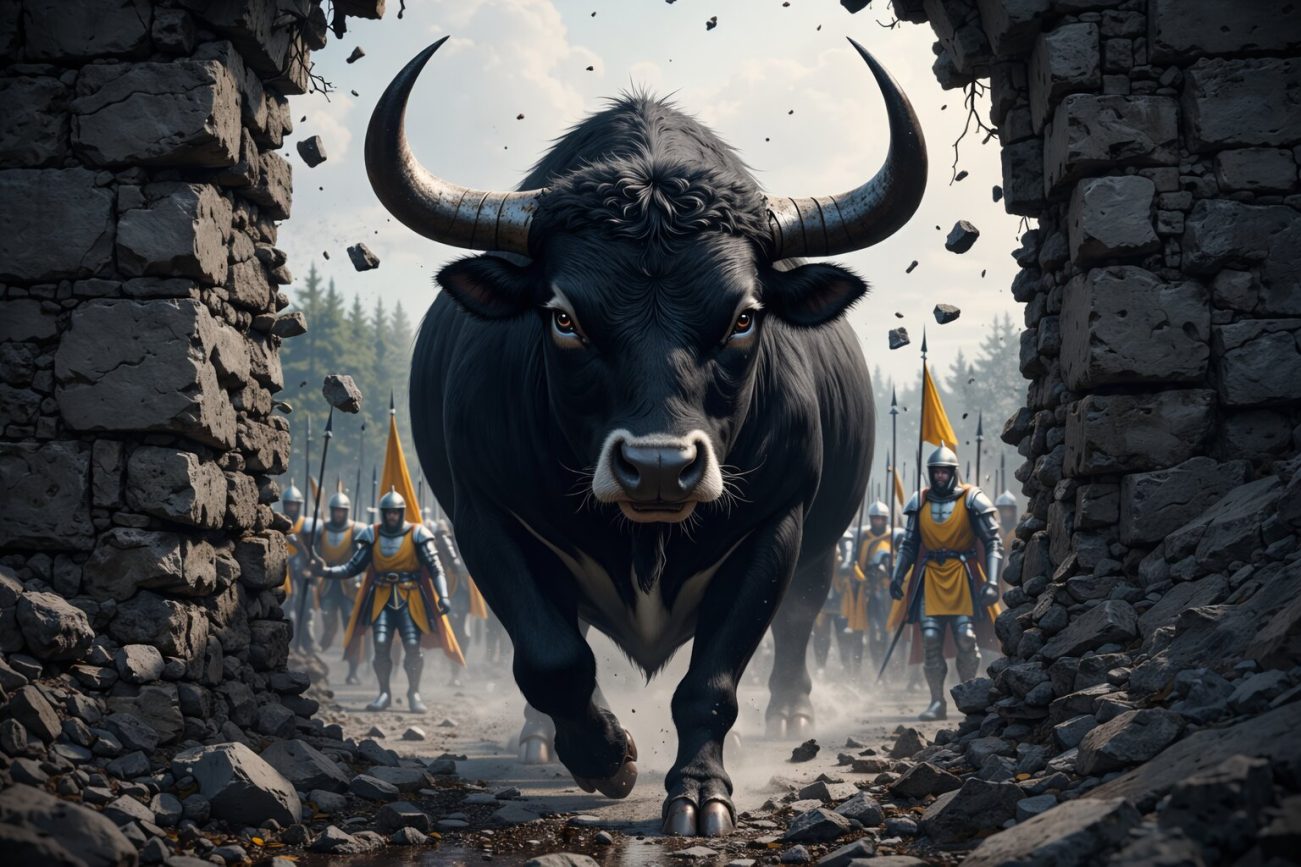
During the siege, a bull wandered calmly into the ducal camp. The soldiers soon realized that it was the town bull of Bardowick, a familiar animal that roamed freely and knew every path and crossing of its home. Seeing opportunity, Duke Henry ordered the bull released and commanded his men to follow it quietly.

The bull, untroubled and unaware, returned toward the city. It moved along the outer defenses, crossed a shallow ford, and passed through a narrow, crumbling opening in the stonework—a place long overlooked and poorly guarded. By instinct alone, the bull revealed the city’s hidden weakness.

That same night, the duke’s soldiers followed the path the bull had taken. They crossed the ford, slipped through the broken stone, and poured into Bardowick. The city was taken and destroyed. Many were slain, others fled, and Bardowick was reduced to ruins. Only the cathedral was spared from the devastation.

Though the city never regained its former glory, the memory of the bull endured. It was remembered not as an innocent creature, but as the animal whose unwitting loyalty betrayed its home and led the enemy inside. Even generations later, the tale remained sharp with shame. It is said that one should never ask the people of Bardowick about the bull, for the memory of the beast that led destruction home still stirs anger in every heart.


Gallery


Sources


Interpretive Lenses

Religious Readings
  • Christian Ascetic Deep Dive
Philosophical Readings
  • Nietzschean Deep Dive
Psychological Readings
  • Jungian Deep Dive
Esoteric Deep Dive
  • Hermetic Deep Dive
Political / Social Readings
  • Marxist Deep Dive
Other
  • How to Invite The Bull of Bardowick

Bukha-Noyon

Tradition / Region: Buryat mythology, Russian Mythology
Alternate Names:
Category: Cow


The Myth

In the oldest stories of the Buryat people, Bukha-Noyon was the first bull-father, the ancestor from whom the people themselves were born. He was the son of the great sky deity, and from the heavens he descended to the earth. He did not belong to one form alone. At times he appeared as a man, and at other times as a mighty bull, and through this shifting shape he moved freely between the upper sky, the middle world of humans, and the depths below.

On one of his journeys, Bukha-Noyon came to the land of Taizha-khan, where rich herds grazed. There he took the form of a powerful, mottled bull and challenged the bulls of that country. None could withstand him. When the daughter of Taizha-khan saw this overwhelming bull, she conceived, and in time gave birth to children who would become the ancestors of human lineages. Thus the people were said to descend from Bukha-Noyon, born of the union between heaven, earth, and the bull.

In other tellings, Bukha-Noyon wandered the steppe and mountains until he finally shed his human form and became wholly a bull. He climbed into the highlands and disappeared from the world of people. There, his body turned to stone. In the Sayan Mountains, it is said that his vast shape can still be seen in the land itself, like a great bull lying upon the slopes, watching over the earth.

From Bukha-Noyon came strength, fertility, and continuity. Where he was honored, cattle flourished and the people endured. He was remembered as both ancestor and guardian—the bull who gave life to the people, and whose spirit still lives in stone, mountain, and herd.


Gallery


Sources

Toronova, E. M. (2015). Transformation of the mythological image of Bukha-noyon in the works of the Buryat artists. Vestnik Vostochno-Sibirskogo Gosudarstvennogo Universiteta Tekhnologiy i Upravleniya, (4 (55)). Retrieved from https://sciup.org/transformacija-mifologicheskogo-obraza-buha-nojona-v-proizvedenijah-burjatskih-142148225-en


Interpretive Lenses

Religious Readings
  • Christian Ascetic Deep Dive
Philosophical Readings
  • Nietzschean Deep Dive
Psychological Readings
  • Jungian Deep Dive
Esoteric Deep Dive
  • Hermetic Deep Dive
Political / Social Readings
  • Marxist Deep Dive
Other
  • How to Invite The Bukha-Noyon

Buffalo Woman

Tradition / Region: Pawnee mythology, American Mythology
Alternate Names:
Category: Cow, Hybrid


The Myth

In the earliest days, when the Pawnee still wandered and lived on roots and wild plants, a strange woman appeared at dusk near their gambling grounds. She moved in silence, her body wrapped in a covering that hid her hair, and she passed through the place where the people played before vanishing over the hills.

The next morning, her tracks were found—but they were not human footprints. They were the split hooves of an animal. Still, the people continued their games.

On another evening, the woman returned. This time she ran across the gambling ground and circled it. As she fled over the hills, a man saw her transform before his eyes into a buffalo. He pursued her for many days, until he reached a place where there was nothing but water. There, exhausted, he lost consciousness.

When he awoke, the Buffalo Woman touched him and led him into a lodge. Inside sat four ancient men, the gods of the west. They told him that the buffalo were being given to the people so they might live. They taught him how the buffalo were to be prepared and honored, showing him that the heart and tongue were sacred and must be offered in gratitude. They also entrusted him with seeds—corn, beans, squash, and tobacco—tied in buffalo hide, gifts meant to sustain the people.

Thus the Buffalo Woman was revealed as a messenger between worlds. She crossed between human and animal, bringing food, life, and sacred instruction. From that time on, the Pawnee lived by the buffalo and honored the western gods first in their offerings, remembering the woman who came at dusk and changed the fate of the people.


Gallery


Sources

Dorsey, G. A. (1906). The Pawnee Mythology (Part I).


Interpretive Lenses

Religious Readings
  • Christian Ascetic Deep Dive
Philosophical Readings
  • Nietzschean Deep Dive
Psychological Readings
  • Jungian Deep Dive
Esoteric Deep Dive
  • Hermetic Deep Dive
Political / Social Readings
  • Marxist Deep Dive
Other
  • How to Invite The Buffalo Woman