Mondao

Tradition / Region: Zimbabwean Mythology
Alternate Names:
Category: Mermaid


The Myth

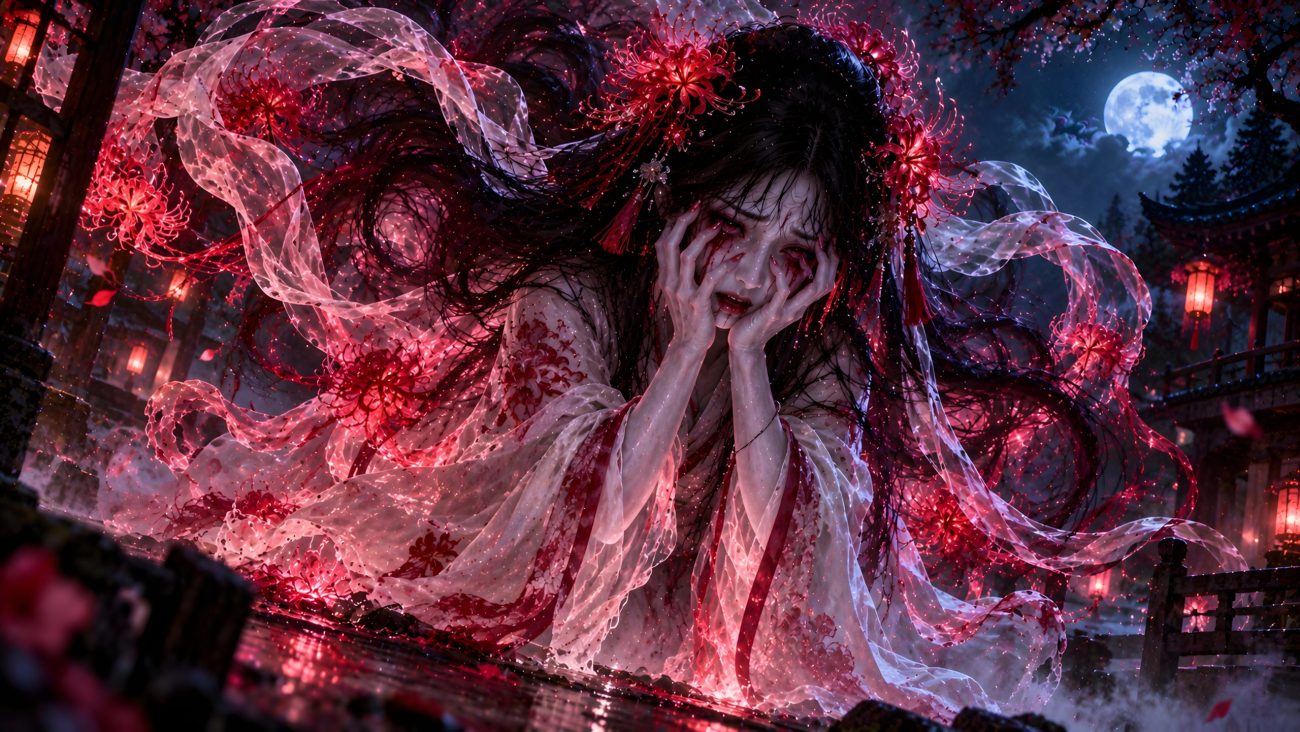
In the rivers of Zimbabwe, there are said to dwell dangerous water maidens known as the Mondao.

They are described as pale-skinned beings with long dark hair and sharp, needle-like teeth. From a distance they may appear beautiful, but those who see them closely know they are not human. Their true form is half woman, half fish, and they move swiftly through the deep currents of rivers and pools.

Mondao hide beneath the surface where the water runs dark and deep. Fishermen casting their nets, swimmers crossing the river, or travelers resting near the banks may suddenly feel the water stir beneath them.

Without warning, the Mondao seize their victims and drag them below the surface. Few who are taken ever return.

Because of this, certain stretches of river are feared and treated with caution. People say that when someone vanishes in the water without a trace, it is the work of the Mondao, who guard their hidden domain beneath the currents.

They are remembered as spirits of the river’s depths—
beautiful from afar, deadly when near,
and always waiting beneath the water.


Gallery


Sources

Bestiary.us contributors. (n.d.). Mondao. In Bestiary.us, from https://www.bestiary.us/mondao/


Interpretive Lenses

Religious Readings
  • Christian Ascetic Deep Dive
Philosophical Readings
  • Nietzschean Deep Dive
Psychological Readings
  • Jungian Deep Dive
Esoteric Deep Dive
  • Hermetic Deep Dive
Political / Social Readings
  • Marxist Deep Dive
Other
  • How to Invite The Mondao

Mami Wata

Tradition / Region: Congolese Mythology
Alternate Names: Mammy Water, Mami Muntu, Mamba Muntu, Papi Wata (male counterpart in some traditions)
Category: Mermaid, Goddess


The Myth

In the rivers, lakes, and ocean shores of Africa, there is said to dwell a powerful spirit of the waters known as Mami Wata.

She appears most often as a woman of striking beauty, sometimes with the lower body of a fish, sometimes entirely human, sometimes adorned with serpents coiled about her body. Her hair is long, her gaze mesmerizing, and her presence both alluring and dangerous. She is a being of wealth, mystery, and deep water.

Mami Wata rises from rivers or from the sea to encounter humans. She may appear to travelers at night, to fishermen on the water, or to those who wander too close to sacred pools. Those she favors may be drawn into her world beneath the water, where she offers them riches, power, or secret knowledge.

Some who are taken by her return to the world of the living with sudden fortune, beauty, or spiritual gifts. Others never return at all.

She is known to demand devotion from those she chooses. Shrines are raised to her beside water, decorated with mirrors, combs, perfumes, bright cloth, and foreign objects she is said to love. Those who honor her properly may receive protection, healing, prosperity, or children.

But she is not always gentle. If neglected or angered, she may bring misfortune, illness, poverty, or madness. She may wreck boats, claim lovers, or pull the unwary beneath the water.

In some traditions she is accompanied by a male spirit, sometimes called Papi Wata, who shares her watery domain.

Thus Mami Wata is remembered as a spirit of beauty and danger, wealth and temptation—
a queen of the waters who gives blessings to the devoted,
and whose depths remain beyond human control.


Gallery


Sources

Wikipedia contributors. (n.d.). Mami Wata. In Wikipedia, The Free Encyclopedia. Retrieved February 14, 2026, from https://en.wikipedia.org/wiki/Mami_Wata


Interpretive Lenses

Religious Readings
  • Christian Ascetic Deep Dive
Philosophical Readings
  • Nietzschean Deep Dive
Psychological Readings
  • Jungian Deep Dive
Esoteric Deep Dive
  • Hermetic Deep Dive
Political / Social Readings
  • Marxist Deep Dive
Other
  • How to Invite The Mami Wata

Melusina of the Bock Rock

Tradition / Region: Luxembourg Mythology
Alternate Names: Melusina, Melusine of Luxembourg, Water Nymph of the Alzette
Category: Mermaid, Shapeshifter, Nymph


The Myth

Long ago, Count Siegfried, a noble knight, became lost while hunting and came upon a deep valley where the Bock rock rises above the Alzette River. There he heard a wondrous song and saw a beautiful maiden seated upon the ruins of an ancient castle. She was Melusina, a water nymph of the valley. When she noticed him, she veiled her face and vanished with the setting sun.

The vision never left Siegfried’s mind, and he returned again and again to the valley. At last he met the maiden once more and confessed his love. Melusina agreed to marry him, on the condition that she would never be forced to leave the rock and that he must never seek her presence on Saturdays, when she wished to be alone. Siegfried swore to honor this oath.

To bring her home, he exchanged his lands for the barren Bock rock and, with supernatural help, built a great castle upon it. He married Melusina, and they lived happily together, and she bore him seven children. Yet each Saturday she withdrew to her chamber and locked herself away.

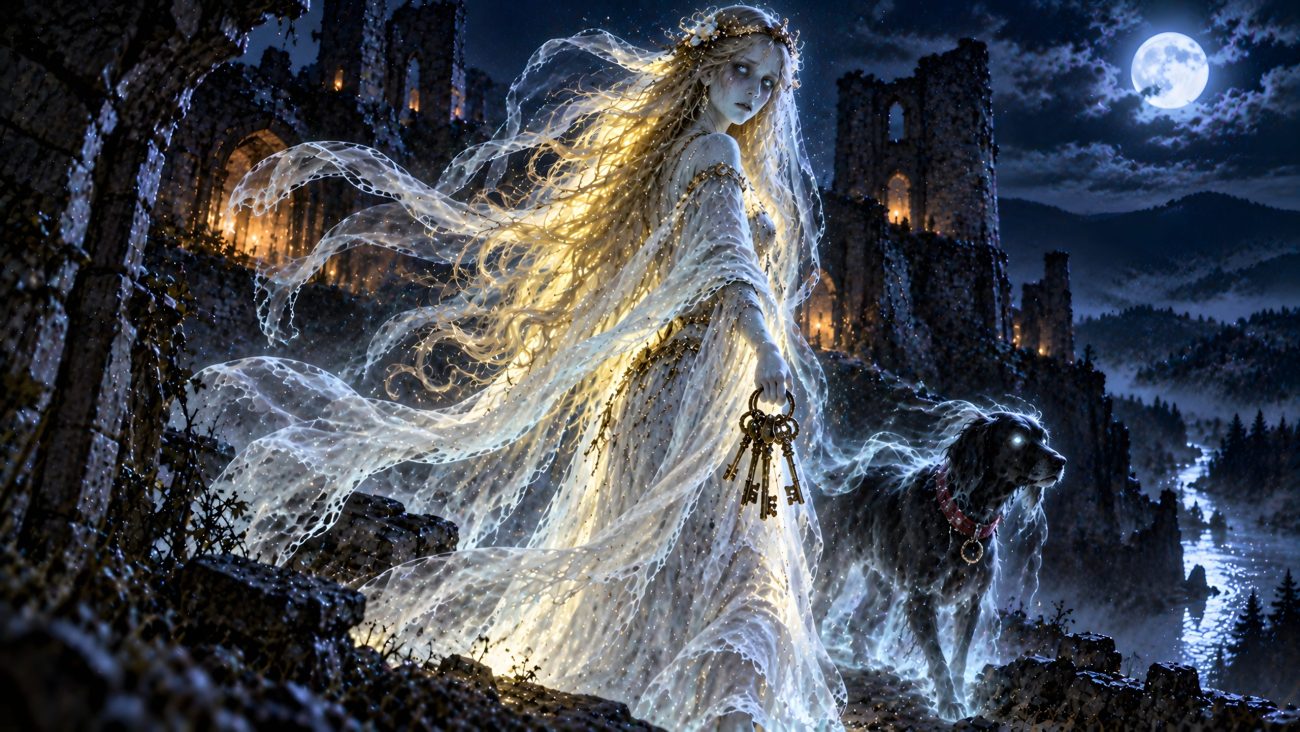
After many years, stirred by the suspicions of others, Siegfried resolved to learn her secret. One Saturday he crept to her door and looked through the keyhole. Inside he saw Melusina bathing in a wave-filled chamber, combing her long golden hair. But below her waist her body ended in a monstrous fishtail that lashed the water. With a cry of horror, he revealed himself. At once Melusina sank into the depths of the rock and was lost to him forever.

After her disappearance, a white figure was sometimes seen at night rocking her youngest child. It is said that Melusina still appears every seven years above the Bock rock in human form, begging to be freed. If no one rescues her, she cries out that not yet seven years have passed and sinks back into the stone.

Once, a soldier on night watch encountered her. She told him that to free her he must stand behind the altar in the Dominican church at midnight for nine consecutive nights. On the tenth night she would appear as a fiery serpent holding a key in her mouth, which he must take with his own mouth and throw into the Alzette River. Only then would she be redeemed and the ancient fortress rise again.

The soldier kept the vigil for eight nights but arrived late on the ninth. That night terrible roaring was heard around the Bock rock, and the chance of her redemption was lost.

Since then Melusina is said to circle the rock and cry out whenever danger threatens the city. Every seven years she is believed to make a single stitch on a mysterious garment she is weaving from flax that grows upon the bare rock. When the garment is finished, she will be freed — but it is said that the city itself will then fall into ruin.

And so Melusina remains bound beneath the Bock to this day, waiting for the one who will finally release her.


Gallery


Sources

sagen.at contributors. (n.d.). Melusina. In sagen.at, from https://www.sagen.at/texte/sagen/luxemburg/Melusina.html


Interpretive Lenses

Religious Readings
  • Christian Ascetic Deep Dive
Philosophical Readings
  • Nietzschean Deep Dive
Psychological Readings
  • Jungian Deep Dive
Esoteric Deep Dive
  • Hermetic Deep Dive
Political / Social Readings
  • Marxist Deep Dive
Other
  • How to Invite The Melusina of the Bock Rock

Lahama

Tradition / Region: Sumerian Mythology, Mesopotamian mythology
Alternate Names: Associated with Lahmu, Lahamu; linked with Oannes and Kululu
Category: Mermaid


The Myth

In the earliest age of the world, when only the deep fresh waters of the Abzu existed beneath the earth, the god Enki, lord of wisdom and the waters, created beings to dwell within his domain. These beings were called the Lahama, and they belonged to the sacred depths from which life and order would rise.

They were many—fifty in number—and they moved through the watery abyss as servants of Enki. They were shaped like beings of the deep, often imagined with forms that joined man and fish, creatures suited to the hidden waters below the world.

Later tales spoke of ancient ancestors of these beings. From the first primordial waters came the twins Lahmu and Lahamu, monstrous children of the earliest oceanic forces. From them came further generations of gods, and through them the world took form. Thus the spirits of the waters stood close to the beginning of creation itself.

Among the companions of Enki were powerful beings who sometimes rose from the sea to meet humankind. One of these was Kululu, a fish-formed servant of the god who moved between the divine world and the human one.

But the most famous of the sea-beings was Oannes.

In ancient days, near the shores of Babylonia, a strange creature rose from the Persian Gulf. His body was that of a fish, yet beneath the fish’s head was the face of a man, and beside the tail were human legs. Though his form was uncanny, his voice was gentle and human.

By day he walked among people. He taught them writing, numbers, and the arts. He showed them how to build cities and temples, how to establish laws, how to measure the land, and how to plant grain and gather food. Everything needed for civilized life he revealed to them.

He took no food while he stayed among humans. At sunset he returned to the sea and vanished beneath the waves, for he belonged both to water and to land.

Thus the beings of the deep waters—the Lahama and those who rose from them—were remembered as ancient spirits of the abyss, close to the birth of the world, and as teachers who once emerged from the sea to guide humankind.


Gallery


Sources

Bestiary.us contributors. (n.d.). Lahama. In Bestiary.us, from https://www.bestiary.us/lahama/


Interpretive Lenses

Religious Readings
  • Christian Ascetic Deep Dive
Philosophical Readings
  • Nietzschean Deep Dive
Psychological Readings
  • Jungian Deep Dive
Esoteric Deep Dive
  • Hermetic Deep Dive
Political / Social Readings
  • Marxist Deep Dive
Other
  • How to Invite The Lahama

Yok-yok

Tradition / Region: Aboriginal Mythology, Australian Mythology
Alternate Names:
Category: Mermaid, Shapeshifter


The Myth

In sacred waterholes across the land dwell spirits known as yok-yok, beings of the deep water who belong to the old time of creation.

They are most often seen as young women with fish tails and long green hair that drifts like seaweed across the surface. When people see strands of weed floating on still water, they say it is the hair of a yok-yok rising from below.

These spirits are tied to the life of the land. Where they dwell, water is strong and fertile. If a woman passes near a waterhole where a yok-yok lives, she may conceive a child, for the spirit’s power brings life into the world. They are also bringers of rain, and when they are pleased, the clouds gather and the land is nourished.

But they are not always gentle. If angered or disrespected, yok-yok can stir the waters and call down storms that flood the land and destroy what grows there.

They are shapeshifters and do not always appear as mermaids. At times they take the form of crocodiles, snakes, or great fish. Some stories say they may grow legs and walk the earth at night, or take wings and pass through the sky like dragonflies.

Now and then a yok-yok falls in love with a human man and lives with him for a time. Yet such unions never last. In the end she returns to the water, drawn back to the place where she belongs.

Some say the yok-yok are daughters of Ngaliod, the great creator linked to the Rainbow Serpent. Others say they are not merely his children but another form of the same ancient power—spirits of the living water that has always flowed through the world.


Gallery


Sources

Bestiary.us contributors. (n.d.). Iok-Jok. In Bestiary.us, from https://www.bestiary.us/iok-jok/


Interpretive Lenses

Religious Readings
  • Christian Ascetic Deep Dive
Philosophical Readings
  • Nietzschean Deep Dive
Psychological Readings
  • Jungian Deep Dive
Esoteric Deep Dive
  • Hermetic Deep Dive
Political / Social Readings
  • Marxist Deep Dive
Other
  • How to Invite The Yok-yok

Iara

Tradition / Region: Brazilian Mythology
Alternate Names: Uiara, Yara, Hiara, Mãe das Águas (“Mother of the Waters”)
Category: Mermaid


The Myth

In the great rivers of the Amazon there lives a being called Iara, the Mother of the Waters. She appears as a beautiful maiden of the river, sometimes sitting upon rocks beneath the sun, combing her long hair and singing with a voice sweeter than any human song.

Men who hear her voice cannot resist it. Drawn by her song, they approach the water and follow her into the depths. Some are drowned at once. Others vanish into her underwater dwelling, where they remain with her until they grow old and die, while she herself never ages. Those who escape her spell return changed—haunted, restless, and forever drawn back toward the river.

One tale tells how a young warrior, son of a chief, heard Iara’s voice at a waterfall. Each night he returned to meet her, ignoring the pleas of his mother and the warnings of his people. At last the villagers saw him with the river maiden. Soon after, he disappeared forever into the waters, and no trace of him was ever found again.

Another story tells how Iara herself was once human. She had been a warrior of great skill, stronger and braver than her brothers. Jealous, they attacked her in the night, but she fought them off and they died by her hand. When her father discovered what had happened, he punished her by casting her into the river to drown. But the fish of the river or the moon-spirit took pity on her and transformed her into a river maiden. From that day on, she lured men to the water in vengeance for the injustice done to her.

Thus Iara is remembered as both enchantress and avenger, the beautiful woman of the river whose song still drifts across the Amazon at dusk, calling the unwary into the deep.


Gallery


Sources

Wikipedia contributors. (n.d.). Iara (mythology). In Wikipedia, The Free Encyclopedia. Retrieved February 14, 2026, from https://en.wikipedia.org/wiki/Iara_(mythology)


Interpretive Lenses

Religious Readings
  • Christian Ascetic Deep Dive
Philosophical Readings
  • Nietzschean Deep Dive
Psychological Readings
  • Jungian Deep Dive
Esoteric Deep Dive
  • Hermetic Deep Dive
Political / Social Readings
  • Marxist Deep Dive
Other
  • How to Invite The Iara

Keask

Tradition / Region: Scottish Highland folklore
Alternate Names: Maiden of the Waves
Category: Mermaid, Salmon


The Myth

In the waters off the Highlands lives the Keask, a sea maiden with the body of a beautiful woman and the tail of a great salmon. When she is beneath the sea her hair is dark green, but when she rises into the air it turns bright gold. She wears ornaments said to come from hidden chambers beneath the earth.

The Keask can sometimes be caught by mortals. If seized, she will grant three wishes in exchange for her freedom. Like other sea maidens, she can cast off her outer fish skin and take human form. In this shape she may wed a mortal man and live among his people. Yet if she ever recovers the skin that was taken from her, she returns to the sea. Even so, she does not forget her children, and is said to guide them in storms or lead them to good fishing.

One tale tells of a Keask who swallowed a man whole. His beloved lured the creature ashore by playing the harp, and the man escaped. The Keask then seized the harpist instead. To defeat her and free the captive, the hero had to destroy her hidden life. This life was not in her body but in a separable soul concealed far away: an egg inside a fish, the fish inside a duck, the duck inside a ram, buried beneath a house in a forest on an island in the middle of a lake. When the egg was destroyed, the Keask lost her power and the prisoner was freed.

Thus the Keask is remembered as both a bride from the sea and a dangerous being whose life and power lie hidden beyond her body.


Gallery


Sources

Bestiary.us contributors. (n.d.). Keask. In Bestiary.us, from https://www.bestiary.us/keask/


Interpretive Lenses

Religious Readings
  • Christian Ascetic Deep Dive
Philosophical Readings
  • Nietzschean Deep Dive
Psychological Readings
  • Jungian Deep Dive
Esoteric Deep Dive
  • Hermetic Deep Dive
Political / Social Readings
  • Marxist Deep Dive
Other
  • How to Invite The Keask

Isiququmadevu

Tradition / Region: Zulu Mythology, South African Mythology
Alternate Names: Smelly Whiskers; Unomabunge; O’gaul’-iminga; O-nsiba-zimakqembe
Category: Mountain dweller


The Myth

When Untombinde, the king’s daughter, set out for the sacred pools of the Ilulange River, her parents warned her not to go. She ignored them and traveled there with two hundred maidens as her escort.

At the river they bathed and played in the water. But when they came out, their clothes, jewels, and bracelets were gone. They had been taken by Isiququmadevu.

The monster was a vast, bloated being with an enormous mouth, said to be large enough to swallow whole villages. Terrified, the maidens begged for their possessions back. One by one, as they pleaded, the monster returned their things. At last only Untombinde remained.

The others urged her to beg the creature for mercy, but she refused proudly, saying she would not humble herself before it. At once Isiququmadevu seized her and dragged her into the pool.

When King Usikulumi heard what had happened, he sent his army to kill the monster. But Isiququmadevu rose up and swallowed the entire force in one gulp. She then went to the village and devoured everyone there—men, women, children, and cattle—leaving only one man alive. Among the swallowed were his twin children.

The man armed himself with a spear and went in search of the creature. Along the way he asked the animals he met where she had gone, and each told him, “Forward, forward.”

At last he found Isiququmadevu, swollen from all she had eaten and resting in the forest. When he declared that he had come for his children, the monster again tried to mislead him, saying only, “Forward, forward.” But he attacked her with his spear and killed her.

He cut open her body, and from inside came the army, the villagers, and the cattle, all alive. Untombinde came out last.

Other tales tell how a young woman named Usitungusobenthle once cut open the sleeping monster and freed a village she had swallowed, and how a princess named Uluthlazase escaped her by refusing to release her clothes and fleeing while the creature went to seek help.

Thus Isiququmadevu is remembered as a devouring monster who swallows whole communities, yet can be overcome by courage and determination.


Gallery


Sources

abookofcreatures.com contributors. (n.d.). Isiququmadevu. In abookofcreatures.com, from https://abookofcreatures.com/2015/12/04/isiququmadevu/


Interpretive Lenses

Religious Readings
  • Christian Ascetic Deep Dive
Philosophical Readings
  • Nietzschean Deep Dive
Psychological Readings
  • Jungian Deep Dive
Esoteric Deep Dive
  • Hermetic Deep Dive
Political / Social Readings
  • Marxist Deep Dive
Other
  • How to Invite The Isiququmadevu

Waawu

Tradition / Region: Japanese Mythology
Alternate Names: Wau, Wauawu
Category: Mountain dweller, Yokai


The Myth

In the mountains near Karimata, at the foot of Mount Hotaka, there is said to be a strange being called Waawu, named for the cry it makes in the night.

Long ago, a hunter from a nearby village went into the mountains and stayed overnight in a small hut. In the middle of the night he heard a terrifying voice echo through the darkness.

“Wauawu! Wauawu!”

Something rushed toward the hut and began to shake it violently. The walls rattled and the beams creaked, but the hunter could not see what attacked him. Frozen with fear, he waited for morning and fled back to the village, telling everyone a Waawu had appeared.

Some days later, several villagers went into the mountains to gather lumber and stayed in the same hut. As night fell, they heard the same cry approaching through the forest.

“Waawu… Wauawu…”

The sound grew louder and louder until their bodies seemed to go numb. Too frightened to leave, they remained inside the hut for several days.

One night the creature returned again, screaming “Waa-woo! Waa-woo!” and shaking the hut so violently it seemed it would collapse. The men huddled together and chanted, “Far-off Kuwabara, far-off Kuwabara,” praying for safety until dawn.

When morning finally came, they fled back to the village and told what had happened.

From then on, the place where the cries were heard was called Waa-woo Sawa—Wau Valley—named after the unseen monster whose voice once shook the mountain huts in the night.


Gallery


Sources

tyz-yokai.blog.jp contributors. (n.d.). Waawu. In tyz-yokai.blog.jp, from https://tyz-yokai.blog.jp/archives/1077741604.html


Interpretive Lenses

Religious Readings
  • Christian Ascetic Deep Dive
Philosophical Readings
  • Nietzschean Deep Dive
Psychological Readings
  • Jungian Deep Dive
Esoteric Deep Dive
  • Hermetic Deep Dive
Political / Social Readings
  • Marxist Deep Dive
Other
  • How to Invite The Waawu

Jengu

Tradition / Region: Sawabantu Mythology, Cameroon Mythology
Alternate Names: Miengu (plural), Bisima; Liengu (Bakweri), Maengu (plural)
Category: Mermaid


The Myth

In the rivers, lakes, and along the shores of the sea in Cameroon dwell the jengu—water spirits of beauty and power.

They are said to appear as radiant beings, often like mermaids, with long flowing hair and shining gap-toothed smiles. Their presence is linked to clear waters and hidden depths. They live beneath the surface, in the currents and tidal places where the worlds of the living and the spirits meet.

The jengu are guardians of the waters and intermediaries between humanity and the ancestors. When illness strikes, when fate turns uncertain, or when guidance is needed, people call upon them. They are believed to heal disease, grant prosperity, and influence destiny. Those who honor them with devotion receive good fortune; those who neglect them may lose their favor.

Among the Duala and other Sawabantu peoples, the jengu are honored through sacred rites and festivals. When the ruling families of the Ngondo declare that the time has come, offerings are gathered from the villages. Trained spiritual specialists prepare themselves through ritual purification and ceremony.

On the night before the festival, these priests perform sacred rites on the islands of the Wouri River. At dawn, the tribute is displayed before the chiefs. Then a jengu specialist carries the offering into the water, swimming out beyond sight. There, beneath the surface, the gift is presented to the miengu.

When the priest returns, he brings back a message from the spirits—a prophecy concerning the year to come.

Among the Bakweri, the jengu also play a role in a young girl’s passage into womanhood, marking her transformation and linking her life to the power of the waters.

Thus the jengu remain: spirits of the deep, bringers of healing and fortune, moving unseen between the living and the ancestral world.


Gallery


Sources

Wikipedia contributors. (n.d.). Jengu. In Wikipedia, The Free Encyclopedia. Retrieved February 14, 2026, from https://en.wikipedia.org/wiki/Jengu


Interpretive Lenses

Religious Readings
  • Christian Ascetic Deep Dive
Philosophical Readings
  • Nietzschean Deep Dive
Psychological Readings
  • Jungian Deep Dive
Esoteric Deep Dive
  • Hermetic Deep Dive
Political / Social Readings
  • Marxist Deep Dive
Other
  • How to Invite The Jengu