Bull Demon King

Tradition / Region: Chinese mythology
Alternate Names: Niú Mówáng
Category: Cow


The Myth

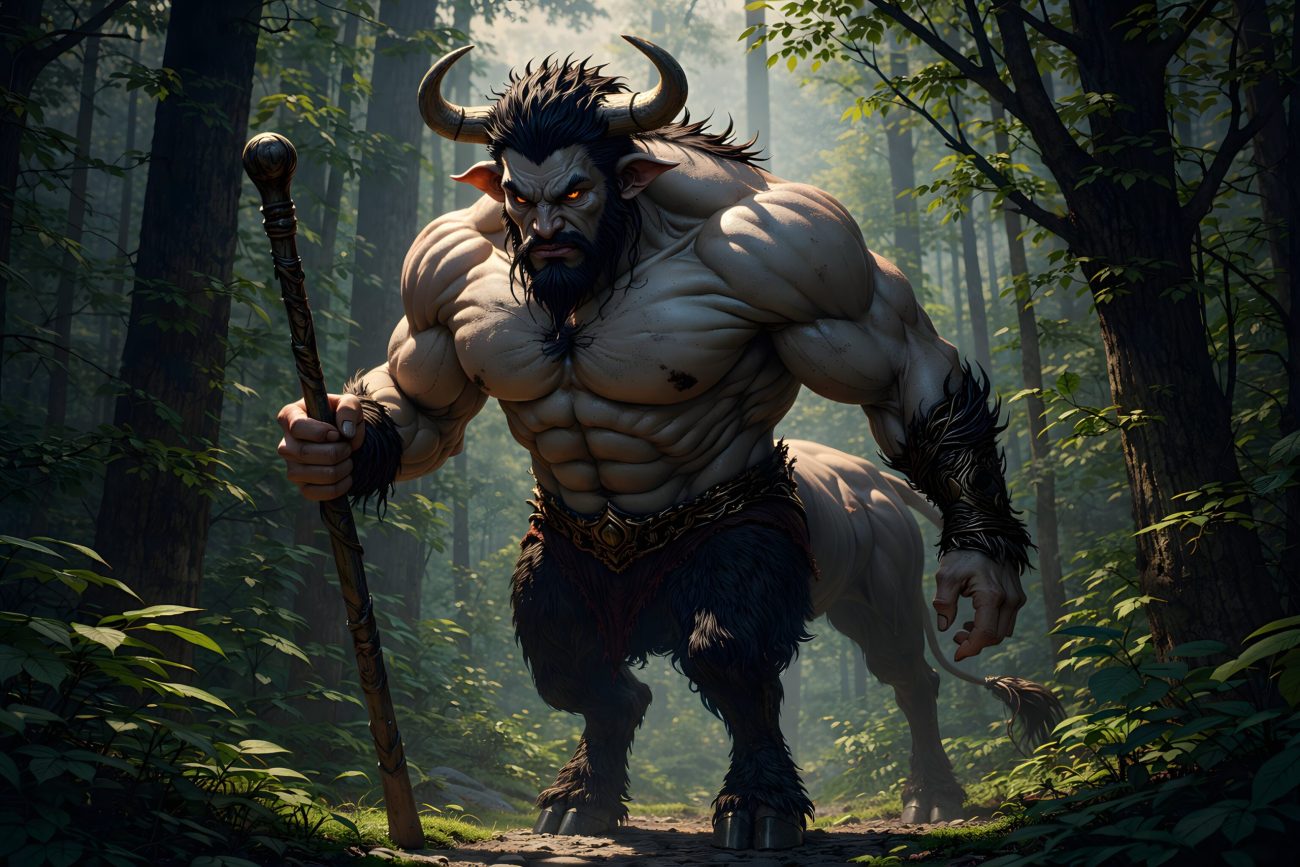
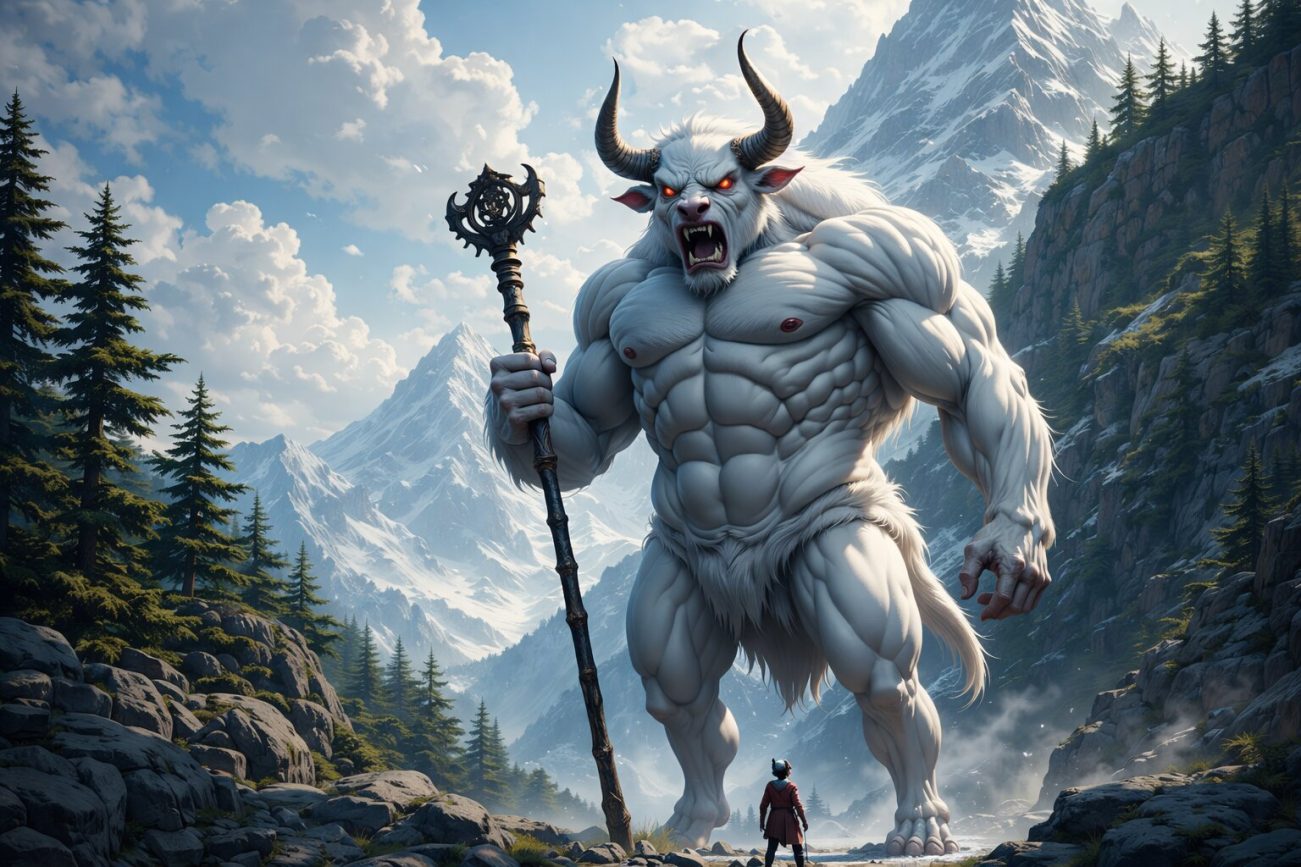
The Bull Demon King was one of the greatest demon lords of the age, feared across mountains and valleys for his immense strength and terrifying presence. He ruled from his cavern on Thunder-Accumulating Mountain, commanding legions of lesser demons and living as a sovereign in his own right. He was the husband of Princess Iron Fan and the father of Red Boy, a fearsome child-demon whose power rivaled that of seasoned warriors.

In the days before Sun Wukong’s rebellion against Heaven, the Bull Demon King stood among a brotherhood of seven mighty demon kings. Together they swore oaths of loyalty, each proclaiming himself a ruler equal to Heaven. Among them, the Bull Demon King was the eldest and most respected, a figure of authority even the Monkey King acknowledged.

Later, when Tang Sanzang and his disciples journeyed westward, they came upon the Flaming Mountains, where fire burned endlessly and blocked their path. To extinguish the flames, Sun Wukong sought the Banana Leaf Fan, a powerful artifact owned by Princess Iron Fan. Trickery and persuasion failed, and the conflict drew out the Bull Demon King himself.

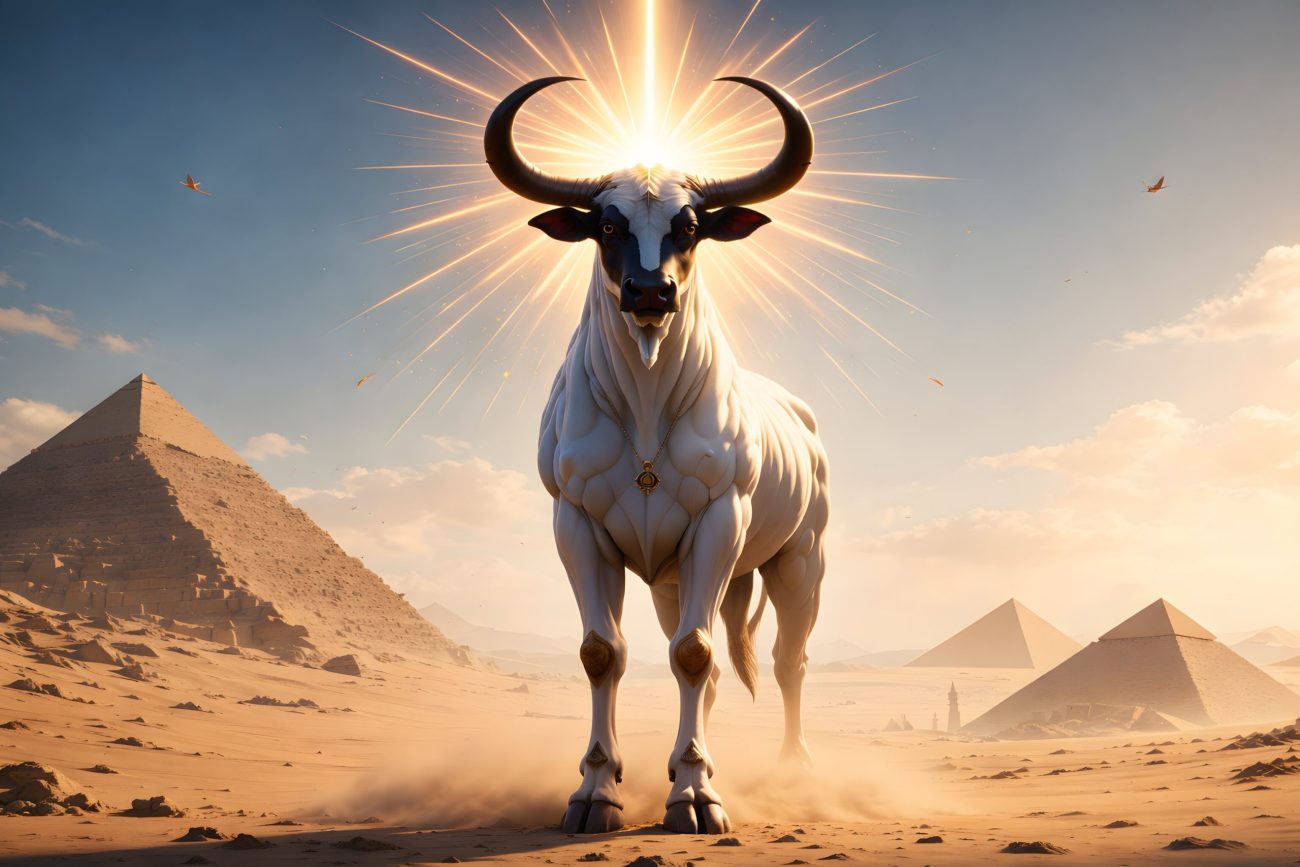
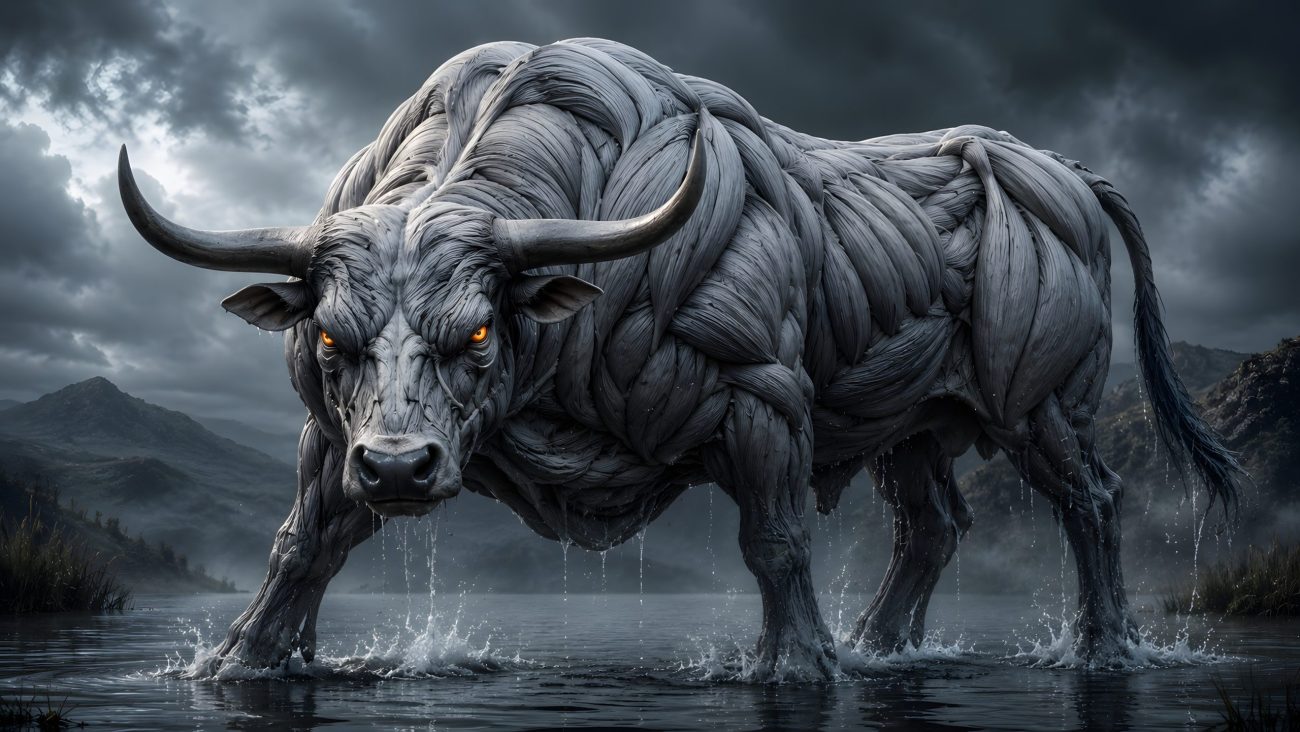
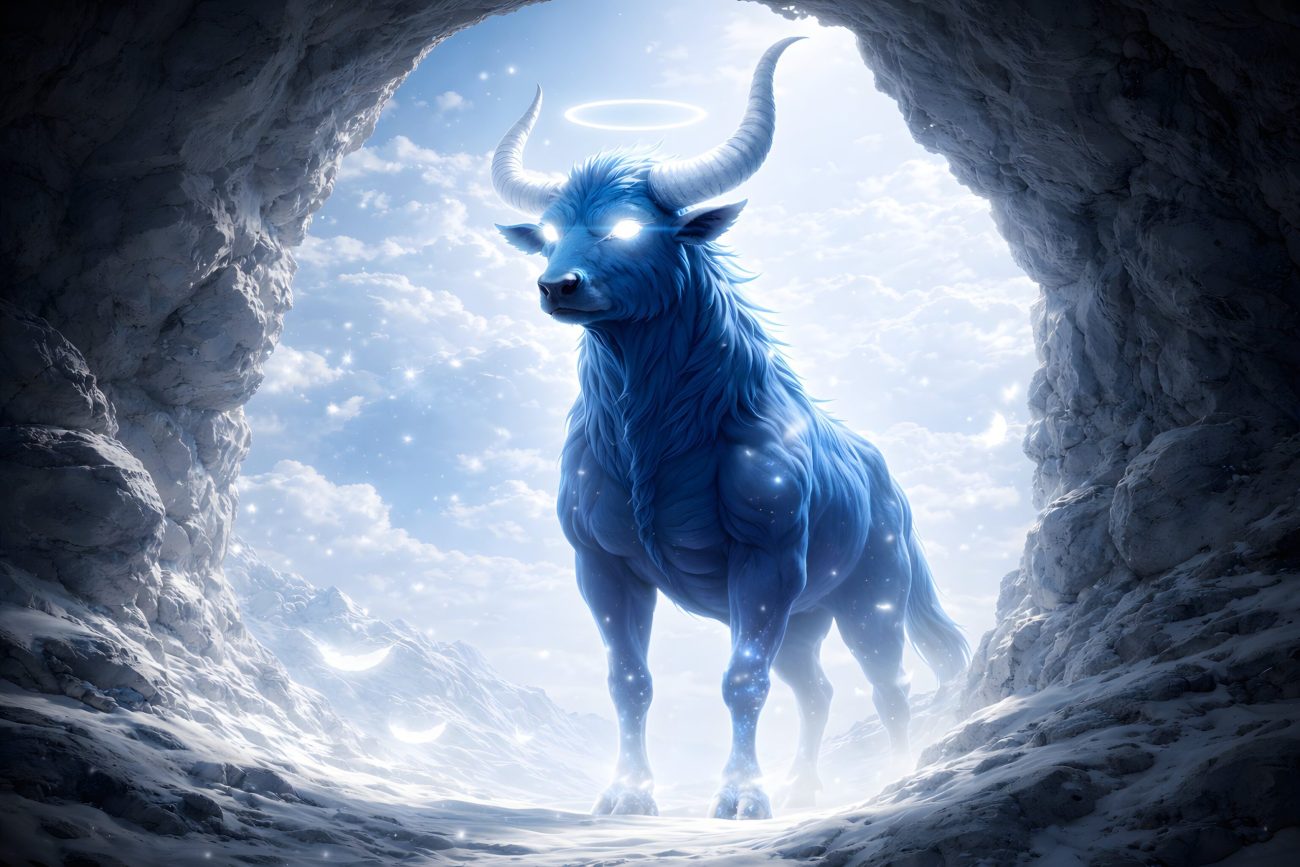
When he entered battle, the Bull Demon King revealed his true form: a colossal white bull, towering hundreds of feet tall, shaking the land with each step. He fought Sun Wukong with overwhelming force, wielding weapons and magic alike. Like the Monkey King, he could change his shape, using disguise and deception to outwit his enemies, even taking on the form of others to reclaim what was taken from him.

The struggle between the two shook mountains and skies, but even the Bull Demon King’s strength was not limitless. At last, the heavens intervened. Celestial generals descended, surrounding him and breaking his resistance. Bound and subdued, the Bull Demon King was taken away to face judgment under higher divine authority.

Thus ended the reign of one of the greatest demon sovereigns of the age—a being of immense power and pride, whose clash with Sun Wukong became one of the most fearsome and unforgettable trials on the journey to the West.


Sources

Cheng’en, W. (1987). Journey to the West.
Wikipedia contributors. (2025a, August 14). Bull Demon King. Wikipedia. https://en.wikipedia.org/wiki/Bull_Demon_King#cite_ref-1
Bull of Bardowick

Tradition / Region: German mythology
Alternate Names: —
Category: Cow


The Myth

In the time when Bardowick was a rich and powerful city, its people rose in pride and defied their lord, Duke Henry the Lion of Brunswick, refusing him entry through their gates. Enraged by this insult, the duke laid siege to the city. For two days his forces pressed against Bardowick’s defenses, yet made no progress.

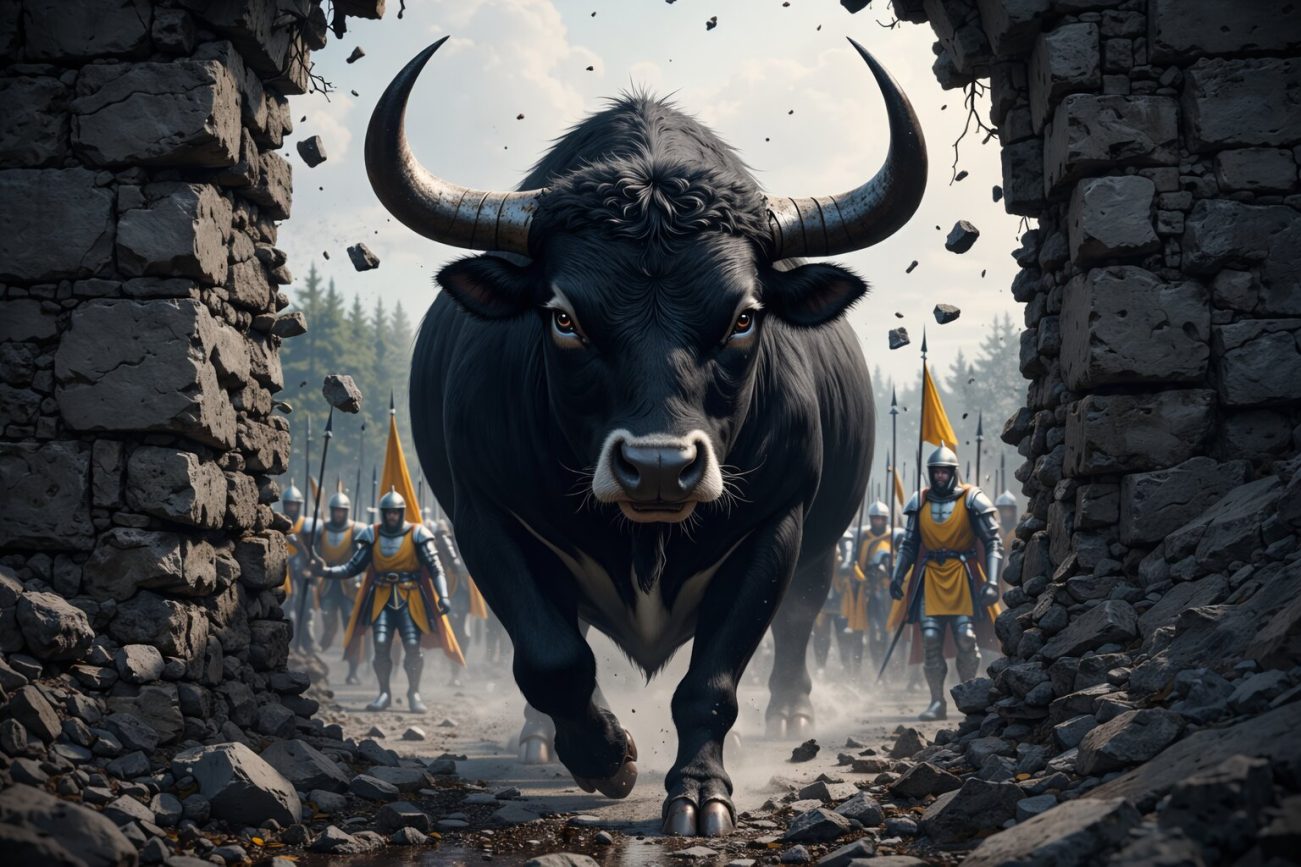
During the siege, a bull wandered calmly into the ducal camp. The soldiers soon realized that it was the town bull of Bardowick, a familiar animal that roamed freely and knew every path and crossing of its home. Seeing opportunity, Duke Henry ordered the bull released and commanded his men to follow it quietly.

The bull, untroubled and unaware, returned toward the city. It moved along the outer defenses, crossed a shallow ford, and passed through a narrow, crumbling opening in the stonework—a place long overlooked and poorly guarded. By instinct alone, the bull revealed the city’s hidden weakness.

That same night, the duke’s soldiers followed the path the bull had taken. They crossed the ford, slipped through the broken stone, and poured into Bardowick. The city was taken and destroyed. Many were slain, others fled, and Bardowick was reduced to ruins. Only the cathedral was spared from the devastation.

Though the city never regained its former glory, the memory of the bull endured. It was remembered not as an innocent creature, but as the animal whose unwitting loyalty betrayed its home and led the enemy inside. Even generations later, the tale remained sharp with shame. It is said that one should never ask the people of Bardowick about the bull, for the memory of the beast that led destruction home still stirs anger in every heart.


Sources


Bukha-Noyon

Tradition / Region: Buryat mythology, Russian Mythology
Alternate Names: —
Category: Cow


The Myth

In the oldest stories of the Buryat people, Bukha-Noyon was the first bull-father, the ancestor from whom the people themselves were born. He was the son of the great sky deity, and from the heavens he descended to the earth. He did not belong to one form alone. At times he appeared as a man, and at other times as a mighty bull, and through this shifting shape he moved freely between the upper sky, the middle world of humans, and the depths below.

On one of his journeys, Bukha-Noyon came to the land of Taizha-khan, where rich herds grazed. There he took the form of a powerful, mottled bull and challenged the bulls of that country. None could withstand him. When the daughter of Taizha-khan saw this overwhelming bull, she conceived, and in time gave birth to children who would become the ancestors of human lineages. Thus the people were said to descend from Bukha-Noyon, born of the union between heaven, earth, and the bull.

In other tellings, Bukha-Noyon wandered the steppe and mountains until he finally shed his human form and became wholly a bull. He climbed into the highlands and disappeared from the world of people. There, his body turned to stone. In the Sayan Mountains, it is said that his vast shape can still be seen in the land itself, like a great bull lying upon the slopes, watching over the earth.

From Bukha-Noyon came strength, fertility, and continuity. Where he was honored, cattle flourished and the people endured. He was remembered as both ancestor and guardian—the bull who gave life to the people, and whose spirit still lives in stone, mountain, and herd.


Sources

Toronova, E. M. (2015). Transformation of the mythological image of Bukha-noyon in the works of the Buryat artists. Vestnik Vostochno-Sibirskogo Gosudarstvennogo Universiteta Tekhnologiy i Upravleniya, (4 (55)). Retrieved from https://sciup.org/transformacija-mifologicheskogo-obraza-buha-nojona-v-proizvedenijah-burjatskih-142148225-en


Buffalo Woman

Tradition / Region: Pawnee mythology, American Mythology
Alternate Names: —
Category: Cow, Hybrid


The Myth

In the earliest days, when the Pawnee still wandered and lived on roots and wild plants, a strange woman appeared at dusk near their gambling grounds. She moved in silence, her body wrapped in a covering that hid her hair, and she passed through the place where the people played before vanishing over the hills.

The next morning, her tracks were found—but they were not human footprints. They were the split hooves of an animal. Still, the people continued their games.

On another evening, the woman returned. This time she ran across the gambling ground and circled it. As she fled over the hills, a man saw her transform before his eyes into a buffalo. He pursued her for many days, until he reached a place where there was nothing but water. There, exhausted, he lost consciousness.

When he awoke, the Buffalo Woman touched him and led him into a lodge. Inside sat four ancient men, the gods of the west. They told him that the buffalo were being given to the people so they might live. They taught him how the buffalo were to be prepared and honored, showing him that the heart and tongue were sacred and must be offered in gratitude. They also entrusted him with seeds—corn, beans, squash, and tobacco—tied in buffalo hide, gifts meant to sustain the people.

Thus the Buffalo Woman was revealed as a messenger between worlds. She crossed between human and animal, bringing food, life, and sacred instruction. From that time on, the Pawnee lived by the buffalo and honored the western gods first in their offerings, remembering the woman who came at dusk and changed the fate of the people.


Sources

Dorsey, G. A. (1906). The Pawnee Mythology (Part I).


Buchis

Tradition / Region: Egyptian mythology
Alternate Names: —
Category: Cow


The Myth

In the city of Hermonthis there appeared a bull unlike any other. Its body shone white as sunlight, while its face was dark as night. The people knew at once that this was no ordinary beast. It was Buchis, the living presence of Montu, god of war and strength, whose life-force had taken flesh.

Buchis was not worshipped as an animal, but as a god walking among humans. Every movement of the bull was watched closely, for within its steps and gestures the will of Montu was believed to be revealed. Priests cared for it with reverence, tending to its needs as one would attend a divine king. Where Buchis lived, Montu himself was thought to be present.

When Buchis died, it did not pass away like common cattle. Its body was prepared with sacred rites, preserved so that the divine force within it would endure beyond death. The bull was laid to rest in a holy place set aside for such beings, and the land mourned as if a god had withdrawn from the world.

Yet Buchis did not end with a single life. Another bull would be born bearing the same signs—white body, black face—and Montu would again walk among mortals. In this way, Buchis embodied the cycle of divine presence, death, and return.

To the people of Egypt, Buchis was proof that the gods were not distant. They could live, breathe, and stand silently among humankind, their power contained within the calm, watchful form of a sacred bull.


Gallery


Sources

Dodson, A. (2005). Bull Cults. In American University in Cairo Press eBooks (pp. 72–102). https://doi.org/10.5743/cairo/9789774248580.003.0004


Interpretive Lenses

Religious Readings
  • Christian Ascetic Deep Dive
Philosophical Readings
  • Nietzschean Deep Dive
Psychological Readings
  • Jungian Deep Dive
Esoteric Deep Dive
  • Hermetic Deep Dive
Political / Social Readings
  • Marxist Deep Dive
Other
  • How to Invite The Buchis

Bucentaur

Tradition / Region: Spanish mythology
Alternate Names: —
Category: Cow, Hybrid


The Myth

In the old tales, there is mention of a creature rarely seen and seldom challenged: the Bucentaur.

It bears the upper body of a man, broad-shouldered and upright, with human eyes that can glare with anger or dull with indifference. From the waist down, however, its body is that of a massive bull—thick-limbed, heavy, and powerful, with hooves that strike the ground like stone. In its arms lies great strength, and in its bovine form rests an immense weight that anchors it to the earth.

The Bucentaur is ill-tempered and easily provoked. When disturbed, it bellows and threatens, pawing the ground and raising its fists as if to crush whatever stands before it. Yet despite its fearsome appearance, it is slow. Its great body moves with difficulty, and its rage burns hotter than its ability to act upon it. Those who encounter it and keep their distance often find that escape is easy, for the Bucentaur cannot pursue for long.

It does not hunt, nor does it scheme. It lingers in lonely places, half man and half beast, caught between thought and instinct. It is said that its human half knows frustration, while its bull’s body binds it to brute force and inertia.

Thus the Bucentaur remains a creature of warning rather than conquest: powerful, dangerous, yet limited—an image of strength weighed down by its own nature, and of a mind trapped within the body of a beast.


Sources

Bestiary. (n.d.). Букентавр — в европейском символизме чудовищная разновидность кентавра: получеловек, полубык. https://www.bestiary.us/bukentavr


Bonacon

Tradition / Region: Roman mythology, Italian Mythology
Alternate Names: Bonnacon
Category: Cow


The Myth

The Bonacon is a strange and powerful beast, shaped like a great bull with a broad chest, thick hide, and heavy limbs. Around its neck hangs a mane like that of a horse, and its head is unmistakably bovine. Yet its horns, though impressive in size, are twisted inward and curl back upon themselves, useless for combat.

When threatened, the Bonacon does not charge or fight. Instead, it flees.

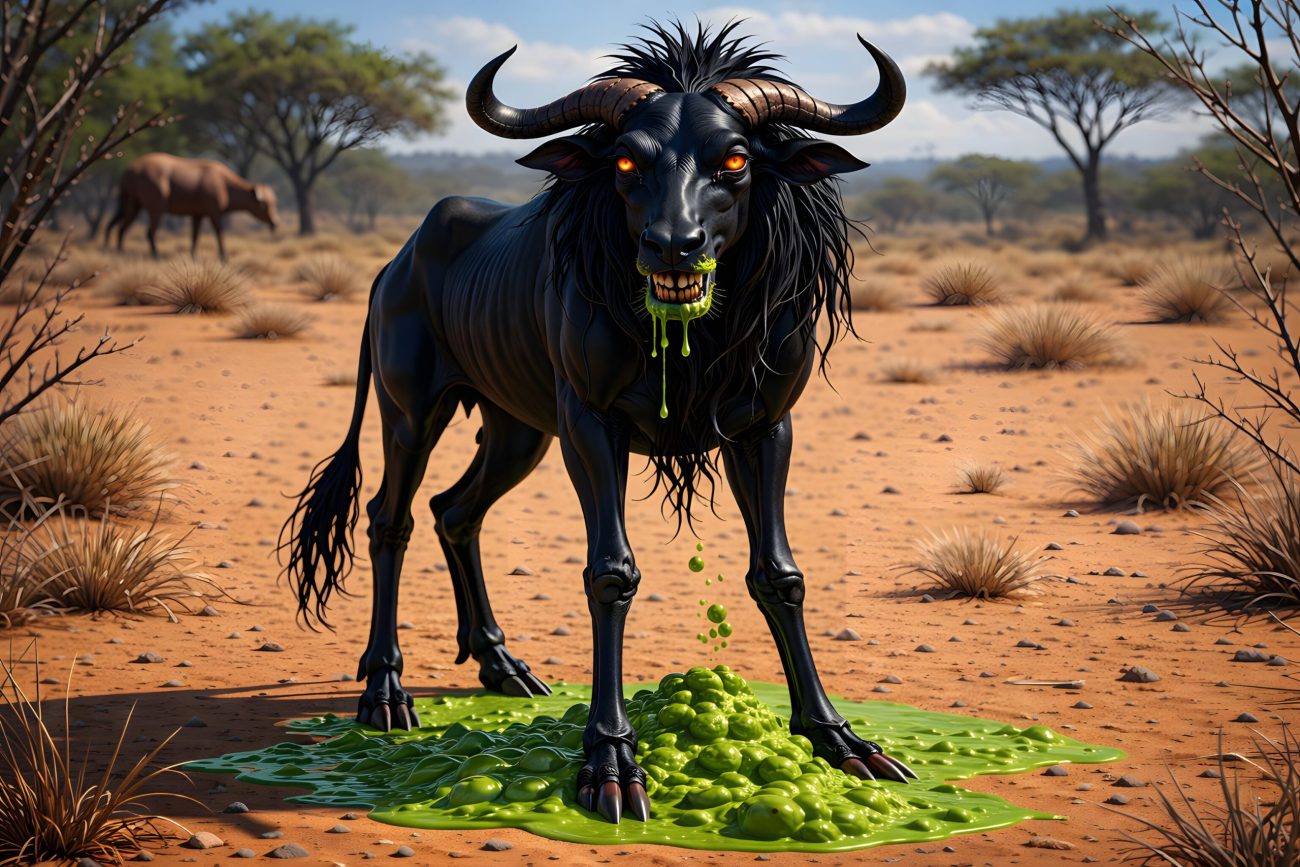
As it runs, the creature unleashes its true defense. From its body pours a vast stream of burning filth, hurled far behind it with astonishing force. The discharge scorches the earth like fire, filling the air with unbearable heat and stench. Anything it touches is seared, and hunters who pursue the beast are driven back in pain and terror, unable to continue the chase.

Thus the Bonacon escapes without ever turning to face its enemies, leaving them burned and humiliated while it vanishes into the distance. Its survival lies not in strength or weapons, but in a defense so foul and overwhelming that no pursuer dares follow for long.


Sources

Pliny the Elder. (n.d.). Naturalis Historia, Book 8, Chapter 16.

Wikipedia contributors. (n.d.). Bonnacon. In Wikipedia, The Free Encyclopedia, from https://en.wikipedia.org/wiki/Bonnacon


Boxed Calf

Tradition / Region: German mythology
Alternate Names: —
Category: Cow, Familiar


The Myth

It was said that those who wished to possess a brood penny—a coin that multiplied itself each night—had to make a bargain with the devil. On Christmas Eve, while church bells rang for Mass, they went alone to a crossroads. There they laid thirty coins in a circle and counted them forward and backward without a single mistake. If their tongue slipped, their neck would be twisted. If they succeeded, the devil added a thirty-first coin, and the cursed wealth was secured.

Near Wittenberg, a peasant woman was believed to own such a coin. In her house stood a box she guarded closely. One evening, she ordered her maid to boil the milk from the very first cow she milked, pour it over white bread, and place it in the box before doing anything else.

The maid delayed. She milked all the cows first, then boiled the milk and carried the pot to the box.

When she opened it, she saw a small calf inside—pitch black, cramped within the chest, its mouth stretched wide as if waiting to be fed. Terrified, the maid poured the boiling milk straight into its mouth.

At once the calf sprang from the box and raced through the house. Flames erupted in its wake, and the house was set ablaze.

Soon after, the woman was arrested and confessed. From that time on, brood pennies were seized wherever they were found and locked away in public treasuries, so that no boxed calf would ever again be secretly fed in the dark.


Sources

AGEN.at contributors. (n.d.). Der Brutpfennig. In SAGEN.at – Grimms Märchen & Sagen, from https://www.sagen.at/texte/sagen/grimm/derbrutpfennig.html


Bokeler Bulle

Tradition / Region: German mythology
Alternate Names: Bokel Bull
Category: Cow


The Myth

At the southern edge of the Breitenhees, near the quiet village of Bokel, the Ilmenau River rises from a chain of small ponds and flows eastward, murmuring softly through meadow and hollow. The people say this sound is no ordinary current, but the bathing of a hidden being—the Bokeler Bulle.

Near the village lies a place known as the Bull’s Hollow. Each year, when May arrives and the nights grow long and dark, the bull is said to emerge. At the stroke of midnight, it leaves the waters and moves silently into the village stables, seeking the cows of Bokel. From these secret unions are born calves of extraordinary size and strength, yet they are wild and unruly, never fully tame, and often slaughtered before they can grow dangerous.

The Bokeler Bulle is feared, and few dare to wander the area on May nights. Shepherds keep their distance, knowing the bull can be fierce when angered. Once, a young apprentice shepherd from Günne encountered the creature. The bull lowered its head and charged, its snort shaking the air. In terror, the shepherd cried out to the Holy Virgin Mary, and at that very moment the bull vanished, leaving him unharmed.

In gratitude for his escape, the shepherd later carved a magnificent door and gave it to the chapel in Bokel. Thus the legend endured: of a powerful bull rising from the river, of danger and deliverance, and of a hidden presence that still murmurs beneath the waters of the Ilmenau.


Sources

Meyer, C. (1950). Stadt und Kreis Uelzen. Ein Heimatbuch. Uelzen, p.166

SAGEN.at – DER KUHBANNER. (n.d.). https://www.sagen.at/texte/sagen/liechtenstein/seger/kuhbanner.html


Boi-Vaquim

Tradition / Region: Brazilian mythology
Alternate Names: —
Category: Cow


The Myth

On the wide southern plains of Brazil, where cowboys rode beneath endless skies, people told of a bull unlike any other. They called it the Boi-Vaquim.

Its horns shone like gold, and its eyes glittered like diamonds. From its body leapt sparks of fire, flashing as it moved across the grasslands. To glimpse it was to feel both awe and dread, for the creature was as beautiful as it was dangerous.

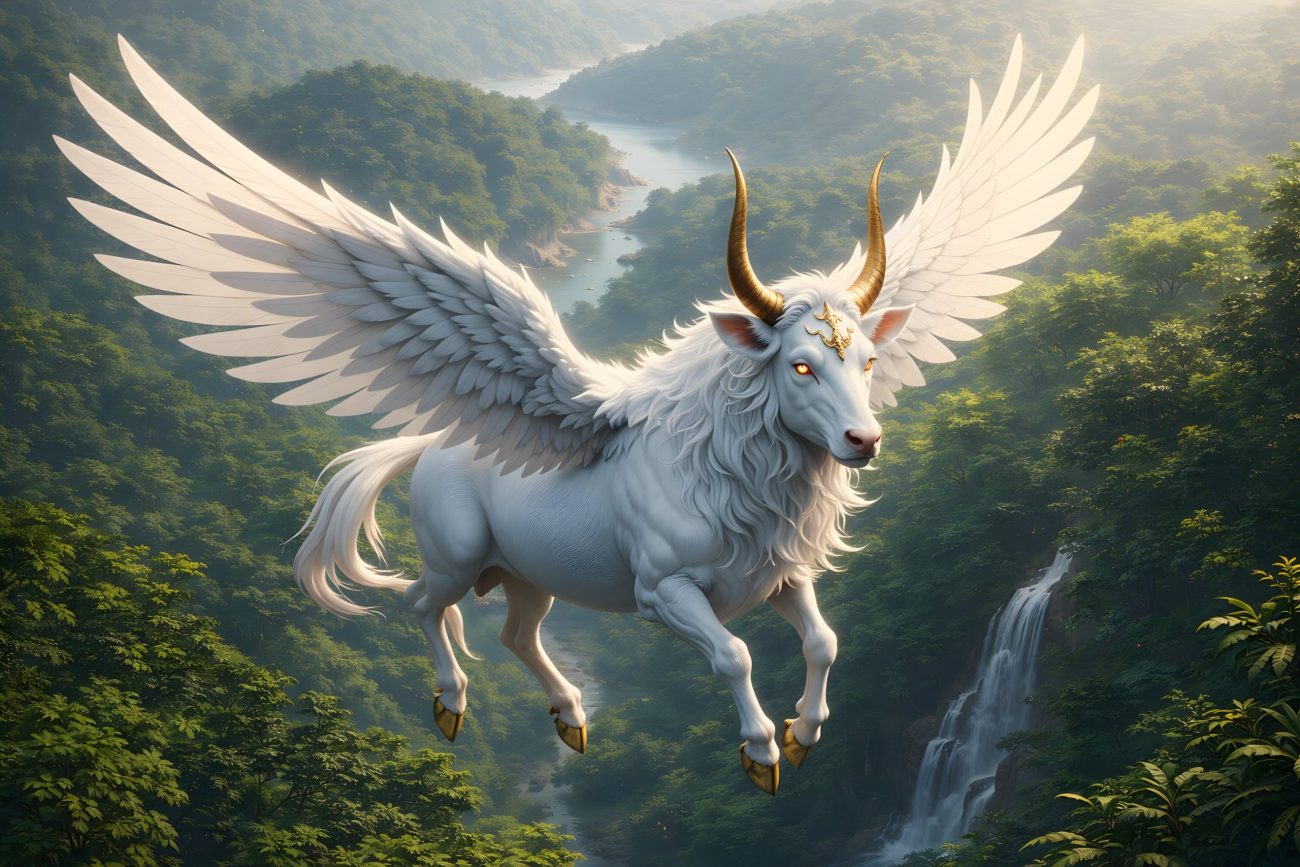
The Boi-Vaquim was said to have wings like a great bird, spreading wide as it crossed the plains, and hooves of gold that left the ground shimmering where they struck. When it charged, the air itself seemed to burn, and even the bravest rider felt his heart falter beneath its gaze.

Some cowhands dreamed of capturing it, imagining the glory of lassoing such a beast and proving their courage before all others. But only a rider of extraordinary strength, mounted on a horse swift and unshakable, could even hope to face it. Many tested their resolve from afar, measuring their nerve against the bull’s blazing presence.

Yet no tale tells of the Boi-Vaquim ever being mastered. It remained free, untamed, and unconquered—a living emblem of the wild southern lands, inspiring fear, respect, and wonder in all who spoke its name.


Sources

Contribuidores da Wikipédia. (2022, May 10). Boi Vaquim. https://pt.wikipedia.org/wiki/Boi_Vaquim