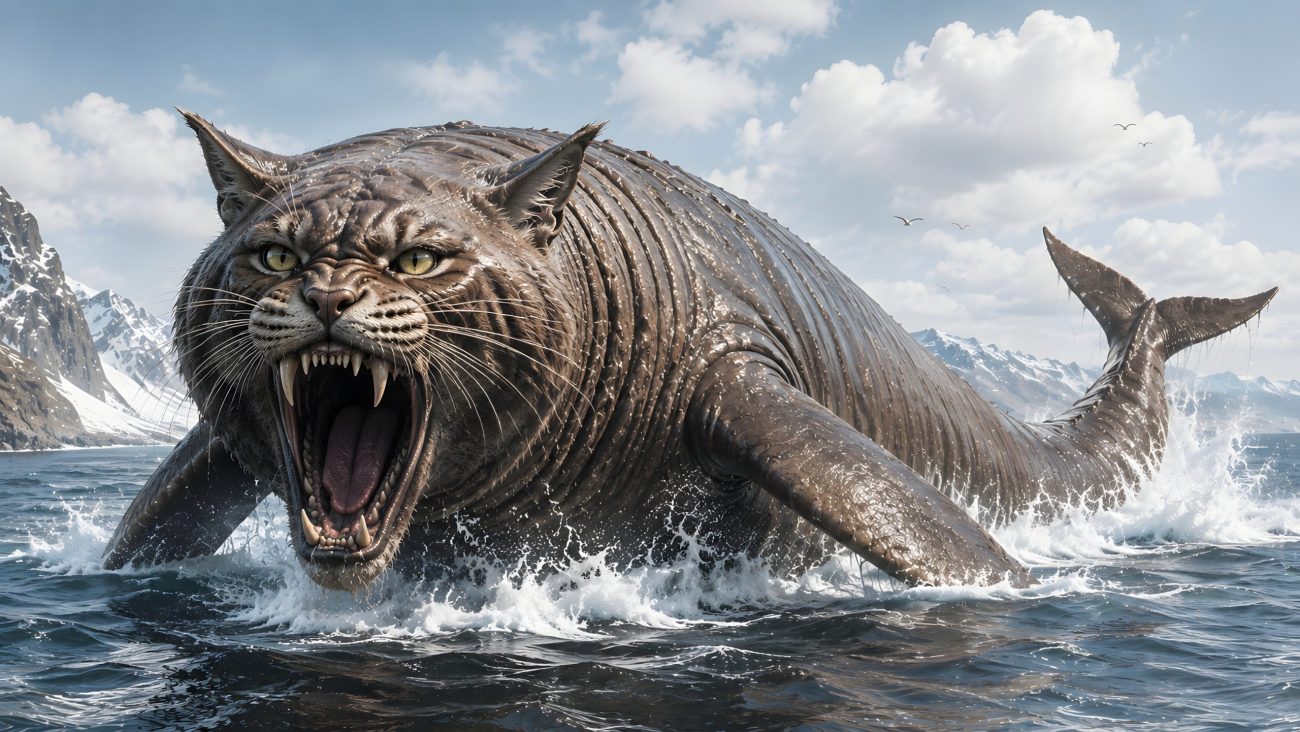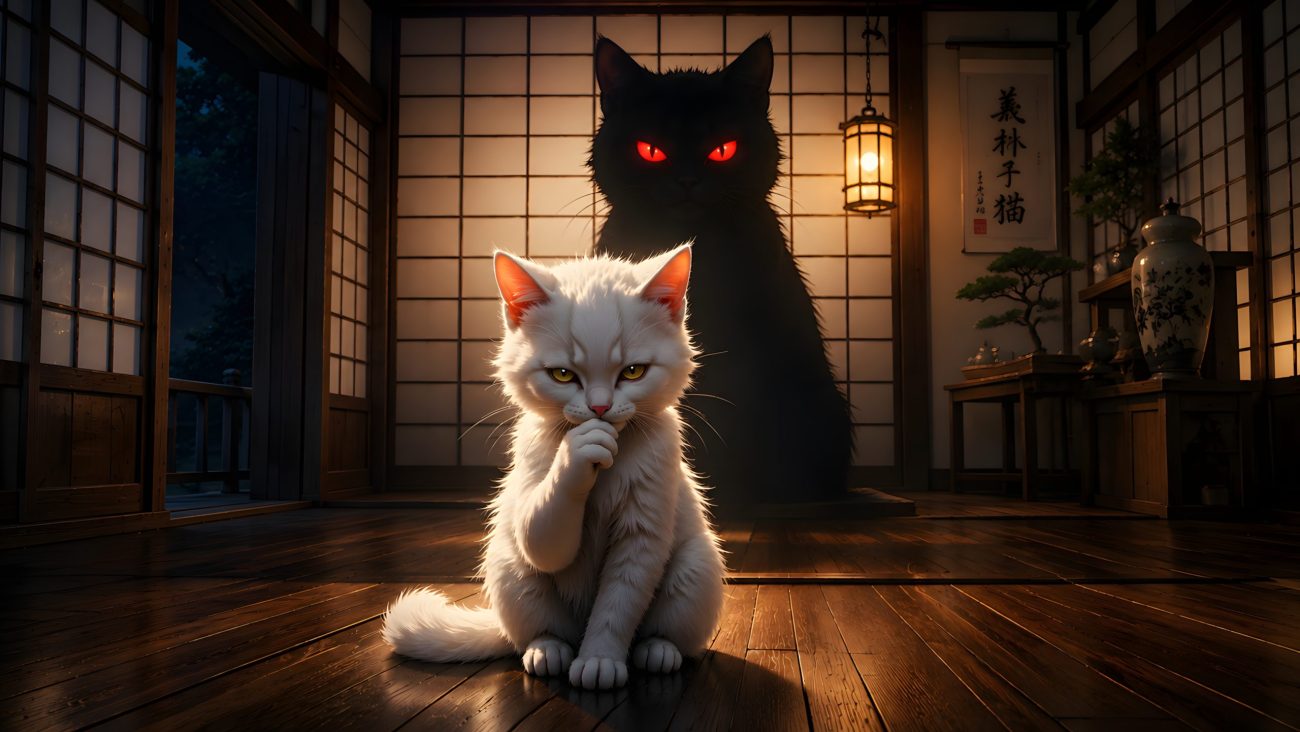
Aleleb the Bat

Tradition / Region: Cameroon Mythology
Alternative names: Aleleb
Category: Bat


The Myth

Aleleb the Bat is portrayed in Cameroonian folklore as a sorrowful, intelligent creature tied to grief, loyalty, and the origin of nocturnal life. Unlike many trickster bats found in folklore, Aleleb is deeply emotional and devoted to family, especially to his aging mother. He is described as a close companion of Neneb the Sun, and the two share an unusually powerful friendship, constantly visiting one another and living almost like brothers.

Bat’s mother eventually becomes gravely ill. Aleleb desperately searches for healers, carrying herbs and prayers from compound to compound while traditional healers call upon the ancestors to save her. Despite every effort, she continues to weaken until she finally dies after giving her son final words of wisdom and endurance.

Overwhelmed by grief, Aleleb decides he must bury his mother before nightfall. Because sunset is approaching, he flies to his friend Neneb the Sun and begs him to delay darkness just a little longer so the burial can be completed properly.

But Sun refuses.

Neneb tells Bat he cannot hold back the coming night and suggests waiting until morning instead. To Aleleb, this response feels cold, dishonorable, and cruel. In his deepest moment of suffering, the friend he trusted most chooses not to help him.

Bat returns home devastated and buries his mother in darkness.

After the burial, Aleleb lies beside her grave and swears never again to look upon the face of the Sun. From that day onward, according to the myth, bats abandoned the daylight forever and became creatures of the night.

In this story, Aleleb symbolizes mourning, wounded friendship, filial devotion, and exile from the world of light. The myth explains the nocturnal behavior of bats while also functioning as a moral tale about loyalty and the consequences of refusing compassion to those in grief.


Sources

Makuchi. (2008). The sacred door and other stories: Cameroon folktales of the Beba. Athens, OH: Ohio University Press.


Passadinha

Tradition / Region: Cape Verde Mythology
Alternative names: Passadinha, Little Blue Bird
Category: Bird


The Myth

Passadinha is a mysterious little blue bird from Cape Verde folklore, remembered for its bright red mouth, mocking intelligence, and connection to the downfall of Lob the Wolf. Though physically small and seemingly harmless, Passadinha acts as a supernatural trickster figure that humiliates greedy or foolish characters. In the tales, the bird is often associated with the sky, unreachable places, and deceptive appearances. Its red mouth is sometimes mistaken for meat by the starving Lob, emphasizing the bird’s strange, almost magical nature.

In one story, Lob learns from his clever nephew Tobinh’ about an enchanted fig tree that obeys spoken commands. By saying special words, the tree bends down to the ground, allowing someone to climb aboard before rising high into the air. Lob uses the tree to gorge himself on fruit, but in his greed he forgets the command needed to descend.

Instead of bringing him back to earth, the tree continues rising higher and higher until it reaches heaven itself.

There Lob encounters God, who gives him pieces of leather to wash so a drum can be made for him. But Lob is so hungry and gluttonous that he repeatedly eats the leather instead. Eventually God sends an angel to watch him, and a drum is finally completed. Lob is lowered back toward earth hanging from a string attached to heaven itself. God instructs him to beat the drum once he safely reaches the ground so the string can be cut.

As Lob descends through the sky, he sees Passadinha flying nearby. The bird carries something red in its mouth which Lob mistakes for meat. Desperate with hunger, he begs the bird for food.

Passadinha refuses unless Lob plays the heavenly drum.

Lob knows that if he beats the drum too early, God will cut the string and he will fall to his death. But his greed overwhelms him once again. Hoping to survive the fall, he shouts for Tobinh’ to prepare mattresses and hay below.

Instead, Tobinh’ gathers knives, razors, broken glass, pins, and every sharp object he can find.

Lob finally plays the drum.

God cuts the string.

Lob crashes down onto the deadly trap below and is killed.

In the tale, Passadinha functions as more than an ordinary bird. It acts almost like a sky-spirit or supernatural tester whose presence exposes greed, impatience, and foolishness. Small, mocking, and untouchable, the bird represents cunning intelligence triumphing over brute appetite — a recurring theme throughout Cape Verdean Lob stories.


Sources

Parsons, E. C. (1923). Folk-lore from the Cape Verde Islands. Part I. Cambridge, MA & New York: American Folk-Lore Society.


Aunt Ganga

Tradition / Region: Cape Verde Mythology
Alternative names: Ganga
Category: Bird


The Myth

Aunt Ganga is a strange and frightening being from Cape Verde folklore, associated with a water-fowl but portrayed more like a supernatural old woman or monstrous bird spirit. She lives alone in an isolated house protected by a magical talking door that opens only with secret words. She is connected with huge stores of eggs, bundles of firewood, ashes, and dark magical power. In the tale, she appears as an elderly female figure with immense strength and an intimidating presence, carrying enormous loads of wood through the wilderness by herself. Though not described in precise physical detail, she is imagined as something between a giant bird and an old crone: harsh, dangerous, solitary, and feared.

In the story, Lob the Wolf becomes jealous after noticing how fat and healthy his clever nephew has grown. The nephew finally reveals that he has secretly been stealing eggs from Aunt Ganga’s hidden house, but he warns Lob that she is extremely dangerous and unlucky visitors do not survive encounters with her.

Lob insists on going anyway.

Before entering the house, the nephew teaches Lob the magical words needed to open the enchanted door:

“Door toboc tobac!”

But he deliberately gives Lob the wrong phrase for leaving the house, ensuring he will become trapped inside once Aunt Ganga returns.

Inside the house, Lob becomes consumed by greed. He devours enormous numbers of Aunt Ganga’s eggs while continuing to eat even after his nephew warns him she is approaching. Outside, the nephew watches Aunt Ganga returning through the landscape carrying a huge bundle of gathered wood. As she approaches, songs are exchanged between Lob trapped inside the house, the mocking nephew outside, and Aunt Ganga herself advancing toward the door.

When Aunt Ganga reaches the house, Lob mistakenly repeats the false password and the magical door refuses to open. Suspicious, Aunt Ganga commands the door repeatedly until it finally bursts open on its own.

Lob hides beneath the bed while Aunt Ganga calmly enters, prepares coffee, and lies down to rest. But when she breaks wind, Lob insults her from beneath the bed, calling her filthy. Realizing something is hiding in the room, Aunt Ganga searches until she discovers him.

Lob leaps upward and clings desperately to a roof beam while Aunt Ganga savagely beats him. Eventually exhausted, he falls into a pile of ashes where he hides in silence.

When the nephew later arrives, Aunt Ganga explains that Lob somehow disappeared. The nephew tricks Lob into exposing himself by claiming that members of Lob’s kind never die without breaking wind.

Hearing this, Lob foolishly breaks wind loudly from inside the ashes, revealing his hiding place.

Aunt Ganga immediately kills him.

In the tale, Aunt Ganga functions as a supernatural guardian of hidden food and secret places. She punishes greed, intrusion, and gluttony, while her magical house and enchanted door give her the qualities of a witch, ogress, or spirit-being rather than an ordinary woman.


Sources

Parsons, E. C. (1923). Folk-lore from the Cape Verde Islands. Part I. Cambridge, MA & New York: American Folk-Lore Society.


Lob

Tradition / Region: Cape Verde Mythology
Alternative names: Nho Lob, Ti’ Lob
Category: Wolf


The Myth

In the folktales of Cape Verde, Lob is a large wolf-like being who constantly falls victim to the tricks of his clever nephew Pedr, also called Tubinh or Subrinh.

Lob is powerful but foolish, greedy, boastful, and easily deceived. Nearly every tale involving him ends in humiliation, injury, or death.

During a terrible famine, Lob agrees to sell his own mother for sacks of corn after Pedr convinces him to do so. Pedr secretly tells his own mother to escape before reaching the market, but Lob truly loses his. Later, Pedr tricks Lob into pulling buried donkey tails from river mud. Lob believes the donkeys are trapped underwater and pulls with all his strength until he falls into the river and nearly drowns.

In another story, Lob borrows feathers from birds so he can attend a dance on an island. But once there, he insults every bird in mocking songs. Furious, the birds each reclaim their feathers and abandon him stranded on the island.

A supernatural sea creature called Peix’ Caball eventually rescues him by carrying him across the water. Yet Lob immediately betrays her kindness by tearing off one of her breasts when they reach shore. Later the creature drags him into the sea to drown him in revenge.

Many of Lob’s stories involve absurd acts of gullibility. Pedr convinces him to hold up a cave roof for three entire days because he falsely claims the cave is collapsing. In another tale, Pedr pours molasses over his head and pretends someone struck him with an axe, causing sweetness to flow from the wound. Lob foolishly orders his wife to strike his own head with an axe so the same thing will happen to him.

In one of the cruelest stories, Pedr is captured for theft and tied up for punishment. He tricks Lob into believing the punishment is actually part of a feast. Excited by the promise of food, Lob takes Pedr’s place and is tortured with red-hot iron while Pedr watches from a hilltop singing mockingly.

Throughout the tales, Lob represents uncontrolled greed, appetite, vanity, and stupidity. Though physically strong and intimidating, he is repeatedly defeated by intelligence and cunning.

The stories belong to a wider Afro-Atlantic trickster tradition descended partly from West African folklore, where large predatory beasts are often humiliated by smaller but cleverer animals.


Sources

Parsons, E. C. (1917). Ten folk-tales from the Cape Verde Islands. The Journal of American Folklore, 30(116), 230–238.


Peixe Caball

Tradition / Region: Cape Verde Mythology
Alternative name: Peix’ Caball’, Horse-Fish
Category: Horse, Fish


The Myth

Peixe Caball is a strange sea creature from the folktales of Cape Verde, especially stories collected from the islands’ Lob and Tubinh trickster tradition.

The creature is described as a fish with the head or upper body of a horse and the tail of a fish. In the tales, Peixe Caball lives in the sea and possesses intelligence, emotion, and supernatural strength.

One famous story tells how Lob, a greedy and cruel wolf-like trickster, became stranded on an island after borrowing feathers from birds to attend a dance. During the celebration, Lob insulted each bird one after another until they angrily reclaimed their feathers and abandoned him.

As Lob cried alone on the island, Peixe Caball appeared from the sea and asked what had happened. Feeling pity for him, the creature agreed to carry him safely back across the water.

While riding on Peixe Caball’s back, Lob secretly admired the creature’s large breasts and planned to tear one off once they reached shore. The moment they arrived on land, Lob attacked the creature and ripped away one of its breasts before fleeing.

Wounded and crying on the beach, Peixe Caball later encountered Tubinh, Lob’s clever nephew and enemy. Tubinh promised revenge and tricked Lob into returning to the shore by pretending the stranded creature was a giant cow. When Lob approached to kill it, Peixe Caball seized him and dragged him deep beneath the ocean.

At first Lob laughed and told his wife the creature was only “playing.” But Peixe Caball continued diving deeper and deeper until Lob finally realized he was about to die. The Horse-Fish drowned him beneath the sea, ending the tale.

Peixe Caball is unusual among Atlantic African folk beings because it combines traits of a mer-creature, sea spirit, and monstrous animal. Despite its frightening strength, the creature is not evil by nature. In the story, it acts more as a supernatural being capable of both mercy and vengeance, punishing betrayal and cruelty.


Sources

Parsons, E. C. (1917). Ten folk-tales from the Cape Verde Islands. The Journal of American Folklore, 30(116), 230–238.


Salamander Spirit

Tradition / Region: Burkina Faso Mythology
Alternative name: Ko! Ko! Salamander
Category: Lizard


The Myth

In a Moose folktale from Burkina Faso, the mysterious salamander spirit appears during the story of the destructive twins Poko and Raôgo.

After being raised by a giant hawk, the twins were adopted by a village chief. But Raôgo was wild and violent. He eventually burned down the chief’s palace and hid with his sister high inside a kapok tree while the enraged villagers tried to cut it down.

As blacksmiths chopped at the massive tree, a salamander suddenly crawled out from a hole in the trunk and cried:

“Ko! Ko! Ko!”

Immediately, the cuts vanished and the tree became whole again, as though it had never been damaged.

The salamander possessed supernatural restorative powers tied to the tree itself. Its cry magically healed the wood every time it was nearly destroyed, protecting the twins from capture.

Raôgo wanted to kill and eat the creature despite Poko’s warnings. He seized the salamander, cut off its head, and gave the head to his sister. Even after death, the severed head retained its magical power. Whenever the tree was close to falling, the salamander’s head cried again:

“Ko! Ko! Ko!”

And once more the tree restored itself.

Eventually, Raôgo consumed the head as well, destroying the spirit’s power entirely. Without the salamander’s magic, the blacksmiths finally succeeded in cutting down the tree.

The salamander in this tale acts as a guardian spirit connected to nature, restoration, and survival. Its regenerative abilities resemble wider African and global beliefs linking salamanders and reptiles to rebirth, fire, immortality, and supernatural protection.


Sources

Sissao, A.-J. (2010). Folktales from the Moose of Burkina Faso. African Books Collective.


Kinkirga

Tradition / Region: Burkina Faso Mythology
Alternative name: Little Genie
Category: Spirit, Goblin


The Myth

The Kinkirga is a small supernatural being from Moose folklore in Burkina Faso. It is usually described as a genie-like spirit living in the wilderness, rocks, and remote areas of the bush.

In one famous tale, a village chief promised his daughter in marriage to whoever could bring him three impossible objects: milk from a wild she-buffalo, the tendon of a tortoise, and the brain of a kinkirga.

The clever hare decided to attempt the challenge. After tricking a buffalo and obtaining her milk, he searched the bush for a kinkirga. When he found the little spirit, the hare asked whether it could perform a somersault on top of a large rock.

The kinkirga admitted it could not.

Pretending to help, the hare climbed onto the rock first and demonstrated the trick safely. The kinkirga tried to imitate him, but struck its head against the stone and shattered its skull. The hare then took the spirit’s brain and continued on his journey.

The tale portrays the kinkirga as mysterious and supernatural, but also vulnerable to cunning and deception. In Moose folklore, spirits of the bush are often powerful in strange ways, yet they can still be outsmarted by clever tricksters like the hare.


Sources

Sissao, A.-J. (2010). Folktales from the Moose of Burkina Faso. African Books Collective.


Fire Hawk

Tradition / Region: Burkina Faso Mythology
Alternative name: Giant Hawk
Category: Bird


The Myth

The Fire Hawk is a gigantic supernatural bird from Moose folklore in Burkina Faso. It is remembered as a terrifying creature that descended from the sky to attack villages and devour people.

According to the legend, the monster appeared every seven days. Entire communities lived in fear of it, knowing that sooner or later the hawk would return to claim more victims. People eventually gathered together, preparing to sacrifice themselves all at once so the nightmare would finally end.

The hawk was said to land on a massive rock before attacking. When it opened its beak, fire burst out, scorching the ground and terrifying everyone nearby. Its arrival was associated with destruction, panic, and death.

The hero Raôgo confronted the creature after hearing of the suffering it caused. Armed with a heavy iron club, he faced the giant hawk alone. During the battle, the hawk repeatedly rose after being struck down, but Raôgo continued attacking until he finally killed the monster.

After the death of the Fire Hawk, the people celebrated their freedom from the creature’s terror. In some versions of the story, the defeat of the hawk becomes linked to storms and thunder, with Raôgo later ascending into the sky alongside his sister Poko.


Sources

Sissao, A.-J. (2010). Folktales from the Moose of Burkina Faso. African Books Collective.


Bibêga

Tradition / Region: Burkina Faso Mythology
Alternative name: Bibega
Category: Human Creature


The Myth

Bibêga is a terrifying child figure from Moose folklore in Burkina Faso, known for his cruelty, fearlessness, and violent behavior.

According to the tale, Bibêga was born in a supernatural way. While a pregnant woman was gathering wood in the bush, a thorn pierced her stomach and the child burst out immediately, already able to speak. He announced his own name and calmly told his frightened mother to return home.

As he grew, Bibêga searched for others who claimed to fear nothing. He gathered several children and traveled with them until they reached the house of a village chief, who welcomed them generously and offered them food and shelter for the night.

During the night, Bibêga suddenly decided to murder the chief’s daughters while they slept. His companions begged him not to do it, reminding him that the chief had treated them kindly, but Bibêga ignored them and killed all three girls. Terrified, the other children fled.

After the murders, Bibêga climbed a tree and mocked the villagers while they searched for him. When the villagers tried to cut the tree down, a great eagle rescued him by carrying him away beneath its wings. Yet Bibêga repaid kindness with violence again. Later, after a tortoise revived both him and the injured eagle with magical water, Bibêga immediately killed the tortoise, cooked it, and ate it.

The stories continue with Bibêga wandering from place to place, offering help to strangers before murdering them without reason. He kills an old woman who fed him and later murders a blacksmith while pretending to assist him in his workshop.

Bibêga became remembered in Moose folklore as the image of a merciless and destructive child who rejected gratitude, kindness, and hospitality. The tale is often told as a warning about cruelty, ingratitude, and uncontrolled violence.


Sources

Sissao, A.-J. (2010). Folktales from the Moose of Burkina Faso. African Books Collective.


Dorlis

Tradition / Region: Senegal Mythology, Burkino Faso Mythology
Also Known As: Dowlis, Stick Man, Night Husband
Category: Succubus


The Myth

The Dorlis is a feared spirit from West African folklore, especially associated with traditions in Senegal and Burkina Faso. It is described as a malevolent supernatural being that visits people at night while they sleep.

By day, the Dorlis appears as an ordinary human, blending into society unnoticed. At night, however, it is believed to become invisible or transform into an animal in order to secretly enter homes. Because of its nocturnal behavior, it is sometimes called the “night husband.”

Legends portray the Dorlis as a dangerous spirit associated with nighttime visitations, sleep, and supernatural assaults during the night. People believed it could slip through tiny openings and silently approach sleeping victims.

Traditional methods said to repel the Dorlis include wearing red or black underwear inside out and placing a pair of scissors beneath the bed before sleeping.


Sources

Blake’s. (2015, July 27). Mythes, légendes et croyances traditionnelles des Antilles-Guyane. Retrieved May 10, 2026, from https://blakes.fr/mythes-legendes-et-croyances-traditionnelles-des-antilles-guyane/