White Skull Cat

Tradition / Region: Belgian Mythology
Alternative names: White Cat
Category: Cat, Skeleton


The Myth

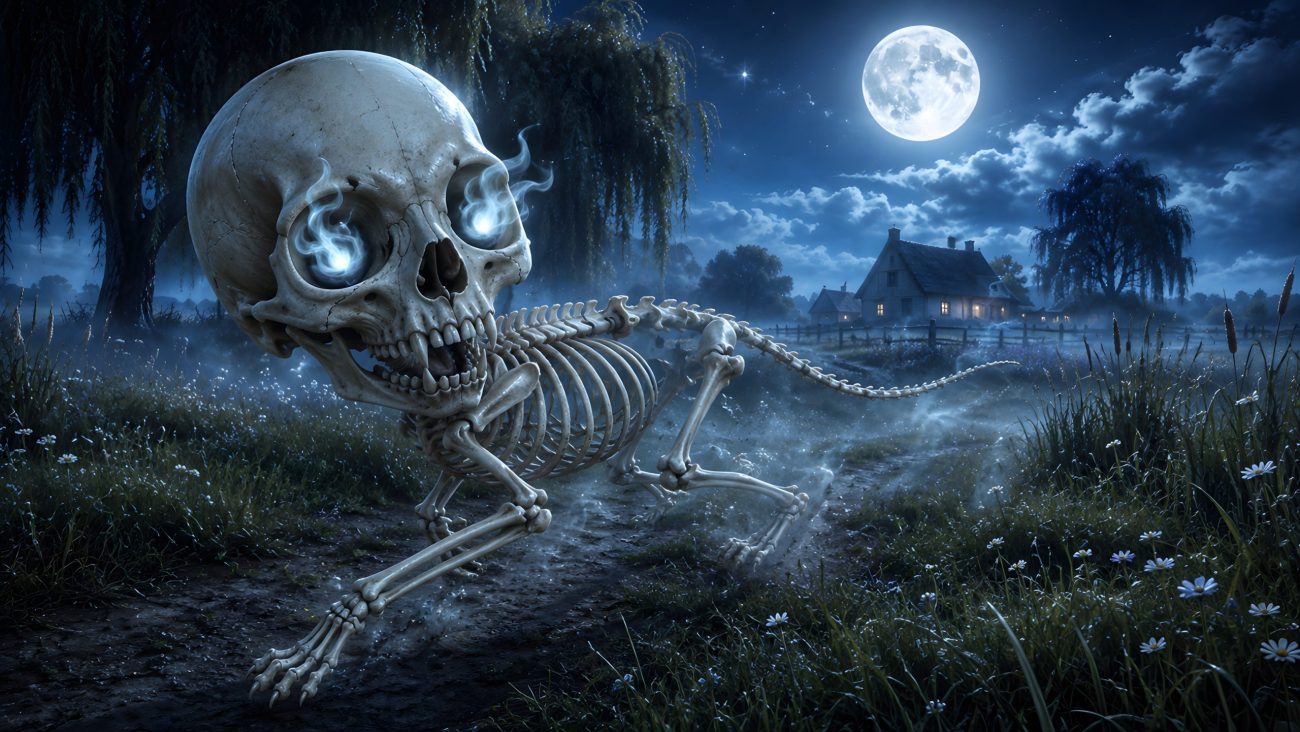
The White Skull Cat appears as a small white cat that can transform into a human skull.

According to the legend, a farmer known as Boerke Jans was walking home late one evening from the village square. Near the Lindo on the Windikeveld, a small white cat began walking ahead of him. He picked it up and carried it home inside his coat. Once home, he locked the cat inside his wardrobe for the night.

The following morning, when he opened the wardrobe, the cat had transformed into a human skull.

Terrified, Boerke Jans waited until midnight before carrying the skull back to the place where he had found the cat. As soon as he laid it on the ground, the skull instantly changed back into the white cat, which ran off across the fields and disappeared into the darkness.

The fright affected Boerke Jans so deeply that, according to the legend, he gradually wasted away from fear.


Sources

De Cock, Alfons. Vlaamsche sagen uit den volksmond. Amsterdam: Maatschappij voor Goede en Goedkoope Lectuur, 1921, p. 49.


Zudringliche Katze

Tradition / Region: Luxembourgish Mythology
Alternative names: The Intrusive Cat
Category: Cat


The Myth

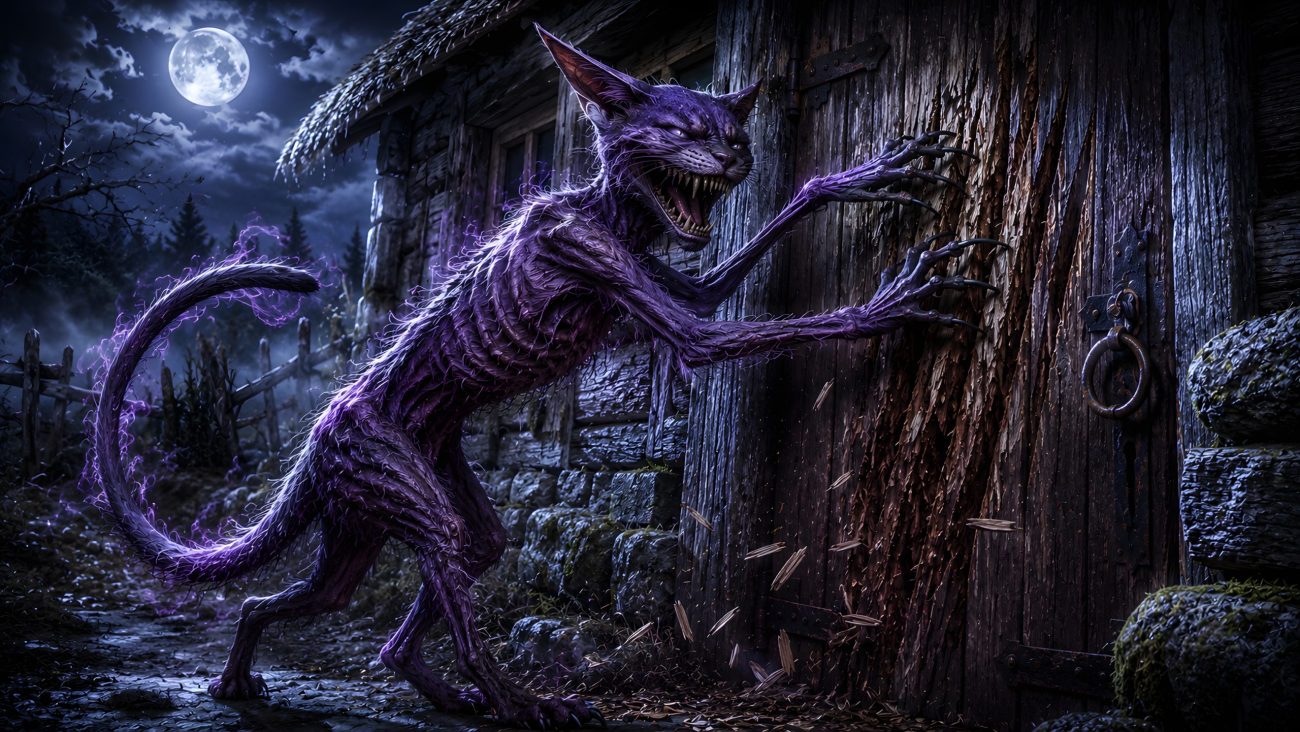
The Zudringliche Katze appears as an ordinary cat that visits people at night, speaks with a human voice, and is believed to be a witch in animal form.

According to the legend, a young woman from Bons entered service at a farm in Hamm. After she had lived there for a few weeks, a mysterious cat began visiting her bedroom door at night. The animal softly scratched at the door and repeatedly called in a strange voice, Margaret, open the door.

The servant refused to let it in. Eventually, she grew tired of the nightly disturbance. One night she leapt from her bed, flung the door open, and hurled one of her shoes at the cat with all her strength. The cat immediately disappeared, and everything fell silent.

The next morning, the young woman searched for her shoe, but it had completely vanished without a trace. According to the tradition, this proved that the mysterious cat had been a witch in disguise.


Sources

De la Fontaine, Edmond. Luxemburger Sagen und Legenden. Luxembourg: Jos. Beffort, 1882. Accessed July 28, 2026. https://viewer.eluxemburgensia.lu/ark:70795/rvks9k


Koshin-yama Yamaneko

Tradition / Region: Japanese mythology
Alternative names: Koshin Mountain Wildcat, Koshinzan Yamaneko
Category: Cat


The Myth

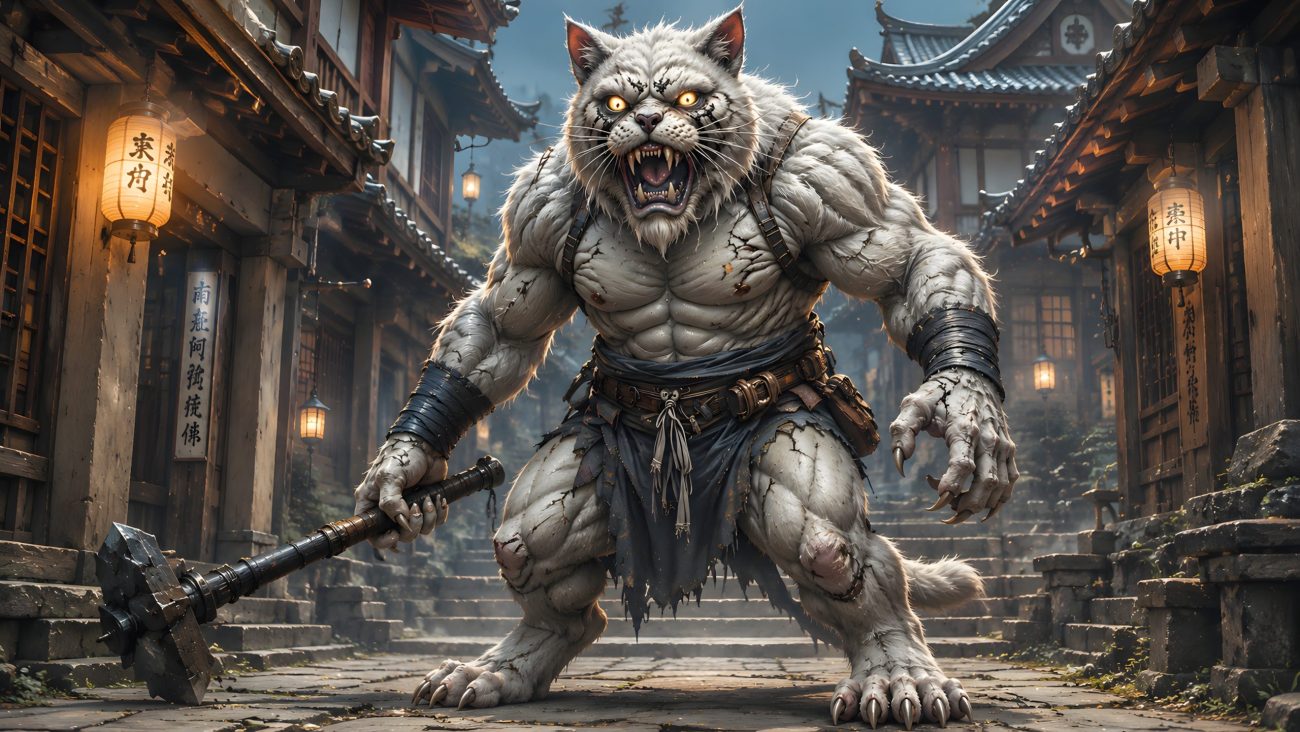
The Koshin-yama Yamaneko was a gigantic wildcat that had lived for hundreds of years, growing to the size of a calf and gaining immense supernatural powers. Its face resembled that of a raging tiger, its mouth stretched to its ears and was redder than blood, its fangs were as white as swords, and although its body was human-like, it rode a grotesque horse formed from an ancient tree spirit. Its eyes shone like torches, and after revealing its true form, they gleamed like mirrors while its whiskers resembled snowy pampas grass. It could command the beasts of the mountain, ride tree spirits as horses, speak human language, and even had the mountain and land gods as its servants.

Seventeen years before the events of the story, the local samurai Akaiwa Ikkaku climbed Mount Koshin to prove his bravery. Unknown to everyone, he was killed and devoured by the monstrous wildcat. The creature stole his clothes, assumed his appearance, and descended from the mountain to live in his place. It sought to possess Ikkaku’s beautiful second wife, Madoi, whose life was eventually drained through sleeping with the disguised monster. The false Ikkaku then continued living among humans, abusing his eldest son Kakutaro while living with the wicked woman Funamushi, whose greedy nature allowed her to remain unaffected by the monster’s supernatural influence.

Years later, the Dog Warrior Inukai Genpachi arrived in the region while searching for his scattered companions. After hearing rumors of a monstrous wildcat living on Mount Koshin, he became lost in the mountain during the night. There he encountered the mysterious horseman whose blazing eyes pierced the darkness. Genpachi fired an arrow that struck the rider’s left eye, forcing the monster and its attendants to flee. Soon afterward, he met the ghost of the real Akaiwa Ikkaku, who revealed the truth about his murder and begged Genpachi to save his son Kakutaro from the impostor.

Genpachi descended the mountain and uncovered the schemes of the false Ikkaku and Funamushi. They falsely accused Kakutaro’s wife Hinaginu and eventually demanded that her unborn child be sacrificed to restore the monster’s wounded eye. Rather than allow others to suffer, Hinaginu stabbed herself in the stomach. At that moment the sacred Jewel of Propriety burst from her body and flew across the room, shattering the chest of the false Ikkaku with divine punishment.

As the battle continued, the false Ikkaku rose again, cast aside his human disguise, and revealed himself as the monstrous wildcat. Declaring that only by tearing apart his enemies, drinking their blood, and devouring their flesh could he preserve his supernatural power, he attacked Kakutaro and Genpachi. After a fierce struggle, Kakutaro severed the monster’s hip, brought it crashing to the ground, and finally pierced its throat, avenging the death of his true father.

Although the monster’s body was burned, strange illnesses and supernatural disasters continued to plague the region. Its ashes were eventually gathered and reburied beneath a cat mound, appeasing the wildcat’s lingering curse. Afterward, peace returned, and it was said that rats no longer came near the surrounding fields.


Sources

Takahashi, Toshihiro. “庚申山の山猫 (Mountain Cat of Mt. Kōshin).” 新版TYZ 妖怪図鑑 (New TYZ Yokai Encyclopedia). August 13, 2018. Accessed July 28, 2026. https://tyz-yokai.blog.jp/archives/1071974070.html
Yule Cat

Tradition / Region: Icelandic Mythology
Alternative names: Jólakötturinn, Jólaköttur, Christmas Cat
Category: Cat


The Myth

The Yule Cat is a gigantic, vicious cat that prowls the snowy countryside during the Christmas season. It is said to lurk outside homes searching for people who have not received new clothing before Christmas Eve. In some versions of the legend, it devours those unfortunate people, while in others it steals and eats only their Christmas food. The Yule Cat is closely associated with the ogress Grýla and the Yule Lads, and is commonly regarded as Grýla’s fearsome pet.

According to Icelandic tradition, the Yule Cat appeared each Christmas to punish laziness. Farm workers were expected to finish processing the autumn wool before the holiday. Those who completed their work were rewarded with new clothes, while those who failed received nothing. Anyone without new clothing risked becoming the Yule Cat’s next victim.

Later traditions connected the beast to Grýla and her thirteen Yule Lads. The enormous cat roamed the countryside during Christmas, and in some stories only the smallest Yule Lad, Stúfur, was capable of controlling the unruly monster, riding it across the snow-covered landscape in search of prey.


Sources

“Yule Cat.” Wikipedia: The Free Encyclopedia. Wikimedia Foundation. Accessed July 28, 2026. https://en.wikipedia.org/wiki/Yule_cat


Vargin

Tradition / Region: Belarusian mythology
Alternative names: Vargan
Category: Cat


The Myth

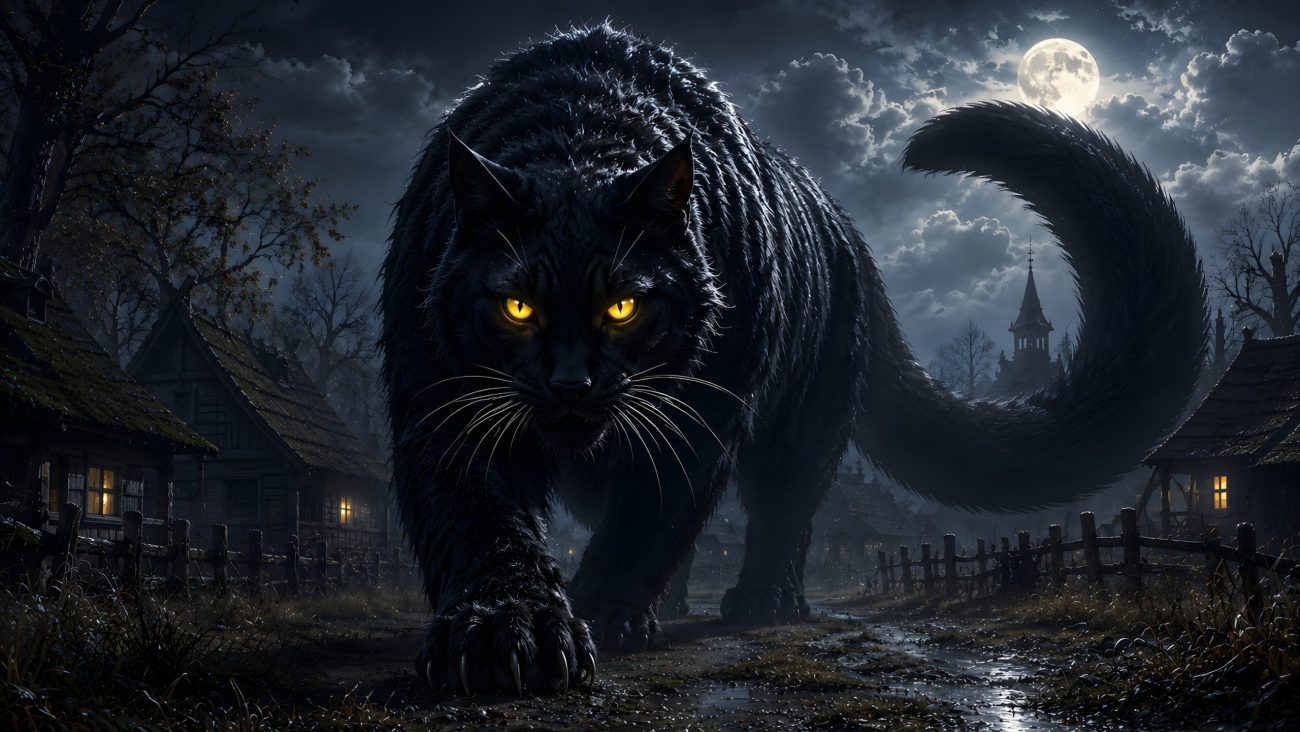
Vargin is an enormous demonic black cat regarded as the king of the feline kingdom. His fur is as black as coal, his eyes glow like flames, and his body is immense, with a pitch-black, furry tail as thick as a sable’s. He can appear and disappear without warning, squeeze through tiny cracks despite his size, and even pass through closed doors and windows. He is also able to assume the forms of butterflies, monstrous creatures, or humans, and is accompanied by evil spirits. His purring is said to lull people into a false sense of peace before bringing them misfortune.

Belarusian folklore tells that Vargin is one of the rulers of the animal world. The king of cats is Vargin, the king of roosters is Budzimir, and the king of mice is Podnor. While Budzimir represents peace and light, Vargin embodies torment, fear, and darkness.

Vargin is believed to prey upon people suffering from severe mental illnesses or emotional despair. Rather than causing ordinary physical sickness, he drives victims into confusion, social isolation, and complete mental and physical exhaustion. He especially torments those whose illnesses cannot be explained or cured, feeding upon their suffering.

One tale tells of a man named Tomas whose wife became mysteriously ill after insects entered her head. Doctors could not cure her. Tomas lovingly kept a black cat that everyone admired for its gentle nature, but a healer warned him that black cats, especially unknown ones, could bring terrible misfortune. The healer revealed that the beloved cat was actually Vargin, whose comforting purring concealed his true purpose of tormenting the household.

Another story tells of Budzimir being seized by Vargin, causing fear to spread throughout the world. An oak advised that Budzimir should be freed by calming and soothing Vargin rather than confronting him directly. Once the fire within the cat was allowed to fade and he became gentle, Budzimir was released and peace returned.

Despite his immense supernatural power, Vargin is said to fear only a powerful natural healer or sorcerer capable of driving him away with sacred words. Such healers can banish both Vargin and the evil spirits that accompany him.


Sources

“Варгин (Vargin).” New Bestiary (Bestiary.us). Accessed July 28, 2026. https://www.bestiary.us/Vargin


Zheng

Tradition / Region: Chinese mythology
Alternative names: None known
Category: Cat


The Myth

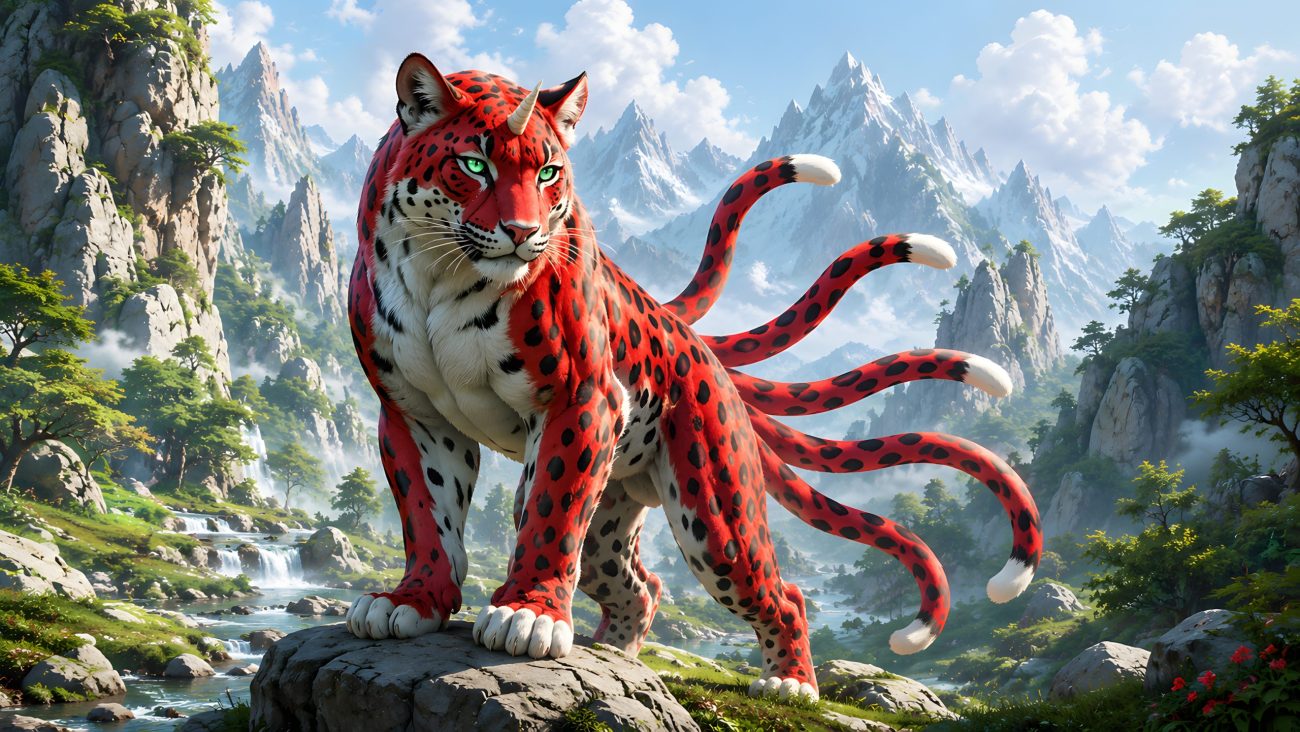
The Zheng is a strange beast described as resembling a red leopard with five tails and a single horn. Its cry sounds like the striking of stone. It is said to inhabit Mount Zhang’e, a barren mountain devoid of vegetation but rich in jade and precious stones.

According to the Classic of Mountains and Seas (Shan Hai Jing), the Zheng lives on Mount Zhang’e, located two hundred and eighty li to the west. The mountain is described as barren of plant life but abundant in jade and valuable stones. There dwells the Zheng, an extraordinary creature whose appearance and voice distinguish it from all other beasts. Its body resembles a red leopard, yet it possesses five tails, a single horn, and emits a sound like stone being struck. No further actions, powers, or legends are recorded in the source.


Sources

“狰 (Zhēng).” Chinese Wikipedia. Wikimedia Foundation. Accessed July 28, 2026. https://zh.wikipedia.org/wiki/狰


Zhujian

Tradition / Region: Chinese mythology
Alternative names: None known
Category: Cat


The Myth

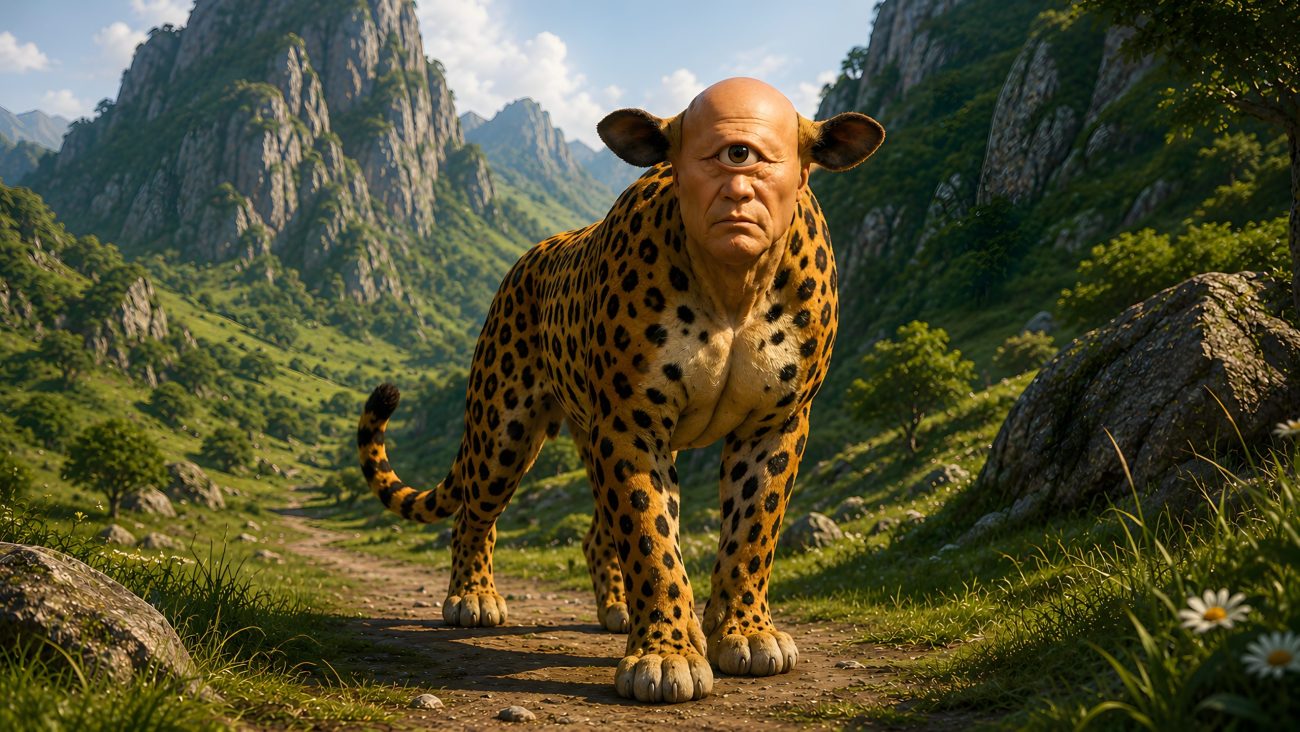
The Zhujian is a bizarre creature with the body of a leopard, a long tail, a human head, the ears of an ox, and a single eye.

According to the Classic of Mountains and Seas (Shan Hai Jing), specifically the Northern Mountains Classic, the Zhujian is simply described as a strange beast with these unusual features. It has the body of a leopard, an elongated tail, a human-like head with ox ears, and only one eye. No further legends, abilities, or deeds are recorded in the source.


Sources

“諸犍 (Zhūjiàn).” Chinese Wikipedia. Wikimedia Foundation. Accessed July 28, 2026. https://zh.wikipedia.org/wiki/諸犍


Shusse Neko

Tradition / Region: Japanese mythology
Alternative names: Cat of Success
Category: Cat


The Myth

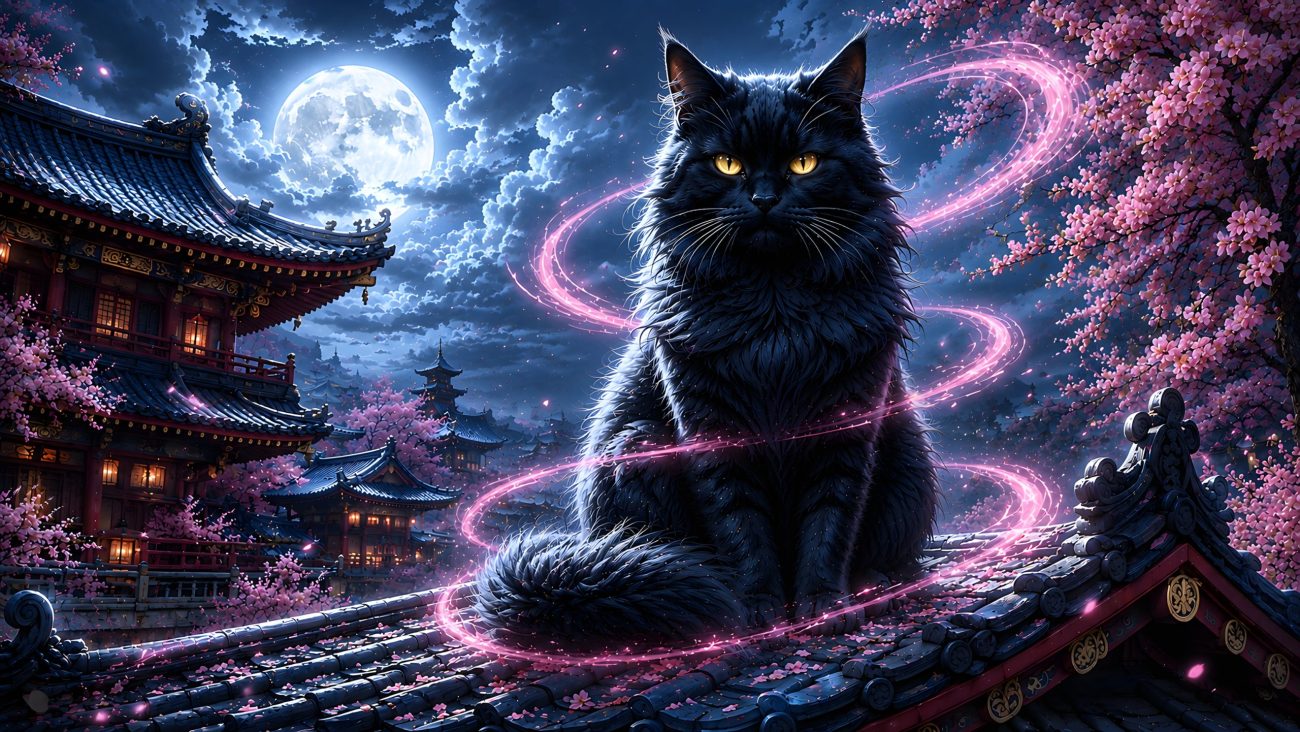
The Shusse Neko was a mysterious black cat said to appear within the Kawachi residence beyond the main gate of Fuchu Castle in Suruga Province. Anyone fortunate enough to see the cat was believed to receive good fortune. Those with great ambitions, who sought to cultivate virtue and achieve fame, were said to inevitably rise in status after encountering it. Because of its ability to bring prosperity and advancement, the mysterious black cat became known as the Cat of Success.


Sources

Takahashi, Toshihiro. “出世猫 (Shusseneko).” 新版TYZ 妖怪図鑑 (New TYZ Yokai Encyclopedia). Accessed July 28, 2026. https://tyz-yokai.blog.jp/archives/1010655155.html


Splintercat

Tradition / Region: American Mythology
Alternative names: None known
Category: Cat


The Myth

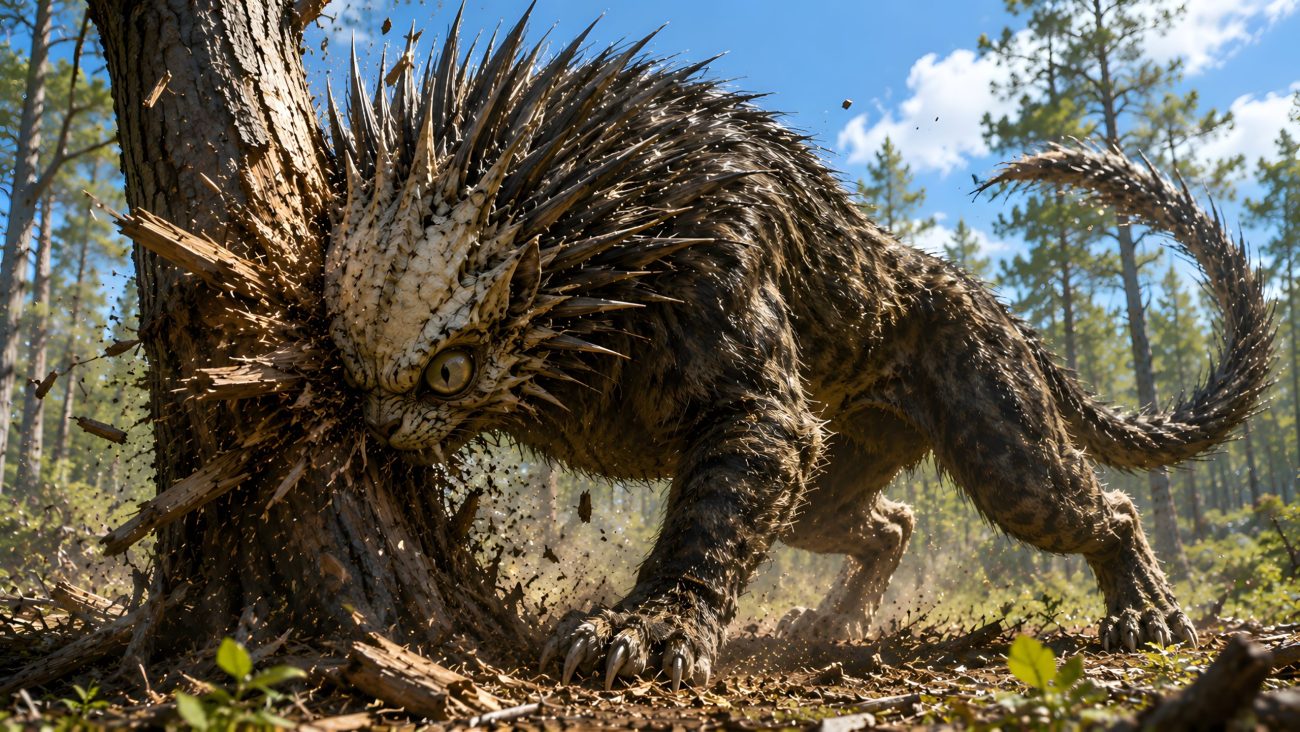
The Splintercat is a fierce nocturnal feline that flies through the air at tremendous speed. It is said to smash headfirst into large trees, knocking off their branches and leaving the trunks dead and stripped bare like pale ghostly snags. It performs this remarkable feat to expose raccoons and wild bees hiding inside the trees for food. Constantly battering trees with its head leaves the creature with a perpetual headache, making it notoriously ill-tempered and dangerous to approach.

An alternate tradition from Nova Scotia describes the Splintercat as emerging from trees during winter after spending the summer hibernating inside them. The loud cracking sounds heard in frozen forests are said to be the creature breaking free from its tree. In this version, it has exceptionally long claws, powerful legs, and fur patterned like tree bark, allowing it to remain perfectly camouflaged until it suddenly leaps from the shadows to ambush its prey.


Sources

“Splintercat.” Wikipedia: The Free Encyclopedia. Wikimedia Foundation. Accessed July 28, 2026. https://en.wikipedia.org/wiki/Splintercat


Hurbóż

Tradition / Region: Polish Mythology
Alternative names: Hurbusz
Category: Cat


The Myth

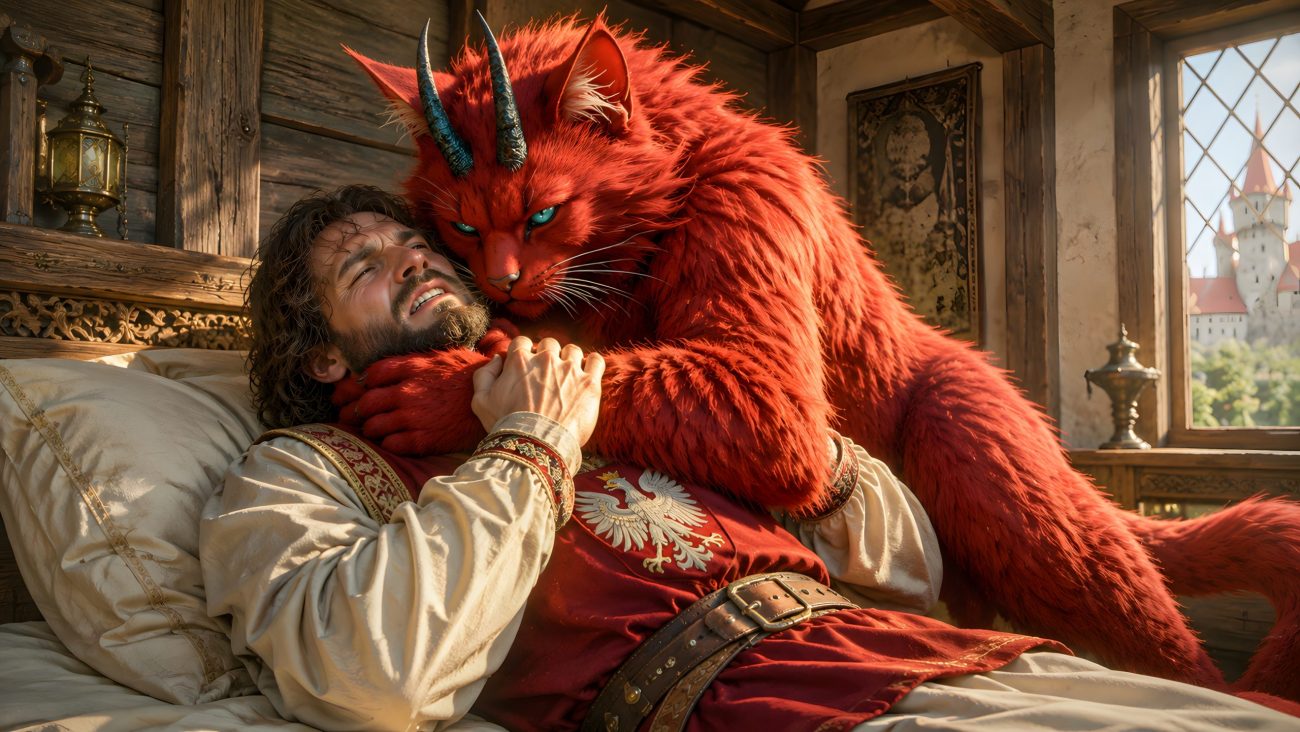
The Hurbóż is a demonic creature that resembles a cat. It attacks people by silently creeping onto them and strangling them with its soft paws. It is regarded as a type of nightmare demon that strikes its victims during sleep. Besides tormenting humans, the Hurbóż is also said to tease horses by tangling and knotting their manes during the night.


Sources

“Hurbóż.” Wikipedia, wolna encyklopedia (Polish Wikipedia). Wikimedia Foundation. Accessed July 28, 2026. https://pl.wikipedia.org/wiki/Hurb%C3%B3%C5%BC