Tradition / Region:Luxembourg Mythology Alternate Names: Warken Dwarves, Hard Hill Gnomes Category:Gnome
The Myth
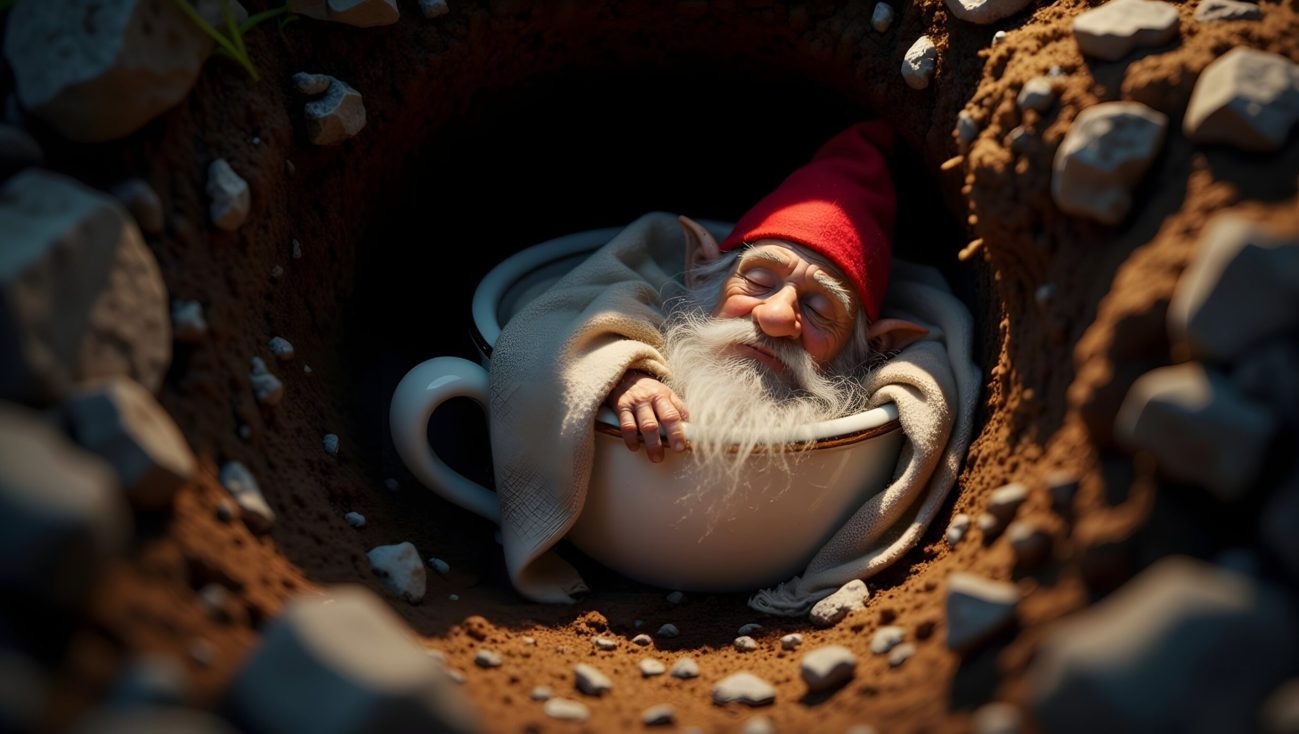
Between Erpeldingen and Warken, it was said that underground passages ran through the mountain, built and inhabited by dwarves. Above this hidden dwelling rose the Hard hill.
At Warken, the gnomes were believed to have one of their entrances at a place called Wöllen hirer Tâk. Another exit lay at the so-called Fûszelach in the Hohlbech, opposite Erpeldingen.
These little beings were known to help people quietly and generously. They brought grain into the barn, flour to the mill, and bacon into the cupboard. They also once rewarded a man who was plowing on the Hard by giving him a tarte flambée.
Many years ago, when gnomes were still said to live in the Ranker Delt a short distance south of Esch-sur-Sûre, two farmhands were plowing with their horses near a rock where the little beings had made their home.
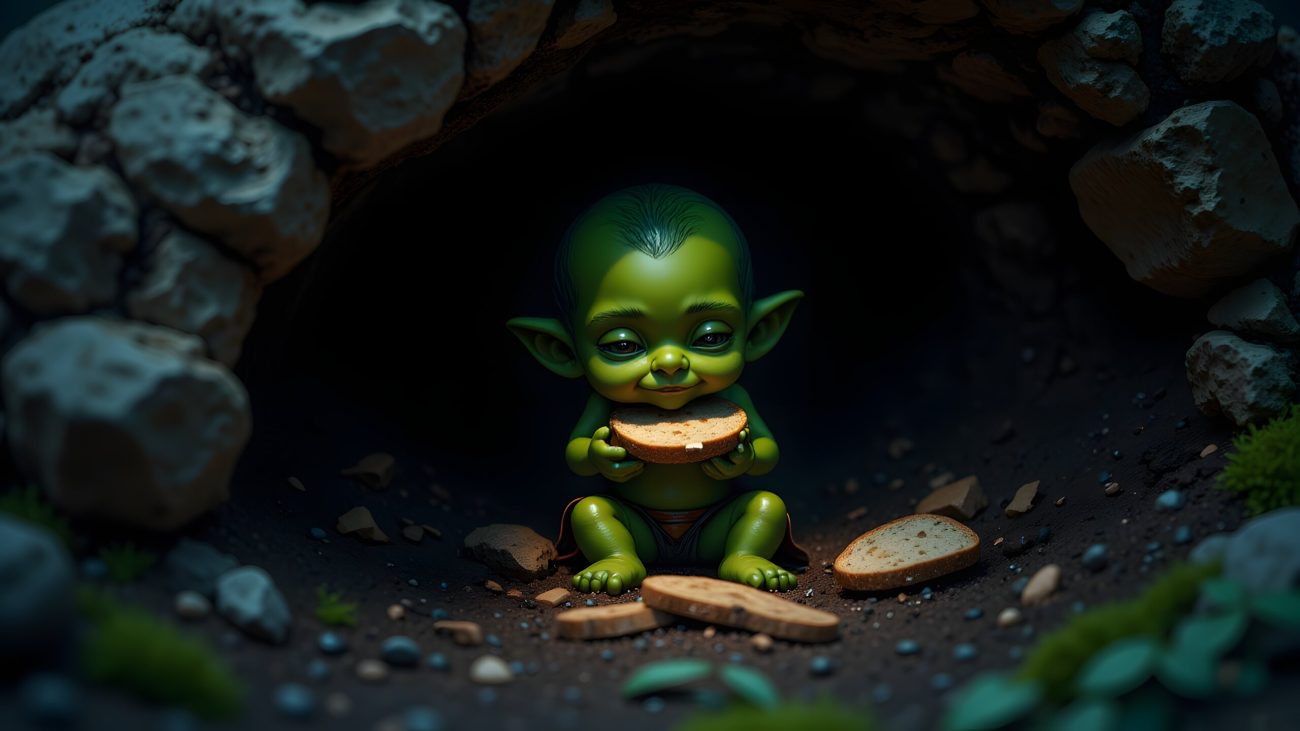
As they worked, they suddenly heard a voice calling from inside the rock: “Bread! Bread!” One of the farmhands jokingly shouted back, “Cake! Cake!”
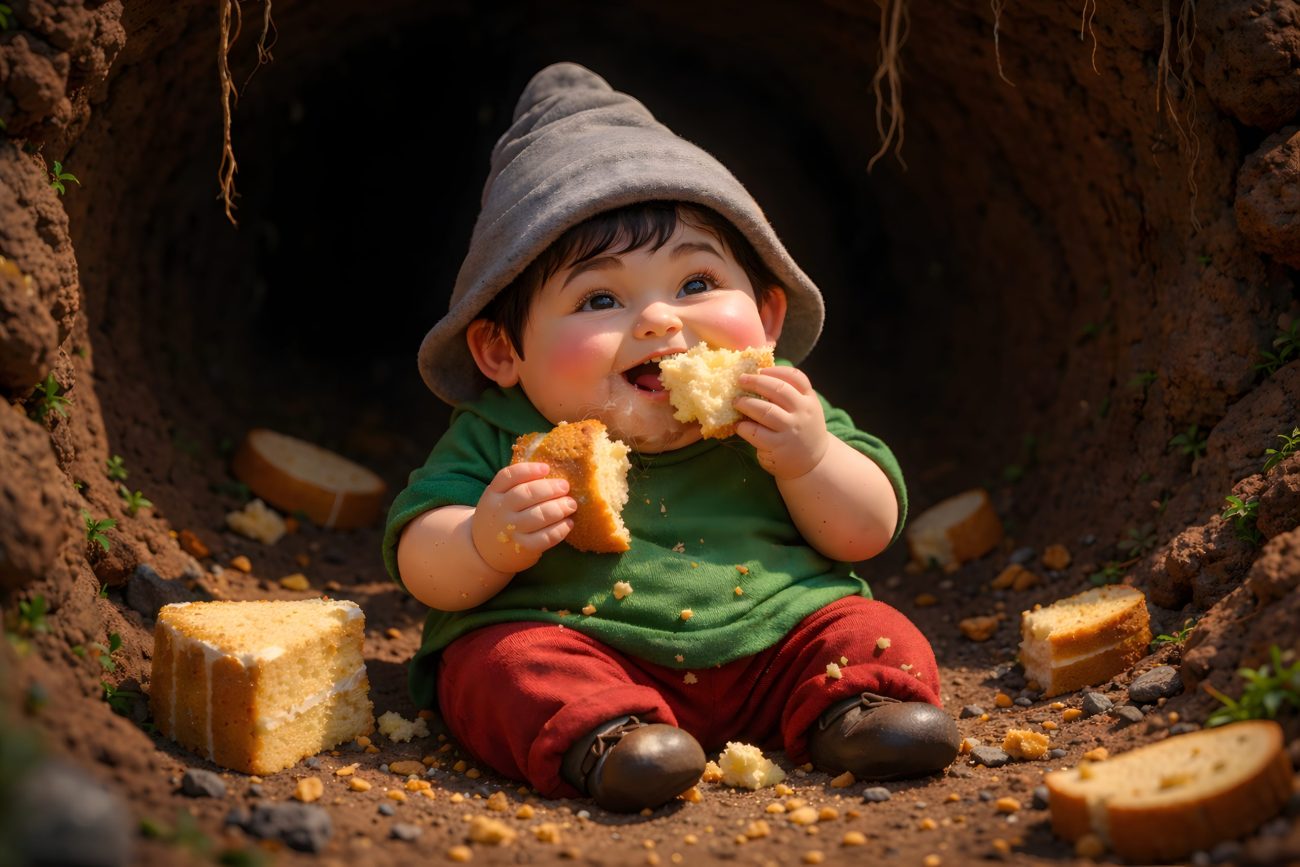
They continued plowing and soon turned back along the next furrow. When they came again to the same place, they found a large white napkin spread out on the ground. Upon it lay a fine cake, and beside it a knife.
“Should we eat the cake or not?” asked the older of the two. “Why not?” replied the other. “The gnomes put it there so we could eat it.”
So they ate the cake completely and left the napkin where it lay. After plowing another furrow, they returned to the spot, but everything had been cleared away.
Near the village of Lulzhausen stands a high rock known as the Kâtzelê, where little gnomes were once said to live.
They were especially fond of a certain man from Esch. Whenever he drove his two horses, one red and one white, into the area near the rock in the evening and fell asleep, he would later wake to find that the white horse had been carefully groomed and cleaned. The red horse, however, was always left just as it had been. This happened every time he came near the Kâtzelê.
Another time, a farmhand was passing the Kâtzelê stream on his way to plow. As he went by, he heard voices from within the rocks calling out, “Bake me a cake too!” Laughing, he called back, “Bake me one too!” and continued on his way without giving the matter further thought.
But before an hour had passed, a little man came running up to him, placed a small, freshly baked cake on his plow, and quickly disappeared again.
In Vichten, people once said the dwellings of the gnomes could still be seen. They appeared as small underground chambers or little wells beneath the ground. One man, believing he had discovered a hidden treasure, began digging in his garden and uncovered one of these untouched underground rooms. It was said that little gnomes had lived there, beings who were known only for doing good to humans.
Not long ago, there lived in Vichten a man who, as a child, had been cared for by the gnomes themselves. On Sunday mornings, when his family went to church, the little folk would quietly enter the house, rock the child in his cradle, and feed the horses and cows in the stable.
Another farmer, while plowing his field, once heard the sound of kitchen utensils clattering beneath the soil. Laughing, he called out, “Hey, bake me a cake too!” When he turned his plow and passed the place again, he found a small cake lying on a clean cloth spread on the ground, which he ate with pleasure.
It was also said that near Vichten, along the road to Bissen where old ruins stand, there had once been the palace of the dwarves, and that Vichten itself had been their capital. There ruled a king named Shaddaï, who governed the dwarven people peacefully until a rebellion broke out among them and cost him his life.
Other dwarves were believed to live in underground tunnels beneath the Scheuerbusch. They were said to be extremely rich, so wealthy that they fed gold to their mice, and some claimed to have seen the animals running about gnawing on gold coins.
The dwarves of Vichten were considered richer than all the rest. One of them once boasted to a dwarf beneath the Scheuerburg castle in the Scheuerbusch forest, saying, “If you plow your fields with silver plowshares, then we plow ours with golden ones.” Among their privileges, the Vichten dwarves were also said to have the right to demand from a certain house in the village an entire oven of bread cake every Saturday.
Tradition / Region:Luxembourg Mythology Alternate Names: Wichtelcher of Schaar, Gnomes of op de Wîchtelheiser Category:Gnome
The Myth
Between Ermsdorf and Folkendingen, about a quarter of an hour’s walk toward the left bank of the White Ernz, lies a place on the Schaar that is still called op de Wîchtelheiser, the place of the gnome houses. It is said that long ago little gnomes lived there, and that their underground dwellings once stretched beneath the ground. People even claimed that remains of these small homes were found, built of tiny, finely made bricks.
In those days, a girl from one of the nearby villages was chosen to be the godmother of a child belonging to one of the gnomes. Without telling her parents, she went to their hidden dwellings. The little folk welcomed her warmly, and she spent a wonderful time among them.
At last she began to fear that night would soon fall and her parents would worry about her, so she set out to return home. But when she arrived, everything seemed changed. Entering her father’s house, she saw her mother, who looked entirely different. Her hair had turned white and her strength had faded.
Only then did the girl learn that she had been gone for thirteen years and had long been believed dead.
In a hollow called the Goldkaul, near the Kehlbach stream by Kehlen, there once lived the Wichtelcher, little gnomes whose underground tunnels were said to stretch from the hollow to the nearby Ehlbusch forest.
These small beings were known to help people with their work. At night, they would quietly enter a farmer’s barn and thresh his grain. They did this for a long time, unseen and without asking for anything in return.
One evening, however, a farmhand felt pity for them and placed food out for them while they worked. From that moment on, the Wichtelcher never returned.
Farmers who plowed fields near the Goldkaul sometimes heard the gnome children calling to their mother as she baked: “I want a cake too! I want a cake too!” If a farmer then called out jokingly, “I want a cake too!”, he would find a cake lying on his plowshare the next morning when he came back to the field.
Near the rock known as Katzenfels, close to the road from Mamer to Kehlen, there was once a deep hollow in the rock where gnomes were said to live. Though they were never seen, they made their presence known through their work and their kindness.
When farmers plowed nearby fields and noticed smoke rising from Katzenfels, they would know the gnomes were baking bread. The plowman would then call toward the rock, “Dear gnomes, bake us a roll too!” When he later returned to his plow, he would often find a fresh roll lying there.
In those days, the good little gnomes were known to help people quietly and unseen. Once, when the water sources of the Bofort ironworks dried up and harvests were poor, a man from Mamer, father of seven children, went to Kehlen with his last money to buy bread. He returned late in a heavy snowstorm, sorrowful and empty-handed. After crossing the Kehlbach stream, he heard a loud knocking and noise ahead. Looking toward the Goldberg hill opposite Katzenfels, he saw a great furnace blazing and many shadows moving around it. These were the gnomes, working busily near their dwelling. Around them lay heaps of gold, and they were minting new coins.
The man stepped forward and told them of his misery. The little gnomes took pity on him and allowed him to take as much money as he needed to escape his hardship. But when he turned to thank them, the furnace, the gold, and the gnomes had vanished. After that time, no one ever again caught the gnomes minting gold, no matter how people tried to find their hidden riches.
The gnomes were also said to keep a cow, which they sent to graze with the cattle of the surrounding villages. Though they watched over it carefully, no shepherd ever saw the little guardians.
Another tale says that long ago, when the helpful gnomes still lived in the land, a man named Mamer passed by Katzenfels and heard cheerful hammering, like that of a blacksmith. Entering the hollow, he saw the little creatures forging gold and silver they had gathered from the mountains at night. The man later settled nearby, and the village of Mamer is said to have arisen there. The gnomes themselves have since disappeared, but their dwelling in Katzenfels can still be seen.
On the Wischteschberg hill between Ersingen and Medingen, little beings known as the Wichtelcher once lived in underground dwellings. They were said to be only one to one and a half feet tall.
During the winter nights, they often went to Medingen and quietly threshed the grain for the villagers in their barns. When their work was finished, each of them took a small bag of grain back to his underground home.
One day, a man was plowing on the hill directly above the place where the Wichtelcher lived. As he worked, he heard noises from below, for the gnomes were baking bread. He heard their children calling out, “Bake me flax too!” Soon the Wichtelcher themselves were shouting from all sides, “Me too flax! Me too flax!”
Unable to resist, the man called down from above, “Me too flax!”
At midday he unharnessed his plow, and when he returned in the afternoon, he found a thick layer of flax lying upon it.
In winter the gnomes also often came to the Pleitringer farm to thresh grain for the people. Wanting to show their gratitude, the inhabitants once had clothes made for the little folk and hung them in the barn so the gnomes could take them.
But when the Wichtelcher came that night and saw the garments, they realized that their presence had been discovered. They hurried away and never returned again.
A man from Ettelbrück, known as old Walsdorf, was once plowing his field on the Haard hills. When he reached the end of one of the furrows, he found a piece of willow wood lying there with a small note attached. The note, it was said, came from the little gnomes, who asked him to make them a bread shovel.
When he reached the end of the field again, he found a tarte flambée lying there. He ate the gift and agreed to fulfill the gnomes’ request.
After finishing the bread shovel, he left it for them on Weiland’s Hill, as they had wished.
In a place called Fäsch near Dondelange, there stands a high rock that contains a large cave. This cave was said to have once been the dwelling of a family of gnomes, whose mother was known as Frau Holle.
One day, a farmer named Michel Wagner was plowing a field not far from the rock. Around ten o’clock he stopped to rest and smoke his pipe. As he sat there, he heard voices coming from within the rock, calling out: “Bake me a Pflamb! Me too, a Pflamb! Me too, a Pflamb!”
Amused, the farmer called back jokingly, “Me too, a Pflamb!”
When he returned to his work and later in the afternoon prepared to leave, he found that a fine cake was hanging from his plow. It was said to be so delicious that even the best confectioner of the time could not have baked a better one.
Sources
sagen.at contributors. (n.d.). Die Wichtelcher zu Dondelingen. In sagen.at, from https://www.sagen.at/texte/sagen/luxemburg/Wichtlein_Dondelingen.html