Kting Voar

Tradition / Region: Cambodian Mythology and Vietnamese Mythology
Alternative names: Khting Vor, Linh Dương, Snake-eating Cow
Category: Cow


The Myth

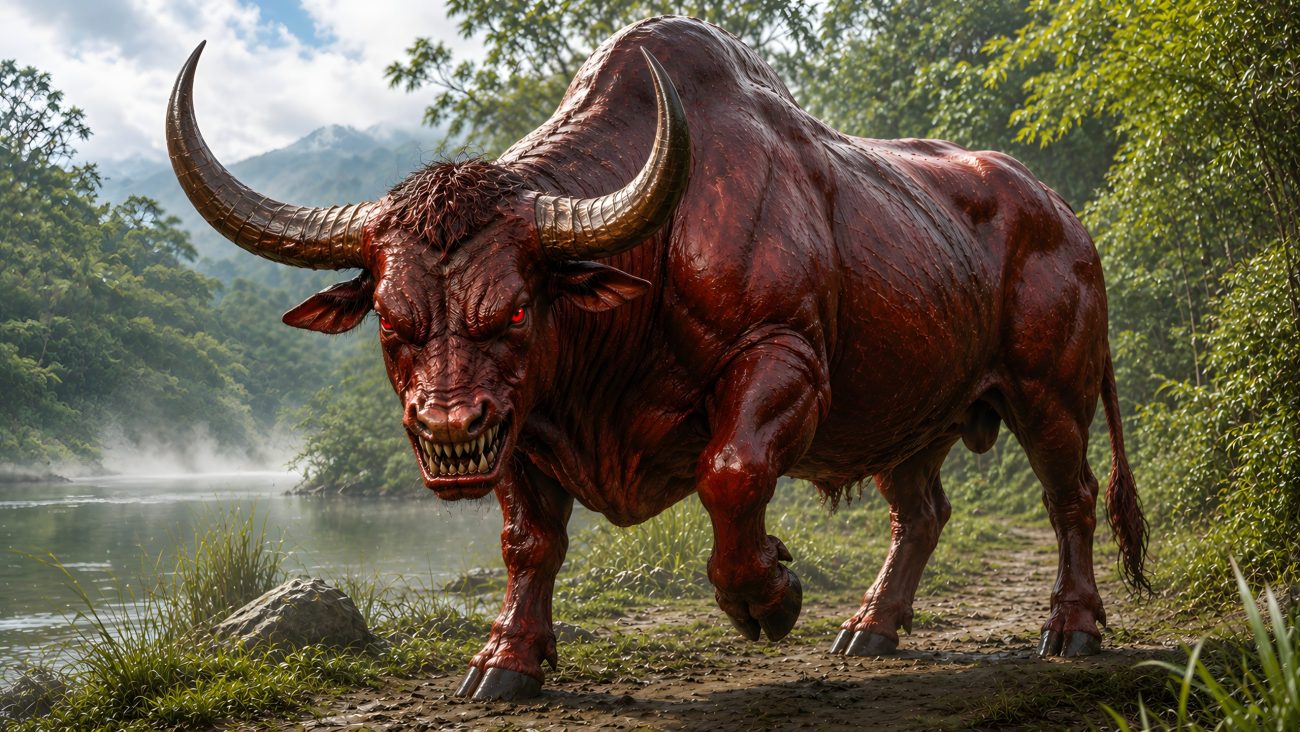
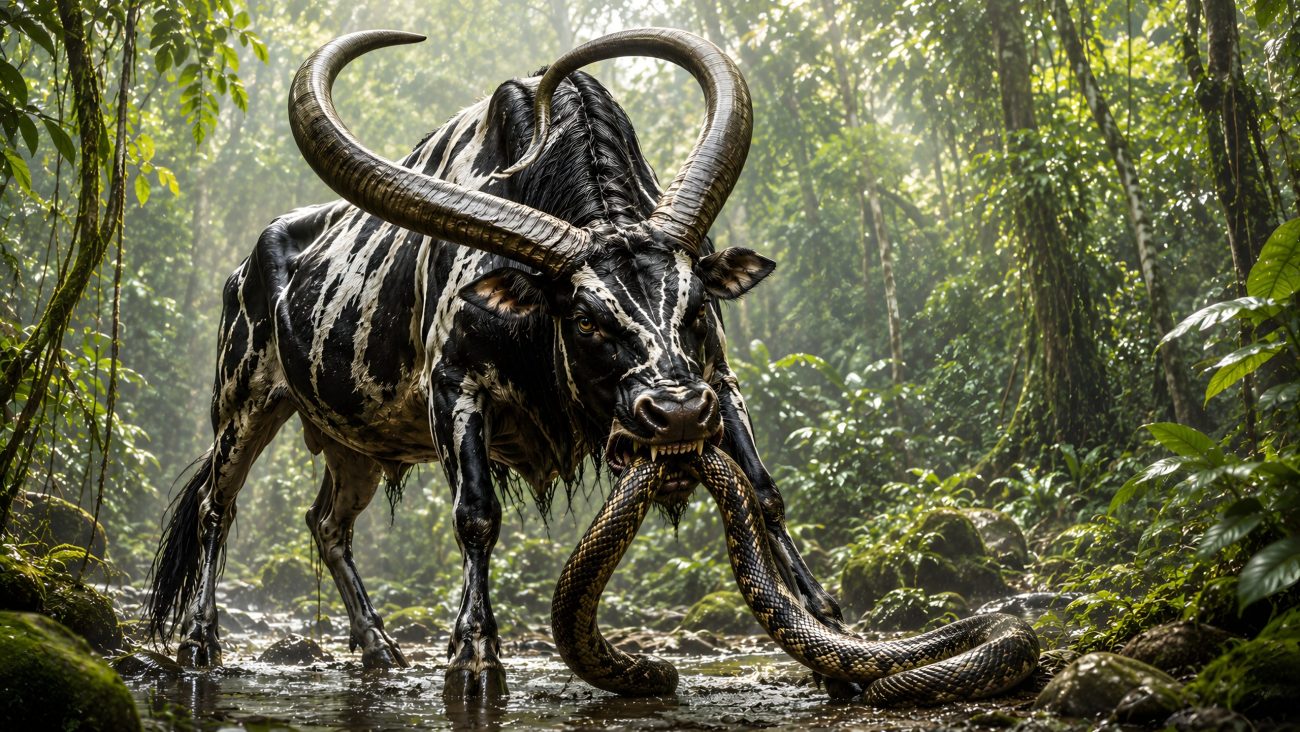
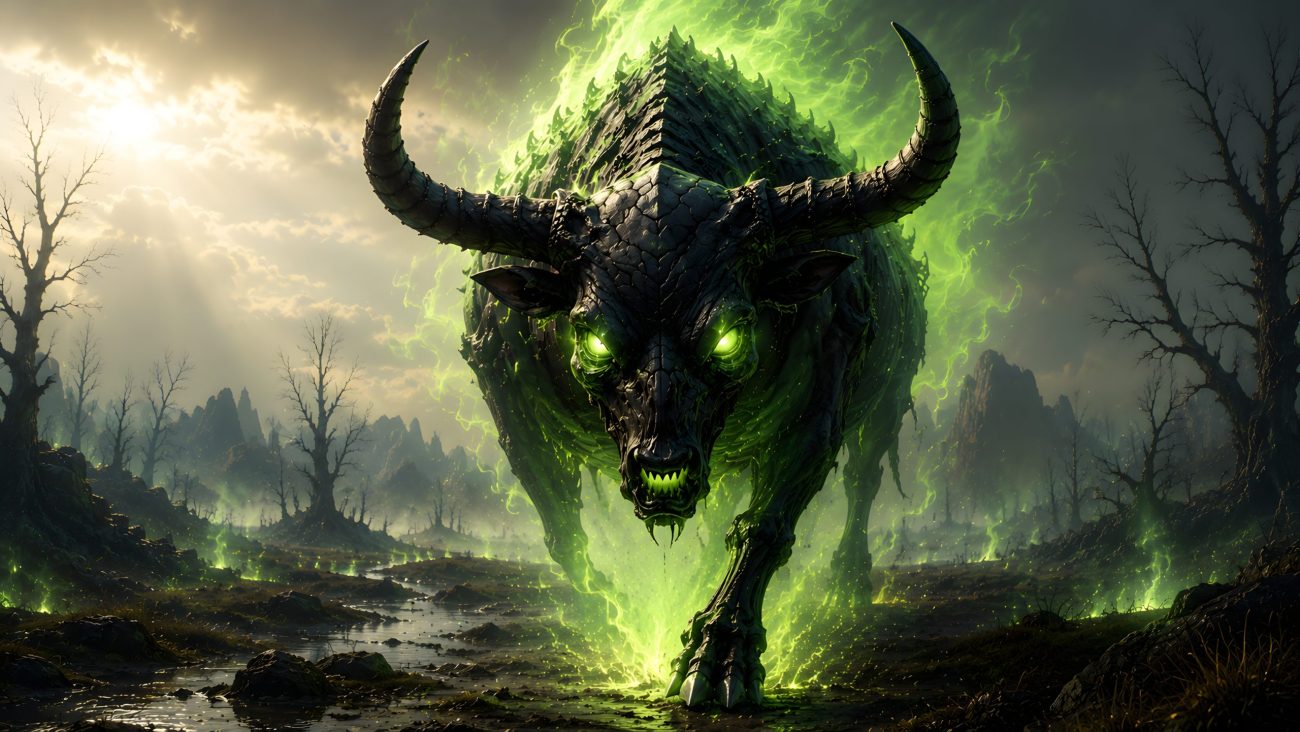
The Kting Voar is a legendary bovine creature associated with the forests of Cambodia and Vietnam. It is described as a strange and powerful wild cattle-like animal, famous above all for its extraordinary horns.

It is traditionally known as the “snake-eating cow,” reflecting its reputation as a formidable creature of the wilderness. Its unusual horns became its most distinctive characteristic, giving the Kting Voar an almost supernatural appearance and setting it apart from ordinary cattle.

The creature belongs to the broader tradition of mysterious wild bovids inhabiting the forests of mainland Southeast Asia, where unusual cattle and buffalo could become subjects of folklore and legend.


Sources

“Kting voar.” Wikipedia: The Free Encyclopedia. Wikimedia Foundation. Accessed August 21, 2026. https://en.wikipedia.org/wiki/Kting_voar
Kraisorn Karwee

Tradition / Region: Thai Mythology
Alternative names: Singha Karwee
Category: Cow, Lion


The Myth

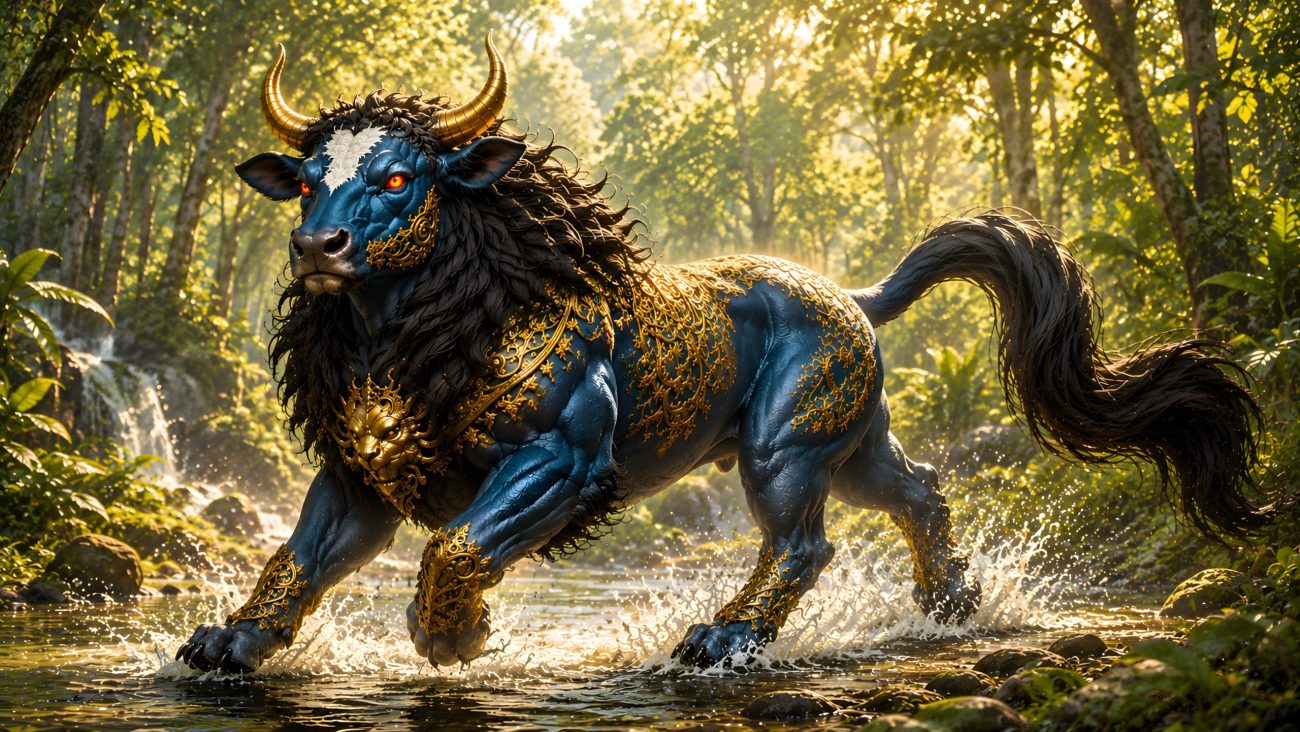
Kraisorn Karwee is a fantastic creature combining the features of a cow and a lion. It generally has the head of a cow and the body of a lion.

Some depictions give Kraisorn Karwee a single horn, the body of a lion, and the tail of a horse. It resembles the related Singha Karwee, another creature combining an ox and a lion, but Singha Karwee is distinguished by its lack of the horse-like tail.


Sources

“The Mythical Creatures in Thailand.” Explore Bangkok. Accessed August 21, 2026. https://www.explore-bangkok.com/mythical-creatures-in-thailand/


Korov’ya smert

Tradition / Region: Russian Mythology
Alternative names: Cattle Death, Tovaricha Death, Black Infirmity
Category: Cow


The Myth

Cow’s Death is the personification of the death and disease that strikes cattle. Among the Eastern Slavs, she was believed to appear particularly around the day of Agafya the Cow-keeper.

She could take different forms. Sometimes she appeared as a black cow, cat, or dog; in other traditions she appeared as a cow skeleton or as an old, frightening woman with hands like rakes. It was also believed that she could be brought into a village by a visitor, traveller, or witch.

When cattle began dying, villagers performed rituals to drive Cow’s Death away. One of the most important was the plowing of the village. Women gathered secretly at night, took up clubs, sickles, and other objects, and plowed a furrow around the settlement. The procession made tremendous noise with pans, scythes, sickles, and other household objects to frighten Death away.

The villagers also drove their cattle through specially prepared ditches or tunnels, kindled a fire by friction, and sometimes wove a piece of cloth in a single day as part of the protective rites.

During the procession, the women called upon the cattle god Veles, identified in Christian tradition with Saint Blaise, asking that Cow’s Death leave the village.

If a cat or dog appeared during the ritual, it could be killed because the villagers believed Cow’s Death might be hiding in the form of an animal.

Old worn bast shoes soaked in tar were also hung in barns as protection against Cow’s Death.


Sources

“Коровья смерть (Korov’ya smert’).” Wikipedia: The Free Encyclopedia (Russian Wikipedia). Wikimedia Foundation. Accessed August 21, 2026. https://ru.wikipedia.org/wiki/Коровья_смерть


Komol

Tradition / Region: Russian Mythology
Alternative names: Komokol, Komorkol
Category: Cow


The Myth

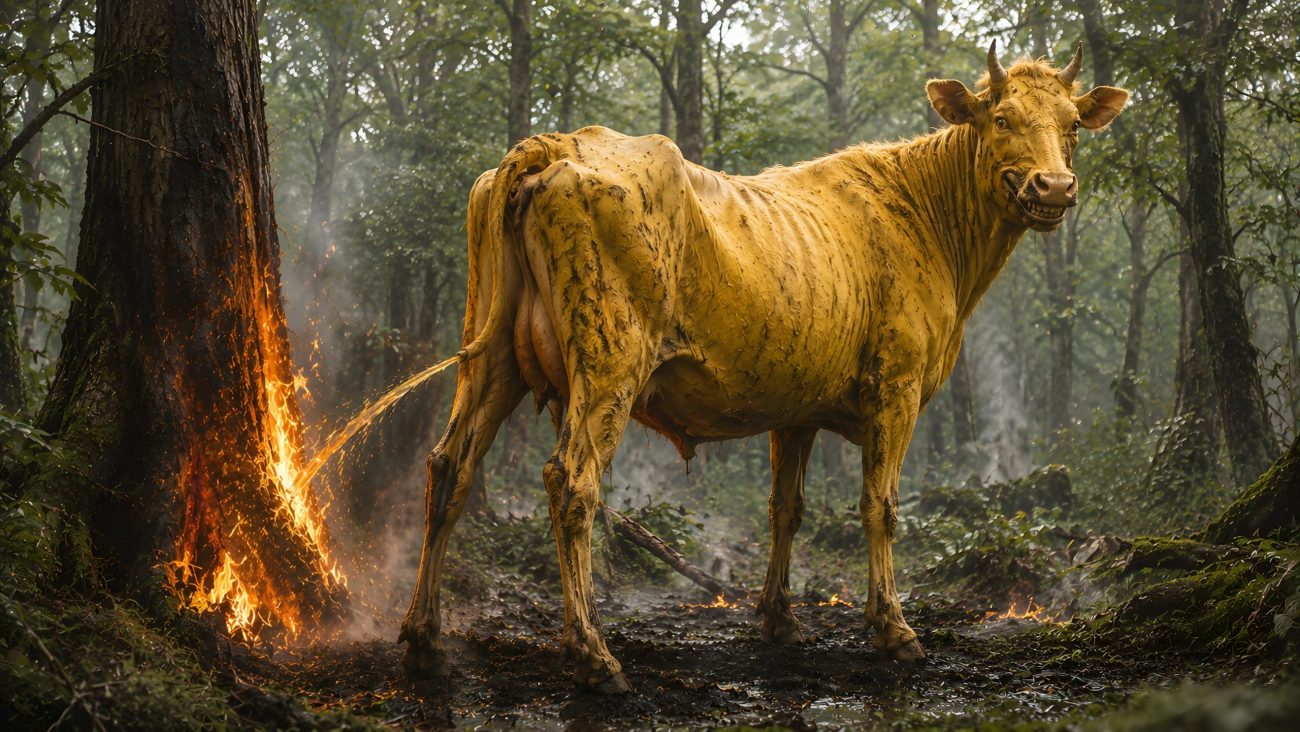
Komol is a fierce beast described in Slavic bestiary tradition. It possesses a strange and deadly defense: its urine can burn anything it touches.

If Komol urinates on a wooden board or a tree, the object is said to be completely burned by the following hour. The creature is depicted as a horned beast, although the surviving descriptions provide little information about its appearance.


Sources

“Комол (Komol).” New Bestiary (Bestiary.us). Accessed August 16, 2026. https://www.bestiary.us/komol


Aed’s Magical Cow

Tradition / Region: Irish Mythology
Alternative names: Magical Cow of Aed
Category: Cow


The Myth

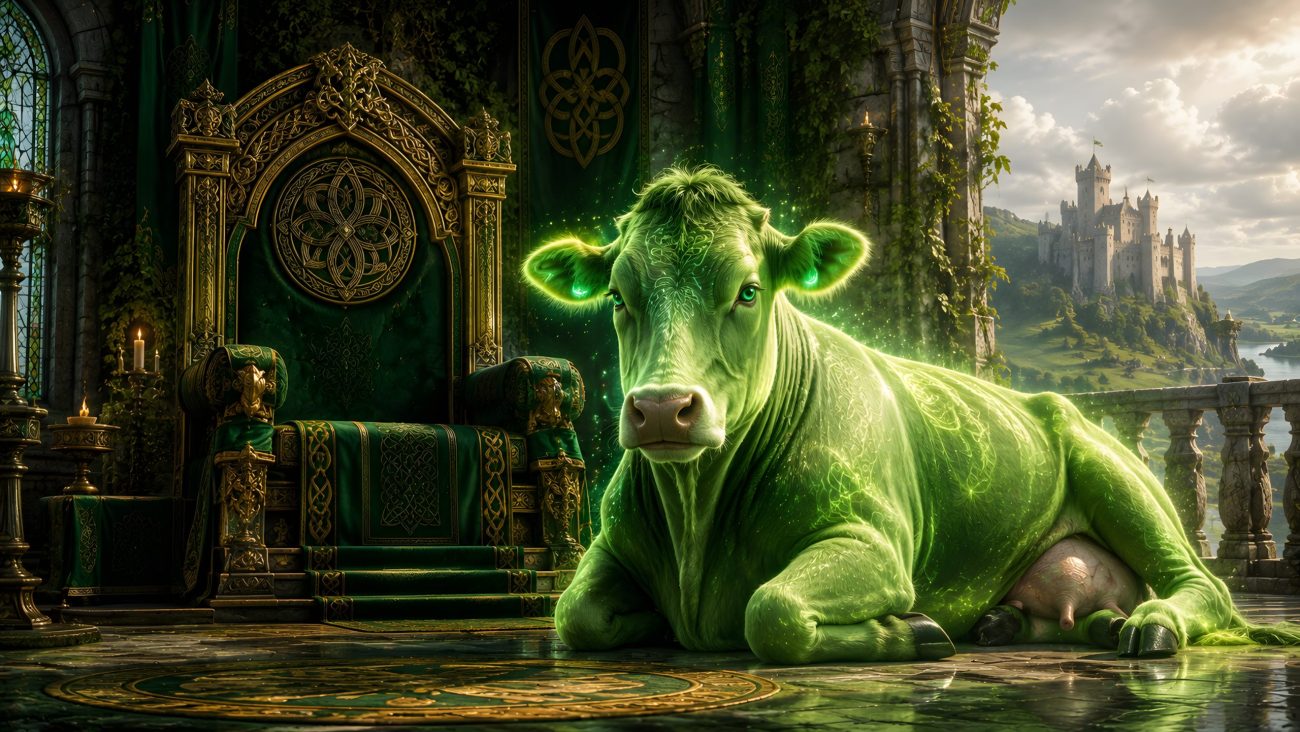
Aed, king of Tara in the sixth century, possessed a magical cow whose presence protected him from harm. He believed that as long as the cow remained near him, its supernatural power would keep him safe, even during battle.

When war came, Aed left the magical cow behind at Tara and rode into battle without it. Separated from his supernatural protector, he faced his enemies without the protection he had trusted.

Aed was killed on the battlefield. The magical cow remained safely at home, unable to protect the king from a distance.

The story tells of a magical cow whose protective power depended upon its presence beside its master.


Sources

Monaghan, P. (2004). The Encyclopedia of Celtic Mythology and Folklore. p. 3.


Kimmo

Tradition / Region: Finnish Mythology
Alternative names: Kimmo
Category: Cow


The Myth

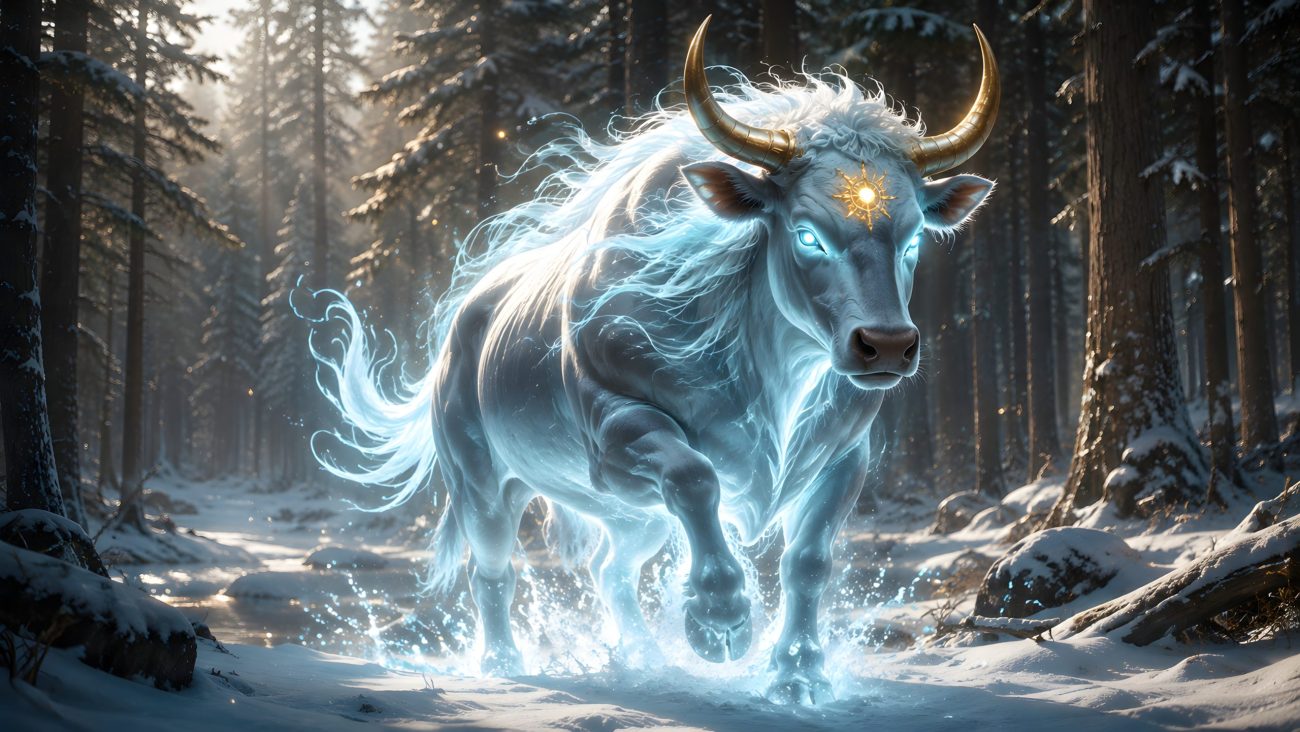
Kimmo is a magical heifer forged by Ilmarinen, the eternal smith and master of metals, during his attempt to create the Sampo. Her horns shine like gold, while the Bear of Heaven and a disc of sunlight mark her forehead.

On the third day of Ilmarinen’s work, after a metal crossbow and a purple-metal skiff had emerged from the furnace and been destroyed, the strange heifer rose from the flames.

Kimmo was wild and impossible to control. She raced through forests, swamps, and meadows, scattering and spilling her milk as she went. No mortal could restrain her, and even Ilmarinen could not tame the creature he had forged.

Realizing that the heifer could not be kept, Ilmarinen cut Kimmo into pieces and threw her back into the furnace. From the magical materials of the forge, the Sampo finally began to take shape, its many-colored lid turning as it produced flour, salt, and gold.


Sources

Kalevala: The Epic Poem of Finland: RUNE X. ILMARINEN FORGES THE SAMPO. (J. M. Crawford, Trans.). (1888).


Khalkotauroi

Tradition / Region: Greek Mythology
Alternative names: Colchis Bulls, Bronze Bulls, Tauroi Khalkeoi
Category: Cow


The Myth

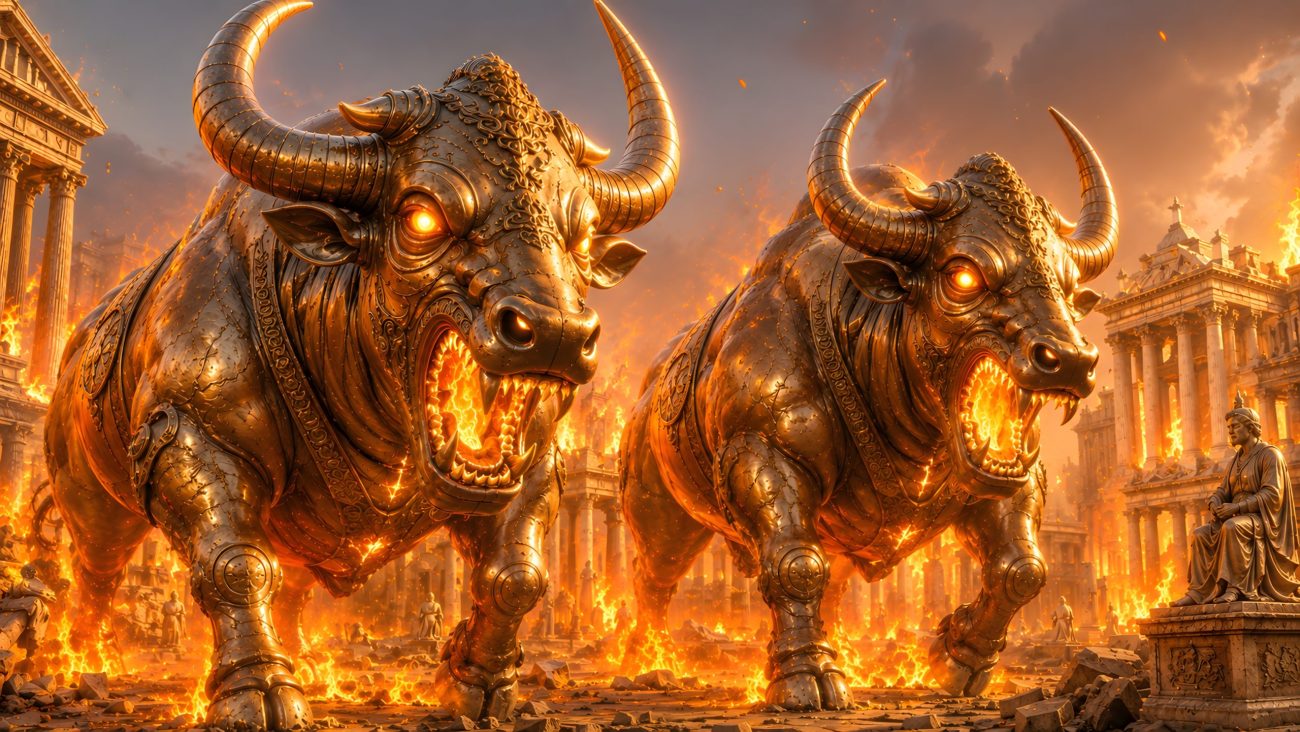
The Khalkotauroi are two enormous bulls with bronze hooves and bronze mouths. Flames pour from their mouths, making them dangerous even before they begin to charge.

The bulls were forged by Hephaestus, the divine blacksmith, and given to King Aeetes of Colchis. Aeetes guarded the Golden Fleece and set the creatures as one of the impossible tasks that Jason had to complete.

Aeetes promised Jason the Golden Fleece if he could yoke the two bronze bulls and use them to plough a field. Afterward, Jason was required to sow the freshly ploughed earth with dragon’s teeth.

The heat of the bulls made the task nearly impossible. Their fiery breath could burn anyone who approached them, but Medea, the daughter of Aeetes, had fallen in love with Jason and secretly gave him a magical potion that protected his body from the flames.

Protected by Medea’s potion, Jason approached the Khalkotauroi, endured their fire, yoked the enormous bulls, and forced them to plough the field.


Sources

“Khalkotauroi.” Wikipedia: The Free Encyclopedia. Wikimedia Foundation. Accessed August 16, 2026. https://en.wikipedia.org/wiki/Khalkotauroi


Kettetsu

Tradition / Region: Chinese Mythology, Japanese Mythology
Alternative names: Kettetsu, Gnawing Iron
Category: Cow


The Myth

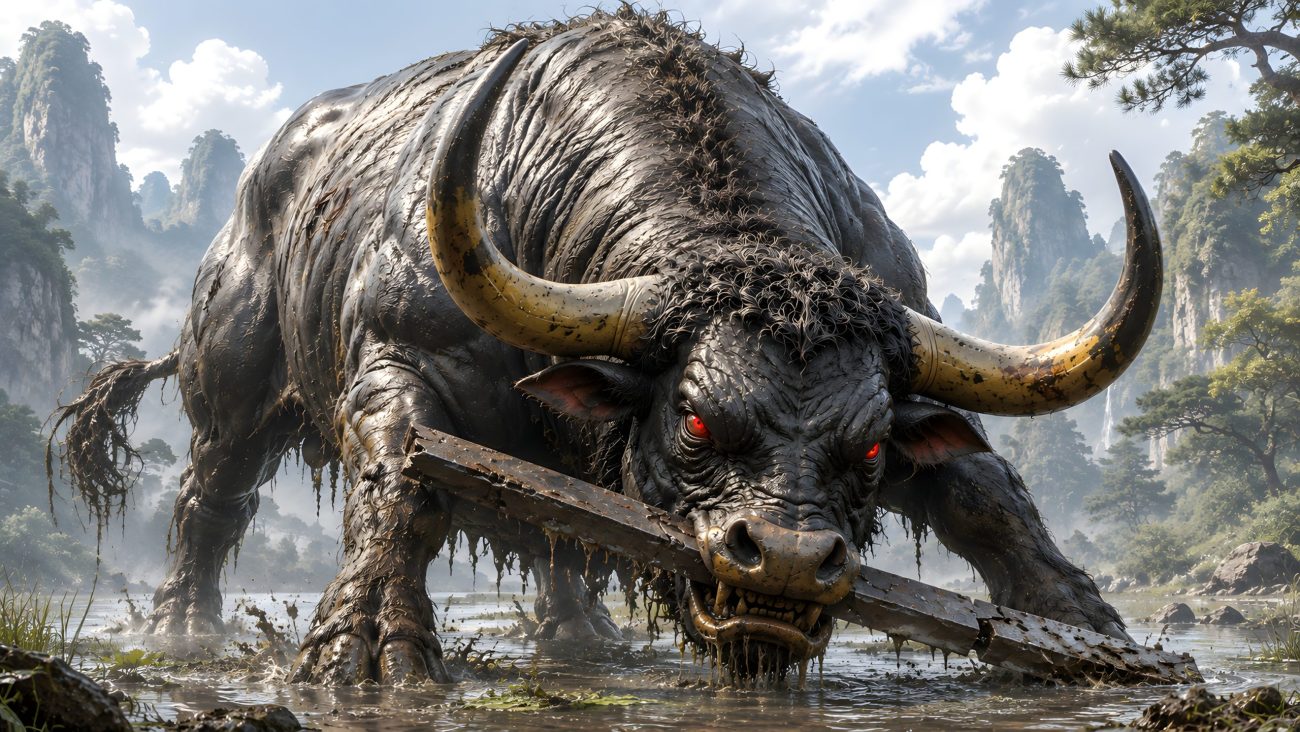
Kettetsu is a strange beast from the southern regions, described with the horns and feet of a water buffalo and a body covered in jet-black fur. Its name means gnawing or eating iron.

The creature feeds on iron and drinks water. According to ancient accounts, its feces were harder than ordinary metal and could be used by people to make sharp weapons.

Descriptions of Kettetsu appear in the Shenyi Jing and later Chinese works such as the Bencao Gangmu. Japanese encyclopedias, including the Wakan Sansai Zue, also recorded the creature from these earlier accounts.

Some traditions placed Kettetsu among a group of iron-eating beasts associated with the baku. The baku itself was sometimes described as a creature capable of eating copper and iron, and in some accounts the two creatures were identified with one another.

In later interpretations, the legend of iron-eating beasts may have developed from ancient descriptions of pandas. An animal originally described as eating bamboo may have been misunderstood as eating the arrows and other objects made from bamboo, copper, and iron, eventually producing the strange tradition of a beast that consumed iron.


Sources

Takahashi, Toshihiro. “囓鉄 (Kettetsu).” 新版TYZ 妖怪図鑑 (New TYZ Yokai Encyclopedia). June 27, 2021. Accessed August 16, 2026. https://tyz-yokai.blog.jp/archives/1078437874.html


Jingjing

Tradition / Region: Chinese Mythology
Alternative names: Jingjing
Category: Cow


The Myth

The Jingjing is a powerful ox-like creature that lives on Mount Minyu, a distant mountain surrounded by forests, red earth, metal, and jade. Its body resembles that of a mighty ox, while its rear ends in a long, flowing horse’s tail.

The Jingjing moves through the forests and mountain slopes of Minyu. Its distinctive call echoes through the valleys, repeating its own name: jingjing, jingjing.


Sources

Strassberg, R. E. (2002). A Chinese bestiary: Strange Creatures from the Guideways Through Mountains and Seas. Univ of California Press, p. 140.


Kao

Tradition / Region: Indian Mythology
Alternative names: Kao Phaba, Khambana Kao Phaba, Kau Phaapa
Category: Cow


The Myth

Kao was a powerful divine bull that terrorized the people of the Khuman kingdom, killing those who came near the waters where it lived. Its enormous strength and dangerous horns made it impossible for ordinary people to capture.

A wealthy nobleman named Kongyamba wanted the bull captured, but instead of facing it himself, he tricked the brave Khuman warrior Khamba into accepting the task. Kongyamba claimed that the god Thangjing demanded the bull as an offering and told the king that Khamba had promised to capture it. The king then declared that Khamba would be allowed to marry Princess Thoibi if he succeeded.

A great gathering was arranged between the kingdoms, and an enormous enclosure was built for the capture of Kao. On the day of the contest, Khamba faced the charging bull and seized it by the horns. Kao carried him deep into the forest, but Khamba remembered the secret given to him by his sister Khamnu.

She had revealed that Kao had once belonged to their father’s herd. Khamba spoke their father’s name to the bull and showed it a silk rope. At once, the furious beast became calm and gentle.

Khamba began leading Kao back toward the gathering. Kongyamba intercepted them and falsely claimed that he had captured the bull himself. When the dispute could not be settled, Kongyamba was ordered to face Kao inside the enclosure. Terrified, he climbed away from the bull, while Khamba once again confronted the beast and successfully captured it.

The capture of Kao became one of the celebrated episodes of the Khamba Thoibi epic, remembered as Kao Phaba, the taking or capture of the sacred bull.


Sources

“Kao (bull).” Wikipedia: The Free Encyclopedia. Wikimedia Foundation. Accessed August 16, 2026. https://en.wikipedia.org/wiki/Kao_(bull)