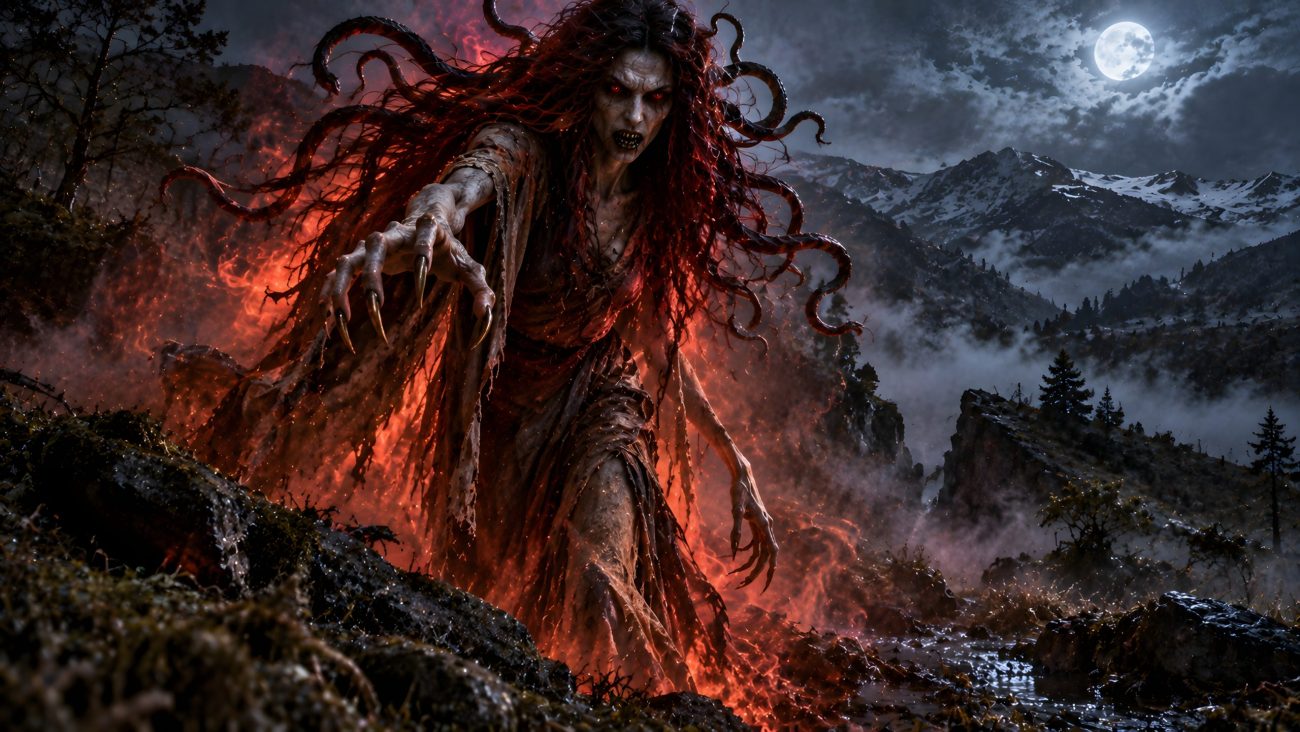
Brennet Wurm

Tradition / Region: Czech Mythology
Alternate Names: Brennetwurm
Category: Dragon


The Myth

The Brennet Wurm is a gigantic serpent said to dwell in the dense forests of the Brennetberg. It is described as an enormous snake-like creature, powerful enough to disturb both nature and human life.

Driven by thirst, the creature would descend from the mountains into the valley and drink from streams in such vast quantities that it could stop the flow of water, even halting the work of mills. Its presence was therefore not only terrifying but also destructive to local livelihoods.

In one encounter, a man unknowingly sat upon what he believed to be a fallen tree trunk. As he rested and emptied the ashes from his pipe, the heat struck the surface beneath him—revealing that the “log” was in fact the sleeping serpent. The creature suddenly sprang to life and slithered away with immense speed.

The Brennet Wurm also ravaged fields, crushing crops and causing widespread damage. Unable to tolerate its destruction any longer, the villagers armed themselves and drove it back into the wilderness.

There, they set the forest ablaze, using fire to destroy the beast. Through this act, the Brennet Wurm was finally eradicated.

The creature represents a classic European motif:
a dragon-like serpent tied to land and water, whose presence disrupts both natural balance and human survival, and which can only be defeated through collective action and elemental force—especially fire.


Sources

sagen.at contributors. (n.d.). Der Brennetwurm. In sagen.at, from https://www.sagen.at/texte/sagen/tschechien/watzlik/brennetwurm.html


Höritz Cemetery Skeleton

Tradition / Region: Czech Mythology
Alternate Names: —
Category: Skeleton


The Myth

The Höritz Cemetery Skeleton is a manifestation of disturbed remains, representing the danger of disrespecting the dead. It is not a living being in the usual sense, but a corpse animated by unseen forces when provoked.

In the story, a gravedigger uncovered a large skeleton and left it leaning against the cemetery wall. That same evening, villagers gathered nearby and, seeing the skeleton, dared one another to fetch it as a joke.

A fearless servant girl accepted the challenge and carried the skeleton on her back. But as she descended the steps, the bones came to life. The skeletal arms slowly tightened around her neck, strangling her while she struggled to break free. Unable to escape, she reached the doorway—only to collapse dead as she entered.

In another account, a girl removed a skull from the charnel house. When she returned it, the skull spoke, warning that only her good nature had spared her from being torn apart.

The Höritz Cemetery Skeleton reflects a clear belief:
the dead are not inert, and disturbing them invites retaliation.

It represents a guardian-like aspect of the grave, where bones themselves can act as vessels of lingering force, punishing mockery, arrogance, or irreverence toward burial places.


Sources

sagen.at contributors. (n.d.). Die Wichtelcher zu Useldingen. In sagen.at, from https://www.sagen.at/texte/sagen/luxemburg/Wichtlein_Useldingen.html


Cross Deer

Tradition / Region: Czech Mythology
Alternate Names: Holy Stag
Category: Deer


The Myth

The Cross Deer is a sacred and supernatural stag that appears during holy times, particularly around Palm Sunday. It is not an ordinary animal, but a divine or holy manifestation tied to Christian symbolism and the sanctity of nature.

In the tale, two poachers hunted illegally on Palm Sunday and followed the tracks of a stag into the forest. Using a magical trick, they attempted to force the animal to return along its path. Soon after, the stag indeed came back—but what they saw was no ordinary creature.

The deer bore a shining cross between its antlers, glowing as if lit by the sun itself. Faced with this vision, the hunters were struck with fear and awe. Recognizing the stag as something holy, they did not dare shoot it.

After the encounter, they abandoned their hunt and rushed to church, never again daring to hunt such a creature.

The Cross Deer represents a powerful motif found across European folklore:
a sacred animal acting as a sign of divine presence and judgment. Its appearance punishes or corrects human wrongdoing, especially when sacred time—like a holy day—is violated.

Rather than attacking or harming, the Cross Deer transforms those who witness it. It forces recognition of sin and compels repentance, acting as a living boundary between the natural world and the divine.


Sources

sagen.at contributors. (n.d.). Heilige Zeit. In sagen.at, from https://www.sagen.at/texte/sagen/tschechien/watzlik/heiligezeit.html


Raven Men

Tradition / Region: Czech Mythology
Alternate Names: Raven Brothers, Rabenköpfige Männer
Category: Bird


The Myth

The Raven Men are the restless spirits of violent brothers who, after death, were condemned to wander as punishment for their deeds. Though their castle had long fallen into ruin, they continued to appear upon its remains.

Every Friday, they manifested in human form—but with raven heads. Their voices were harsh and unnatural, croaking so loudly that they drove all birds from the surrounding forest. People feared the place and avoided passing near the ruins.

One day, a young hunter dared to approach and fired at them. The shot struck with such force that he collapsed. When he awoke, he discovered he had been transformed—his face now bore a long, bristling raven beak.

From that moment, the curse shifted. The three brothers were no longer bound to their half-human form and instead became ordinary ravens, while the hunter carried their former burden, living in shame and isolation.

After years of suffering, the hunter died. At that moment, voices were heard from the ruins, declaring that he had freed them. With his death, the Raven Men vanished completely and were never seen again.

The Raven Men represent a powerful theme in Central European folklore:
a transferable curse, where guilt and punishment can pass from one being to another. Their story also reflects redemption through suffering—the hunter’s transformation and endurance ultimately broke the cycle and released the damned spirits.


Sources

sagen.at contributors. (n.d.). Raben und Roß. In sagen.at, from https://www.sagen.at/texte/sagen/tschechien/watzlik/rabenundross.html


Lampir

Tradition / Region: Bosnian Mythology
Alternate Names: Lampiger, Lampijer, Lampijerović, Lepir, Tenac, Vukodlak
Category: Vampire


The Myth

The Lampir is a vampiric revenant believed to arise from the first person who dies during an epidemic or plague. Because of this origin, it is closely associated with death spreading through communities, making it a feared figure during times of disease.

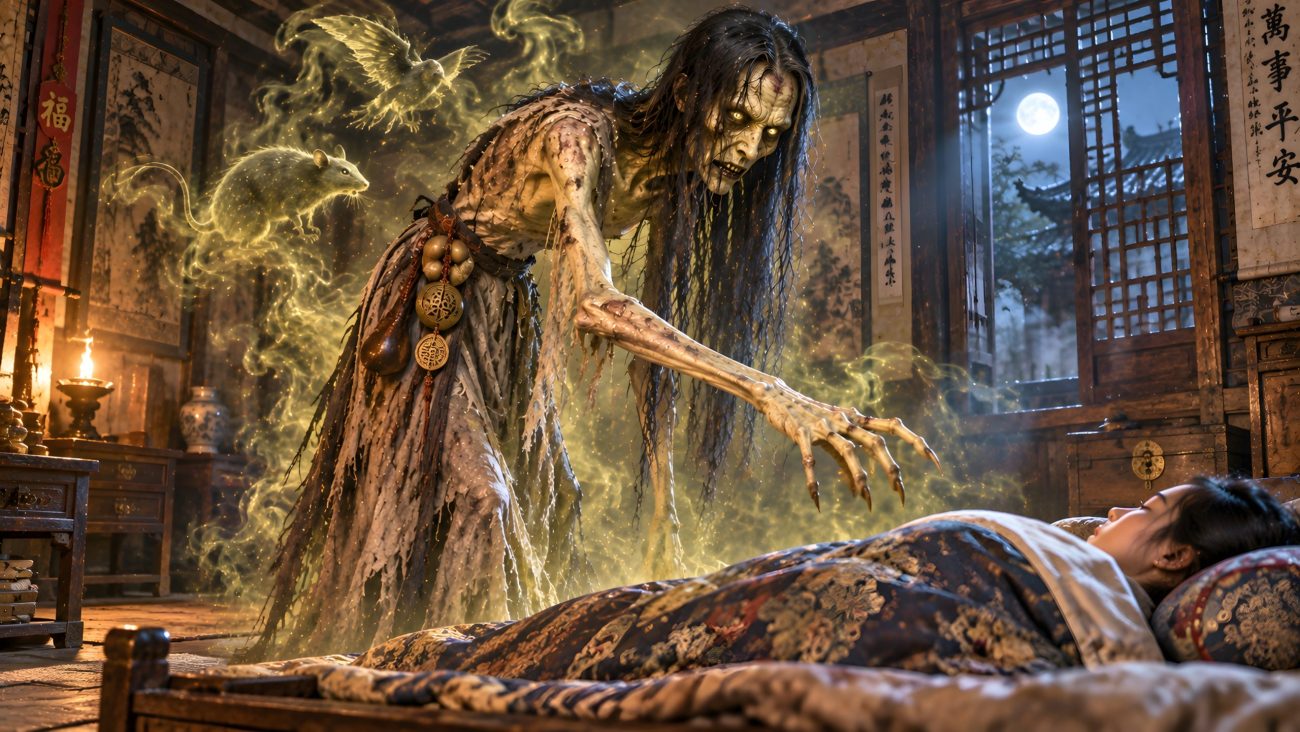
After death, the Lampir returns from the grave as an undead being that feeds on the living. Unlike some other vampires, it is said to attack by biting a small hole into the chest using its distinctive multiple fangs, draining blood directly from the body.

Its curse is contagious in a delayed way: a person who survives an encounter will not immediately turn, but after their natural death they will rise again as a Lampir. This creates a chain of transformation linked to mortality rather than immediate infection.

There are also darker traditions stating that a person could deliberately become such a creature by consuming the flesh of an executed individual, suggesting that the Lampir is tied not only to plague but also to taboo acts and impurity.

To destroy a Lampir, villagers would exhume the corpse during daylight and burn it completely, ensuring that no part of the body remained to rise again.

The Lampir represents a classic Balkan fear:
a disease-bringing undead, where death itself does not end suffering but spreads it further through both body and spirit.


Sources

Bane, T. (2010). Encyclopedia of Vampire Mythology. In McFarland (p. 93).

Vampires Fandom contributors. (n.d.). Lampir. In Vampires Fandom, from https://vampires.fandom.com/wiki/Lampir


Tur

Tradition / Region: Bosnian Mythology
Alternate Names: —
Category: Cow


The Myth

Tur is a colossal black bull believed to carry the weight of the Earth upon his back. He is not merely an animal, but a cosmic being whose existence sustains the balance of the world itself.

Described as immense beyond measure, Tur’s body stretches like a living foundation beneath the world. His dark coat shines like night, and his massive horns are said to reach into the sky, sometimes imagined as piercing the clouds.

According to legend, earthquakes and tremors occur when Tur shifts his horns. Even the smallest movement can shake mountains and disturb the land. Because of this, people believed that the stability of the world depended entirely on his stillness.

Tur is usually calm and unmoving, but this calm is what keeps existence intact. If he were ever to rise or fully move his body, it was said that the Earth would collapse—mountains would fall, seas would overflow, and the world would be destroyed.

For this reason, Tur was both feared and respected. People would offer prayers or small sacrifices to keep him at peace, hoping to prevent any movement that could bring catastrophe.

Tur represents a powerful mythological idea:
a world-bearing creature whose stability maintains reality, where even the slightest disturbance reminds humanity how fragile the order of the world truly is.


Sources

Wikipedia contributors. (n.d.). Tur (Bosnian-Slavic mythology). In Wikipedia, from https://en.wikipedia.org/wiki/Tur_(Bosnian-Slavic_mythology)


Dorat

Tradition / Region: Bosnian Mythology
Alternate Names: Dorin, Dorat of Đerzelez
Category: Horse


The Myth

Dorat is the legendary horse of Đerzelez Alija, known in epic songs as a creature of immense power and near-supernatural nature. Unlike ordinary horses, Dorat behaves more like a wild, elemental force than a domesticated animal.

The horse was so dangerous that it had to be restrained with many reins and kept locked away. No one dared approach it, as it would lash out violently, striking with such force that it could kill a man. Many had been promised great rewards to control or even lead the horse to water, but none succeeded.

When Đerzelez Alija approached Dorat, however, the horse immediately recognized him. Instead of attacking, it became obedient, allowing Alija to remove all restraints and lead it outside. This moment shows that Dorat is not merely savage—it is bound to its rightful master.

Dorat’s true nature becomes clear when it moves:
from its nostrils, flames burst outward, marking it as a fire-breathing creature rather than a normal animal. When ridden, it displays overwhelming strength and speed, capable of breaking structures and terrifying all who witness it.

In battle, Dorat enhances Alija’s power, allowing him to chase down enemies effortlessly and dominate the battlefield. The horse moves with such force that it seems unstoppable, almost like a force of nature unleashed.

Despite its destructive potential, Dorat is not evil. It is loyal, intelligent in its own way, and perfectly controlled only by its chosen rider. In this sense, it represents a common motif in epic tradition:
a mythic steed that mirrors the strength and destiny of its hero, combining danger, fire, and absolute loyalty into a single being.


Sources

Hormann, K. (1976). Narodne pjesme muslimana u BiH – Knjiga 1. In Bosna i Hercegovina (collected 1888–1889) p. 122.


Vila of Butkove Stijene

Tradition / Region: Bosnian Mythology
Alternate Names: Butkove Vila
Category: Fairy


The Myth

The Vila of Butkove Stijene is a mountain and river spirit connected to the cliffs above the Drina, near Višegrad. Like other Balkan vile, she is a powerful and dangerous supernatural being tied to wild nature, especially water and rocky heights.

During the construction of the bridge on the Drina, commissioned by Sokollu Mehmed Pasha, the master builder Mitre encountered her while testing whether the river could be crossed. As his horse reached the middle of the river, it suddenly froze, unable to move forward.

At that moment, the vila appeared and tried to drown both Mitre and his horse. However, the horse broke free and leapt back onto dry land, carrying the vila with it. Mitre drew his sword to kill her, but she stopped him by invoking a sacred bond, calling him her brother and begging for mercy.

In exchange for her life, she promised to help him build the bridge. Trusting her, Mitre released her back into the cliffs of Butkove Stijene.

But when the construction repeatedly failed—everything built during the day collapsing by night—Mitre called upon the vila for help. She answered from the rocks, explaining that she could not assist him directly because other vile forbade it. Instead, she revealed the harsh condition required for success: living humans had to be built into the structure.

Following her instruction, two people were immured within the bridge, and only then did the construction succeed.

The Vila of Butkove Stijene reflects the dual nature of vile in Balkan folklore—beautiful and knowledgeable, yet bound by harsh supernatural laws. She does not lie, but her guidance leads to sacrifice, showing that dealing with such beings always comes at a cost.


Sources

Hormann, K. (1976). Narodne pjesme muslimana u BiH – Knjiga 1. In Bosna i Hercegovina (collected 1888–1889).


Ravenmill Demon

Tradition / Region: Czech Mythology
Alternate Names: Demon of the Rabenmühle
Category: Demon


The Myth

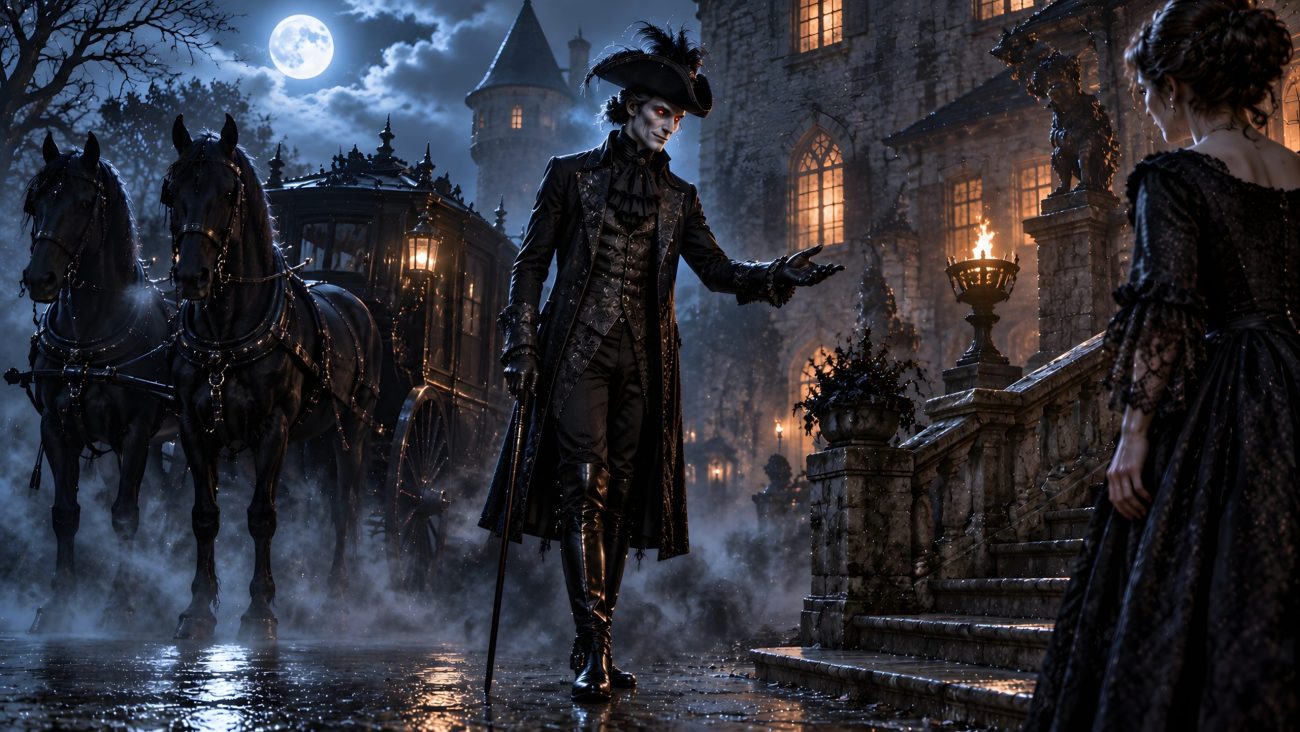
The Ravenmill Demon is associated with the infamous Rabenmühle, a mill feared by locals for its connection to dark forces and witchcraft. The miller himself was said to be deceitful and corrupt, while his wife was a practicing witch who cursed nearby farmers and their livestock if they refused to use the mill.

Because of its sinister reputation, travelers would make the sign of the cross when passing the mill, fearing the presence of evil forces tied to it.

The true horror revealed itself through the miller’s three daughters, who were described as even more wicked than their parents. One night, after a gathering, they swore that they would dance no matter what—even if it meant dancing with the devil.

Soon after, mysterious strangers arrived, appearing as elegant musicians and noble men adorned with gold. They began dancing with the daughters, at first slowly and gracefully, but the dance quickly turned wild and unnatural.

As the music grew shrill and disturbing, the dancers revealed their true forms—horns sprouted from their heads, and their feet transformed into hooves. These were no humans, but demonic beings.

The dance reached a frenzy until suddenly the demons carried the daughters away into the air. At that very moment, the Ravenmill burst into flames and vanished, as if consumed by infernal forces.

The Ravenmill Demon represents a classic motif in Central European folklore: the devil answering reckless invitations. The daughters’ oath opened the door, and the demons came not merely to dance—but to claim what had been offered.


Sources

sagen.at contributors. (n.d.). Die Rabenmühle. In sagen.at, from https://www.sagen.at/texte/sagen/tschechien/watzlik/rabenmuehle.html


Three-Legged Rabbit

Tradition / Region: Czech Mythology
Alternate Names: –
Category: Rabbit


The Myth

The Three-Legged Rabbit appears as a strange and unsettling creature tied to a tragic rural legend. It is not described as a natural animal, but as something uncanny that manifests at a critical moment.

In a village, a group of boys argued whether a person could hang themselves from a simple straw if fate—or the devil—willed it. One boy, determined to prove it, tied a straw to a beam and hanged himself, telling the others to cut him down if he began to suffocate.

At that exact moment, a rabbit with only three legs suddenly ran through the barn. Its unnatural appearance startled the boys, who chased after it in confusion and excitement, completely forgetting their friend.

By the time they returned, it was too late—the boy had died.

The three-legged rabbit is not directly identified as a demon, but its timing and abnormal form strongly suggest a supernatural role. It functions as a distraction or omen, appearing precisely when needed to lead the boys away from the hanging.

In this way, the creature is often interpreted as a manifestation of dark fate or a subtle agent of evil—possibly linked to the devil mentioned earlier—ensuring that the tragic outcome could not be prevented.


Sources

sagen.at contributors. (n.d.). Der Dreifüßige. In sagen.at, from https://www.sagen.at/texte/sagen/tschechien/watzlik/derdreifuessige.html