Sarmatian Sea Snail

Tradition / Region: Danish Mythology
Alternate Names: Sarmatian Snail, Cochlea Sarmatica, Philosmon, Aknib, Albakr, Lucrab
Category: Snail, Mollusc


The Myth

The Sarmatian Sea Snail is a gigantic marine creature described as inhabiting the Sarmatian Sea, identified with the Baltic Sea, and also reported in the Black Sea under various names.

It is said to be as large as a barrel and unlike ordinary snails in both form and behavior. It bears antlers like those of a stag, with bright, pearl-like tips. Its head has a rounded, cat-like snout with whiskers, and its eyes glow in the dark, lighting its way. Its mouth is long and deeply split, with a fleshy appendage hanging beneath it. The creature has a thick neck and a long, multicolored tail patterned like that of a tiger. Instead of a soft body, it possesses four legs armed with hooked claws.

Though capable of living both in water and on land, it is usually found in the open sea and rarely approaches the shore. In calm weather, it may crawl onto beaches to feed.

Its flesh is considered edible and even beneficial, believed to help with illnesses of the lungs and liver.

Reports place similar creatures across different regions, each culture naming it differently but describing the same or closely related being. These accounts present it as a rare and elusive inhabitant of northern and eastern seas.


Sources

A Book of Creatures contributors. (2015, August 31). Sarmatian Sea Snail. In A Book of Creatures, from https://abookofcreatures.com/2015/08/31/sarmatian-sea-snail/


Hyldemoer

Tradition / Region: Danish Mythology
Alternate Names: Hyldequinde, Elder Mother, Old Lady
Category: Forest Dweller, Spirit


The Myth

Hyldemoer is a spirit that dwells within the elder tree and guards it. She is regarded as a living presence tied directly to the tree, similar to a nymph or dryad, and her existence is inseparable from the wood itself.

She watches over all elder trees and reacts to how humans treat them. Anyone who cuts or uses elder wood without first asking permission risks provoking her anger. When offended, she brings misfortune, illness, or direct harm.

Tradition required that a person ask the Elder Mother before taking any wood. If this was not done, consequences followed. In one account, a man used elder wood to make part of a child’s cradle without permission. The spirit responded by attacking the child, leaving it in distress until the object was replaced.

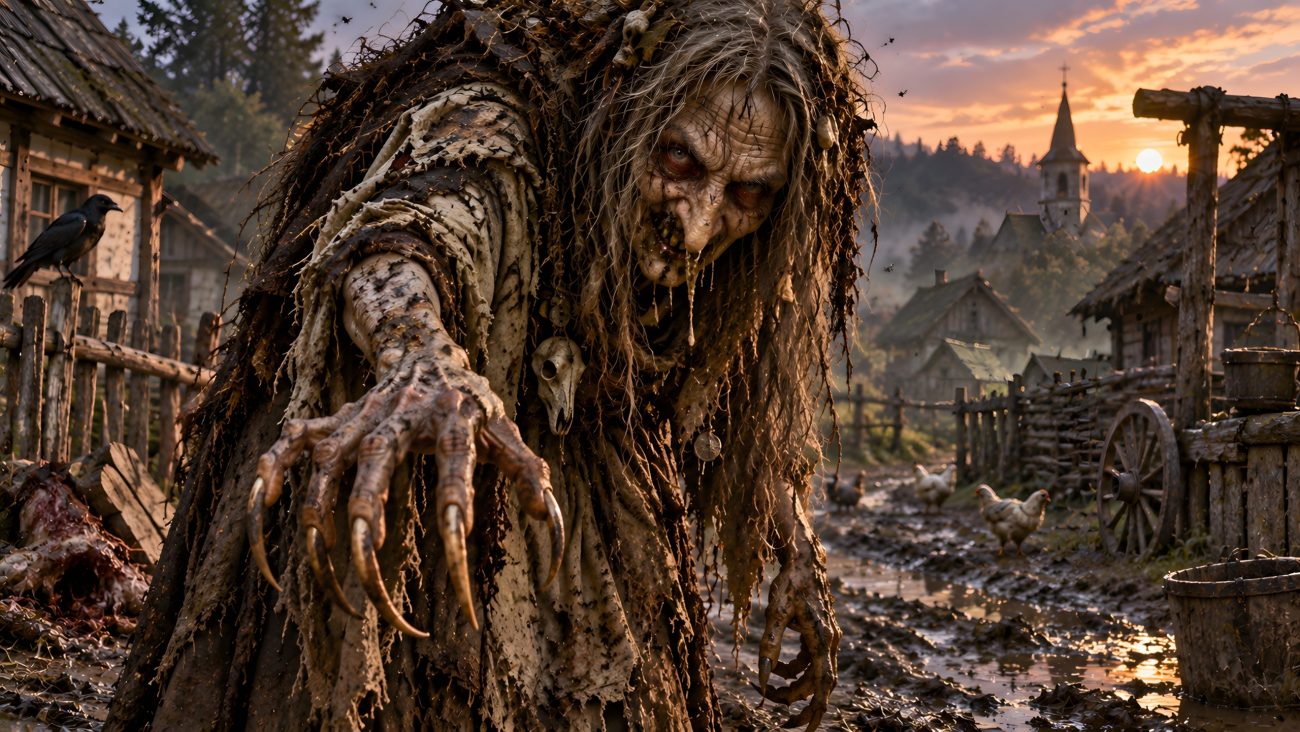
In other stories, the spirit appears in human form, often as an old woman or witch. She may be seen connected to the tree itself—sometimes bleeding when the tree is cut, or appearing wounded in the same place. This reflects the belief that the tree and the spirit are one and the same.

Hyldemoer is also linked to transformation and protection. In some traditions, a woman or witch becomes an elder tree, or uses its power to act against others. In one tale, a figure associated with the elder turns a king and his men into stone and transforms herself into the tree.

The elder tree itself was considered powerful and dangerous. It could protect against evil, but only if treated correctly. If disrespected, it became a source of harm.

Hyldemoer represents a clear rule within folklore:
nature is inhabited and must be approached with respect, or it will respond with punishment.


Sources

Wikipedia contributors. (n.d.). Elder Mother. In Wikipedia, from https://en.wikipedia.org/wiki/Elder_Mother


Valravn

Tradition / Region: Danish Mythology
Alternate Names: Valravnen
Category: Bird, Wolf


The Myth

The Valravn is a supernatural raven connected with death, transformation, and dark power. It is often described as either a human turned into a raven or a raven that gains human nature through consuming the dead.

In the central ballad tradition, the Valravn appears as a cursed knight in raven form. He encounters a maiden and offers to carry her to her betrothed, but demands a price: the first son she will bear. The woman accepts, and after she is reunited and later gives birth, the raven returns to claim the child.

No bargain or wealth can stop him. When the child is brought forth, the Valravn pierces the boy and drinks his heart’s blood. Through this act, the curse is broken—the raven transforms back into a human knight.

After the transformation, the child is restored to life, and the danger passes. Yet the event reveals the cost of the change: the Valravn’s return to humanity requires blood and sacrifice.

Another tradition presents a different origin. Ravens that feed on the bodies of fallen kings or warriors—especially consuming the heart—gain human intelligence and supernatural abilities. These creatures can harm people, alter forms, and possess unnatural strength.

The Valravn represents a darker transformation motif:
a being caught between animal and human, whose return to humanity is achieved through violence, death, and the crossing of natural boundaries.


Sources

Wikipedia contributors. (n.d.). Valravn. In Wikipedia, from https://en.wikipedia.org/wiki/Valravn


Yule Vette

Tradition / Region: Danish Mythology
Alternate Names: Julevætten, Yule Goat
Category: Sheep


The Myth

The Yule Vette is a strange, goat-like creature associated with Christmas in Danish folklore. It is described as a creeping being with long hair, a tail, and eight horns, blending animal and monstrous features.

It is said to dwell deep in forests throughout the year, but as Christmas approaches, it moves closer to human settlements. On Christmas Eve, it sneaks up to houses and attempts to enter quietly. Because of its enormous, hairy body, it often hides in the shadows, with only its horns visible.

The creature is not purely malevolent. It enters homes seeking food and drink, and if it finds what it wants, it consumes everything it can. Despite this, it does not usually harm the household if it is left undisturbed. However, if someone blocks its path or interferes with it, the Yule Vette may take them with it.

There are traditions that offerings—such as apples or nuts—can satisfy the creature. When properly fed, it leaves peacefully, full and content, without causing further trouble.

The Yule Vette is also connected to older, deeper forces. Its presence is linked to ancient beings and to the wild, untamed aspects of nature that persist even during sacred or festive times.

It represents a recurring idea in winter folklore:
a visitor from the wilderness during sacred nights, who must be respected and appeased rather than confronted.


Sources

Bestiary contributors. (n.d.). Йольский Вэттэ (Iolskii Vette). In Bestiary, from https://www.bestiary.us/iolskii-vette


Slattenpatten

Tradition / Region: Danish Folklore
Alternate Names: Slattenlangpat
Category: Nymph


The Myth

Slattenpatten is a strange and unsettling female figure in Danish folklore, often described as a wild woman of the woods or waters. She is sometimes classified among the “ellefolk” (hidden folk), though unlike the beautiful elf-maidens, she appears in a far more grotesque and uncanny form.

Her most defining feature is her extremely long, sagging breasts, which hang down to her knees. These are not merely physical traits but serve a symbolic and functional role. In stories, she can throw them over her shoulders to move freely or even nurse a child carried on her back. This unnatural anatomy emphasizes both her maternal nature and her otherworldly character.

Slattenpatten is not purely benign. Like other female nature spirits, she can be dangerous to humans, haunting certain areas and appearing unpredictably. In some legends, she is pursued nightly by a king—often identified as Kong Volmer—who hunts and shoots her, yet she always returns the next day, suggesting an immortal or cyclical existence.

She is also linked to water and fertility. Some traditions claim she bore many children, her long breasts symbolizing nourishment and abundance. In more unusual accounts, she is said to nurse offspring beneath the water, connecting her to lakes, rivers, and the hidden life within them.

This dual nature—nurturing yet eerie, fertile yet unsettling—places Slattenpatten between roles:
a maternal figure, a spirit of nature, and a haunting presence that reflects both life-giving power and the strangeness of the natural world.


Sources

Wikipedia contributors. (n.d.). Slattenpatte. In Wikipedia, from https://en.wikipedia.org/wiki/Slattenpatte


Helhest

Tradition / Region: Danish Mythology
Alternate Names: Hel Horse
Category: Horse


The Myth

The Helhest is a spectral three-legged horse associated with death, illness, and the underworld. It is closely connected to Hel, the ruler of the realm of the dead in Norse belief.

According to tradition, the Helhest appears near graveyards, churches, and places tied to burial. It is often described as walking on three legs, producing an unnatural, heavy sound as it moves. Its presence is never neutral—it signals death, plague, or misfortune.

In times of epidemic, people believed that Hel herself rode across the land on this horse, spreading disease and claiming lives. The image of a three-legged horse moving through villages became a symbol of unavoidable death approaching.

A widespread belief held that in earlier times, before a cemetery could be used for burials, a living horse was buried within its grounds. This sacrificed animal would later return as the Helhest, bound eternally to the graveyard and serving as a guardian of the dead.

Encounters with the Helhest were rare but terrifying. In one account, a man looked out toward a cathedral yard after being told the Helhest was outside. After seeing it, he turned pale, refused to speak of what he had witnessed, and soon fell ill and died.

The Helhest also entered everyday speech. Expressions described people moving clumsily or ominously as “walking like a hel-horse,” reinforcing its association with something unnatural and foreboding.

The creature represents a deeper belief:
that death is not abstract, but moves through the world in visible form—slow, heavy, and inevitable.


Sources

Wikipedia contributors. (n.d.). Helhest. In Wikipedia, from https://en.wikipedia.org/wiki/Helhest


Prachatice Cat

Tradition / Region: Czech Mythology
Alternate Names: —
Category: Cat


The Myth

The Prachatice Cat is a sinister manifestation of cats acting under supernatural influence, capable of intelligence, coordination, and deadly intent.

One night, after a village celebration, a drunken farmer stumbled home and heard strange music coming from his barn. Curious, he opened the doors and let the moonlight reveal the scene inside.

There, a gathering of cats had assembled. They were not behaving like ordinary animals—each cat held its own tail in its mouth and played it like a musical instrument, producing eerie sounds like flutes and pipes. In the center, a dance was taking place: a cat whirled together with the farmer’s own large black tomcat.

The spectacle was unnatural and unsettling, but the farmer reacted with anger rather than fear. He cursed his cat and threatened it, dismissing what he had seen as drunken nonsense. Then he went inside and fell asleep.

During the night, the black cat entered the house silently. It approached the sleeping man and, in a calculated act of revenge, forced its tail down his throat, suffocating him.

By morning, the farmer was dead.

The story left behind a lasting warning, remembered in local tradition:
cats are not always harmless creatures, and what appears tame may conceal something dangerous.

The Prachatice Cat embodies the idea that animals—especially cats—can serve as vessels of hidden forces, capable of turning against humans when disrespected or provoked.


Sources

sagen.at contributors. (n.d.). Katzenmusik. In sagen.at, from https://www.sagen.at/texte/sagen/tschechien/watzlik/katzenmusik.html


Black Hiesel

Tradition / Region: Czech Mythology
Alternate Names: Schwarzer Hiesel
Category: Forest dweller


The Myth

Black Hiesel was a feared and elusive poacher who roamed the forests with unnatural power. Though human in origin, he possessed supernatural resilience that set him apart from ordinary men.

No weapon could harm him. Bullets flattened against his skin, blades failed to cut him, and even iron had no effect. Hunters who tried to kill him found themselves powerless, as if he existed beyond the reach of normal violence.

He hunted freely in the forests, especially in the Wallerer woods, killing deer and game without restraint. Lawful hunters were left with nothing but tracks and remains, which fueled both their anger and fear. They organized hunts to capture or kill him, but every attempt failed.

When cornered, Black Hiesel used another unnatural ability—transformation. He could turn himself into parts of the forest, such as a young fir tree or a dry stump. In this form, he remained unnoticed, listening as hunters passed by him, unaware that their target stood among them. This ability made him not only untouchable, but also omnipresent within the woodland.

Over time, his presence became deeply unsettling. Hunters began to lose their courage, knowing they were dealing with something more than a man.

Eventually, however, he was caught off guard. Unable to kill him by conventional means, his pursuers resorted to brute force. They crushed his skull with a heavy wooden tool, ending his life in a way that bypassed his unnatural protection.

Black Hiesel represents a recurring figure in folklore:
a human who crosses into the supernatural through defiance, gaining power over nature and weapons, but ultimately remaining vulnerable to raw, physical force.


Sources

sagen.at contributors. (n.d.). Der schwarze Hiesel. In sagen.at, from https://www.sagen.at/texte/sagen/tschechien/watzlik/hiesel.html


Charnel House Spirit

Tradition / Region: Czech Mythology
Alternate Names: —
Category: House dweller


The Myth

The Charnel House Spirits are eerie entities said to inhabit ossuaries—rooms where human bones and skulls are stored after burial. In one such chamber near a church, countless skulls were piled together, forming a place closely tied to death and the afterlife.

One night, a man approached the charnel house with ill intent. As he drew near in the darkness, he heard strange noises from within—rolling, clattering, and hollow knocking, as if the bones themselves were in motion.

Driven by curiosity, he listened at the door and discovered that two unseen spirits were inside. They were handling the skulls, dividing them between themselves as if they were objects in a game. The spirits treated the remains of the dead like playthings, using them almost as pieces in a contest.

One of the spirits was cunning and deceitful. As he divided the skulls, he manipulated the process so that he always ended up with more than the other, repeating the same trick again and again. The other spirit, simple-minded and unaware, was continually cheated.

The scene revealed something unsettling: even in death, deception and imbalance persisted. The spirits mirrored human flaws—greed, cunning, and foolishness—within a realm that should have been beyond such behavior.

Terrified by what he witnessed, the man fled immediately. His fear was so great that he abandoned his original sinful plan, unwilling to risk encountering such forces again.

The Charnel House Spirits embody a grim idea in folklore:
that places of the dead are not always silent or sacred, but may be inhabited by restless, mocking forces that imitate the worst traits of the living.


Sources

sagen.at contributors. (n.d.). Halbscheid!. In sagen.at, from http://sagen.at/texte/sagen/tschechien/watzlik/halbscheid.html


Frischhof Giants

Tradition / Region: Czech Mythology
Alternate Names: Giants of the Frischhof
Category: Giant


The Myth

The Frischhof Giants belong to an ancient time when giants still roamed the land. They are portrayed as powerful and destructive beings who lived before the present human order was established.

One day, while the household of a farmer named Frisch was away at church, a group of giants descended upon his farm. They tore down fences and demanded his wealth. When he refused, some of the giants restrained him while others looted his home, breaking into chests and stealing everything they could.

As they prepared to leave, the farmer turned to a mysterious object kept in his house—a black book filled with powerful knowledge. Opening it, he recited a spell that instantly froze the giants in place, leaving them unable to move.

Trapped where they stood, the giants remained there forever. Over time, their bodies became part of the landscape itself, transforming into the mountains that surround the region.

The black book that enabled this act was later lost in a mundane but ironic way—mistaken for food and destroyed—ending the possibility of such power being used again.

The Frischhof Giants represent a mythic explanation for the landscape:
mountains as the remains of ancient beings, defeated not by strength, but by hidden knowledge and supernatural means.


Sources

sagen.at contributors. (n.d.). Das Schwarzbuch. In sagen.at, from https://www.sagen.at/texte/sagen/tschechien/watzlik/schwarzbuch.html