Sugaar

Tradition: Basque mythology, Spanish Mythology
Alternative Names: Sugar, Sugoi, Suarra, Maju
Category: Dragon, Deity


The Myth

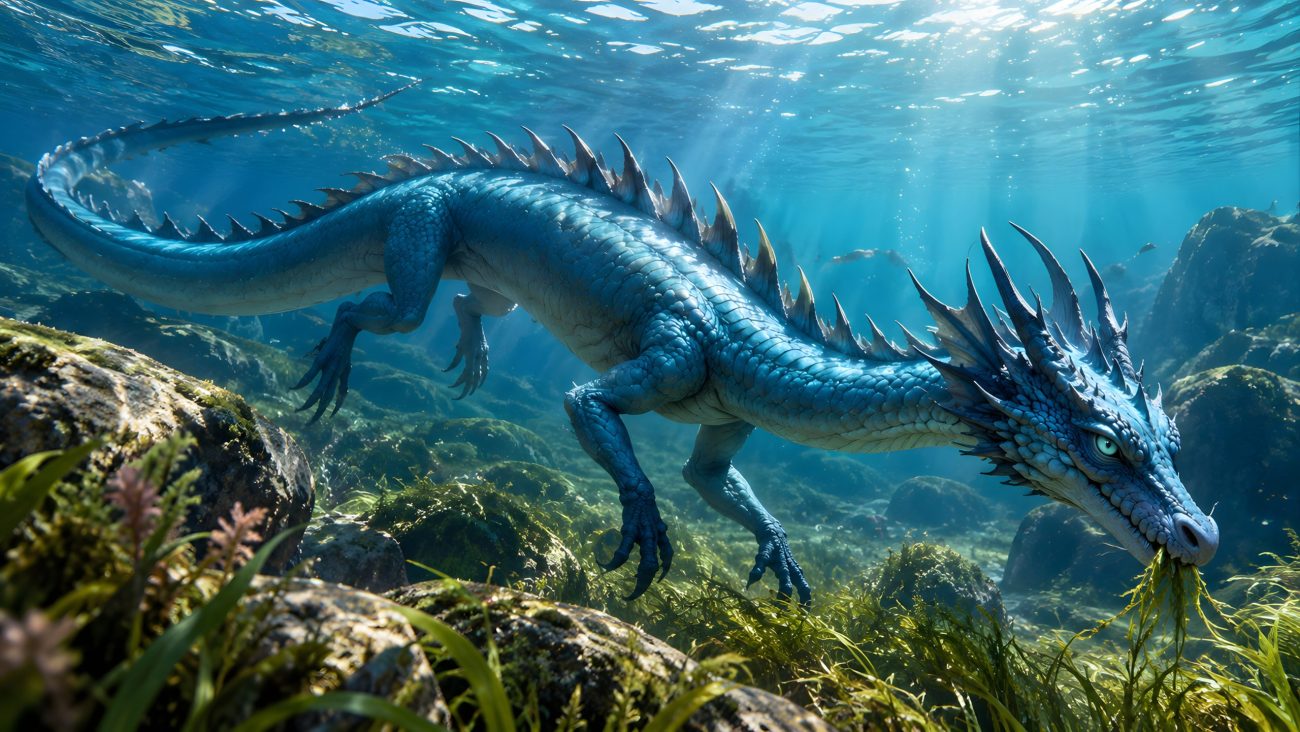
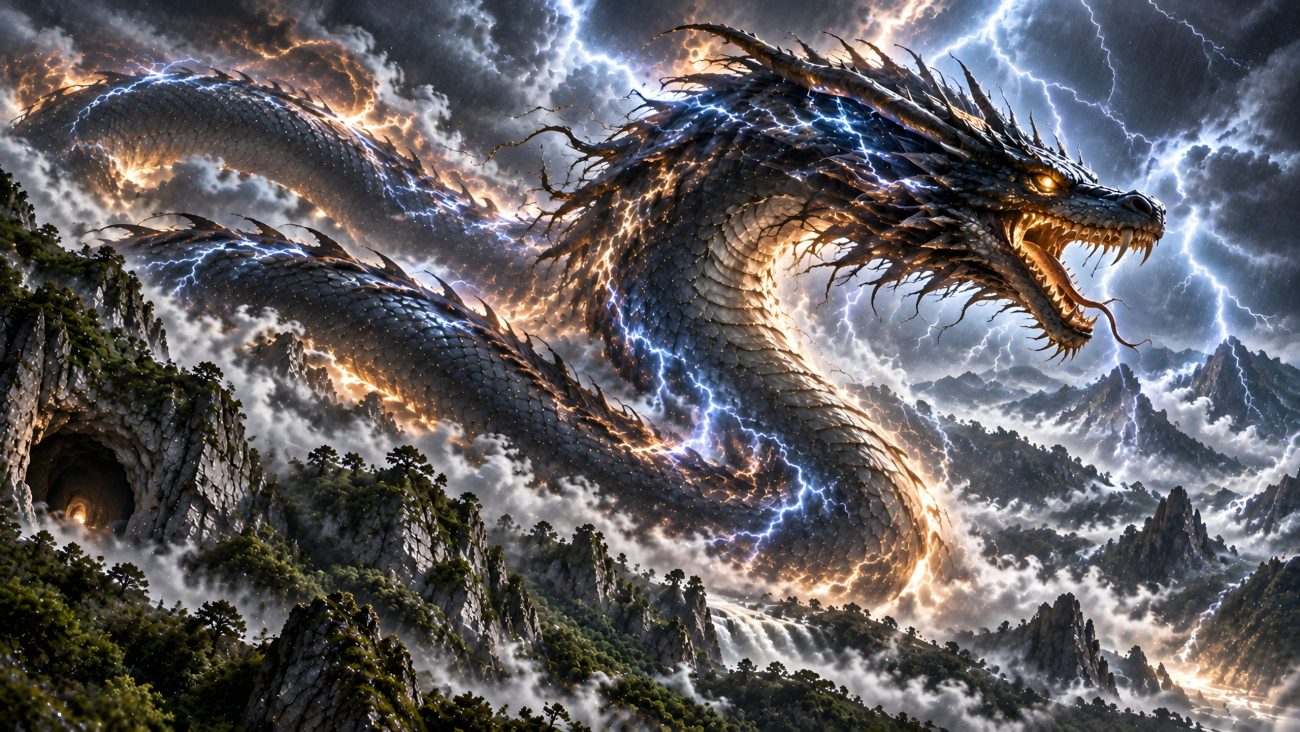
Sugaar is a powerful male serpent or dragon deity of Basque mythology, associated with storms, thunder, rain, and lightning. He may appear as pure fire or lightning, but his usual form is that of a great serpent or dragon. He is the male counterpart of the goddess Mari and is considered an ancient pre-Christian figure, with traditions surrounding him predating those concerning Herensuge.

Sugaar lives among mountains and caves, with one of his homes said to lie in the Aralar mountain range. His most famous dwelling is the cave of Baltzola, where he appears in a tale concerning two brothers from Dima.

Sugaar is Mari’s consort and is said to visit her at Mount Anboto every Friday. Their meetings are understood in different ways: Sugaar may be imagined tending Mari’s hair, while other traditions describe the two joining together and producing the great thunderstorms that sweep across the land. Their union also carries a deeper natural meaning, with Sugaar representing the rain that fertilizes the earth associated with Mari.

Yet Sugaar is not always a divine and benevolent figure. In Betelu he is regarded as an evil spirit, while in Ataun he serves as a frightening bogeyman figure. His nature therefore moves between that of an ancient storm deity and a dangerous supernatural being feared by ordinary people.

One of the most striking stories about Sugaar begins when two young brothers from Dima discover him inside the cave of Baltzola. The younger brother attacks the strange creature, cutting its tail with a stone. His elder brother disapproves of the violence, and the two leave the cave.

Years pass before the elder brother encounters a mysterious man who leads him back to the same cave at Baltzola. There the stranger gives him a box filled with gold and a red belt, instructing him to take the belt to his younger brother.

When the brothers are reunited, the younger brother refuses to wear the belt. Instead, he ties it around a chestnut tree. The moment the belt touches the tree, the tree bursts violently into flames.

The brothers suddenly understand who the mysterious stranger must have been. The man who had given them the gold and the red belt was Sugaar himself, returning years after the brothers had wounded him in his cave.


Sources

“Sugaar.” Wikipedia: The Free Encyclopedia. Wikimedia Foundation. Accessed October 3, 2026. https://en.wikipedia.org/wiki/Sugaar
Marraco

Tradition: Catalan folklore, Spanish Mythology
Alternative Names: Lo Marraco
Category: Dragon


The Myth

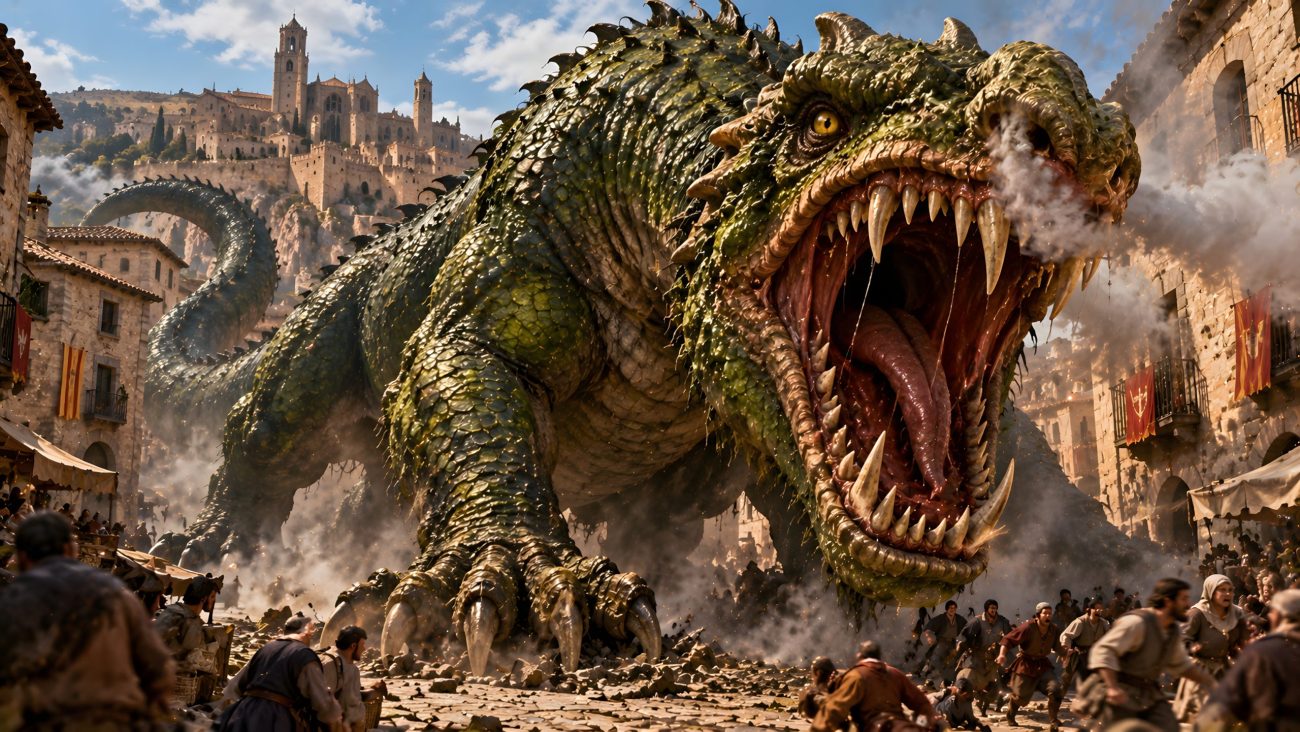
Lo Marraco is a terrifying dragon-like creature from the folklore of Lleida, said to possess an enormous mouth capable of swallowing a person whole. In tales told to frighten children, the monster lurks as a frightening threat to those who misbehave, with adults warning that the Marraco will come and devour them.

The Marraco became one of the great frightening creatures of Lleida. Its gigantic jaws were imagined as large enough to swallow children whole, making it an especially effective bogeyman. Adults used the creature to frighten disobedient children into behaving, turning its monstrous appetite into a warning passed from one generation to the next.

The creature eventually took physical form in the great processional monster of Lleida. A dragon figure had already appeared in the city’s religious processions in the sixteenth century, and another dragon was ordered to be built in 1671. In 1907, the Marraco was given a recognizable physical form as a large green dragon effigy mounted on wheels. It could emit smoke from its nostrils, giving the imaginary beast a frightening presence as it moved through the streets during celebrations.


Sources

“Marraco.” Wikipedia: The Free Encyclopedia. Wikimedia Foundation. Accessed October 2, 2026. https://en.wikipedia.org/wiki/Marraco


La Guita Xica

Tradition: Catalan folklore, Spanish Mythology
Alternative Names: Guita Boja, La Guita Xica, Mulaguita, La Mulassa, Mula Fera, Mula Guita
Category: Dragon, Horse


The Myth

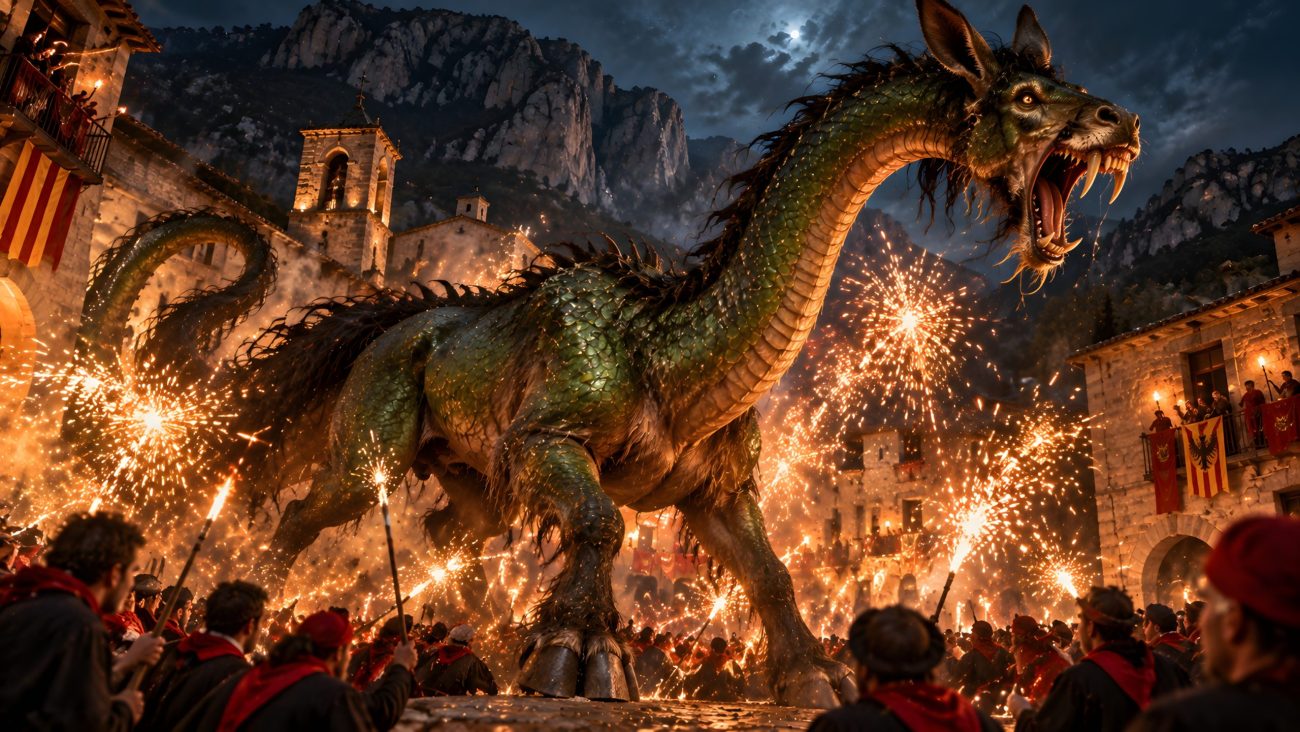
La Guita Xica is a strange dragon with the body of a mule and the features of a dragon. She has a green, horse-like body, a very long neck, and sharp fangs. Her long neck gives her an uncanny resemblance to a great serpent rising above the crowd.

Originally, La Guita Xica was regarded as a threatening demonic creature. Her nature was connected to the mule, an animal deeply familiar in the Catalan mountains but also notorious for its stubborn and unruly temperament. This wildness became part of the creature herself, making her a dangerous and unpredictable presence.

Over time, however, La Guita Xica changed from a frightening monster into a protective spirit. She became associated with the people of Catalonia and with the Eucharistic celebrations of the Patum de Berga.

During the festivals, enormous representations of La Guita Xica are brought into the town squares. The great dragon-mule moves among the celebrations and spits fireworks, transforming the once-feared creature into a spectacular guardian of the festivities.

Her many names preserve the changing image of the creature: Mulassa, Mulaguita, Guita Boja, Mula Fera, Mula Guita, and finally La Guita Xica. What began as a monstrous mule-dragon became a beloved protective figure within Catalan tradition.


Sources

“La Guita Xica.” Wikipedia: The Free Encyclopedia. Wikimedia Foundation. Accessed October 2, 2026. https://en.wikipedia.org/wiki/La_Guita_Xica


Herensuge

Tradition: Basque mythology, Spanish Mythology
Alternative Names: Herensuge
Category: Dragon


The Myth

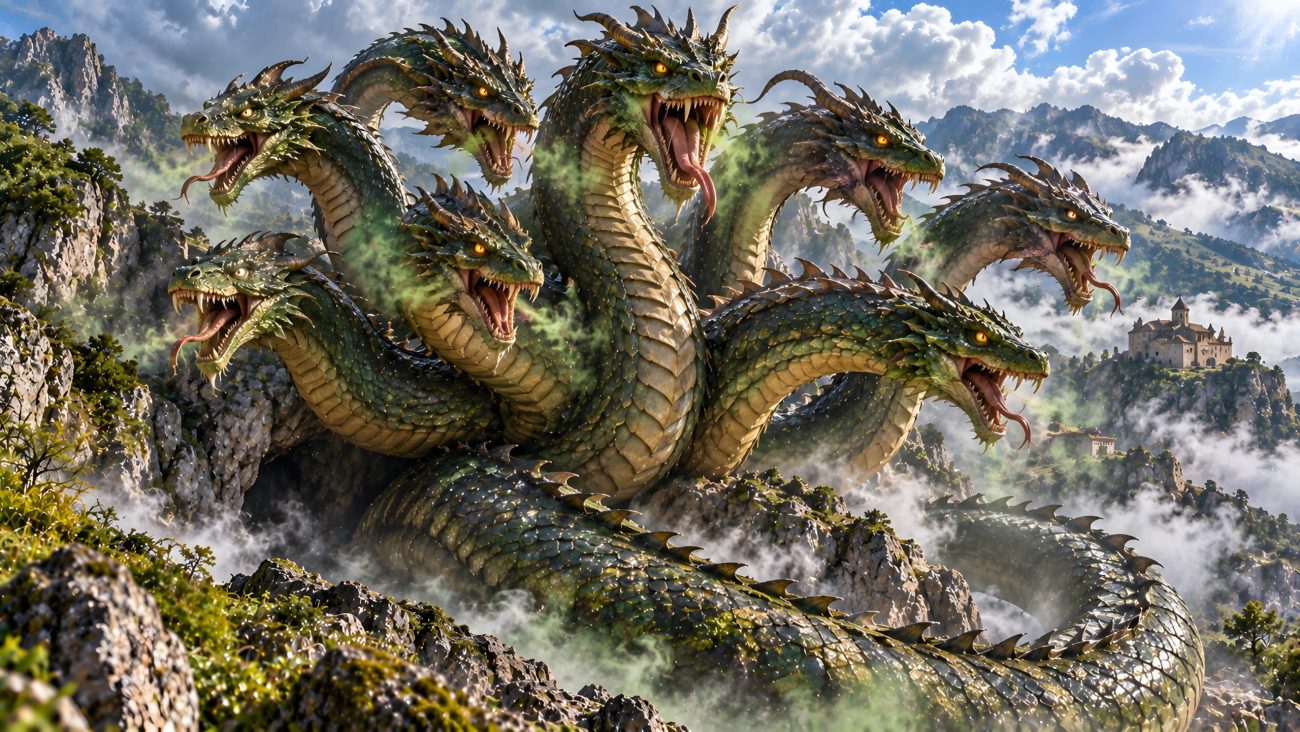
Herensuge is a fearsome Basque dragon that often takes the form of an enormous serpent. Some Herensuge have seven heads, with the seven young dragons believed to grow from the creature’s heads before eventually falling away when they become fully grown. The creature is associated with Sugaar, who is more commonly depicted as a serpent.

One of the most famous tales tells of the Navarrese knight Teodosio de Goñi, who was performing penance for killing his own parents in the Aralar Mountains. There he encountered a woman who had been given to the dragon as a ransom. Teodosio attempted to save her, but the dragon bit through the chains binding his ankles, leaving him unable to escape or fight it.

With no way to defeat the creature, Teodosio prayed to Saint Michael for salvation. In heaven, the archangel heard his plea, but would not enter the battle without God. Saint Michael finally descended with God above him and confronted the dragon. He struck off the Herensuge’s head, freeing Teodosio from his chains and bringing his long penance to an end.

The dragon also appears in tales of seven-headed serpents and princesses condemned to sacrifice. In one story, a prince falls in love with a king’s youngest daughter, only to learn that she has been chosen as the sacrifice to a seven-headed Herensuge. With help from the one-eyed giant Tartalo, the disguised prince battles the dragon three times and finally kills it, winning the princess’s hand.

Another tale tells of a young man who receives a magical stick from an old woman after generously giving her his entire cake. The stick can kill with a single blow. Eventually he reaches a kingdom where the people draw lots to determine who must be sacrificed to a Herensuge, and the king himself loses the drawing, meaning his daughter must die. The young man accompanies her to the dragon’s mountain and uses the magical stick to kill all seven of its heads. As a reward for saving the princess, he marries her.

Herensuge can also appear as a cursed human being. A young woman wandering through the countryside is captured by a serpent and held in a forest for three years. Eventually the creature tells her that he is actually a prince who was transformed into a Herensuge as punishment and will soon regain his human form. He gives her a distaff, spindle, and silk handkerchief and promises to marry her when his punishment ends.

When the young woman returns home, her father prevents her from leaving again, delaying her journey back to the prince. She eventually escapes and travels a great distance to his city, only to discover that he is about to marry another woman. She presents the objects he had given her, proving their earlier promise. The prince abandons the new marriage and instead marries the woman he had promised to wed.


Sources

“Herensuge.” Wikipedia: The Free Encyclopedia. Wikimedia Foundation. Accessed September 26, 2026. https://en.wikipedia.org/wiki/Herensuge


Banyoles Monster

Tradition: Catalan Mythology, Spanish Mythology
Alternative Names: Banyoles Monster, Banyoles Lake Monster
Category: Dragon


The Myth

The Banyoles Monster is a legendary creature said to live in the depths of Lake Banyoles in Girona, in northeastern Spain. It is possibly described as a dragon.

According to the legend, the monster has lived in the lake for hundreds of years. In the eighth century, a French monk named St. Emeterio approached the creature and used prayers to coax it out of the lake. Through his prayers, he transformed the beast into a peaceful herbivore.

Despite this transformation, the Banyoles Monster is said to still live deep beneath the waters of the lake.


Sources

“Banyoles monster.” Wikipedia: The Free Encyclopedia. Wikimedia Foundation. Accessed September 20, 2026. https://en.wikipedia.org/wiki/Banyoles_monster


Peryton

Tradition: Gibraltar Mythology, Spanish Mythology
Alternative Names: Peryton, Perytons
Category: Deer, Bird


The Myth

The Peryton is a strange and tragic creature said to have originally inhabited Atlantis. After the seismic catastrophes that destroyed their homeland, the Perytons settled on the border of the Ocean, in the region of the Pillars of Hercules.

According to the legend, the Perytons were haunted by the deaths of their fellow creatures. In memory of the millions who perished at sea, including the inhabitants of Atlantis, they became living cenotaphs, carrying the restless souls of those who had died far from home. They were associated with fishermen, sailors, travelers, and wanderers. Each Peryton possessed a human shadow, which appeared upon the ground while the creature itself flew through the sky.

The delicate nature of the Peryton could not withstand the trauma of forced migration. Something within the creatures eventually broke, transforming them into monsters. Their heads became those of gentle deer, while their bodies were those of birds. They possessed enormous horns and sharp claws, with some accounts describing bodies hardened like tempered adamant and others giving them the clawed feet of eagles.

Once the Perytons had taken to the sky, they could no longer return to the earth. They became predators and developed a thirst for human flesh. The only way for a Peryton to free itself from this terrible fate was to taste the blood of a slain human being and consume human flesh.

The Perytons became a source of terror to those who encountered them. Their attacks could affect travelers, sailors, merchant ships, and even armies. Yet the widows of fishermen were said not to fear them.

When a Peryton saw the broken outline of a human shadow on the ground, it would approach the person whose shadow it recognized. If the Peryton heard the name of its former human self, however, it would suddenly stop its attack and fall toward the ground, weeping like a man awakening from a deep sleep. For a brief moment, the widow could see in the transformed monster the person she had once known.

One of the great stories concerning the Perytons was connected with the Punic Wars. It was said that the army of Scipio, later known as Africanus, was crossing the waters of Gibraltar on its way to fight Carthage when the soldiers were attacked by countless Perytons.

The creatures were difficult to defeat. Their teeth, claws, and horns caused enormous casualties, while their skins were so tough that weapons could scarcely pierce them. Hundreds of Roman soldiers were killed during the attack.

The attack was associated with a prophecy of the Erythraean Sibyl that Rome would eventually be destroyed by the Perytons. Yet after the creatures had killed hundreds of Roman soldiers, they were finally freed from the curse that had transformed them and abandoned the Pillars of Hercules.

The Peryton therefore remained a creature of tragic transformation: originally associated with the dead and with the memories of those lost far from home, it became a predatory monster whose own human shadow constantly reminded it of what it had once been.


Sources

“Peritii.” New Bestiary (Bestiary.us). Accessed September 5, 2026. https://www.bestiary.us/peritii


Iratshoak

Tradition: Basque mythology, Spanish Mythology
Alternative names: Iratxo, Iratxoak, Iratshoa
Category: Demon


The Myth

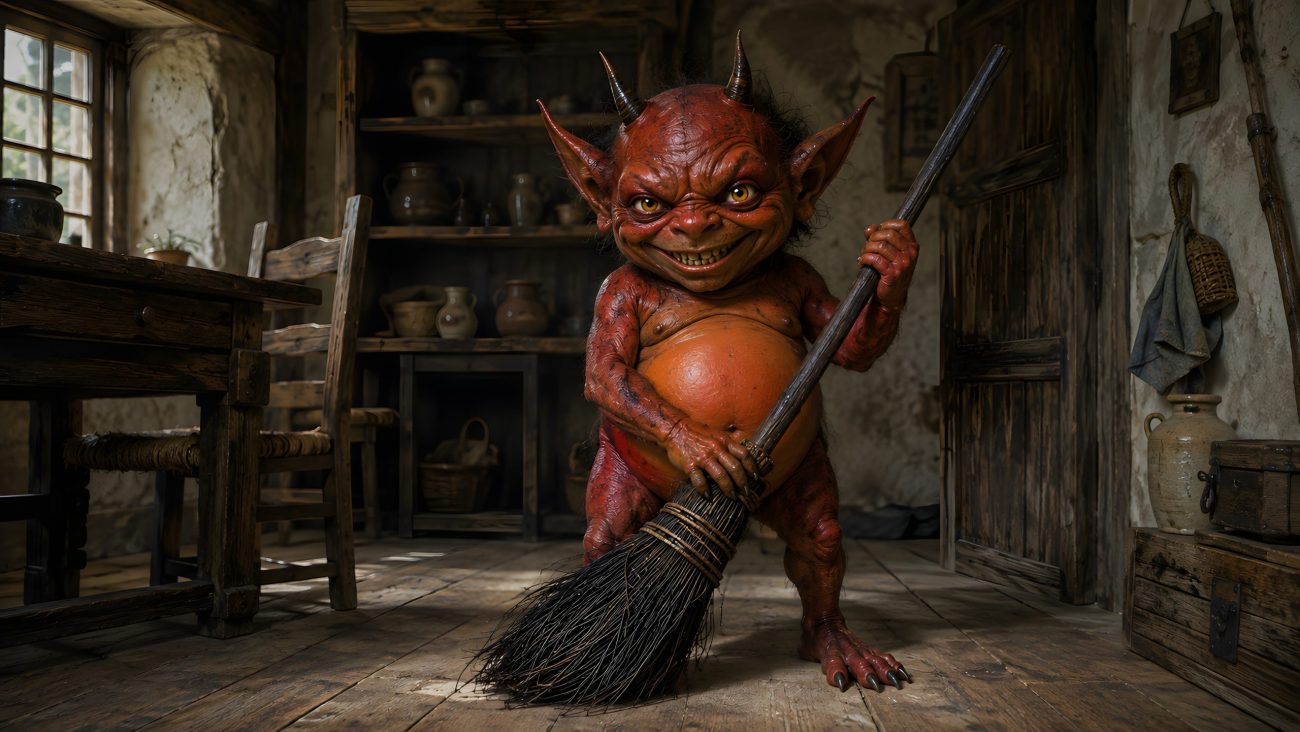
Iratshoak are small supernatural demons in Basque mythology that are generally friendly toward humans. They are helpful spirits that assist people with their work and business in exchange for a small symbolic reward.

They are especially associated with working during the night. Food left for them in a visible place can encourage them to work throughout the night, making them similar to the brownies of British folklore.

Despite being classified as demons, Iratshoak are not primarily hostile beings. Their relationship with humans is instead based on mutual benefit: they perform useful tasks while humans provide them with food or another small reward.


Sources

“Zlydnya.” New Bestiary (Bestiary.us). Accessed August 30, 2026. https://www.bestiary.us/Zlydnya


Momerota

Tradition: Catalan Mythology, Spanish Mythology
Alternative names: Momeroteta (her daughter)
Category: Cow


The Myth

The Momerota is a female beast from the Catalan popular bestiary of Mataró. She has the head of an ox or bull and the body of a mule.

During festive celebrations in Mataró, the Momerota may chase people through the town. She can also be slain, at which point blood appears to drip from her body, although this “blood” is actually wine.

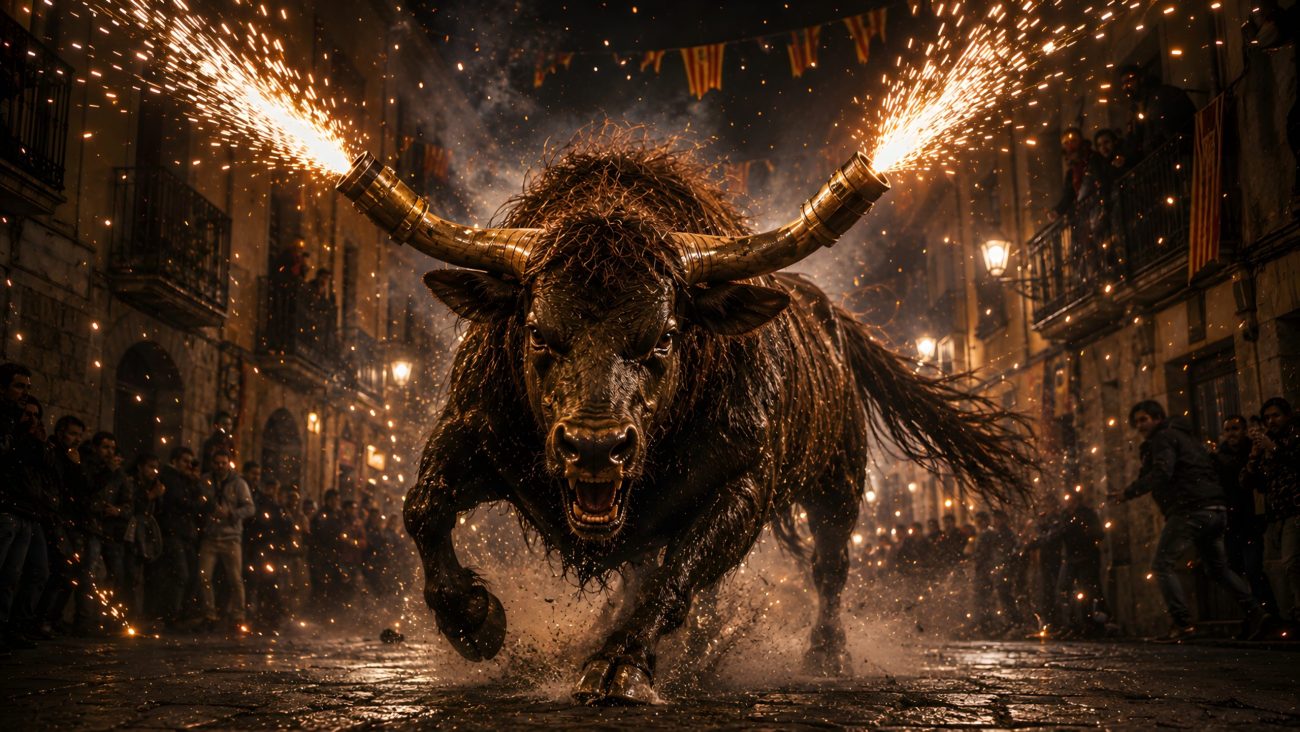
The Momerota is particularly associated with fire and spectacle. She launches sparks of “fire” from her horns, using pyrotechnic devices, often directing them toward the authorities watching the festivities from a balcony.

The Momerota may sometimes be accompanied by her young daughter, Momeroteta. The daughter is smaller than her mother and is distinguished by her protruding tongue. Like the Momerota, she can also launch sparks from her horns during the celebrations.


Sources

“Momerota.” Creatures of Myth Wiki. Fandom. Accessed August 29, 2026. https://creatures-of-myth.fandom.com/wiki/Momerota


Laminyaki

Tradition / Region: Basque Mythology, Spanish Mythology
Alternative names: Lamiñaku, Lamiñak, Lamiak
Category: Cave dweller


The Myth

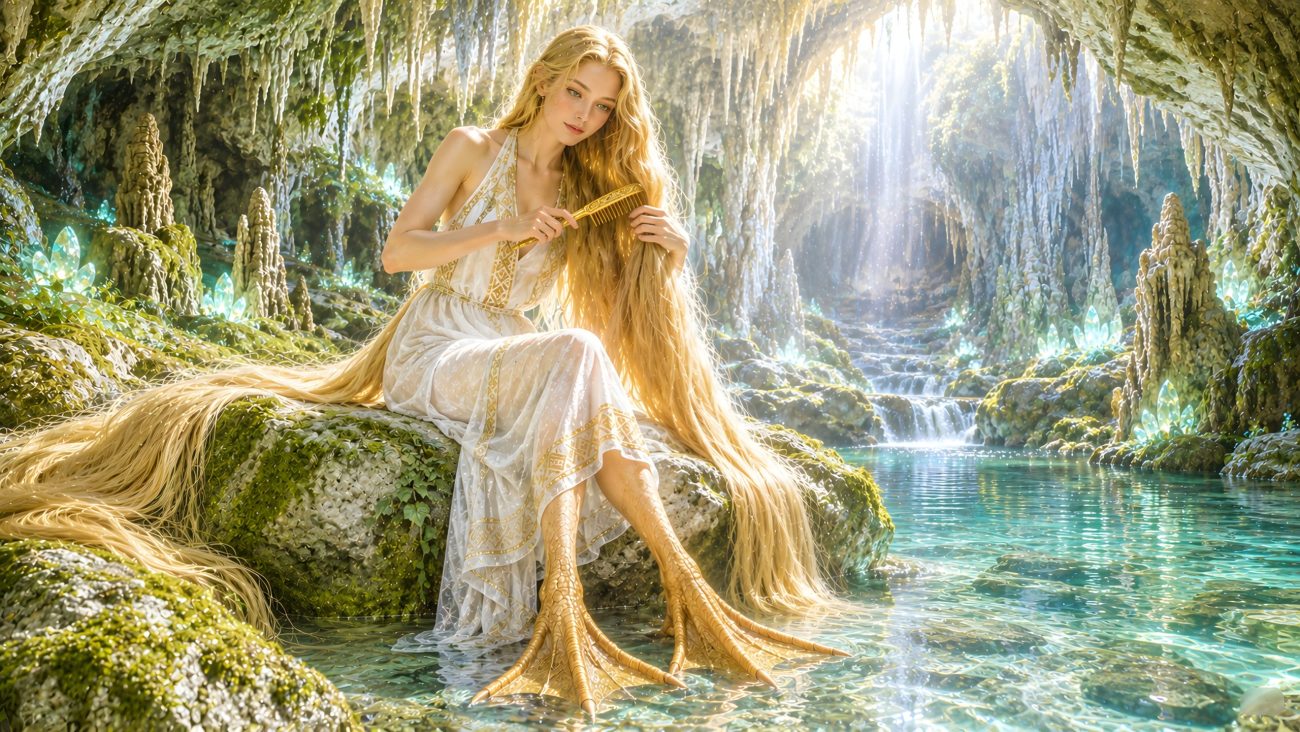
The Laminyaki are mysterious guardian spirits of springs, rivers, and caves that often appear as beautiful women with the legs or feet of a duck or chicken. In some regional traditions, however, they can also take the form of large supernatural cats that dwell in caves and lonely places. These feline forms are associated with hidden treasures, ancient magic, and encounters with travelers who unknowingly cross into their territory.

According to Basque legend, the Laminyaki inhabited remote caves, riverbanks, and mountain springs, where they guarded hidden riches and lived apart from humankind. Although they usually avoided people, they occasionally appeared to travelers, sometimes offering help and other times leading them into danger.

Many stories describe the Laminyaki demanding the return of stolen objects. One famous tale tells of a woman who borrowed a golden comb from one of these beings. When she failed to return it, the Laminyaki repeatedly appeared to her, warning that terrible consequences would follow if the comb was not given back. Fearing the creature’s growing anger, the woman eventually returned the treasure.

Other legends tell of Laminyaki visiting isolated farms during the night. If treated with kindness and offered bread, milk, or flour, they rewarded the household by secretly completing unfinished work before dawn, repairing bridges, cultivating fields, or helping with difficult tasks. Those who insulted or cheated them, however, could expect curses or misfortune.

One of the best-known tales concerns a young man who fell in love with a beautiful woman, unaware that she was one of the Laminyaki. She agreed to marry him, but his family suspected she was not entirely human. They instructed him to look at her feet, where he discovered that she possessed the webbed feet of a duck. Horrified, he abandoned the marriage. Heartbroken, the Laminyaki disappeared forever, later returning only to mourn at the young man’s funeral.

Whether appearing as beautiful maidens or as uncanny supernatural cats lurking near caves and springs, the Laminyaki remain among the most mysterious beings of Basque folklore, dwelling on the boundary between the human world and the hidden realm of ancient spirits.


Sources

“Ламиньяки (Lamiñaki).” New Bestiary (Bestiary.us). Accessed July 28, 2026. https://www.bestiary.us/laminyaki


Cocollona

Tradition / Region: Catalan Mythology, Spanish Mythology
Alternative names: –
Category: Crocodile


The Myth

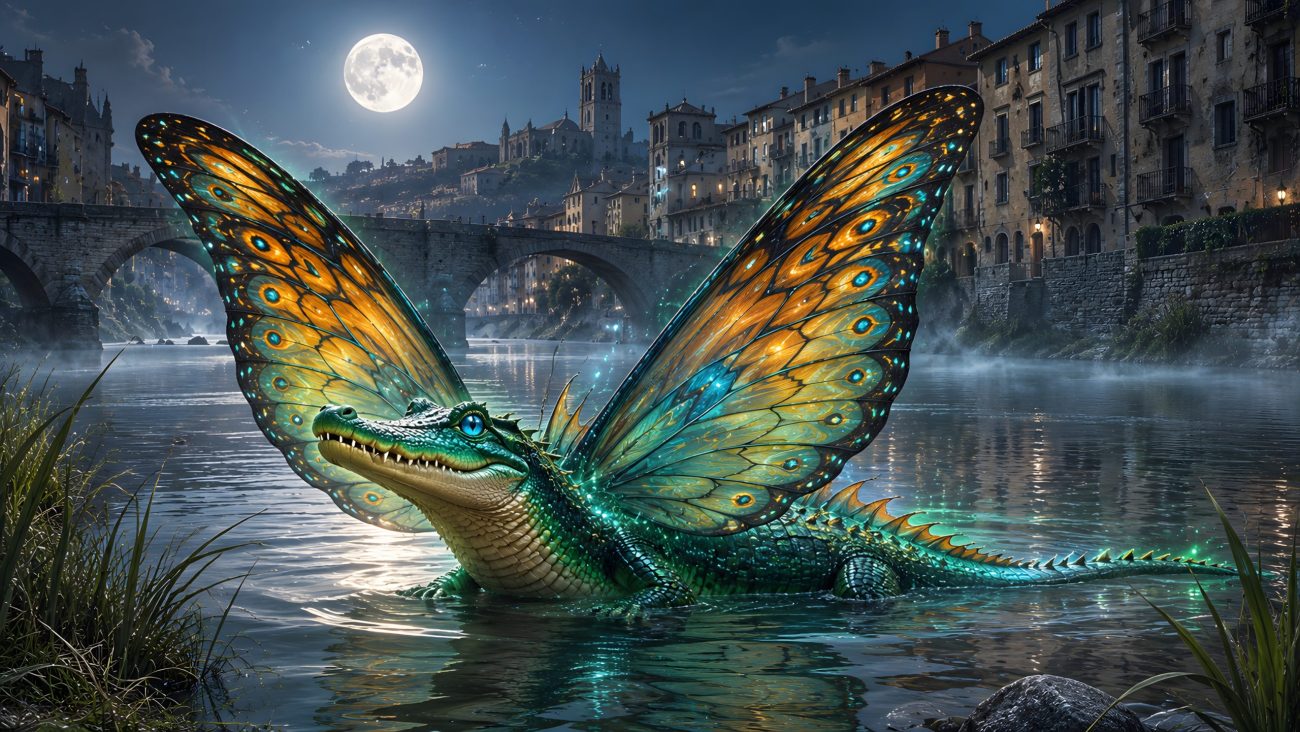
The Cocollona is a legendary creature from the city of Girona. According to tradition, it was once a novice nun who sincerely embraced the religious life while the other nuns in her convent neglected their vows and lived carelessly.

The novice repeatedly reproached the other nuns for their behavior. In response, they imprisoned her in a dark, damp cell beneath the convent, where she remained for many years. The constant darkness and humidity gradually transformed her body, causing scales to grow until she became like a crocodile.

Because of her purity and holiness, however, she also developed beautiful butterfly wings upon her back. In this way, she became the Cocollona, a creature that was half crocodile and half butterfly.

After her death, the Cocollona returned as a ghost. It is said to swim through the waters of the Onyar River near the place where she had been imprisoned. According to the legend, only on nights of the full moon, just before dawn, can those with sensitive souls glimpse the ghostly Cocollona gliding silently along the river before disappearing with the first light of day.


Sources

Wikipedia contributors. (n.d.). Cocollona. In Wikipedia. Retrieved June 29, 2026, from https://en.wikipedia.org/wiki/Cocollona