Ji-ji-bon-da

Tradition: Abenaki Mythology, Russian Mythology
Alternative Names: Dzi-dzi-bon-da, Dzee-dzee-bon-da
Category: Forest dweller


The Myth

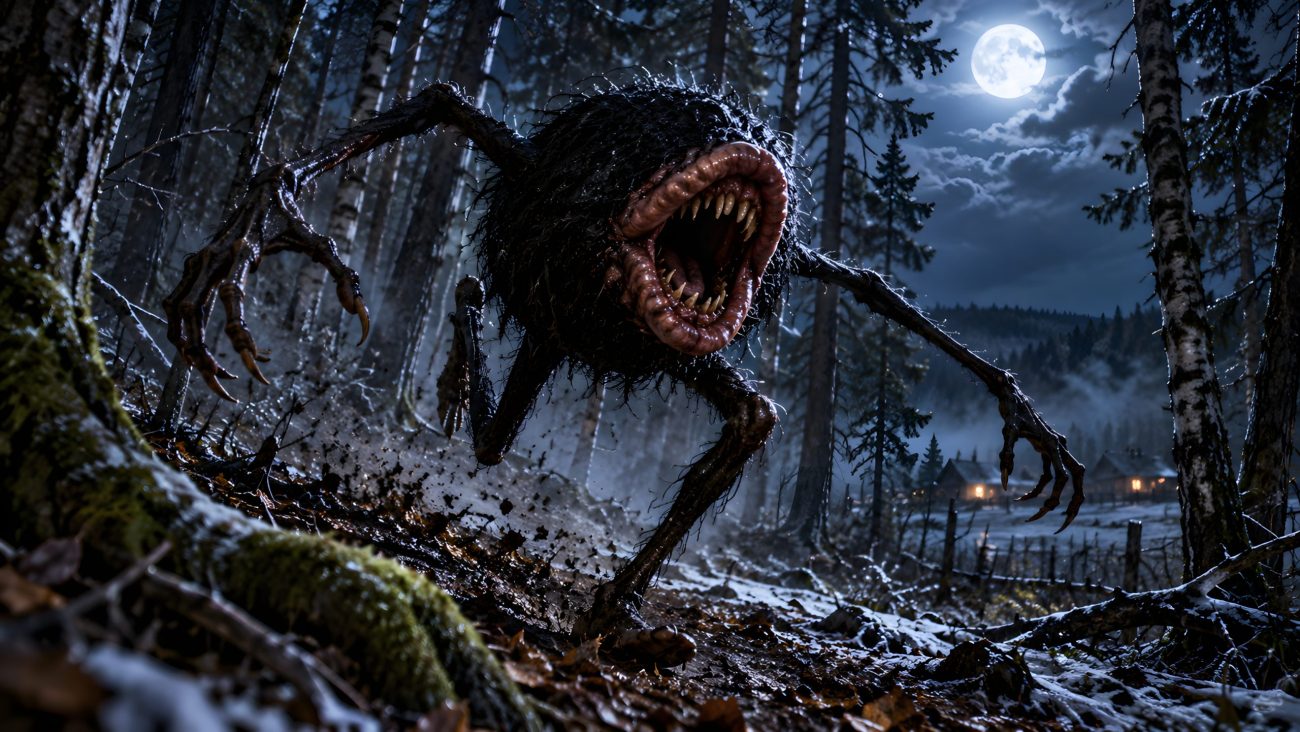
Ji-ji-bon-da is a grotesque monster from Abenaki mythology, so hideous in appearance that it is afraid of its own reflection. Its body is a nightmarish mass of twisted limbs, shaggy fur, and contorted flesh. It has a monstrous face with bulging eyes, a gaping mouth, and numerous long, crooked horns that curve outward from its head and body. Wild tufts of dark hair and fur surround its misshapen form, while its long, clawed limbs give it a hunched and unsettling appearance. Every part of the creature seems unnaturally distorted, making it a frightening sight even to supernatural beings.

Despite its monstrous appearance, Ji-ji-bon-da is distinguished by its fear of its own ugliness. Its twisted body and hideous features are so horrifying that it cannot bear to look at itself. The creature embodies grotesque deformity and self-directed terror, a monster whose own appearance becomes the source of its fear.


Sources

“Дзи-дзи-бон-да (Dzi-Dzi-Bon-Da).” New Bestiary (Bestiary.us). Accessed October 12, 2026. https://www.bestiary.us/dzi-dzi-bon-da/ru


Abasy

Tradition: Yakut Mythology, Russian Mythology
Alternative Names: Abaasy, Abaahsy, Abaasylar (plural)
Category: Forest dweller


The Myth

The Abasy are evil spirits from Yakut mythology that inhabit the upper, middle, and lower worlds. They are described in various forms, sometimes appearing as monstrous beings resembling a man the size of a larch tree, a one-eyed or one-legged giant, or a huge stone-like monster. Some Abasy are born from black stones that initially resemble children. As they grow older, their bodies increasingly resemble stone, and they begin consuming everything around them, including people.

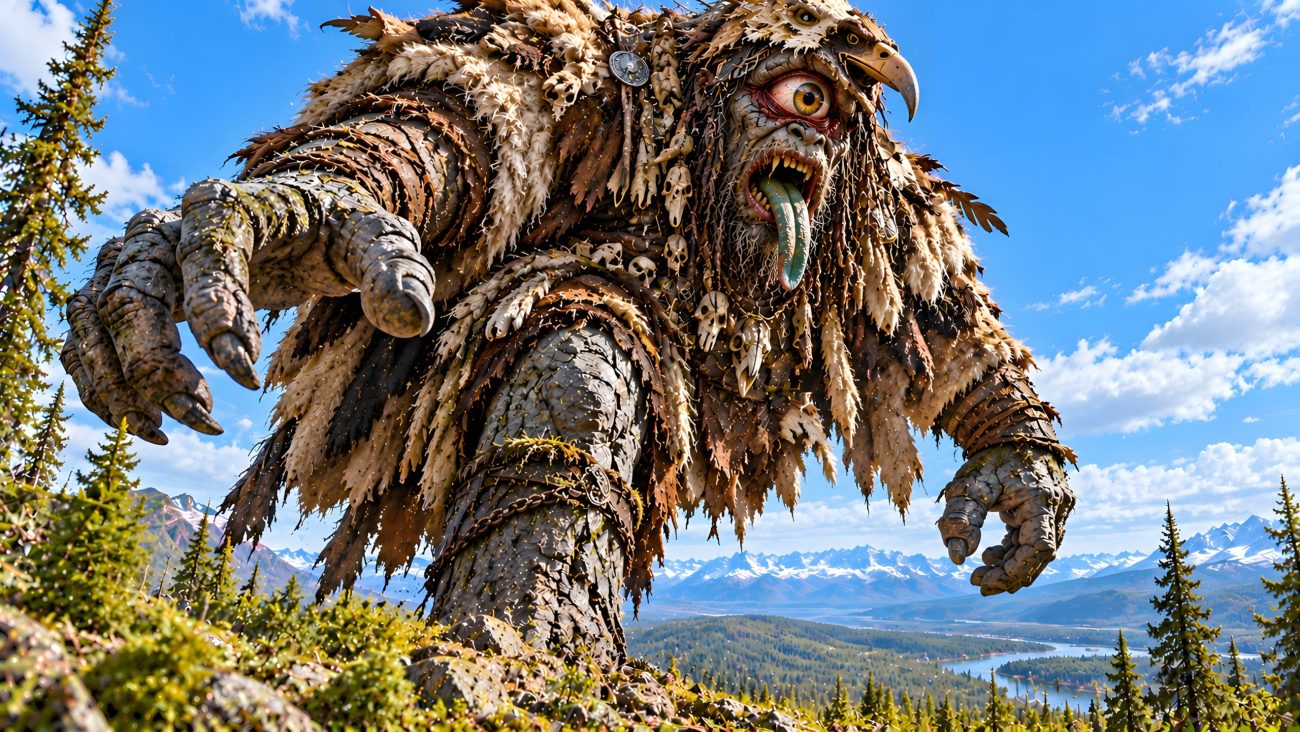
One description of an Abasy depicts a terrifying giant wearing eight garments of mail and a solid iron suit. His long fur coat is made from the hides of twenty oxen, while his clothing is adorned with the skins of dead calves. He wears a cap made from the skin of a dead eagle and has an enormous head, a crooked nose, and a huge mouth filled with a long, green-blue tongue. One eye sits within a deep, mountain-like hollow surrounded by red eyelids. His neck resembles a massive tree trunk, and his head hangs forward like that of a hunchbacked old man. The giant constantly chatters and grumbles, laughing and mumbling as the earth trembles beneath him. His voice echoes through the forests and mountains, and when he finally speaks clearly, his words reveal his immense and frightening nature.

The Abasy are dangerous beings that bring harm, disease, and misfortune to humanity. They may tempt people into committing crimes, send illnesses among communities, and destroy crops and animals. Their influence can extend to entire families and settlements, bringing suffering to those who encounter them. In some traditions, people offer the soul of a sick or deceased person to an Abasy in exchange for the threatened person’s soul. These demons are feared as powerful enemies of humankind, capable of consuming people and spreading destruction throughout the worlds they inhabit.


Sources

“Абасы (Abasy).” New Bestiary (Bestiary.us). Accessed October 12, 2026. https://www.bestiary.us/abasy


Mazyl

Tradition: Adyghe Mythology, Russian Mythology,
Alternative Names: Mezil, Meylaj
Category: Forest dweller


The Myth

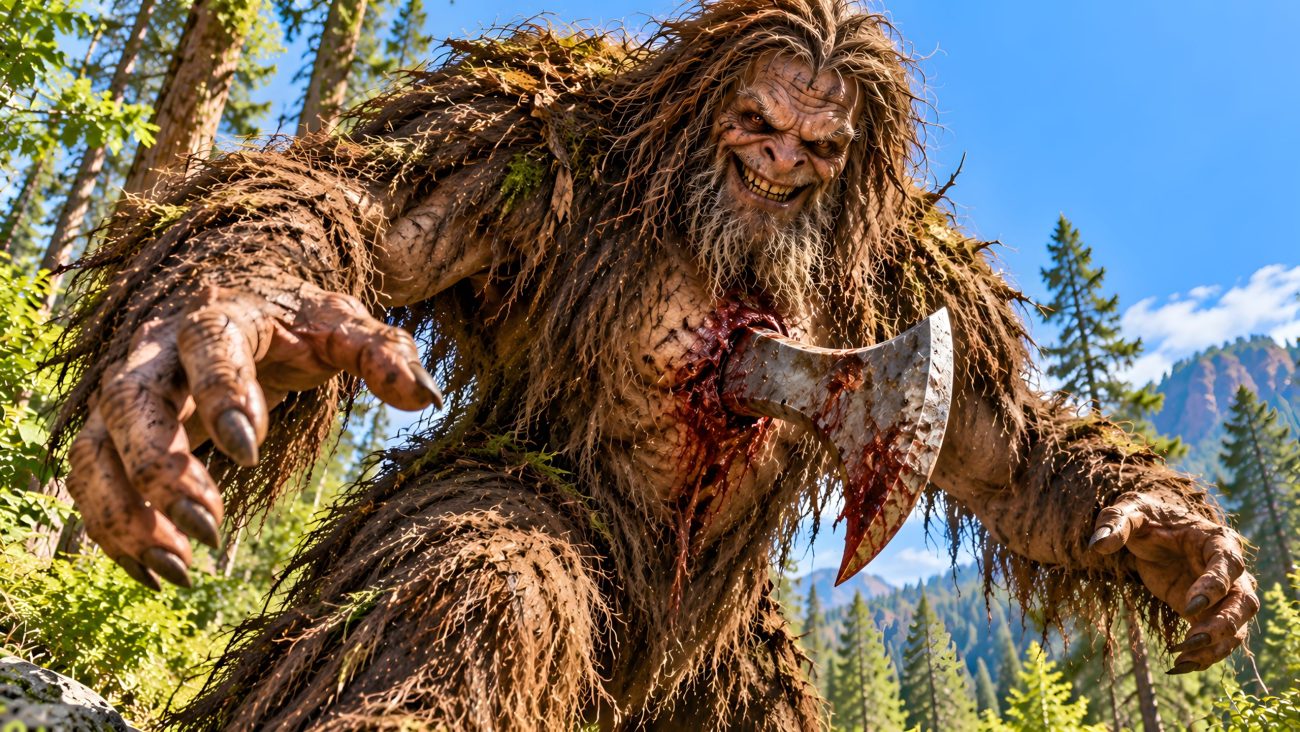
Mazyl is a fearsome humanoid forest creature from Adyghe mythology, with a body covered in thick fur and an axe-shaped protrusion extending from his chest. He dresses in animal skins and dwells in the forests, where his strange appearance and frightening presence make him a dangerous being to encounter. The axe-like growth on his chest is his most distinctive feature and serves as a weapon against those who cross his path.

In one tale, a hunter meets Mazyl after sharing a meal with the forest creature. The hunter, having eaten alongside Mazyl, cleverly overcomes him by placing a log on his bed and covering it with birch bark to make it resemble a sleeping person. Mazyl mistakes the log for the hunter and leaps at it, attempting to strike it with the axe-shaped growth on his chest. The hunter then takes advantage of the creature’s mistake and defeats him.

Mazyl belongs to a wider group of Caucasian forest beings known for their hairy bodies, unusual weapons, and dangerous encounters with hunters. Like these related creatures, he represents the frightening and unpredictable nature of the wilderness, where a traveller may encounter a powerful supernatural being whose strength must be overcome through cleverness rather than brute force.


Sources

“Mezyl.” New Bestiary (Bestiary.us). Accessed October 12, 2026. https://www.bestiary.us/mezyl


Chagrin

Tradition: Romani Mythology, Russian Mythology
Alternative Names: Hāgrin, Chagrin Hedgehog
Category: Forest Dweller


The Myth

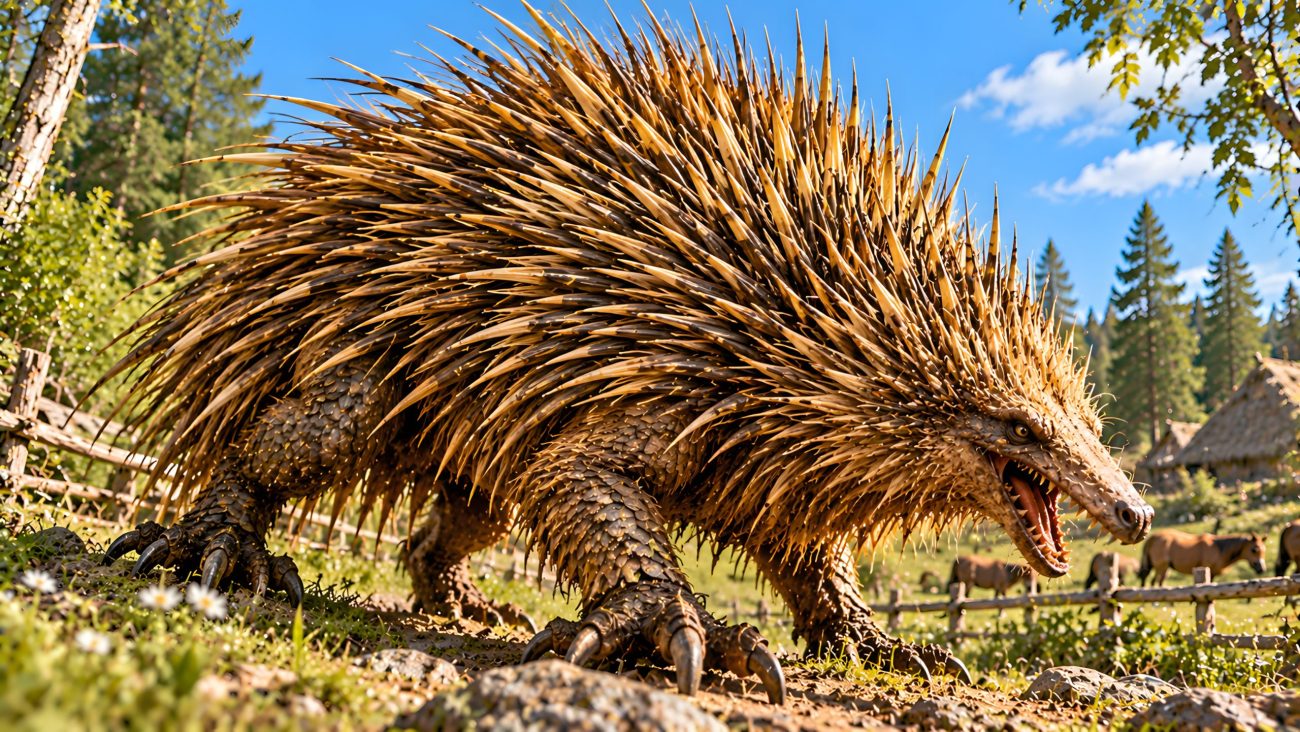
The Chagrin is a monstrous hedgehog or porcupine from Romani mythology, renowned for its extraordinary size, magical powers, and association with livestock diseases. It can grow to an enormous length, with a body covered in thick, sharp spines that shimmer like gold. Its long, pointed quills are said to resemble the thorns of a dragon, while its paws look like those of a dragon and are covered with scales. Some accounts describe the Chagrin as having a long, narrow snout and a fearsome appearance that makes it unlike any ordinary hedgehog.

The Chagrin is considered dangerous to livestock, particularly cattle and horses. It urinates on animals and the ground, causing red abscesses and painful ulcers to appear on the hides of affected animals. Its urine is believed to make horses lose their strength and develop sores. To protect their animals, Romani people use magical rituals and protective charms. They may collect the Chagrin’s burnt feathers or quills and scatter the ashes around livestock, believing this will repel the creature and prevent disease. Iron objects, such as nails or knives, may also be placed among the ashes to strengthen the protection.

The Chagrin can be driven away through spoken spells and ritual actions. One method involves burning its feathers and scattering the ashes over the ground, while another uses a rope smeared with garlic juice to create a protective circle. The rope is accompanied by a spell commanding the Chagrin to jump into a stream and drown. These rituals reflect the creature’s supernatural nature and the fear it inspires among those who depend on livestock for their livelihood. Its claws are also believed to possess magical properties, and rubbing the ashes of its middle claw onto a dead person’s body is said to increase sexual potency.


Sources

“Chagrin.” New Bestiary (Bestiary.us). Accessed October 12, 2026. https://www.bestiary.us/chagrin


Lagsird

Tradition: Ossetian Mythology, Russian Mythology
Alternative Names: Gadadlag, Baedagdar, Cindlag, Cindlagar
Category: Forest Dweller


The Myth

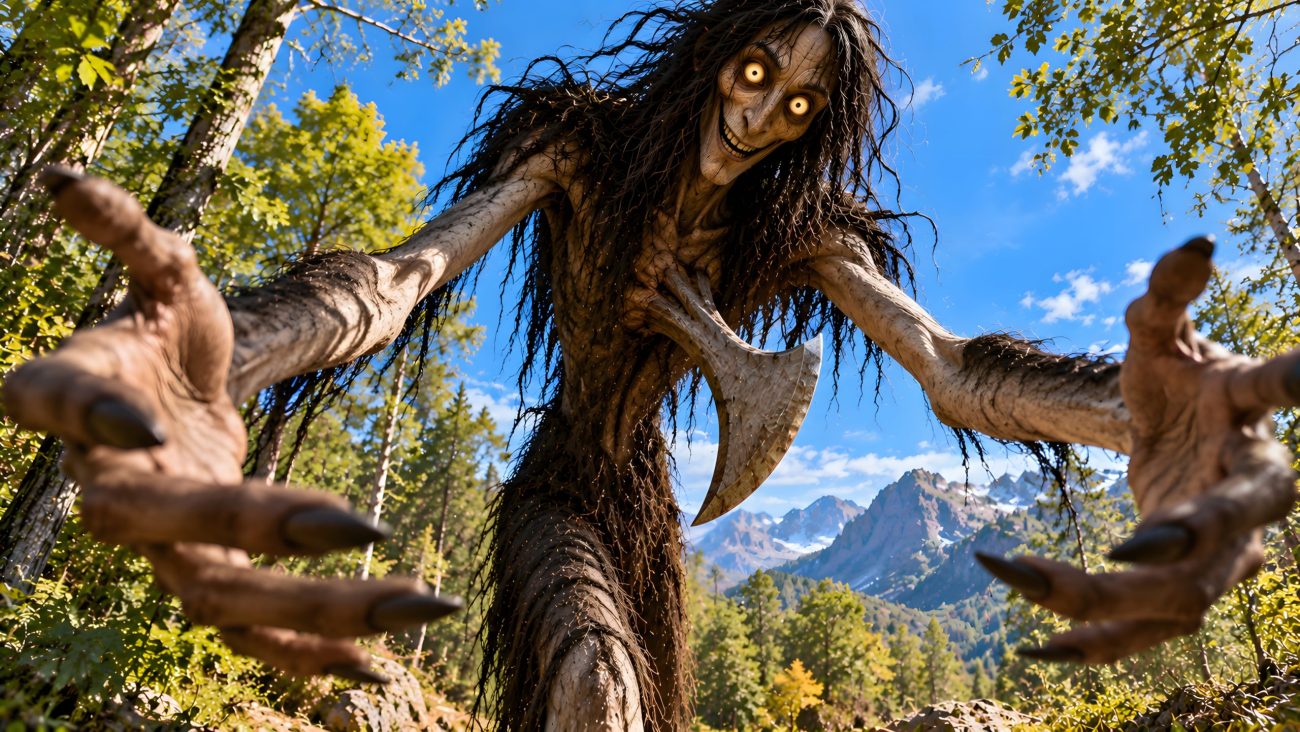
Lagsird is a fearsome forest spirit from Ossetian mythology, appearing as a hairy, anthropomorphic creature with long arms, large teeth, and a sharp, axe-shaped growth protruding from its chest. Although it resembles a beast, it is described as something more human-like than an ordinary animal. It lives in dense forests and preys on people, attacking travellers and feeding on human flesh.

One day, a hunter named Khabitz was returning through the forest when he encountered Lagsird. The creature approached him and asked for food. Khabitz offered it a piece of roasted boar, but Lagsird refused and demanded that he hand over the entire animal. When the hunter refused, the spirit extended its long arms towards him. Khabitz raised his axe and struck the creature, cutting off its large teeth before it disappeared into the forest. Knowing the monster’s habits, Khabitz suspected it would return to take revenge. He built a fire, covered himself with his fur cloak, and hid behind a nearby tree with his weapon ready.

Lagsird returned carrying an axe and approached the place where Khabitz lay beneath his cloak. Believing the hunter was asleep, it struck him in the chest. Khabitz sprang up and wounded the creature with his axe, forcing it to flee. He pursued Lagsird through the forest until the trail led him to a cave, where he discovered a beautiful young woman. She explained that she was the daughter of a prince and had been abducted by the monster, which had also stolen her infant son. The child had been raised by Lagsird and resembled the creature, but he was now seriously wounded. Khabitz killed Lagsird, then listened to the woman’s story and took her and the child to safety. The woman was reunited with her father, and Khabitz received rich gifts for rescuing them.


Sources

“Lagsird.” New Bestiary (Bestiary.us). Accessed October 12, 2026. https://www.bestiary.us/lagsird


Leshy

Tradition: Russian Mythology, Polish Mythology, Ukranian Mythology, Croatian Mythology, Belarusian Mythology, Serbian Mythology
Alternative Names: Lesovik, Lesovoy, Lesnik, Leshak, Lesun, Borovoy, Gayevoy
Category: Forest Dweller


The Myth

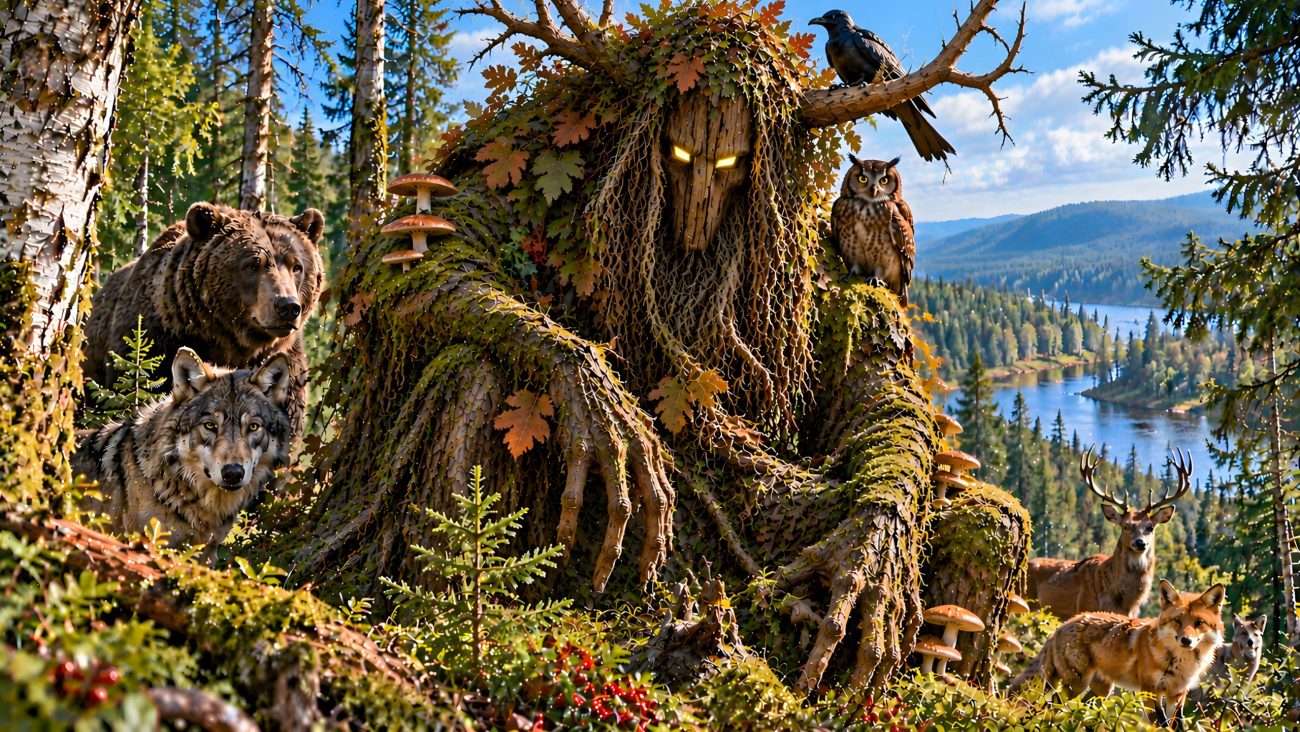
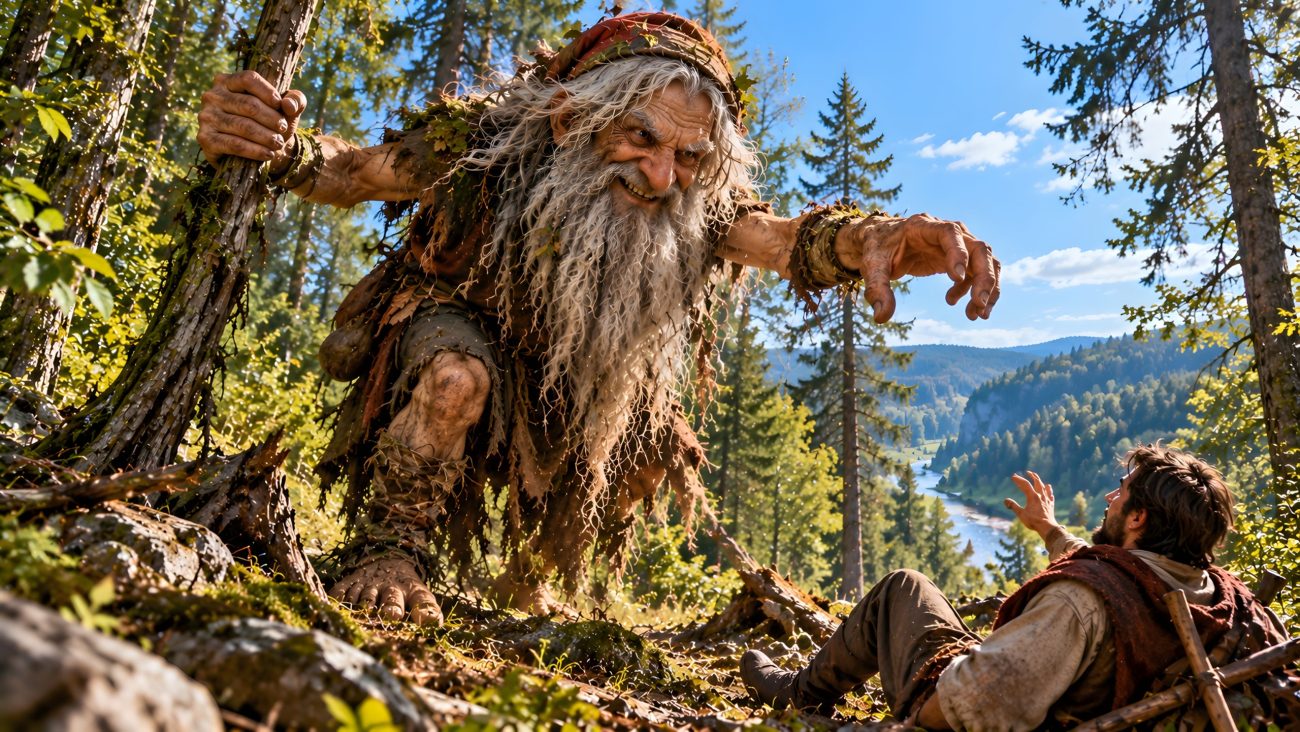
Leshy is a powerful guardian of the forest and hunting, a supernatural being whose appearance reflects the wild woodland he rules. He often takes the form of a man with long, tangled hair in shades of grey, green, or red, a thick beard, and skin resembling tree bark. His hair may look like branches, while his beard may be covered in lichen. He can also appear as a towering giant, a tiny figure no larger than a blade of grass, or an ordinary man. Some tales describe him with green eyes, blue skin, one eye, a long face, or a leg turned backwards. He may wear a wide-brimmed hat, a fur coat, a rough caftan, or enormous bast shoes, although he sometimes appears naked or takes the shape of a tree, stump, bush, mushroom, or other part of the forest.

Leshy can change his size and disguise himself as almost anyone, including a traveller’s friend, a family member, or even someone who has died. He can also transform into animals such as bears, wolves, owls, crows, horses, black cats, and goats. Sometimes he appears as a horned, goat-legged creature covered in black fur. He may travel as a whirlwind or manifest through storms, rain, fog, and powerful winds. His presence is often announced by strange sounds echoing through the trees: whistling, laughter, clapping, bellowing, singing, or the cries of animals. He can imitate familiar voices and create false sounds to confuse those who enter his domain.

Leshy delights in misleading travellers, making them lose their way in forests they know well. He may lead people in circles, conceal paths, or disguise himself as someone they trust. He can also frighten those who disturb the woodland, striking people with twigs, causing trees to split, and unleashing powerful winds. His attitude towards humans depends on how they behave towards the forest and its creatures. Although he can be dangerous and temperamental, he also protects the woodland and its animals. In some tales, he carries away children who have been mistreated by their families, taking them to the mysterious realm of forest-dwelling beings. Leshy is sometimes said to have a wife and children of his own, living hidden among the trees. He embodies the forest’s untamed power, capable of protecting its inhabitants, punishing intruders, and making anyone who enters his domain feel lost in a world beyond human control.


Sources

“Leshy.” Wikipedia: The Free Encyclopedia. Wikimedia Foundation. Accessed October 12, 2026. https://en.wikipedia.org/wiki/Leshy
Abnaauyu

Tradition: Abkhazian Mythology, Russian Mythology
Alternative Names: Abnaauyu, Forest Man
Category: Forest dweller


The Myth

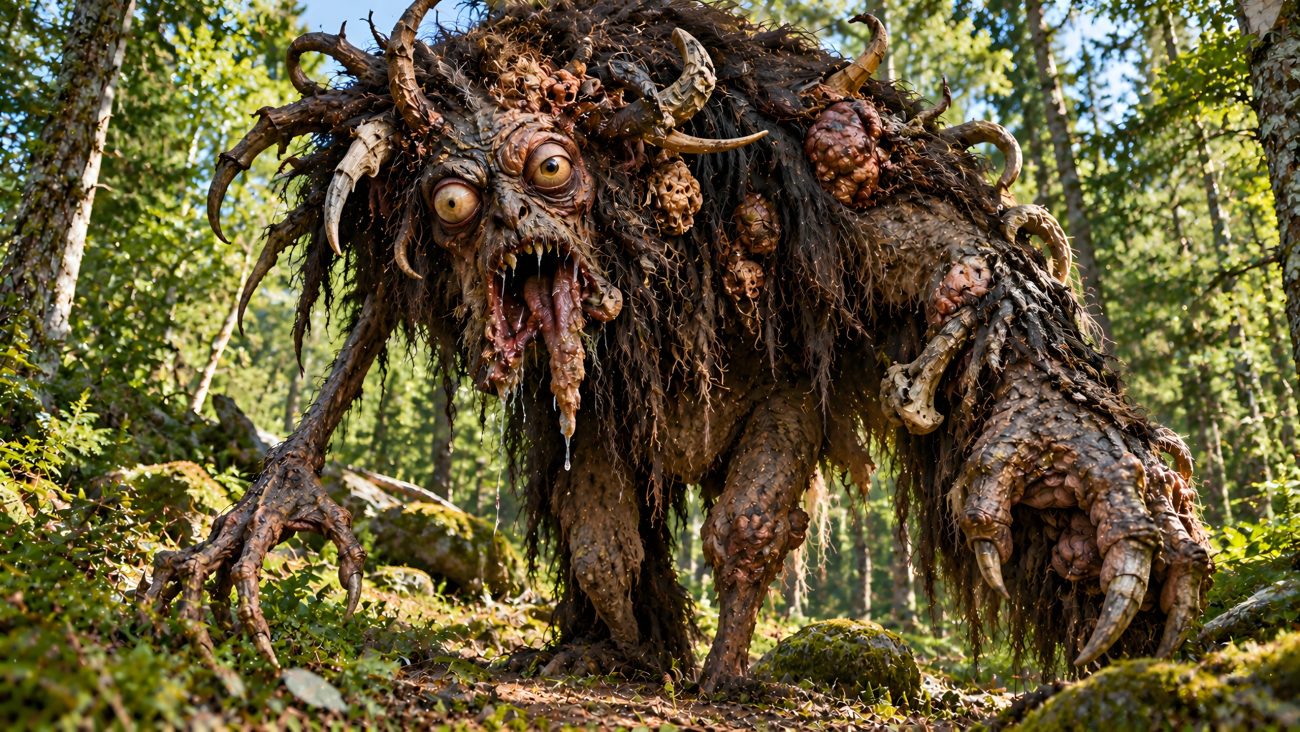
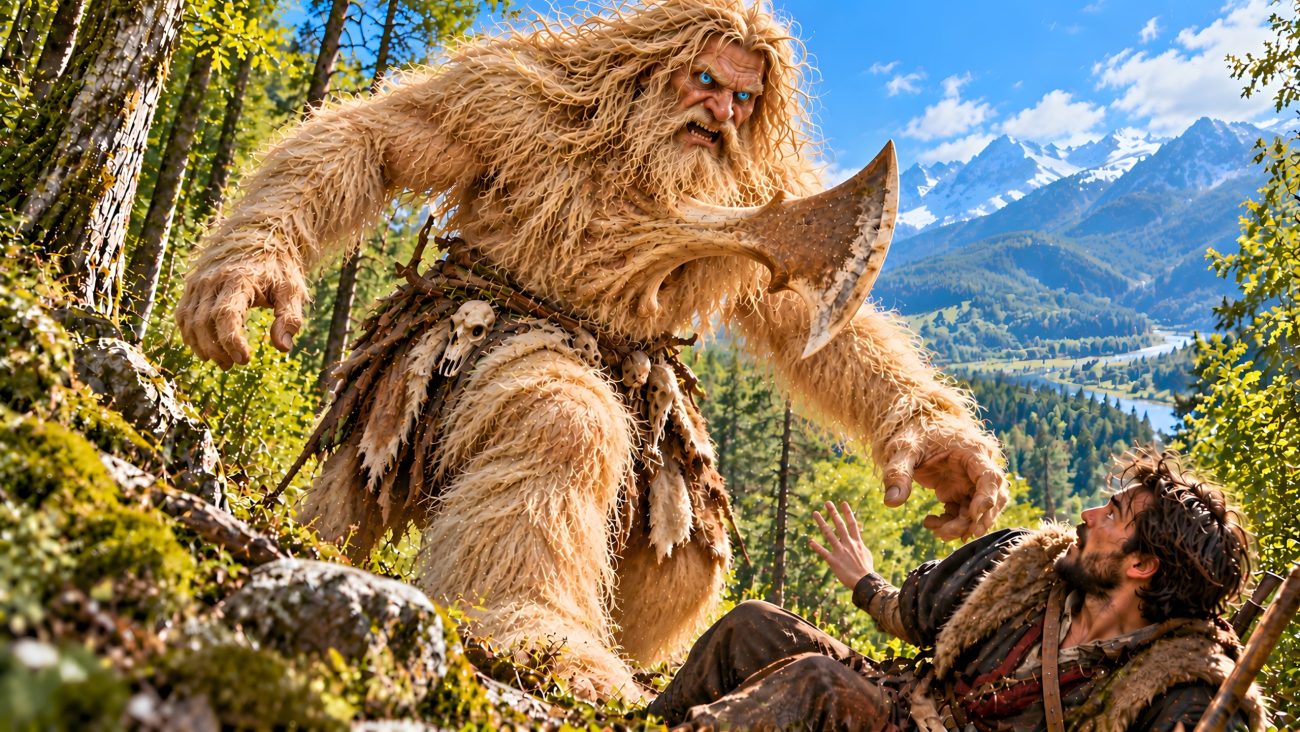
Abnaauyu is a huge, hairy monster from Abkhazian mythology, distinguished by its extraordinary physical strength and fierce nature. Its enormous body is covered in long, bristle-like hair, while its large nostrils, jaws, and nose give it a terrifying appearance. An axe-shaped steel protrusion extends from its chest, making the creature even more dangerous. Abnaauyu inhabits dense forests, where it roams among the trees and attacks those who cross its path.

The monster is known for its tremendous strength and cruelty. When it encounters a human, it may seize its victim and use its immense power to overpower them. Its steel chest protrusion is a deadly weapon, allowing it to inflict terrible wounds on anyone who comes too close. Even experienced hunters and shepherds must be wary of this fearsome creature when travelling through its woodland domain.

In one tale, Abnaauyu encounters a shepherd who is tending his sheep. The monster approaches and sees the shepherd asleep beside a hut, with his dog nearby. Believing the man to be helpless, Abnaauyu lunges at him, but the shepherd awakens and manages to wound the beast mortally. Before dying, Abnaauyu loses all its possessions to the shepherd, who takes them and marries the monster’s beautiful wife.


Sources

“Pfifar.” SAGEN.at – Traditionelle Sagen aus Österreich (Vorarlberg, Dornbirn). Reproduced by SAGEN.at. https://www.sagen.at/texte/sagen/oesterreich/vorarlberg/dornbirn/pfifar.htm


Veshitko

Tradition: Romani Mythology, Russian Mythology
Alternative Names: Vošako manuš, Vošesko manuš, Vošetko, Vošetko
Category: Forest dweller


The Myth

Veshitko is a forest spirit who appears as a short, grey-haired old man with a long beard and extraordinary strength. He wears simple clothing and has a playful, mischievous nature. Despite his small stature, he can grow until he towers above the tallest trees. He is closely associated with the forest, where he wanders among the trees and encounters travellers, woodcutters, and people who enter his domain.

The Veshitko is known for his fondness for teasing people, provoking arguments, and challenging others to tests of strength. He may appear beside a road or in the woods, growing taller and taller until his head rises above the treetops. He enjoys frightening those who mock him or attempt to challenge his power. Although he can be playful, his strength makes him dangerous, and those who disrespect him may find themselves helpless before him.

The forest spirit can also interfere with travellers by leading them into thickets, where he may torment or even kill them. Among the Romani, stories of Veshitko serve as warnings about the dangers of the forest and the consequences of treating its inhabitants with contempt. He is also known as the wood goblin, and some traditions associate him with horse thieves, Gypsy women, and the fate of travellers who disappear in the woods. In other tales, he is a protector of the forest, punishing those who steal horses or mistreat its inhabitants.


Sources

“Pfifar.” SAGEN.at – Traditionelle Sagen aus Österreich (Vorarlberg, Dornbirn). Reproduced by SAGEN.at. https://www.sagen.at/texte/sagen/oesterreich/vorarlberg/dornbirn/pfifar.htm


Bomka

Tradition: Russian Mythology
Alternative Names: Bomb, Bogeyman
Category: Forest Dweller


The Myth

Bomka is a frightening figure from Slavic folklore used by adults to scare naughty children into behaving. Its appearance is unknown, and no definite description of its body or features survives. This uncertainty makes Bombka an ominous presence, feared not for any particular shape but for the threat associated with its name.

Parents warn misbehaving children that Bombka will come to get them, sometimes threatening to put them into a sack or eat them. In one traditional warning, children are told that if they do not behave, Bombka will come and devour them. The creature serves as a bogeyman lurking in the imagination, embodying the frightening consequences adults threaten when children refuse to listen.


Sources

“Bomka.” New Bestiary (Bestiary.us). Accessed October 11, 2026. https://www.bestiary.us/bomka


Bobo

Tradition: Mordvin Mythology, Russian Mythology
Alternative Names: None known
Category: Forest Dweller


The Myth

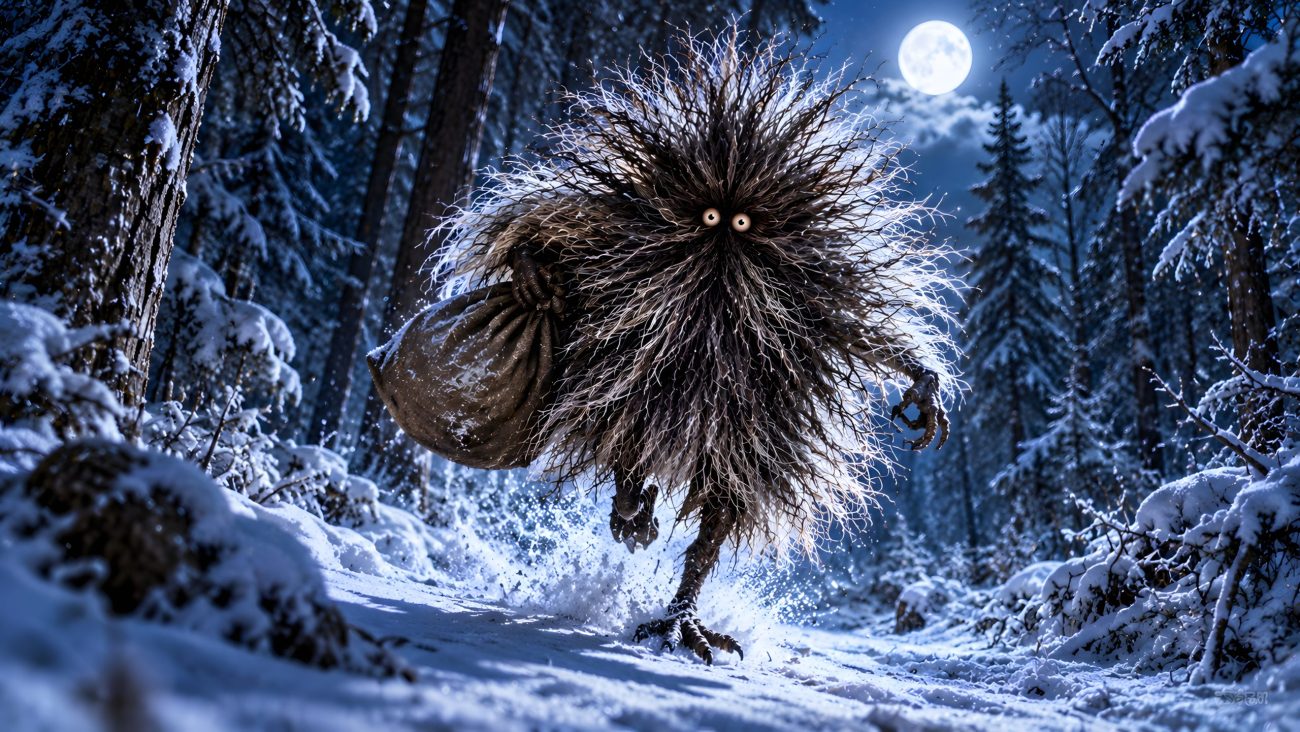
Bobo is a short, furry creature from Mordvin folklore, covered in thick black fur and carrying a large sack. It has a bird-like leg and a long, bushy tail, and its strange appearance makes it a frightening figure for mischievous children. Bobo lives in vegetable gardens or in the forest, hiding until evening before emerging to frighten children who refuse to behave.

When children are naughty or misbehave, their mothers or grandmothers warn them that Bobo is coming from the forest. The creature is said to put those who are not ready for bed into its sack and carry them away. Although children imagine Bobo as a terrifying monster, it is not especially dangerous in reality. It mainly serves as a frightening figure used by adults to encourage children to behave and go to sleep.

Bobo emerges late in the evening and peers into the windows of houses, searching for mischievous children. It makes noises by banging its furry paws and muttering, “Bo-bo-bo!” However, it only scares children who are still awake and refuses to stay when everyone has settled down and gone to sleep. Once the house becomes quiet, Bobo chooses the warmest place to sleep itself, curling up comfortably like a furry creature seeking shelter.


Sources

sagen.at contributors. (n.d.). Das Bichelgretchen an der Syr. In sagen.at, from https://www.sagen.at/texte/sagen/luxemburg/Bichelgretchen.html