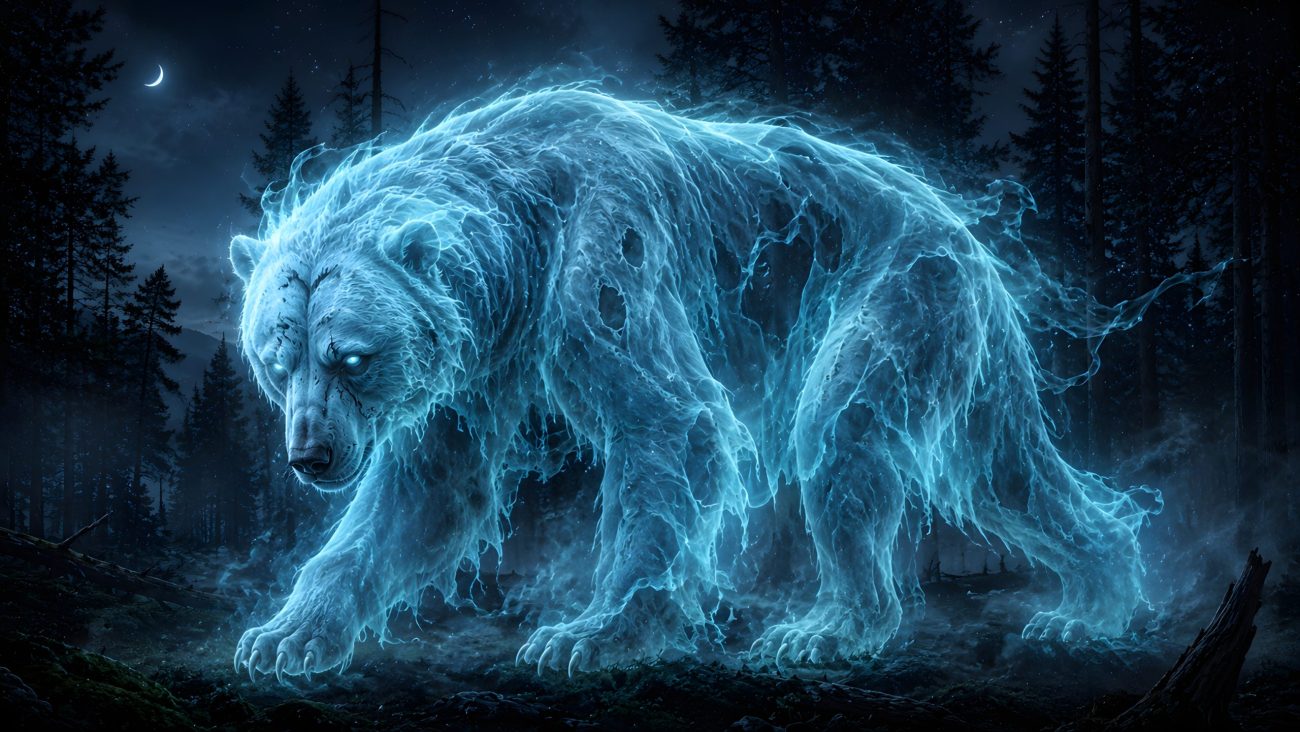
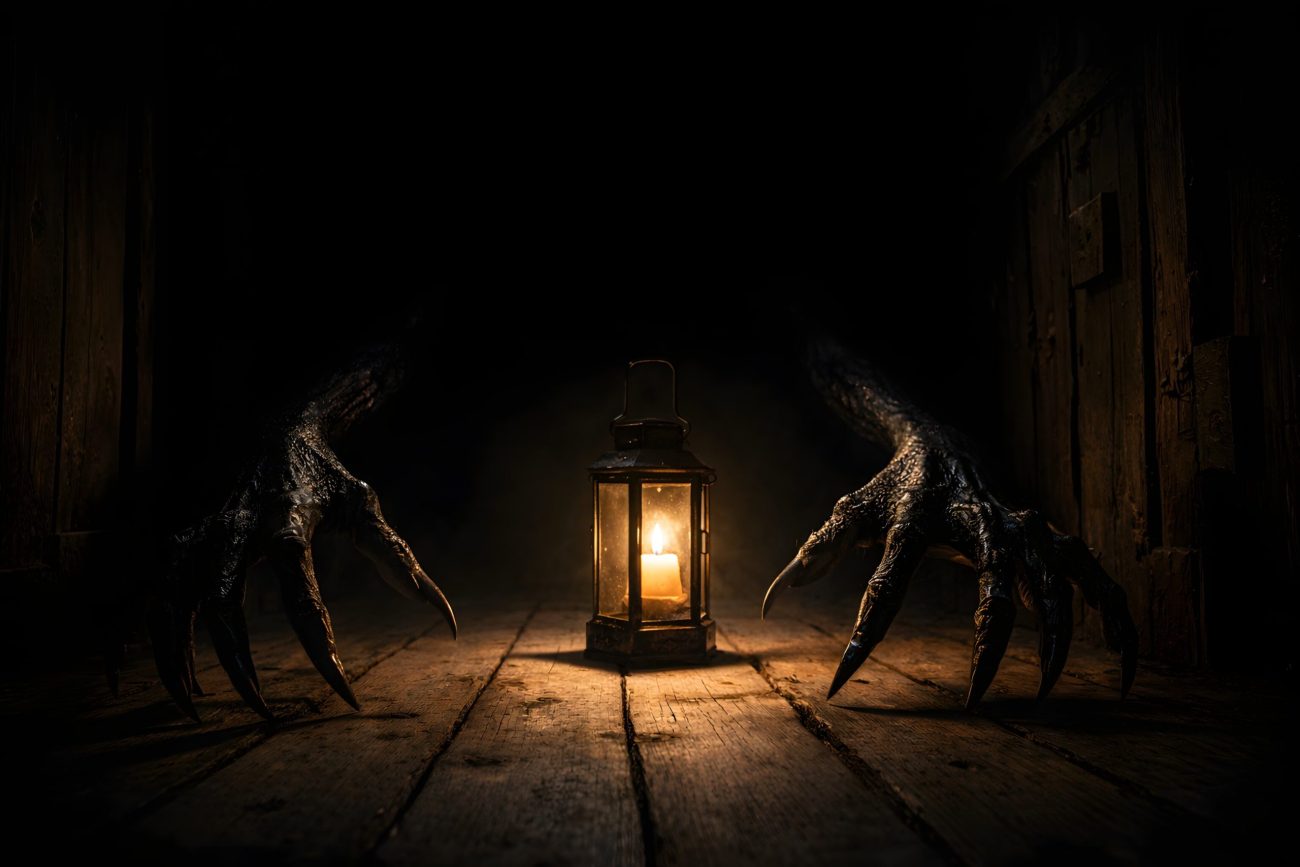
Yalpus-Oika, meaning “Old Man of the Sacred Town,” is a guardian spirit and the mythical ancestor of the Por phratry in Mansi mythology. His cult was centered for centuries at the village of Vezhakary on the Ob River, although images of the spirit were also venerated in other Mansi settlements along the Northern Sosva River.
Yalpus-Oika was believed to take the form of a bear. Because the bear was regarded as sacred among the Mansi, its true name was considered taboo. Instead, respectful titles such as “Old Man with Claws,” “Old Man Living in the Forest,” and “Old Man of the Earthen House” were used when referring to either the animal or the guardian spirit.
According to traditional stories, Yalpus-Oika is the son of Kaltas-Ekwa and the brother of Mir-Susne-Hum. Other versions of the tradition instead describe Kaltas-Ekwa as his sister, particularly where she was worshipped as a local guardian spirit.
Yalpus-Oika was revered as a benevolent protector who watched over the health and well-being of his people. Many illnesses were believed to occur when a person’s shadow-soul left the body. In these cases, a shaman would call upon Yalpus-Oika to help recover the wandering soul and restore the person’s health.
Sources
Wikipedia contributors. (n.d.). Yalpus-Oyka. In Wikipedia. Retrieved June 29, 2026, from https://en.wikipedia.org/wiki/Yalpus-Oyka
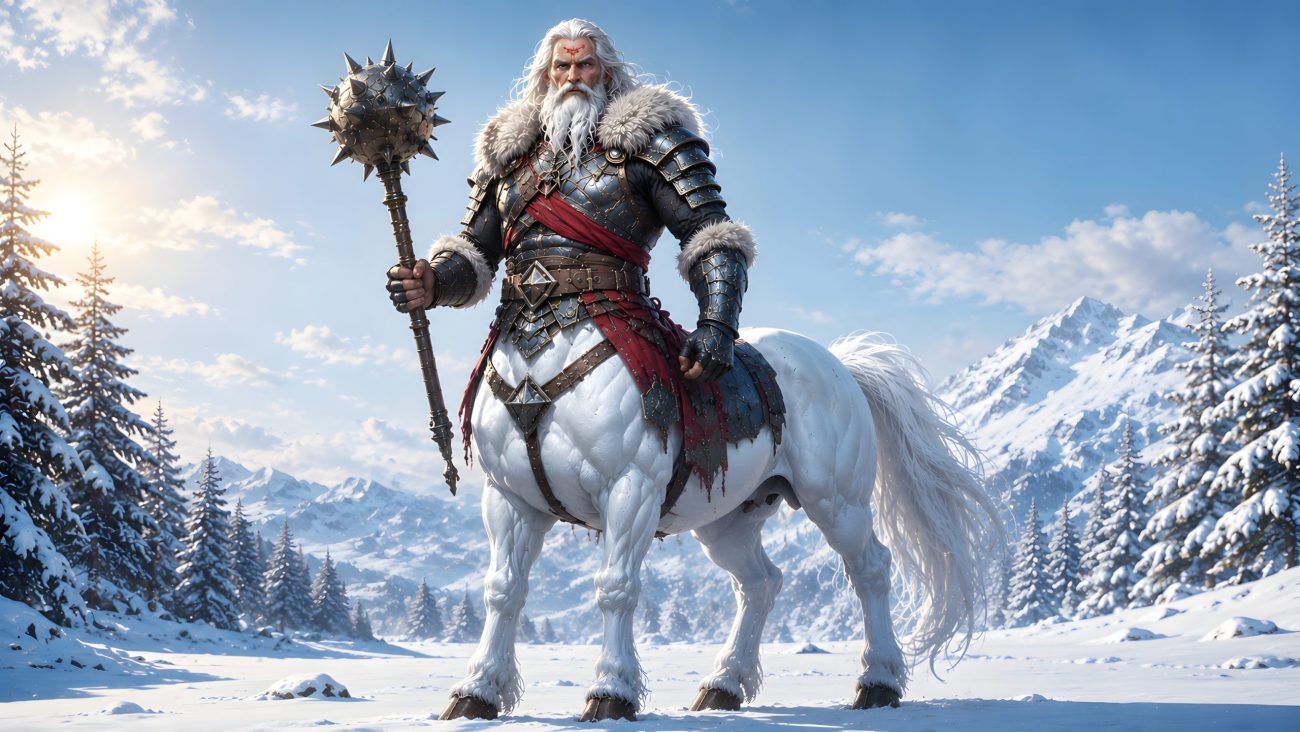
Polkan is a legendary creature from Russian folktales with the upper body of a man and the lower body of a horse. In some versions of the legend, he instead possesses the body of a dog. He is renowned for his immense strength and extraordinary speed.
Polkan first appears as the enemy of the hero Bova Korolevich. After battling the prince, however, he becomes Bova’s loyal companion and faithful ally, fighting alongside him in later adventures.
His story ends tragically when he sacrifices himself to protect Bova’s wife and children. During this defense, Polkan is killed while battling lions.
The Russian Polkan ultimately derives from the Italian character Pulicane, a half-dog creature from Andrea da Barberino’s I Reali di Francia. Through Slavic prose adaptations of the poem, Pulicane gradually transformed into the half-horse hero of Russian folklore. Folk tradition later reinterpreted his name as polukon, meaning “half-horse.”
Sources
Wikipedia contributors. (n.d.). Polkan. In Wikipedia. Retrieved June 29, 2026, from https://en.wikipedia.org/wiki/Polkan
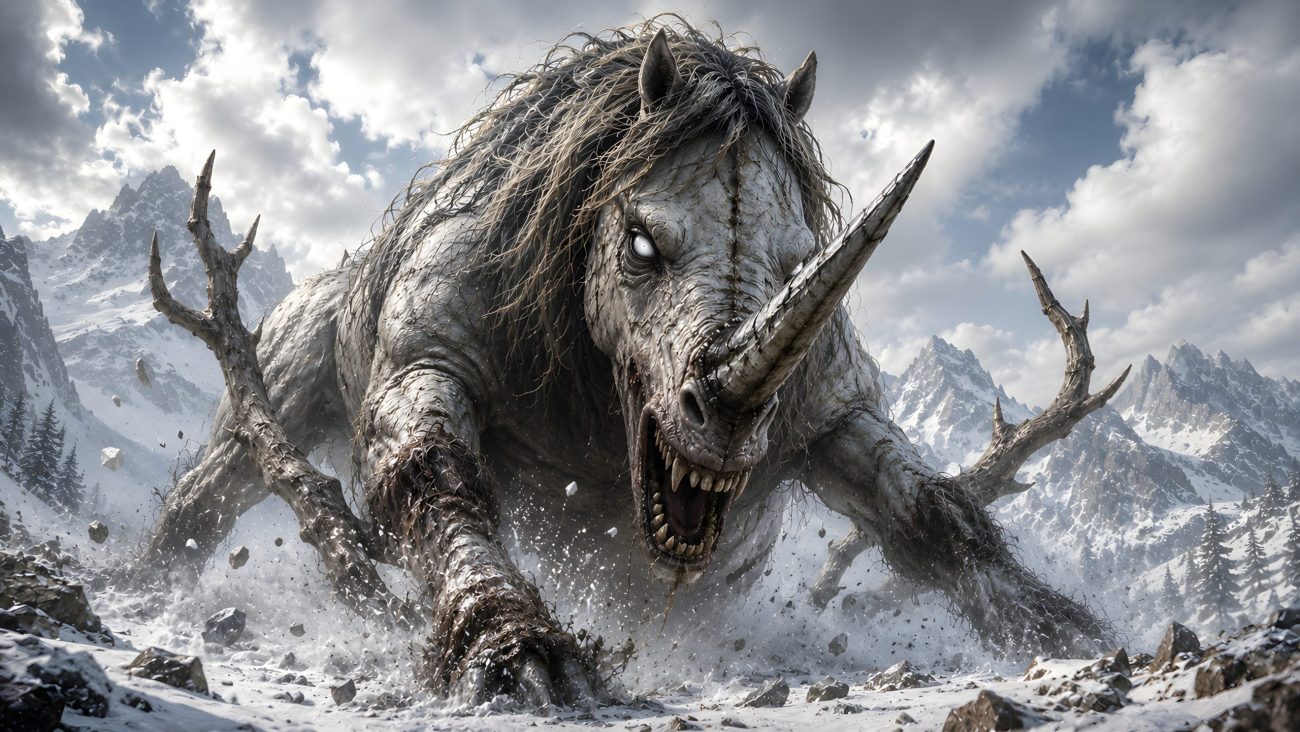
The Indrik, or Indrik-Beast, is a fabulous creature in Russian folklore and the Dove Book. It is regarded as the king of all animals and dwells upon the Holy Mountain, a sacred place where no other creature may set foot.
Whenever the Indrik moves, the earth itself trembles beneath its immense power.
The beast is described as having the gigantic body of a bull, the legs of a deer, the head of a horse, and a single enormous horn growing from its snout, giving it an appearance resembling both a unicorn and a rhinoceros.
Sources
Wikipedia contributors. (n.d.). Indrik. In Wikipedia. Retrieved June 29, 2026, from https://en.wikipedia.org/wiki/Indrik
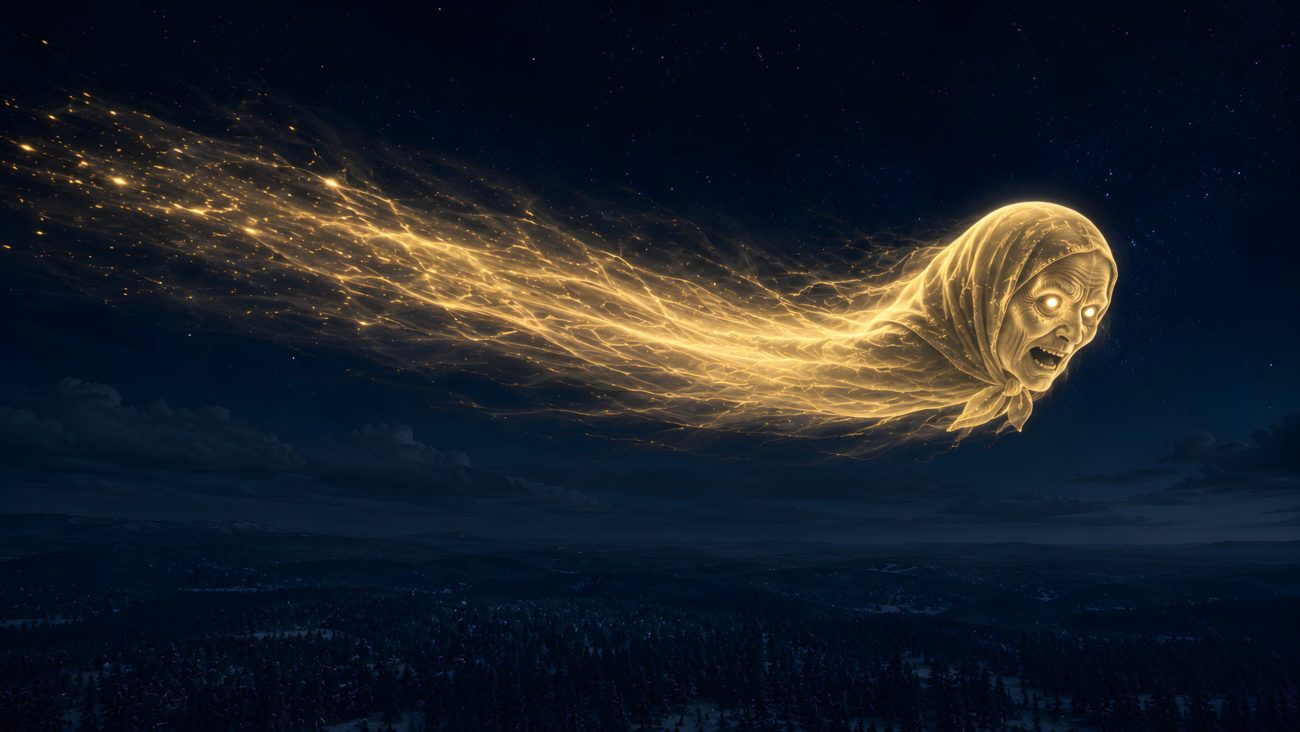
The Maniac is a ghostly being of Russian folklore associated with evil spirits and uncanny apparitions. It is an elusive creature with no fixed form, appearing as a phantom, vision, or wandering spectre.
In northern Russia, northeastern regions, and Siberia, the Maniac often takes the shape of a frail old woman. Such apparitions were especially known by the name Manya, and people regarded them as ghosts rather than living beings.
In central and southwestern Russia, however, the Maniac was believed to appear in a different form. It manifested as a fiery spirit resembling a falling star streaking across the night sky. These celestial apparitions were considered sinister omens.
According to popular belief, anyone who witnessed such a falling star invited misfortune upon themselves. The sight foretold inevitable death, either for the observer or for a member of their family. Because of this, experienced people avoided looking at shooting stars and regarded those who casually remarked, “A maniac has flown,” with suspicion and unease.
Another tradition held that Maniacs appeared to women harvesting grain in the fields on the feast day of Saints Kirik and Julitta, celebrated on July 28. These apparitions were vague and shadowy, more like haunting visions than physical beings.
Known variously as ghosts, spirits, and ill-omened phantoms, the Maniac was feared not for violence but for the doom and death believed to follow in its wake. Whether appearing as an old woman or as a blazing star falling from heaven, it remained one of the unsettling spectres of Russian folk belief.
Sources
Bestiary.us. (n.d.). Manjak. In New Bestiary: Encyclopedia of Imaginary Beings. Retrieved June 20, 2026, from https://www.bestiary.us/manjak
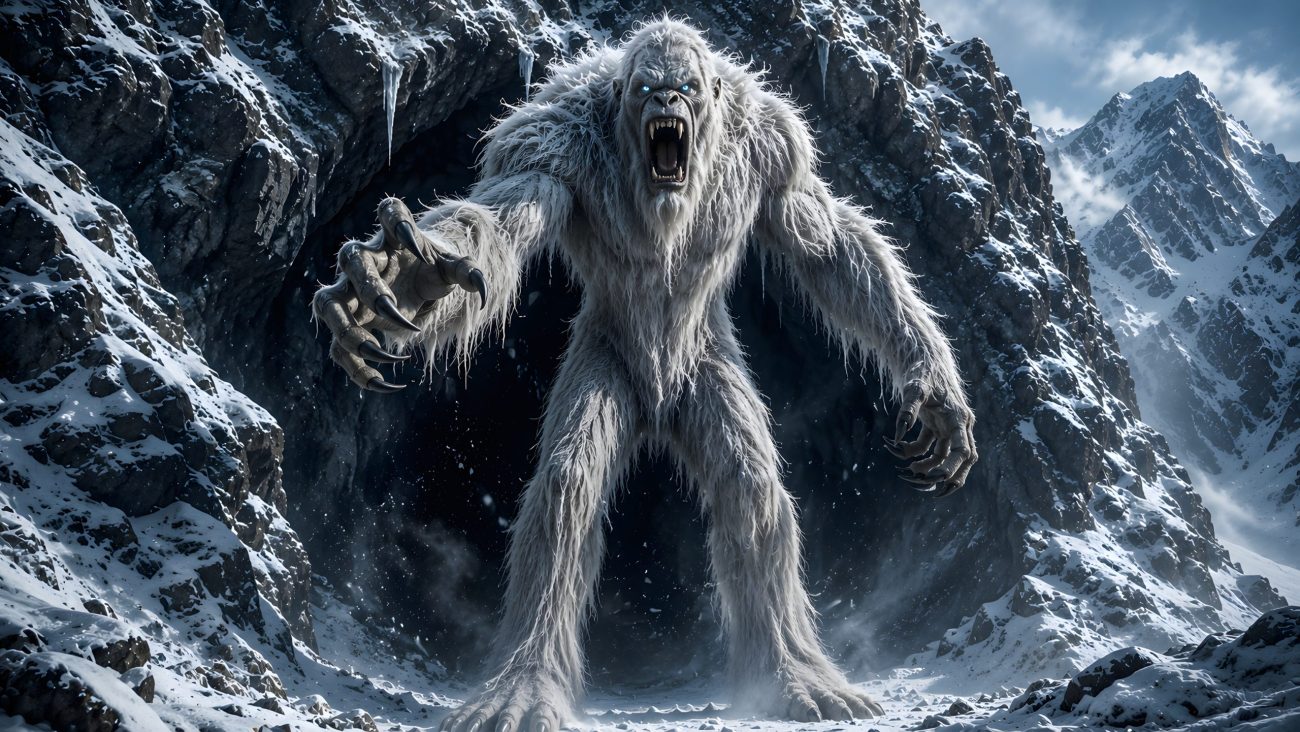
The Yeti is a legendary ape-like being said to inhabit the remote mountains and glaciers of the Himalayas. Descriptions vary between regions, but it is most often portrayed as a massive hairy humanoid creature that walks upright like a man. Its body is covered in dark or reddish fur, and it is associated with enormous footprints found in snow and ice. In older Himalayan traditions, the Yeti was not merely viewed as an animal but as a mysterious supernatural being connected to mountains, wilderness, and spiritual power.
Among several Himalayan peoples, especially before the spread of Buddhism, the Yeti was tied to religious beliefs. Some Lepcha traditions described a “Glacier Being” worshipped as a spirit or god of the hunt. Followers of the ancient Bön religion believed the blood of the wild mountain being possessed ritual power and could be used in spiritual ceremonies. In these stories the creature was depicted carrying large stones as weapons and roaming isolated snowy valleys far from human settlements.
In Tibetan Buddhist traditions, the Yeti became less of a god and more of a powerful nonhuman creature living beyond civilization. Some stories describe Yetis helping monks, saints, or religious figures after being tamed through spiritual teachings. Images of Yetis were sometimes carried in ceremonies as protective guardians against evil spirits. Despite this, encountering one was usually considered a terrible omen. Hearing its cries or glimpsing it in the mountains was believed to foretell danger, death, or misfortune unless the witness performed religious acts to cleanse the bad luck.
The Yeti became widely known outside the Himalayas during the nineteenth century when explorers and travelers reported seeing strange footprints and hairy creatures in remote mountain regions. Trekkers described tall bipedal figures covered in dark hair fleeing across snowy slopes, while guides told stories of wild mountain men wandering glaciers and forests. Reports of massive footprints in the snow became especially famous, though many later believed they may have belonged to bears or other animals distorted by melting ice.
Despite skepticism and many suspected hoaxes, the legend of the Yeti endured throughout the Himalayas and later spread into global popular culture as the “Abominable Snowman.” In folklore, however, the creature remained something more mysterious than a simple monster: a hidden being of the mountains, existing somewhere between animal, spirit, and wild man.
Sources
Wikipedia contributors. (n.d.). Yeti – Pre-19th century. In Wikipedia, from https://en.wikipedia.org/wiki/Yeti#Pre-19th_century
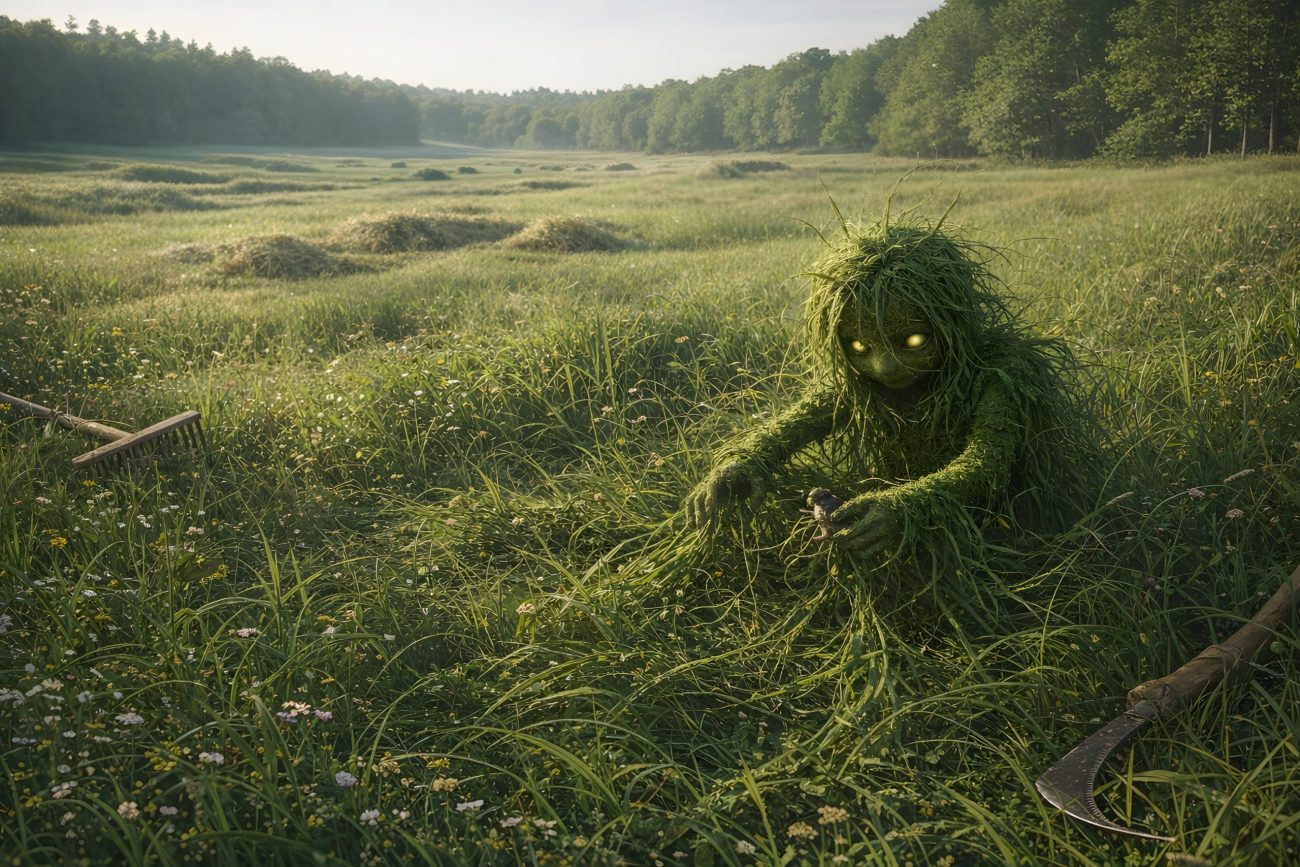
In Slavic mythology, Lugovichok is known as the spirit of the meadows. He is described as a small green man, clothed in grass and vegetation, and is considered one of the children of the field worker, a spirit connected with cultivated land and agricultural labor.
Lugovichok is believed to move swiftly through the meadows, catching birds and bringing them as food to his parent. During haymaking, he may secretly help people, ensuring that the work goes smoothly when it is done properly and at the right time.
However, Lugovichok is easily angered by neglect or improper behavior. When people delay mowing or fail to tend the meadow correctly, he may cause the grass to grow wildly and become tangled, braiding it so tightly that it cannot be cut or torn. In some cases, he is said to dry the grass at the root, ruining the hay altogether. If mowers arrive at the wrong time, Lugovichok can dull their scythes instantly or even break them completely, bringing work to a halt.
The name “Lugovichok” itself is rare and is recorded mainly in northwestern Russia. In other regions, related beliefs appear under different names. Peasants in the Tula province, for example, believed in shaggy meadow beings—alongside the field-goose and well-goose—who lived underground in burrows and emerged only at midday and just before sunset. At these times, such beings were considered dangerous and were thought capable of bringing illness or fever to humans.
Through these beliefs, Lugovichok represents both the helpful and harmful forces of the meadow—rewarding proper care and timing, but punishing neglect, impatience, or disrespect toward the land.
In the folklore of several peoples of Dagestan, Kushkaftar is an evil forest spirit feared for her terrifying appearance and cruelty. She belongs to the realm of lower mythology and is known among the Tabasarans, Lezgins, Rutuls, Tsakhurs, Laks, and others.
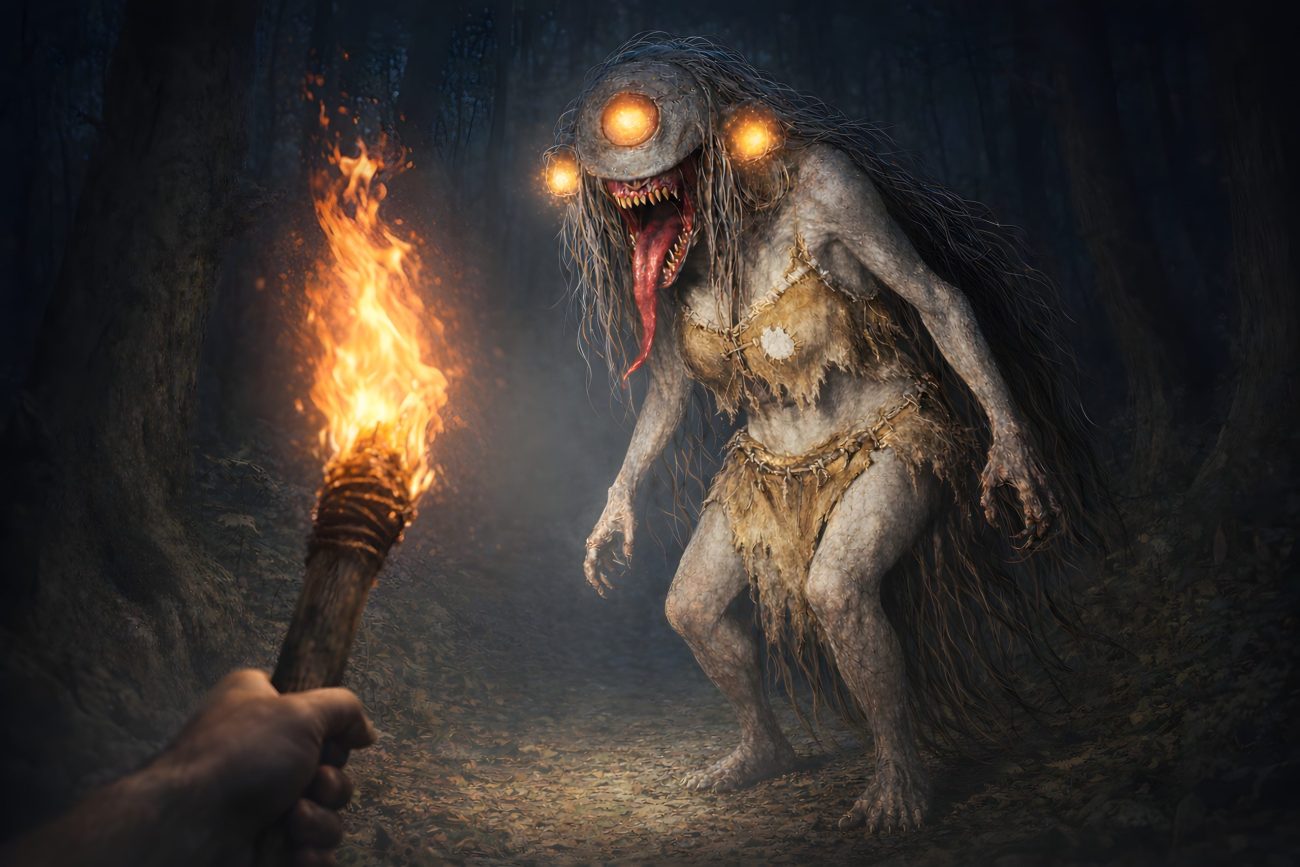
Most commonly, Kushkaftar is described as an ugly old woman. She has sharp fangs protruding from her mouth, fiery eyes, and long, tangled hair that hangs unkempt around her body. Her breasts are described as unusually large, further marking her as unnatural and frightening. According to belief, she lives deep in the forest together with her daughter.
At night, Kushkaftar is said to abduct children, carrying them away into the forest where she devours them. Because of this, she is regarded as a particular danger to families and a figure of terror used to explain disappearances and warn against wandering after dark.
Among the Rutuls, Kushkaftar—often called Kashkaftar—is described in a very different but equally frightening form. In these accounts, she appears as a strange, glowing creature, shining like phosphorus. She walks on two legs and possesses a single enormous eye, flat and plate-like, covering her entire face. From her mouth hangs a bright red tongue, and instead of ears she has burning lanterns, which glow in the darkness.
Despite differences in appearance across regions, Kushkaftar remains consistently portrayed as a malevolent forest being, associated with night, fear, and the consumption of children, embodying the dangers believed to lurk beyond the safety of the village.
In the Arkhangelsk region of northern Russia, Efimon is known as a frightening figure used to warn and restrain children on the eve of Great Lent. Parents and elders would invoke his name to signal the end of carefree winter pleasures and the arrival of a strict, joyless time.
Children were told that while sledding and play were still allowed today, tomorrow Lent would arrive—and with it, Efimon. Adults would say that once Efimon began to walk, there would be no more games or fun. In this way, Efimon became a figure associated with restraint, silence, and the loss of festive freedom.
The origin of Efimon lies not in folklore alone, but in Christian ritual. In church tradition, Efimon is the name of an evening service held during Lent, derived from the Hebrew phrase meaning “God is with us.” Over time, this liturgical term entered popular speech and was transformed into a personified image of Lent itself.
Unlike the lively and celebratory Maslenitsa, Lent was seen as dull, strict, and unwelcome. This contrast is reflected in sayings in which people symbolically drive Efimon away, sending him to distant places. In this sense, Efimon represents the oppressive side of fasting—the quiet, discipline, and abstinence that follow carnival excess.
Among many European peoples, the transition from carnival to fasting is marked by ritualized opposition between two characters. Maslenitsa or carnival figures are often defeated, expelled, or destroyed, while Lent always emerges victorious. Similar traditions appear across Europe: among the Czechs, Maslenitsa ends with the burial of Myasopust; among the Serbs, Lent is personified as Baba Korizma; in England, a ragged figure called Jack-o’-Lent was paraded and abused throughout the fasting season. Medieval Europe also preserved stories of symbolic battles between Don Carnal and Doña Cuaresma, representing excess and abstinence.
Within East Slavic folklore, however, such personifications of Lent are rare. Efimon stands as a limited but notable example of this tradition. Earlier records from the Mezen region, dating to 1839, show Efimon in a less frightening role. At that time, boys gathered on the church porch at the end of the Efimon service, tossing their caps into the air and chanting for Efimon to leave, marking the nearing end of fasting. In these early accounts, Efimon is not yet a monster, but a ritual figure tied closely to church practice.
Over time, as the original religious meaning faded, Efimon’s image shifted. His role became simplified and generalized, turning him into a vague but unsettling presence—a figure of warning rather than worship. This transformation, from sacred ritual term to household bogeyman, reflects a common process in folklore, where abstract concepts gradually take on human or monstrous form in popular imagination.
Efimon thus survives not as a detailed creature, but as a name filled with meaning: the arrival of Lent, the end of play, and the quiet authority of discipline looming just beyond the threshold of childhood freedom.
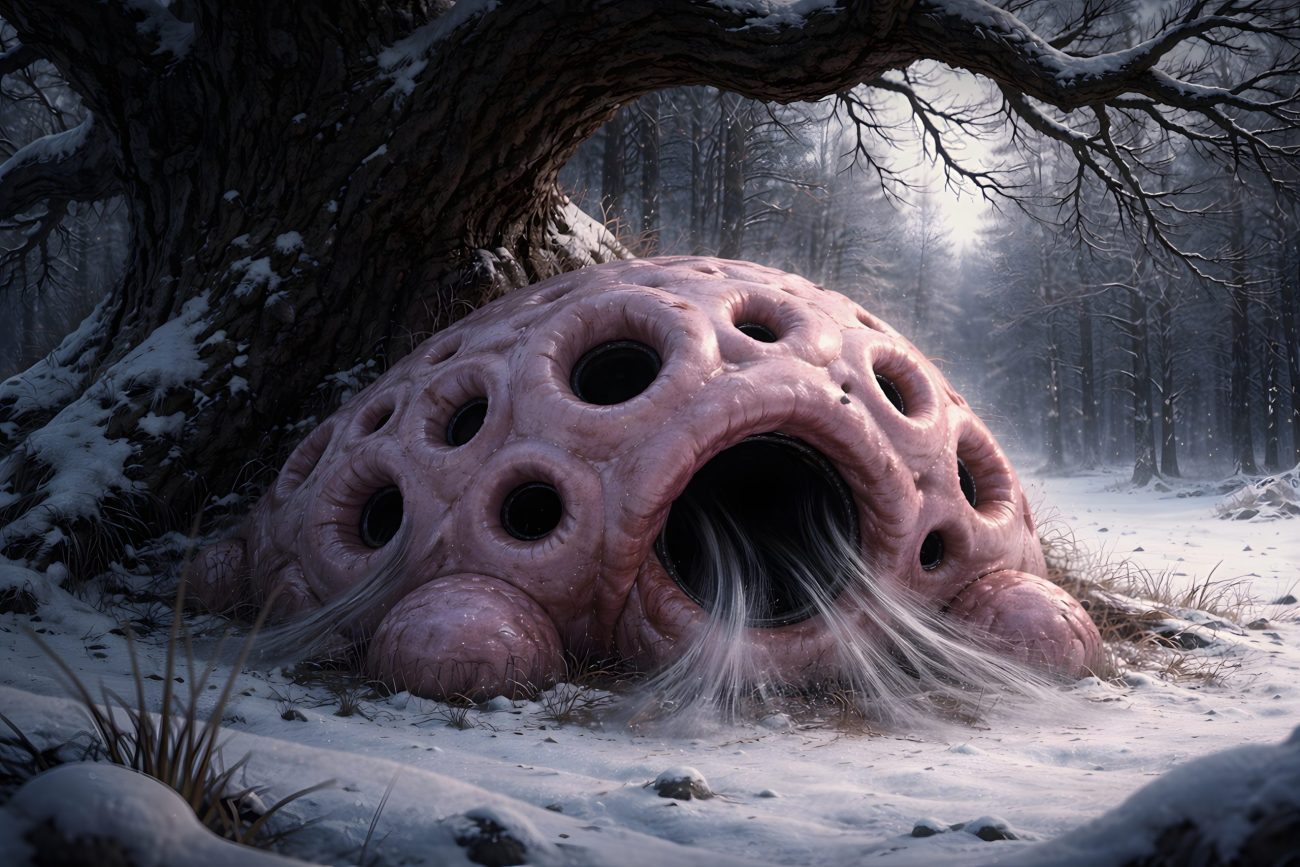
In Russian folklore, Endar is a scarcely described mythical being known primarily for its unusual way of sustaining itself. According to legends recorded in the Vyatka Province, the Endar lives beneath an old oak tree and feeds not on food or flesh, but on air itself.
Marina Vlasova, in her Encyclopedia of Russian Superstitions, notes that little else is known about this creature. Its form is not clearly described, and no detailed accounts of its behavior survive. The Endar remains largely undefined, existing more as a name and a location than as a fully formed figure.
Later retellings, particularly in modern sources, add that the Endar is said to be roughly the size of a boar. Beyond this single detail, however, its appearance remains uncertain.
The Endar thus occupies a quiet place in folklore: a being tied to a specific landscape, sustained by invisible means, and remembered more for its mystery than for any deeds or encounters.
In Slavic folklore, Bomka is a vague and unnamed terror used by adults to frighten disobedient children. It belongs to the broad class of bogeymen—creatures invoked in warnings rather than described in stories.
Parents would threaten naughty children with words such as: “I’ll put you in the golbets, and the Bomka will snatch you from there.” The golbets, a dark storage space beneath the house or stove, was imagined as a place where Bomka could reach its victims.
Bomka has no fixed appearance. No specific shape, size, or features are known. It exists more as an idea than a creature—an unseen presence associated with darkness, hiding places, and punishment for misbehavior.
The power of Bomka lies not in what it is, but in what it represents: an unknown danger waiting in the dark, ready to take children who do not listen.
Sources
Bestiary.us contributors. (n.d.). Bomka. In Bestiary.us, from https://www.bestiary.us/Bomka/