Dàfēng

Tradition / Region: Chinese Mythology
Alternative names: Great Wind, Wind Earl (Fēngbó)
Category: Bird


The Myth

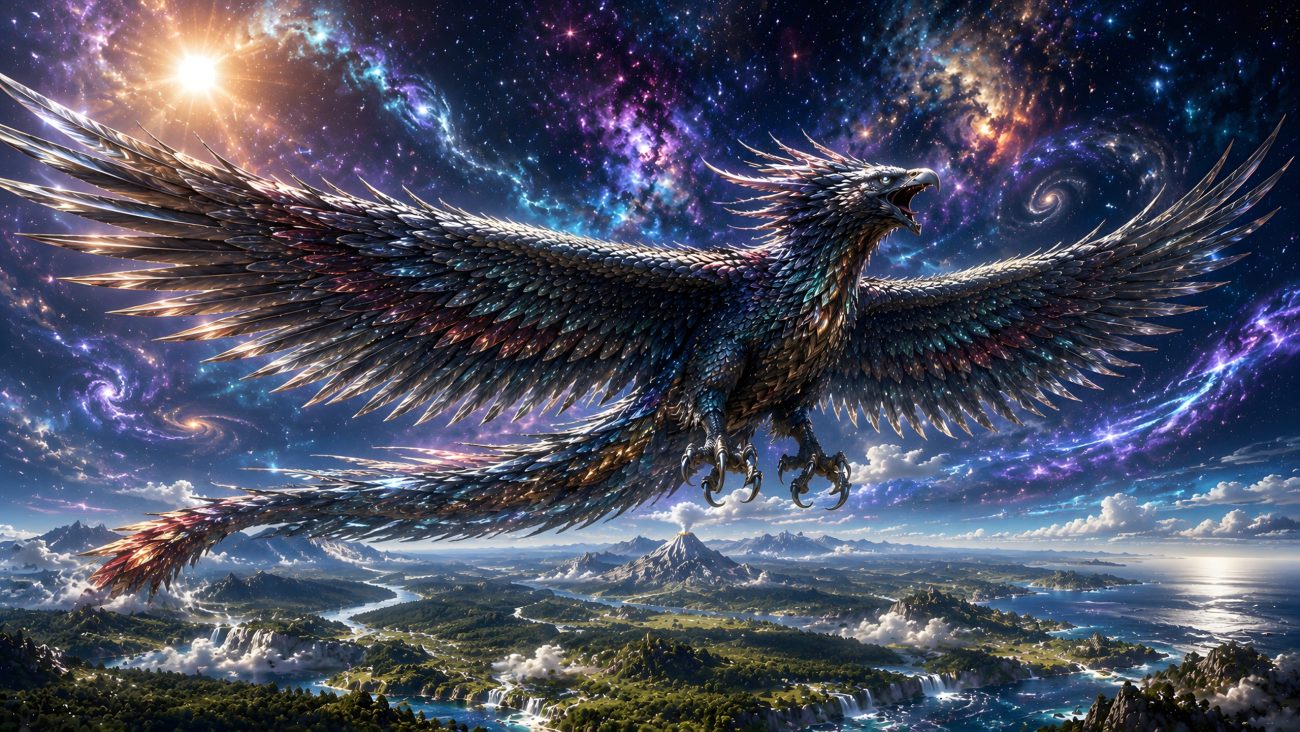
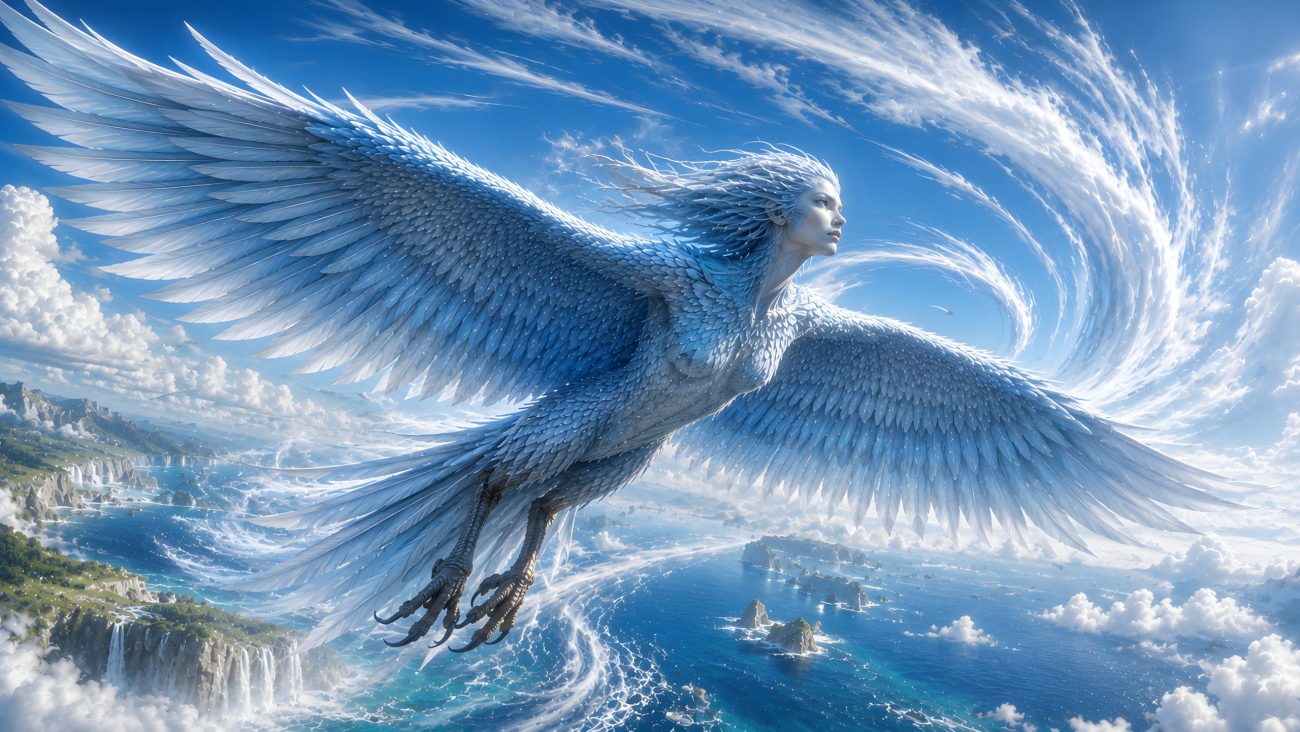
Dàfēng is a monstrous bird and ancient wind deity capable of unleashing devastating gales. Whenever it spread its enormous wings, violent winds arose, destroying houses and bringing disaster upon the land. Some traditions identify it as a gigantic bird, while others describe it as the Wind Earl (Fēngbó), the spirit who governs the winds.

During the reign of the legendary Emperor Yao, Dàfēng was one of several monsters that plagued humanity. To end these calamities, Yao sent the divine archer Hou Yi to destroy them. Hou Yi tracked Dàfēng to the marshes of Qingqiu, where he shot down the monstrous wind-bringer, freeing the people from its destructive storms.


Sources

“大風 (神).” Chinese Wikipedia. Wikimedia Foundation. Accessed July 27, 2026. https://zh.wikipedia.org/wiki/大風_(神)
Vucub-Caquix

Tradition / Region: Maya Mythology, Guatemala Mythology
Alternative names: Wuqub’ Kaqix; Seven Macaw
Category: Bird


The Myth

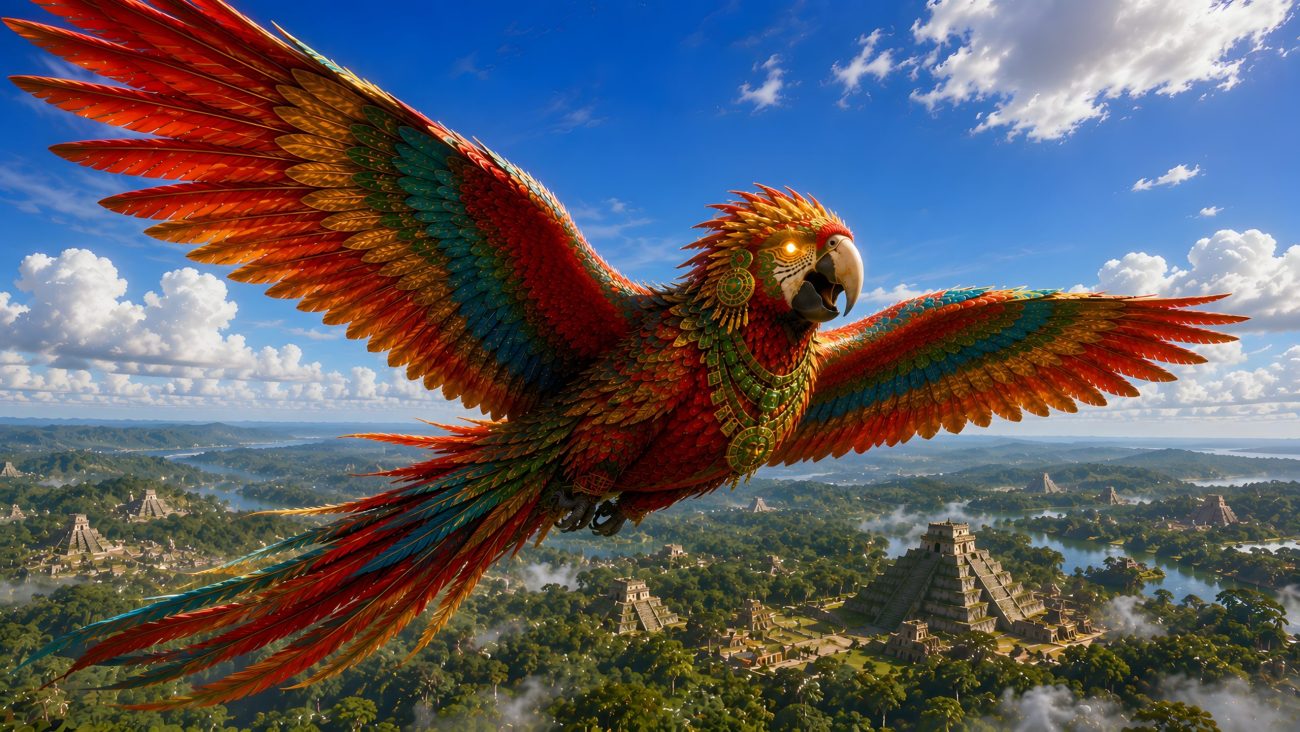
Vucub-Caquix is a proud and powerful bird demon of Maya mythology who falsely proclaimed himself to be the sun and the moon during the age before the present creation. With shining eyes and jeweled teeth, he perched atop a great fruit tree, dazzling the world with his brilliance while boasting of his greatness. He was also the father of the fearsome beings Zipacna and Cabrakan.

Seeking to end the demon’s deception, the Hero Twins, Hunahpu and Xbalanque, challenged him. Hunahpu fired a blowgun at Vucub-Caquix, striking the great bird, but the demon retaliated by tearing off the hero’s arm before fleeing with it.

The Twins later tricked Vucub-Caquix into allowing his magnificent jeweled teeth and radiant eyes to be removed, claiming they would heal him. Instead, the loss of these treasures stripped away his beauty, power, and false glory. Defeated and humbled, the bird demon perished, allowing the Hero Twins to fulfill their destiny and become the true Sun and Moon of the present world.


Sources

Wikipedia contributors. (n.d.). Vucub Caquix. In Wikipedia. Retrieved June 29, 2026, from https://en.wikipedia.org/wiki/Vucub_Caquix


Podarge

Tradition / Region: Greek Mythology
Alternative names: Podarkes; Podarke-Aellopos; Podarces
Category: Bird


The Myth

Podarge is a Harpy, a swift wind spirit of Greek mythology whose name means “swift-footed.” She became the mate of Zephyrus, the West Wind, and was renowned for her speed. In the Iliad, she took the form of a mare and grazed in the meadows beside the stream of Ocean.

From her union with Zephyrus were born the divine horses Balius and Xanthus, whose speed matched that of the wind. These immortal steeds were later given to Achilles, carrying the Greek hero into battle with unmatched swiftness during the Trojan War.

Some traditions also credit Podarge as the mother of the divine horses Phlogeus and Harpagos. Through her offspring, she became the mythical ancestress of some of the fastest and most celebrated horses in Greek legend.


Sources

Wikipedia contributors. (n.d.). Podarge. In Wikipedia. Retrieved June 29, 2026, from https://en.wikipedia.org/wiki/Podarge


Three-Headed Eagle

Tradition / Region: Russian Mythology
Alternative names: Triple-Headed Eagle; Öksökö (Yakut and Dolgan)
Category: Bird


The Myth

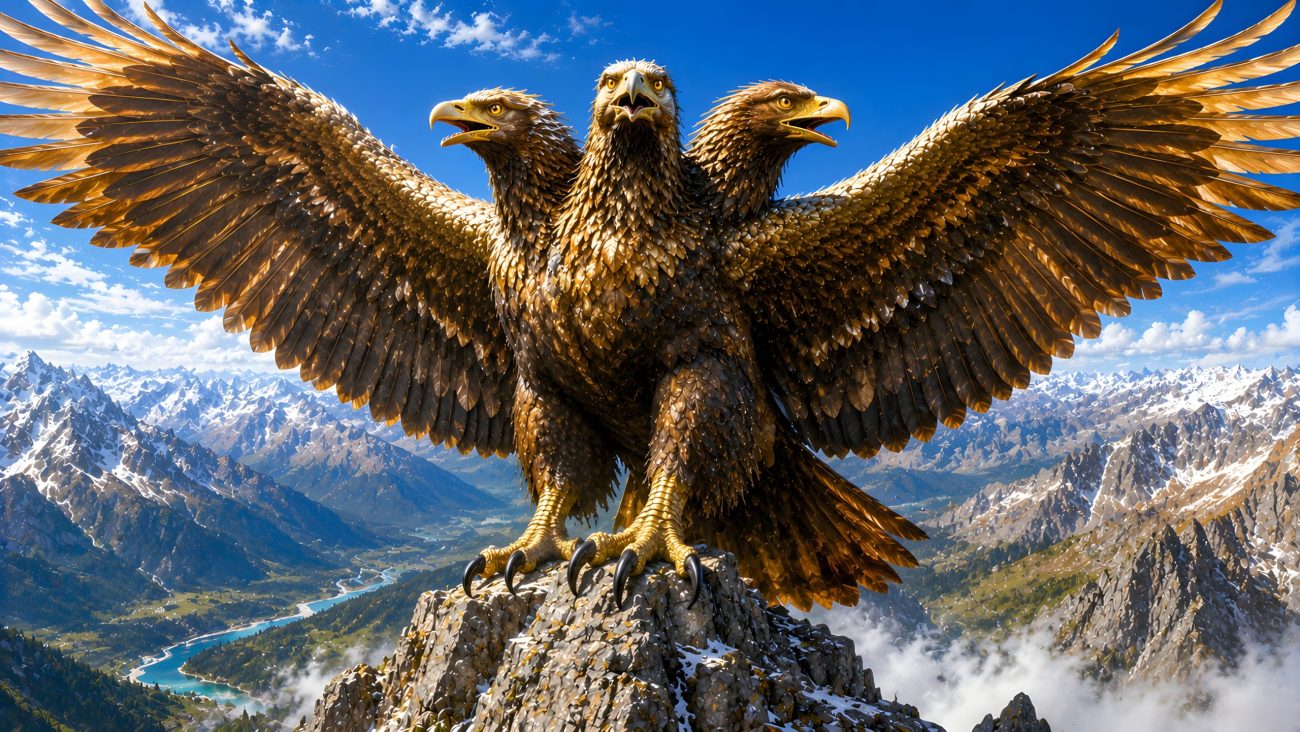
The Three-Headed Eagle is a legendary giant bird that appears in several Eurasian traditions. Unlike the more familiar two-headed eagle, this fearsome creature possesses three heads, making it an even more formidable supernatural being. In Yakut and Dolgan folklore, it is known as Öksökö, which may have either two or three heads depending on the tale.

In a Chechen fairy tale, the Three-Headed Eagle appears as a monstrous adversary that terrorizes the land until it is confronted by a heroic warrior. After a fierce struggle, the hero slays the giant bird, overcoming one of the greatest dangers of the story and restoring peace.

Although the Three-Headed Eagle later appeared in heraldry and religious literature, its mythological role is that of an immense supernatural eagle whose multiple heads emphasize its extraordinary power and make it a worthy opponent for legendary heroes.


Sources

Wikipedia contributors. (n.d.). Triple-headed eagle. In Wikipedia. Retrieved June 29, 2026, from https://en.wikipedia.org/wiki/Triple-headed_eagle


Daramulum

Tradition / Region: Australian Mythology
Alternative names: Darhumulan; Daramulan; Dhurramoolun; Dharramaalan
Category: Bird


The Myth

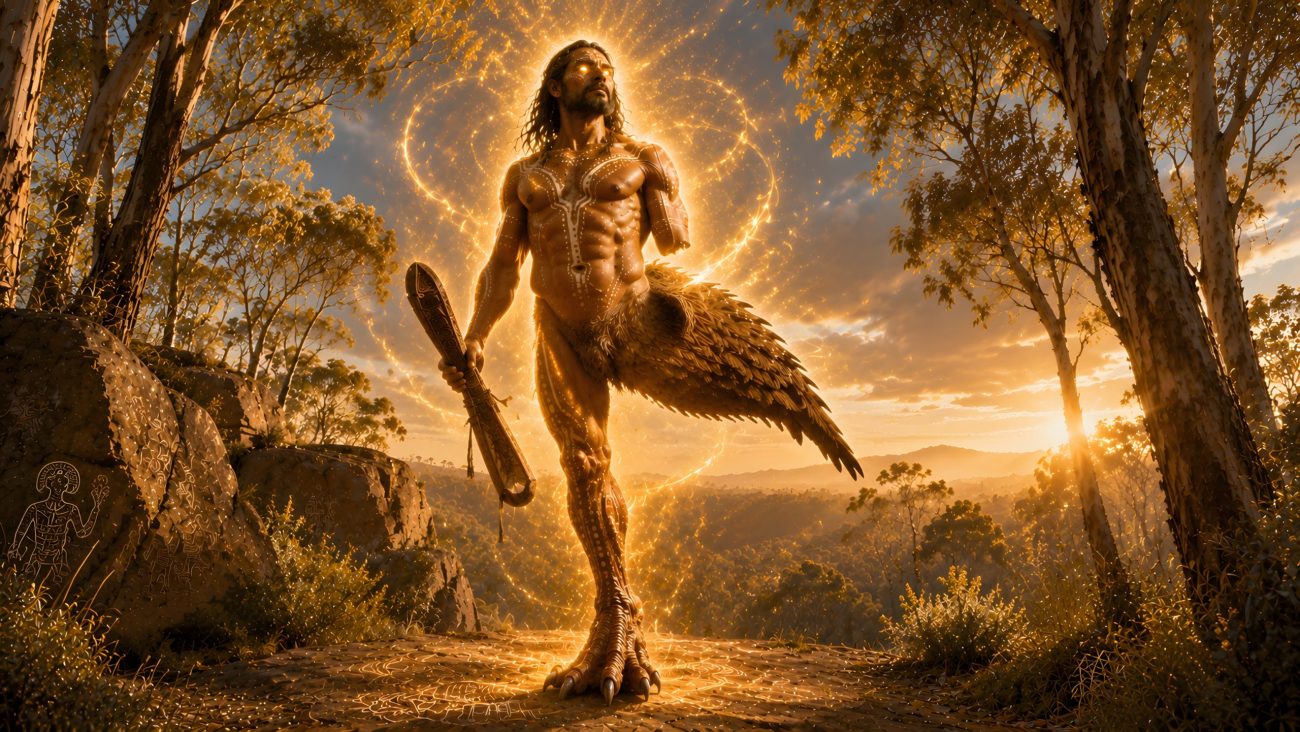
Daramulum is a great sky hero of Aboriginal tradition, closely associated with Baiame. A powerful shapeshifter, he is linked with an emu-wife and is often portrayed as a part-human, part-emu being. Rock engravings depict him with a human body, one arm, a single large leg and foot, and the hindquarters of an emu.

After leaving the sky, Daramulum came to dwell within the great trees of the bush, his spirit residing in the burls that grow upon their trunks. During initiation ceremonies, his voice is heard through the bullroarer, which must be carved from a tree containing his spirit. As the sacred instrument spins through the air, it is believed that Daramulum himself is speaking to those taking part in the ceremony.

Among the Guringai people, Daramulum is also connected to the night sky. He is identified with Alpha Crucis, the brightest star of the Southern Cross, while the remaining stars of the constellation represent the head of his emu-wife, linking the sacred hero forever with the heavens.


Sources

Wikipedia contributors. (n.d.). Daramulum. In Wikipedia. Retrieved June 29, 2026, from https://en.wikipedia.org/wiki/Daramulum


Pamola

Tradition / Region: American Mythology
Alternative names: Pamolai; P-mol-a; Pomola; Bmola; Bumole
Category: Bird


The Myth

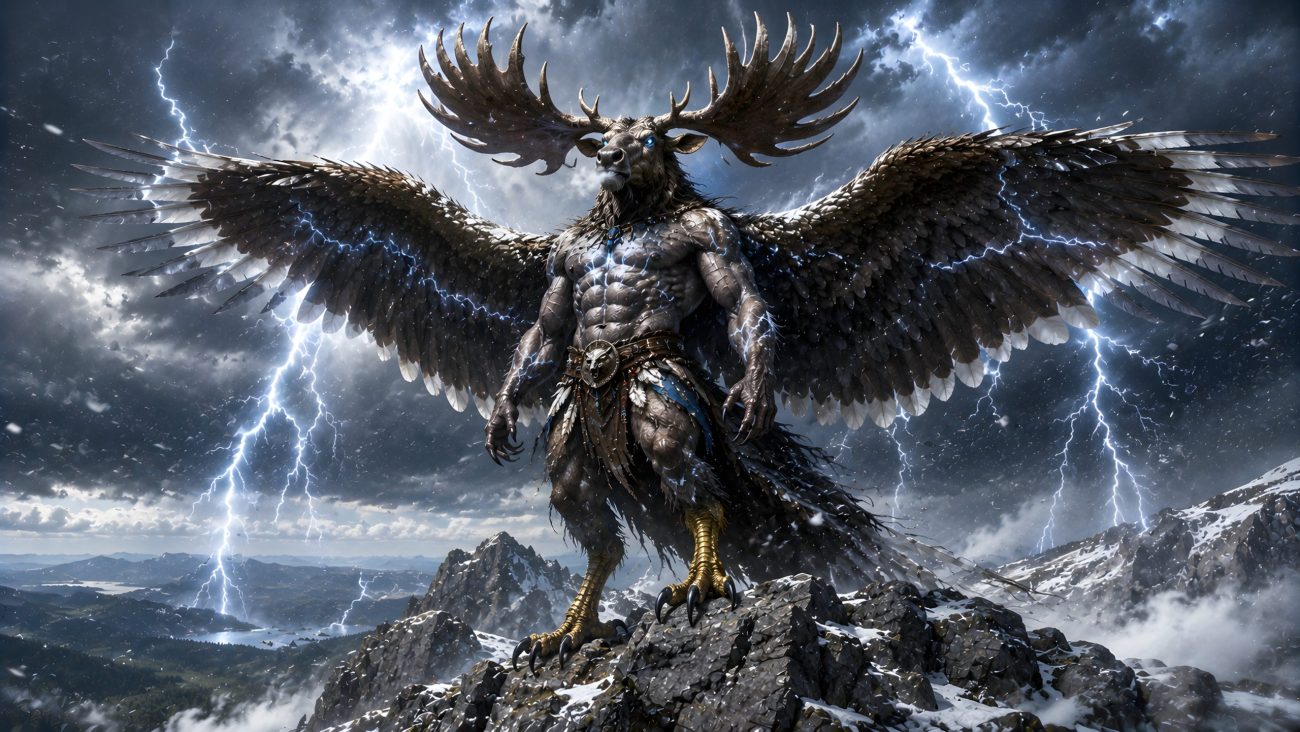
Pamola is a mighty bird spirit and thunder god of Penobscot tradition who dwells atop Mount Katahdin, the highest peak in Maine. Banished there by the culture hero Gluskab, Pamola became the sacred guardian of the mountain. He is commonly described as having the head of a moose, the body of a man, and the wings and talons of an eagle, though some traditions portray him with a gigantic human face upon an eagle’s body.

Pamola rules over storms, fierce winds, snow, dense fog, and bitter cold. It is said that he beats his great wings to summon violent weather, protecting the mountain from those who would disturb it. The Penobscot regarded Katahdin as sacred, and climbing its summit was long considered forbidden because Pamola fiercely resented human intruders.

Legends warn that Pamola carries trespassers away to Alomkik, the land of the dead near the mountain. Other stories tell how he hurled boulders at those who lingered too long on his slopes or descended from the sky to drive away anyone who dared challenge his domain. Through these tales, Pamola remains the eternal guardian of Katahdin, keeping watch over the sacred mountain with thunder and storm.


Sources

Wikipedia contributors. (n.d.). Pamola. In Wikipedia. Retrieved June 29, 2026, from https://en.wikipedia.org/wiki/Pamola.


Kahka

Tradition / Region: Tajikistan Mythology
Alternative names: Kahka Bird
Category: Bird


The Myth

The Kahka is a magical talking bird of Tajik folklore, famous for its enormous wings and immense strength. It is said to be so powerful that it can lift four hundred people into the air simply by allowing them to cling to its legs. Despite its great power, the Kahka is a benevolent creature that loves people and often comes to their aid.

One tale tells of a blind king who learns that only the blood of the Kahka can restore his sight. An old man reveals that the bird visits his courtyard every night to steal a large fish, but warns that capturing it would require more than a hundred people because of its incredible size and strength.

The Kahka is treasured not only for its miraculous power but also for its kindness. Its blood is believed to cure blindness, and throughout Tajik tradition it is remembered as a mighty heavenly bird whose strength and compassion make it one of the greatest magical creatures in the folklore.


Sources

Bestiary.us. (n.d.). Kahka. In New Bestiary: Encyclopedia of Imaginary Beings. Retrieved June 29, 2026, from https://www.bestiary.us/kahka


Romŝiwamnari’

Tradition / Region: Brazilian Mythology
Alternative names: Romshiwamnari
Category: Bird


The Myth

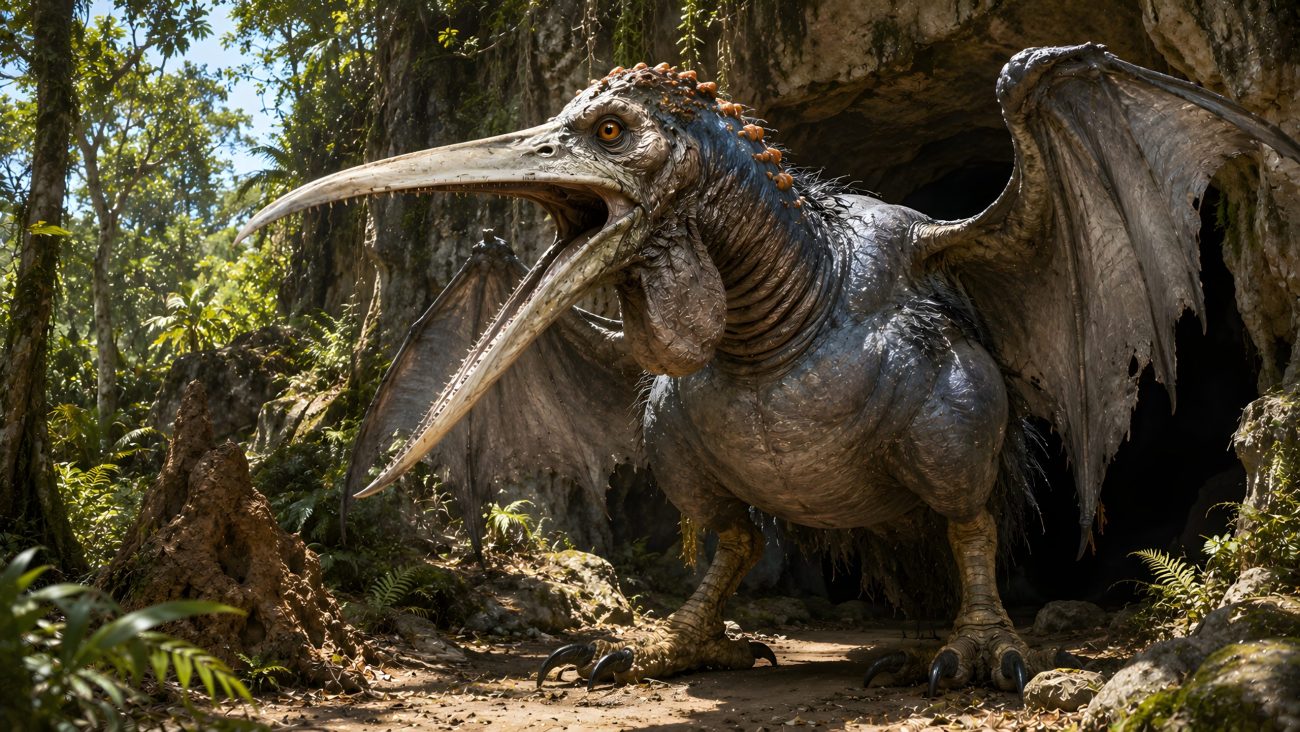
The Romŝiwamnari’ are fearsome forest and cave demons of the Šerente people. They usually appear as enormous birds with flabby, flightless bat-like wings, long scissor-shaped beaks, and haunting whistles that echo through the wilderness. They can also transform into tapirs or stout human figures with large teeth and the tail of a howler monkey. In human form, they are even said to resemble the Pope.

These monstrous beings prey not only upon the living but also upon the souls of the dead. As spirits journey through the realm of death, the Romŝiwamnari’ lie in wait to devour them. Only exceptionally powerful shamans are capable of confronting and destroying the demons in the spirit world.

One legend tells of a hunter and his pregnant wife who encountered two Romŝiwamnari’ inside a cave. The hunter fought bravely to allow his wife to escape, but the demons overwhelmed him and cut off his head. When the villagers later attacked the cave, they killed the two monsters, although two more remained hidden. The hunter’s son grew into a mighty hero before he was a year old, avenged his father by burning the demons’ bones, slew the remaining Romŝiwamnari’, and freed the region from their terror forever.


Sources

A Book of Creatures. (2016, February 5). Romŝiwamnari’. Retrieved June 29, 2026, from https://abookofcreatures.com/2016/02/05/romsiwamnari/


Pasărea Măiastră

Tradition / Region: Romanian Mythology
Alternative names: Andilandi (in some tales)
Category: Bird


The Myth

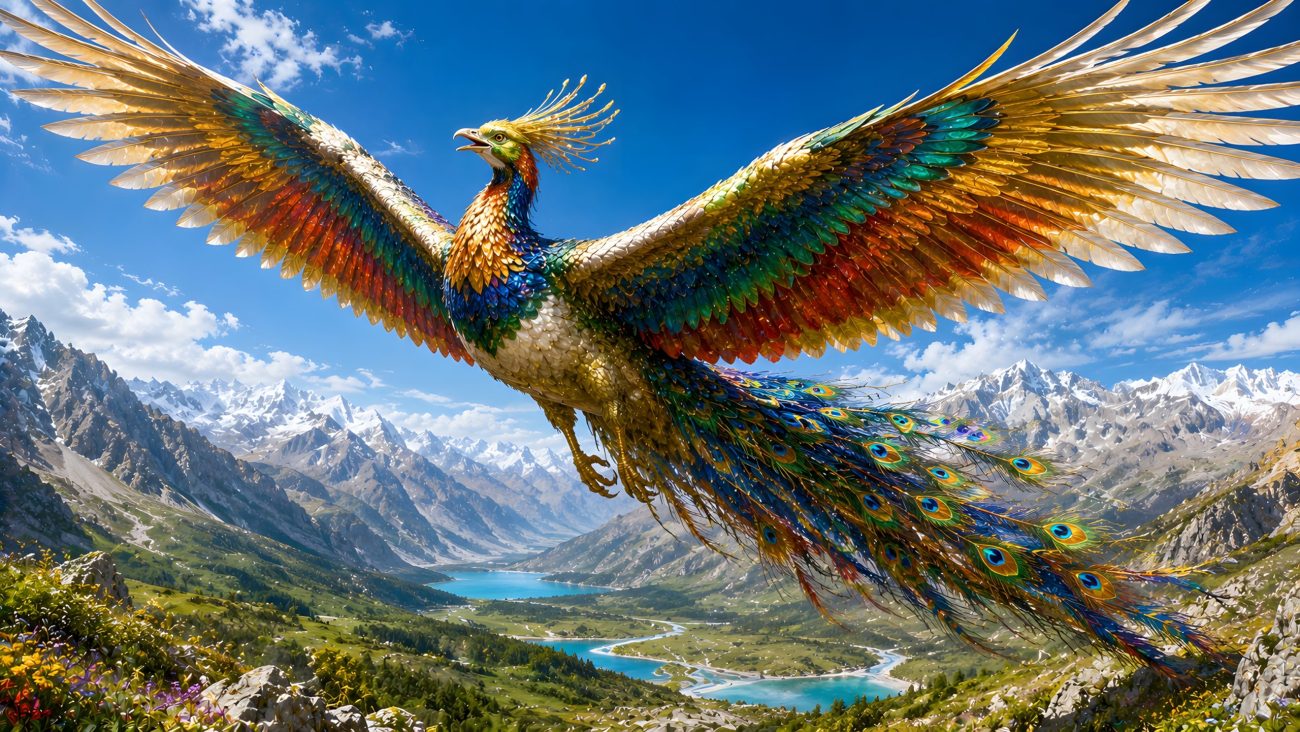
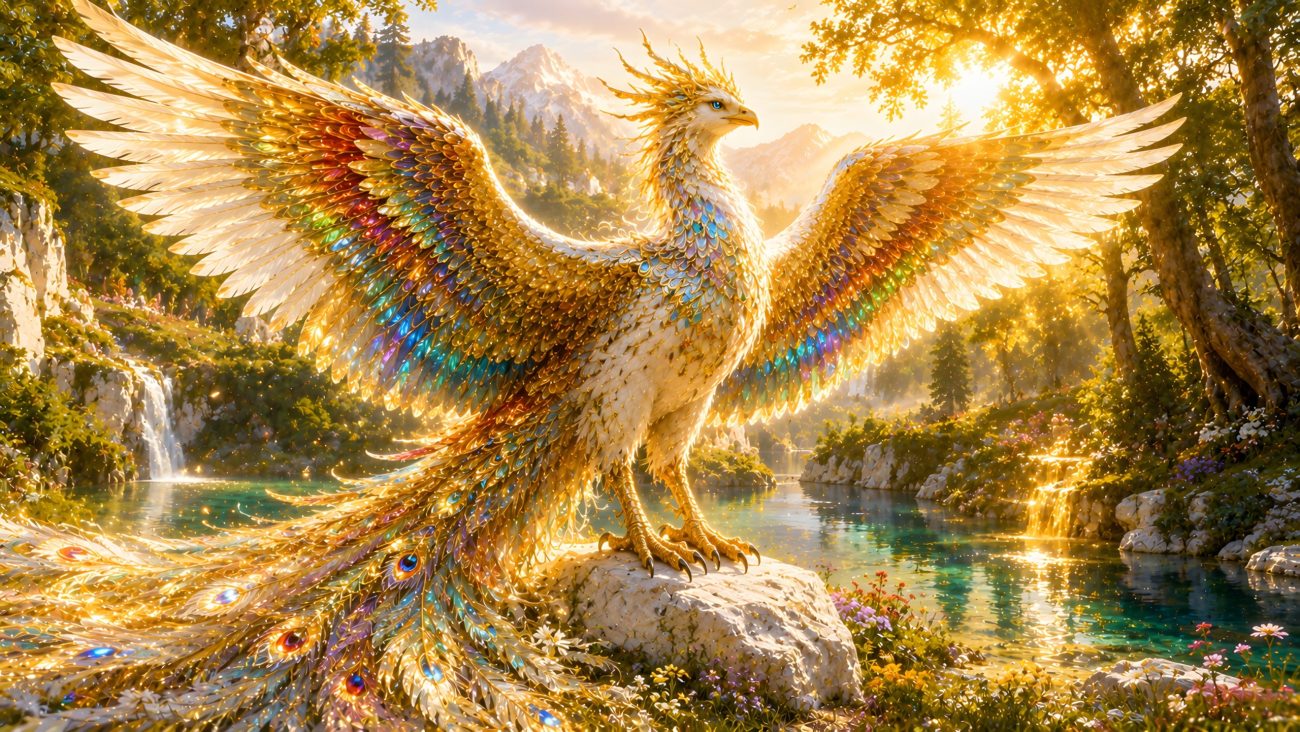
The Pasărea Măiastră is the Queen of Birds in Romanian mythology, a radiant supernatural being who dwells in the Otherworld. She is renowned for her incomparable beauty, dazzling light, and magnificent multicolored plumage. As the messenger of the fairies, she possesses immense magical power and reveals herself only to the most fortunate of mortals.

The bird’s enchanting song is said to be heard only in solitude, and anyone privileged enough to listen to it is restored to youth. As a magical guardian and bringer of justice, the Pasărea Măiastră rarely leaves her hidden home, appearing only when her powers are needed or when fate calls her into the world of humans.

In some Romanian folktales, the Pasărea Măiastră is known as Andilandi, the cursed daughter of an emperor who was transformed into a marvelous bird. Despite her enchantment, she retains her royal nature and extraordinary powers, remaining one of the greatest and most wondrous birds of Romanian legend.


Sources

Contribuitorii Wikipedia. (n.d.). Pasărea măiastră. În Wikipedia. Retrieved June 29, 2026, from https://ro.wikipedia.org/wiki/Pas%C4%83rea_m%C4%83iastr%C4%83


Ellén Trechend

Tradition / Region: Irish Mythology
Alternative names: Ellen Trechend
Category: Bird


The Myth

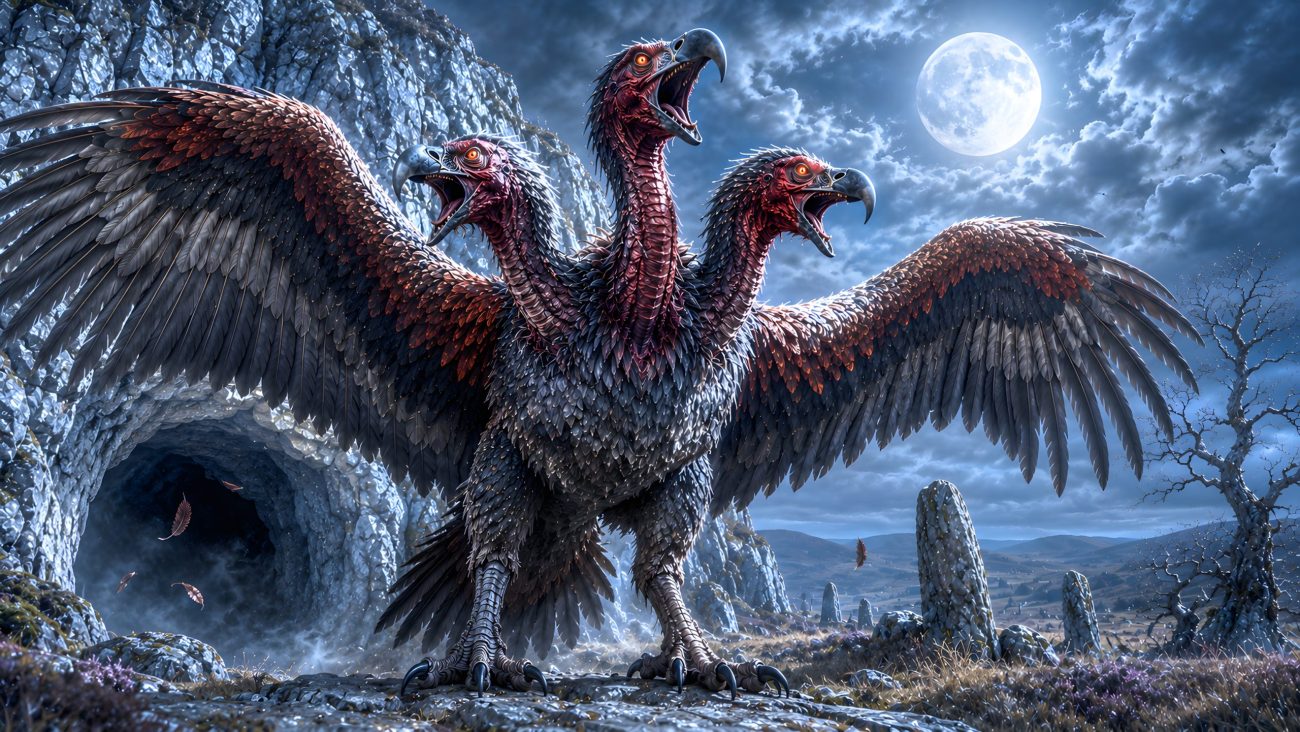
The Ellén Trechend is a terrifying three-headed monster from Irish mythology, often described as a monstrous three-headed bird or vulture. It emerged from the cave of Cruachan during a time of great destruction and ravaged Ireland, bringing devastation wherever it flew.

According to the Cath Maige Mucrama, the creature laid waste to the land until it was confronted by the Ulster poet and hero Amergin, who succeeded in slaying the monstrous being and ending its reign of terror.

Later Irish tradition associates the Ellén Trechend with the horrors released from the cave of Cruachan on Samhain. Alongside a host of goblins came a flock of copper-red birds led by a gigantic three-headed vulture, a creature widely believed to be the Ellén Trechend itself. As the leader of these supernatural birds, it became one of the most fearsome monsters associated with the opening of the Otherworld.


Sources

Wikipedia contributors. (n.d.). Ellén Trechend. In Wikipedia. Retrieved June 29, 2026, from https://en.wikipedia.org/wiki/Ell%C3%A9n_Trechend