Hornless Lion Cattle

Tradition / Region: Sudanese Mythology
Alternative names: Lion Cattle, Hornless Cattle of the Lions
Category: Lion, Cow


The Myth

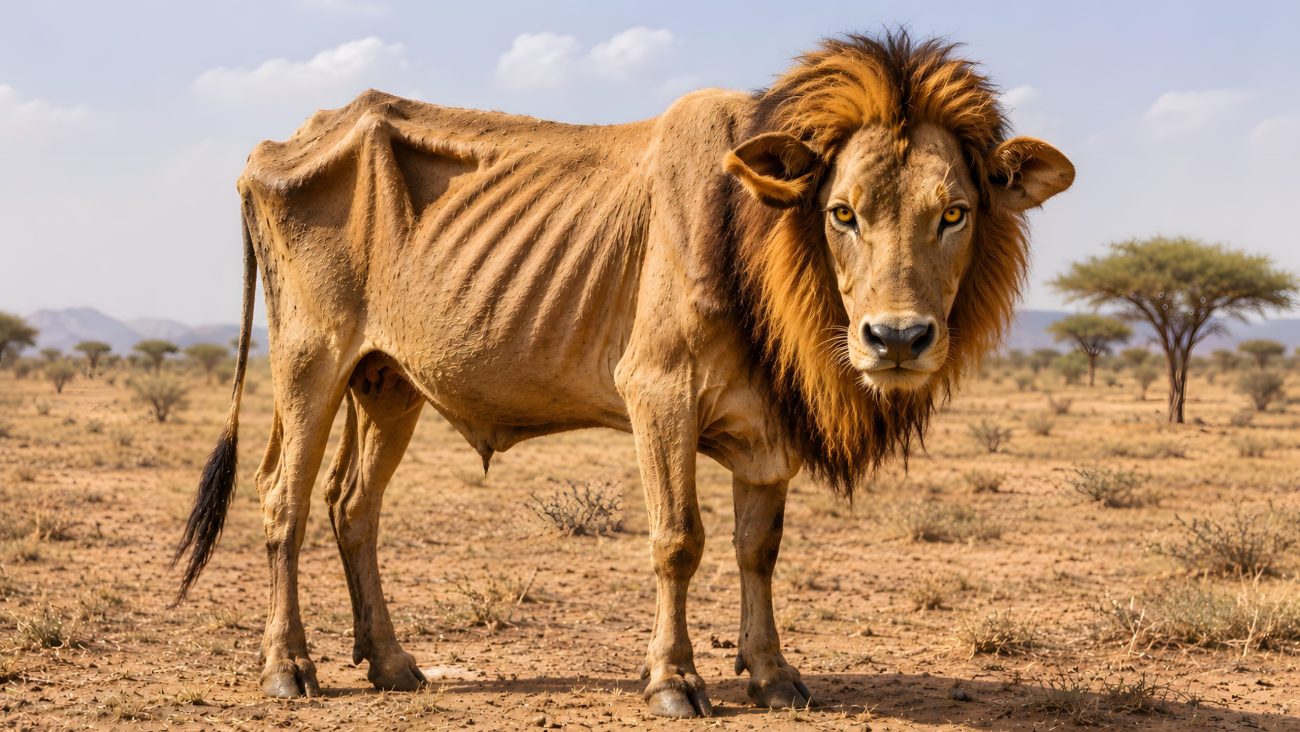
Among the Dinka, hornless cattle were believed to be dangerous and unnatural animals closely connected to lions and wilderness spirits. Unlike ordinary cattle with horns, hornless cattle were feared for their aggression and strange behavior. Folktales claimed they did not truly belong to human beings at all, but to lions.

One famous story tells of two brothers both named Deng. One was born to a human mother, while the other was the son of a lioness who had raised both boys together as brothers. Although the lioness cared for them for many years, she eventually turned against the human Deng and attacked him out of jealousy and beastly hunger. After many struggles, the lioness was killed by her own son to protect his brother.

Later, the lioness’s relatives sought revenge. The two brothers traveled into the land of the lions to confront Miyar, the lion-chief and cousin of Deng of the lioness. After reaching the lion settlement, Deng challenged Miyar and killed him in combat.

The death of the lion chief caused panic throughout the camp. The lions fled into the wilderness, and with them fled the strange hornless cattle that belonged to them. According to the tale, these hornless cows transformed into lions and lionesses and disappeared into the forest alongside their masters.

Only the ordinary horned cattle remained behind for the human brothers to take home.

The story explains an old Dinka belief that hornless cattle possessed something wild and dangerous within them. They were thought to follow lions naturally, behave more fiercely than ordinary cattle, and even share a spiritual connection with predatory beasts. In folklore, hornless cattle were not fully separated from the world of lions, but stood somewhere between domesticated animal and supernatural creature.


Sources

Deng, F. M. (1974). Dinka folktales: African stories from the Sudan. New York: Africana Publishing Company.
Enchanted Lion of Ntringui

Tradition / Region: Comoros Mythology
Alternative names: The Lion Guardian of Ntringui, The Stone Lion of the Mountain
Category: Object, Lion


The Myth

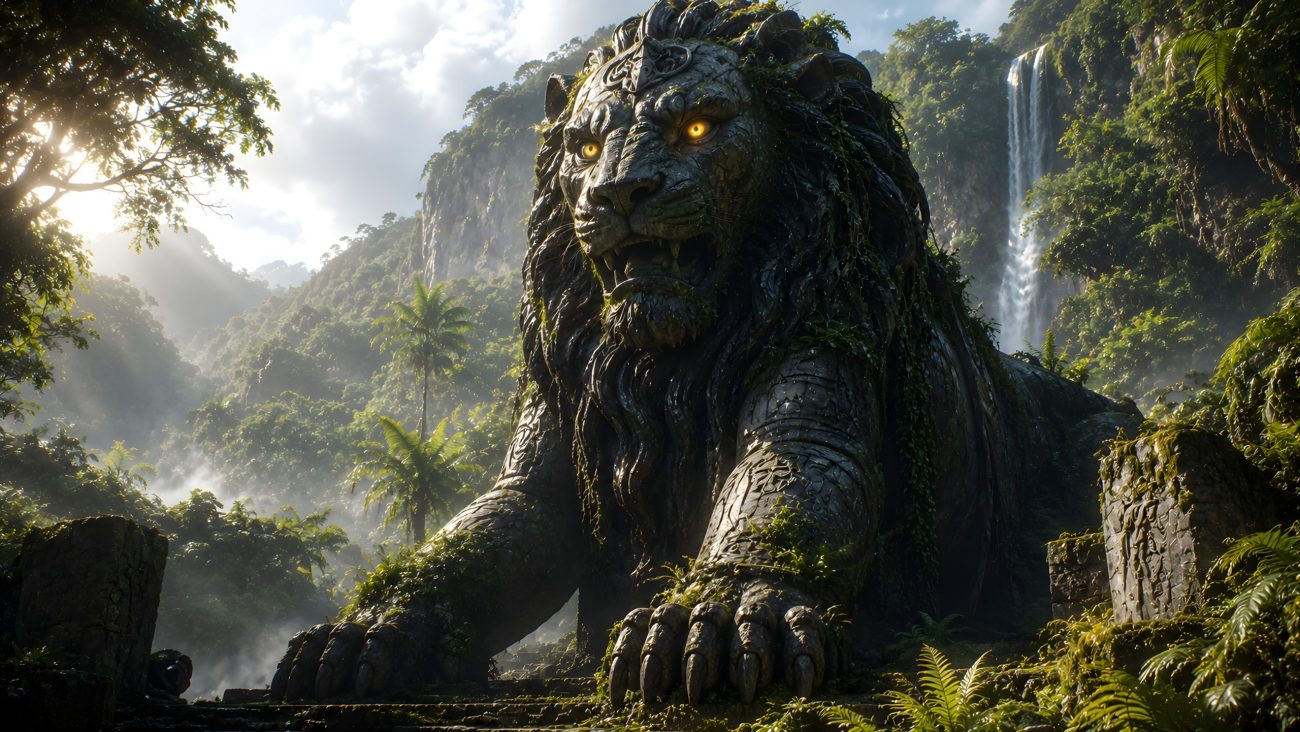
Deep within the forests of Mount Ntringui, travelers speak of an enormous stone lion hidden among tangled vines and ancient trees. The statue is said to guard the sacred paths leading toward the mountain’s supernatural heart. Though carved from stone, the lion is believed to possess awareness, intelligence, and the power to judge the souls of those who approach it.

According to legend, the lion stands within a secluded clearing surrounded by dense jungle where the air grows unnaturally silent. Moss and roots cover much of its body, but its face remains perfectly untouched, its eyes fixed upon the mountain paths as if eternally watching intruders.

The people of Anjouan believe the statue was placed there long ago by the Mountain Spirit of Ntringui to prevent the selfish, greedy, and cruel from reaching the sacred summit. Many who sought the mountain’s hidden wonders reportedly fled after hearing growls echo through the forest or seeing the lion’s eyes glow in the darkness.

The most famous story connected to the lion concerns a young woman named Amina, who climbed Mount Ntringui hoping to help her struggling village. Unlike treasure seekers who came before her, Amina sought nothing for herself. She wished only for prosperity and peace for her people.

While traveling through the mountain forest, she reached the clearing of the lion statue. As she approached, the ground trembled and the lion’s stone eyes began to shine with supernatural light. The creature spoke with a voice like thunder and demanded proof that her heart was pure.

Instead of showing fear, Amina knelt before the lion and explained that she desired no riches or glory, only relief for her starving village. The enchanted guardian recognized the sincerity in her words. Its expression softened, and with a deafening roar it moved aside, allowing her passage deeper into the mountain.

Because of this story, the Enchanted Lion became a symbol of courage, humility, and spiritual worthiness in Anjouan folklore. The statue is not viewed as evil, but as a sacred protector that separates the pure-hearted from those corrupted by greed.

Even today, some villagers claim strange things happen near the forests of Ntringui. Travelers report hearing distant roaring despite there being no lions on the island, while others speak of glimpsing glowing eyes between the trees before suddenly losing the mountain path. Many believe the Enchanted Lion still guards the hidden mysteries of Ntringui, waiting silently for the next worthy soul to approach.


Sources

Hichamou, P. (n.d.). Prince tales of the Comoros: Legends, mysteries & enchantments from the Isles of the Moon.


Manticore

Tradition / Region: Iranian Mythology, Persian Mythology
Alternative Name: Mantichore, Martichora
Category: Lion


The Myth

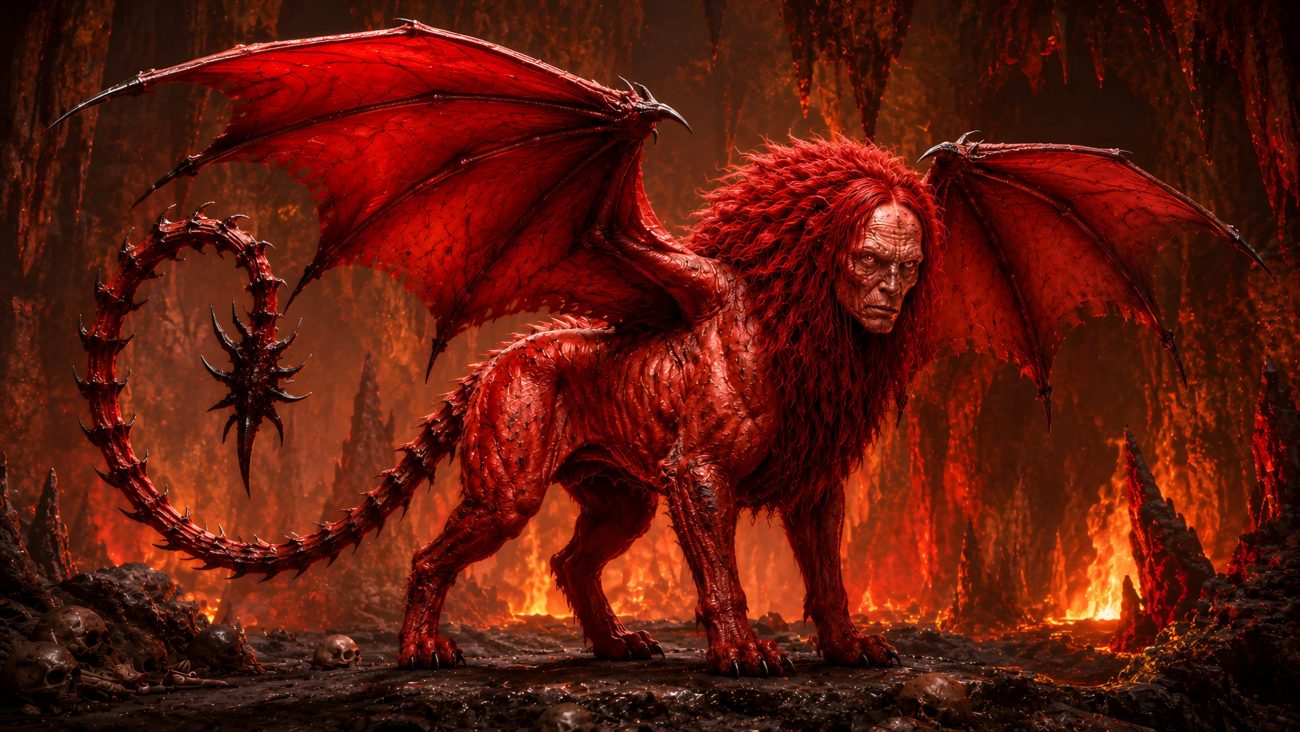
The Manticore is a monstrous creature from Persian mythology later adopted into Greek and medieval European legends. Its name means “man-eater,” reflecting its terrifying appetite for human flesh.

The creature is most commonly described as having the body of a lion, the face of a human, and the tail of a scorpion. Some legends describe the tail as being covered in venomous spines or quills that can be launched like arrows at enemies. It was also said to possess three rows of teeth and a powerful voice resembling a trumpet or pipe.

Ancient writers claimed the manticore lived in India or the distant eastern lands beyond Persia. It was feared as a swift and aggressive predator capable of overpowering humans and animals alike. According to the earliest stories, the beast would devour its victims entirely, leaving no bones behind.

Greek physician Ctesias recorded one of the earliest descriptions of the creature after hearing stories from Persian sources during the Achaemenid Empire. Later Roman writers such as Pliny the Elder repeated and expanded the legend, helping spread the manticore throughout medieval Europe.

During the Middle Ages, the manticore became a common creature in bestiaries and medieval art. Illustrations often portrayed it with a human-like face, massive claws, a lion’s body, and a deadly spiked tail. Some depictions gave it wings or exaggerated monstrous features, though these additions varied between manuscripts.

The manticore eventually became a symbol of savagery, hidden danger, and insatiable hunger in folklore and literature.


Sources

Wikipedia contributors. (n.d.). Manticore. In Wikipedia. Retrieved May 10, 2026, from https://en.wikipedia.org/wiki/Manticore


Beast of the North

Tradition / Region: French mythology
Alternative Name: –
Category: Lion


The Myth

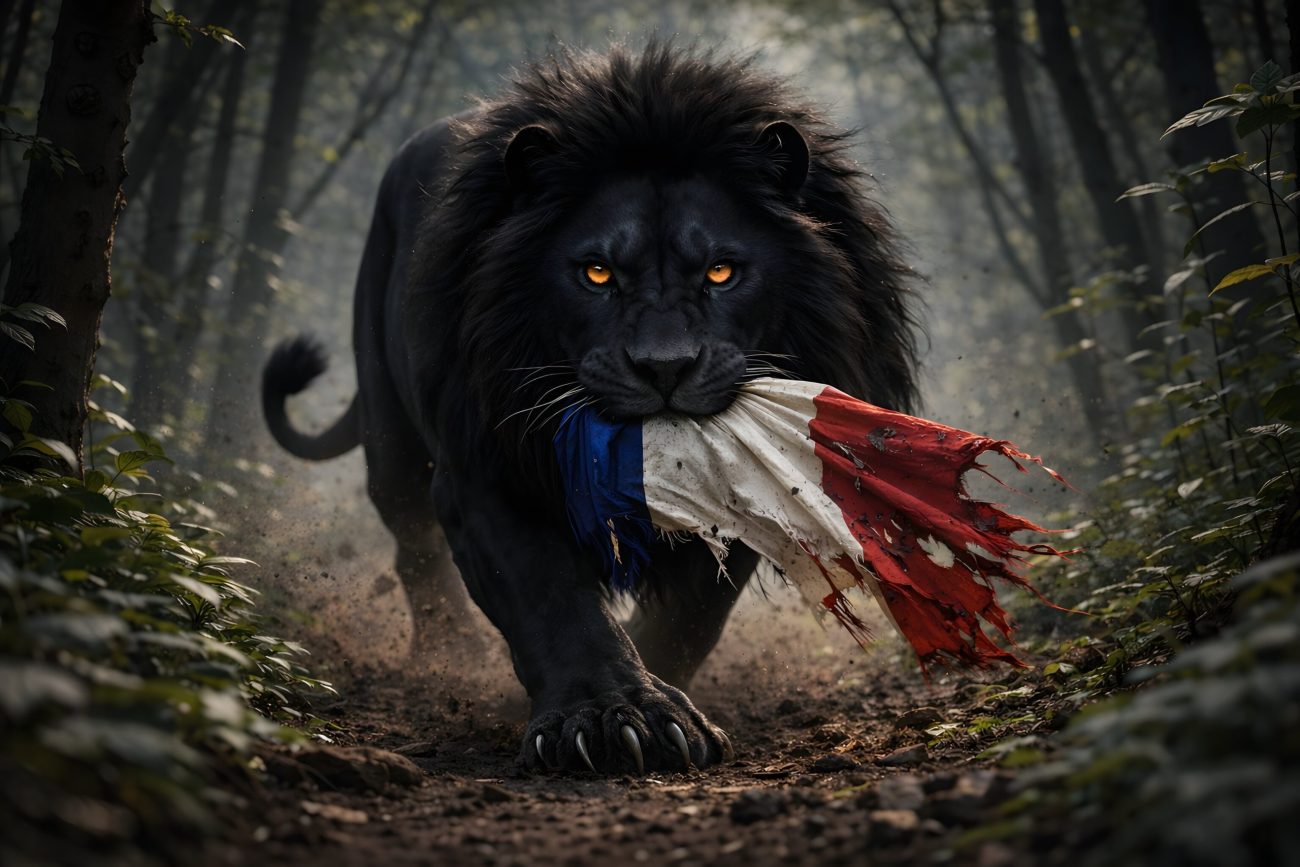
In the forests of Creuse, during the late autumn of 1982, a disturbing presence emerged from the woodland shadows. Livestock across the region—bulls, cows, and sheep—were found brutally killed and mutilated in ways that defied ordinary explanation. The precision of the wounds, the sheer force involved, and the absence of clear tracks convinced many villagers that this was no wolf, dog, or known predator.

A single explanation began to circulate with growing certainty: a lion.

Witnesses spoke of an immense, powerful creature moving silently through the forest, watching from the trees before striking under cover of darkness. One man reportedly came face-to-face with the beast during a hunt, yet could not identify it clearly—only its overwhelming presence, its unnatural size, and its unblinking, golden gaze. These details fed the belief that something foreign, regal, and terrifying had crossed into rural France.

The idea of a lion roaming the French countryside struck at something deeper than fear of an animal. It became a symbol of nature’s refusal to remain contained, of wild forces intruding upon human order. Fields and forests once seen as familiar were reimagined as domains of an unseen sovereign predator, demanding caution and respect.

Though the attacks eventually stopped and no definitive proof was ever found, the creature was never captured, named, or explained away. The Beast of the North remained unresolved—half incident, half legend. In local memory, it endures as a reminder that even in modern times, the wilderness can still give birth to myths, and that the spirit of the lion—silent, powerful, and untamed—can appear where no one expects it, testing the boundary between the known and the unknown.


Sources

Wikipedia contributors. (n.d.). Bête de Noth. In Wikipedia, from https://fr.wikipedia.org/wiki/B%C3%AAte_de_Noth


Apedemak

Tradition / Region: Kingdom of Kush, Sudan Mythology, Egyptian Mythology
Name: –
Category: Deity, Lion


The Myth

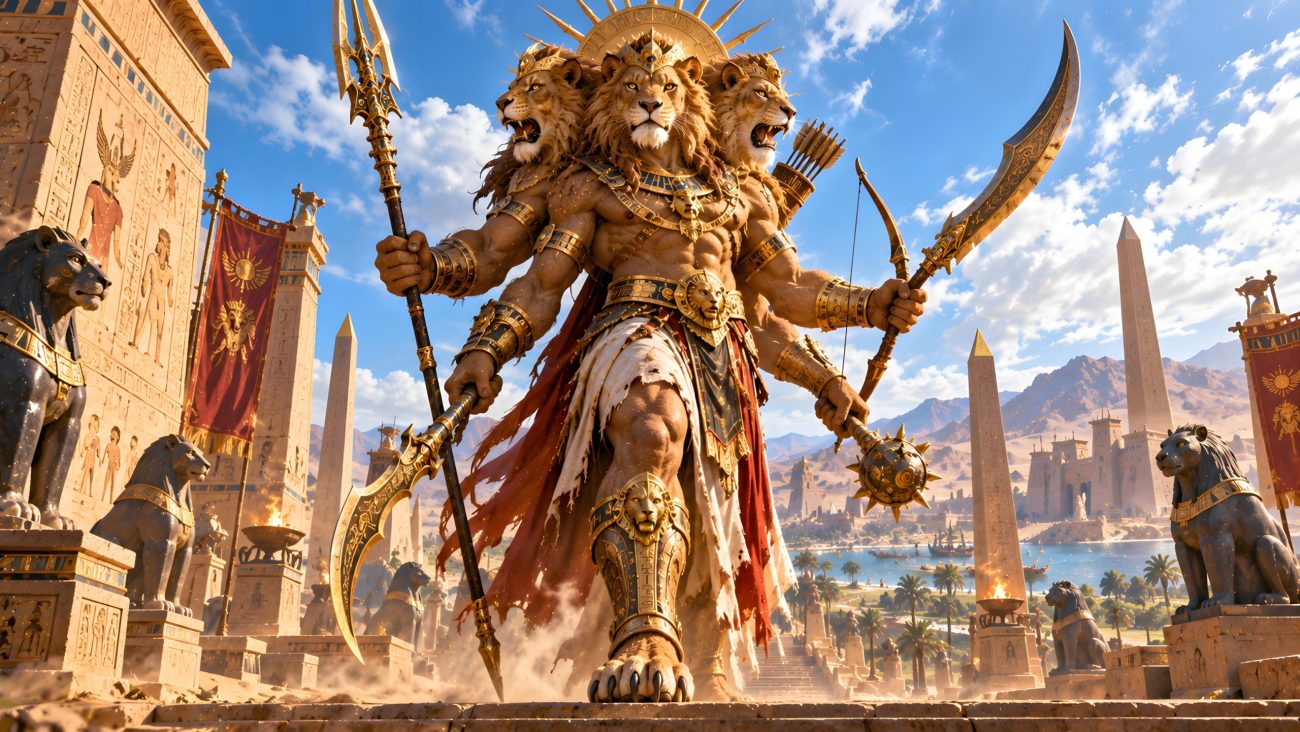
In the lands of Kush, along the life-giving Nile, Apedemak was known as the lion-headed god of war and royal power. He appeared with the body of a man and the head of a lion, radiating strength, authority, and ferocity. In some representations his form was even more fearsome, combining lion, man, and serpent, emphasizing his supernatural nature and his command over chaos and battle.

Apedemak was the divine force behind conquest and kingship. When armies marched and rulers sought to expand their dominion, he was believed to stand behind them, guiding their victories and striking fear into their enemies. He embodied courage, discipline, and the unyielding force of war. To oppose him was to face destruction, for he represented war not as disorder, but as divine judgment.

Yet Apedemak was not solely a god of bloodshed. He was also a giver of life and abundance. In temple reliefs he is shown holding stalks of grain, blessing the land with fertility and ensuring prosperity for those under his protection. Through him, war and life were bound together: victory brought order, and order allowed the land and people to flourish.

His worship was centered at great temple complexes such as Naqa and Musawwarat es-Sufra. These sanctuaries served as places where kings received divine legitimacy. By honoring Apedemak, rulers affirmed that their power flowed not merely from human strength, but from a god who embodied both might and rightful authority.

To the people of Kush, Apedemak was more than a warrior god. He was the living symbol of sovereignty itself—the roar of the lion behind the throne, the unseen hand guiding the fate of kingdoms, and the divine presence that bound war, rule, and fertility into a single, commanding force.


Sources

Wikipedia contributors. (n.d.). Apedemak. In Wikipedia, from https://en.wikipedia.org/wiki/Apedemak


Nurikabe

Tradition / Region: Japan (Edo-period yōkai scrolls)
Alternate Names: —
Category: Yōkai / Lion / Dog


The Myth

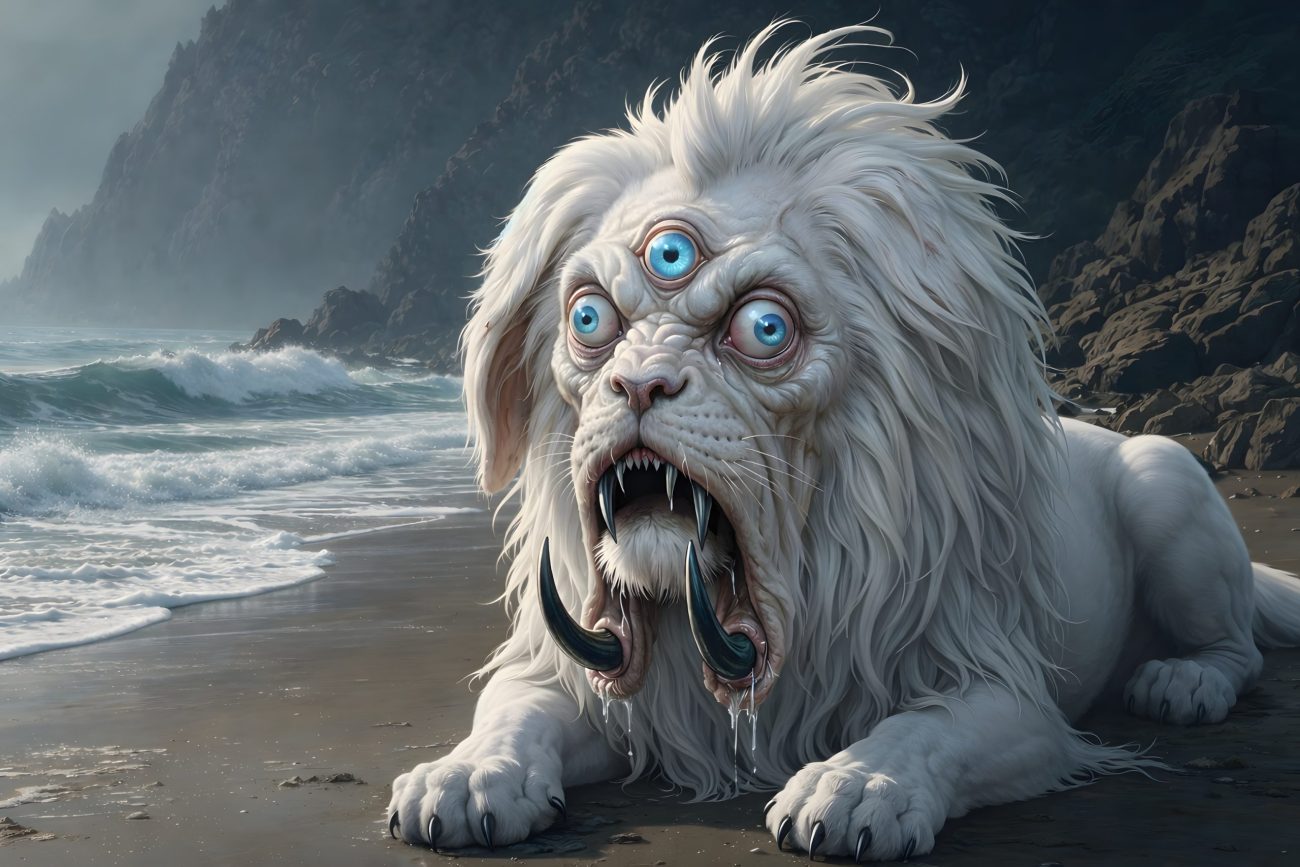
In illustrated yōkai scrolls from Japan, a creature known as the Nurikabe appears in a form unlike the better-known invisible wall of later folklore. This Nurikabe is a tangible beast with four legs and a powerful body. Its most striking feature is its enormous face, which bears three eyes that shine with an unnatural blue light. It has large, drooping ears like those of an elephant and two black tusks that curve outward. Its body is painted white, giving it a ghostly and imposing appearance. Some describe it as resembling a dog or a lion, though it does not fully match any known animal.

In the scrolls where it appears, the Nurikabe is shown near crashing waves. Behind it emerge figures such as Umi-otoko, a human seaman, and Umi-bōzu, a fearsome sea spirit. This setting places the Nurikabe at the boundary between land and sea, standing where the human world meets the supernatural. It does not act directly against the figures shown, but its presence dominates the scene, suggesting a powerful being that guards or obstructs passage.

The scroll depicting this Nurikabe is dated to the early nineteenth century. No clear written legend accompanies it, and its precise origin is unknown. It is uncertain whether this beast represents a specific local tradition or whether it was created by the artist as a yōkai form inspired by existing beliefs. Its connection to the later Nurikabe known for blocking travelers’ paths is not clearly stated in the original material.

As it appears in the scroll, the Nurikabe remains an enigmatic creature: a massive, watchful being standing firm amid waves and spirits, neither clearly hostile nor welcoming, marking a place where movement forward is uncertain and dangerous.


Interpretive Lenses

Religious Readings
Philosophical Readings
Psychological Readings
Esoteric Deep Dive
Political / Social Readings
Other