Léwfrächen

Tradition: Luxembourg Mythology
Alternative Names: Lion Maiden, Lioness of Oak
Category: Lion


The Myth

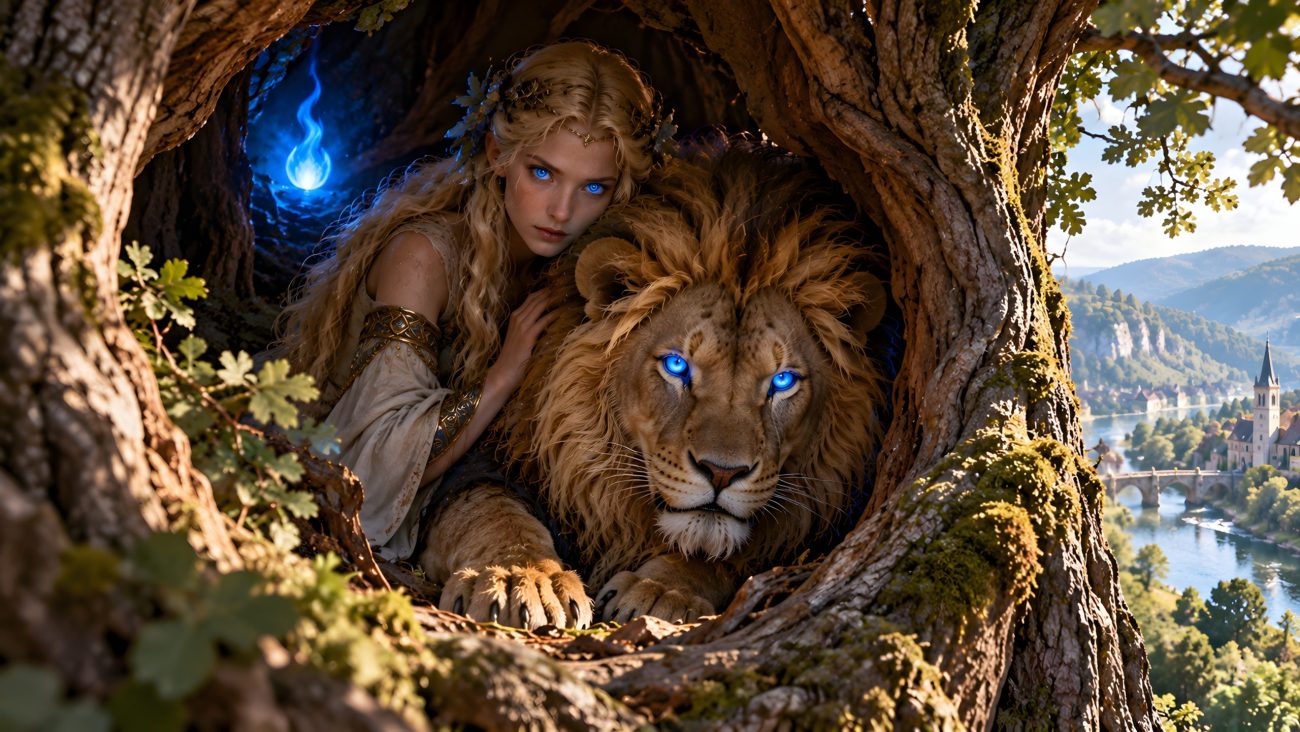
Léwfrächen was a mysterious maiden who lived inside a thick, hollow oak tree near the village of Eich in Luxembourg. She kept a tame lion, which gave her the name Lion Maiden. The hollow tree, known as the Léwfrächeshielchen, stood beside an old path leading into the meadows along the Alzette River. The path became known as the Lion Maiden’s Path, preserving the memory of the strange woman and her feline companion.

The hollow oak was also associated with a will-o’-the-wisp that emerged from its trunk every evening, appearing as a mysterious light in the gathering darkness. The tree became so closely linked to the local landscape that some claimed the village of Eich itself took its name from the hollow oak. Little else is known about Léwfrächen, her lion, or the mysterious light that appeared from their unusual dwelling.


Sources

“Löwenfräulein.” SAGEN.at. https://www.sagen.at/texte/sagen/luxemburg/Loewenfraeulein_Eich.html


Karajishi

Tradition: Japanese Mythology
Alternative Names: Chinese Lion
Category: Lion


The Myth

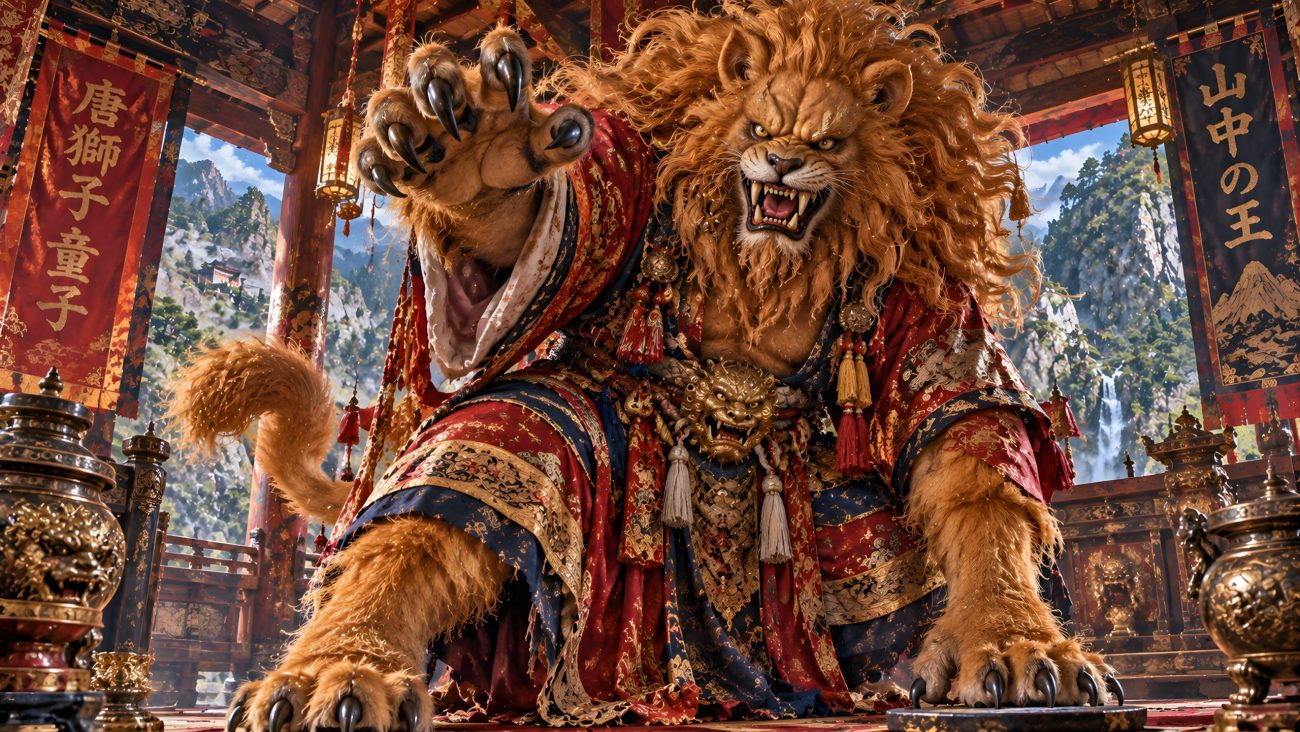
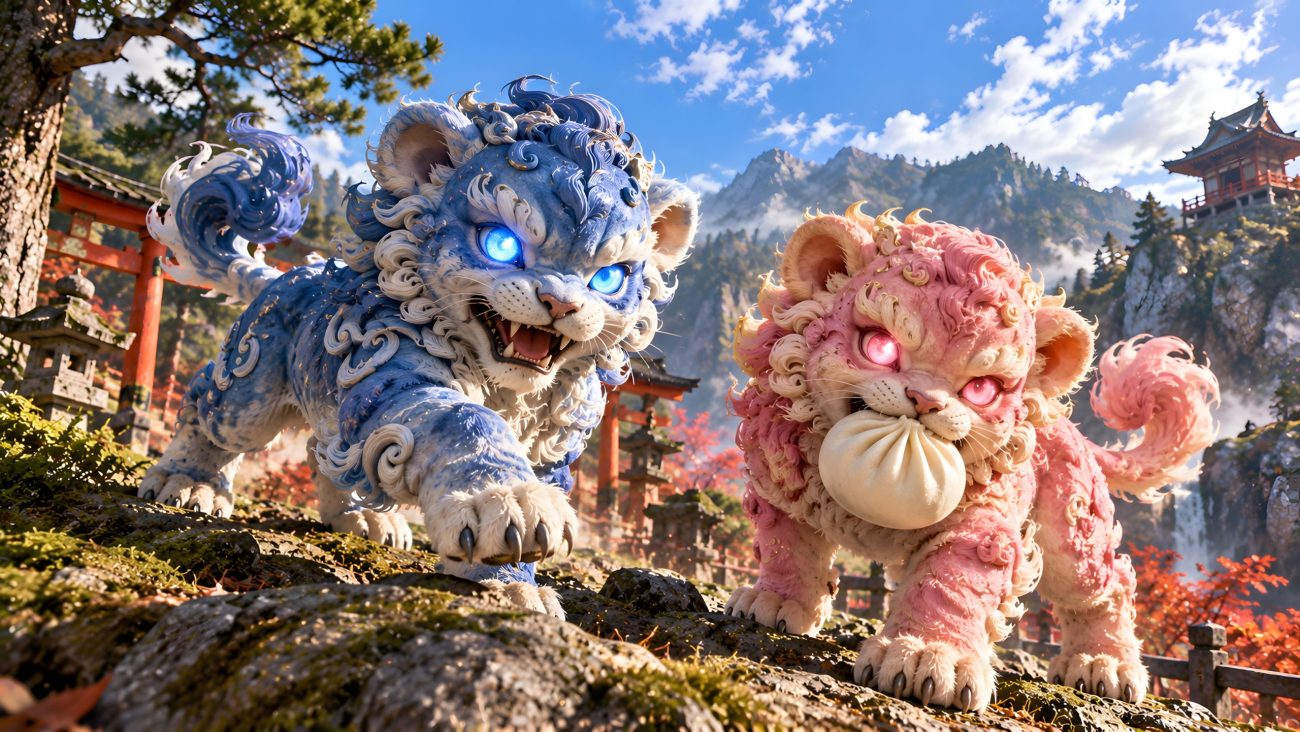
The Karajishi is a legendary Chinese lion associated with the local guardian deity of Miwa in Kagawa Prefecture, Japan. A male and female pair serve as protectors of people who work in the mountains, watching over them as they carry out their labor in the wilderness.

When commanded by the guardian deity, the male Karajishi transforms into a dog and runs off on its mission, with the female following close behind. The female has a curious habit: she always carries a round dumpling in her mouth to eat for lunch. Together, the pair serve the deity and protect those who venture into the mountains.


Sources

“Karajishi.” 新版TYZ 妖怪図鑑 (New TYZ Yokai Encyclopedia). https://tyz-yokai.blog.jp/archives/1073699423.html


Komainu

Tradition: Japanese Mythology
Alternative Names: Guardian Dogs, Lion-Dogs
Category: Lion


The Myth

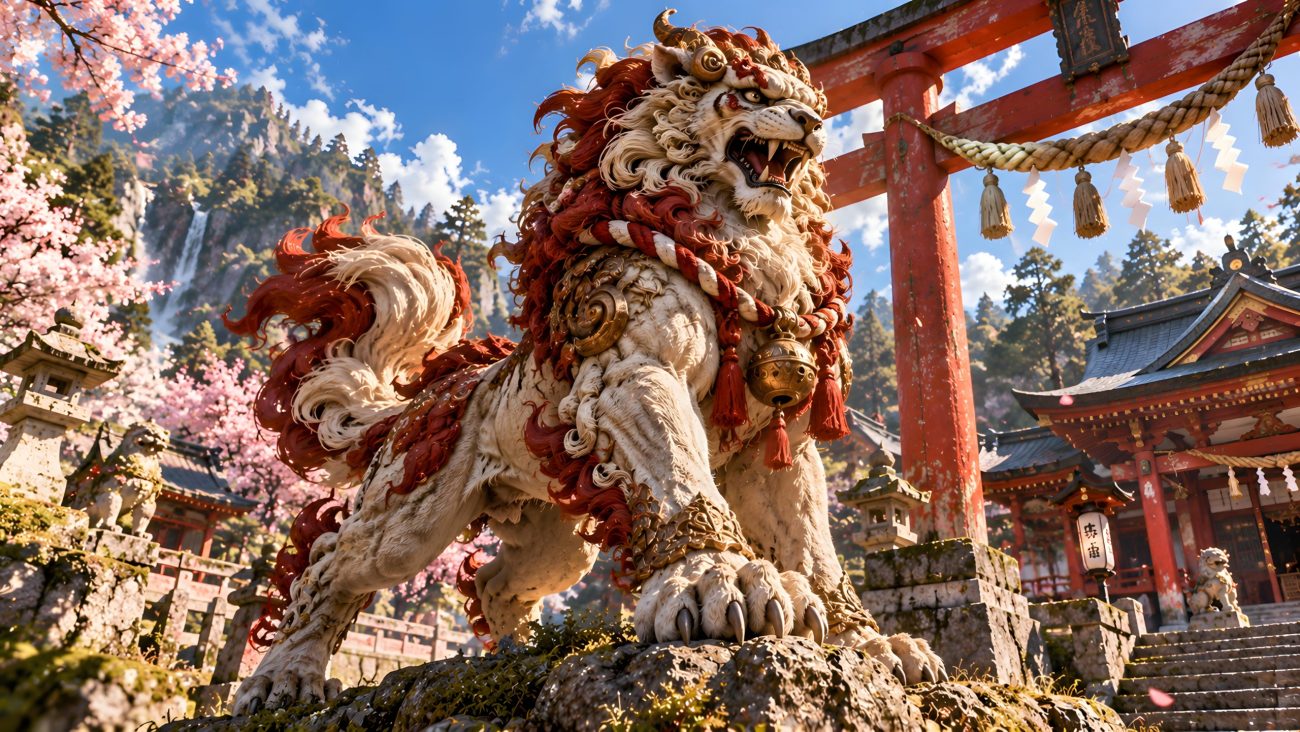
Komainu are large, dog-like or lion-like creatures that guard the entrances of Shinto shrines and Buddhist temples, protecting sacred places from evil. They are usually depicted as a pair of imposing stone statues facing one another, standing on either side of an entrance, main hall, or sanctuary. One has its mouth open, forming the sound A, while the other keeps its mouth closed, forming Un. These two forms stand together as guardians against harmful forces. Traditionally, the open-mouthed figure is identified as a lion, while the closed-mouthed figure is the horned komainu, although both are commonly called komainu today.

The creatures are believed to possess protective and sometimes miraculous powers. Stories from different regions tell of people who suffer misfortune after disrespecting the guardian statues, as well as tales in which the spirits of the statues leave their stone bodies and appear in human form. Their images also adorn objects such as incense burners, censers, and folding screens, where they continue to serve as guardians.

One tale preserved among Japan’s hidden Christians describes a lion-dog rescuing the devout son of a king from a great wave. The story presents the guardian creature as a miraculous protector capable of saving the faithful from disaster. Through such traditions, the Komainu are more than decorative statues: they are watchful guardians whose presence keeps evil away and whose supernatural power can intervene in the lives of human beings.


Sources

“Komainu.” 新版TYZ 妖怪図鑑 (New TYZ Yokai Encyclopedia). https://tyz-yokai.blog.jp/archives/1069301438.html


Hanattara Shishi

Tradition: Japanese Mythology
Alternative Names: Hanattara-shishi,洟垂獅
Category: Lion


The Myth

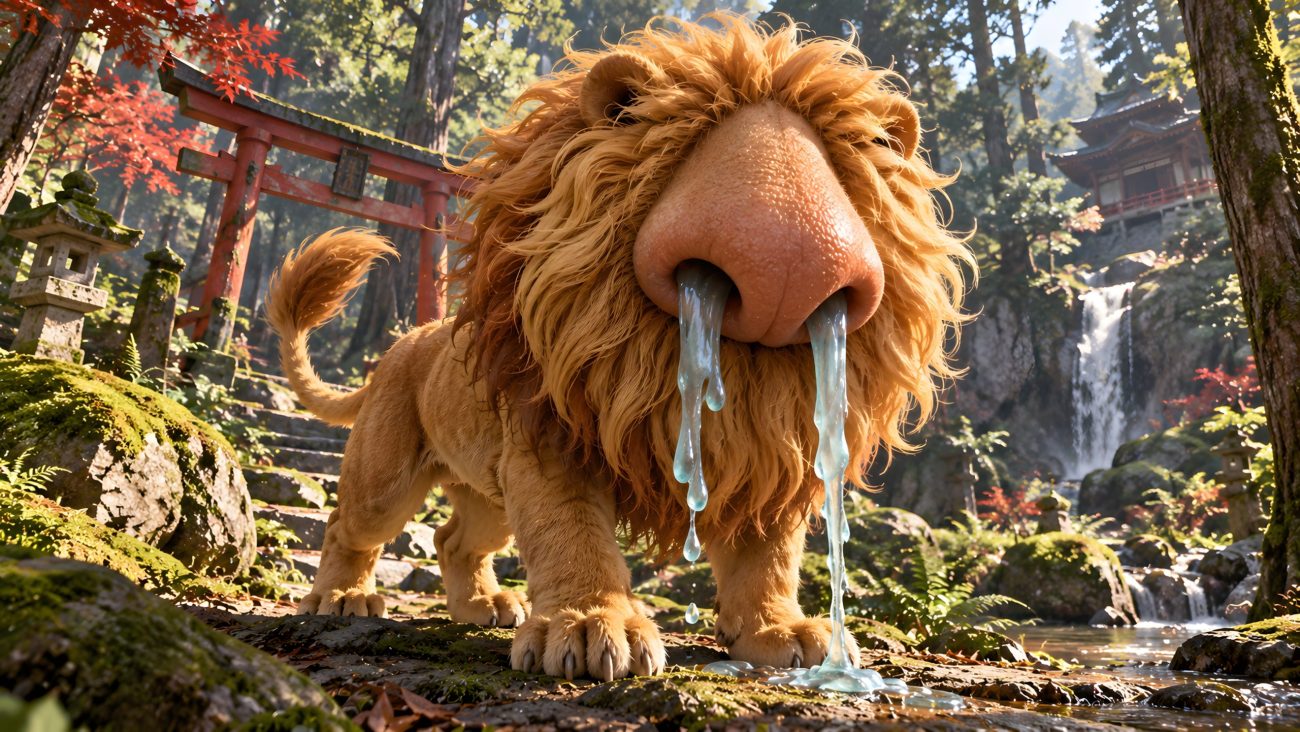
The Hanattara Shishi is a strange lion-like creature with an otherwise ordinary lion’s body and face, distinguished by an enormous nose. From both nostrils, thick blue mucus streams down like that of a small child with a runny nose, giving the beast a childish and comical appearance.

The creature inhabits the Boy’s Country, an island nation encountered by the fisherman Musō Byōe during his fantastical journey through distant lands. In this peculiar country, everyone lives their entire lives as children, and childish behavior fills the land. The Hanattara Shishi appears among the unusual creatures associated with this strange island, reflecting its inhabitants’ perpetual immaturity.


Sources

“Hanatarashishi.” 新版TYZ 妖怪図鑑 (New TYZ Yokai Encyclopedia). https://tyz-yokai.blog.jp/archives/1061090453.html


Myrmecoleon

Tradition: Greek Mythology
Alternative Names: Ant-Lion, Myrmicioleon, Formicaleon, Formicaleun, Mirmicioleon
Category: Lion


The Myth

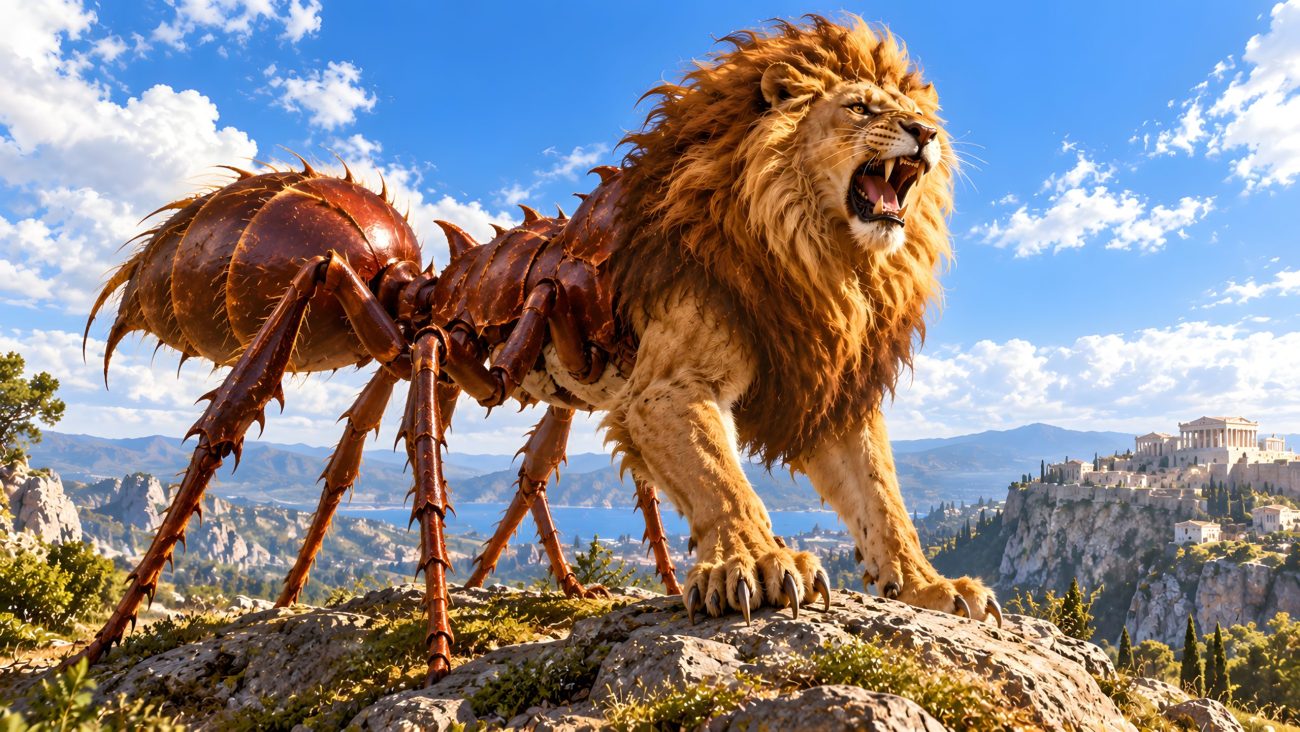
The Myrmecoleon, or Ant-Lion, is a fantastical creature combining the ant and the lion. Its name comes from the Greek words myrmex, meaning ant, and leon, meaning lion. The creature appears in ancient and medieval Christian bestiaries, where it became a strange symbol of the natural world’s contradictions. Its name may have originated from a translation error in the Greek version of the Book of Job, before the creature appeared in the Physiologus, an early Christian collection of stories about animals and their spiritual meanings.

The Myrmecoleon was preserved in medieval bestiaries, including the Hortus Sanitatis of 1491. Its identity as an ant-lion made it a curious creature of the bestiary tradition, linking the small ant with the mighty king of beasts. It was also known by several alternative names, including Formicaleon and Formicaleun.

A separate description in the Aberdeen Bestiary gives the name mermecoleon to a remarkable sea stone. Hollow and round, the stone is divided into two parts that can close together. It rests on the seabed and comes alive in the early morning, rising toward the surface and opening its mouth to collect heavenly dew. As sunlight shines upon it, the dew develops inside the stone into a precious, radiant pearl. In this account, the creature’s name is associated not with a hybrid animal, but with a wondrous marine object that produces a pearl through the meeting of heavenly moisture and sunlight.


Sources

“Myrmecoleon.” Wikipedia: The Free Encyclopedia. Wikimedia Foundation. Accessed October 21, 2026. https://en.wikipedia.org/wiki/Myrmecoleon


Karajishi Dōji

Tradition: Japanese mythology
Alternative Names: Karajishi Dōji, Chinese Lion Boy
Category: Demon, Lion


The Myth

Karajishi Dōji is the leader of the demons in the Edo-period picture book Saru no Yamairi Karajishi Dōji. In the story, the characters from the legend of Minamoto no Yorimitsu and his retainers defeating Shuten-dōji are replaced by animals, with Karajishi Dōji taking the role of Shuten-dōji, the leader of the demons.

The warriors who oppose him are represented by a monkey, corresponding to Minamoto no Yorimitsu, accompanied by four animal warriors: a dragon representing Watanabe no Tsuna, a horse representing Sakata Kintoki, a rat representing Usui Sadamitsu, and a rabbit representing Urabe Suetake. A lone boar represents Hirai Yasumasa.

The conflict begins at Rashōmon, where the dragon and rat confront a tiger representing Ibaraki Dōji. They succeed in cutting off the tiger’s arm, but the tiger and a sheep recover the severed arm and take it away.

The monkey and his companions pursue them into the mountains. Disguised as mountain ascetics, they reach the stronghold of Karajishi Dōji and are invited into his mansion. To gain the demon boy’s trust and lower his guard, the group performs a monkey show for him.

When the opportunity arises, the monkey and his companions launch their attack. With the assistance of Sannō Gongen, the guardian deity of Mount Hiei whose messengers are monkeys, they scatter Karajishi Dōji and his demonic followers, represented by the tiger, sheep, and dogs.


Sources

Takahashi, Toshihiro. “唐獅子童子 [からじしどうじ] (Karajishi Dōji).” 新版TYZ 妖怪図鑑 (New TYZ Yokai Encyclopedia). September 24, 2016. https://tyz-yokai.blog.jp/archives/1061255510.html


Kraisorn Karwee

Tradition / Region: Thai Mythology
Alternative names: Singha Karwee
Category: Cow, Lion


The Myth

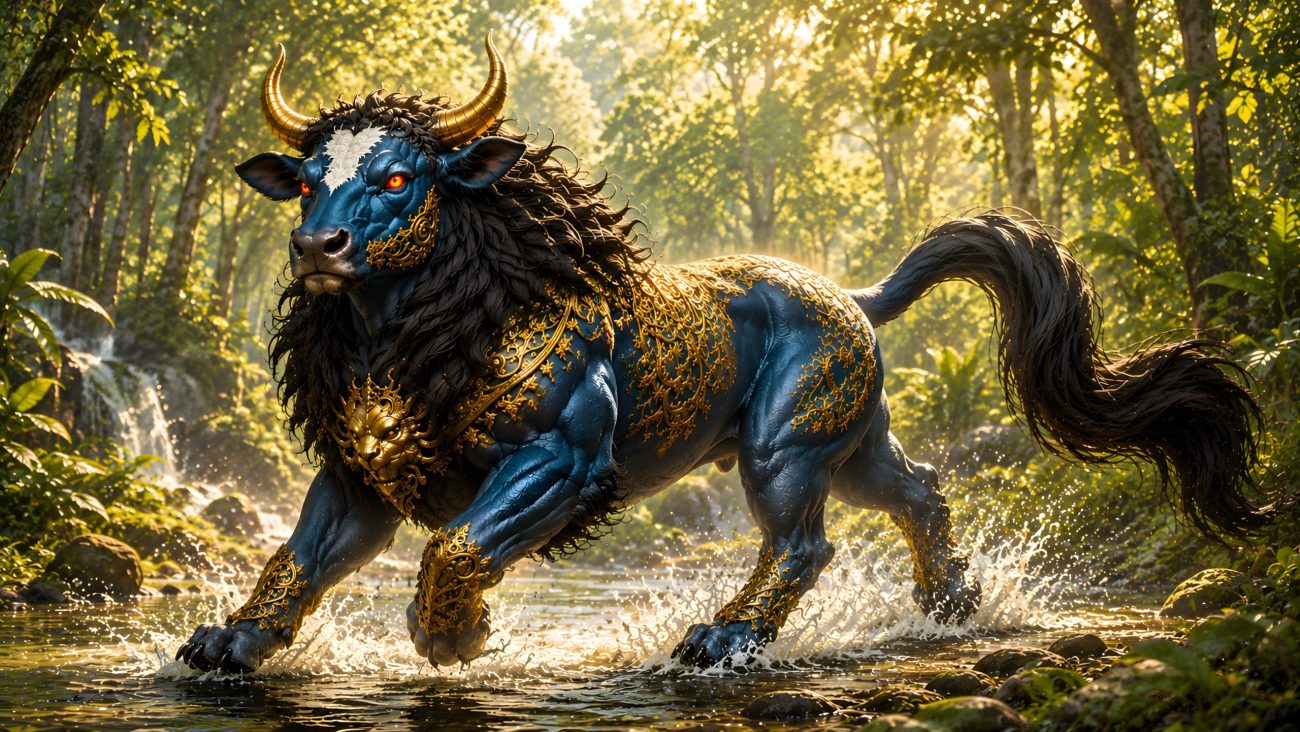
Kraisorn Karwee is a fantastic creature combining the features of a cow and a lion. It generally has the head of a cow and the body of a lion.

Some depictions give Kraisorn Karwee a single horn, the body of a lion, and the tail of a horse. It resembles the related Singha Karwee, another creature combining an ox and a lion, but Singha Karwee is distinguished by its lack of the horse-like tail.


Sources

“The Mythical Creatures in Thailand.” Explore Bangkok. Accessed August 21, 2026. https://www.explore-bangkok.com/mythical-creatures-in-thailand/


Svikiro

Tradition / Region: Zimbabwe Mythology
Alternative names: Spirit Medium
Category: Ghost, Lion


The Myth

The Svikiro is an ancestral spirit that speaks through a living person, using the medium as a bridge between the world of spirits and the world of humans. The name comes from the idea of “arriving,” for it is believed that the ancestors arrive within the bodies of their chosen hosts.

When a Svikiro possesses a person, it communicates with the living, offering guidance, warnings, and advice. Through dreams, visions, and trance, the ancestral spirit reveals its wishes and helps maintain harmony within the community.

Svikiro mediums occupy positions of great respect. They act as messengers between humanity and the spirit world, performing rituals, making offerings, and conducting ceremonies of healing. They are entrusted with safeguarding the welfare of society and protecting it from misfortune and spiritual disturbances.

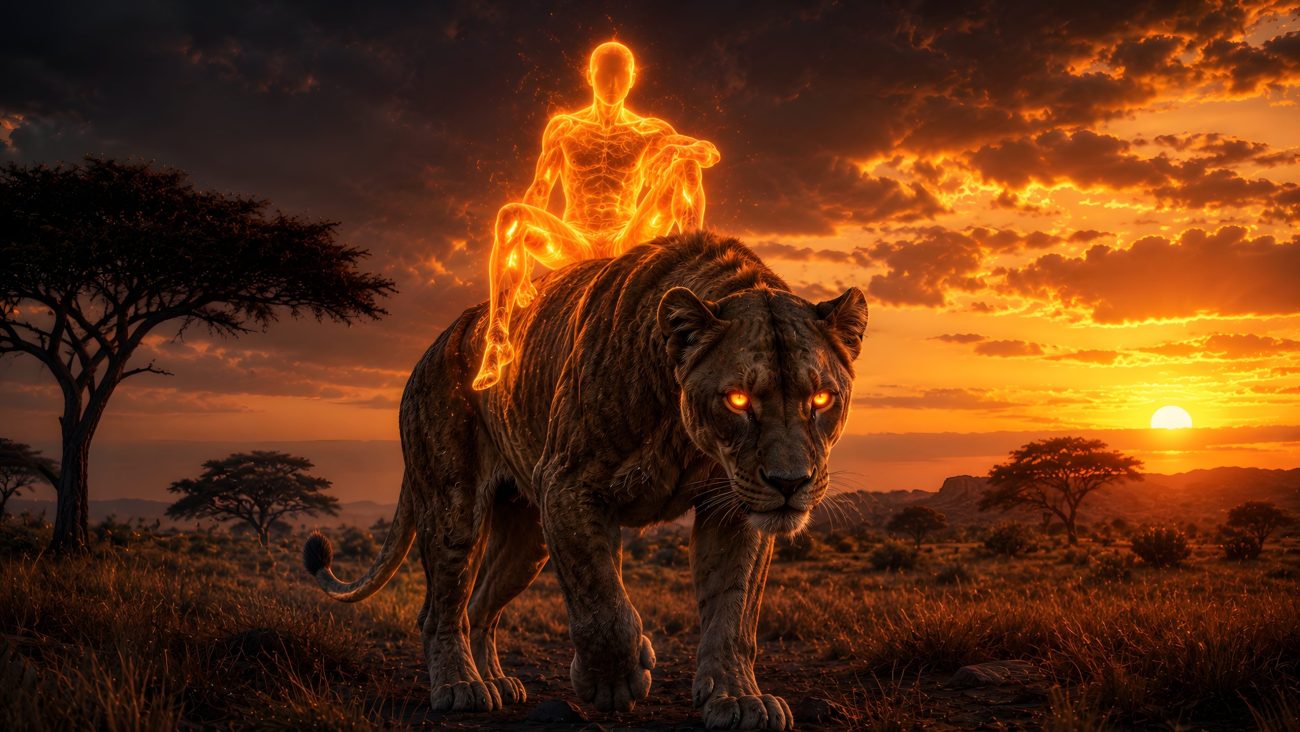
Among the most powerful spirits are the Mhondoro, the royal ancestral spirits of deceased chiefs and kings. Their name means “lion,” and they are believed to dwell within maneless lions until they find a human medium to possess. Concerned with the well-being of clans, territories, and the nation itself, these royal spirits guide their people through the Svikiro.

Thus, the Svikiro is remembered not as a ghost of terror, but as a sacred ancestral presence—a spirit that descends upon the living to bring wisdom, healing, protection, and the voices of those who came before.


Sources

Wikipedia contributors. (n.d.). Svikiro. In Wikipedia. Retrieved June 20, 2026, from https://en.wikipedia.org/wiki/Svikiro


Aluel

Tradition / Region: Sudanese Mythology
Alternative names: Lioness-Girl Aluel
Category: Lion


The Myth

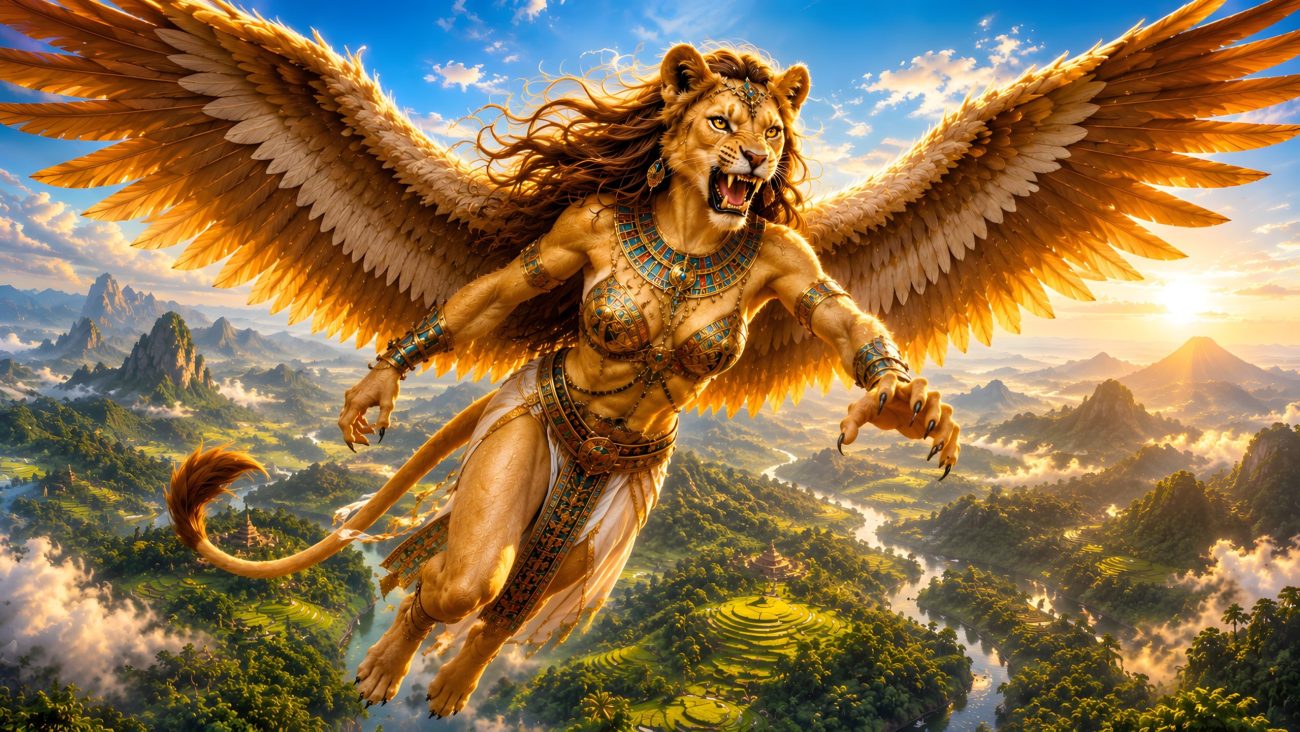
Aluel was a terrifying lioness-woman from Dinka mythology who lived between the human world and the wilderness. She appeared as a supernatural young woman but possessed the nature and strength of a monstrous lioness. Wild, powerful, and feared, she hunted human beings and moved through the bush with unnatural speed and ferocity. Some stories describe her almost like a spirit of the untamed land itself.

Aluel became obsessed with a girl named Atholong, whose beauty had spread across the cattle camps. Atholong had been raised from birth by a man named Chol, who loved her from the moment she was born and later intended to marry her. When Aluel heard of the girl’s beauty, she secretly came to the cattle-camp and hid nearby, waiting for a chance to seize her.

One night Atholong wandered near the edge of the camp, and Aluel attacked. The lioness seized her and carried her away deep into the wilderness. Aluel was so powerful and wild that she could fly through the air while carrying her victim. Yet after taking Atholong, she found herself unable to kill her. Each time she prepared to devour the girl, she became overwhelmed by her beauty and delayed the act again. Instead, she brought her meat, cared for her, and kept her hidden in the forest.

The two lived together for a long time in the bush. Atholong would sing mournful songs about her disappearance and about Chol, while Aluel answered her from the darkness of the forest. Eventually warriors from the cattle-camp tried to rescue the girl, but all fled in terror when they encountered the lioness. Even Atholong’s former suitor failed to face her. Only Chol continued onward alone, carrying many sharpened spears.

When Chol finally reached the place where Atholong was held, Aluel was preparing a special platform covered with grass so the girl’s skin would not touch dirt when she ate her. Before fighting, the lioness repeatedly transformed herself into a more savage and monstrous form. Her tongue changed color from red to green to nearly black as she became fully wild and supernatural. Only then did Chol attack her with his spear.

Mortally wounded, Aluel accepted death calmly. Before dying, she blessed Atholong’s future marriage and children. She ordered Chol and Atholong to dedicate a calf to her spirit once their first daughter married, promising fertility, health, and prosperity in return. Chol later fulfilled the command, and Atholong gave birth to many children, becoming the ancestor of a vast family.


Sources

Deng, F. M. (1974). Dinka folktales: African stories from the Sudan. New York: Africana Publishing Company.
Miyar

Tradition / Region: Sudanese Mythology
Alternative names: Muyar
Category: Lion


The Myth

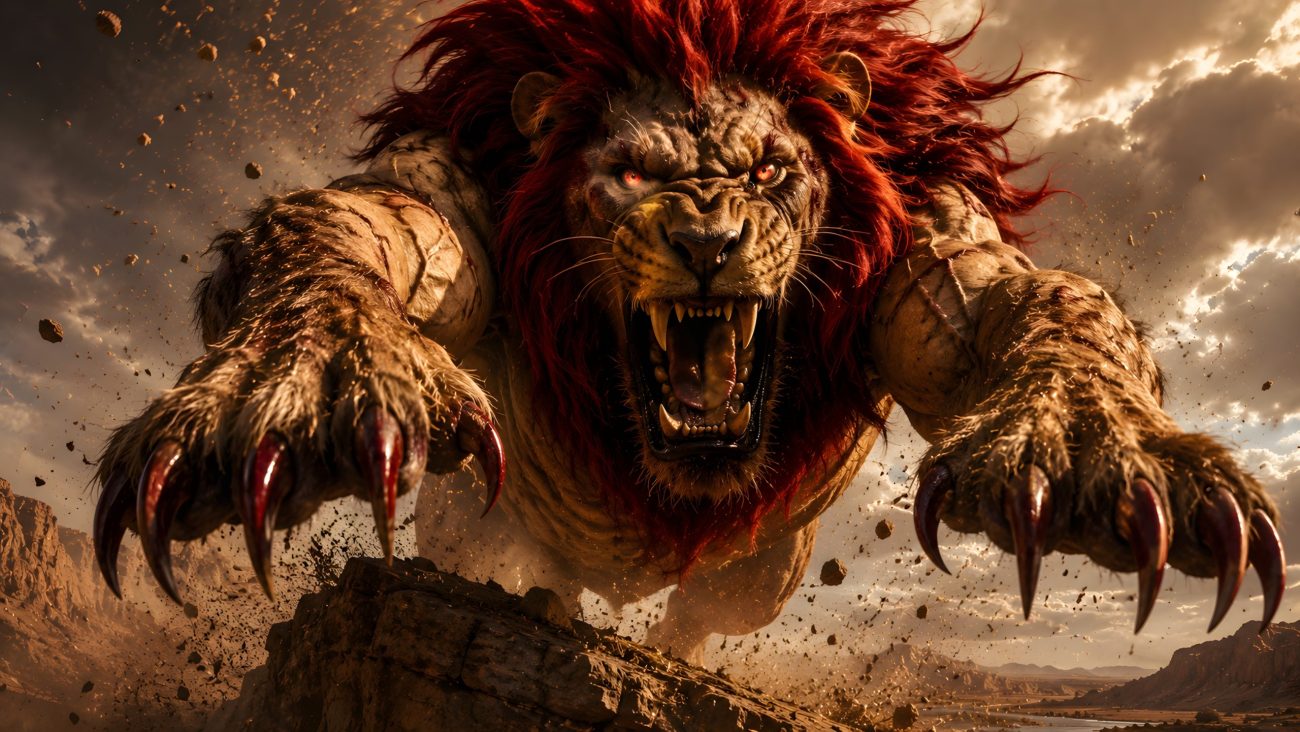
Miyar was a powerful lion-chief from Dinka folklore who ruled over a hidden settlement of lions living like human cattle-herders deep in the wilderness. He was the son of Yor, a lion warrior, and the nephew of a lioness who had once raised two human brothers named Deng.

After the lioness was killed by her own son for attacking his human foster-brother, Yor came seeking revenge but was himself slain. Before dying, Yor warned that his son Miyar would someday avenge him.

Miyar later became chief among the lion people. His cattle-camp was feared and well known, and both lions and strange hornless cattle lived under his rule. These hornless cattle were believed to belong to the lions and could themselves become lions and lionesses.

The two brothers eventually traveled into the land of the lions to confront Miyar before he could attack them first. Carrying only axes and a club, they searched through lion settlements while singing a song announcing themselves and the deaths of Miyar’s relatives.

When Miyar finally heard the song, he recognized Deng immediately and came out to meet him. Instead of attacking like a wild beast, Miyar chose to wrestle as though he were human. The two fought for a long time before Deng threw Miyar to the ground. Deng’s brother then struck Miyar in the head with an axe and killed him.

After Miyar’s death, panic spread through the lion camp. The lions fled into the wilderness, and the hornless cattle transformed into lions and disappeared with them into the forest. Only ordinary horned cattle remained behind for the brothers to take home.


Sources

Deng, F. M. (1974). Dinka folktales: African stories from the Sudan. New York: Africana Publishing Company.