Mājas gars

Tradition / Region: Latvia
Alternate Names: House spirit, house god, lord of the house
Category: House dweller, Frog, Insect, Beetle, Snake


The Myth

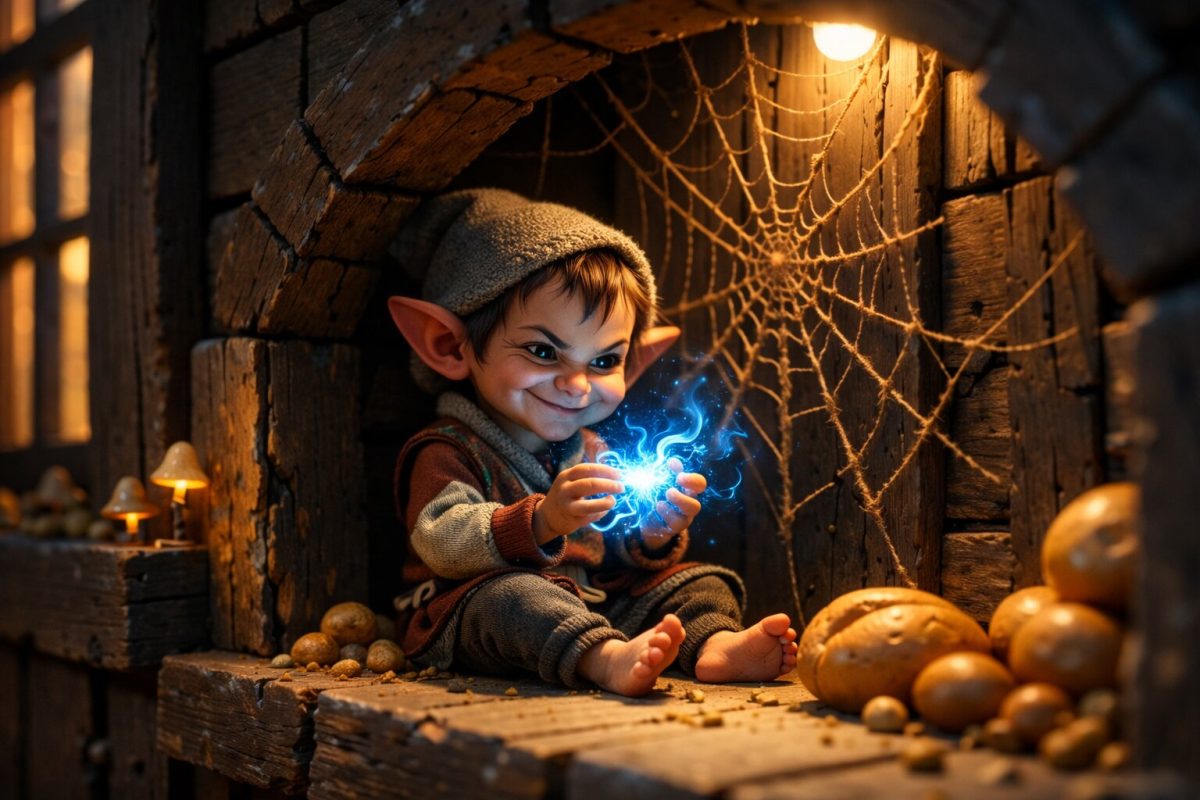
Mājas gars is a household spirit in Latvian mythology that protects the inhabitants of a home from evil and brings prosperity and good fortune. It is regarded as one of the lower deities (dieviņi) and is sometimes called Mājas kungs, the Lord of the House. The spirit is associated with the hearth and may dwell behind the stove, beneath the floor, or elsewhere in the farmstead, and it could still be honored in some places as late as 1935.

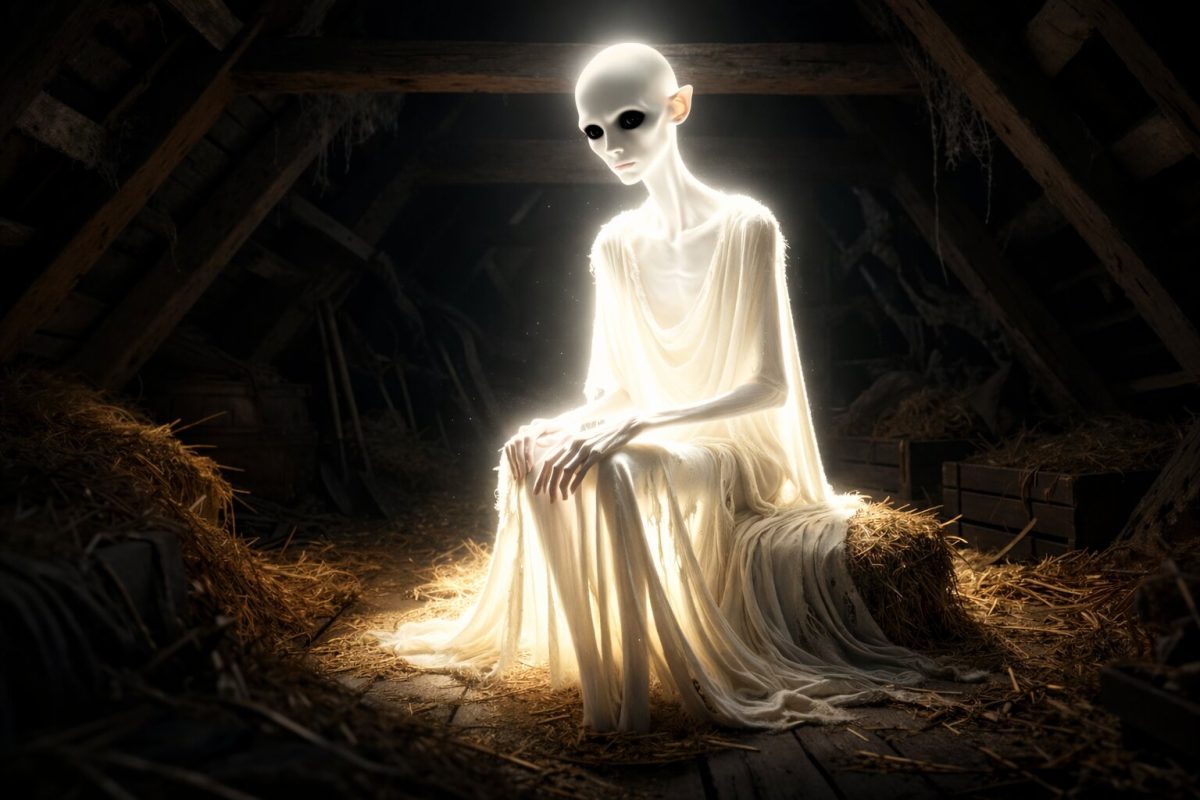
Mājas gars watches over the household and everything within it, ensuring the protection of the home and the well-being of the family. The spirit may appear to people in different forms, sometimes as a man or woman dressed in white, and at other times as an animal connected to the home, such as a toad, a snake, or a beetle. It is understood as a presence guarding the house, living near the hearth or elsewhere on the farmstead, and acting as the household’s protective spirit, bringing good fortune and keeping away harmful forces.

Gallery


Sources

Wikipedia contributors. (n.d.). Mājas gars. In Wikipedia, from https://lv.wikipedia.org/wiki/M%C4%81jas_gars


Interpretive Lenses

Religious Readings
  • Christian Ascetic Deep Dive
Philosophical Readings
  • Nietzschean Deep Dive
Psychological Readings
  • Jungian Deep Dive
Esoteric Deep Dive
  • Hermetic Deep Dive
Political / Social Readings
  • Marxist Deep Dive
Other
  • How to Invite The Kuygorozh

Little One of Reussen

Tradition / Region: Romanian Mythology
Alternate Names: The Little One; The Bought Little One; The Farmer’s Familiar
Category: House dweller, Gnome


The Myth

In the village of Reussen there once lived a farmer who had acquired a being known as the Little One. He had obtained it for money, and from that time onward wealth flowed to him in such abundance that he scarcely knew what to do with it.

Every year he built new stables, barns, and sheds, only to tear them down again and rebuild them, simply to spend the money that continued to pour in.

Yet despite his riches, he found no peace. At last, wishing to be rid of the being, he bored a hole into a heavy floor beam with a large drill. Into this hole he forced the Little One and sealed it tightly, hoping to imprison it there forever.

But the Little One would not be confined. It burst the prison apart and destroyed everything the farmer possessed. His buildings were ruined, his property laid waste, and all his wealth vanished.

In the end, when the farmer went into the forest and leaned his rifle against a ladder, the Little One seized the weapon. It fired the gun and shot the man who had tried to betray it.

Thus the farmer lost both his fortune and his life to the very being that had once made him rich.


Gallery


Sources

sagen.at contributors. (n.d.). Der „Kleine“ in Reußen. In sagen.at, from https://www.sagen.at/texte/sagen/rumaenien/siebenbuergen/reussen.html


Interpretive Lenses

Religious Readings
  • Christian Ascetic Deep Dive
Philosophical Readings
  • Nietzschean Deep Dive
Psychological Readings
  • Jungian Deep Dive
Esoteric Deep Dive
  • Hermetic Deep Dive
Political / Social Readings
  • Marxist Deep Dive

Little One of Alzen

Tradition / Region: Romanian Mythology
Alternate Names: The Little One; The Hidden Boy; House Little One
Category: House dweller, Gnome


The Myth

In the village of Alzen there once lived a farmer named Stefan Guipets. In his house, people said, there lived a small unseen being known only as the Little One.

Whenever the family sat down to eat, they always threw the first bite beneath the table for him. In return, the household prospered. In the pantry stood a sack of grain that was never empty, no matter how much was taken from it. Yet no one was allowed to touch this sack carelessly, for it belonged to the Little One.

On the chimney of the house the farmer had written a warning:

“Whoever wants to keep something secret
must not tell any woman.”

And so the Little One remained in the house, unseen, fed, and quietly guarding the farmer’s fortune.


Gallery


Sources

sagen.at contributors. (n.d.). Der „Kleine“ in Alzen. In sagen.at, from https://www.sagen.at/texte/sagen/rumaenien/siebenbuergen/alzen.html


Interpretive Lenses

Religious Readings
  • Christian Ascetic Deep Dive
Philosophical Readings
  • Nietzschean Deep Dive
Psychological Readings
  • Jungian Deep Dive
Esoteric Deep Dive
  • Hermetic Deep Dive
Political / Social Readings
  • Marxist Deep Dive

Heinzelmännchen

Tradition / Region: German Mythology
Alternate Names: Heizemännche, Heizemänncher, Hänneschen
Category: House dweller, Gnome


The Myth

Long ago in the city of Cologne, the people lived with remarkable ease. Bakers slept late, tailors lounged on benches, and craftsmen moved through their days unburdened by toil. This was because, every night while the city slept, the Heinzelmännchen came.

They were small, naked little men who appeared silently after darkness fell. No one ever saw them arrive. They crept into kitchens, workshops, and storerooms, baking bread, washing clothes, mending tools, sweeping floors, and finishing every task left undone. By dawn, all work was complete. When the citizens awoke, they found their chores finished as if by magic.

So long as no one tried to see them, the Heinzelmännchen remained faithful helpers. But curiosity is hard to restrain.

One night, a tailor’s wife grew determined to discover who truly labored in her workshop. Before going to bed, she scattered dried peas across the floor and hid herself nearby. When the Heinzelmännchen arrived and began their work, they slipped on the peas, tumbled over one another, and fell in a noisy heap.

Realizing they had been spied upon and mocked, the Heinzelmännchen were furious. Without a word, they gathered themselves and vanished into the night.

They never returned.

From that day forward, the people of Cologne were forced to rise early and work with their own hands. Bread had to be baked, floors scrubbed, and tools repaired by human effort alone. And so the city learned a lasting lesson: unseen help must be respected, and some mysteries are better left undiscovered.

To this day, the story is told at Christmastime, when quiet houses and winter nights still seem to whisper of the little men who once worked while all Cologne slept.


Gallery


Sources

Wikipedia contributors. (n.d.). Heinzelmännchen. In Wikipedia, The Free Encyclopedia (German), from https://de.wikipedia.org/wiki/Heinzelm%C3%A4nnchen


Interpretive Lenses

Religious Readings
  • Christian Ascetic Deep Dive
Philosophical Readings
  • Nietzschean Deep Dive
Psychological Readings
  • Jungian Deep Dive
Esoteric Deep Dive
  • Hermetic Deep Dive
Political / Social Readings
  • Marxist Deep Dive
Other
  • How to Invite The Heinzelmännchen

Toornmannetje

Tradition / Region: Dutch Mythology
Alternate Names: Torenmannetjes
Category: Gnome, House dweller


The Myth

In the village of Onstwedde it was once said that small beings lived high in the church tower. These were the Toornmantjes, also called the Torenmannetjes — kabouters who were anything but harmless. From their place in the tower they watched the surrounding land, and when angered, they brought misfortune down upon the fields. Hail would suddenly fall from a clear sky, crops would fail, and farmers would stare helplessly at ruined harvests. Chickens vanished from coops in the night, taken silently, as if by unseen hands.

The Toornmantjes were not creatures of constant malice. Like many spirits of the land, they were deeply sensitive to how humans treated them. If respected, they could be helpful, quietly assisting a household or sparing a farmer from loss. But if insulted, ignored, or disturbed, their anger showed itself swiftly and without mercy.

One farmer learned this the hard way. While working his land, he found a small porcelain figurine and thought it charming. He took it home and placed it on the mantelpiece above the hearth. From that moment on, everything in the house began to go wrong. Illness spread among the family, accidents followed one another, and no effort seemed able to restore peace.

Desperate, the farmer called for the priest. The moment the priest saw the figurine, he understood. It was no harmless ornament — it was a Toornmannetje. By removing it from its place and bringing it into the house, the farmer had offended the tower spirits and drawn their wrath upon himself.

The warning passed down in Onstwedde was clear: these little men are not to be mocked or mishandled. Treat them with care, and they may help you. Cross them, and they will answer with hunger, sickness, and ruin. The Toornmantjes remember every slight — and from their tower, they do not forget.


Gallery


Sources

Abe de Verteller contributors. (n.d.). Van aardmannetje tot zwarte juffer: Een lijst van Nederlandse en Vlaamse elfen en geesten. In Abe de Verteller, from https://abedeverteller.nl/van-aardmannetje-tot-zwarte-juffer-een


Interpretive Lenses

Religious Readings
  • Christian Ascetic Deep Dive
Philosophical Readings
  • Nietzschean Deep Dive
Psychological Readings
  • Jungian Deep Dive
Esoteric Deep Dive
  • Hermetic Deep Dive
Political / Social Readings
  • Marxist Deep Dive
Other
  • How to Invite The Toornmannetje

Little Peterman

Tradition / Region: German mythology
Alternate Names: Petermännchen
Category: House dweller, Gnome


The Myth

Deep within the halls, vaults, and tunnels of Schwerin Palace lives Little Peterman, a small but vigilant household spirit who has guarded the castle for centuries. He is only a few feet tall and is most often seen carrying a heavy ring of keys, which jangle softly as he wanders through locked doors and hidden passages beneath the palace. Some say he also bears a lantern to light his way, and at times a sword or dagger, marking him as both watchman and protector.

Little Peterman is good-natured toward the honest. He rewards loyalty and upright behavior, and he is especially known for watching over the castle’s guards. Soldiers who fell asleep during night watch were sometimes shaken awake by an unseen hand or startled by sudden noises—saving them from severe punishment or disgrace. In this way, Peterman acted not as an enforcer of discipline, but as a quiet guardian of those who tried to do their duty.

Thieves and intruders, however, receive no such kindness. To them, Little Peterman becomes a tormentor. He bangs on doors, crashes through corridors, rattles chains, and plays relentless pranks until the unwelcome guest flees the castle in terror. His noises echo through the night, reminding all that the palace is never truly unguarded.

One old legend says that when Christianity came to the region, the pagan god once worshipped on the site of Schwerin Castle fled, taking his servants with him. Only one remained behind: Little Peterman, who refused to abandon his post. Another tale claims he once worked as a blacksmith in the underground tunnels, forging tools or weapons long forgotten, and that his spirit remained after death to protect the place he knew best.

Little Peterman does not have a single fixed appearance. Some have seen him as a small old man with a long white beard flowing to his waist. Others describe him as a jaunty cavalier with a feathered hat, curled moustache, waistcoat, and riding boots with spurs. Whatever his form, he is always unmistakably at home in the castle.

To this day, Little Peterman is remembered as the faithful spirit of Schwerin Palace: loyal, watchful, playful, and stern by turns—a reminder that even stone walls and locked doors may have a living memory that refuses to leave.


Gallery


Sources

Wikipedia contributors. (n.d.). Petermännchen. In Wikipedia, The Free Encyclopedia, from https://en.wikipedia.org/wiki/Peterm%C3%A4nnchen


Interpretive Lenses

Religious Readings
  • Christian Ascetic Deep Dive
Philosophical Readings
  • Nietzschean Deep Dive
Psychological Readings
  • Jungian Deep Dive
Esoteric Deep Dive
  • Hermetic Deep Dive
Political / Social Readings
  • Marxist Deep Dive
Other
  • How to Invite The Little Peterman

Burggruef Gnome

Tradition / Region: Luxembourgish Mythology
Alternate Names: Wichtel
Category: Gnome, House dweller


The Myth

In the town of Grevenmacher, people once believed that small gnomes lived in the Burggruef, the old castle moat. These beings were not hidden enemies or frightening spirits, but friendly little folk who moved easily between their own hidden dwelling and the world of humans.

The gnomes were said to walk openly among the townspeople, helping where they could and bringing quiet good fortune. Unlike many other little folk, they were not feared or avoided. Instead, they were loved, welcomed, and spoken of with warmth. Their presence was believed to bring harmony to the town, as if the land itself was content.

Over time, the gnomes of the Burggruef faded from sight. Whether they withdrew deeper into the earth or simply left when belief in them waned was never known. Yet the memory remained: that once, in the castle moat of Grevenmacher, small hidden beings lived close to humanity, and for a time, both worlds shared the same ground in peace.


Gallery


Sources

SAGEN.at contributors. (n.d.). Wichtlein (Grevenmacher). In SAGEN.at, from https://www.sagen.at/texte/sagen/luxemburg/Wichtlein_Grevenmacher.html


Interpretive Lenses

Religious Readings
  • Christian Ascetic Deep Dive
Philosophical Readings
  • Nietzschean Deep Dive
Psychological Readings
  • Jungian Deep Dive
Esoteric Deep Dive
  • Hermetic Deep Dive
Political / Social Readings
  • Marxist Deep Dive
Other
  • How to Invite The Burggruef Gnome

Chopirako

Tradition / Region: Japanese mythology
Alternate Names:
Category: House dweller, Gnome


The Myth

The Chopirako is said to be the most beautiful and refined of the household spirits known as zashiki-warashi. It appears as a small child, no more than four or five years old, pale and strikingly white, with a presence gentler and more radiant than its kin. Where a chopirako dwells, the house is blessed with quiet prosperity and harmony.

In old stories from northern Japan, a single household might host several such child spirits, each bound to a different space. One might live in the earthen floor, another in the living room, another near the tools of daily labor. The chopirako, however, was the highest and most graceful among them, associated with the heart of the home rather than its margins.

At night, when the house slept, these spirits made themselves known through sound rather than sight. Soft footsteps, the whisper of movement, or the faint presence of a child passing unseen through rooms were signs that the spirits were awake. They were never meant to be watched directly, and attempts to spy on them risked driving them away forever.

As with all zashiki-warashi, the chopirako was a double-edged blessing. As long as it remained, the household would thrive. If it vanished—offended, neglected, or simply choosing to depart—fortune would fade, and the house would fall into decline. Thus families treated their homes with care and respect, believing that unseen children might be listening, watching, and quietly deciding the fate of those who lived there.


Gallery


Sources

TYZ-Yokai Blog contributors. (n.d.). Chopirako. In TYZ-Yokai Blog, from https://tyz-yokai.blog.jp/archives/1085633632.html


Interpretive Lenses

Religious Readings
  • Christian Ascetic Deep Dive
Philosophical Readings
  • Nietzschean Deep Dive
Psychological Readings
  • Jungian Deep Dive
Esoteric Deep Dive
  • Hermetic Deep Dive
Political / Social Readings
  • Marxist Deep Dive
Other
  • How to Invite The Chopirako

Monaciello

Tradition / Region: Italian mythology
Alternate Names: Munaciello
Category: House dweller, Gnome


The Myth

The Monaciello, the “little monk,” is one of the most familiar and unsettling spirits of Naples. Small, stocky, and hooded in a monk’s robe, he moves unseen through the city, slipping in and out of homes as easily as water through stone. His presence is felt most often at night, when doors are shut and the streets are quiet.

According to the old stories, the Monaciello knows the hidden world beneath Naples. He travels through underground passages, wells, and tunnels, emerging unexpectedly inside kitchens, cellars, or courtyards. When he appears in a home, he expects hospitality—food, wine, and respect. Families who share what little they have are often rewarded, sometimes waking to find coins, jewels, or other valuables left behind without explanation.

But the Monaciello is quick to anger. If he is refused, mocked, or treated with greed, he becomes spiteful. He may steal valuables, break household items, or plague the residents with bad luck. For this reason, people speak of him cautiously, never boasting about his gifts, for fortune gained through the Monaciello can vanish as suddenly as it appears.

Despite his temper, the Monaciello is not considered evil. In many tales, he appears to the poor or desperate, guiding them to hidden treasure or secretly leaving wealth where it will be found. Such sudden luck is still explained by saying, “Perhaps the little monk has been in the house.”

Thus the Monaciello remains a figure of uncertainty—part helper, part trickster, a spirit of Naples itself. He rewards generosity, punishes arrogance, and reminds those who live above the old stones that unseen guests still walk the city by night.


Gallery


Sources

Wikipedia contributors. (n.d.). Monaciello. In Wikipedia, The Free Encyclopedia, from https://en.wikipedia.org/wiki/Monaciello


Interpretive Lenses

Religious Readings
  • Christian Ascetic Deep Dive
Philosophical Readings
  • Nietzschean Deep Dive
Psychological Readings
  • Jungian Deep Dive
Esoteric Deep Dive
  • Hermetic Deep Dive
Political / Social Readings
  • Marxist Deep Dive
Other
  • How to Invite The Kuygorozh

Lutin

Tradition / Region: French Mythology
Alternate Names: Lutine (female), Nain Rouge, Cheval Bayard (horse form)
Category: Gnome, House dweller


The Myth

The lutin is one of the small hidden folk who live close to humans, slipping easily between the visible and invisible worlds. Mischievous by nature, clever rather than cruel, the lutin delights in tricks, surprises, and quiet interference in everyday life.

Often unseen, the lutin may suddenly make its presence known through tangled hair, twisted into stubborn elf-locks, or by the unexplained movement of objects in a home or stable. Horses are particular targets of its playfulness: their manes may be braided overnight, or they may be found lathered and exhausted, as though ridden hard while no rider was seen.

At times, the lutin takes on a striking form—a horse already saddled and waiting, known as Le Cheval Bayard. Those foolish enough to mount it may find themselves carried off at impossible speed, only to be dropped far from home, confused and shaken.

Lutins possess remarkable powers. They can become invisible at will, pass through walls, doors, and locked spaces, rise into the air without wings, dive into the sea without drowning, and cross vast distances in an instant. They are not bound by the limits of land, water, or sky. When they choose to be seen, they appear in a small, human-like form, often wearing a red cap, sometimes enchanted so that it grants invisibility.

Though playful and troublesome, lutins are not enemies of humankind. Like household spirits elsewhere in Europe, they may help or hinder depending on how they are treated. Kindness may earn quiet assistance; disrespect invites mockery and confusion.

In later tradition, the lutin’s role softened further. It is said that they now assist Père Noël, working unseen to help with his labors in the far north. Yet even then, they retain their old nature—quick, elusive, fond of tricks, and never entirely trustworthy.

To encounter a lutin is to brush against a world where rules bend, doors open without keys, and laughter may echo just beyond sight.


Gallery


Sources

Wikipedia contributors. (n.d.). Lutin. In Wikipedia, The Free Encyclopedia, from https://en.wikipedia.org/wiki/Lutin


Interpretive Lenses

Religious Readings
  • Christian Ascetic Deep Dive
Philosophical Readings
  • Nietzschean Deep Dive
Psychological Readings
  • Jungian Deep Dive
Esoteric Deep Dive
  • Hermetic Deep Dive
Political / Social Readings
  • Marxist Deep Dive
Other
  • How to Invite The Lutin