Kuon Khryseos

Tradition / Region: Greek Mythology
Alternate Names: Golden Dog
Category: Dog


The Myth

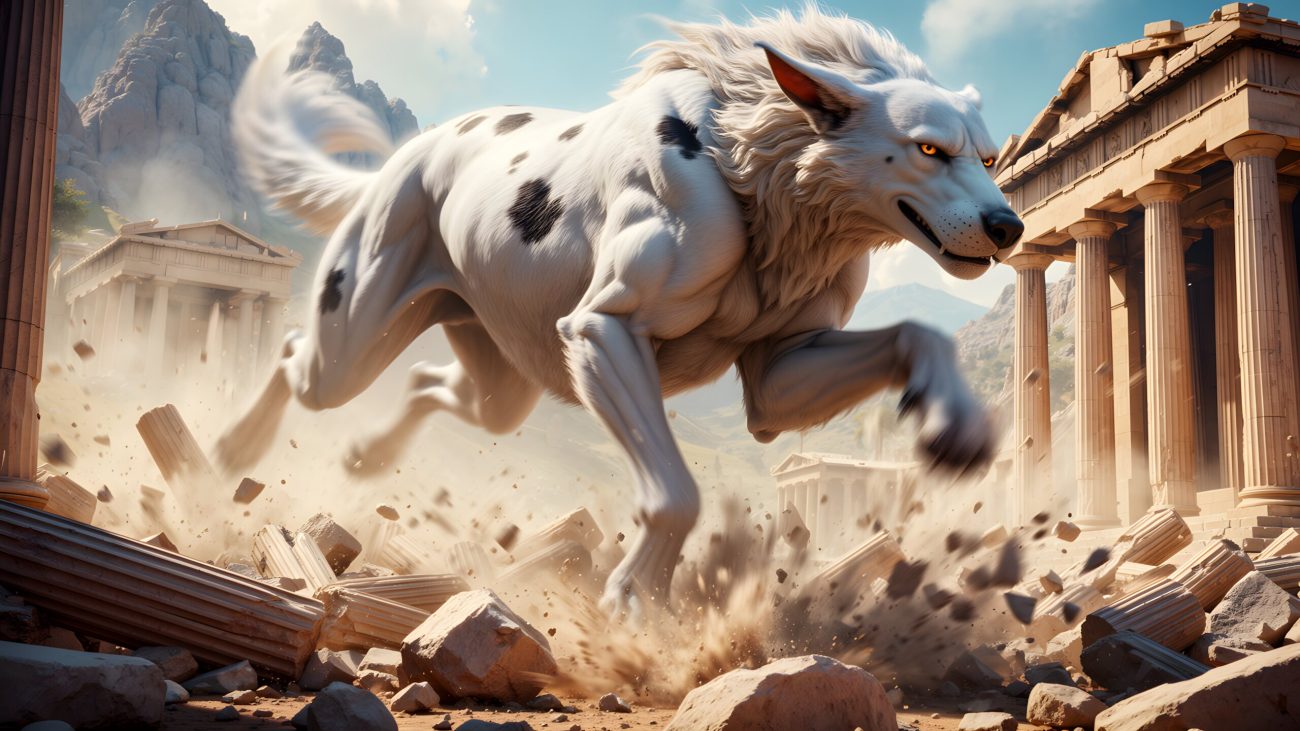
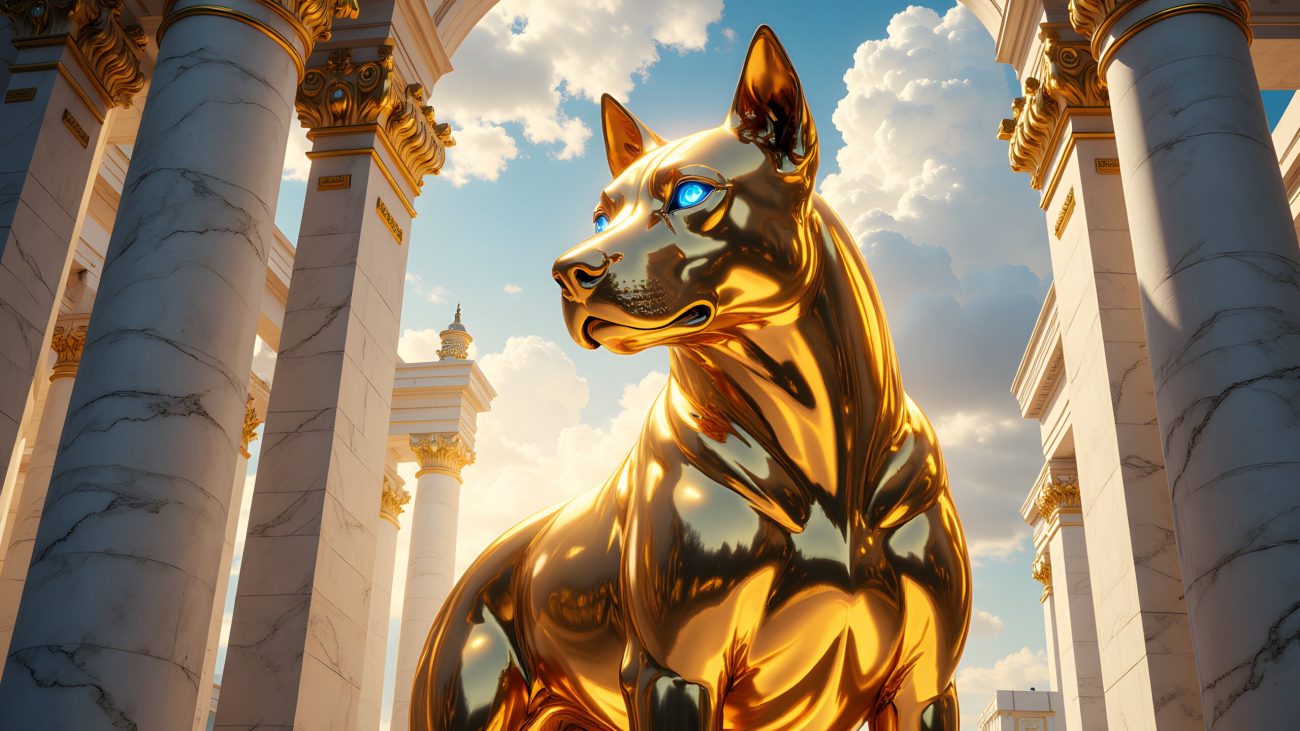
The Kuon Khryseos, the Golden Dog, was a sacred animal set to guard the infant Zeus.

When the god was hidden in a cave on the island of Crete to protect him from his father Kronos, he was nursed by the divine goat Amaltheia. Rhea, wishing to keep both child and nurse safe, appointed a golden dog to stand watch over them. The creature guarded the cave and the sacred place where Zeus was raised.

After Zeus grew to adulthood and overthrew the Titans, he honored those who had protected him. Amaltheia was placed among the stars, and the Golden Dog was also set in the heavens, remembered as a constellation so that its watch would never end.

In another tale, the dog was later stolen. A man named Pandareos took the sacred animal and carried it away, eventually giving it to Tantalos to hide. When the dog was demanded back, Tantalos denied ever having received it. Zeus, angered by the theft and the false oath, punished both men — Pandareos was transformed into stone, and Tantalos was struck down for his lie.

Because of these stories, the Golden Dog was remembered as a divine guardian, tied to the infancy of Zeus, to sacred oaths, and to the stars themselves. In some traditions it was even linked with the magical hound Lailaps, another swift and wondrous dog connected to the heroes of Crete.

Thus the Kuon Khryseos lived on in myth as the shining hound of Zeus — protector of the god in childhood and a watcher placed forever in the heavens.


Sources

Theoi Project. (n.d.). Kuon Khryseos. From https://www.theoi.com/Ther/KuonKhryseos.html


Maera

Tradition / Region: Greek Mythology
Alternate Names: Maira
Category: Dog


The Myth

Maera was the faithful hound of Erigone, daughter of Icarius of Athens.

Icarius was a man favored by the god Dionysus, who taught him the art of making wine. Carrying this new gift, Icarius traveled the countryside and shared the drink with shepherds he met along the way. But the men, unaccustomed to wine, soon became drunk and confused. Believing that Icarius had poisoned them, they killed him and buried his body.

When Icarius did not return, his daughter Erigone set out to search for him. She was accompanied by Maera, who guided her on the journey. The dog followed the trail until at last he led her to the place where her father lay buried.

When Erigone discovered the grave, she was overcome with grief. Unable to bear the loss, she fastened a noose and hanged herself from a tree. Seeing his mistress dead, Maera too was seized by sorrow and threw himself from a cliff.

When Dionysus learned what had happened, he was filled with anger at the injustice done to Icarius and the fate of his daughter. He sent a madness upon the women of Athens. One after another, unmarried girls were driven to hang themselves, as Erigone had done. The city fell into terror, and the deaths did not cease.

At last the Athenians sought to appease the god. They established rites in honor of Icarius and Erigone, remembering their suffering and giving them due reverence. Only then did the plague lift.

In memory of them, the gods placed the three together in the heavens. Icarius became the constellation Boötes, Erigone became Virgo, and Maera was set among the stars as the bright star Procyon, where the faithful dog still shines beside them.


Sources

Wikipedia contributors. (n.d.). Maera (hound). In Wikipedia, from https://en.wikipedia.org/wiki/Maera_(hound)


Hecuba

Tradition / Region: Greek Mythology
Alternate Names: Hekabe
Category: Dog, Transformation figure, Tragic queen


The Myth

Hecuba was the queen of Troy, wife of King Priam and mother of many children. During the war with the Greeks, her sons and daughters were slain, and her city was destroyed. When Troy finally fell, she was taken captive by the victors and led away into slavery.

In one tale, as she was handed over to Odysseus, grief and fury overcame her. She cursed him, snarling like a wild beast. Because of her rage and the depth of her suffering, the gods transformed her into a dog. In this form she escaped her captors, and it is said that the goddess Hecate later took her in as one of her sacred companions.

Another story tells that her transformation came after an even greater sorrow. When the war ended, Hecuba learned that her daughter Polyxena had been sacrificed at Achilles’ tomb. Soon after, the body of her son Polydorus was discovered on the shore, murdered despite having been sent away for safety. Seeing the corpses of her children, the queen’s mind broke beneath the weight of grief. She cried out and howled like a dog, and her voice lost all human sound.

In some tellings, this madness became a true change. Driven beyond reason, she threw herself into the sea. There she was transformed into a she-dog with blazing eyes. Her body was later said to rest at a place called Kynosema, the “Dog’s Grave,” a headland known to sailors who passed that shore.

Yet another version says that after her transformation she did not perish, but was taken by the goddess Hecate. The goddess made her one of the spirits that follow her, a canine presence moving between the world of the living and the dead.

So Hecuba, once queen of mighty Troy, was remembered not only for her sorrow, but for the strange fate that turned her from a grieving mother into a creature of the night.


Sources

Wikipedia contributors. (n.d.). Hecuba. In Wikipedia, from https://en.wikipedia.org/wiki/Hecuba


Argos

Tradition / Region: Greek mythology
Alternate Names: Argus
Category: Dog


The Myth

Argos was the hunting dog of Odysseus, king of Ithaca.

He had been bred as a strong and swift hound, and while Odysseus was still young, the dog was raised with care and trained for the hunt. Though the king departed for the Trojan War before they could hunt together, Argos grew into a fine dog. In those days he was used by other young men to track deer, wild goats, and hares, and none could outrun him.

But Odysseus did not return when the war ended. Years passed, and then more years still. Believing their master dead, the household fell into disorder. Servants grew careless, and the palace filled with arrogant suitors seeking the hand of Odysseus’s wife, Penelope.

With no one left to care for him, Argos was cast aside. Once a proud hunting dog, he was left to lie neglected outside the palace. Old age overtook him, and he lay upon heaps of dung near the gates, his body weak, his fur matted, and parasites clinging to him. There he waited, barely able to move.

Twenty years after he had left home, Odysseus at last returned to Ithaca. The goddess Athena disguised him as an old beggar so that he might enter his own house unseen and judge the situation within.

As he approached the palace with the swineherd Eumaeus, Argos lay nearby. Though nearly blind and too weak to rise, the dog heard the voice of his master. At once he knew him.

Argos dropped his ears and began to wag his tail. He tried to rise, but his strength failed him, and he could only stretch out where he lay.

Odysseus saw the dog and knew him as well. Yet he dared not show recognition, for fear of revealing himself too soon. Turning his face aside so that Eumaeus would not see, he wiped away a tear.

He asked the swineherd about the dog, speaking as though he were a stranger. Eumaeus told him that the animal had once belonged to Odysseus and had been unmatched in the hunt, but since the king had gone to Troy, no one had cared for him.

As they spoke, the two men went inside the palace.

Argos, having seen his master return at last, closed his eyes. His watch was over. There, at the gate of the house he had guarded all his life, the faithful dog died.


Sources

Wikipedia contributors. (n.d.). Argos (dog). In Wikipedia, from https://en.wikipedia.org/wiki/Argos_(dog)


Cretan Bull

Tradition / Region: Greek Mythology
Alternate Names: Marathonian Bull
Category: Cow


The Myth

In the time when the gods still intervened openly in the affairs of men, Poseidon sent a magnificent snow-white bull from the sea to King Minos of Crete. The god meant this beast to confirm Minos’ right to rule, on the condition that the king would sacrifice the animal in honor of the god.

But when Minos saw the bull, he judged it too splendid to lose. Instead of offering it to Poseidon, he sacrificed another, lesser animal and kept the divine bull for himself.

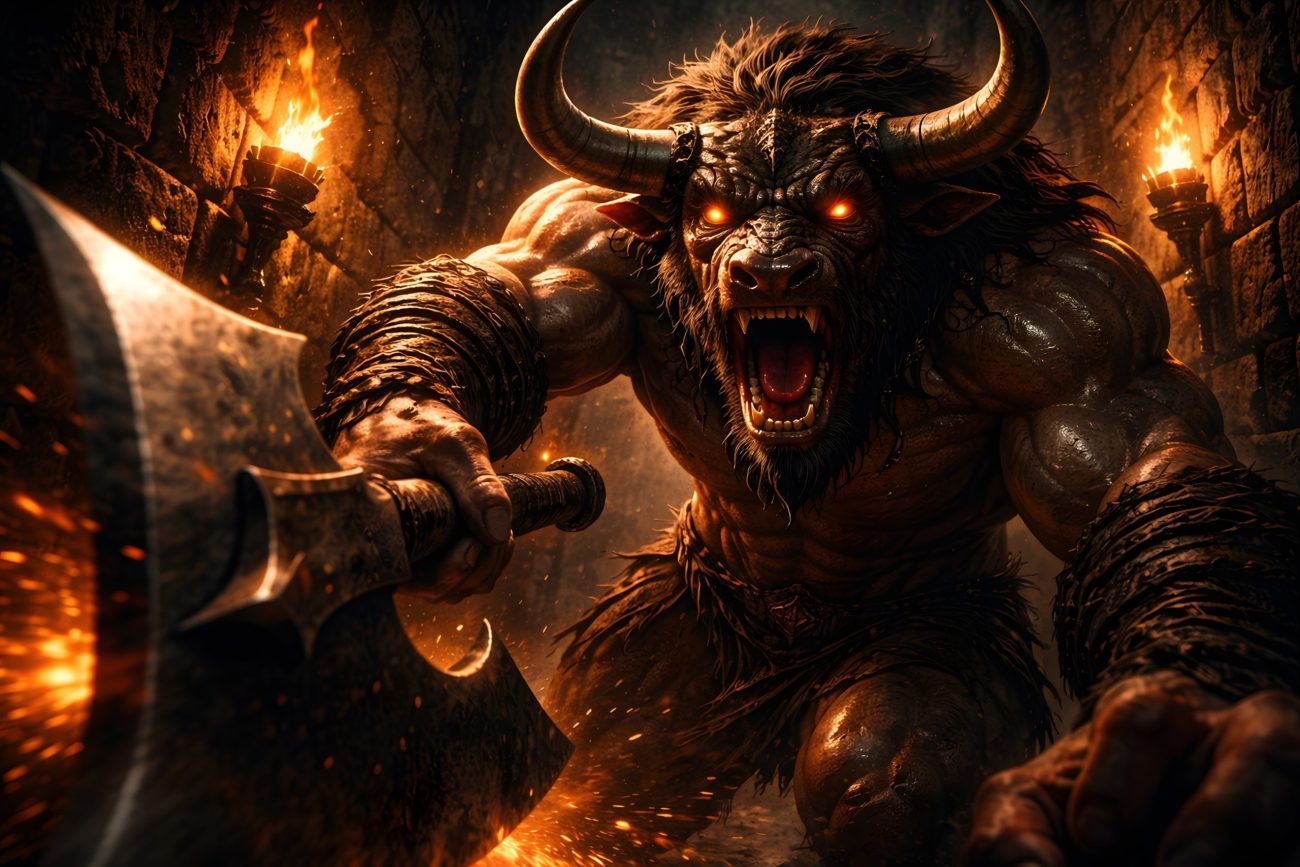
The god saw the deception and grew angry. As punishment, he caused Minos’ wife, Pasiphaë, to be seized by a strange and terrible desire for the bull. From their union was born the Minotaur, half man and half bull. To hide the monster, Minos ordered the craftsman Daedalus to build the Labyrinth, a vast and winding maze in which the creature was shut away.

Meanwhile the bull itself fell under the god’s curse. It grew wild and furious, rampaging across Crete, tearing up crops and destroying orchards, and no one could subdue it.

At last the hero Heracles was commanded by King Eurystheus to capture the beast as one of his labors. Minos allowed him to take it, and Heracles wrestled the bull into submission and carried it across the sea to Tiryns. Later the animal escaped again and wandered into the land of Marathon, where it continued to terrorize the countryside.

The bull’s fate crossed again with that of heroes. It was said to have caused the death of Androgeus, Minos’ son, which in turn led to the tribute of Athenian youths sent to Crete for the Minotaur. Eventually the hero Theseus captured the bull near Marathon and brought it to Athens, where it was sacrificed to the gods.

Thus the Cretan Bull became known as a creature sent by a god, the sire of the Minotaur, and a beast whose fury shaped the deeds of kings and heroes alike.


Sources

Wikipedia contributors. (n.d.). Cretan Bull. In Wikipedia, from https://en.wikipedia.org/wiki/Cretan_Bull


Catoblepas

Tradition / Region: Greek Mythology
Alternate Names:
Category: Cow


The Myth

In ancient times, in the distant lands of Africa near the sources of great rivers and marshes, there lived a dreadful creature called the Catoblepas.

It was shaped somewhat like a bull, though more monstrous and misshapen. Its limbs were heavy, and its head was enormous, so large that it could scarcely lift it from the ground. Because of this weight, the beast always walked with its gaze turned downward. This was considered a mercy, for its eyes were said to bring instant death to any who met them.

Its face was grim and terrible. A mane like that of a horse hung over its head, and its eyes were small, red, and bloodshot. It fed only on poisonous plants that grew in the marshes, and the foulness of its food filled its breath with deadly vapor. When angered or disturbed, the creature released a noxious breath that poisoned the air itself, so that animals and men who inhaled it lost their strength, their voice, and their life.

Because of this, all creatures avoided the places where it dwelled, and even hunters feared to approach its marsh.

Stories were told of travelers and soldiers who unknowingly came near it. Some died from its gaze, others from its breath, until at last men armed with long spears managed to kill the monster from a distance. Its hide was said to have been taken as a trophy and placed in a temple dedicated to a mighty hero.

Yet the terror of the Catoblepas lived on in tales, for it was remembered as a beast so foul and dangerous that even its mere presence could bring death, a creature that kept its head forever bowed, as though the world itself could not bear its sight.


Sources

George of Pisidia. Hexaemeron, p. 29

Bestiary.us, Katoblepas. Retrieved May 28, 2025, from https://www.bestiary.us/katoblepas

Pliny the Elder. Natural Histories, Book VIII, Chapter 32, p. 209–210.


Kobalos

Tradition / Region: Greek mythology
Alternate Names: Kobaloi
Category: Gnome


The Myth

In the old Greek tales, the kobaloi were restless little sprites who delighted in mischief. They lurked along lonely roads, rocky places, and wild edges of the land, where they startled travelers, stole unattended goods, and played cruel jokes simply for the pleasure of it. To encounter them was not usually deadly, but it was rarely pleasant. They frightened children, confused wanderers, and mocked human seriousness with impudent laughter.

The kobaloi were closely tied to Dionysus, god of wine, ecstasy, and chaos. Like his other followers, they embodied disorder and excess. They could change their shape, sometimes disguising themselves in strange or deceptive forms, and were known to imitate divine or monstrous appearances to unsettle mortals. Their tricks echoed Dionysus’ own nature: playful, mocking, and dangerous when underestimated.

One well-known tale tells how the kobaloi once robbed Herakles while he slept. When he awoke and discovered the theft, he hunted them down and captured them. Yet instead of crushing them, Herakles burst into laughter at their ridiculous antics. Amused by their cleverness and audacity, he spared their lives. In some versions of the story, he even gave them away as a gift to Queen Omphale of Lydia, treating them more like troublesome pets than true enemies.

Because of their love of deception and fear-making, parents warned children about the kobaloi, saying they would come for those who misbehaved or wandered too far alone. In this way, the kobaloi lived on not only as spirits of prank and trickery, but as cautionary figures—small, mocking reminders that the world was full of unseen beings who delighted in turning order upside down.


Sources

Wikipedia contributors. (n.d.). Kobalos. In Wikipedia, The Free Encyclopedia, from https://en.wikipedia.org/wiki/Kobalos


Abyzou

Tradition / Region: Mesopotamian, Greek, Byzantine
Alternate Names: Abizou, Obizuth, Obyzouth, Byzou, Gylou, Gello, Alabasandria, Anabardalea, and countless others
Category: Demon, Snake, Hybrid


The Myth

From the deepest darkness before the world was formed, Abyzou came forth. She rose from the primeval waters, from the abyss that existed before heaven and earth were divided. In that endless sea she was born barren, and from her barrenness grew envy without limit.

Abyzou wandered the world without rest or sleep. She moved silently through night and shadow, drawn to the cries of women in labor and the breath of newborn children. She was said to feel no mercy, for what she desired most had been denied her forever. Because she could not give life, she sought to take it.

When a woman lay ready to give birth, Abyzou would draw near. If she was not driven away, she strangled infants in their cradles, stole them in the night, or brought sickness upon them so that they wasted away. She whispered illness into bodies, closing throats, blinding eyes, twisting minds, and filling flesh with pain. Wherever she passed, suffering followed.

Abyzou did not walk openly among mortals. Her form was half-seen: a greenish, gleaming face framed by writhing, serpent-like hair, while the rest of her body dissolved into darkness. Sometimes she appeared with the scales or tail of a fish or serpent, for she belonged to the ancient waters. She claimed to possess countless names and shapes, changing them constantly so that none might easily command her.

In ancient times, King Solomon encountered her while binding demons to build the Temple. When she was brought before him in chains, she confessed her deeds freely, boasting that she never slept and that each night she sought children to destroy. Solomon ordered her bound by her own hair and displayed before the Temple, so that all might see the demon who preyed upon mothers and infants.

Yet Abyzou could never be destroyed. She could only be driven away.

Thus people learned to defend themselves through sacred names, seals, and charms. Her name was written on amulets, spoken aloud in childbirth, carved into metal and stone. When she was named correctly, she was forced to flee. When the names of her enemies—angels, saints, or divine protectors—were invoked, she recoiled in fury and envy.

In Egypt she was known as Alabasandria. In Byzantium she was Gylou or Gello. In each land she took a new name, but her hunger remained the same. Riders trampled her beneath their horses in sacred images. She was whipped, bound, cursed, and cast out in spells, yet always returned when vigilance failed.

Only one thing could stop her: knowledge of her names. When a woman about to give birth wore an amulet bearing those names, Abyzou was powerless. Forced by oath, she would turn away and retreat to the dark waters from which she had come.

And so Abyzou still wanders the edges of night, driven by envy, searching for life she can never possess—an ancient shadow born from the abyss, feared wherever children are born.


Gallery


Sources

Wikipedia contributors. (n.d.). Abyzou. In Wikipedia, The Free Encyclopedia, from https://en.wikipedia.org/wiki/Abyzou


Interpretive Lenses

Religious Readings
  • Christian Ascetic Deep Dive
Philosophical Readings
  • Nietzschean Deep Dive
Psychological Readings
  • Jungian Deep Dive
Esoteric Deep Dive
  • Hermetic Deep Dive
Political / Social Readings
  • Marxist Deep Dive
Other
  • How to Invite The Abyzou

Epimetheus

Tradition / Region: Greek mythology
Alternate Names: Afterthought, Late Counsel
Category: Titan god


The Myth

Epimetheus was one of the Titan sons of Iapetos, brother to Prometheus, Atlas, and Menoitios. Where Prometheus was clever and foresighted, Epimetheus was slow to consider consequences, acting first and understanding only afterward. Because of this nature, the gods named him Afterthought.

When the time came for the mortal world to be filled with life, the gods entrusted Prometheus and Epimetheus with the task. Epimetheus asked that he be allowed to distribute the gifts of survival himself, while Prometheus would later inspect his work. Prometheus agreed.

Epimetheus moved eagerly among the creatures of the earth. To some he gave great strength, to others speed. He armed some with claws, tusks, and horns, and gave thick hides and fur to those who would face cold and heat. Birds received wings, beasts received burrows, hooves, shells, or venom. To preserve balance, he ensured that prey multiplied quickly while predators were few. By the time he had finished, every animal was well equipped for life.

Only then did Epimetheus come to mankind.

And he found that he had nothing left.

Humans stood naked and unarmed, without claws or fur, without swiftness or strength, unable to defend themselves from beasts or the harshness of the world. Epimetheus was struck with terror at what he had done. He could not undo his mistake, and the appointed hour for humanity’s emergence had already arrived.

When Prometheus came to inspect the work, he saw at once the disaster. To save mankind, he climbed secretly into the workshops of the gods and stole fire, along with the arts of metalwork, craft, and skill. With these gifts, humans learned to build, to cook, to forge weapons, and to survive.

But Zeus saw the theft, and his anger was terrible.

As punishment, Zeus devised a slow and beautiful ruin for mankind. He commanded Hephaistos to shape a woman from earth, and Athena clothed her in fine garments and taught her weaving. Aphrodite gave her beauty and longing, Hermes placed cunning words and deception in her heart, and the other gods each bestowed a gift. Because of this, she was named Pandora, the All-Gifted.

Zeus sent Pandora to Epimetheus as a gift.

Prometheus warned his brother again and again: never accept gifts from Zeus. But Epimetheus did not heed him. Captivated by Pandora’s beauty, he welcomed her into his house and took her as his wife.

Pandora carried with her a sealed jar, entrusted to her by the gods. One day, moved by curiosity placed in her by divine design, she lifted the lid. From the jar burst sickness, pain, hunger, toil, madness, old age, and every misery that had never before existed. They spread across the earth and entered the lives of all mortals.

Only one thing remained inside the jar when Pandora closed it again.

Hope.

From that day onward, humans lived with suffering, yet were not entirely without comfort.

Epimetheus understood his error only after the evils had already escaped. He had failed mankind twice: first by leaving them helpless, and again by welcoming the instrument of their sorrow. Because of him, Prometheus was later chained and punished, and humanity inherited a world of labor and grief.

The poets said that Epimetheus was the father of Excuse, for he always understood too late. And so his name endured as a warning: wisdom that comes only afterward is no wisdom at all.


Sources

Theoi.com contributors. (n.d.). Epimetheus. In Theoi Greek Mythology, from https://www.theoi.com/Titan/TitanEpimetheus.html


Alcyone

Tradition / Region: Greek Mythology
Alternate Names: Halcyone
Category: Bird


The Myth

Alcyone is remembered as a woman whose grief reshaped the sea itself. When her husband was lost to a violent storm, she threw herself into the waves in despair. Moved by her devotion and sorrow, the gods transformed her into a seabird—most often identified as the kingfisher—so that she might remain forever bound to the waters that had taken him.

In her new form, Alcyone lays her eggs upon the open sea. During this sacred time, the winds are stilled and the waves grow calm, allowing her fragile nest to float safely upon the surface. These days of quiet waters became known as the halcyon days, a brief and precious interval when the sea abandons its fury and rests in perfect balance.

The myth tells that Alcyone does not command the sea through strength or authority. Instead, her constancy and patience bring harmony where chaos once ruled. The calm she creates is temporary, but absolute—a pause in the natural order granted by devotion rather than force.

Thus Alcyone endures as a symbol of steadfast love and cosmic balance. Her story affirms that even the wildest forces of the world may be softened, if only for a time, by loyalty, endurance, and grief transformed into quiet renewal.


Source