Yashawaka

Tradition / Region: Japanese Mythology
Alternate Names:
Category: Ghost, Mountain dweller


The Myth

At a mountain temple, there once lived a young page named Yashawaka. He was an ordinary boy until, around the age of fourteen or fifteen, something about him began to change. He stopped eating and drinking altogether, yet he did not grow weak. Instead, he became increasingly withdrawn. Each night, once darkness fell, he would quietly leave the temple grounds and vanish into the surrounding hills.

As weeks passed, his appearance became unsettling. His face turned deathly pale, his cheekbones jutted sharply from his skin, and his features grew strange and hollow. The monks whispered among themselves, uneasy at his nightly wanderings and unnatural endurance. Suspecting something dreadful, one of them decided to follow him in secret.

Late one night, the monk watched as Yashawaka crept into the temple cemetery. There, beneath the moonlight, he dug into fresh graves with frantic strength. When the earth was pulled away, he uncovered the newly dead—and began to eat the corpses. The watcher fled in horror and reported what he had seen.

The head priest ordered the entire temple to seize Yashawaka. Monks rushed into the night to capture him, but he moved with terrifying speed. He ran as though he could fly, leaping across the ground, then climbing into the treetops where no one could follow. From branch to branch he vanished into the mountains, swallowed by the forest.

Yashawaka was never seen again. Some say he became a creature of the wild, neither living nor dead, while others believe he still wanders the mountains, driven by hunger and darkness, a warning of what happens when the boundary between the human and the monstrous is crossed.


Gallery


Sources

TYZ-Yokai Blog contributors. (n.d.). ヤシャワカ (Yashawaka). In TYZ-Yokai Blog, from https://tyz-yokai.blog.jp/archives/1057282474.html


Interpretive Lenses

Religious Readings
  • Christian Ascetic Deep Dive
Philosophical Readings
  • Nietzschean Deep Dive
Psychological Readings
  • Jungian Deep Dive
Esoteric Deep Dive
  • Hermetic Deep Dive
Political / Social Readings
  • Marxist Deep Dive
Other
  • How to Invite The Yashawaka

Ying Miao

Tradition / Region: Japanese Mythology
Alternate Names: Inmao, Inmaho
Category: Ghost, Mountain dweller, Yokai


The Myth

In the villages of the Amami Islands, where moonlight turns the paths silver and the forests seem to breathe, people once spoke of a quiet apparition known as Ying Miao. It was not counted among the dangerous spirits, nor was it invoked to frighten children. Instead, it was remembered as something strange and fleeting, a presence that appeared and vanished without leaving harm behind.

One night, under a bright moon, a traveler was returning to Hanatomi from Iyomo along a lonely road. As he walked, he heard a peculiar sound ahead of him—soft yet heavy, like large ears clapping together. From the opposite direction came a creature unlike any animal he knew. It looked neither like a goat nor like a dog, yet carried something of both in its form.

Ying Miao stopped directly in front of the man. Its ears continued to clap slowly as it raised its head and stared at his face in silence. The two stood there for a moment that felt longer than it was, the road empty and the night utterly still. Then, without a sound or gesture, the creature turned and walked on past him, disappearing down the path.

The man continued home, uneasy but unharmed. When he looked back after a few steps, Ying Miao was gone, as if it had never been there at all. No illness followed, no misfortune, no lingering curse. Nothing happened—except the memory.

Unlike many spirits of the Amami Islands, which were feared for stealing souls or killing those they touched or licked, Ying Miao was said to do nothing at all. It appeared, looked, and vanished. Because of this, people came to believe it was not a bringer of death, but a wandering ghost—one that crossed paths with the living without malice, leaving behind only a quiet question in the moonlit road.


Gallery


Sources

TYZ-Yokai Blog contributors. (n.d.). Ying Miao. In TYZ-Yokai Blog, from https://tyz-yokai.blog.jp/archives/1018147293.html


Interpretive Lenses

Religious Readings
  • Christian Ascetic Deep Dive
Philosophical Readings
  • Nietzschean Deep Dive
Psychological Readings
  • Jungian Deep Dive
Esoteric Deep Dive
  • Hermetic Deep Dive
Political / Social Readings
  • Marxist Deep Dive
Other
  • How to Invite The Ying Miao

Kingyo-Yūrei

Tradition / Region: Japanese Mythology
Alternate Names: Goldfish Ghost
Category: Yōkai, Ghost, Fish, Goldfish


The Myth

In an age when grudges were believed to stain the world itself, there lived a woman named Monohana whose life ended in cruelty and betrayal. Bound with rope and murdered unjustly, her resentment did not fade with death. Instead, it clung to what lay closest to her final suffering.

In the water where goldfish swam, her hatred took hold.

The fish, once harmless and beautiful, became vessels for her spirit. Their eyes gleamed with an unnatural light, and their movements grew violent and erratic. From within their small bodies, Monohana’s fury watched and waited.

When the man who had wronged her and the woman who shared his crime drew near, the goldfish surged from their container, water spilling as if driven by invisible hands. The possessed fish attacked without mercy, striking at the guilty as though guided by human will. In their thrashing bodies lived the scream Monohana was denied in death.

Thus the goldfish ghost was born—a yōkai formed not from flesh, but from resentment itself. It is said that wherever goldfish are kept, the memory of betrayed women lingers in the water, and that even the most delicate creatures may carry the weight of unresolved hatred.


Gallery


Sources

TYZ-Yokai Blog contributors. (n.d.). 金魚幽霊 (Kingyo-Yūrei). In TYZ-Yokai Blog, from https://tyz-yokai.blog.jp/archives/1037178954.html


Interpretive Lenses

Religious Readings
  • Christian Ascetic Deep Dive
Philosophical Readings
  • Nietzschean Deep Dive
Psychological Readings
  • Jungian Deep Dive
Esoteric Deep Dive
  • Hermetic Deep Dive
Political / Social Readings
  • Marxist Deep Dive
Other
  • How to Invite The Kingyo-Yūrei

Coconut Ghost of Wutumara

Tradition / Region: Papua New Guinea Mythology
Alternate Names: Wutumara
Category: Ghost, Coconut, Plant


The Myth

Wutumara was a woman of great force and determination, a culture heroine whose life became entwined with the world of spirits. She was married to a man who also took a second wife—a ghost from the underworld. This ghost-wife often visited, and each time she came, she drew the husband away from the human world for long stretches of time. Wutumara grew resentful and jealous, angered that her rival’s presence disrupted her household and marriage.

Seeking to resolve this, Wutumara persuaded her husband to bring the ghost-wife permanently into the world of the living, believing that if they all lived together, harmony might be restored. Secretly, however, Wutumara intended to murder the ghost, unaware that spirits cannot be killed in the way humans can.

She attacked her rival and left her body in the jungle. But the ghost was not destroyed. Instead, she returned in vengeance, using powerful magic. She exchanged the genitals of Wutumara and her husband, a transformation meant to humiliate and confuse, and then killed Wutumara. After this, the ghost transformed herself into a pubic hair growing on the husband’s groin, hiding in plain sight.

Eventually, the husband tricked the ghost into revealing herself and managed to destroy her. Yet even this was not the end. Shortly afterward, the ghost reappeared once more, transformed into a coconut palm. To this day, it is said that the face of the angry ghost can still be seen in the coconut, watching from within its shell.

Thus the coconut palm became a lasting reminder of jealousy, rivalry, and the persistence of spirits beyond death—a living monument to Wutumara’s tragic conflict with the unseen world.


Gallery


Sources

Landtman, G. (1970). The Kiwai Papuans of British New Guinea: A nature-born instance of Rousseau’s ideal community.


Interpretive Lenses

Religious Readings
  • Christian Ascetic Deep Dive
Philosophical Readings
  • Nietzschean Deep Dive
Psychological Readings
  • Jungian Deep Dive
Esoteric Deep Dive
  • Hermetic Deep Dive
Political / Social Readings
  • Marxist Deep Dive
Other
  • How to Invite The Coconut Ghost of Wutumara

Antsje mei it Tsjil

Tradition / Region: Dutch Mythology
Alternate Names: Antje met het Wiel
Category: Ghost


The Myth

Antsje mei it Tsjil is a spirit of the rye fields, feared as a child-snatching presence that lurks among tall grain. She is said to dwell within the fields themselves, unseen but never silent, bound to the growing rye and the dangers it hides.

Children were warned never to wander through ripe rye fields, for Antsje waits there. Those who stray too far are seized, crushed, and devoured, ground down as though by a mill. No trace is left behind, only flattened stalks and silence.

Antsje moves upon a wheel, rolling endlessly through the fields. Though she cannot be seen, her approach is always announced. Before she arrives, a soft rustling passes through the rye—not the sound of wind, but something heavier, deliberate, circling closer and closer.

Those who hear the sound know to flee at once. To remain is to risk being caught in her turning path, drawn into the grain and destroyed. Adults say the fields themselves seem to close behind her, hiding her passage and concealing her victims.

Antsje mei it Tsjil stands as a warning spirit, embodying the dangers of the harvest fields and the boundary between safety and wilderness. She reminds all who hear the rye whisper that not every rustle belongs to the wind, and that some fields are alive with hunger.


Gallery


Sources

Abe de Verteller. (2014). Van aardmannetje tot zwarte juffer: Een lijst van Nederlandse en Vlaamse elfen en geesten. In AbeDeVerteller.nl, from https://abedeverteller.nl/van-aardmannetje-tot-zwarte-juffer-een-lijst-van-nederlandse-en-vlaamse-elfen-en-geesten/


Interpretive Lenses

Religious Readings
  • Christian Ascetic Deep Dive
Philosophical Readings
  • Nietzschean Deep Dive
Psychological Readings
  • Jungian Deep Dive
Esoteric Deep Dive
  • Hermetic Deep Dive
Political / Social Readings
  • Marxist Deep Dive
Other
  • How to Invite The Antsje mei it Tsjil

Acheri

Tradition / Region: Indian Mythology
Alternate Names: Hill Fairy; Bhūt; Hill Godling
Category: Ghost / Child


The Myth

The Acheri is the restless spirit of a young girl, or sometimes a woman, who died a violent or untimely death. After death, her soul did not depart the world but lingered among the mountains, becoming a dangerous presence feared by the villages below.

By day, Acheri dwell on mountain peaks and high hilltops, unseen and silent. As dusk falls, they descend from the heights to hold revels in remote places. These gatherings are perilous. Anyone who stumbles upon an Acheri revel risks death or grave harm, and even visiting the site afterward is considered unsafe, as the land itself is believed to retain their influence.

Acheri are especially feared for their connection to disease. They are said to cast their shadow—known as chāyā—over children, afflicting them with sudden and incurable illnesses. The touch of their shadow alone is enough to weaken the body, and once marked, a child may never recover. Because of this, parents were warned to keep children away from lonely hillsides and twilight paths.

Though feared, the Acheri are not without boundaries. It is said that wearing a scarlet thread around the throat offers protection against certain illnesses associated with them, particularly colds and goitre. However, bright red clothing is dangerous, as the Acheri are believed to hate the color red and may be drawn to it in anger rather than repelled.

In some regions, strange sights on the mountains are attributed to the Acheri. Travelers speak of enormous moving shadows cast against the slopes—phantom processions of elephants, horses, and figures marching in silence. These illusions are said to appear without sound or substance, vanishing as suddenly as they arise.

The Acheri are remembered as spirits bound to the hills by unresolved death. Neither fully divine nor merely ghostly, they stand between village deities and wandering dead. Their presence turns mountains into places of beauty and danger alike, reminding those below that the heights are not empty, and that the spirits of the violently lost still walk at dusk.


Gallery


Sources

Bestiary.us contributors. (n.d.). Acheri. In Bestiary.us — Mythical Creatures of the World, from https://www.bestiary.us/acheri

Wikipedia contributors. (n.d.). Acheri. In Wikipedia, The Free Encyclopedia, from https://en.wikipedia.org/wiki/Acheri


Interpretive Lenses

Religious Readings
  • Christian Ascetic Deep Dive
Philosophical Readings
  • Nietzschean Deep Dive
Psychological Readings
  • Jungian Deep Dive
Esoteric Deep Dive
  • Hermetic Deep Dive
Political / Social Readings
  • Marxist Deep Dive
Other
  • How to Invite The Acheri

Abja

Tradition / Region: Albanian Mythology
Alternate Names:
Category: Ghost


The Myth

Abja is a ghostly figure in Albanian folklore, appearing in the form of a woman wrapped in a rough shroud or a thick cloak made of coarse woolen fabric. The name Abja derives from abá or abája, referring to such a garment.

She is described simply as a female apparition distinguished by this heavy, coarse covering, which conceals her body and form. No further actions, speech, or narrative events are consistently recorded; her defining characteristic is her appearance as a shrouded female ghost.


Gallery


Sources

Elsie, R. (2001). A Dictionary of Albanian Religion, Mythology, and Folk Culture. p. 4.


Interpretive Lenses

Religious Readings
  • Christian Ascetic Deep Dive
Philosophical Readings
  • Nietzschean Deep Dive
Psychological Readings
  • Jungian Deep Dive
Esoteric Deep Dive
  • Hermetic Deep Dive
Political / Social Readings
  • Marxist Deep Dive
Other
  • How to Invite The Abja

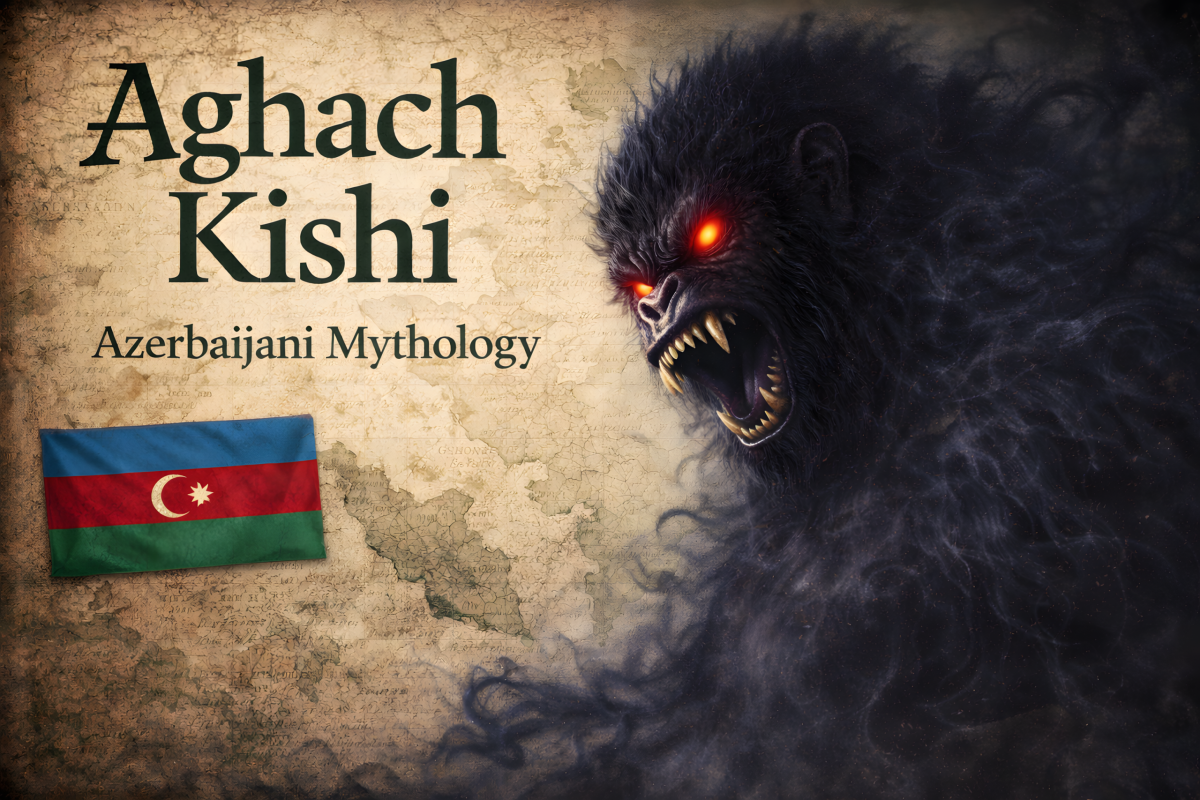
Aghach Kishi

Tradition / Region: Azerbaijani mythology
Alternate Names: Mesha Adam
Category: Monkey, Forest dweller, Mountain dweller, Ghost


The Myth

In the mountainous forests there lives Aghach Kishi, the Woodman. He is a wild, ghostlike being, his body covered in hair, moving through the trees with a will of his own. Some say he resembles a man, others a beast, but he belongs fully to the forest.

Aghach Kishi wanders near villages and gardens, where he sometimes appears without warning. He has a strong, unpleasant smell, and he is known to take clothing left behind by humans. In older times, people would leave garments for him on purpose, hoping to avoid angering him.

Though he does not always attack, encounters with Aghach Kishi are uneasy and unsettling. He is a reminder that the forests are not empty, and that something older and untamed still walks among the trees.


Gallery


Sources

JAMnews.net. (2017). The magical creatures of Azerbaijani mythology. Retrieved from https://jam-news.net/azerbaijani-demons/


Interpretive Lenses

Religious Readings
  • Christian Ascetic Deep Dive
Philosophical Readings
  • Nietzschean Deep Dive
Psychological Readings
  • Jungian Deep Dive
Esoteric Deep Dive
  • Hermetic Deep Dive
Political / Social Readings
  • Marxist Deep Dive
Other
  • How to Invite The Peri