Kichkanya

Tradition / Region: Nepali Mythology
Alternative names: Kichkandi
Category: Ghost


The Myth

The Kichkanya is the restless spirit of a woman whose body was not completely cremated, leaving part of her remains—usually a bone—behind in the world of the living. Bound to this fragment, she wanders alone and haunts the place where she suffered an untimely death.

These spirits are often said to be the souls of women who were mistreated during life or who died during pregnancy or childbirth. They are remembered as tragic and tortured beings unable to find peace.

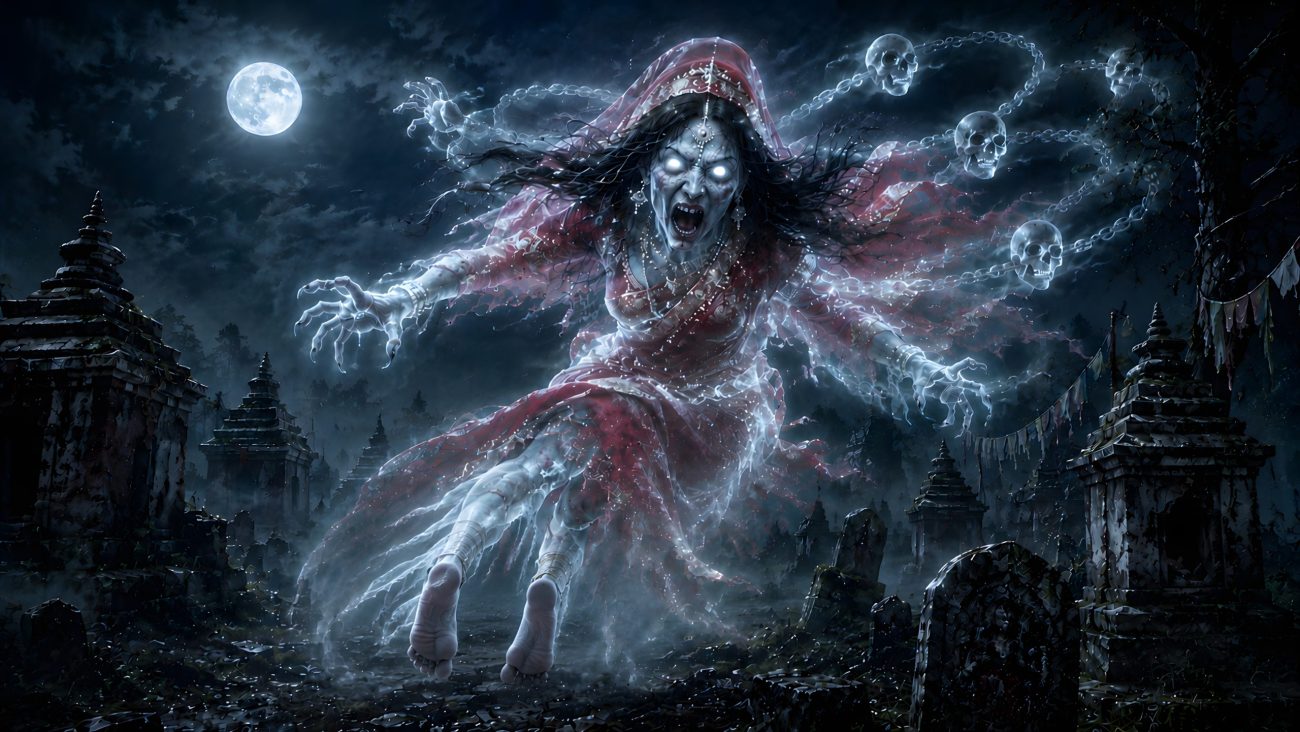
A Kichkanya appears as a beautiful young woman with unusually long black hair, a pale and bony complexion, and a red bridal dress. Her most disturbing feature is revealed by her feet, which point backward.

She uses her beauty to lure lonely male travelers. Those who fall under her influence are said to have their life force drained away, becoming thin, weak, and exhausted. Some victims are believed to waste away entirely.

Another common tale describes the Kichkanya as a ghostly hitchhiker who appears on deserted roads late at night. Drivers who stop for her and obey her directions eventually find themselves led to cremation grounds, temple cemeteries, or lonely places of death.

Solitary and mournful, the Kichkanya is one of Nepal’s most feared female spirits—a beautiful phantom in red, forever wandering the places where her suffering began.


Sources

Wikipedia contributors. (n.d.). Kichkandi. In Wikipedia. Retrieved June 20, 2026, from https://en.wikipedia.org/wiki/Kichkandi


Maniac

Tradition / Region: Russian Mythology
Alternative names: Manya
Category: Ghost


The Myth

The Maniac is a ghostly being of Russian folklore associated with evil spirits and uncanny apparitions. It is an elusive creature with no fixed form, appearing as a phantom, vision, or wandering spectre.

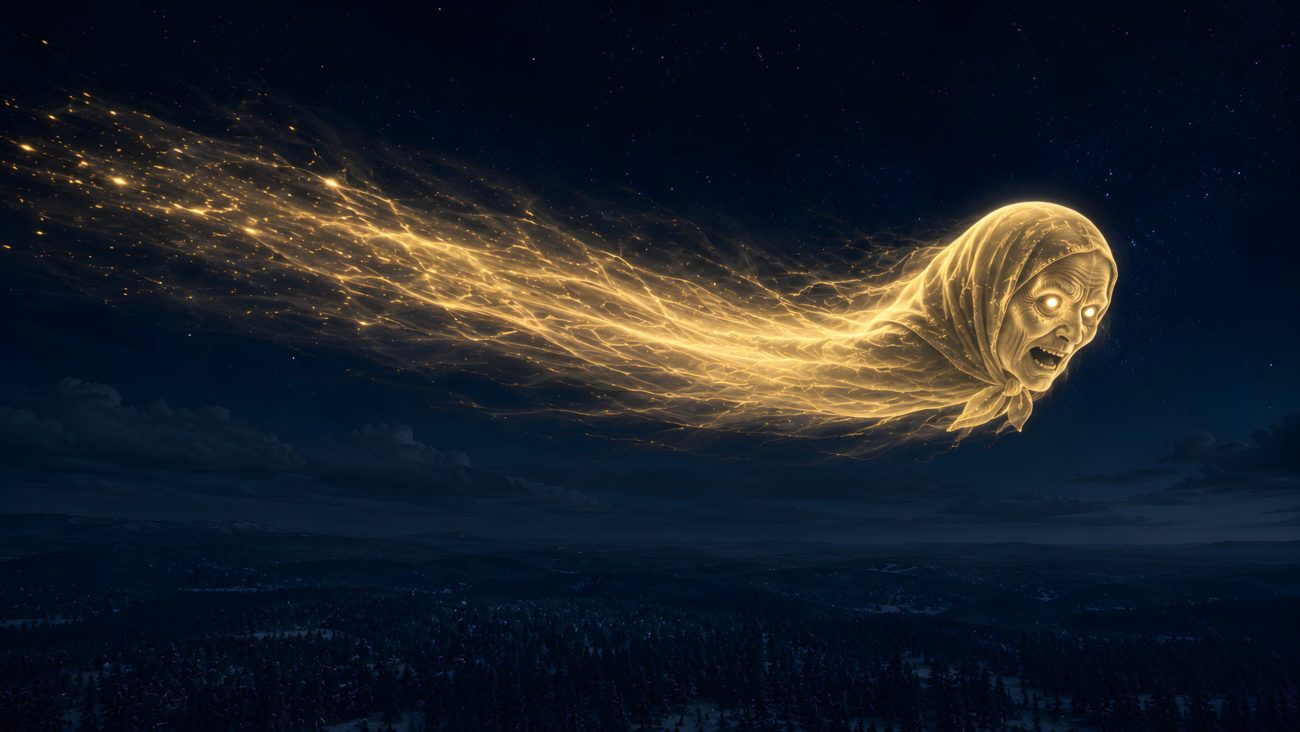
In northern Russia, northeastern regions, and Siberia, the Maniac often takes the shape of a frail old woman. Such apparitions were especially known by the name Manya, and people regarded them as ghosts rather than living beings.

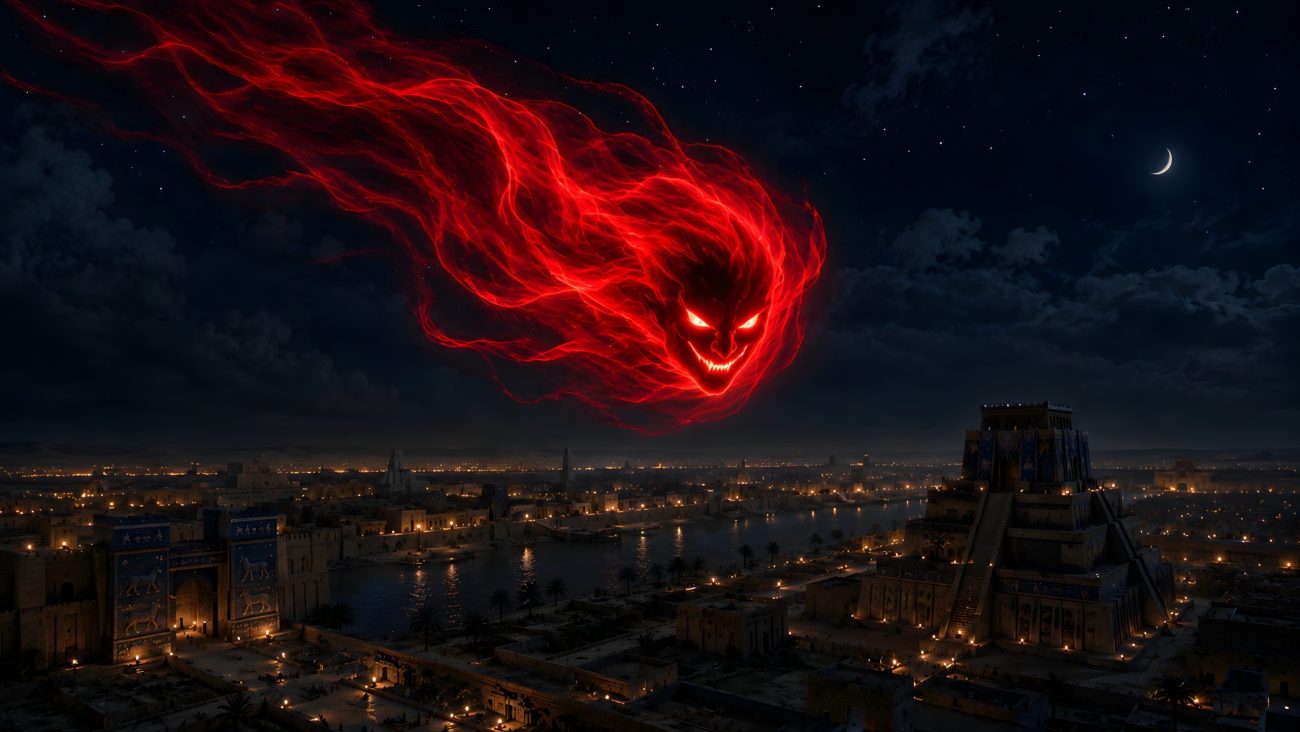
In central and southwestern Russia, however, the Maniac was believed to appear in a different form. It manifested as a fiery spirit resembling a falling star streaking across the night sky. These celestial apparitions were considered sinister omens.

According to popular belief, anyone who witnessed such a falling star invited misfortune upon themselves. The sight foretold inevitable death, either for the observer or for a member of their family. Because of this, experienced people avoided looking at shooting stars and regarded those who casually remarked, “A maniac has flown,” with suspicion and unease.

Another tradition held that Maniacs appeared to women harvesting grain in the fields on the feast day of Saints Kirik and Julitta, celebrated on July 28. These apparitions were vague and shadowy, more like haunting visions than physical beings.

Known variously as ghosts, spirits, and ill-omened phantoms, the Maniac was feared not for violence but for the doom and death believed to follow in its wake. Whether appearing as an old woman or as a blazing star falling from heaven, it remained one of the unsettling spectres of Russian folk belief.


Sources

Bestiary.us. (n.d.). Manjak. In New Bestiary: Encyclopedia of Imaginary Beings. Retrieved June 20, 2026, from https://www.bestiary.us/manjak


Hone-onna

Tradition / Region: Japanese Mythology
Alternative names: Boneless Woman, Jellyfish Woman
Category: Ghost


The Myth

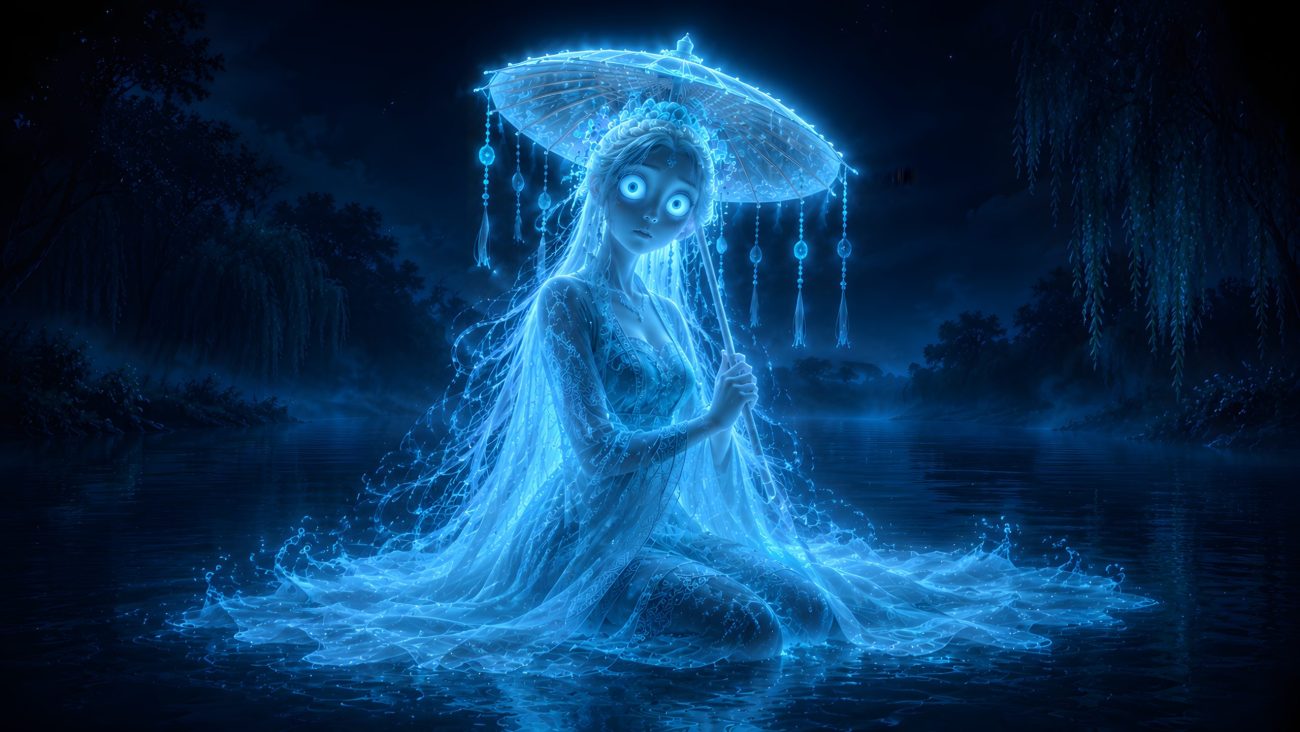
The Hone-onna, or Boneless Woman, is a strange ghost said to originate from Habayama Mountain in Shioe. According to tradition, she was once a jellyfish that lived for so long that it transformed into a woman, though one without any bones.

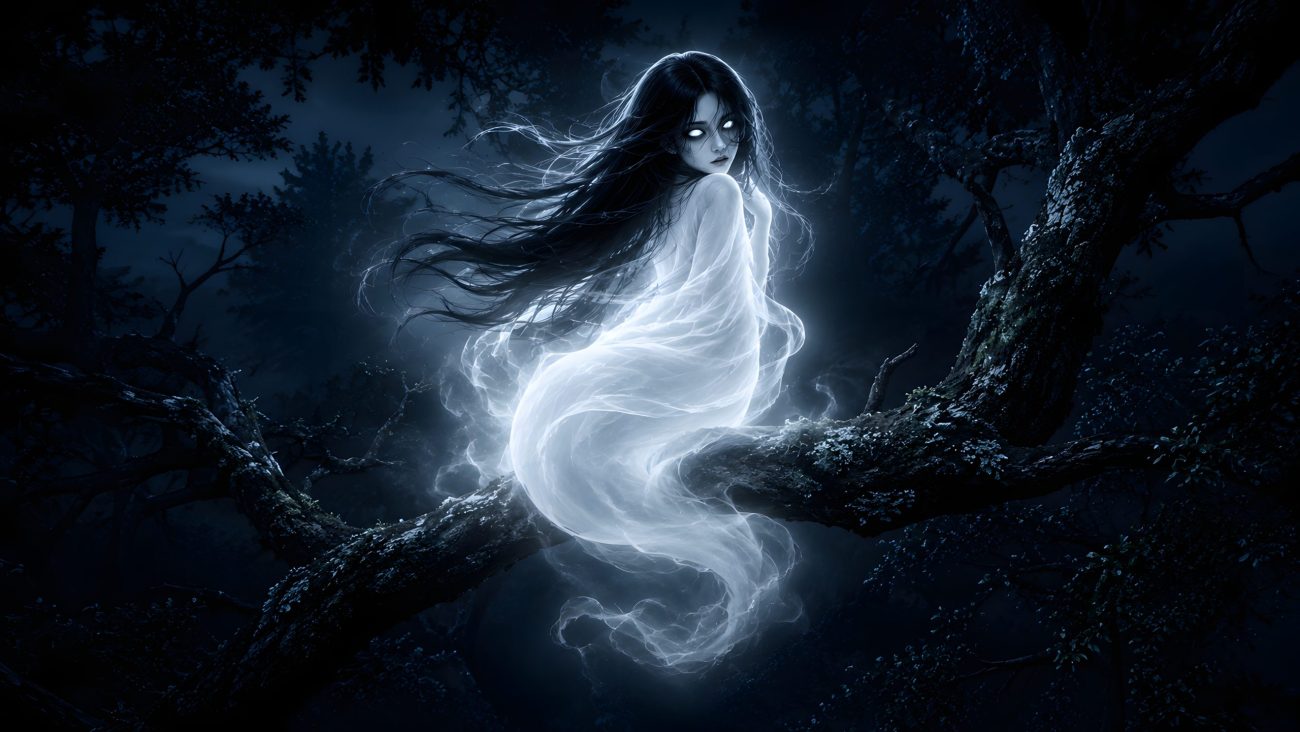
The creature is associated with death and mourning. Whenever someone dies, the Hone-onna is said to visit the house of the deceased. Night after night, she appears in the garden, clinging to the branches of trees.

There she plays by herself and laughs, seemingly unaware of the living around her. Her eerie laughter echoes through the darkness while she sways among the trees, returning again and again to places touched by death.

Unlike many violent spirits, the Hone-onna is not known for attacking people. Instead, she is remembered as a strange and unsettling apparition—a boneless woman who arrives whenever death enters a household and spends the night laughing alone among the garden trees.


Sources

TYZ. (n.d.). Hone-Onna [骨女]. In 新版TYZ 妖怪図鑑. Retrieved June 20, 2026, from https://tyz-yokai.blog.jp/archives/1010654275.html


Goninzowai

Tradition / Region: Japanese Mythology
Alternative names: Five-Men Shoal, Goninzowai
Category: Ghost


The Myth

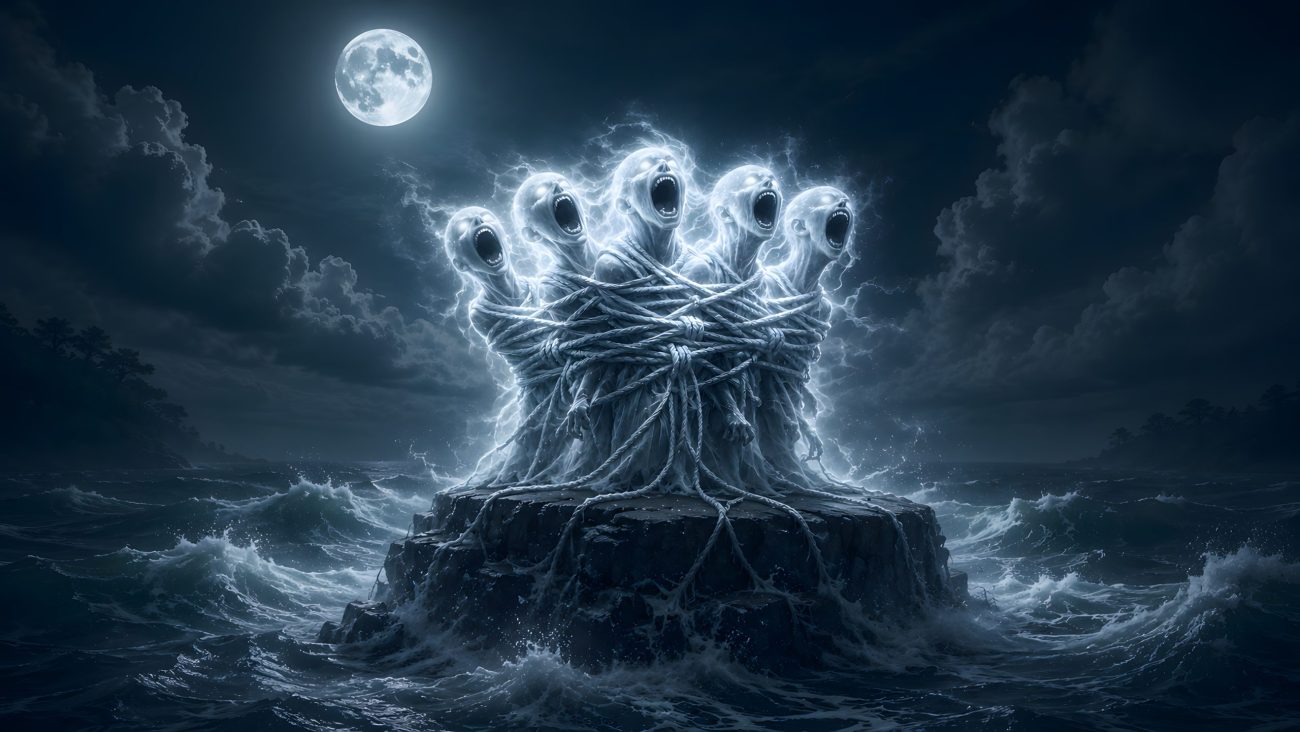
Goninzowai is the name given to the restless spirits of five blind men who perished on a lonely shoal near Uno Port. Their ghosts are said to haunt the sea and can still be heard on dark and rainy nights.

According to tradition, five wealthy blind men arrived in Bingo Province while traveling to the capital to receive the rank of Kengyō, the highest title granted to blind people. A boatman offered to take them to Osaka and they gladly boarded his vessel.

As evening approached, the boatman told them that he needed to empty water from the ship and asked them to wait on a small rocky island. Trusting him, the five men disembarked and sat peacefully listening to the sound of the waves.

But the boat never returned.

When they realized they had been abandoned, they called desperately for the boatman. No answer came. The tide slowly rose around them. Clinging to one another so that they would not be separated, the five men cried for help, but no vessel passed by. Eventually the sea swallowed them, and they drowned together.

From that time onward, fishermen avoided the area. On rainy nights voices, sobbing, and cries are said to rise from beneath the water. Strange balls of fire sometimes appear above the rocks, circling through the darkness.

The place became known as Goninzowai, meaning “Five-Men Shoal.” The name refers to the small reef that disappears beneath the sea at high tide. One story claims that a diver once descended there and found countless human bones piled among the submerged rocks.

Another version says that one of the blind men managed to wash ashore and was rescued by villagers. In gratitude and sorrow, he later traveled to Mount Kōya and erected a tomb for his four companions, praying for the peace of their souls.

Yet even today, the voices of the dead are said to remain beneath the waves, and the haunted shoal of Goninzowai is remembered as the resting place of the five blind men betrayed by the sea.


Sources

TYZ. (n.d.). Goninzowai [五人増悪]. In 新版TYZ 妖怪図鑑. Retrieved June 20, 2026, from https://tyz-yokai.blog.jp/archives/1010654266.html


Jealous Woman of the Ferry

Tradition / Region: Chinese Mythology
Alternative names: Jealous Woman’s Ferry
Category: Ghost


The Myth

The Jealous Woman is the ghost of Duan, the wife of Liu Boyu during the Jin Dynasty. She was infamous for her fierce jealousy and eventually became a dangerous spirit associated with a river crossing where she met her death.

One day, while reciting the Ode to the Goddess of the Luo River, Liu Boyu admired the beauty and grace of the water goddess and remarked that he would have no regrets if he had such a wife. Enraged by what she considered an insult, Duan exclaimed that if the goddess of the river was so wonderful, then she herself would become a water goddess after death. With those words, she threw herself into the river and drowned.

After her death, strange events began to occur at the ferry where she had perished. Beautiful women who attempted to cross the river while dressed elegantly or wearing fine makeup would suddenly encounter fierce winds and rough waters. Their boats were endangered by violent waves, as though some unseen force sought to harm them.

Ugly or plainly dressed women, however, crossed the river without trouble. Even if they wore their finest clothes, the waters remained calm and peaceful.

People believed that the spirit of Duan had become jealous of the beauty of other women and attacked them out of envy. To warn travelers, a stone monument was erected beside the crossing bearing the inscription “Jealous Woman’s Ferry.”

Thus the Jealous Woman was remembered as a vengeful water spirit whose envy survived even death, disturbing the river and punishing those whose beauty she could no longer bear.


Sources

Wikipedia contributors. (n.d.). 妒婦津. In 維基百科,自由的百科全書. Retrieved June 20, 2026, from https://zh.wikipedia.org/wiki/%E5%A6%92%E5%A6%87%E6%B4%A5


Edimmu

Tradition / Region: Mesopotamian Mythology, Iraqi Mythology
Alternative names: Edimmu, occasionally Ekimmu
Category: Ghost


The Myth

The Edimmu are restless spirits of the dead in ancient Mesopotamian belief. They are the ghosts of those who received no proper burial or whose funeral rites were neglected. Unable to find peace, they wander among the living, filled with bitterness and hunger.

These spirits were feared for their hostility toward mankind. They brought disease, misfortune, and madness, and were believed capable of influencing people toward criminal acts. Those who violated certain taboos, such as the prohibition against eating ox meat, were considered especially vulnerable to their attacks.

Edimmu were thought to be almost incorporeal beings, more like winds or invisible shadows than physical creatures. They drifted through the darkness and preyed upon the weak, the sleeping, and especially the young, drawing away their life force.

Although dangerous, the spirits could sometimes be appeased. Funeral meals, offerings, and libations made in honor of the dead might calm their anger and provide them with the sustenance they lacked in the afterlife.

Unlike many monsters that dwell in distant places, the Edimmu were believed to arise from neglected ancestors and forgotten dead. Invisible and insubstantial, they haunted the world like hungry winds, forever seeking the peace denied to them in death.


Sources

Wikipedia contributors. (n.d.). Edimmu. In Wikipedia. Retrieved June 20, 2026, from https://en.wikipedia.org/wiki/Edimmu


Baihuoni

Tradition / Region: Chinese Mythology
Alternative names: Baihuoni
Category: Ghost


The Myth

Baihuoni is a feared ghost in the traditions of the Lisu people of Yunnan. It is especially associated with illness and is believed to prey upon the most vulnerable members of the community.

According to tradition, Baihuoni causes sickness in children younger than eight years old and in pregnant women. Because of this, mothers and young children are considered particularly vulnerable to its influence.

To protect families from the spirit, people in the Bijiang region traditionally make offerings to Baihuoni. Pigs or chickens are sacrificed in order to appease the ghost and prevent it from bringing disease upon pregnant women and children.

Thus, Baihuoni is remembered as a dangerous spirit whose presence is linked to sickness, and whose wrath must be calmed through ritual offerings to safeguard mothers and the young.


Sources

Wikipedia contributors. (n.d.). 摆货尼. In 维基百科,自由的百科全书. Retrieved June 20, 2026, from https://zh.wikipedia.org/wiki/%E6%91%86%E8%B4%A7%E5%B0%BC


Ubume

Tradition / Region: Japanese Mythology
Alternative names: Ubume, Ubugame, Guhuo Bird (姑獲鳥)
Category: Ghost, Bird


The Myth

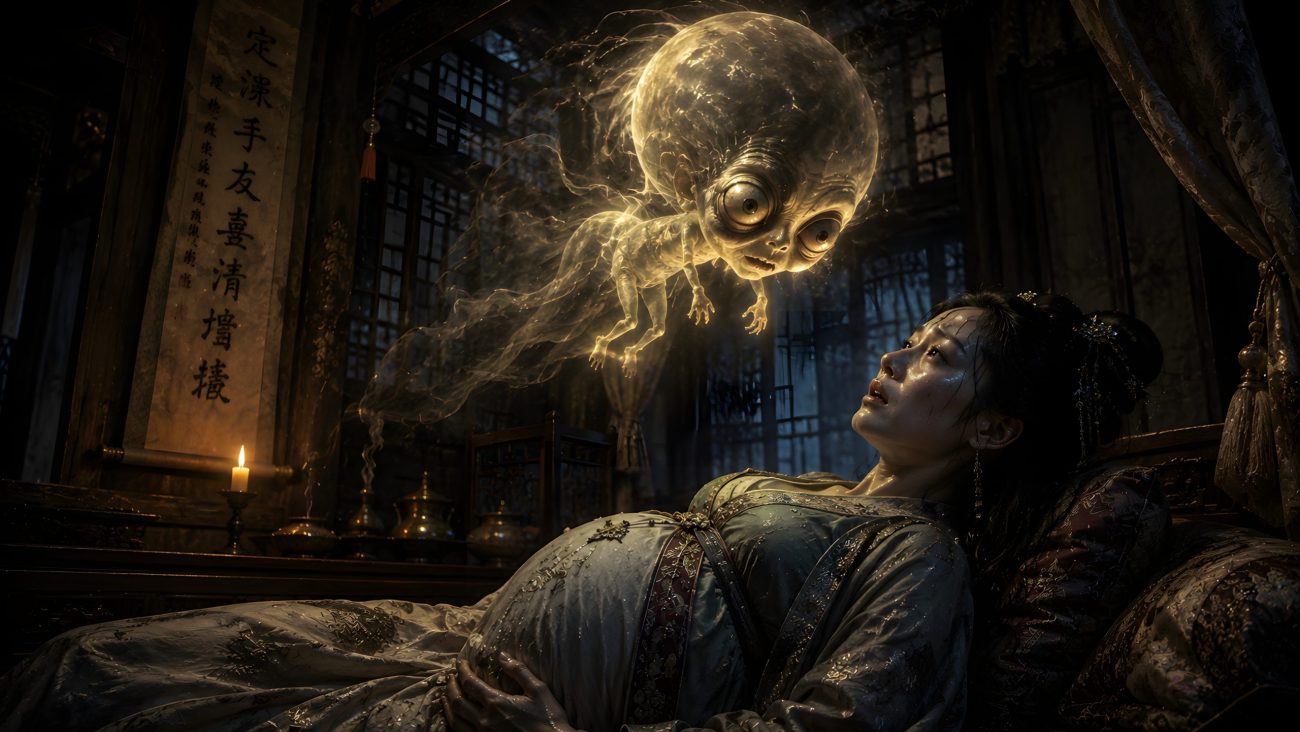
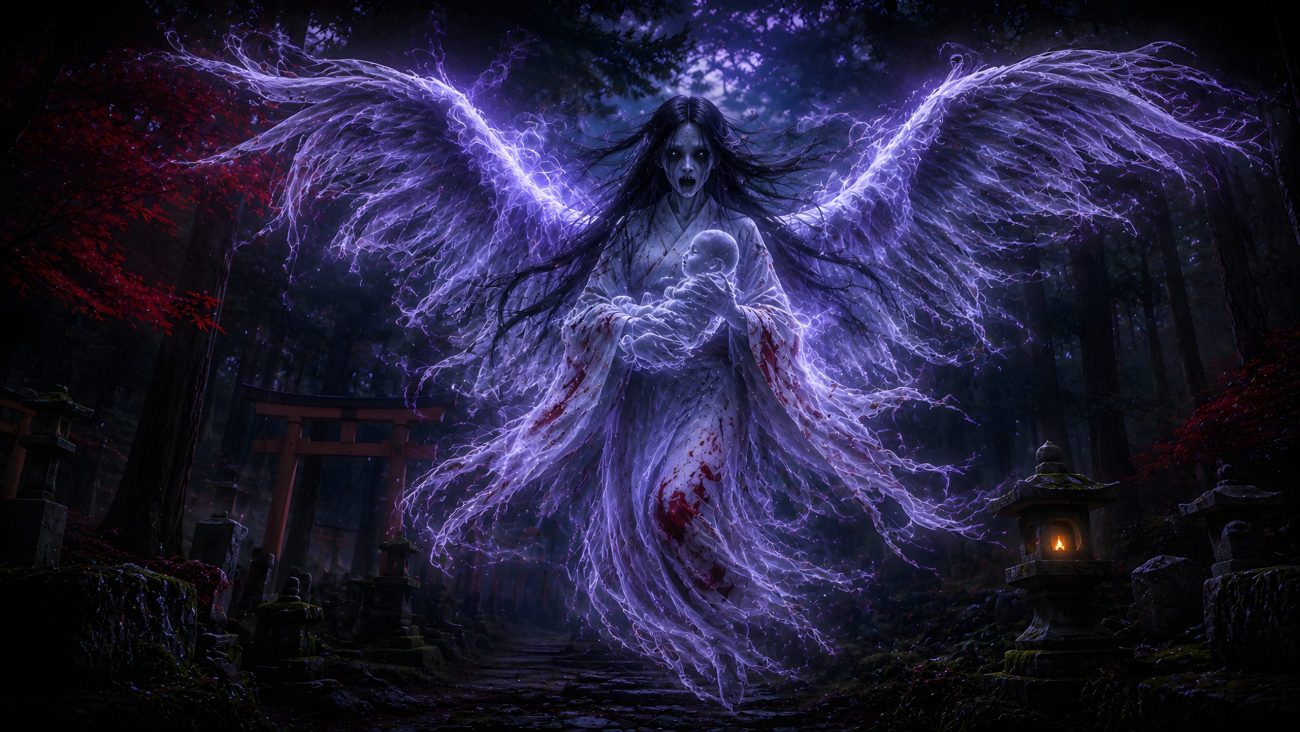
The Ubume is the restless spirit of a woman who died during childbirth. She appears at night along lonely roads, bridges, and riverbanks, carrying an infant in her arms. Dressed in blood-stained clothing, she weeps and asks passersby to hold her child for a moment while she fixes her hair or prays for salvation.

Anyone who accepts the baby soon discovers that it grows heavier and heavier. In some tales, the child eventually transforms into a stone or a bundle wrapped around a straw hammer. Other stories say that a person who fulfills the Ubume’s request and faithfully carries the child receives extraordinary physical strength as a reward. In Akita Prefecture, this supernatural power was known as Obōjikara.

The Ubume is one of Japan’s oldest ghostly beings and was already known during the time when the Konjaku Monogatari-shū was compiled. During the Edo period, it became closely associated with the Chinese Gu Huo Bird, since both were believed to originate from women who had died while pregnant or giving birth. Because of this connection, the two creatures gradually became confused with one another.

Most depictions portray the Ubume as a sorrowful woman holding a baby while wearing blood-soaked garments. Some illustrations, however, give her bird-like features, with wing-shaped arms wrapped protectively around the child.

Though feared, the Ubume is not considered a malicious spirit. She is remembered as a tragic mother unable to abandon her child, forever wandering the night and seeking someone willing to carry the burden she herself could no longer bear.


Sources

TYZ. (n.d.). Ubume [産女]. In 新版TYZ 妖怪図鑑. Retrieved June 20, 2026, from https://tyz-yokai.blog.jp/archives/1010652594.html


The Wild Hunt of Gottschee

Tradition / Region: Slovenia (Gottschee / Kočevje)
Alternative names: Bilde Jochd, Bildai Jogkd
Category: Ghost


The Myth

The Wild Hunt of Gottschee is a terrifying phantom procession said to roam the forests and fields during the night. Long before it is seen, people hear its approach: the howling of dogs, the cries of strange animals, and the sound of distant gunfire. Witnesses speak of bears, hares, and foxes fleeing ahead of the hunt, followed by packs of hounds and finally by the ghostly hunters themselves.

The Hunt moves like a whirlwind across the countryside. Those unfortunate enough to stand in its path risk being torn apart or killed. To survive an encounter, people traditionally crossed their hands or lay down inside wagon tracks until the terrible procession had passed.

Stories tell of a man returning home late at night with wine loaded on his horse. His relatives warned him not to travel, but he ignored their advice and set out. Near midnight, villagers later found his horse standing alone, still carrying the wine but missing its tail. Searching the forest, they discovered the man lying dead upon the road, his face blackened and the horse’s severed tail clenched tightly in his hand. It was said that the Wild Hunt had killed him. A cross was later erected at the place where his body was found.

Another tradition explains the nature of the phantom riders. They were once hunters who preferred chasing game to attending Mass and hunted even on Sundays while church services were being held. After death, they were condemned to ride forever through the darkness, accompanied by their hounds and the sounds of the chase.

Crosses were often raised at places where the Wild Hunt was known to pass, and travelers avoided lonely roads at night, fearing the ghostly hunters whose punishment would never end.


Sources

SAGEN.at. (n.d.). Die Wilde Jagd in der Gottschee. In SAGEN.at – Traditionelle Sagen. Retrieved June 16, 2026, from https://www.sagen.at/texte/sagen/slowenien/wildejagd.html


Çahık

Tradition / Region: Turkic mythology
Alternative names: Alban, Chahik, Ozor, Körmös, Körmöz, Körmös Spirit
Category: Ghost


The Myth

The Çahık is one of the many forms of the Kormos spirits found in Turkic mythology. These beings are wandering souls and supernatural entities associated with the earth, the heavens, and the underworld. Some are protectors, some are servants of darkness, and others exist in a state of endless misery between the two.

Çahıks are often described as the souls of the damned. They are shape-shifters capable of taking different forms, making them difficult to recognize. Their hands are stained with blood, their eyes are dry and lifeless, and their words themselves are deadly. Merely listening to their speech is considered dangerous.

Kormos spirits are ruled by Körmös Khan and are divided into three kinds. Arug Körmös are benevolent spirits under the command of Ülgen, helping righteous people and maintaining balance in the world. Caman Körmös are demonic servants of Erlik who dwell in Tamag, the underworld, where they torment and abduct humans. Between these two are the Kal Körmös, wandering ghosts neither wholly good nor evil, condemned to roam the earth in sorrow and suffering.

A soul may become a Kormos after death. The spirits of ancestors are known as Ozor, while the souls of those who died violently or by suicide are called Alban. Because of this connection with the dead, Kormoses are often linked to ancestral spirits and ghosts.

Çahıks and other Kormos spirits are believed to appear most often at sunrise and sunset. These moments are regarded as dangerous, and people are traditionally warned not to remain outside or awake during these hours. The spirits are said to seize human souls and carry them away.

Although demonic Kormoses serve Erlik in the underworld, they are not necessarily damned forever. A soul transformed into one of these spirits may eventually escape torment and ascend to Uçmag, the heavenly realm, if the good within it proves stronger than its evil.

Among the wandering spirits of Turkic belief, the Çahık is one of the most feared—a shape-shifting soul with bloody hands and deadly words, forever caught between damnation, suffering, and the possibility of redemption.


Sources

Wikipedia contributors. (n.d.). Kormos. In Wikipedia. Retrieved June 16, 2026, from https://en.wikipedia.org/wiki/Kormos