Cyhyraeth

Tradition: Welsh Mythology
Alternative Names: Cyhyraeth
Category: Ghost


The Myth

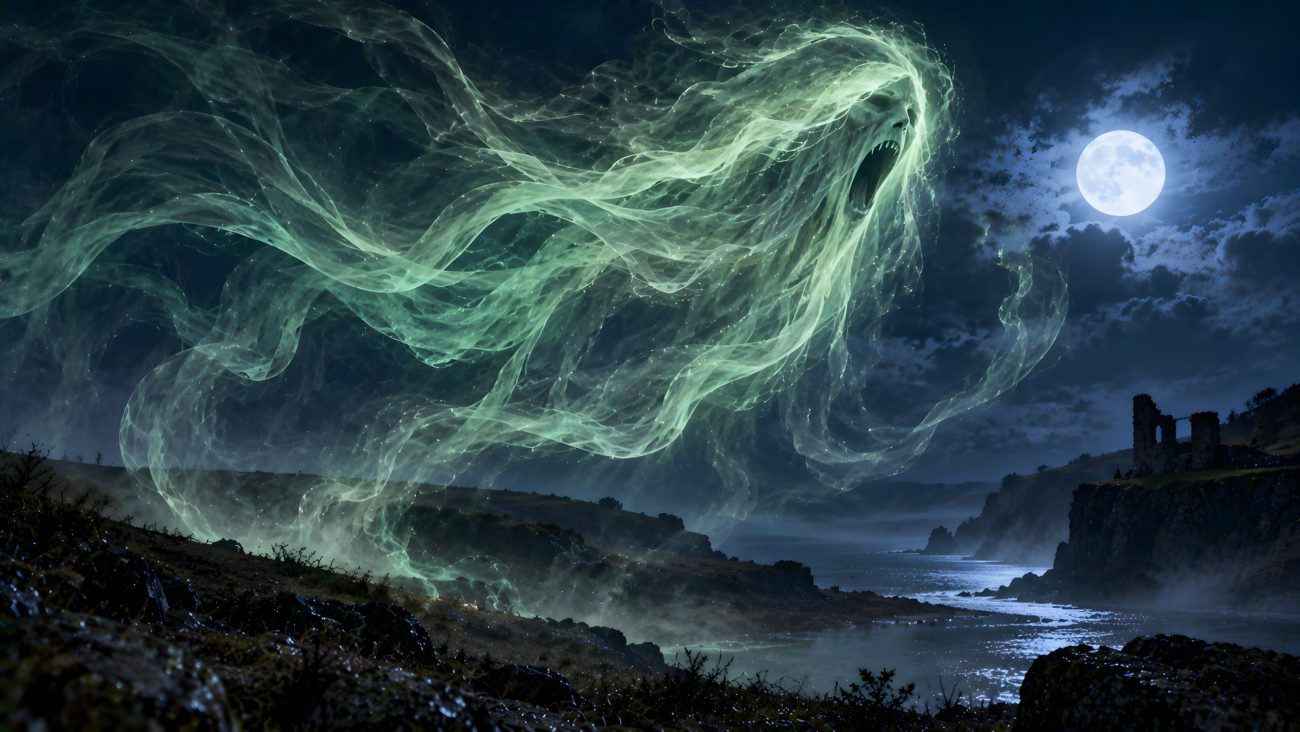
The Cyhyraeth is a ghostly spirit in Welsh mythology that has no visible body. Instead of appearing as a figure, it announces approaching death through a mournful, disembodied voice. Its cries are described as doleful and unpleasant, resembling the groans and sighs of someone suffering from a terrible illness.

The Cyhyraeth is said to sound three times before a person dies. Each cry grows weaker and fainter than the one before it, serving as a threefold warning that death is approaching. Its voice is associated particularly with the region around the River Tywi in eastern Dyfed and the coast of Glamorganshire. Along the Glamorganshire coast, the spirit may be heard before a shipwreck, accompanied by a mysterious corpse-light.

The Cyhyraeth also gives warning when Welsh people are about to die far from their homeland. Even across distant places, its sorrowful cries announce their approaching end. Like the Irish Banshee and the Scottish Cailleach, it is a supernatural harbinger of death, its invisible presence bringing the sound of grief before tragedy strikes.


Sources

“Cyhyraeth.” Wikipedia: The Free Encyclopedia. Wikimedia Foundation. Accessed October 15, 2026. https://en.wikipedia.org/wiki/Cyhyraeth
Eidolon

Tradition: Greek Mythology
Alternative Names: Eidola, Eidolons
Category: Ghost


The Myth

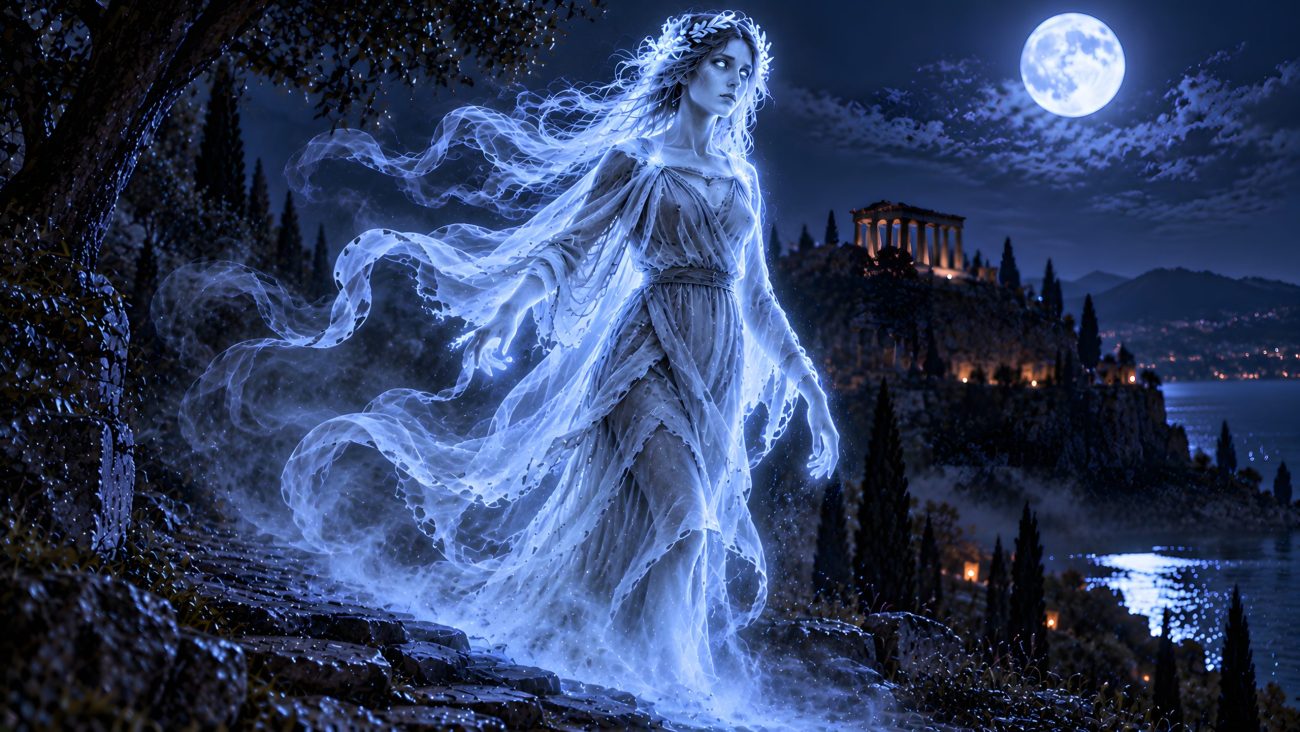
An Eidolon is a phantom or spirit-image that resembles a living or dead person. It appears in the likeness of a human being, taking the form of a shadowy double or an apparition of someone who has passed away. In Greek mythology, an Eidolon can represent the image of the dead or appear as the deceased person themselves, lingering in the world as a spectral presence.

One of the best-known examples concerns Helen of Troy. In some versions of the story, an Eidolon of Helen appeared in Troy during the Trojan War, while the real Helen was elsewhere. The phantom resembled Helen so perfectly that the Greeks and Trojans could believe she was physically present in the city. The existence of this double changed the meaning of the war, as the armies fought over an apparition rather than the actual woman.

Eidola also appear among the dead in the Greek underworld. In the Odyssey, after the suitors of Penelope are killed, their spirits gather in the palace as spectral images of the men they once were. These apparitions retain the appearance of the living but exist as shades separated from the world of the living. The Eidolon therefore represents the mysterious image that remains after death, a phantom likeness that can appear before the living even when the person it resembles is no longer present.


Sources

“Eidolon.” Wikipedia: The Free Encyclopedia. Wikimedia Foundation. Accessed October 15, 2026. https://en.wikipedia.org/wiki/Eidolon


Cauld Lad of Hylton

Tradition: English Mythology
Alternative Names: Cauld Lad, Cold Lad of Hylton
Category: Ghost


The Myth

The Cauld Lad of Hylton is the ghost of Robert Skelton, a stable boy said to have been murdered at Hylton Castle near Sunderland in northern England. According to one version of the legend, he was killed after courting Baron Hylton’s daughter. Another account claims that the boy overslept when ordered to prepare the baron’s horse for an important journey. Enraged by the delay, the baron struck him with a riding crop, stabbed him with a pitchfork, or beheaded him. The boy’s body was then thrown into a deep pond or an abandoned well.

After the murder, strange disturbances began inside Hylton Castle. Kitchens were mysteriously cleaned when left untidy and thrown into disorder when everything had been put in its proper place. Hot ashes were removed from fireplaces and scattered across the floor, sometimes bearing the imprint of a body that had lain upon them. Chamber pots were emptied onto the floor, and unseen hands seemed to move objects throughout the castle.

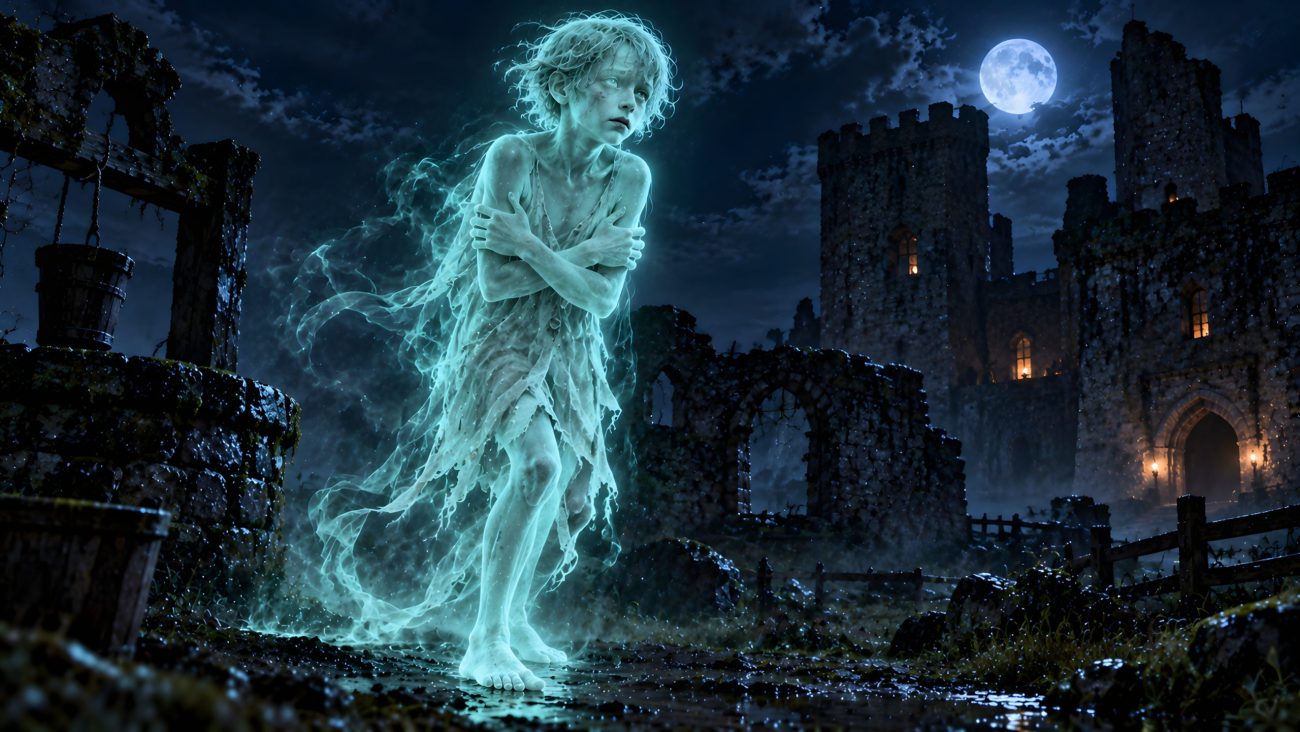
Eventually, a cook decided to remain awake until midnight to discover the cause of the disturbances. He encountered the naked ghost of a young boy, who cried out, “I’m cauld!”—meaning that he was cold. The cook and his wife took pity on the spirit and left a warm cloak for him. The following night, they heard the ghost sing, “Here’s a cloak and here’s a hood, the Cauld Lad of Hylton will do no more good.” After receiving the clothing, the ghost disappeared, and the strange disturbances ceased.

In other versions of the legend, the Cauld Lad is described as an enchanted elf, a barghest, or a brownie whose mischief is intended to draw attention to his suffering. He sings a sorrowful song predicting that he will remain enchanted until an acorn grows into a tree, the tree becomes a cradle, and the child rocked in that cradle grows into a man who can finally release him. Despite the story of his disappearance after receiving clothing, people have continued to claim that they hear the Cauld Lad’s ghostly cries around Hylton Castle.


Sources

“Cauld Lad of Hylton.” Wikipedia: The Free Encyclopedia. Wikimedia Foundation. Accessed October 15, 2026. https://en.wikipedia.org/wiki/Cauld_Lad_of_Hylton


Myling

Tradition: Norwegian Mythology
Alternative Names: Mylingar, Utburd, Útburður, Ihtiriekko, Liekkiö
Category: Ghost


The Myth

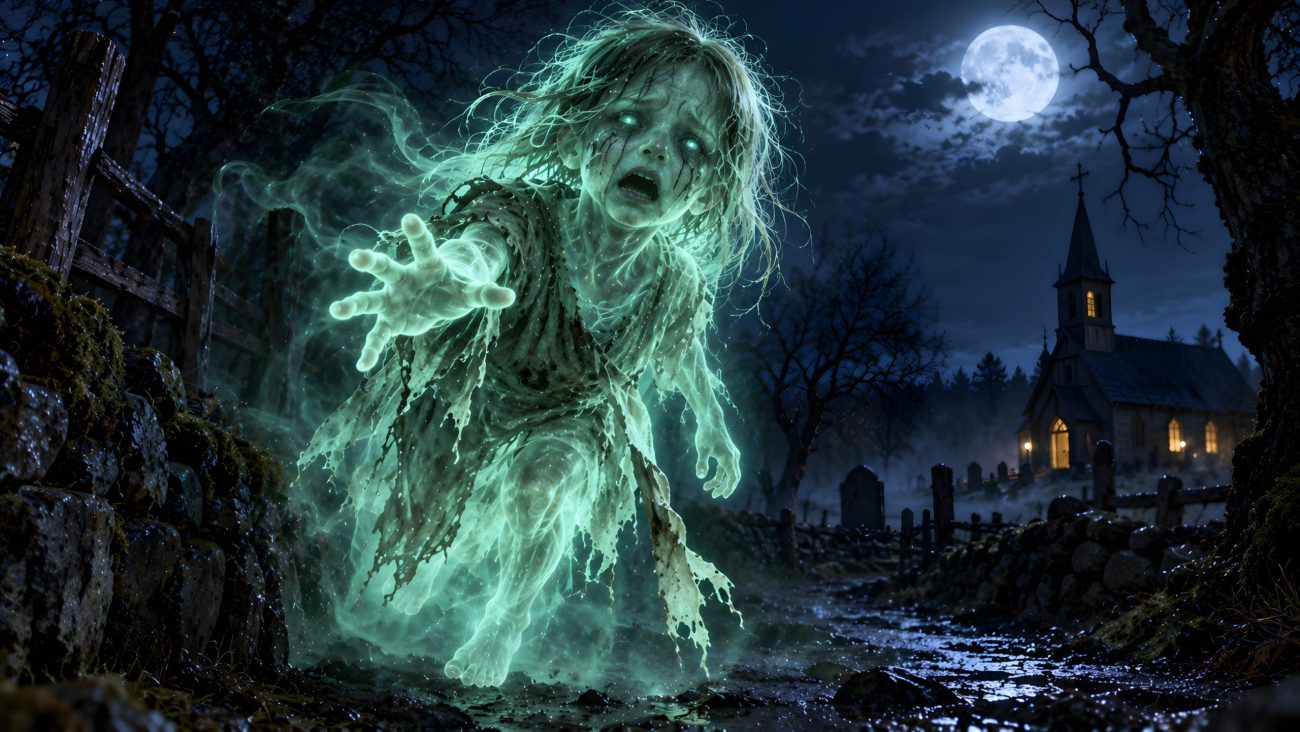
A Myling is the restless ghost of an unwanted child who was killed or abandoned by its mother and left without a proper burial. Unable to rest peacefully, the child’s spirit remains in the world of the living, haunting the place where it died or seeking out those responsible for its death. Mylings are among the most feared ghosts in Scandinavian mythology, driven by suffering and a desperate desire to receive the burial denied to them.

Mylings may be heard singing mournfully during the night, revealing the terrible crime that brought them into existence. They also pursue solitary travellers after dark, suddenly leaping onto their backs and demanding to be carried to a graveyard. The traveller must take the spirit to consecrated ground so that it can finally rest. However, the Myling grows heavier and heavier as they approach the cemetery, until the burden becomes almost impossible to bear. The victim may sink into the earth beneath its weight, and anyone who fails to reach the graveyard risks being killed by the furious spirit.

The Myling seeks both recognition and a proper burial. In some traditions, it cries out to passers-by, begging them to give it a name. If someone offers the spirit their own name, the Myling may finally find peace. Another way to release it is to discover its remains and bury them in consecrated ground. Some people attempted to prevent a murdered child from becoming a Myling by placing scissors upon its chest, but this was believed to be ineffective. Only a proper burial could truly free the child from its restless existence.

The Myling’s haunting reflects the fate of children who were secretly killed or abandoned and denied acceptance into the Christian community through baptism and burial in sacred ground. Its suffering can turn into terrible vengeance against the living, especially those responsible for its death. Until its identity is acknowledged and its remains are laid to rest, the Myling continues to wander, demanding justice and release from its earthly torment.


Sources

“Myling.” Wikipedia: The Free Encyclopedia. Wikimedia Foundation. Accessed October 15, 2026. https://en.wikipedia.org/wiki/Myling


Zwarte Juffer

Tradition: Dutch Mythology
Alternative Names: Zwarte Wijven, Zwarte Vrouwen, Sokkeraaiwiefke
Category: Ghost


The Myth

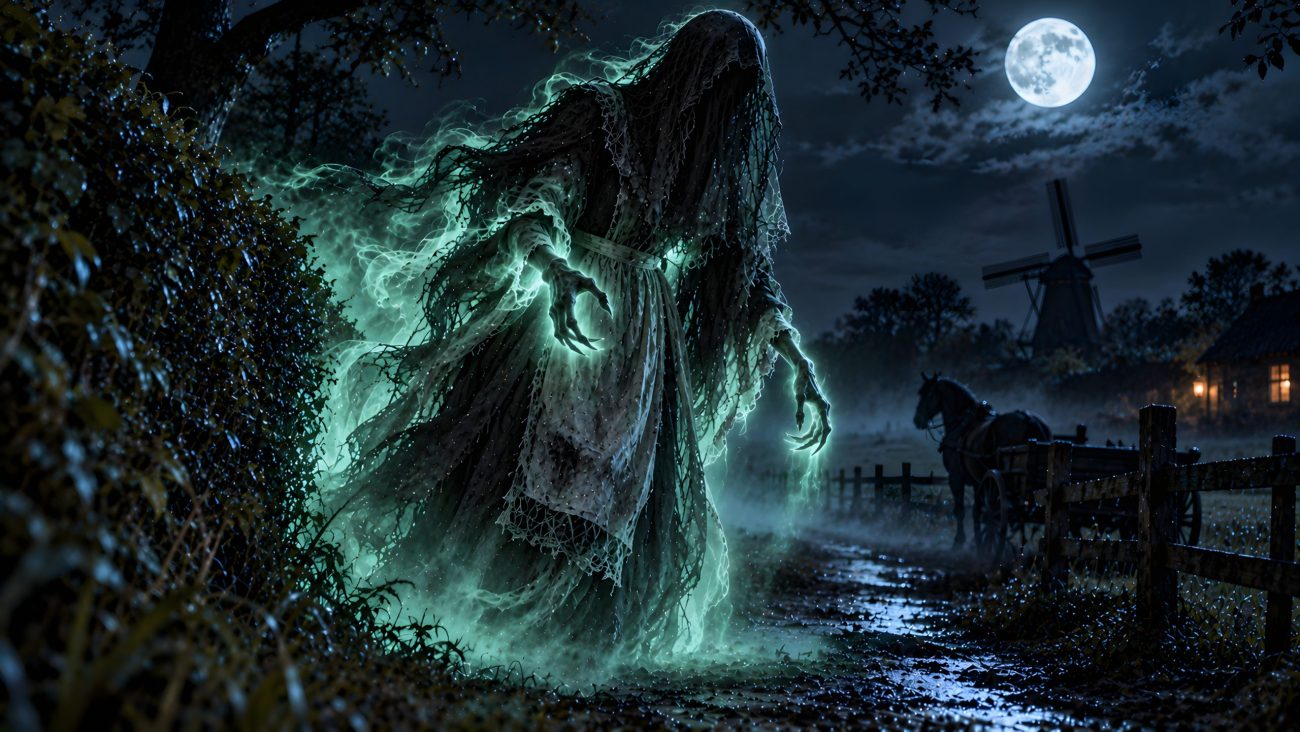
The Zwarte Juffer is a malevolent female spirit known in regional traditions of Groningen, Friesland, Twente, and the Veluwe in the Netherlands. She appears as a mourning woman dressed entirely in black, with an apron pulled over her head to conceal her face. She hides beneath hedges or inside alder bushes, emerging from the shadows to frighten travellers who pass by.

The Zwarte Juffer is said to float along roads and bring misfortune to those who encounter her. She may push people off the road or cause their horses to freeze in place, unable to move. Her presence turns an ordinary journey into a terrifying experience, as travellers find themselves helpless before the mysterious figure.

Seeing the Zwarte Juffer is considered a terrible omen. Anyone who encounters her can expect someone from their immediate family to die soon. Her black clothing and mourning appearance announce death before it occurs, making her a feared apparition associated with grief, bad fortune, and the approach of a family tragedy.


Sources

Van der Veen, Abe. “Van aardmannetje tot zwarte juffer: Een lijst van Nederlandse en Vlaamse elfen en geesten.” Abe de Verteller. https://abedeverteller.nl/van-aardmannetje-tot-zwarte-juffer-een-lijst-van-nederlandse-en-vlaamse-elfen-en-geesten/


Fearremantsje

Tradition: Dutch Mythology
Alternative Names: Verenmannetje, Jantsje mei de fearren, Wietske mei de fearren
Category: Ghost


The Myth

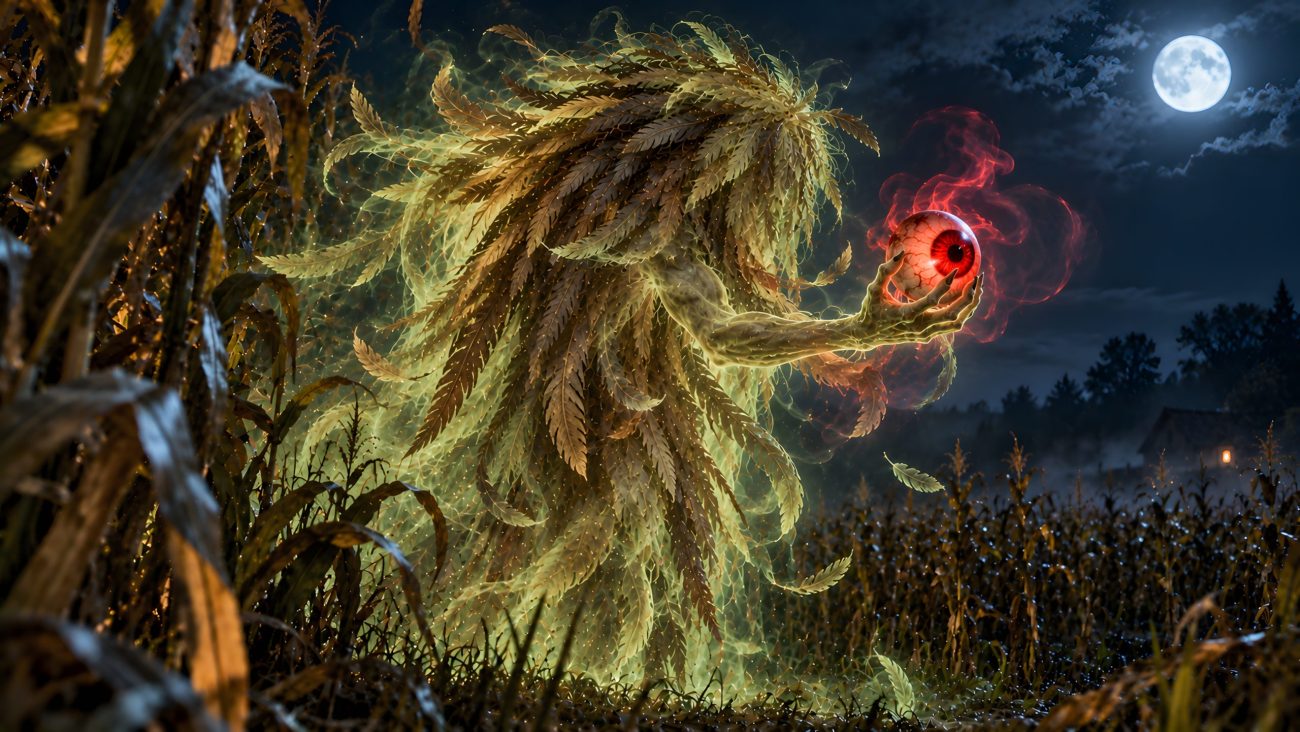
Fearremantsje, also known as Verenmannetje, is a ghostly being said to haunt the cornfields around Twizel in Friesland, the Netherlands. Its name is associated with feathers, and it is also known by the names Jantsje mei de fearren and Wietske mei de fearren. No precise description of its appearance is recorded, leaving its form mysterious.

Adults used Fearremantsje as a frightening figure to scare children, warning them of the ghost lurking among the corn. The idea of a spirit hidden in the field made the familiar agricultural landscape seem dangerous and uncanny, particularly to children who might otherwise wander into the crops.


Sources

Van der Veen, Abe. “Van aardmannetje tot zwarte juffer: Een lijst van Nederlandse en Vlaamse elfen en geesten.” Abe de Verteller. https://abedeverteller.nl/van-aardmannetje-tot-zwarte-juffer-een-lijst-van-nederlandse-en-vlaamse-elfen-en-geesten/


Kilekanen

Tradition: Dutch Mythology
Alternative Names: Kilekammen, Wâlmûzen, Tientoanen
Category: Ghost


The Myth

Kilekanen are frightening supernatural beings from Frisian tradition, particularly associated with the villages of Menaam and Minnertsga in Friesland, the Netherlands. Adults used stories about these ghosts to frighten children into returning indoors before darkness fell. Children were warned that if they stayed outside after nightfall, the Kilekanen would come and seize them.

Similar beings appear under different names in other parts of Friesland. In Suwâld, comparable creatures are called the Wâlmûzen, while in the Bildt region they are known as the Tientoanen. Their precise appearance and supernatural abilities are not described, as their main role in local tradition was to frighten children away from staying outdoors after dark.


Sources

Van der Veen, Abe. “Van aardmannetje tot zwarte juffer: Een lijst van Nederlandse en Vlaamse elfen en geesten.” Abe de Verteller. https://abedeverteller.nl/van-aardmannetje-tot-zwarte-juffer-een-lijst-van-nederlandse-en-vlaamse-elfen-en-geesten/


Klakkaart

Tradition: Belgian Mythology
Alternative Names: Klakkaart
Category: Ghost


The Myth

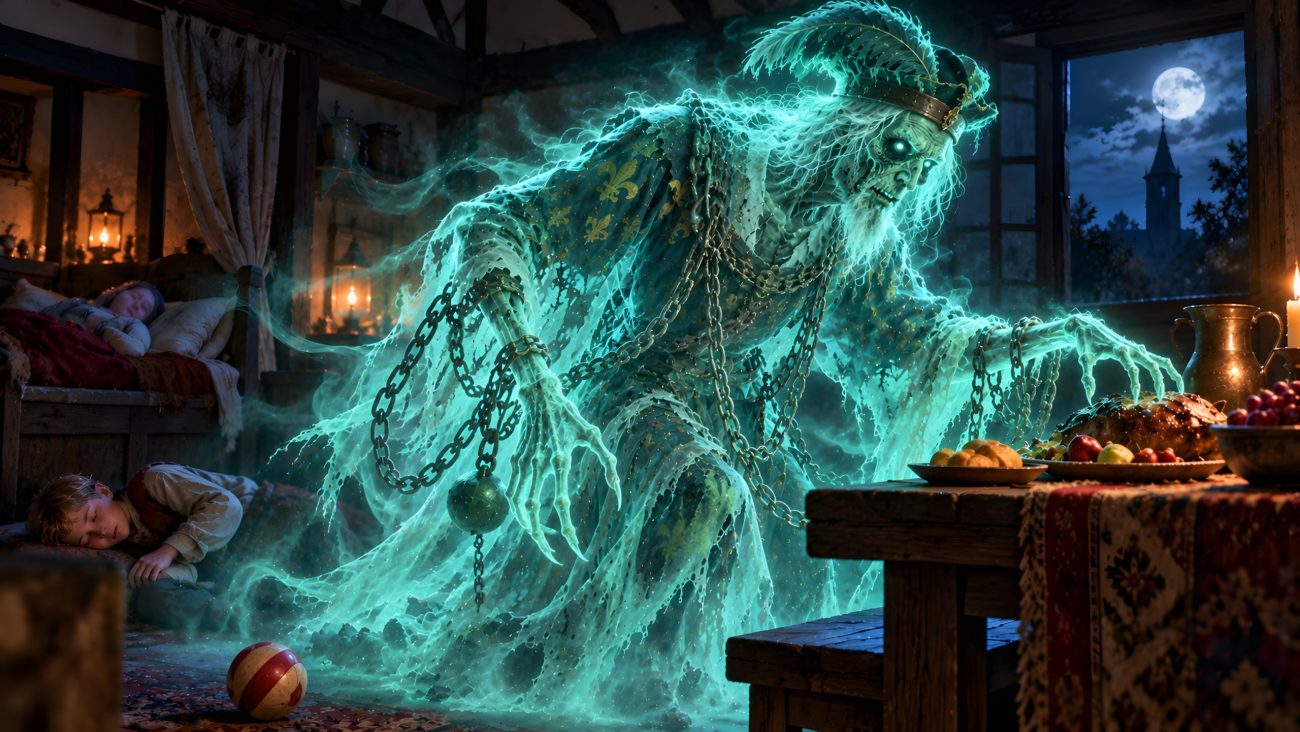
Klakkaart is the ghost of a French nobleman who was killed during the Battle of the Golden Spurs in Flanders. His spirit frightens women and children by rattling his chains, creating a terrifying noise as he moves about. Although invisible, he can enter houses unnoticed and search for delicious food.

When Klakkaart finds food to his liking, he uses his supernatural powers to make the household fall asleep, allowing him to enjoy himself without being disturbed. He also enjoys tormenting boys by placing a small ball used in the traditional game of kolf beside his hiding place. Anyone who touches the ball is suddenly struck with a sharp slap across the cheek, suffering the ghost’s mischievous punishment.


Sources

Van der Veen, Abe. “Van aardmannetje tot zwarte juffer: Een lijst van Nederlandse en Vlaamse elfen en geesten.” Abe de Verteller. https://abedeverteller.nl/van-aardmannetje-tot-zwarte-juffer-een-lijst-van-nederlandse-en-vlaamse-elfen-en-geesten/


Slepers

Tradition: Dutch Mythology
Alternative Names: De Slepers
Category: Ghost


The Myth

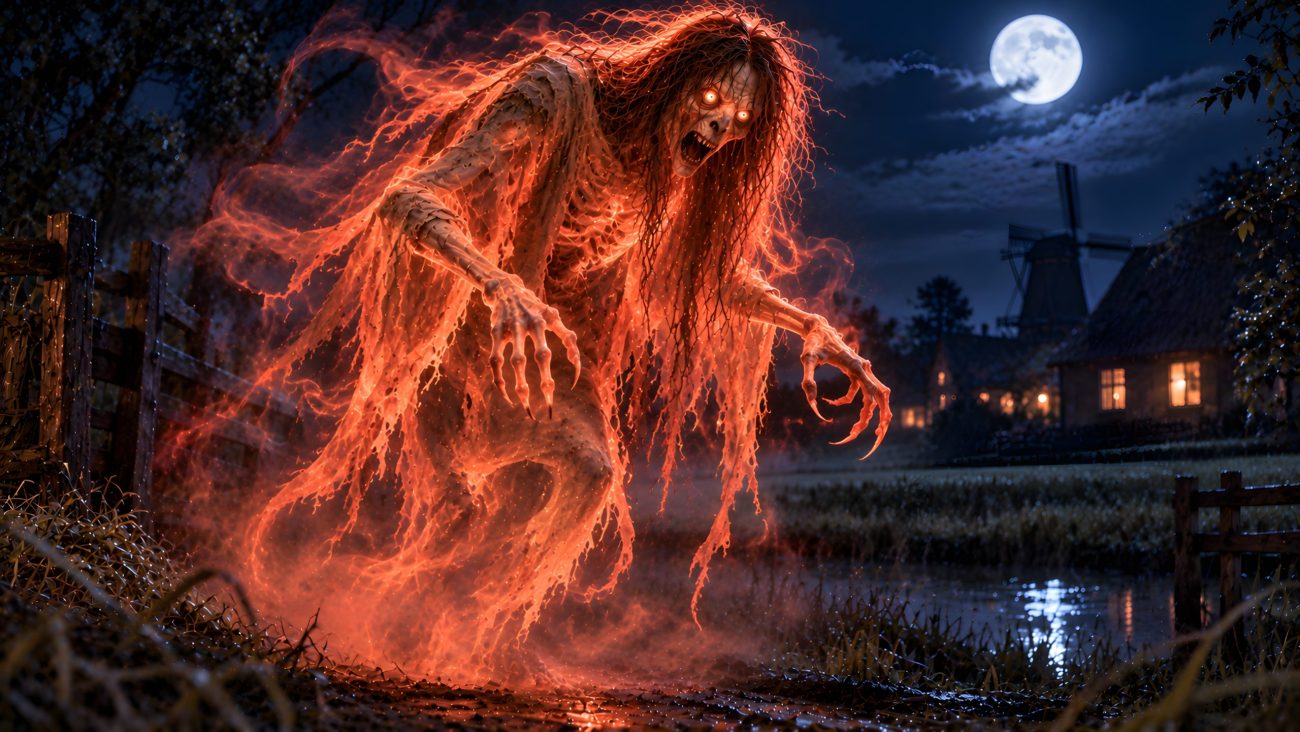
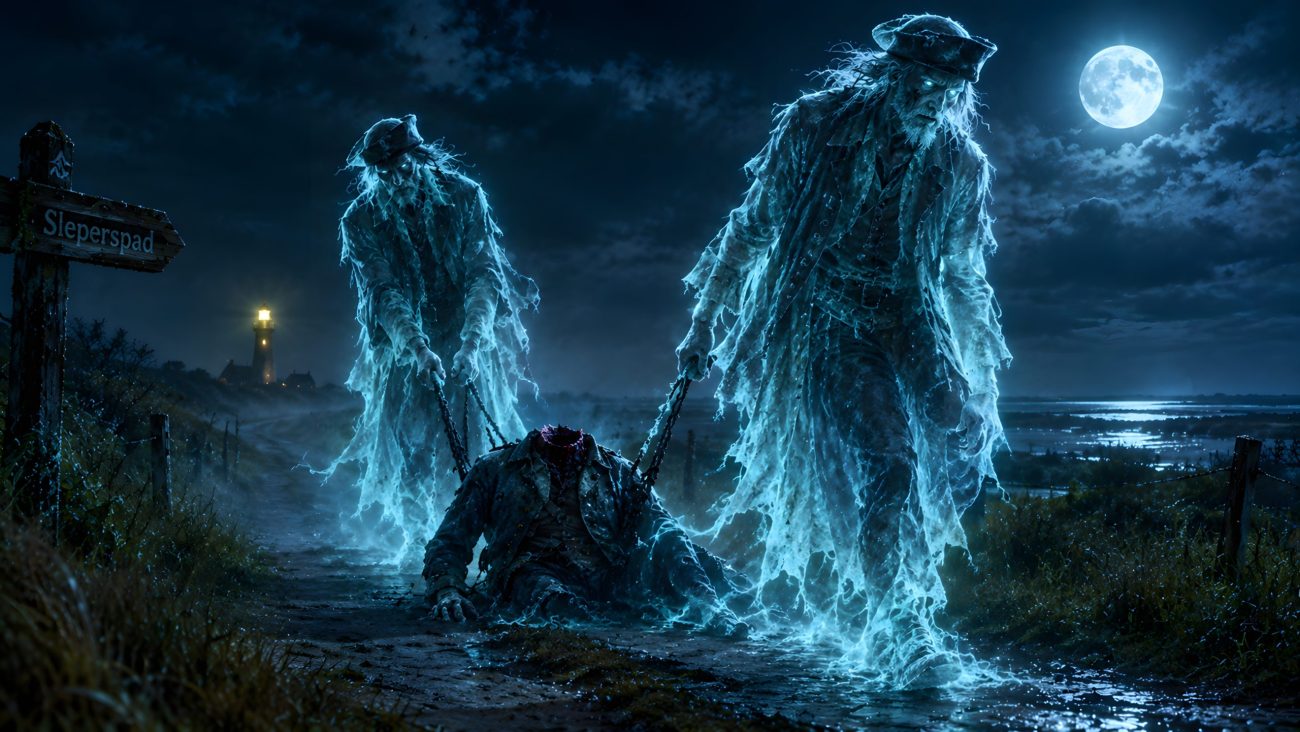
The Slepers are two ghostly sailors who haunt the Sleperspad, a road between Nes and Ballum on the island of Ameland in the Netherlands. They appear at night, dragging a headless corpse behind them. The terrifying procession wanders along the lonely path, repeating a grim task from which the two spirits can never escape.

The corpse they drag is their former captain, whom they murdered. After committing the crime, the sailors discovered that they could never rid themselves of his body. Bound to their victim by their terrible deed, they are condemned to drag him behind them forever. Their endless nocturnal wandering serves as a punishment for their murder, leaving them trapped in an eternal cycle of guilt and torment.


Sources

Van der Veen, Abe. “Van aardmannetje tot zwarte juffer: Een lijst van Nederlandse en Vlaamse elfen en geesten.” Abe de Verteller. https://abedeverteller.nl/van-aardmannetje-tot-zwarte-juffer-een-lijst-van-nederlandse-en-vlaamse-elfen-en-geesten/


Juchūjū Gaki

Tradition: Japanese Mythology
Alternative Names: 樹中住餓鬼, Tree-Dwelling Hungry Ghost
Category: Ghost


The Myth

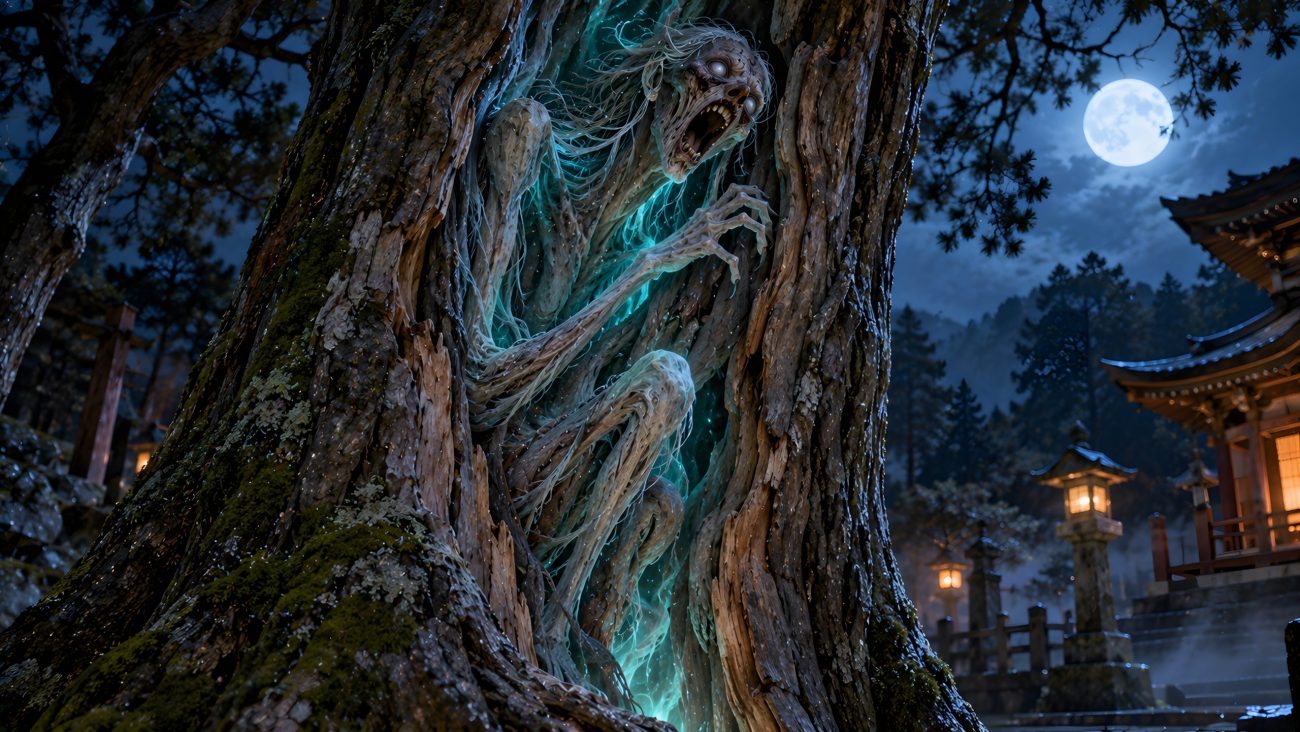
Juchūjū Gaki is one of the thirty-six types of hungry ghosts described in Buddhist teachings. It is a tormented spirit condemned to exist trapped inside the trunk of a tree. Like a tiny insect burrowing within wood, it is confined in an extremely narrow space, unable to move freely and suffering continual agony.

Those who cut down trees that provide cool shade or destroy the groves surrounding Buddhist temples are said to risk being reborn as Juchūjū Gaki. Their punishment reflects the harm they inflicted upon trees that offered shelter and upon sacred temple forests. In the afterlife, they experience the same helpless confinement that their actions brought upon the natural world.

Depictions of these suffering spirits appear in the Kitano Tenjin Engi and the Rokudō-e paintings preserved at Shōjūraigōji Temple. In these images, hungry ghosts are shown trapped within hollow tree trunks, twisting and suffering inside their wooden prisons. Their fate serves as a warning against destroying trees that provide shade and protection.


Sources

. “受注受餓鬼 (Juchūju Gaki).” 新版TYZ 妖怪図鑑 (New TYZ Yokai Encyclopedia). https://tyz-yokai.blog.jp/archives/1010655143.html