Witch as a Calf

Tradition: German Mythology
Alternative Names: Witch as a Calf
Category: Cow


The Myth

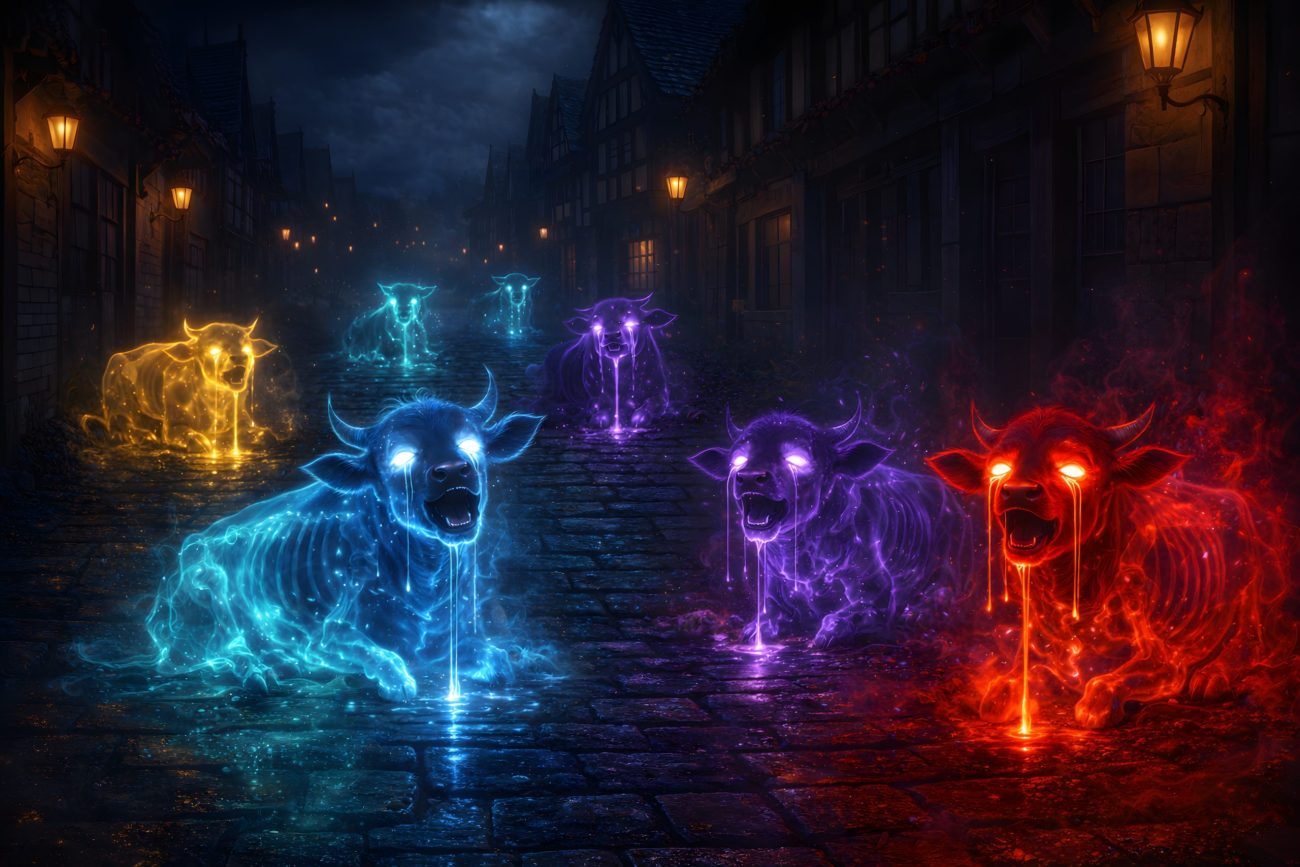
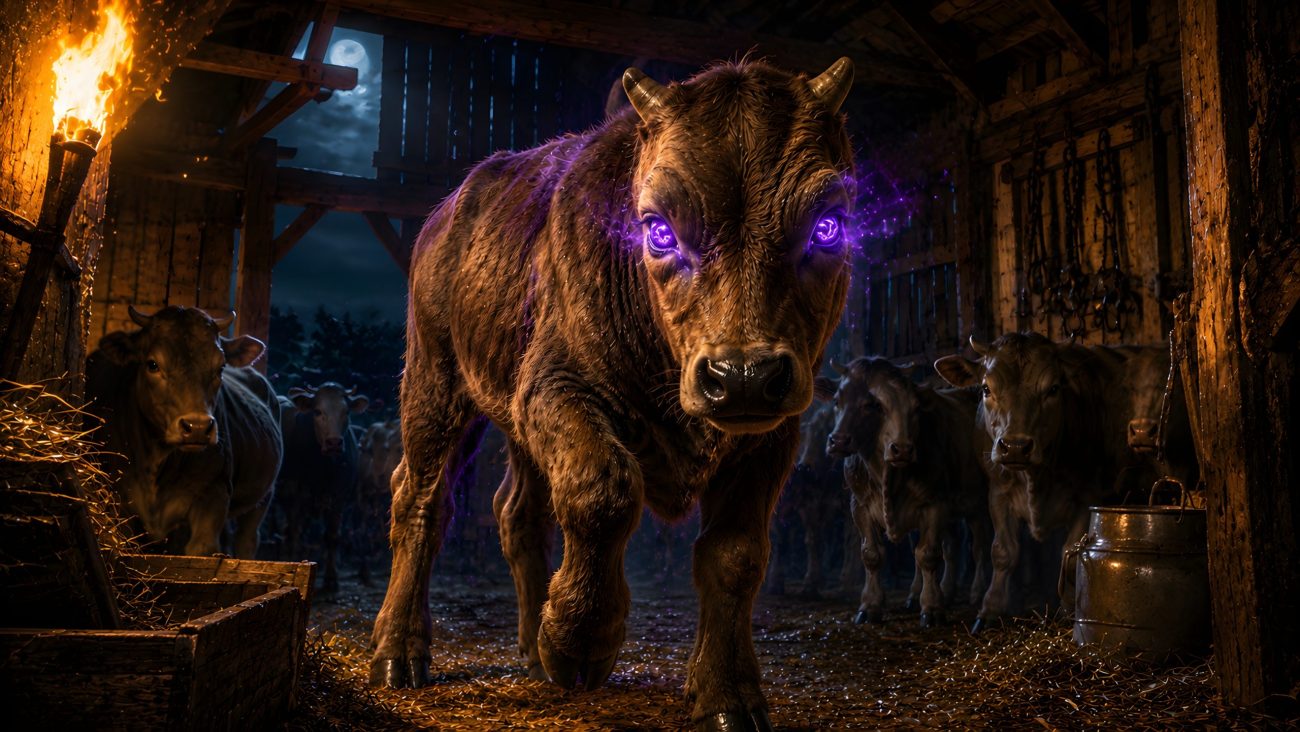
In the Schöllang area of the Allgäu, a farmer was plagued by misfortune in his barn. His cows would not give milk, no matter how much he fed them, and one misfortune after another seemed to fall upon him. The farmer eventually confided his troubles to a man, who gave him strange advice. He told the farmer to get up at midnight and inspect the barn. A calf, he said, would be loose and running around among the other cattle. If the farmer found it, he should not hesitate to cut off both of its ears and then return to bed.

That night, the farmer went to the barn at midnight. Just as he had been told, he found a calf running freely among the other cattle. The farmer took a carving knife and cut off both of the calf’s ears. Having done what he had been instructed to do, he returned to bed without further investigation.

The following morning, the calf was standing unharmed in its usual place. There was nothing apparently wrong with it. But when the farmer looked around the barn, he noticed an old woman sitting in one of the corners. Her ears had been cut off.

The farmer immediately understood what had happened. He shouted, “There you have it!” and chased the old woman out of the stable. After this, the witchcraft that had plagued the farmer and his cattle ceased. His cows once again gave milk, and the farmer and his cattle were happy once more.


Sources

“Hexe als Kalb.” In Allgäuer Sagen, selected from K. A. Reiser’s Sagen, Gebräuche und Sprichwörter des Allgäus, by Hulda Eggart, no. 248, p. 259. Kempten and Munich, 1914. Reproduced by SAGEN.at. https://www.sagen.at/texte/sagen/deutschland/bayern/allgaeu/hexe_kalb.html
Pfronten-Öscher Hund

Tradition: German Mythology
Alternative names: Öscher Hund, Öscher Pudel
Category: Dog, Cow


The Myth

Long ago, people in Pfronten-Ösch frequently saw a huge phantom dog wandering through the area at night. It became known as the Öscher Hund or Öscher Pudel.

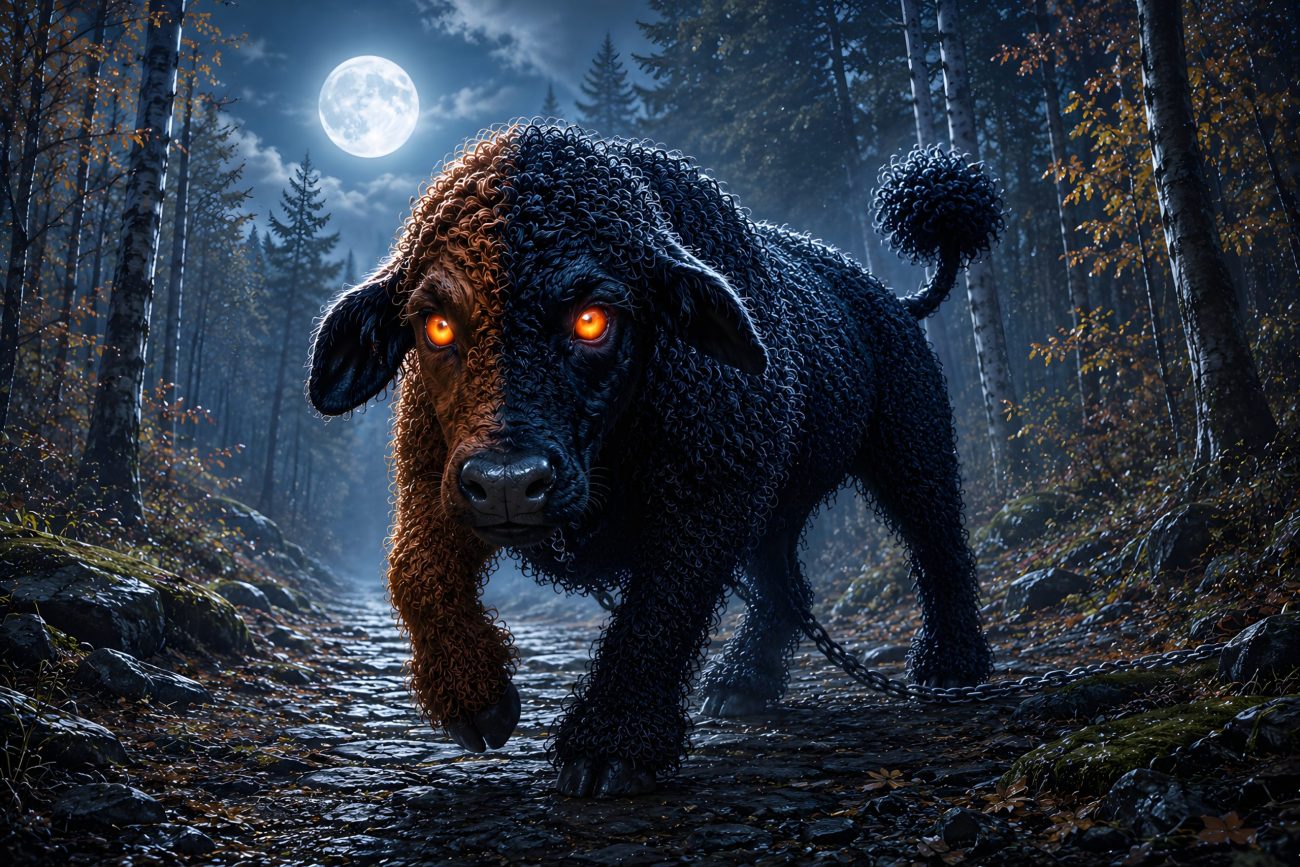
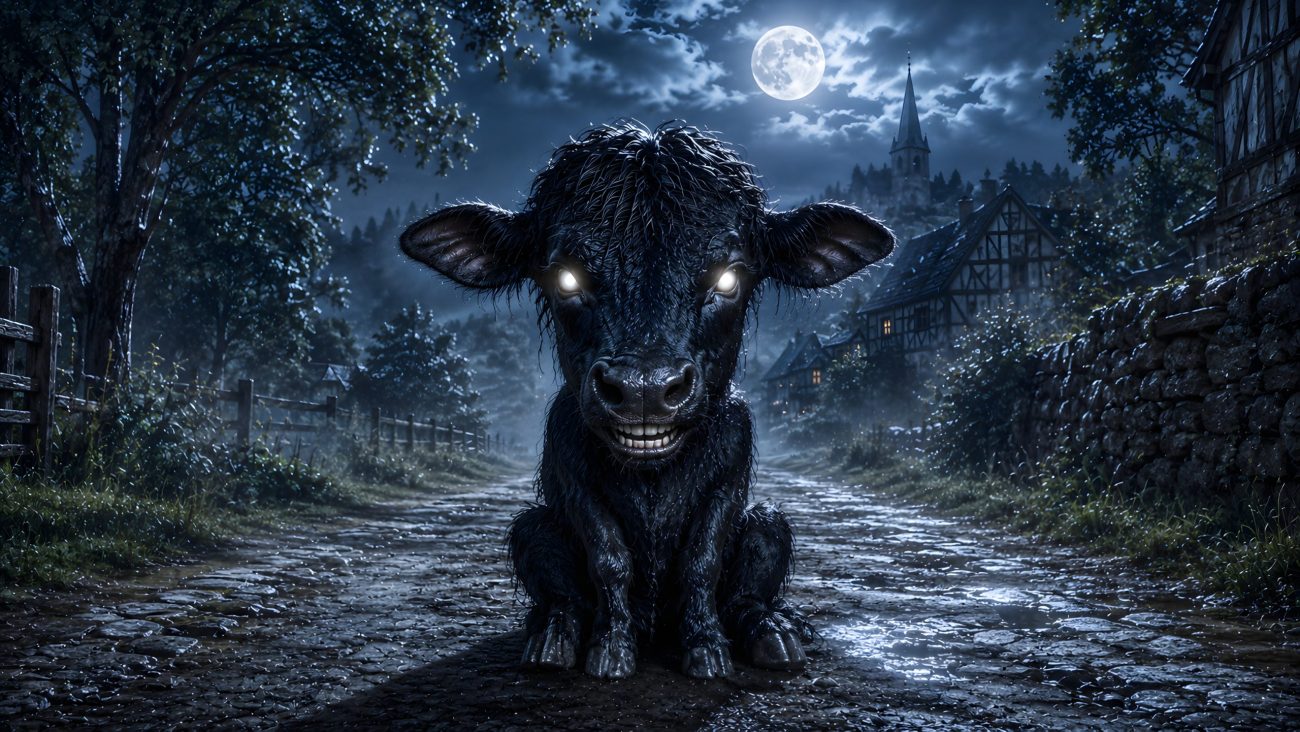
The apparition usually appeared shortly after midnight. It was enormous, about the size of a calf, and its strange appearance made it even more frightening: it was described as being half calf and half dog.

A night watchman who encountered the creature more often than most once found himself being followed by it. The apparition approached him accompanied by the terrifying rattling of chains. Eventually it came so close that he was able to see it clearly.

The creature was divided in color, being half fox-colored and half black. Its eyes were enormous and fiery, said to be as large as the full moon, making it a horrifying sight.

When the night watchman reached the Bärenwirt, however, the Pudel suddenly disappeared. Instead, he heard a terrible crashing noise, as though all the houses of Ösch were collapsing at once.

The Öscher Hund could also be seen by people who did not normally believe in ghosts. Yet it was not visible to everyone. According to the legend, only people born under a particular sign were capable of seeing the apparition.

One Christmas Eve, for example, the creature approached two travelers walking along the road and accompanied them for a considerable distance. One of the men could see the phantom clearly, while his companion could see nothing at all.


Sources

“Der Pfronten-Öscher Hund.” In Hulda Eggart, ed., Allgäuer Sagen, selected from K. A. Reiser’s Sagen, Gebräuche und Sprichwörter des Allgäus, no. 194, pp. 198–199. Kempten and Munich, 1914. Reproduced by SAGEN.at. Accessed August 29, 2026. https://www.sagen.at/texte/sagen/deutschland/bayern/allgaeu/hund.html


Ochsenkopf

Tradition: German Mythology
Alternative names: Ochsenkopf
Category: Cow


The Myth

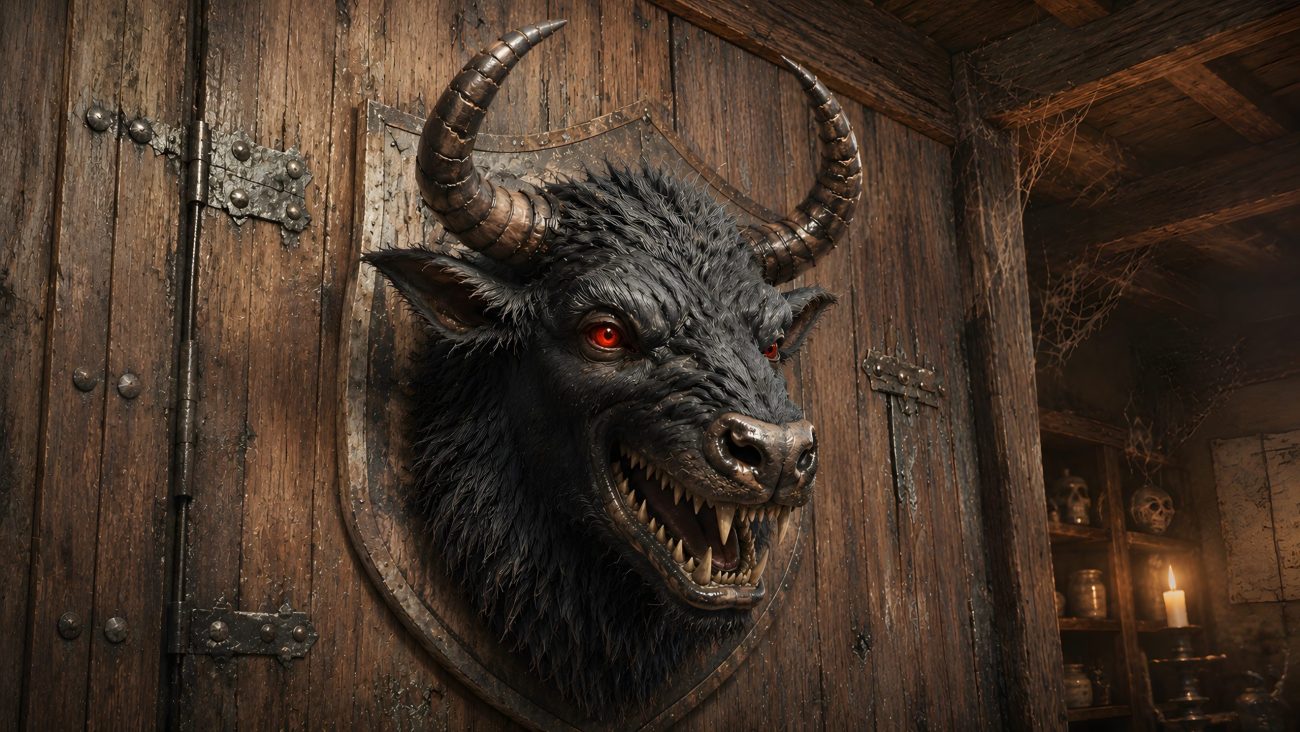
At the Brümmerhof, a historic farmstead dating from 1644 and now located on the grounds of the Agricultural Museum in Hösseringen, an ox head hangs in the gable.

According to the local legend, the ox head has an important protective function. If it were ever removed or disappeared, the farm’s livestock would begin to die one after another.

The deaths would occur in a particular order. The largest animals would die first, beginning with the horses. The deaths would then progress through the livestock until finally reaching the smallest animals, with the chickens dying last.

The legend therefore presents the ox head as a supernatural guardian of the farm’s animals. Its continued presence ensures their survival, while its disappearance would herald the destruction of the entire livestock.


Sources

Bengen, Etta, comp. “Der Ochsenkopf.” SAGEN.at – Traditionelle Sagen aus Deutschland, Niedersachsen. Source: Will-Erich Peukert, Niedersächsische Sagen I (Göttingen, 1964), p. 4. Accessed August 29, 2026. https://www.sagen.at/texte/sagen/deutschland/niedersachsen/bengen/ochsenkopf.html


Muhkalb

Tradition: German Mythology
Alternative names: Moo Calf
Category: Cow


The Myth

The Muhkalb is a legendary creature found in folklore from Rheinhessen, the Rheingau, and other parts of southwestern Germany. It is usually described as an enormous calf with the head of a fully grown cow and glowing eyes. In some traditions, it appears as a hybrid of a bull and a maiden.

The Muhkalb appears only at night and terrifies people with its terrible bellowing. It is said to leap onto the backs of its victims and, in some accounts, trample them to death.

The legends surrounding the creature vary considerably between different locations. In Jugenheim, the Muhkalb was said to be the transformed spirit of an unfaithful nun who had drowned herself and her child in a well. As punishment, she was condemned to wander as a cow-calf, warning lovers against committing similar acts.

In Lorch, the Muhkalb was said to inhabit the dark gateway of the Hilchenhaus. It particularly tormented adulterers, usurious wine merchants, and brawlers. According to one local legend, around 1550 it even saved the town from bankruptcy by driving away officials of the Elector of Mainz who had come to collect war debts.

In Heilbronn, a butcher during the Thirty Years’ War was accused of selling dog meat as veal. He denied the accusation and swore that, if it were true, he would be reborn as a calf. He soon died of the plague, and thereafter was said to haunt the city at night in the form of the Muhkalb.

In Saarbrücken, the creature was described as a calf that appeared in the streets during the evening and grew to an unnatural size before shrinking again. It could also change its appearance, taking the forms of a dog, cow, donkey, or horse. Some accounts described it simply as a headless calf.


Sources

“Muhkalb.” Wikipedia: Die freie Enzyklopädie (German Wikipedia). Wikimedia Foundation. Accessed August 29, 2026. https://de.wikipedia.org/wiki/Muhkalb


Sibylle’s Giant Cats

Tradition / Region: German Mythology
Alternative names: Giant Cats of the Sibylle of Teck
Category: Cat


The Myth

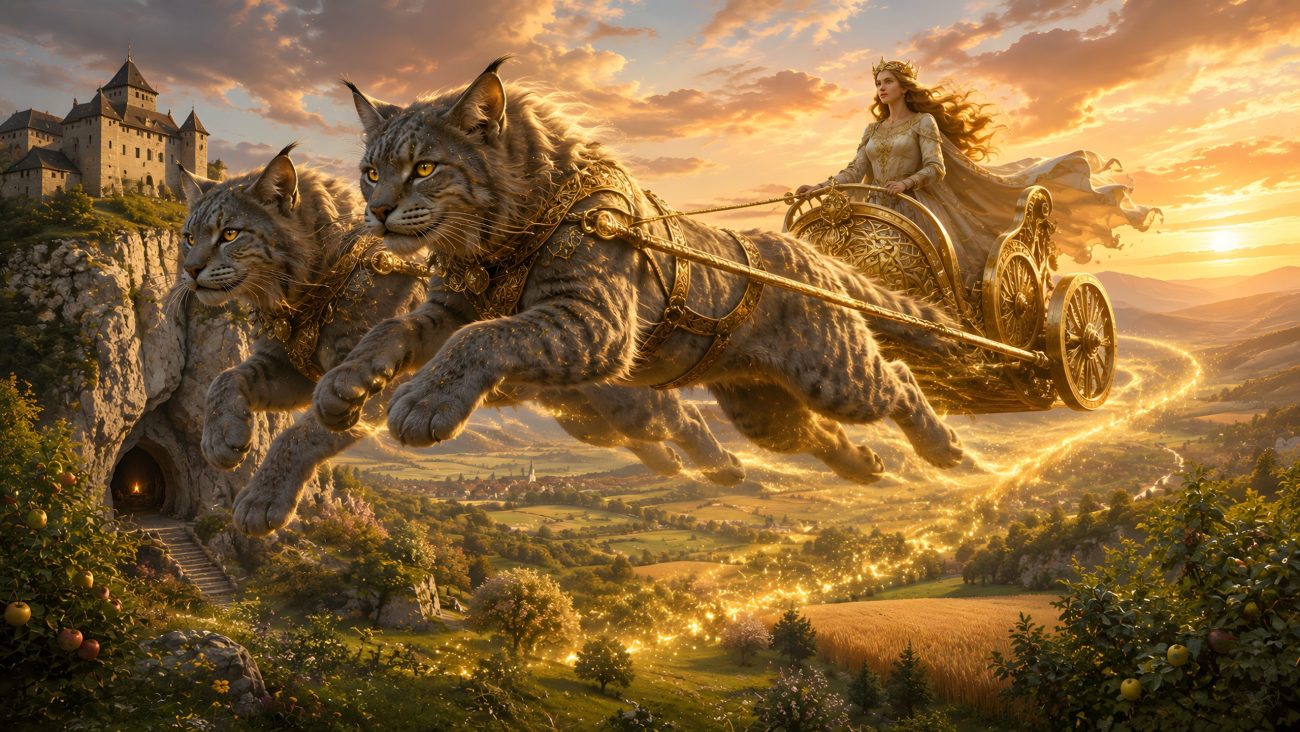
The giant cats of Sibylle are two enormous felines strong enough to pull a golden chariot through the air. They serve the mysterious Sibylle, a wise woman who lived in an underground palace beneath the Teck cliffs.

According to the legend, Sibylle dwelled deep within the Sibylle Cave at the foot of the Teck mountain. She was renowned for her wisdom and kindness, and anyone who climbed the steep path to her hidden palace seeking help was never turned away.

Her three sons, however, were nothing like their mother. Known as Unhold, Raufbold, and Saufbold, they became cruel robbers who built their own castles on nearby hills. From these strongholds they terrorized farmers and plundered merchants traveling through the valley.

Heartbroken by the wickedness of her sons, Sibylle decided to abandon both her underground palace and the land forever. One evening she departed in a magnificent golden chariot drawn through the sky by two gigantic cats. She was never seen again.

The people believed that the route taken by the flying chariot could still be seen each year when the crops began to ripen. Along its path, the meadows remained greener, the grain produced larger ears, and the apples, pears, and cherries grew sweeter and more abundant than elsewhere. This fertile strip became known as the Sibylle Trail.

Later investigations revealed that the legendary trail followed the remains of the ancient Roman Limes. The filled defensive ditches created unusually fertile soil, giving rise to the enduring belief that the giant cats of Sibylle had blessed the land as they carried their mistress away forever.


Sources

“Die Sage von der Sibylle von der Teck.” SAGEN.at – Traditionelle Sagen aus Deutschland (Baden-Württemberg). Accessed July 28, 2026. https://www.sagen.at/texte/sagen/deutschland/baden_wuerttemberg/sibyllevonderteck.html


Night Raven

Tradition / Region: German Mythology, Austrian Mythology
Alternative names: Nightraven; Nachtkrapp; Nachtrabe; Nattravn; Nattramn; Nattkorp
Category: Bird


The Myth

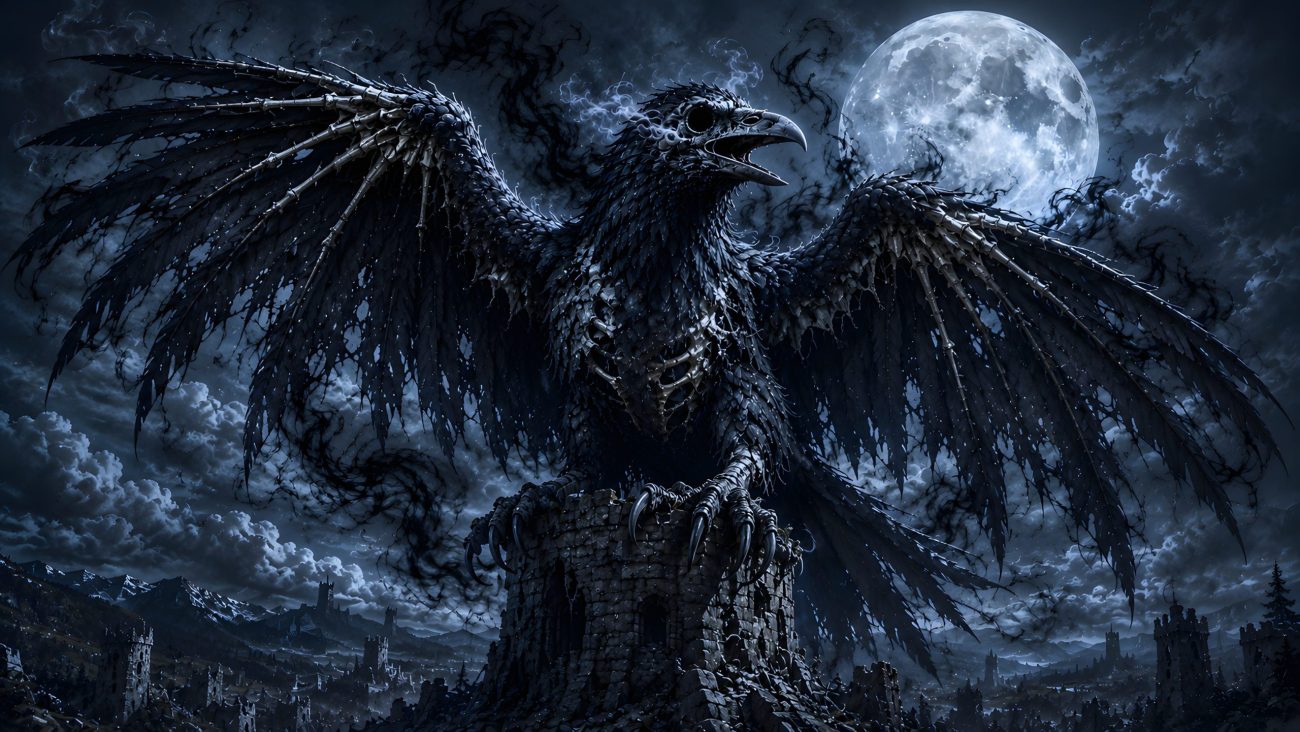
The Night Raven is a fearsome supernatural bird said to appear only after dark. Across much of Europe it is described as a giant raven-like creature that haunts forests, crossroads, and lonely places, often serving as a harbinger of death and misfortune. In many traditions, Night Ravens are not ordinary birds at all, but the spirits of the dead transformed into raven form.

In German folklore, the Night Raven leaves its hiding place after sunset to hunt. It is especially feared by children, whom it is said to snatch from the night and carry away to its nest. Some stories claim it tears its victims apart before devouring them, while others say it simply stuffs disobedient children into a sack and disappears into the darkness. Northern German legends also speak of an Iron Bird, whose iron wings beat offenders to death.

Scandinavian traditions often portray Night Ravens as the restless ghosts of suicides, murderers, unbaptized children, or those buried in unconsecrated ground. They fly through the night in the form of ravens or even skeletal birds, filling the darkness with eerie creaks and shrill cries. Some tales warn that gazing into the empty eye sockets of these ghostly birds brings death, while holes in their wings spread sickness and disease.

Though their forms vary from region to region, Night Ravens are almost always seen as omens of suffering, restless spirits, and the dangers that lurk in the darkness. Their cries and shadowy flights served for centuries as warnings to keep travelers from wandering at night and children safely indoors.


Sources

Wikipedia contributors. (n.d.). Night raven. In Wikipedia. Retrieved June 29, 2026, from https://en.wikipedia.org/wiki/Night_raven


Hercinia

Tradition / Region: German Mythology
Alternative names: —
Category: Bird


The Myth

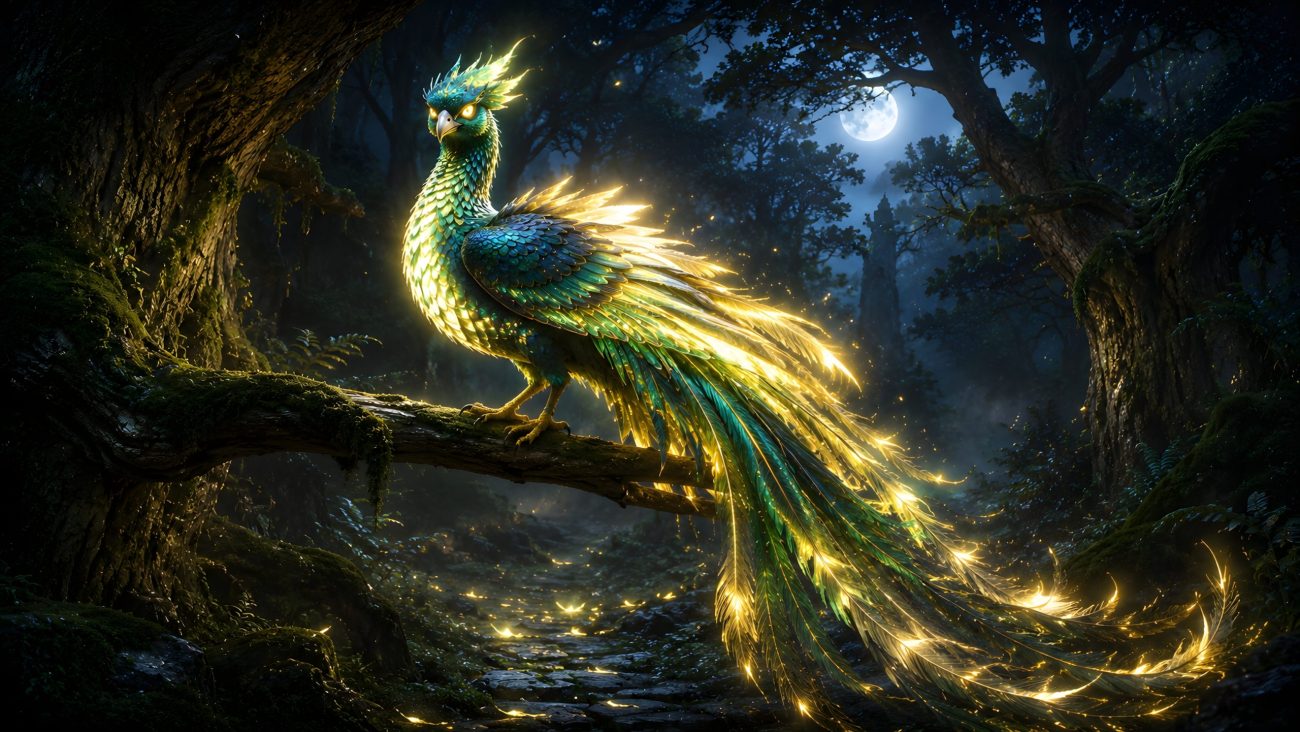
The Hercinia is a legendary bird said to inhabit the vast Hercynian Forest of ancient Germany. It was famed for one extraordinary trait: its feathers glowed like fire in the darkness.

According to ancient accounts, the bird’s plumage shone so brightly at night that individual feathers could be placed upon the ground to illuminate the forest. Even beneath the thick canopy and in the deepest shadows, their radiant glow marked the path and guided travelers through the wilderness.

Because of this miraculous light, the Hercinia became one of the marvels associated with the mysterious Hercynian Forest, a place long regarded as remote, untamed, and filled with strange creatures. Its glowing feathers were remembered as one of the forest’s greatest wonders, capable of turning the darkest night into a visible trail.


Sources

Wikipedia contributors. (n.d.). Hercinia. In Wikipedia. Retrieved June 29, 2026, from https://en.wikipedia.org/wiki/Hercinia


Nis Puk

Tradition / Region: Danish Mythology, German Mythology
Alternate Names: Nis; Niß; Puk; Nispuk; Niskepuk; Nisebuk; Hauspuk
Category: Gnome


The Myth

The Nis Puk is a small kobold-like household spirit combining traits of the Nordic nisse and the Germanic puck. It appears as a child-sized figure with a large head, long arms, bright eyes, and typically wears a red cap, red stockings, and simple work clothes.

It dwells in farms, barns, lofts, or within the wooden structure of a house, often hiding in beams, corners, or small cavities. Its presence is strongly tied to prosperity: where a Nis Puk lives, livestock thrive, chores are completed overnight, and the household flourishes.

The Nis Puk performs domestic labor such as feeding animals, preparing grain, cleaning, and maintaining the farm. It may also protect property, but often acquires resources by stealing from neighboring farms. Some versions describe it as bringing wealth or goods, while others portray a darker aspect, where it behaves like an infernal spirit bound to its owner.

Its behavior depends on how it is treated. If respected and rewarded—typically with porridge, milk, or butter—it remains helpful. If neglected, mocked, or overworked, it becomes aggressive, disturbing the household, tormenting its owner, or sabotaging work.

In some traditions, the Nis Puk is bound to a person or property and cannot easily be rid of. More dangerous variants demand the owner’s soul after death, especially if acquired through unnatural means. Its presence can thus be both a blessing and a long-term curse.


Sources

Wikipedia contributors. (n.d.). Nis Puk. In Wikipedia. Retrieved March 1, 2026, from https://en.wikipedia.org/wiki/Nis_Puk.


Klabautermann

Tradition / Region: German Mythology, Dutch Mythology
Alternate Names: Kalfater; Klabautermännchen; Kaboutermanneken
Category: Gnome


The Myth

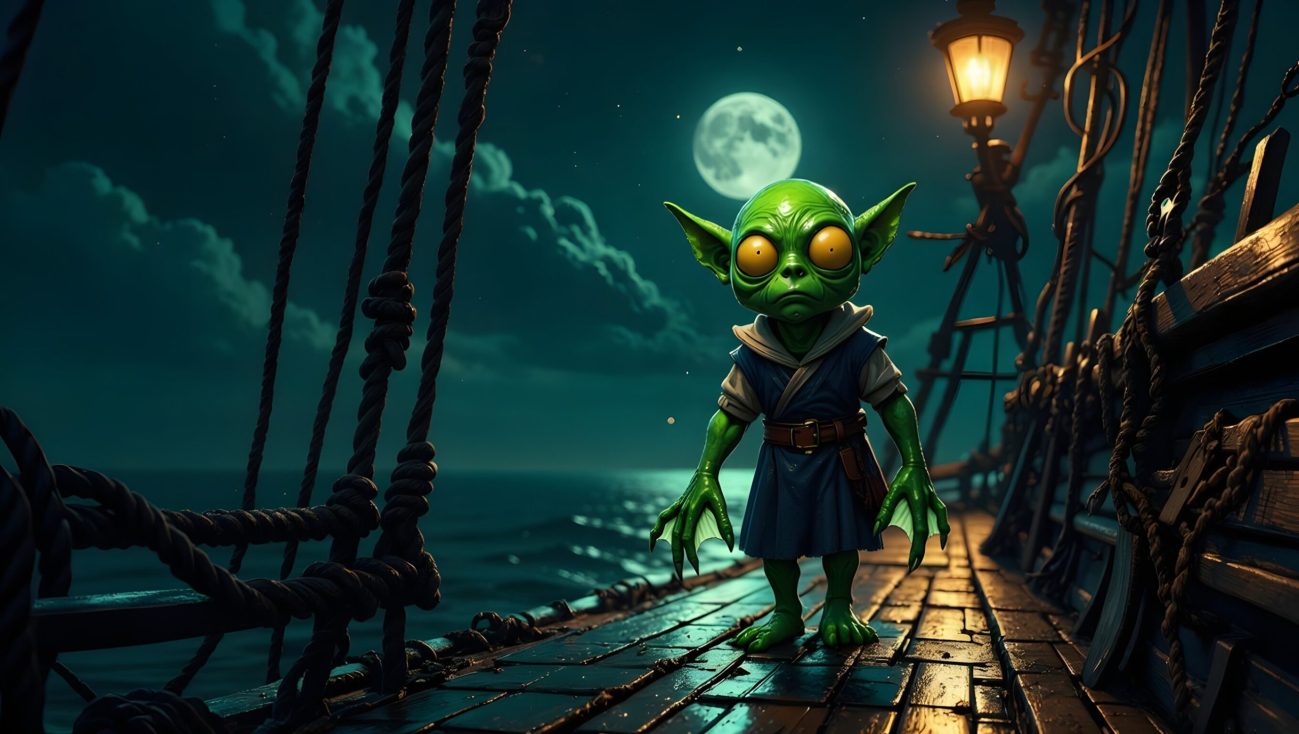
The Klabautermann is a water kobold associated with ships, appearing as a small humanlike figure or sometimes as a ship’s carpenter. It is linked to the wood of the vessel and is rarely seen, as its appearance is considered an ill omen.

The Klabautermann lives within the wood of a ship and assists sailors and fishermen with their duties. It may pump water from the hold, arrange cargo, repair damage, and work at night to fix broken objects. It is often said to sit beneath the capstan. Its presence protects the ship from danger such as illness, fire, or attack, and ensures the vessel remains seaworthy.

It appears only rarely to humans, and seeing it is considered bad luck. It may be seen as a small figure with a pipe, wearing a sailor’s cap and a red or grey jacket, though descriptions vary. It can also appear in the form of the ship’s carpenter.

The spirit reacts to the behavior of the crew. If treated with respect, it continues its helpful work. If angered, it creates disturbances, tangles ropes, makes noise, and damages objects. When the ship is beyond saving, the Klabautermann becomes restless, making loud sounds, running through the ship, or leaving it. Its departure signals that the vessel is doomed to sink.


Sources

Wikipedia contributors. (n.d.). Klabautermann. In Wikipedia. Retrieved March 1, 2026, from https://en.wikipedia.org/wiki/Klabautermann.


The Calf-Bleater of Sufferloh

Tradition / Region: German Mythology
Alternate Names: The Calf Spirit; The Bleating Steward; The Hoofprint Ghost
Category: Cow, Ghost


The Myth

In the free village of Sufferloh, the people once lived under the protection of Tegernsee Abbey. Each year, out of their own goodwill, they brought a calf to the prelate as a sign of respect. The offering was freely given and caused no resentment among the farmers.

But in time a new monastery steward was appointed. When another year passed, he declared that the gift would no longer be voluntary. From then on, he demanded the first-born calf from the farmers as a fixed obligation. The people obeyed, but bitterness settled in their hearts.

After the steward died, strange happenings began in the monastery passage. At night, a loud bleating echoed through the corridors — the unmistakable cry of a calf. The sound returned again and again, filling the monks with dread.

Not long after, a calf’s hoofprint appeared in the stone floor of the passage. No matter what was done, the mark would not vanish. Even when the tiles were removed, the imprint could still be seen beneath them.

The monks finally sealed the passage in hopes of ending the disturbance. Yet the bleating continued night after night, and peace did not return until the monastery itself was dissolved.

People later said the spirit of the unjust steward had been condemned to wander, crying forever like the calf he once demanded without mercy. Some claimed the ghost was driven first to the Ringspitze, and later, by order of the Pope, to roam the Unnütz mountain with other restless spirits, doomed to bleat through the darkness for all time.


Sources

SAGEN.at contributors. (n.d.). Kalbplärrer. In SAGEN.at – Traditionelle Sagen aus Deutschland: Bayern–Isarwinkel, from https://www.sagen.at/texte/sagen/deutschland/bayern/isarwinkel/kalbplaerrer.html