Dragon of Gsäßtobel

Tradition: German Mythology
Alternative Names: Dragon of Gsäßtobel
Category: Dragon


The Myth

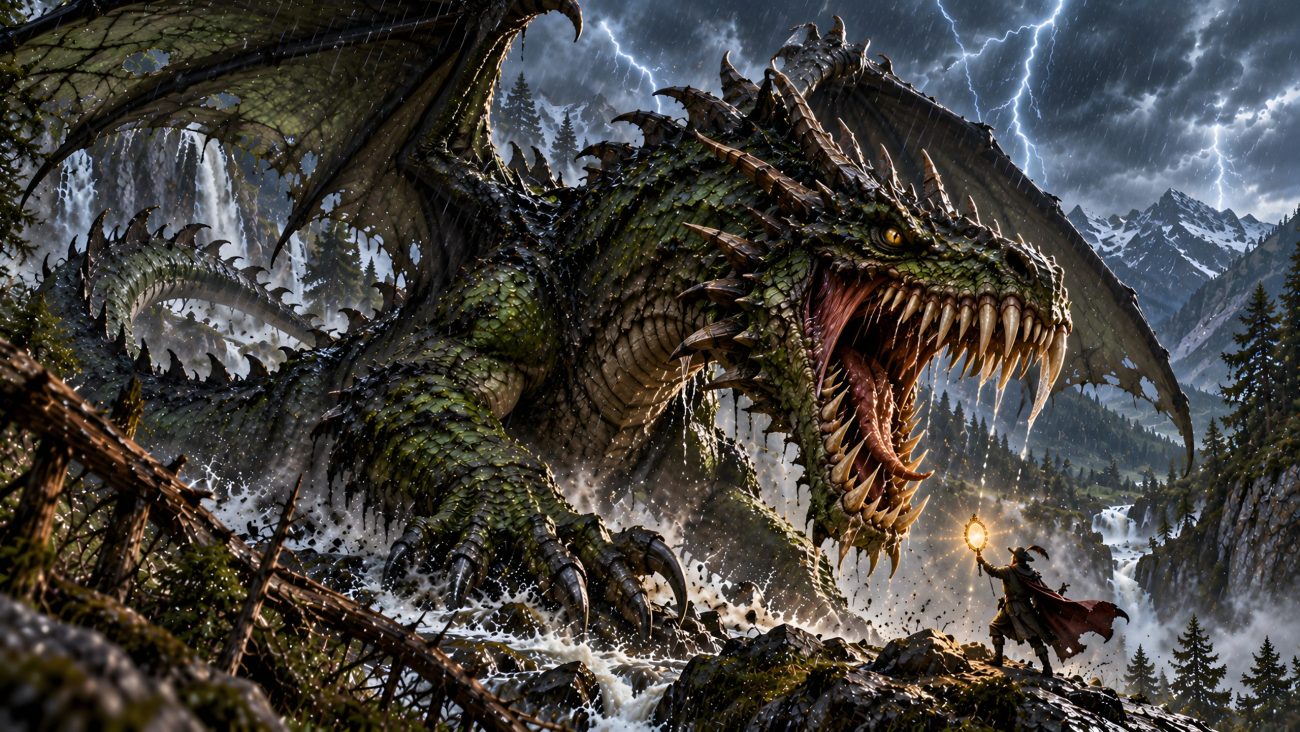
In ancient times, a terrifying dragon lived in the Gsäßtobel above Sigiswang. The creature was a menace to the entire surrounding countryside and caused great harm, becoming a source of fear for the local people.

At that time, a mysterious little man from Venice frequently visited Bolsterlang. He usually stayed overnight in a local house and always carried a remarkable mirror with him. Anyone who looked into the mirror could supposedly see the exact places where hidden treasures lay buried.

On one of his visits, the Venetian little man allowed several people to look into his mirror. Three hidden treasures appeared within it: one near Maiselstein, another at Sonderdorf, and a third on the Spek, a hill near Bolsterlang.

But the little man had no intention of searching for these treasures. He revealed that he had something far more dangerous to accomplish. He was going to the Gsäßtobel above Sigiswang to deal with the dragon.

The Venetian believed that if he succeeded in “carrying away” or removing the dragon, he would have enough wealth to last him for the rest of his life. He announced that he would undertake the attempt at noon, at twelve o’clock, and promised to give a sign if everything went successfully.

When the appointed hour arrived, a terrible storm suddenly broke over Sigiswang. Lightning flashed and thunder roared while violent winds tore through the countryside. The storm became so fierce that it seemed as though the entire village might be destroyed.

Then, just as suddenly, the storm began to subside. A strange apparition appeared in the sky, as though something had passed through the air, with what looked like a hand visible within it. This was taken as the promised sign that the Venetian’s dangerous undertaking had succeeded.

The little man never returned to Bolsterlang after that day. But the terrifying dragon of Gsäßtobel was gone, and the people of the surrounding countryside were finally free from the creature that had brought them so much fear and destruction.


Sources

“Der Drache.” SAGEN.at – Traditionelle Sagen aus Deutschland (Bayern, Allgäu). Reproduced by SAGEN.at.
https://www.sagen.at/texte/sagen/deutschland/bayern/allgaeu/drache.html
Dragon of Urisee

Tradition: German Mythology
Alternative Names: Dragon of Urisee
Category: Dragon


The Myth

In the mountains near Reutte lie two lakes. Urisee rests above the Mühl on a projection of the Dürrenberg, while across the valley, on a projection of the Gernspitze, lies Frauensee. A terrible dragon dwells in Urisee.

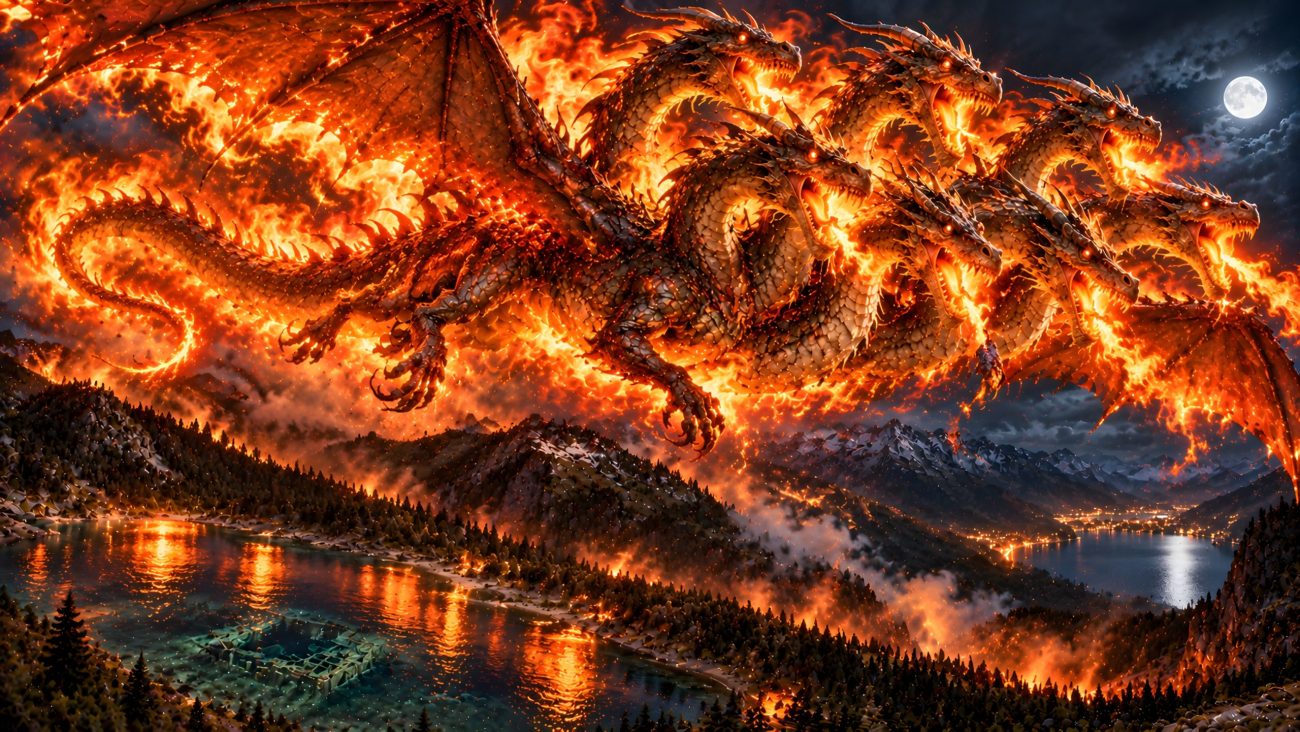
At night, the dragon is sometimes seen flying through the air in flames from Urisee across the valley to Frauensee. Some people claim that it has seven heads and that it occasionally comes ashore to bask on the sandy banks of the lake. Others who have seen the creature say that it looked strangely like a horse that had been skinned.

Long ago, the place where Urisee now lies was occupied by a forge. The forge prospered and brought its owner a good income, but the blacksmith’s wife was a serpent and was utterly without reverence for God.

One day, their little son fell into the dirt in the street. Instead of cleaning him with a cloth or sponge, the woman took a piece of freshly baked bread and used it to wipe the filth from the child. This profane act enraged Heaven.

As punishment, the forge sank into the earth, and the waters of Urisee rose where it had once stood. The blacksmith’s wife was transformed into the dragon that now inhabits the lake, condemned to suffer her punishment and torment there.


Sources

“Der Drache im Urisee.” SAGEN.at – Traditionelle Sagen aus Deutschland (Bayern, Allgäu). Reproduced by SAGEN.at.
https://www.sagen.at/texte/sagen/deutschland/bayern/allgaeu/drache_urisee.html


Dragon of Mountain Spring

Tradition: German Mythology
Alternative Names: Dragon of the Mountain Spring
Category: Dragon


The Myth

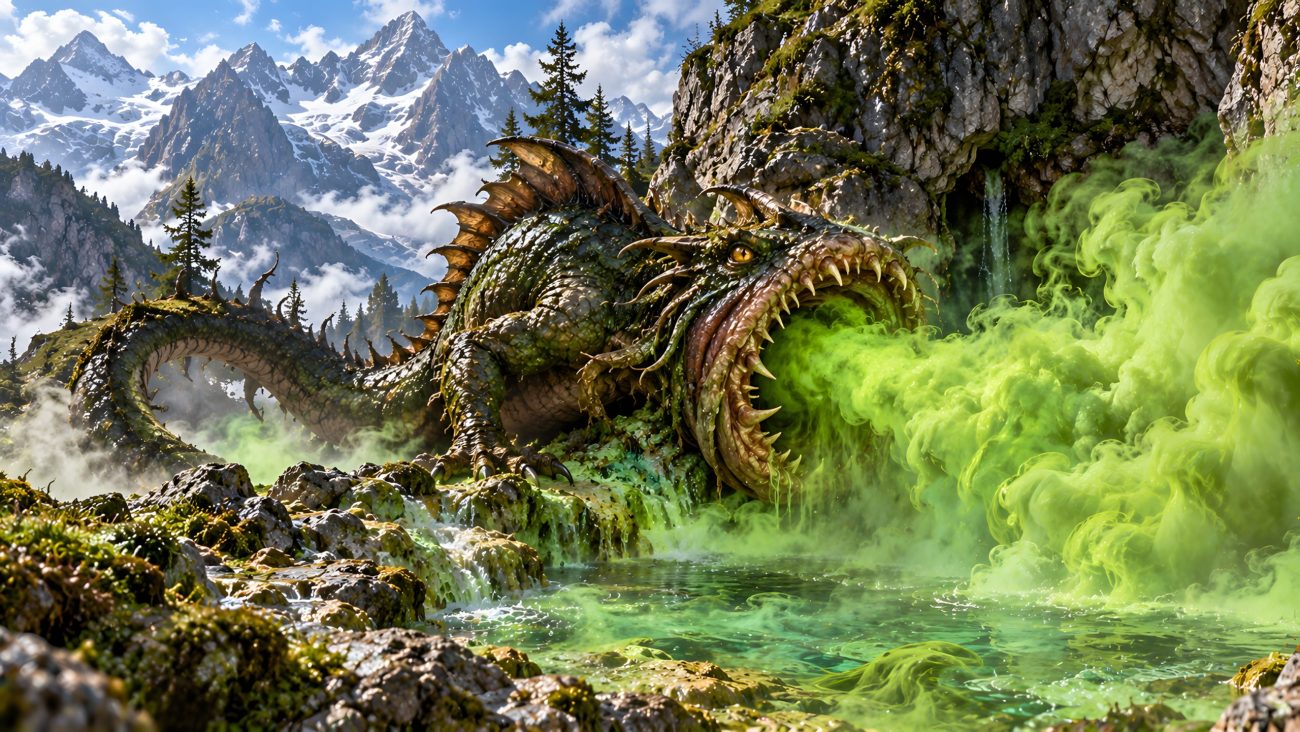
High in the Alpine mountains there was a spring whose water no human or animal could safely drink. A terrible dragon lived beside it, and its poisonous breath was deadly to anyone who approached the spring. The creature’s presence had made the water useless to the people of the surrounding region.

When Saint Narcissus, the holy bishop of Girona, came to Augsburg, the Devil approached him and demanded a soul—a living being whose body he could kill and whose soul he could take for himself. Narcissus agreed, but only after making the Devil swear that he would immediately kill whoever was placed in his power.

The bishop then sent the Devil into the high Alpine mountains. There, he told him, he would find a spring from which nobody could drink because a terrible dragon guarded it. The monster’s poisonous breathing killed all who came near the water. Narcissus commanded the Devil to kill the dragon and seize its soul.

The Devil was horrified by the command. He cried out with the terrible voice of a fierce lion, lamenting that the bishop had trapped him by his own oath. He had sworn to kill the creature given into his power, and if he refused, the bishop’s terms would condemn him to the depths of Hell.

Bound by his oath, the Devil went to the mountain spring and killed the dragon. With the monster dead, the deadly spring was freed from its curse and its water became available for the benefit of humanity, remaining so thereafter.


Sources

“Der Teufel und der Drache.” SAGEN.at – Traditionelle Sagen aus Deutschland (Bayern). Reproduced by SAGEN.at.
https://www.sagen.at/texte/sagen/deutschland/bayern/teufel_drachen.htm


Krampus

Tradition: German Mythology
Alternative Names: Krampus, Krampusnacht Figure
Category: Demon


The Myth

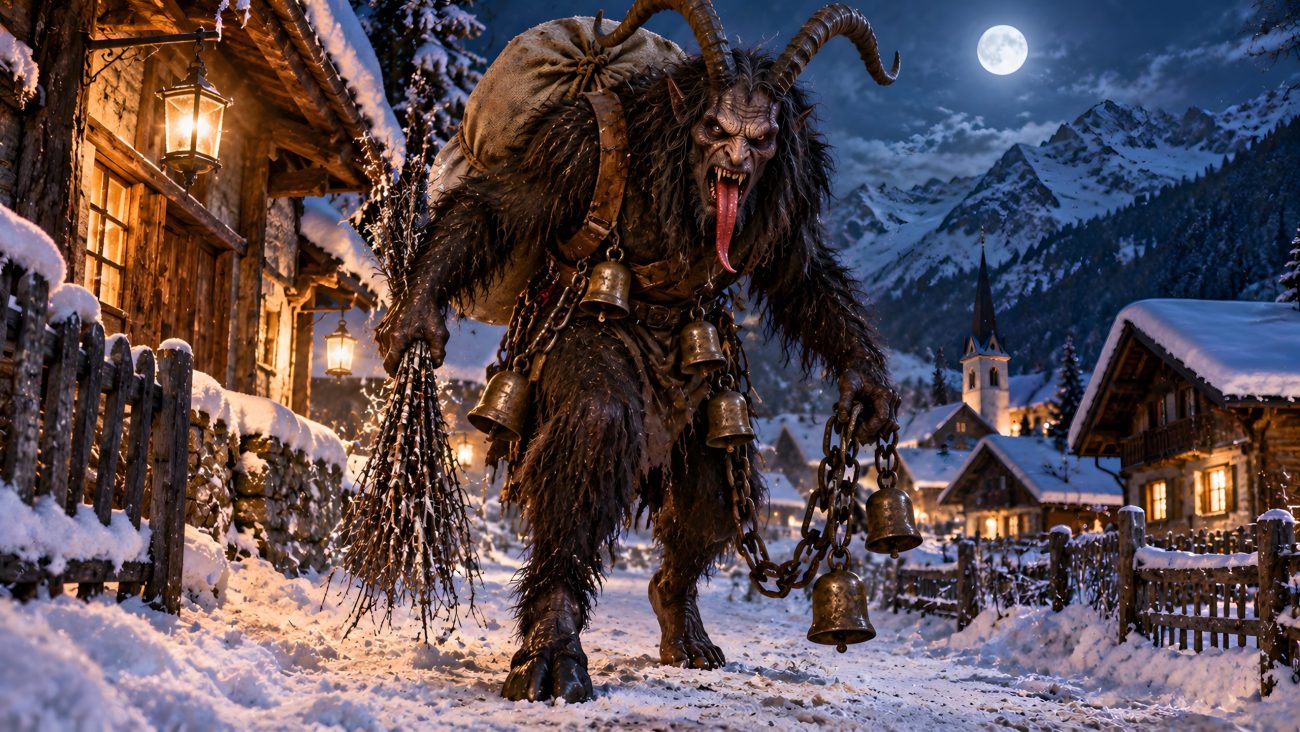
Krampus is a hairy, horned creature with black or brown fur, fangs, and a long pointed tongue. He has goat-like cloven hooves, sometimes depicted with one human-like foot and one goat’s foot. He carries heavy chains, often with bells attached, and a bundle of birch branches used to beat misbehaving children. He may also carry a sack or basket on his back.

On the night of 5 December, Krampus travels with Saint Nicholas as they visit children. Saint Nicholas rewards children who have behaved well with small gifts, while Krampus punishes those who have behaved badly. He lashes them with his birch branches and frightens them.

Particularly wicked children may be seized by Krampus and placed into his sack. In some traditions, he carries them away to drown them, eat them, or take them to Hell.

Krampus is the frightening companion of Saint Nicholas, dealing with the children whom the saint himself does not punish. He appears during the winter celebrations surrounding Saint Nicholas and is especially associated with Krampusnacht and the frightening processions known as Krampuslauf.


Sources

“Krampus.” Wikipedia: The Free Encyclopedia. Wikimedia Foundation. Accessed September 12, 2026. https://en.wikipedia.org/wiki/Krampus


Drude

Tradition: Germanic mythology
Alternative Names: Drude, Trude, Druden
Category: Demon


The Myth

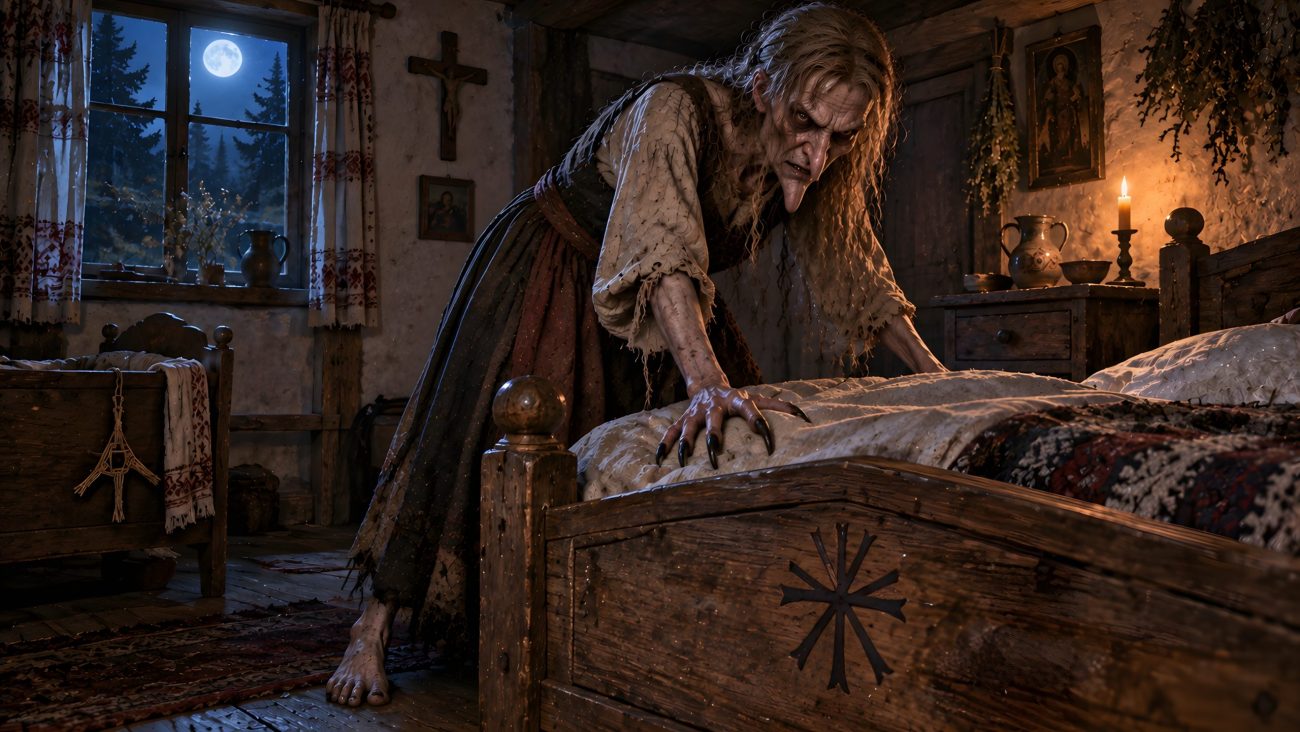
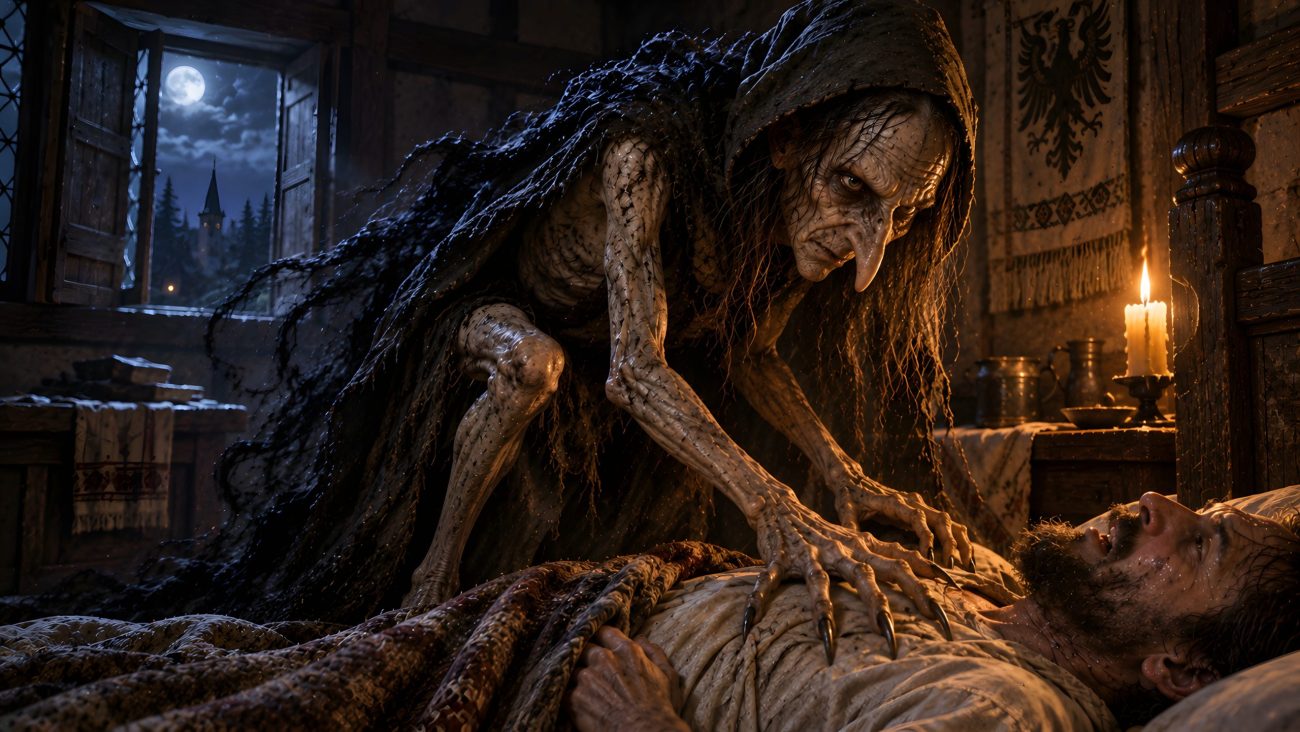
The Drude is a malevolent female nocturnal spirit, particularly associated with southern Germany. She is a kind of Alp or witch-hag who torments people in their sleep and causes nightmares known as Alpdruck, the sensation of being pressed down by a supernatural being.

The Drude is capable of changing her size. She may become small enough to enter a house as a tiny creature, or even appear in the form of a butterfly. At other times she can grow into a giantess, leaving enormous footprints impressed upon stone. In some traditions, it is not the physical body of the witch that attacks people, but her spirit, which leaves her body during the night and travels to torment sleeping victims.

A person oppressed by a Drude could attempt to drive her away in several ways. Grabbing an object could force the Drude to beg for its return. Throwing a pillow at her was believed to repel her, while pronouncing a holy name could frighten her away. In Tyrolean folklore, placing a flax-threshing comb on the chest with its spikes pointing upward was believed to deter the Drude and prevent her from returning.

The Drude was also associated with protective charms. The Drudenfuß, or “Drude’s foot,” was a magical symbol identified with either a pentagram or hexagram. It was placed on houses, stables, gates, cradles, and beds to protect people and animals from the Drude and other supernatural beings. In some regions, a fir-wood Drudenfuß was placed inside a baby’s cradle because the Trude was believed to press down upon infants and prevent them from crying.

Another protective object was the Drudenstein, or “Drude stone.” These were often naturally perforated stones, especially smooth stones shaped by rivers. A ribbon could be threaded through the hole and the stone hung inside a house, beside a cradle, or on the bars of a stable window. Such stones were believed to protect against the Drude, witches, nightmares, Alps, and other harmful spirits.

In southern German folklore, certain stones or landmarks were also known as Trudenstein. One tradition held that these were places where female spirits gathered to decide which humans they would torment. A Bavarian legend tells that the Druden once attempted to place a particular stone at a farmstead, but abandoned it when a rooster crowed.


Sources

“Drude.” Wikipedia: The Free Encyclopedia. Wikimedia Foundation. Accessed September 10, 2026. https://en.wikipedia.org/wiki/Drude


Myrlyava

Tradition: Sorbian Mythology, German Mythology
Alternative Names: Marawa, Myrlata, Myrlawa, Marava, Myrljata
Category: Demon


The Myth

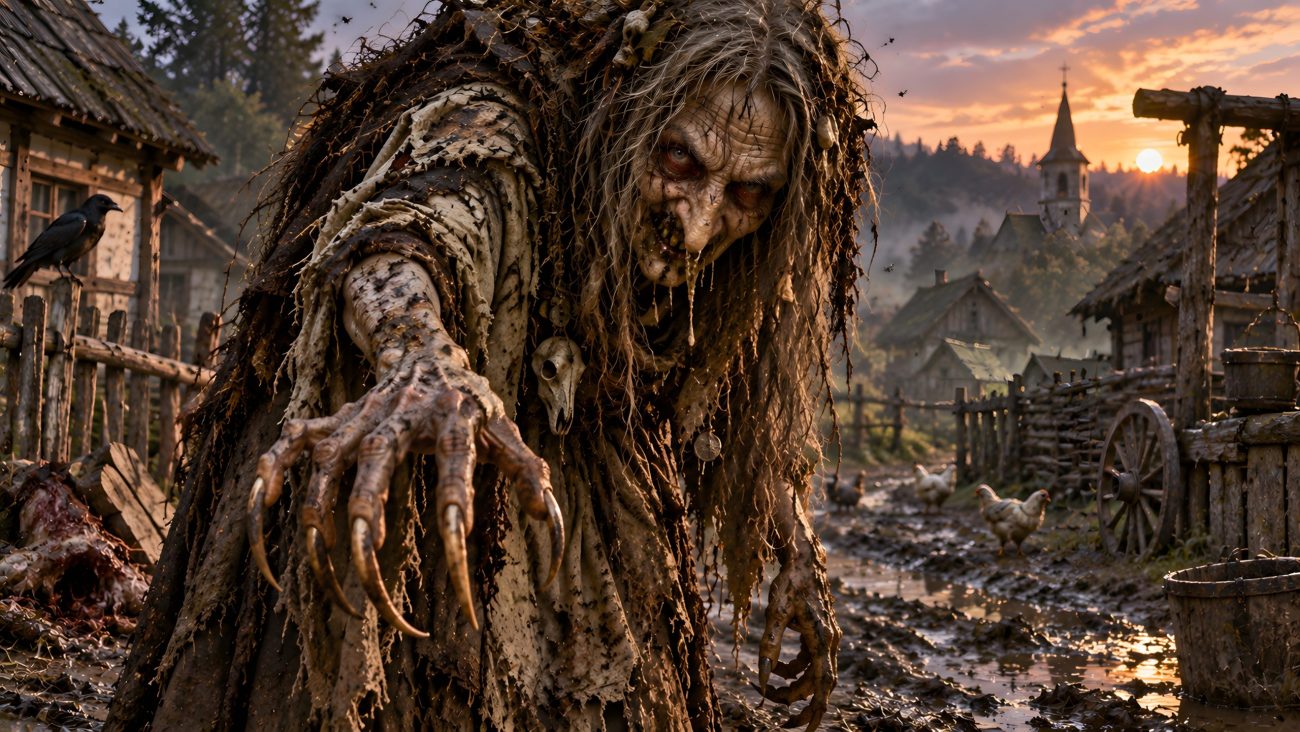
Myrlyava is an evil demoness from Upper Sorbian folklore who appears as a repulsive, ugly, and perpetually dirty woman.

She was rarely seen, and nobody knew where she came from, where she lived, or what she fed on. Her mysterious nature made her a frightening figure in local folklore.

In Müllrose, in northern Upper Lusatia, people had a saying about a woman who had been working for a long time and was constantly busy with her work. They would say:

“She must be an old Myrlyava.”

The name was therefore used to describe a woman who was regarded as particularly unpleasant or unattractive.


Sources

“Мырлява (Myrlawa).” New Bestiary (Bestiary.us). Accessed September 7, 2026. https://www.bestiary.us/Myrlyava


Alp

Tradition: German Mythology
Alternative Names: Alpe, Alpen, Trud, Mar, Mart, Mahr, Schrat, Walrider
Category: Demon


The Myth

The Alp is a supernatural being from German folklore associated with nighttime oppression, nightmares, illness, and the bewilderment or deception of humans. The word Alp is the German form of the same ancient Germanic word that eventually became English elf.

In older German traditions, the Alp was understood as a nature spirit or nature demon. It was regarded as an eerie and sometimes ferocious being, and was particularly associated with the mare, a supernatural creature that tormented people during sleep.

The Alp was believed to approach sleeping people and oppress them during the night. This association is preserved in the German word Alpdruck, literally “elf-oppression,” meaning a nightmare. The Alp could also be associated with illness, including epilepsy.

Medieval German traditions frequently portray elves as beings capable of deceiving or bewildering people. A recurring expression described a person as being deceived by the elves or by the Alp. Elves could also have a seductive aspect, with medieval poetry describing people as being enchanted or bewitched by them.

By the later medieval period, elves had increasingly acquired a threatening and demonic character. A fourteenth-century German prayer known as the Münchener Nachtsegen invokes protection from the Alp, the Trud, and the Mare, asking these beings not to oppress, pinch, ride, or mount the sleeper.

The Alp was therefore closely connected with other Germanic nightmare spirits. Names such as Trud, Mar, Mart, Mahr, Schrat, and Walrider were used for related forms of supernatural beings, while surrounding European traditions preserved similar figures such as the Drude and the Old Hag.

The Alp was also associated with supernatural influence over human beings beyond sleep. In Northern Germany during the early modern period, elves were described as carrying out the evil wishes of witches. Martin Luther himself believed that his mother had been afflicted in this manner.

German traditions also preserved older associations between elves and other supernatural races. Elves could be connected with dwarfs in German heroic literature, particularly figures whose names or characteristics preserved the older idea of elf power.

Thus, the Alp represents an older Germanic conception of the elf as a potentially dangerous supernatural being: a spirit capable of deception, illness, nocturnal oppression, and supernatural influence over humans.


Sources

“Alp (folklore).” Wikipedia: The Free Encyclopedia. Wikimedia Foundation. Accessed September 6, 2026. https://en.wikipedia.org/wiki/Alp_(folklore)


White Roe

Tradition: German Mythology
Alternative Names: Das weiße Reh
Category: Deer


The Myth

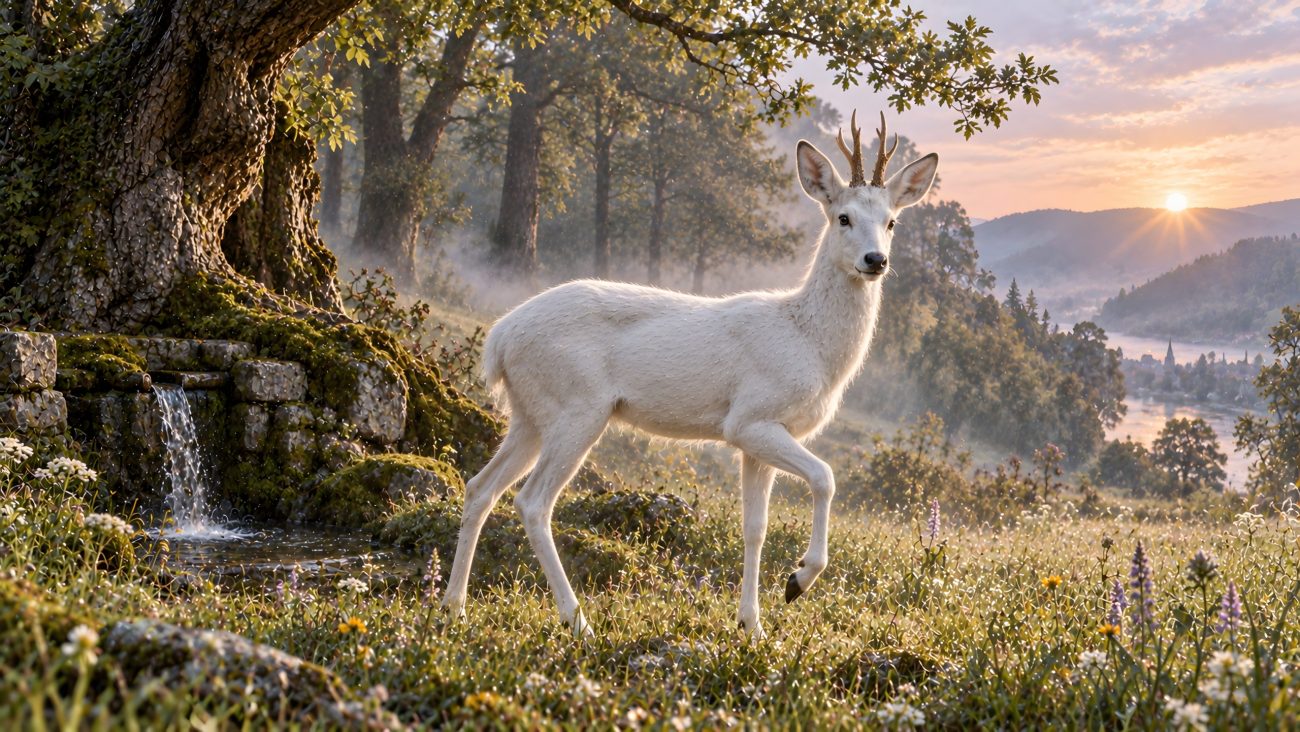
The White Roe is a milky-white deer that appears near a spring at the Hasensprung, a height near Baden in Baden. The spring emerges quietly from old masonry beneath an oak in a somewhat wild rocky woodland. It flows particularly strongly during the full moon and less strongly as the moon wanes.

One morning at first light, a young man came into the woodland and saw a milky-white roe grazing on a meadow filled with flowers. The strange animal greatly fascinated him.

“I must have it!” he thought. He quietly crept toward the White Roe and stretched out his trembling hand, overcome with desire to capture it. But the deer suddenly ran toward the spring. At the edge of the spring lay a maiden with extraordinarily beautiful features, resting her head beside the water.

The young man remained motionless, staring in astonishment at the lovely apparition. He did not know what to do. Fear urged him to flee, yet the beauty of the maiden held him spellbound.

“What am I doing?” he quietly asked himself.

The maiden then waved to him, turning backward as though looking around her. The young man looked again, but there was nothing there. When he turned around once more, both the milky-white roe and the beautiful maiden had disappeared.

Only the quiet spring remained to greet him.


Sources

Gottschalck, Friedrich. “Das weiße Reh.” In Die Sagen und Volksmährchen der Deutschen. Halle, 1814. Originally citing Schreiber, Beschreibung von Baden, Heidelberg, 1811, p. 188. Reproduced by SAGEN.at. https://www.sagen.at/texte/sagen/deutschland/allgemein/gottschalck/dasweissereh.html


Akhlis

Tradition: German Mythology
Alternative Names: Achlis, Alces, Ahlkis
Category: Elk, Deer


The Myth

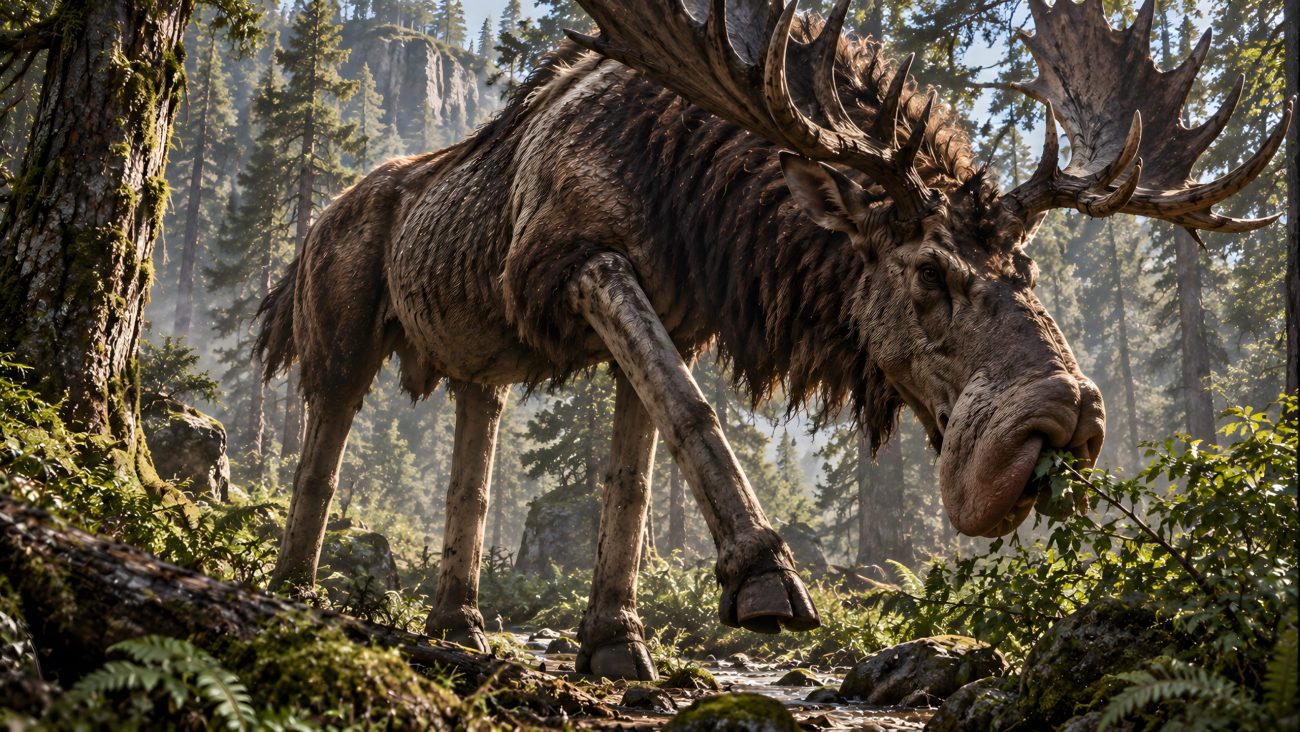
The Akhlis is a strange animal described as resembling an elk, but possessing several unusual features. It has stiff legs without joints or ligaments and a large upper lip that hangs down. Because of the construction of its legs, it is said to be unable to lie down and, if it falls, unable to rise again. Instead, it rests by leaning against trees.

According to Gaius Julius Caesar, the Akhlis was found in the great forests of the north, particularly the Hercynian Forest. He described animals called alces that resembled goats in their build and markings but were considerably larger. They had blunt antlers and legs without joints, preventing them from lying down. When they needed to sleep, they leaned against trees, and hunters could supposedly discover their usual resting places by following their tracks.

The Akhlis was also said to have an unusual way of feeding. According to Pliny the Elder, it resembled an elk and lived on the island of Scandinavia. Its upper lip was so large that it could only graze by walking backwards, preventing it from moving forward while feeding.

Later writers repeated and expanded these descriptions. Solinus described another elk-like animal with a hanging upper lip, saying that it could only graze while walking backwards and that its legs were so straight and stiff that it was difficult to stop once it began running. These accounts closely resemble Caesar’s earlier description of the alces.

The ancient descriptions are therefore unusual because they appear to combine a real northern animal—the elk—with fantastical characteristics. Caesar’s account is generally recognizable as a description of an elk, while the strange details concerning its stiff legs, inability to lie down, and backwards grazing became attached to the creature in later retellings.

The Akhlis was eventually forgotten, surviving mainly in ancient and medieval writings about the animals of the far north. Its name and description were later compared with other legendary elk-like creatures, although the original accounts present it primarily as a mysterious northern animal rather than a supernatural monster.


Sources

Sergey Ksaverov. “Ахлис (Achlis).” New Bestiary (Bestiary.us). Accessed September 5, 2026. https://www.bestiary.us/Akhlis


Zwergenkuh

Tradition: German Mythology
Alternative Names: Dwarf Cow
Category: Cow


The Myth

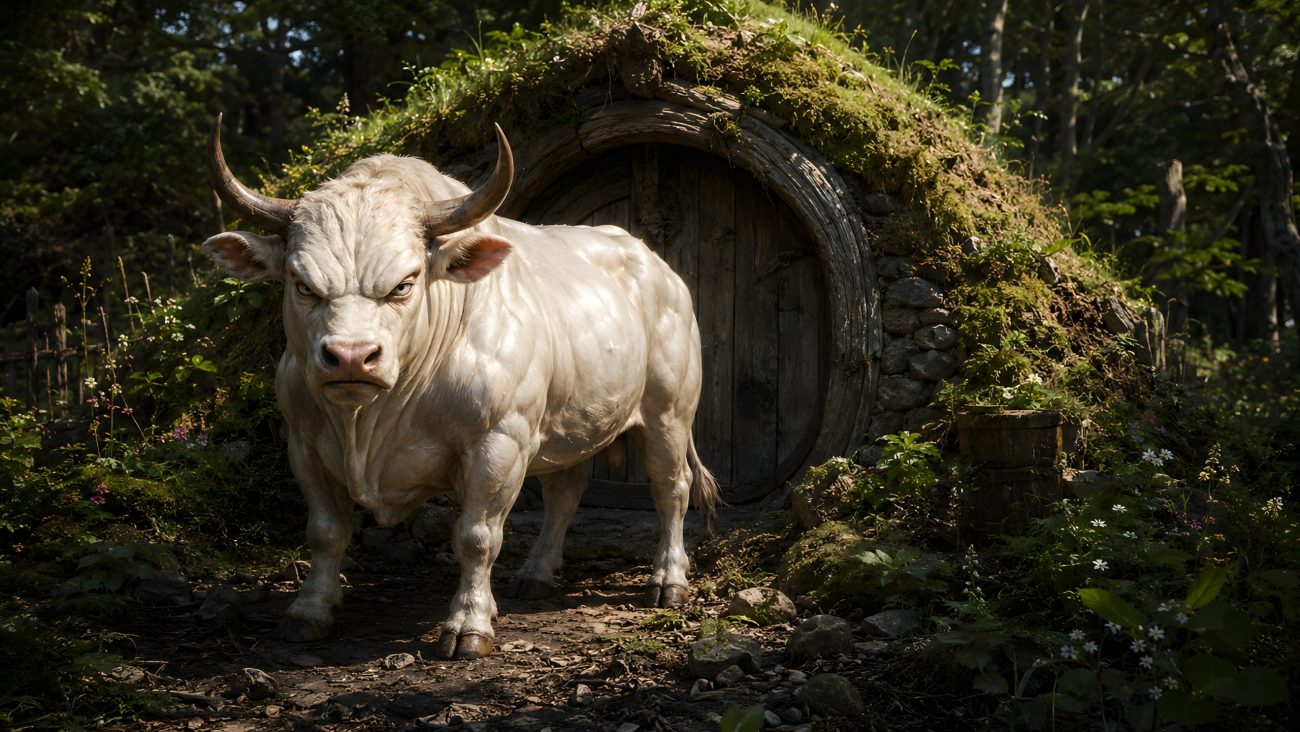
About half an hour from the village of Goldbeck, in the direction of Rinteln, there are caves in a mountain where dwarfs were once said to have lived. Near these caves stood a farmer’s farm, and his herd usually grazed in the area around them. The shepherd noticed that every morning a strange cow would join his animals. She was so smooth and beautiful that she seemed to glitter and shine like gold. Yet every evening, when the shepherd drove the herd home, the mysterious cow would suddenly disappear near the caves.

One evening, the shepherd told his master about the strange animal. The farmer replied, “For that they could surely give you a tip, since you drive their cow out to pasture with yours every day.” The dwarfs, who liked to remain invisibly in the farmer’s house, overheard what he had said.

The following morning, when the shepherd once again drove his herd past the dwarfs’ caves, he found a penny lying in front of one of them. From then on, a penny appeared there every day.

When the farmer heard about this, he said to the shepherd, “If they can do that, surely they can give you breakfast as well.” The next morning, when the shepherd passed the cave again, he found a pancake lying beside the penny. From that day onward, he found a pancake there as well.


Sources

Zaunert, Paul. “Die Zwergenkuh.” In Westfälische Sagen. 1927. Reproduced by SAGEN.at. (sagen.at)
https://www.sagen.at/texte/sagen/deutschland/nordrhein_westfalen/diezwergenkuh.html