Kalanoro

Tradition: Madagascar Mythology
Alternative Names: Kalanoro
Category: Dwarf


The Myth

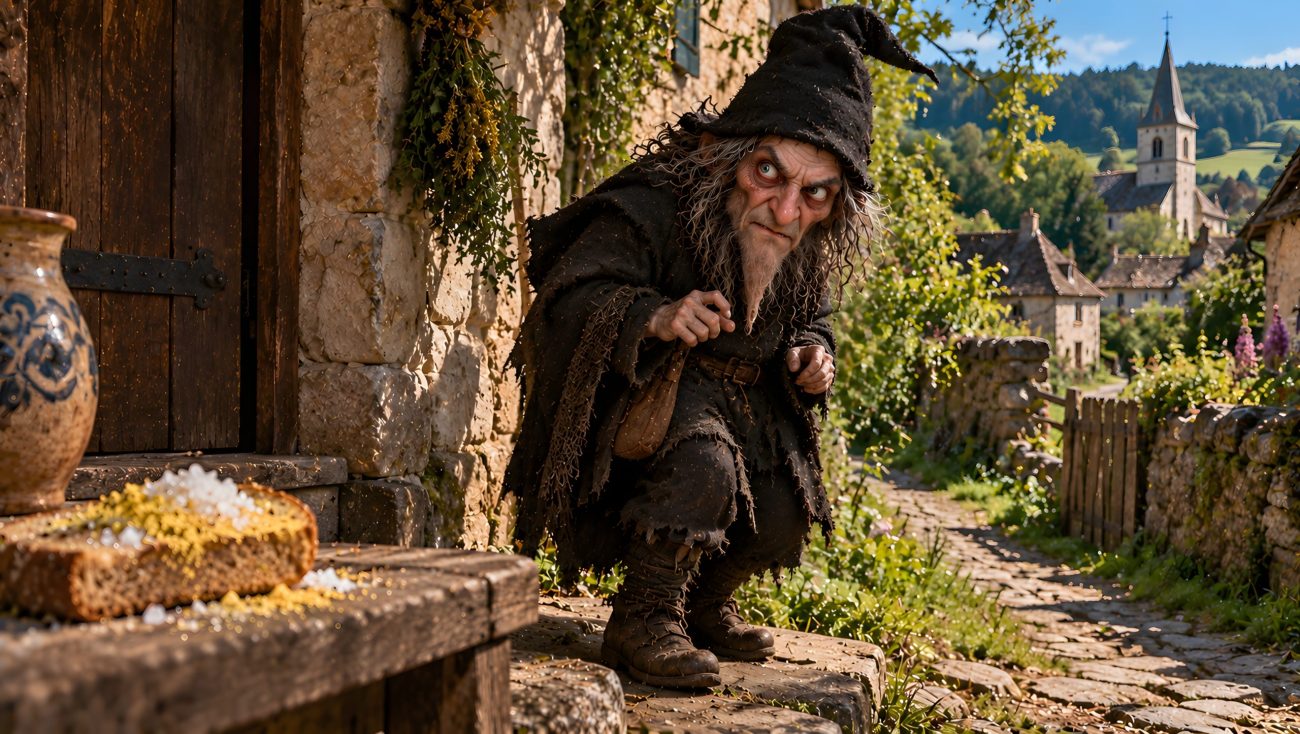
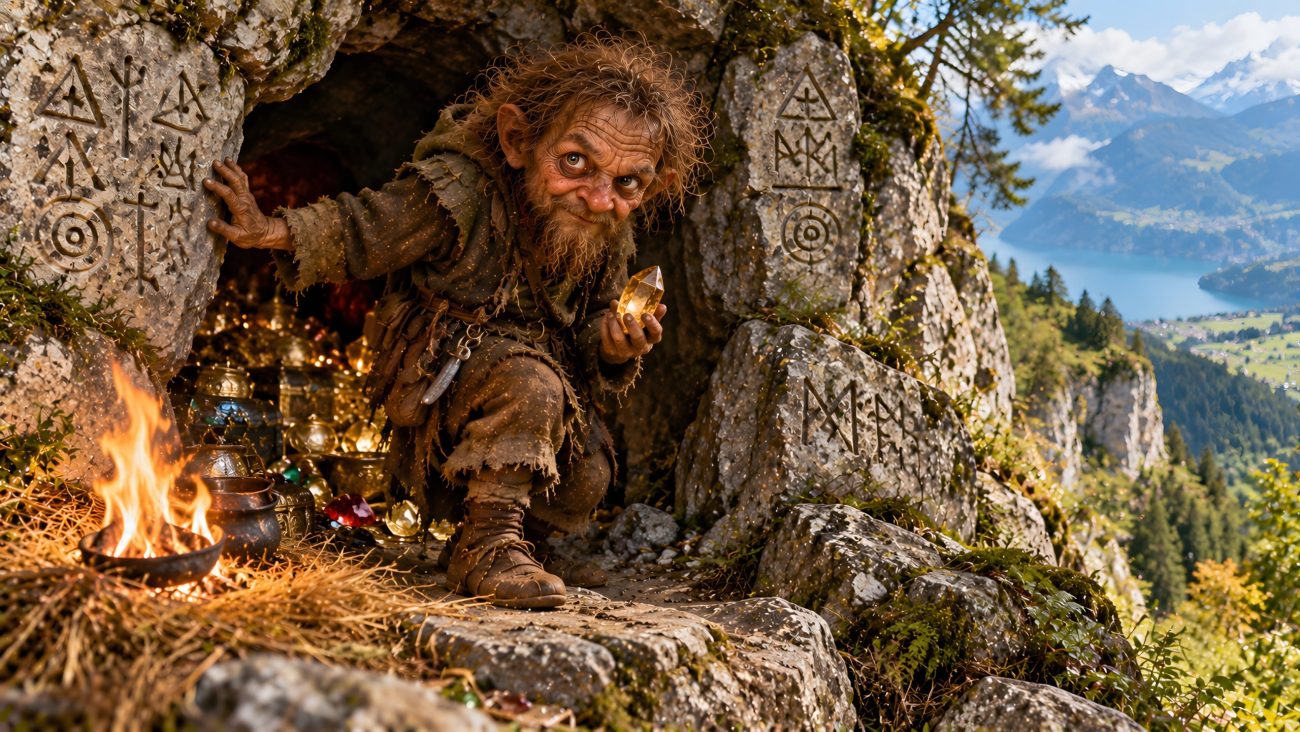
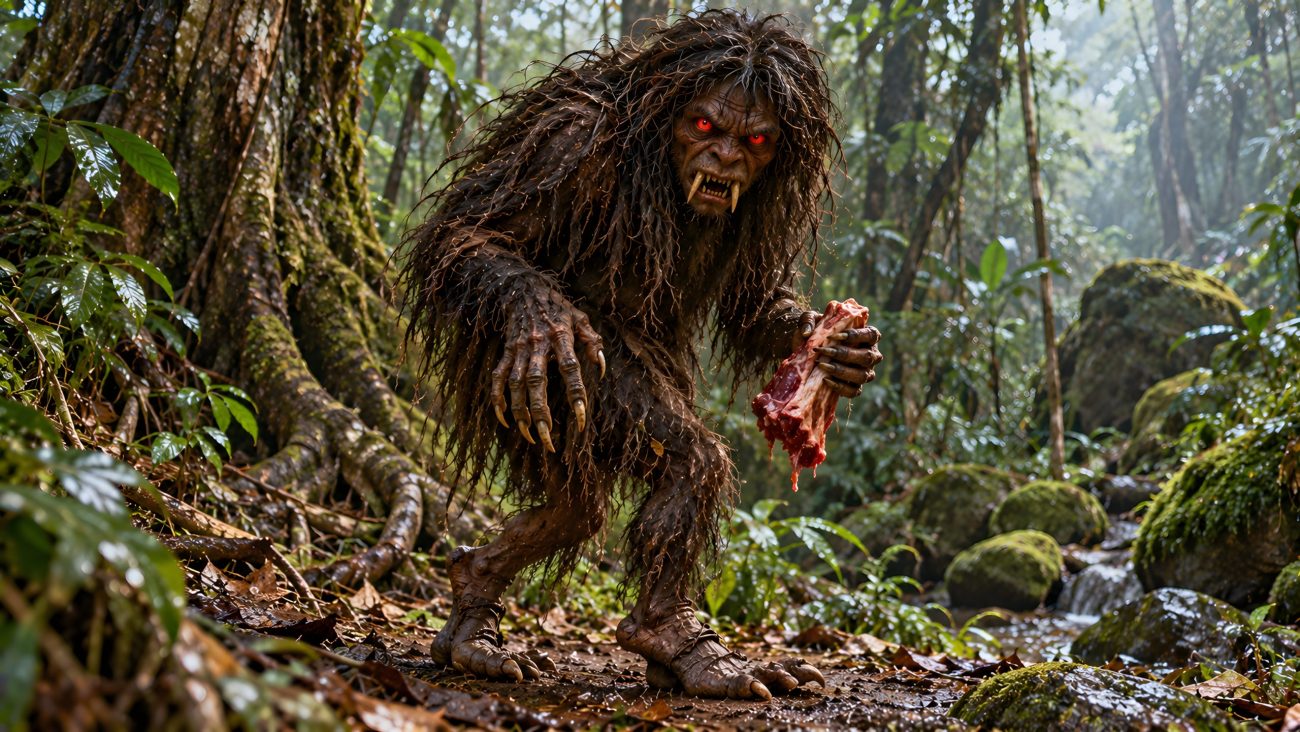
The Kalanoro are small, hairy humanoid spirits said to have once lived physically in the rainforests of Madagascar. They are described as having long, unkempt hair and fingernails, sharp fangs, backward-facing legs and feet, and eyes that glow red. They live alone in the wilderness and are said to eat raw meat. Their strange whining voices are frightening enough to make dogs afraid. Tradition holds that their physical forms eventually disappeared as the forests were destroyed, but the Kalanoro continued to exist as spirits.

The Kalanoro can be dangerous and unpredictable. They are sometimes feared as malevolent beings who rob or kill people and abduct children. A Sakalava story tells of Kalanoro taking children away because they believed the children’s parents were mistreating them. Once the parents fulfilled the Kalanoro’s demands, the children were returned unharmed. Yet they are not always hostile toward humans. They can become loyal servants and protectors, taking a paternal interest in the people they are attached to. They may steal on behalf of their human companions, reveal hidden knowledge, or help with healing, while in more recent traditions they have also become associated with alcoholism.

People seeking the help of a Kalanoro traditionally approach its human owner at night and communicate with the spirit through a wall or closed door. The Kalanoro may speak through the human in a high, nasal voice and is believed to possess knowledge of healing and clairvoyance. It can also reveal taboos through dreams and visions, warning people about actions they must not perform. In Malagasy tradition, the Kalanoro therefore occupy an uncertain place between frightening forest spirits and powerful supernatural helpers, capable of harming people but also protecting, advising, and healing those under their care. Some traditions further connect them with the Vazimba, regarding the latter as the ghosts of Kalanoro.


Sources

“Der einkehrende Zwerg.” SAGEN.at – Traditionelle Sagen aus Deutschland. Reproduced by SAGEN.at. https://www.sagen.at/texte/sagen/grimm/dereinkehrendezwerg.html
Little Man of Iwi

Tradition: Swiss Mythology
Alternative Names: The Rent
Category: Dwarf


The Myth

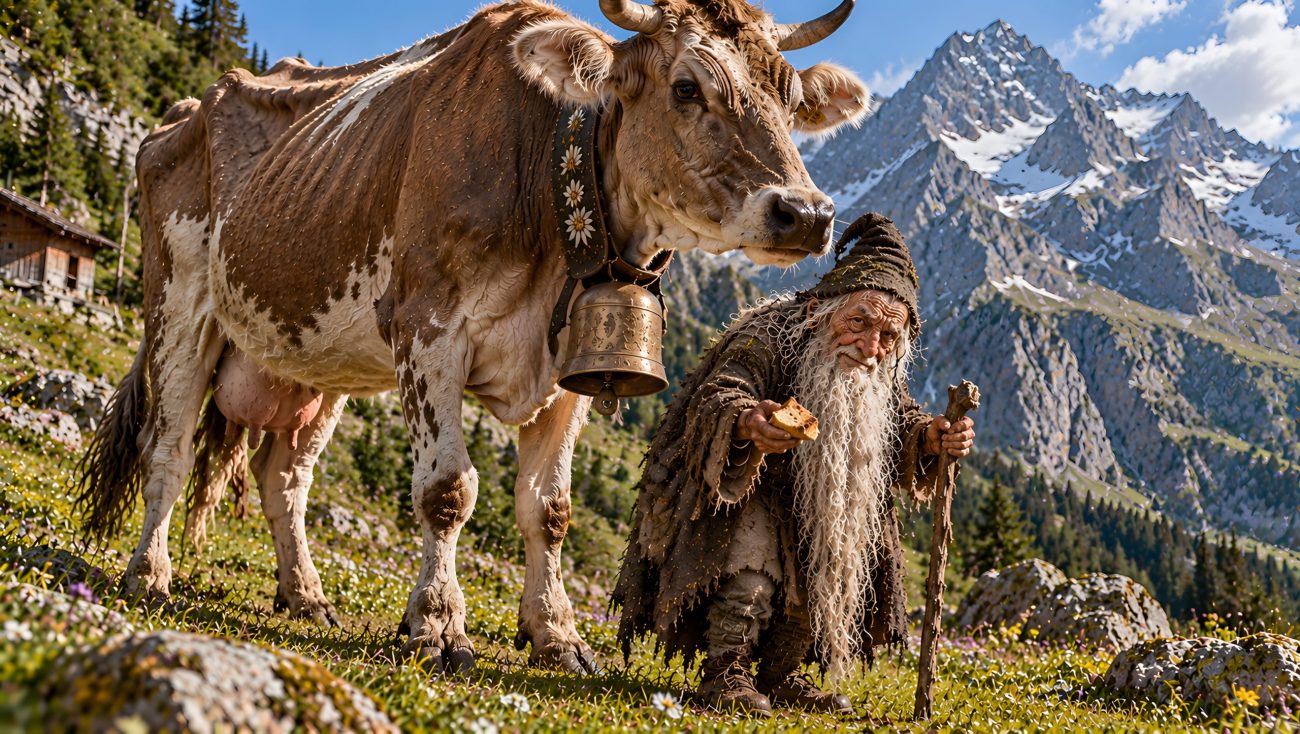
Beneath the gloomy Giswil mountain in Unterwalden lies the beautiful alpine pasture of Iwi, covered throughout the summer with mountain flowers. One day, a prosperous farmer brought his herd of thirty cows up to the pasture. While he was preparing to milk them, a strange little man emerged from the Giswil Stock. He had a long white beard, an ancient face, and old-fashioned clothing. The little man politely asked the farmer to lease him a cow for the summer. The farmer was reluctant, but remembered a thin, sickly cow from Uri that he expected would soon die anyway. He agreed to give it to the little man, provided that both the cow and its rent were returned on Michaelmas. The farmer even wanted to remove the cow’s bell, but finally allowed the little man to take it as well. He watched the strange figure disappear up the mountain with the scrawny animal, convinced he would never see either of them again.

Yet the little cow did not die. Later that summer the farmer spotted it grazing high among the steep chamois pastures of the Giswil mountain, apparently thriving where he thought only chamois could safely graze. Meanwhile, the farmer’s own herd prospered wonderfully. His cows became strong, plump, and glossy, while the cattle of his neighbors suffered from sickness and became thin and bristly. When Michaelmas arrived and the farmer had returned to the lower Iwi pasture, he suddenly heard the beautiful ringing of a cowbell. The little mountain man came walking toward him with a magnificent cow whose coat shone like silk and whose back was perfectly straight. He reminded the farmer that this was the cow he had taken for the summer and asked how much rent he now owed. The farmer could hardly believe that the splendid animal was the same miserable cow he had given away in spring. Astonished, he refused to demand any payment and even offered another cow for the following summer. But the little man said he had no need of another, for he now possessed enough milk and cheese for the rest of his life.

Instead, the little man handed the farmer a small piece of roasted cheese as the rent for the cow. He warned him never to eat it all, because it would always replenish itself. The farmer laughed in disbelief, but the little man exclaimed, “Thio and liog!”—“Do it, and then you’ll see!”—and vanished, running nimbly up the Giswil Stock like a little spider. That evening the farmer and his wife tasted the cheese and found it extraordinarily delicious. Whenever they ate some, the piece became whole again, exactly as it had been before. They shared it with their neighbors, and the miraculous cheese continued to replenish itself for about two years. But eventually the farmer had a tailor and a shoemaker working in his house at the same time. He served them the enchanted cheese for supper, and they enjoyed it so much that, while the farmer was not looking, they ate the entire piece. The magic immediately failed, and no matter how much the farmer scolded them, the cheese would never grow back again.


Sources

“Lehenzins.” SAGEN.at – Traditionelle Sagen aus der Schweiz. Reproduced by SAGEN.at. https://www.sagen.at/texte/sagen/schweiz/allgemein/lehenzins.html


Mountain Man of Schillingsdorf

Tradition: Swiss Mythology
Alternative Names: The Little Mountain Man
Category: Dwarf


The Myth

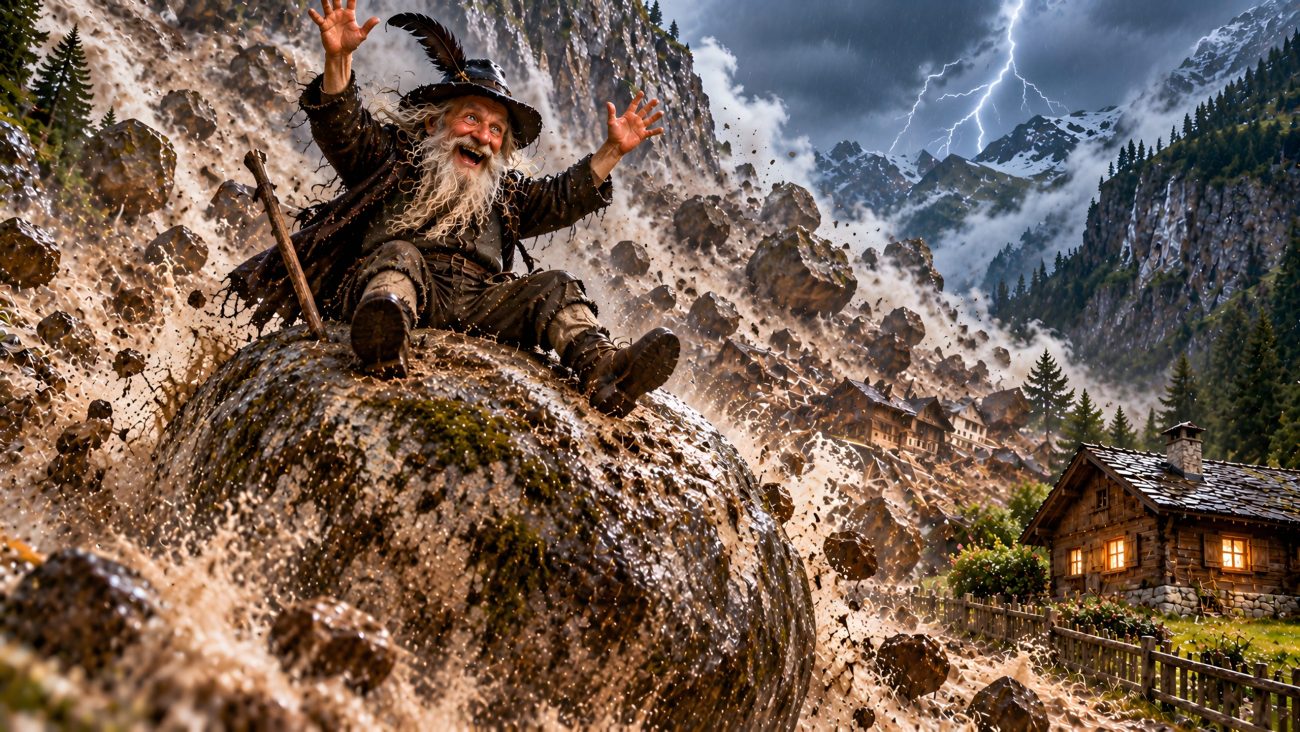
The Little Mountain Man was a small, ancient man with a long gray beard, a black feathered hat, and kind blue eyes. He carried a walking stick and wore a coat that was soaked through by the rain. He appeared during a terrible storm that descended upon the village of Schillingsdorf, where thunder shook the mountains, lightning filled the sky, and torrents of water rushed down the valleys.

As the storm raged, the little man entered the village seeking shelter. He went from house to house, asking only for a place to spend the night, but the inhabitants repeatedly turned him away. Some spoke harshly to him, calling him a beggar, while one farmer even drove him away with blows. At last, the little man reached a poor cottage belonging to an old couple. Unlike everyone else, they welcomed him warmly, gave him dry clothes, milk and cheese, baked him a cake, and prepared a warm bed for him. Deeply moved by their kindness, the little man stepped outside before going to sleep and called out through the storm: “The castle is split! Schlegel and Weggen are dead, Schillingsdorf must perish!” He then returned to the cottage and stayed with the old couple through the night.

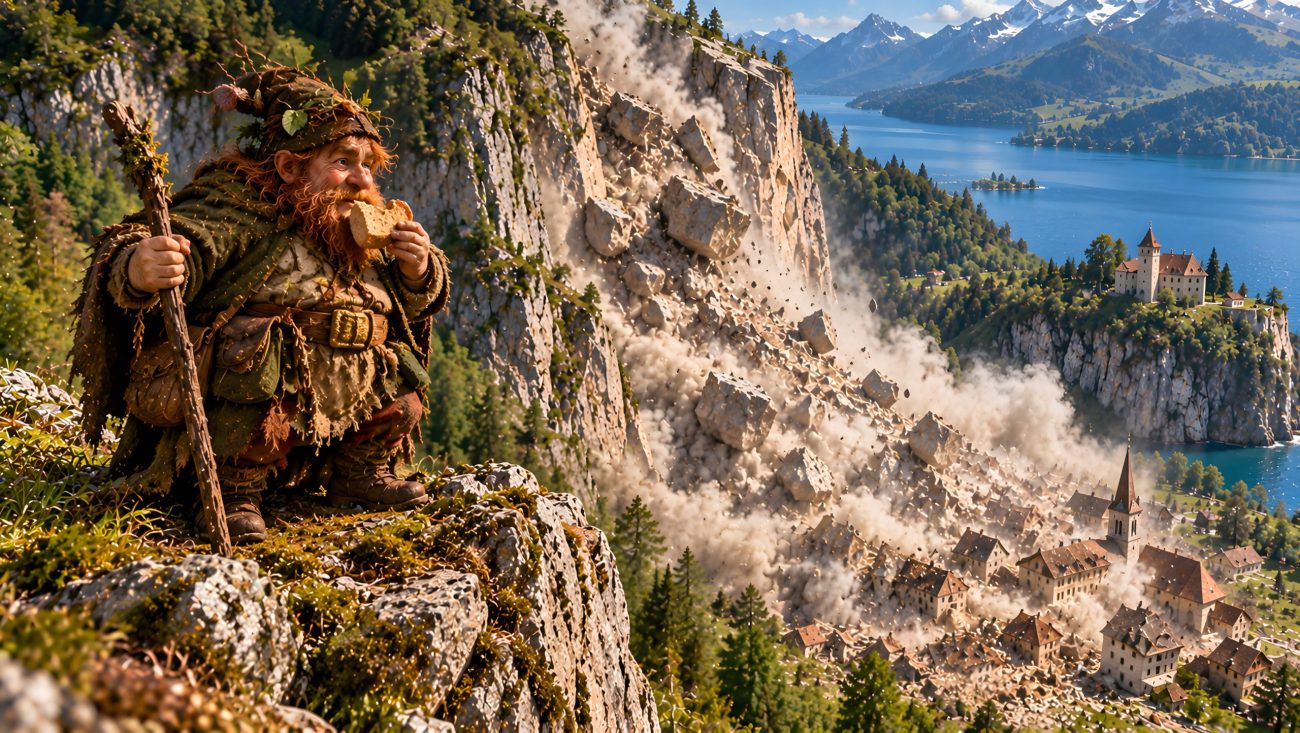
By morning, the strange guest had disappeared. The rain had continued throughout the night, and the people of Schillingsdorf gathered at their doors to see the devastation around them. Suddenly the mountains began to shake, and a gigantic section of rock broke loose above the village. The landslide came crashing down toward Schillingsdorf, while the little mountain men hidden among the cliffs cried out in triumph. Amid the enormous rocks, the villagers saw the old man sitting upon a gigantic boulder, steering it downhill with his walking stick like an oar. The great boulder rolled directly toward the cottage of the poor couple who had sheltered him. When it reached their home, the little man planted his stick before it, and the enormous stone stopped as though it had grown into the ground. The landslide then divided around the cottage and swept over the rest of Schillingsdorf, burying its houses, barns, people, and livestock beneath the rubble. Only the kind-hearted couple and their cottage were spared, while the rest of the village disappeared forever beneath the stones.


Sources

“Schillingsdorf.” SAGEN.at – Traditionelle Sagen aus der Schweiz. Reproduced by SAGEN.at. https://www.sagen.at/texte/sagen/schweiz/allgemein/schillingsdorf.html


Issitoq

Tradition: Greenlandic Mythology, Canadian Mythology, Inuit Mythology
Alternative Names: Issitoq, “The Giant Eye”
Category: Spirit, Dwarf


The Myth

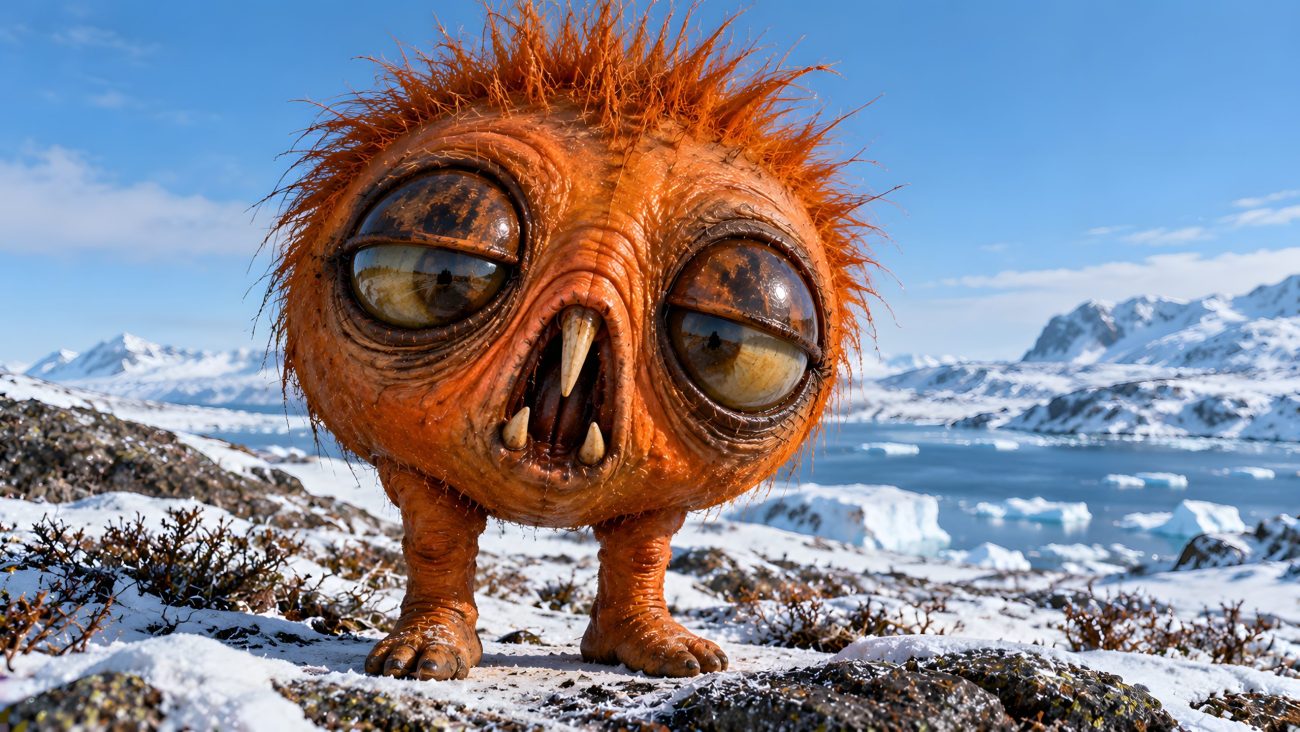
Issitoq was a gloomy helping spirit with a strange and unsettling appearance. It had only a head and legs, with short, bristly hair that stood straight upward. Its enormous eyes were each divided into two sections, while its mouth was set vertically and contained one long tooth at the top and two shorter teeth at the sides. In another depiction, Issitoq had hair made from willow twigs.

Issitoq was originally the helping spirit of a fox, but later came into the possession of Anarqåq. It was said to appear to someone who had lost their parents, approaching the grieving person and telling them not to fear it because it too struggled with sad thoughts. Issitoq would then accompany them as a helping spirit. Its particular ability was to find people who had broken a taboo, making it a spirit closely associated with the discovery and punishment of taboo violations.


Sources

Rasmussen, Knud. Intellectual Culture of the Hudson Bay Eskimos. Copenhagen: Gyldendal, 1930. 3 vols.


Dwarf of Junglinster

Tradition: Luxembourgish Mythology
Alternative Names: The Junglinster Dwarf
Category: Dwarf


The Myth

The Dwarf of Junglinster was a persistent supernatural dwarf who became involved with a young woman from the village. When the pastor learned of their relationship, he warned the girl seriously and she promised to avoid the dwarf. She told him of her decision, but he refused to leave her alone and somehow continued to find her wherever she went.

Frightened by his continued advances, the girl returned to the pastor and begged him for help. The pastor called upon an old shepherd from Beidweiler who was reputed to know various secret remedies. After considering the problem, the shepherd prepared a strange protection. He dissolved a handful of salt in water, dipped a piece of bread into it, covered the bread heavily with sulfur, and left it to dry on the stove. The girl was instructed to eat the bread before the dwarf’s next visit and then press it against her body when he appeared.

She followed the shepherd’s instructions. When the dwarf came again, a faint sound was heard, and the supernatural visitor immediately recoiled in disgust. From that moment onward, the dwarf abandoned the girl and was never seen again.


Sources

“Der Zwerg von Junglinster.” SAGEN.at – Traditionelle Sagen aus Luxemburg. Reproduced by SAGEN.at. https://www.sagen.at/texte/sagen/luxemburg/Zwerg_Junglinster.html


Pygmeentjes

Tradition: Dutch Mythology
Alternative Names: Pygmies, Keutelduimke, Little Thumb
Category: Dwarf


The Myth

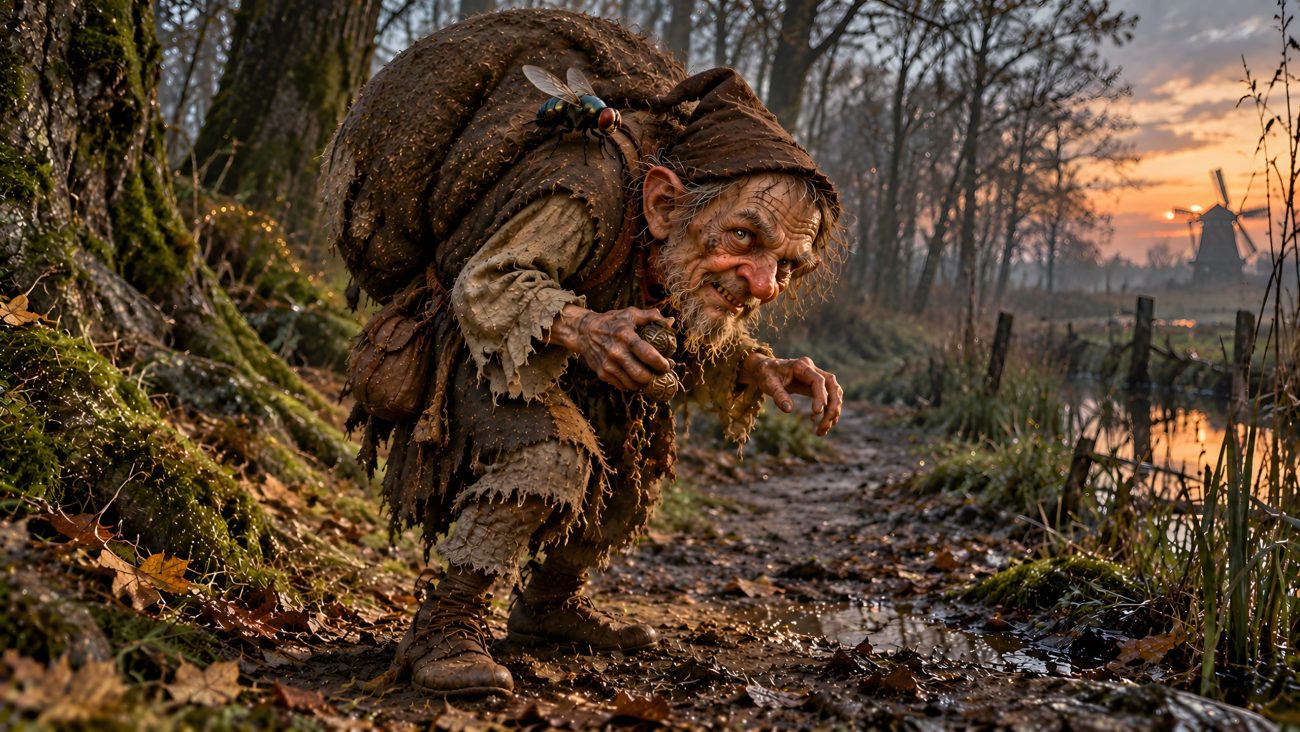
The Pygmeentjes were malformed dwarfs with hunched backs who were highly skilled in magic. They were not inherently good or evil, and could either help people or cause them harm. Their supernatural abilities also allowed them to transform themselves into a horsefly.

A horsefly buzzing persistently around someone was therefore considered a bad sign, for it could be a Pygmeentje in disguise. These strange dwarfs belonged to the magical world of Dutch folklore, where their powers could be used for either benevolent or malicious purposes.


Sources

“Aardmannetje tot zwarte juffer: een lijst van Nederlandse en Vlaamse elfen en geesten.” Abe de Verteller. Accessed October 4, 2026.
https://abedeverteller.nl/van-aardmannetje-tot-zwarte-juffer-een-lijst-van-nederlandse-en-vlaamse-elfen-en-geesten/


Nuton

Tradition: French Mythology
Alternative Names: Nuton, Nuiton, Nuto, Nutons, Nuton
Category: Dwarf


The Myth

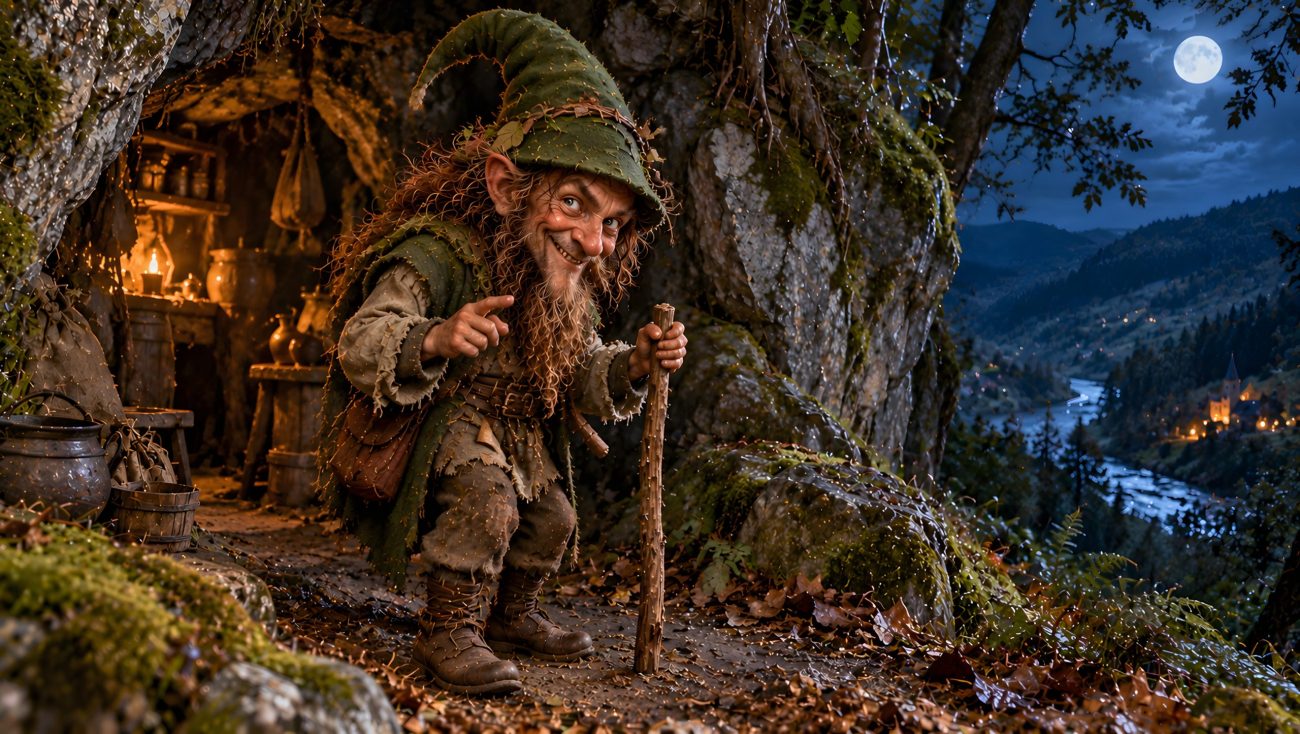
Nutons were mischievous nocturnal dwarfs who lived mainly in caves throughout Wallonia and the Ardennes, including the mountainous regions along the borders of Belgium, France, and Luxembourg. They were small, secretive beings who preferred the darkness of their underground homes and were known for their strange habits and practical skills.

Although Nutons had a reputation for being sullen and unsociable, they were remarkably helpful when treated properly. People traditionally left broken objects at the entrances of their caves together with a small treat. During the night, the Nutons would take the food and repair the damaged object, so that by morning it could be found restored. Their curses, however, were feared throughout the Ardennes, and the little dwarfs were not creatures to anger. One tale tells of a family that failed to work hard enough to harvest their fields before a storm. A Nuton cursed them for their laziness, and the coming storm destroyed their entire harvest.

The Nutons were believed to have been known for centuries. An early medieval account associated with Gervasius of Tilbury is said to describe tiny beings dressed in rags and scarcely half an inch tall. Their reputation survived in the folklore of the Ardennes, where they remained mysterious cave-dwelling dwarfs who could either reward people with their hidden skills or punish those who earned their displeasure.


Sources

“Nuton.” New Bestiary (Bestiary.us). Accessed October 4, 2026. https://www.bestiary.us/nuton


Abhartach

Tradition: Irish Mythology
Alternative Names: Avartagh
Category: Dwarf


The Myth

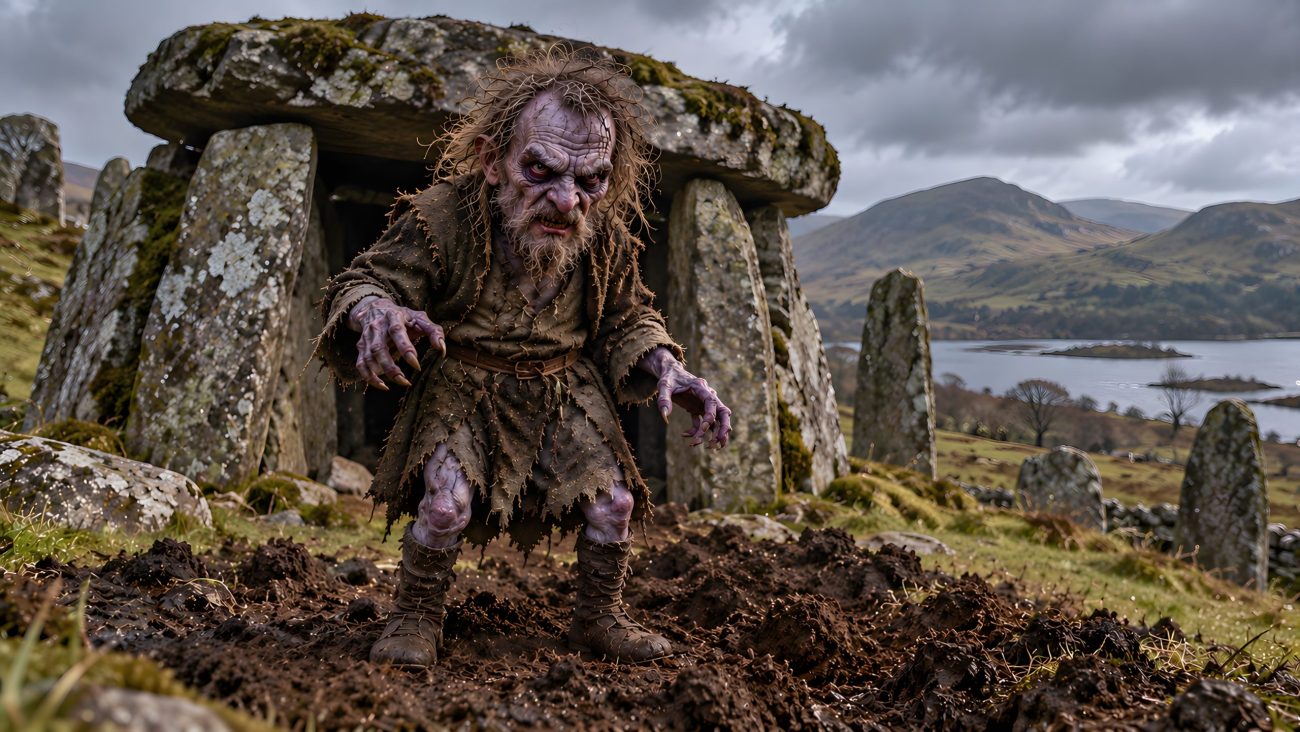
Abhartach was a dwarf and a powerful magician who became a cruel and terrifying tyrant. He lived in the region of what is now County Londonderry, where he committed terrible acts against the people until a neighboring chieftain finally confronted and killed him. Abhartach was buried standing upright in the ground, but his death did not end his reign of terror.

The following day, Abhartach returned from his grave, more powerful and more vicious than before. The chieftain killed him a second time and buried him upright again, but once more the dwarf escaped from the grave and returned to spread fear throughout the countryside. Desperate to find a way to destroy him permanently, the chieftain sought the advice of a druid. The druid revealed how Abhartach’s magical power could finally be overcome.

The chieftain killed the dwarf for a third time and buried him in the same place, but this time Abhartach was placed upside down, with his head beneath the earth. This finally subdued his supernatural power, and he never returned to trouble the living again. A stone monument was raised over his grave, and the place where he was buried remained associated with the terrifying dwarf and his legend.


Sources

“Abhartach.” Wikipedia: The Free Encyclopedia. Wikimedia Foundation. Accessed October 4, 2026. https://en.wikipedia.org/wiki/Abhartach


Earth Dwarf

Tradition: Swiss Mythology
Alternative Names: Erdmännchen, Erdmanndli
Category: Dwarf


The Myth

The Earth Dwarfs were small, nut-brown beings who lived in rocky caves and crevices throughout the Zug region. They were especially associated with the Baarburg and the rocky areas of the Walchwilerallmend near the Gniepenfluh, where they made their homes among the bushes and holes in the stone. They were incredibly agile, able to climb trees with the speed of an arrow and slip into their caves as quickly as a weasel. The dwarfs were also known for carving mysterious letters and signs into the surrounding rock.

The Earth Dwarfs were skilled in strange and unusual arts. They could cook their food on hay and straw without setting it alight, and in Menzingen they were even said to burn the Wied on a bundle of straw without causing the straw itself to catch fire. Beneath the rocks they maintained extensive networks of caves, where they carefully guarded enormous treasures of gold and silver together with countless glittering precious stones.

The dwarfs did not all treat their treasure in the same way. Some were generous and gave from their immense wealth to poor and needy people, while others guarded their riches jealously and watched over them with great suspicion. Anyone who ventured too close to their hidden hoards could be frightened away by these secretive dwarfs, who were determined to keep their underground treasures out of human hands.


Sources

“Das Erdmännchen.” SAGEN.at – Traditionelle Sagen aus der Schweiz (Kanton Zug). Reproduced by SAGEN.at. https://www.sagen.at/texte/sagen/schweiz/zug/erdmaennchen.html


Dwarf of Roll

Tradition: Swiss Mythology
Alternative Names: The Mountain Sprite of Roll
Category: Dwarf


The Myth

The dwarf of Roll was a little mountain sprite who lived among the mountains above Lake Thun. One evening, just before the inhabitants of the town of Roll went to bed, the little dwarf came down from the mountain and asked the townspeople for lodging. The people of Roll turned him away, refusing to offer the stranger a place to stay. Only the inhabitants of Rallig Castle welcomed him and gave him shelter for the night.

The following morning, the dwarf climbed to the summit of the pointed Giebelfluh cliff and delivered a terrible warning to the people below:

“City of Roll, come with your people!
The pointed peace is split;
mallet and path are held,
come on, to the Stampach!”

But the people of Roll paid no attention to his words. Soon afterward, the great cliff began to break apart. A massive section of the fractured mountain tore loose and came crashing down upon the town, burying Roll and its inhabitants beneath the enormous landslide. The destruction was so complete that only a wasteland remained where the town had once stood.

The inhabitants of Rallig Castle were the only people spared, saved because they had shown hospitality to the little mountain dwarf when everyone else had rejected him. Even afterward, the ruined place remained almost empty, with only a shepherd and his flock moving across the sparse pasture where the town had once stood.


Sources

Theodor Vernaleken. “Roll.” In Kinder- und Hausmärchen in den Alpenländern. Vienna, 1863. Reproduced by SAGEN.at. https://www.sagen.at/texte/sagen/vernaleken/roll.html