Alf

Tradition / Region: Dutch Mythology
Alternate Names: Elle, Elvinne
Category: Fairy, Spirit


The Myth

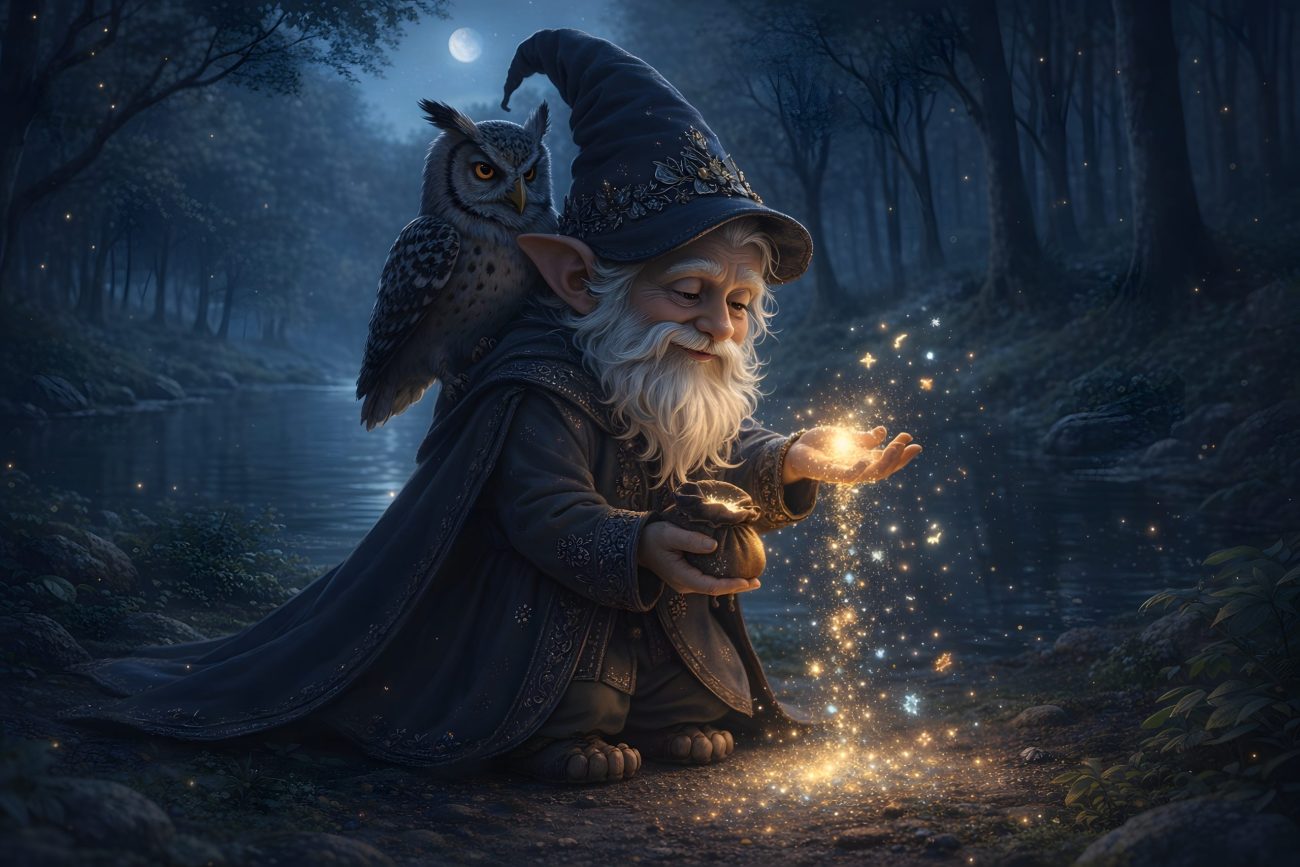
The Alven are elusive beings who move between the human world and a hidden one of their own. They are seldom seen directly, yet their influence is felt wherever paths twist strangely, hills rise unnaturally, or circles appear in the grass at dawn.

They are said to travel in floating eggshells upon water or fly through the air in sieves, drifting lightly between places. Wherever they pass, certain plants may become poisonous, marked by their touch. The Alven make their homes inside hills, mounds, and terpen, known as alvenheuvels or alvinnenheuvels, hollow places where their world presses close to the surface.

Those who lose their way without reason are said to have been “led” or “lured” by an alf. The path seems familiar, yet turns endlessly, and the traveler wanders until fear or exhaustion takes hold. This confusion is no accident: the Alven delight in making the world appear other than it truly is.

At night, they dance above marshes and pools or in rings upon the grass. Their music and movement are enchanting, and those who join them may dance until dawn without knowing how much time has passed. When morning comes, the Alven are gone, but a circle remains pressed into the grass, silent proof of their presence.

In old stories and medieval texts, the elvinne is especially known for deception. She casts illusions so convincing that sight itself cannot be trusted—hence the word alfsgedrog, meaning a false vision or glamour. She is alluring, unrestrained, and dangerous in her beauty. Sometimes she exchanges her child for a human infant, leaving confusion and sorrow behind.

In Flemish tradition, the Alven are ruled by a queen named Wanne Thekla, a powerful and unseen sovereign of their hidden courts.

The Alven are not merely playful spirits. They are tricksters, tempters, and deceivers, beings who blur truth and illusion. To encounter them is to risk losing one’s way, one’s certainty, or even one’s child—yet their traces remain lightly stamped upon the land, in hills, circles, and paths that never quite lead where they should.


Sources

Abe de Verteller contributors. (n.d.). Van aardmannetje tot zwarte juffer: Een lijst van Nederlandse en Vlaamse elfen en geesten. In Abe de Verteller, from https://abedeverteller.nl/van-aardmannetje-tot-zwarte-juffer-een-lijst-van-nederlandse-en-vlaamse-elfen-en-geesten/


Meuzelmannekens

Tradition / Region: Dutch Mythology
Alternate Names:
Category: Gnome


The Myth

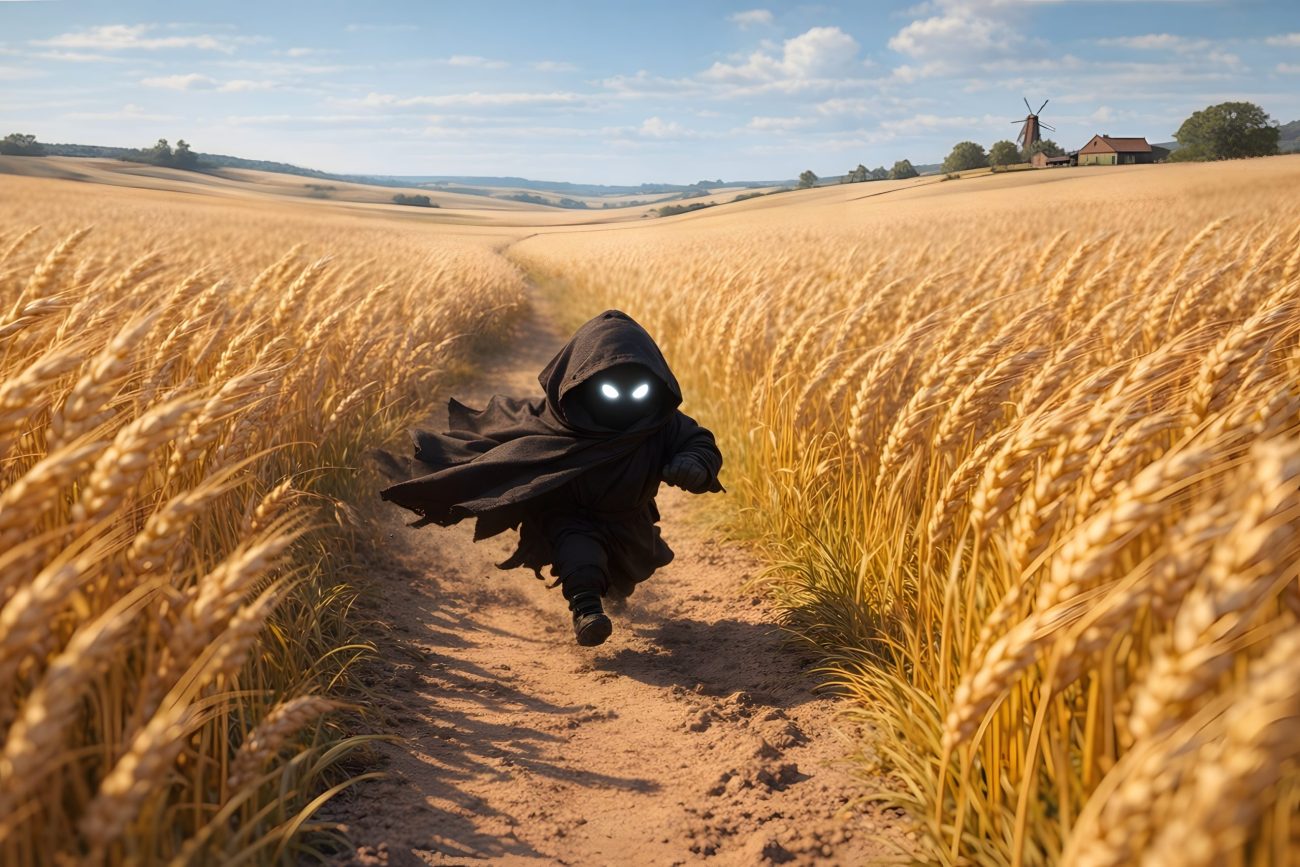
In the peatlands of the Soesterveen near Soest, people once spoke quietly of small beings called Meuzelmannekens. They were a kind of earth folk, living unseen among the turfhopen—the stacked piles of peat that lay drying on the land. While the peat remained, the Meuzelmannekens dwelled within it. When the turfhopen were taken away, they slipped back into the earth itself, vanishing without trace.

They were also said to live in the grain fields near the Lazarusberg. While the corn stood tall, the Meuzelmannekens remained hidden among the stalks. But when harvest time came and the fields were cut bare, they withdrew once more into the mountain. There, deep within the hill, they spent the entire winter, sheltered beneath the ground.

No one ever truly saw them. They caused no harm, stole nothing, and brought no illness or fear. Their presence was known only through tradition and quiet belief, as beings who shared the land but never troubled those who worked it.

The Meuzelmannekens were remembered as peaceful dwellers of soil and field, moving with the rhythms of harvest and winter, retreating into earth and hill as naturally as seeds sinking back into the ground.


Sources

Abe de Verteller contributors. (n.d.). Van aardmannetje tot zwarte juffer: Een lijst van Nederlandse en Vlaamse elfen en geesten. In Abe de Verteller, from https://abedeverteller.nl/van-aardmannetje-tot-zwarte-juffer-een-lijst-van-nederlandse-en-vlaamse-elfen-en-geesten/


Aardmannetje

Tradition / Region: Dutch mythology, Belgian Mythology
Alternate Names: Aardman; Ierdmantsje
Category: Gnome


The Myth

Beneath fields, hills, and old farmyards live the aardmannetjes, small earth beings usually dressed in green. They dwell unseen beneath the ground, moving quietly through the soil, and though most people never glimpse them, their presence is felt in subtle ways.

The aardmannetjes help humans with their work, but only if they are not watched. Crops grow straighter, tools are found where they were lost, and tasks seem to finish themselves overnight. Yet they do not tolerate curiosity. Anyone who spies on them risks punishment, for the aardmannetjes are said to blow out the eye of those who try to observe them.

They are also known to steal human children, leaving one of their own in the cradle instead. The small pipes sometimes found sticking out of the ground are said to be aardmanspijpjes, openings to their hidden homes. Whoever builds a house on land where aardmannetjes live invites disaster: such houses are doomed to be destroyed by fire or storm, again and again.

In Friesland, the ierdmantsjes are said to dance in the middle of cornfields, singing a strange song: “Monday, Tuesday, Wednesday.” Once, a hunchback overheard them and dared to finish the song with “Thursday, Friday.” Instead of punishing him, the earth beings laughed and rewarded him by removing his hump.

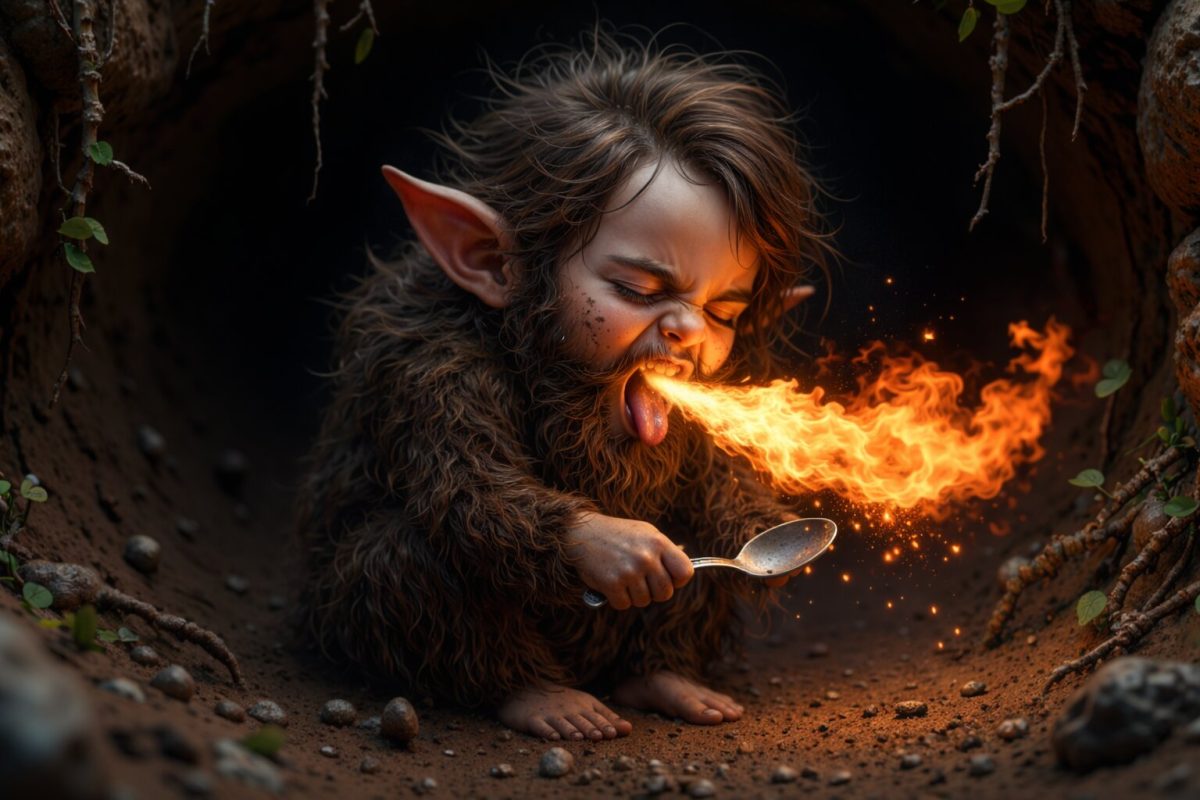
In another tale, a mighty, hairy aardman lived in the Aardjesberg near Bussum. Each year he demanded a maiden as his bride. When no maidens were left, his rage grew uncontrollable. He spewed fire from his mouth, and the nearby village was burned to the ground, house by house, until nothing remained.

Thus the aardmannetjes are remembered as helpers and destroyers alike—generous when respected, merciless when crossed—guardians of the earth who demand silence, distance, and humility from those who live above them.

Limburg

In the folklore of Limburg, especially along the River Maas, people once believed in small underground beings called aardmannetjes (little earth men). According to local legends, they lived in tunnels beneath places such as the ruins of Stein Castle. These creatures slept during the day and came out at night. They were said to wander through houses borrowing kitchen utensils, milking cows, and sometimes causing quarrels among servants, whom they would watch and laugh at from a distance.

Stories about them were told across many Limburg villages. In Doenrade, a servant once tried to trick the aardmannetjes by putting pieces of old shoe leather into a pot of rice pudding meant for them. When the dwarfs discovered the prank, they realized they were being spied on and extinguished the servant’s light—after which he was said to have lost an eye.

In Roggel, the aardmannetjes were believed to borrow pots and pans at night and return them before morning, carefully cleaned. They were harmless as long as people left them alone and did not try to look at them. According to tradition, they eventually disappeared because they could not tolerate the sound of church bells.

Similar traditions placed them at other locations such as Pijpersberg, Spekberg near Tegelen, and near Nunhem and Heithuizen. At Spekberg, legends claimed the small people once lived inside the sandy hill and smoked tiny pipes. Small clay pipes occasionally found in the ground were popularly believed to have belonged to these beings, though scholars later suggested they were early tobacco pipes.

One famous incident occurred around 1832, when a local man secretly buried small pipes in the hill and later “discovered” them, claiming they were relics of the aardmannetjes. After an investigation by the Belgian authorities, he confessed the find was a hoax.

Frisia

Another story from Maasbree tells that when a fire destroyed twenty-two houses, one home remained untouched because its owner had always lent household items to the little people. Like many supernatural beings in European folklore, the aardmannetjes were eventually said to have vanished when church bells and Christian practices spread through the region.

An old folk tale tells of a farm laborer named Sjoerd, who was known in his village as Sjoerd Bult because of his large hunchback. One evening, as he and his wife returned from the fields by moonlight, they crossed a wheat field and heard a strange buzzing sound. Soon countless aardmannetjes—tiny earth-dwelling beings—climbed out of the furrows and began dancing.

Seeing the pitchfork Sjoerd carried (whose shape resembled a cross), the little creatures showed respect and did not harm him. Instead they asked him to join their dance. As they danced, they sang the same short verse over and over:

“Monday, Tuesday, Wednesday.”

Sjoerd laughed and told them their song was incomplete. He added the missing days—“Thursday, Friday, Saturday.” The earth men were delighted and offered him a reward: he could choose either wealth or beauty. Sjoerd chose to be rid of his hunchback. The dwarfs tossed him high into the air, and when he landed, his back was straight.

When the villagers saw Sjoerd the next day, they were amazed. But a greedy and ill-tempered tailor named Semme, who lived in the same village, demanded to know how the miracle had happened. That night he went to the field himself. Trying to imitate Sjoerd, he clumsily added “Sunday” to the song, but he demanded the reward that Sjoerd had refused—wealth. The earth men laughed, tossed him into the air, and when he landed he had gained Sjoerd’s old hump.

Later Sjoerd returned to the field once more. The aardmannetjes explained that they had been forced to dance every moonlit night until someone completed their song. Because Sjoerd had done so, they were now free to return to their underground realm. As thanks, they filled his sack with small bags of gold. When Sjoerd arrived home, the treasure had turned into stones and leaves—but when he sprinkled holy water on them, they transformed back into gold and precious jewels.

From that day on, Sjoerd became a wealthy man and no longer had to depend on the greedy tailor.


Sources

Abe de Verteller contributors. (n.d.). Van aardmannetje tot zwarte juffer: Een lijst van Nederlandse en Vlaamse elfen en geesten. In Abe de Verteller, from https://abedeverteller.nl/van-aardmannetje-tot-zwarte-juffer-een-lijst-van-nederlandse-en-vlaamse-elfen-en-geesten/

Welters, H. (1876). Limburgsche legenden, sagen, sprookje, en volksverhalen. Deel 2. Venlo: Wed. H. H. Uyttenbroeck. Retrieved March 1, 2026, from https://www.dbnl.org/tekst/welt004limb01_01/colofon.php.

Fario

Tradition / Region: Dutch Mythology
Category: Fish


The Myth

In the waters off Zeeuws-Vlaanderen, fishermen speak of Fario, the king of the herrings. He is not an ordinary fish, but a ruler among his kind, set apart from all others.

It is strictly forbidden to catch Fario. To do so is believed to bring great misfortune. If a fisherman should ever find Fario in his nets by accident, he must throw the fish back into the sea immediately, without delay or hesitation. Only by returning him at once can bad luck be avoided.

There is a tale of a greedy fisherman who ignored this warning. When he caught Fario, he kept the fish instead of releasing it. From that moment on, the sea turned against him. All fishing suddenly ceased—not only for him, but for everyone. The waters yielded nothing, as though the herrings themselves had vanished.

From this, people learned that Fario is not merely a fish, but a guardian of abundance. As long as he remains free, the sea continues to provide. If he is taken, the balance is broken, and the waters fall silent.


Gallery


Sources

Abe de Verteller contributors. (n.d.). Van aardmannetje tot zwarte juffer: Een lijst van Nederlandse en Vlaamse elfen en geesten. In Abe de Verteller, from https://abedeverteller.nl/van-aardmannetje-tot-zwarte-juffer-een-lijst-van-nederlandse-en-vlaamse-elfen-en-geesten/


Interpretive Lenses

Religious Readings
  • Christian Ascetic Deep Dive
Philosophical Readings
  • Nietzschean Deep Dive
Psychological Readings
  • Jungian Deep Dive
Esoteric Deep Dive
  • Hermetic Deep Dive
Political / Social Readings
  • Marxist Deep Dive
Other
  • How to Invite The Fario

Antsje mei it Tsjil

Tradition / Region: Dutch Mythology
Alternate Names: Antje met het Wiel
Category: Ghost


The Myth

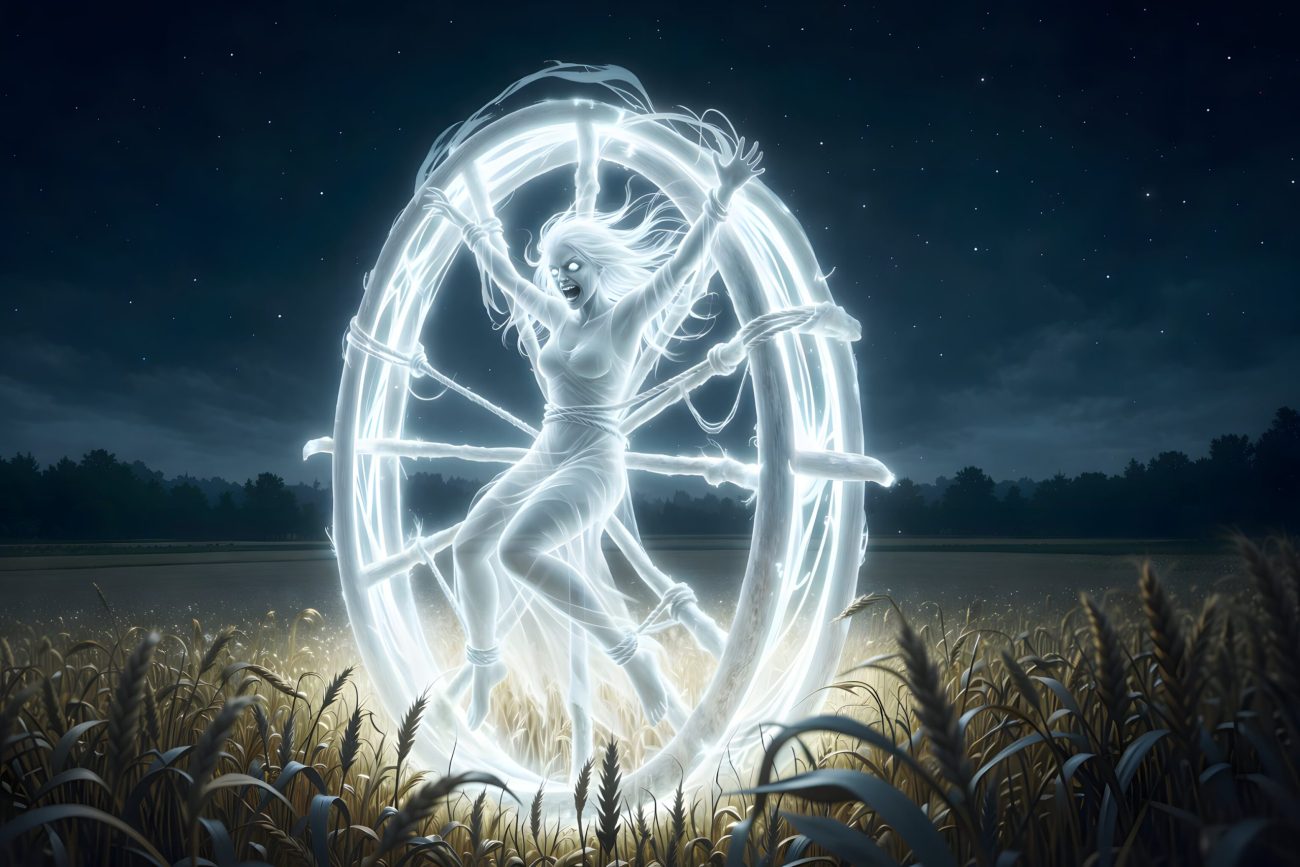
Antsje mei it Tsjil is a spirit of the rye fields, feared as a child-snatching presence that lurks among tall grain. She is said to dwell within the fields themselves, unseen but never silent, bound to the growing rye and the dangers it hides.

Children were warned never to wander through ripe rye fields, for Antsje waits there. Those who stray too far are seized, crushed, and devoured, ground down as though by a mill. No trace is left behind, only flattened stalks and silence.

Antsje moves upon a wheel, rolling endlessly through the fields. Though she cannot be seen, her approach is always announced. Before she arrives, a soft rustling passes through the rye—not the sound of wind, but something heavier, deliberate, circling closer and closer.

Those who hear the sound know to flee at once. To remain is to risk being caught in her turning path, drawn into the grain and destroyed. Adults say the fields themselves seem to close behind her, hiding her passage and concealing her victims.

Antsje mei it Tsjil stands as a warning spirit, embodying the dangers of the harvest fields and the boundary between safety and wilderness. She reminds all who hear the rye whisper that not every rustle belongs to the wind, and that some fields are alive with hunger.


Sources

Abe de Verteller. (2014). Van aardmannetje tot zwarte juffer: Een lijst van Nederlandse en Vlaamse elfen en geesten. In AbeDeVerteller.nl, from https://abedeverteller.nl/van-aardmannetje-tot-zwarte-juffer-een-lijst-van-nederlandse-en-vlaamse-elfen-en-geesten/


Blauw Vuurtje

Tradition / Region: Dutch Mythology
Alternate Names:
Category: Flame


The Myth

In the quiet places of Limburg and the Veluwe, small blue flames are said to appear at night. These are the Blauw Vuurtje, fire-elves that drift silently above the earth.

They hover only where treasures lie hidden beneath the ground. Their light is soft but unwavering, marking the spot for those who know how to read the signs. Yet the treasure is not meant for everyone.

Only a person of pure heart may dig where the blue flame floats. He must also know how to keep silent, for a single spoken word will cause the Blauw Vuurtje to vanish at once. If the flame disappears, the earth closes its secret again, and the treasure is lost forever.

Thus the blue fire waits patiently, glowing in the darkness, revealing riches only to the worthy and the wordless.


Sources

Abe de Verteller. (2014). Van aardmannetje tot zwarte juffer: Een lijst van Nederlandse en Vlaamse elfen en geesten. In AbeDeVerteller.nl, from https://abedeverteller.nl/van-aardmannetje-tot-zwarte-juffer-een-lijst-van-nederlandse-en-vlaamse-elfen-en-geesten/


Waterveulen

Tradition / Region: Dutch Mythology
Alternate Names:
Category: Horse


The Myth

Along the shores of the Zuiderzee near Volendam, it was said that a creature called the Waterveulen would sometimes rise from the sea. It appeared as a young horse, its body slick with seawater, its hooves shining as if made of wet stone. At dusk or in the quiet of evening, it would walk along the shoreline, watching the land from the edge of the waves.

The Waterveulen was said to take an interest in a young maiden known for her beauty. From the sea, it brought her gifts: small fish and offerings gathered from the water. The girl accepted these gifts, and over time she grew accustomed to the creature’s presence, meeting it again and again at the shore.

One day, the maiden mounted the Waterveulen. At once, it turned and ran into the sea, carrying her with it beneath the waves. The people watching from the shore saw the two disappear into the water and were never seen again.

From that time on, the Waterveulen was remembered as a being that emerged from the sea to lure humans away, leaving only the sound of the waves behind.


Sources

Abe de Verteller contributors. (n.d.). Van aardmannetje tot zwarte juffer: Een lijst van Nederlandse en Vlaamse elfen en geesten. In Abe de Verteller, from https://abedeverteller.nl/van-aardmannetje-tot-zwarte-juffer-een-lijst-van-nederlandse-en-vlaamse-elfen-en-geesten/


Klaas Vaak

Tradition / Region: Dutch Mythology, German Mythology
Alternate Names: Zandmannetje
Category: Spirit


The Myth

Klaas Vaak, also known as the Zandmannetje, is a figure believed to bring sleep to children. He is already mentioned in a poem from 1651, where it is said that he gently strokes people’s eyelids to make them yawn and fall asleep. In this early form, his presence is soothing and quiet, associated with the natural onset of sleep.

By 1767, the name Zandmannetje appears for the first time in a lullaby. In this version of the belief, Klaas Vaak causes sleep by sprinkling sand into people’s eyes, making them rub their eyelids. In the morning, the grains of sand are said to remain in the corners of the eyes as proof of his visit.

In a darker German version recorded in 1816, the Sandman is described as a frightening figure. Children were told that if they refused to go to bed, he would throw so much sand into their eyes that they would bleed from their sockets. He would then collect their eyes in a sack, carry them to the moon, and feed them to his own children. In this tradition, he becomes associated with the Man in the Moon and functions as a figure used to frighten children into obedience.

Like Sinterklaas, Klaas Vaak is sometimes said to enter homes through the chimney. While it is not known for certain whether the terrifying version of the Sandman was used in the Netherlands, the belief that Klaas Vaak visits at night to bring sleep was widespread and enduring.


Nachtwerkertjes

Tradition / Region: Dutch Mythology
Alternate Names: Werkgeesten (related)
Category: Spirit


The Myth

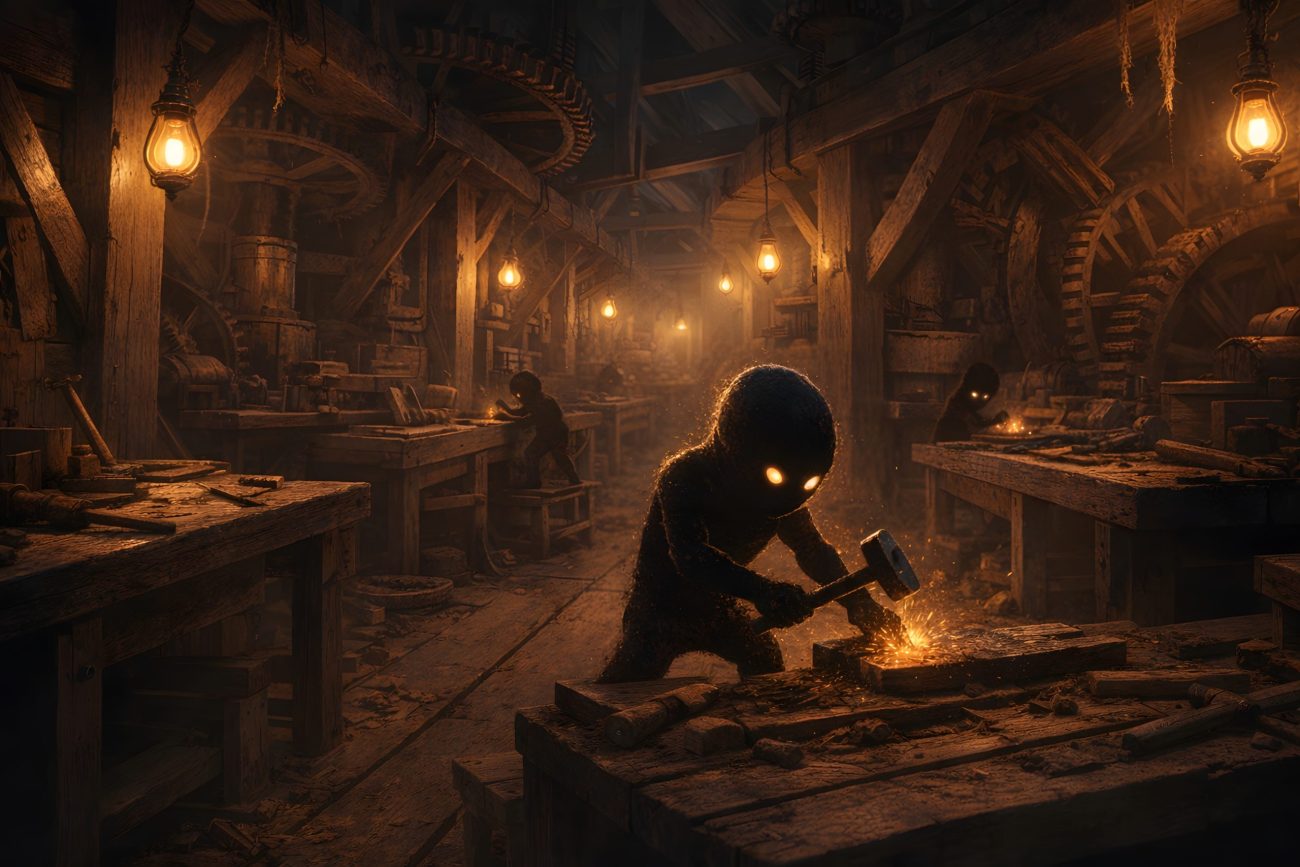
In Dutch folklore, Nachtwerkertjes are mysterious beings heard at night inside workshops and workspaces. When loud hammering, sawing, or other work noises are heard in the middle of the night—without any human present—it is said that the nachtwerkertjes are at work.

Their presence is believed to be a sign of what is to come. Hearing them foretells that there will soon be much work to be done, as if the spirits are preparing in advance. In the Zaan region, where windmills dominate the landscape, the sounds of nachtwerkertjes are specifically taken as a warning that a storm is approaching. Such storms often caused damage to mills, leading to extensive repair work afterward.

Thus, the nachtwerkertjes do not appear directly to people, but announce themselves through sound, acting as unseen workers whose nocturnal activity signals impending labor and disruption.


Zwanenjonkvrouw

Tradition / Region: Netherlands (Noord-Holland, Heemskerk)
Alternate Names:
Category: Swan maiden / nymph


The Myth

In Noord-Holland, people tell of the Zwanenjonkvrouw, a woman of extraordinary beauty who can take the form of a swan. She changes between swan and human shape by means of a magical swan shirt, known as her zwanenhemd. When she wears it, she becomes a swan; when it is removed, she remains human.

In many tales, a man discovers the Zwanenjonkvrouw while she is bathing and steals her swan shirt. Without it, she is unable to return to her true form. The man then forces her to become his wife, and she lives among humans, bound by the loss of her garment rather than by her own will.

For a time, she remains with him, but she never ceases to long for her swan shirt. When she eventually finds it again, she immediately leaves her husband without mercy and disappears, returning to her true nature and her former life.

In a legend from Heemskerk, the story ends more tragically. When the man chooses to abandon her in favor of an ordinary human woman, the Zwanenjonkvrouw falls down dead, her life ending the moment she is rejected.

Thus the Zwanenjonkvrouw is remembered as a swan-maiden bound by theft, marriage, and loss, whose fate is sealed by the recovery of her stolen form or by betrayal.


Interpretive Lenses

Religious Readings
Philosophical Readings
Psychological Readings
Esoteric Deep Dive
Political / Social Readings
Other